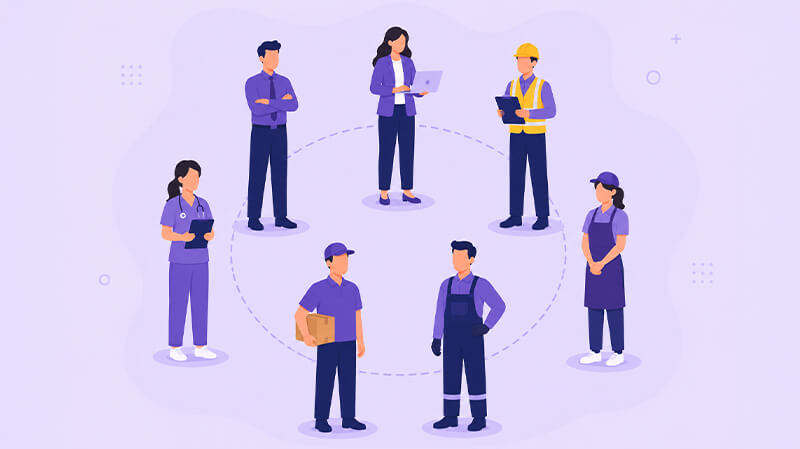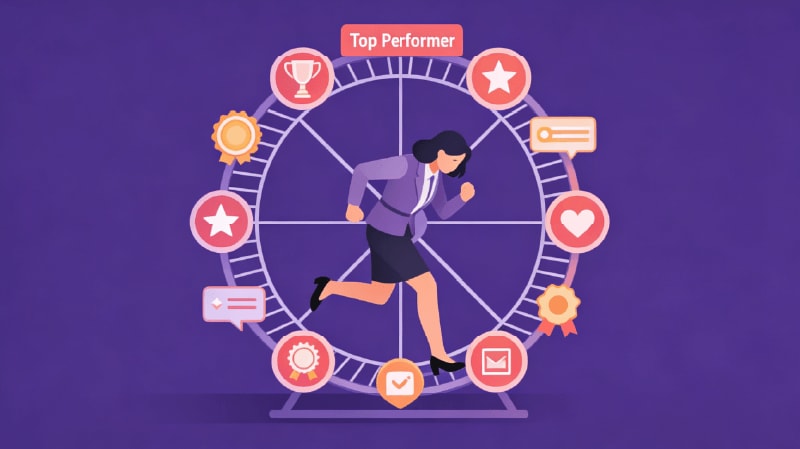
Every quarter, HR dashboards across the world tell the same reassuring story. Recognition activity is up. Awards went out. Anniversaries were acknowledged. The numbers look healthy.
And yet, ask your employees if they feel truly appreciated, and the answer, more often than not, is no.
This is recognition fatigue. Not the absence of appreciation, but appreciation that has been drained of meaning. And it may be the most expensive design flaw in modern people strategy: globally, disengaged employees cost the world economy an estimated $10 trillion in lost productivity in 2025. (Gallup, State of the Global Workplace 2026)
The problem isn't how much recognition organizations are giving. It's that the recognition they're giving has stopped landing. Most programs are built to measure frequency. Almost none are built to measure impact.
This piece breaks down what recognition fatigue actually is, the three forms it takes, five warning signs your program already has it, and what it takes to fix it without starting over.
Key Takeaways
- What Is Recognition Fatigue
- Three Types of Recognition Fatigue
- 5 Warning Signs Your Program Has It
- Why Recognition Fatigue Happens: The Root Causes
- How to Fix It Without Starting Over
- What Good Looks Like: Wipro and Subex
What Is Recognition Fatigue?
Recognition fatigue is the state in which appreciation has become too routine, too predictable, or too generic to carry emotional weight. Employees receive recognition and feel nothing meaningful. It is not a morale problem; it is a program design failure.
And it runs in both directions. Employees receive recognition and feel nothing meaningful in return. Managers send it and feel like they're feeding a machine. Neither side is wrong. The program design is.
It's not the absence of appreciation. It's appreciation that has been drained of meaning.
Psychologists call the underlying mechanism hedonic adaptation, the human tendency to normalize repeated stimuli over time. In the context of recognition programs, hedonic adaptation is the enemy. The brain stops registering what it has learned to expect. And most recognition programs, without realizing it, are designed to accelerate exactly that.
Three Types of Recognition Fatigue (And How Each One Shows Up)
Recognition fatigue isn't one thing. It takes at least three distinct forms, each requiring a different fix.
1. Manager Fatigue
This is the version HR hears about the least but feels the most.
Recognition has become increasingly positioned as a manager responsibility. One-on-ones, team shoutouts, nomination submissions, platform logins, award approvals: the administrative weight of recognition has grown alongside the number of tools designed to simplify it. And somehow, the more tools there are, the heavier the burden feels.
According to Gallup's 2026 State of the Global Workplace report, manager engagement fell five points in a single year, from 27% to 22%. That's the steepest year-over-year drop on record. Managers aren't disengaging from their teams. They're disengaging from the overhead.
When managers experience recognition fatigue, the quality of recognition degrades. Appreciation becomes a checkbox. Messages become templated. The specific, observed, timely acknowledgment that actually creates impact gets optimized away.
2. Employee Fatigue
This is the form most people associate with the term.
It happens when employees receive recognition so frequently that individual moments of appreciation stop feeling meaningful. The peer-to-peer feed fills up. Badges multiply. The "Great work!" messages blur together. What was once a signal becomes noise.
Gallup data reveals the scale of the problem: while 91% of organizations have some form of recognition program, only 34% of US workers feel genuinely recognized for their contributions. That gap, between program existence and felt impact, is not a frequency problem. Many organizations aren't recognizing too infrequently. They're recognizing too generically.
Recognition not tied to a specific behavior or a real observed moment is recognition employees eventually learn to discount altogether. The signal degrades until it stops registering.
Only 33% of workers feel their organization truly understands what motivates them individually. That gap is why generic recognition so often lands as noise rather than meaning. (Deloitte, 2025 Global Human Capital Trends)
3. Program Fatigue
The third form is structural. It happens at the organizational level.
Programs typically launch with momentum: strong adoption in the first quarter, visible engagement, growing usage metrics. But without ongoing governance, the pattern plateaus. The same employees get recognized repeatedly. The same managers nominate the same high performers. The steady contributors, people who never miss a deadline but never break a record, quietly fall out of the recognition ecosystem.
Program fatigue is what happens when the recognition infrastructure outlives the engagement it was designed to create. The platform keeps running, metrics stay green, and participation rates look stable. But the experience has become self-referential: employees recognized not for what they did, but for showing up in a system that rewards showing up. The program continues. The meaning doesn't.
Employees who receive recognition at least once a week are 5x more likely to be highly engaged. (Gallup) But only when that recognition carries genuine weight. When the architecture runs on autopilot, the frequency remains, and the weight disappears entirely.
5 Warning Signs Your Organization Has a Recognition Fatigue Problem
Recognition fatigue doesn't announce itself. It shows up in patterns that look, at first, like ordinary engagement problems.
1. Recognition activity is high, but so is turnover. If your recognition data shows strong volume but retention numbers aren't moving, the recognition isn't landing. Activity is not impact. McKinsey research found that addressing employees' need for recognition through nonfinancial means drives a 55% improvement in engagement; when recognition stops landing, that discretionary effort goes with it.
2. Managers are nominating the same employees quarter after quarter. When the same names dominate recognition data repeatedly, the program is reinforcing existing visibility, not creating appreciation across the team.
3. The recognition feed has become a scroll. Peer shoutouts are multiplying, but nobody reads them. The feed has become background noise. Recognition is being produced, not experienced.
4. Employees can't recall their last meaningful recognition moment. Ask your team. If the answer is "I got a birthday message last month" or "my manager says good job a lot." That's fatigue, not appreciation.
5. Managers describe recognition as a task, not an opportunity. Language matters. When supervisors say they "need to get their recognitions in" before quarter-end, the program has shifted from culture to compliance.
Is Your Recognition Program Showing Fatigue?
A 10-point self-assessment. Select every statement that applies to your current program.
- Recognition activity is high, but employee engagement scores haven't improved in 12+ months.
- The same 10–15% of employees appear in recognition data repeatedly. Most of the team rarely appears.
- Managers describe recognition as a task to complete, not an opportunity to give.
- More than 30% of recognition messages in your platform are generic ("great job," "well done," "keep it up").
- There is no process for refreshing recognition categories, award types, or peer prompts more than once a year.
- Recognition volume is driven by reminders and deadlines rather than real-time moments.
- Employees can't recall a specific, meaningful recognition moment from the past 90 days.
- Your program relies heavily on automated messages: work anniversaries, birthdays, milestone triggers.
- Peer-to-peer recognition is an optional add-on, not a structural part of the program architecture.
- You measure recognition success by volume (recognitions sent) rather than quality (specificity, behavior linkage, team coverage).
Checked: 0 / 10

Why Recognition Fatigue Happens: The Root Causes
Understanding the symptom is straightforward. The causes require more honesty.
Volume without specificity is just noise.
The easiest mistake in recognition program design is optimizing for frequency. Most programs are built around cadence targets: recognitions per manager, per month, per team. And when those targets become the goal, recognition that isn't specific to an individual or a real observed moment stops being experienced as recognition at all. It gets processed, scrolled past, and forgotten.
McKinsey identifies praise and recognition from managers as one of the most consistent drivers of employee performance motivation, with one qualifier: effective recognition must be timely, specific, and personal. Frequency without quality doesn't close the engagement gap. It widens it.
Employees who feel their work is genuinely noticed are 2.7x more likely to be highly engaged. Frequency without quality doesn't close that gap; it widens it. The brain learns to ignore what it has been trained to expect. (Gallup)
Recognition has been automated at the wrong moments.
Technology has made recognition easier to deliver, and easier to hollow out. Automated work anniversary messages, AI-generated award copy, system-triggered milestone notifications: these are recognition in form, not in substance. Employees know the difference. They always do.
The distinction that matters: automation that replaces human observation hollows recognition out. Automation that supports it, surfacing the right moments, flagging under-recognized team members, prompting managers with behavior-specific language, amplifies it. Vantage Circle's Intelligent Recognition features are built for the second kind.
The program has no mechanism for refreshing itself.
Most recognition programs are launched carefully and sustained carelessly. The onboarding is thorough. But long-term governance rarely gets the same attention. Over time, without intentional refreshes to recognition categories, reward options, and peer prompts tied to current values, programs drift toward the predictable. And when employees can predict exactly what recognition looks like, when it comes, who gives it, and what it says, they stop experiencing it as recognition. They experience it as routine.
Managers have been assigned, not equipped.
Telling managers to recognize their teams without giving them the language, the examples, and the confidence to do it specifically and authentically is setting the program up to fail. Managers default to generic appreciation not because they don't care, but because nobody showed them the difference between "great job" and a recognition moment that actually stays with someone. Gallup finds that only 1 in 4 employees strongly agree their manager provides meaningful feedback, and recognition is feedback. The gap isn't intention. It's execution.

Vantage Influencers Podcast
"Appreciation that moves people has to be personal and observed. It must come from a human who noticed something specific."
— Dave Ulrich, HR Thought Leader
Listen to the EpisodeHow to Fix Recognition Fatigue Without Starting Over
Recognition fatigue is a design problem. The fix is design-level, not another all-hands reminder to use the platform.
Shift from volume to specificity as the core metric.
Stop measuring how many recognitions were sent. Start measuring whether recognition is tied to a specific behavior, a named value, or an observed moment. Audit a sample of your current recognition messages. If more than 30% are generic ("great job," "keep it up," "you're a rockstar"), you have a quality problem, not a frequency problem.
Vantage Circle's State of Recognition & Rewards 2025 report found that high-effectiveness recognition programs are 2–3x more likely to recognize specific behaviors rather than outcomes, and the business impact of that shift is measurable, making appreciation more real-time and relatable for employees.
Give managers language, not just tools.
Train managers on observation and articulation, not platform navigation. What makes a recognition moment real? What separates a message that lands from one that gets scrolled past? Those are not intuitive skills, and most manager training programs skip them entirely. The AIRe™ Framework, built around Appreciation, Incentivization, Reinforcement, and Emotional Connect, gives managers a structured way to make recognition specific, behavioral, and human at scale, without adding administrative burden.
Vantage Circle's Manager Recommendations feature takes this further. It surfaces under-recognized team members directly in a manager's workflow, so the gap between "I want to recognize more" and "I don't know where to start" closes automatically.
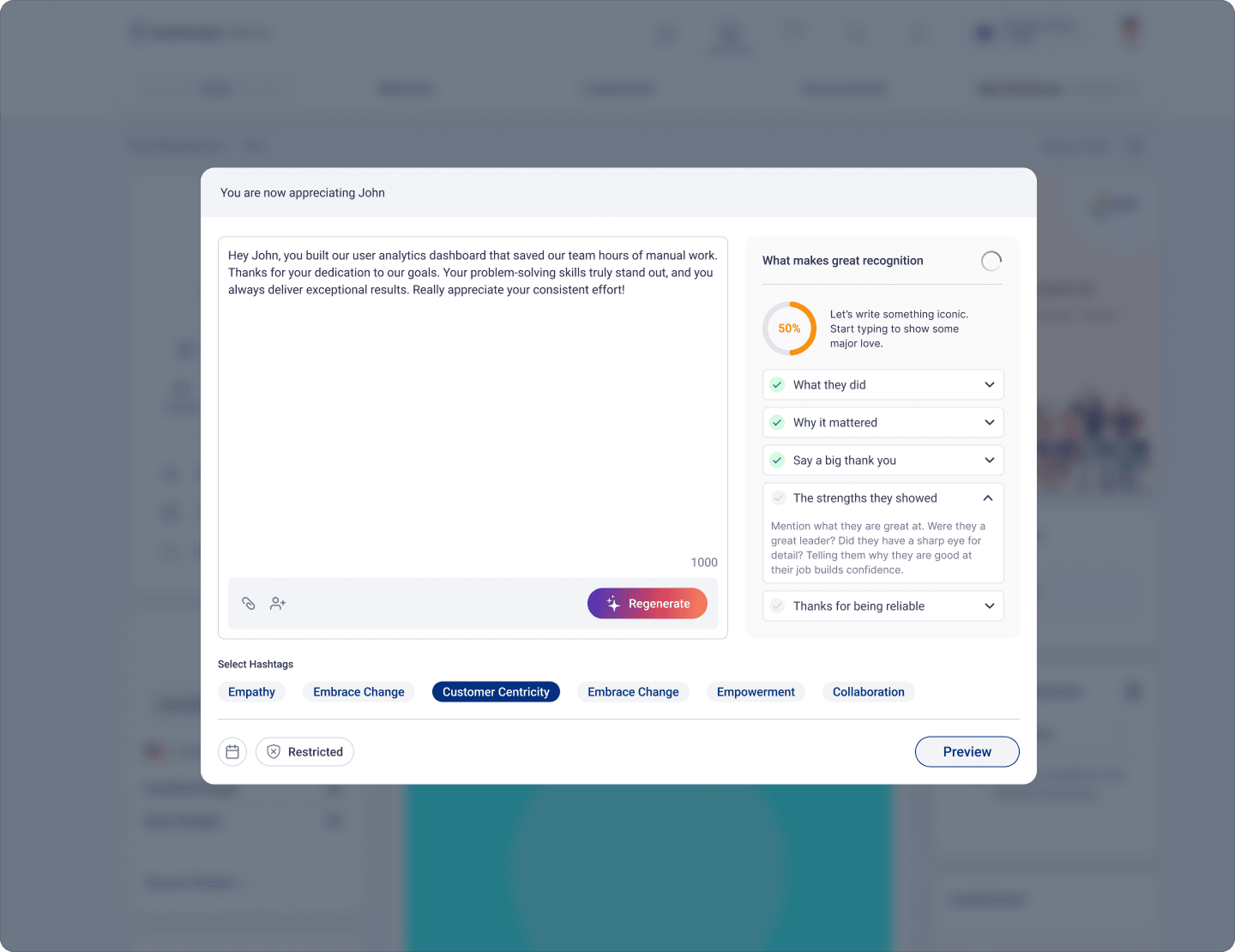
Reintroduce surprise and variability.
Recognition fatigue accelerates when everything is predictable: the same award cycle, the same categories, the same nominees showing up quarter after quarter. Inject variability instead. Unexpected shoutouts, spontaneous team-level celebrations, recognition for growth and resilience rather than just outcomes. Surprise is what breaks hedonic adaptation. It signals that someone actually noticed something real.
Build peer-to-peer into the architecture, not as an add-on.
The most sustainable recognition cultures are not manager-led. They're peer-distributed. When employees recognize each other, and are genuinely enabled to do so, the volume of human-observed appreciation multiplies without increasing manager load. Peer-to-peer recognition also reaches the employees that manager-led programs consistently miss: the steady contributors, the quiet high-performers, the people doing essential work invisibly. A Gallup study tracking thousands of employees over two years found that those who felt well-recognized were 45% less likely to have left the organization, and peer-distributed recognition is one of the most consistent drivers of that outcome.
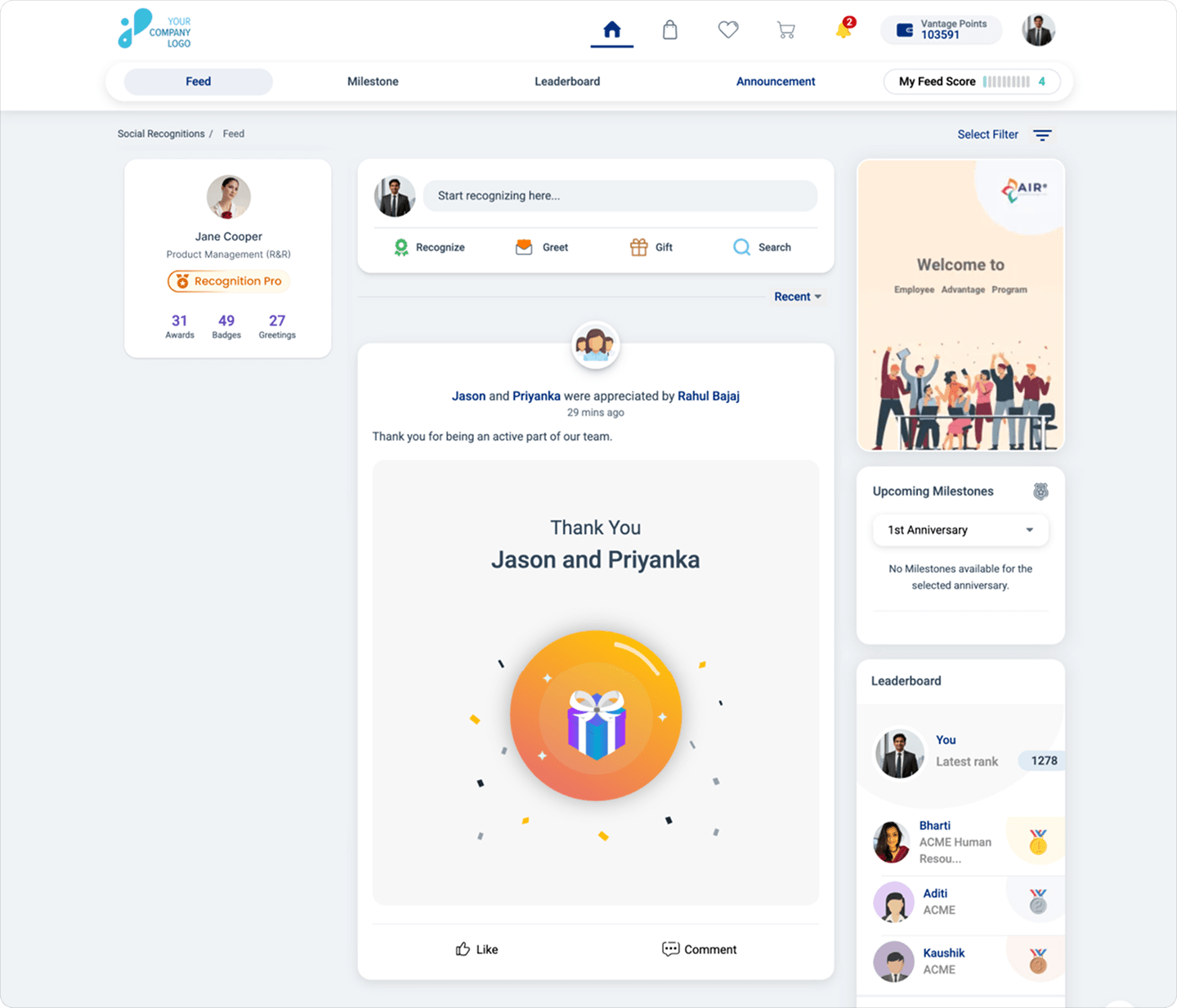
Treat the program as a living system, not a deployed tool.
At minimum twice a year, audit what your employee recognition strategy is actually producing. Are the same people being recognized? Are certain managers opting out? Are there teams where recognition activity has gone flat for months? Programs that sustain impact are governed, not just launched. Vantage Edge runs monthly themed R&R campaigns and tracks North Star Metrics: Receiver Coverage, Giver Coverage, Average Recognition Time, so HR teams can see program decay before it becomes program failure.
What Good Looks Like: Wipro and Subex
When Wipro redesigned its recognition approach with Vantage Circle, the focus shifted from manager-led, milestone-driven awards to a peer-distributed, behavior-linked culture of appreciation. The results were measurable: a 97.5% increase in peer recognition activity and more than 57% of employees receiving recognition within a single fiscal year.
The key wasn't volume. It was architecture. Recognition became something the culture did, not something the platform reminded people to do.
Subex Limited saw a similar pattern. By rebuilding peer-to-peer recognition as a structural element of the employee experience rather than an optional feature, they achieved a 2.8x increase in peer recognition across the organization. Employees who previously fell outside the visibility of manager-led programs were now being seen by colleagues, not just leaders.
Both outcomes share one thread: recognition worked when it stopped being something the program delivered and became something people chose to give.
The same report confirms the pattern at scale: when employees consistently feel appreciated, motivation rises by 18 percentage points and intent to stay by 16, a measurable return on program design, not just program spend.
Conclusion
Recognition fatigue is not a sign that appreciation doesn't matter anymore. It's a sign that the appreciation you're delivering has lost its signal.
The fix isn't more recognition. It's more intentional recognition.
Specific. Timely. Human. Tied to something real.
When appreciation is designed well, built on observation rather than automation and specificity rather than volume, it doesn't fatigue. It compounds.
That's the difference between a recognition program that runs and a recognition culture that lasts.
FAQs
What is recognition fatigue in the workplace?
Recognition fatigue occurs when appreciation becomes too routine, predictable, or generic to carry emotional weight. Employees stop feeling recognized despite receiving recognition. The cause is not frequency. It is appreciation that lacks specificity and human intent.
How do you know if your team is experiencing recognition fatigue?
Look for the gap between program activity and felt appreciation. High recognition volume alongside persistent turnover, the same employees nominated repeatedly, or team members who cannot recall a meaningful recognition moment from the past 90 days. Those are the signals.
Can you recognize employees too often?
Frequency alone does not cause fatigue. Generic recognition at any frequency does. Specific, observed, timely recognition can happen daily without losing impact. Quality matters far more than quantity.
How does the AIRe™ Framework address recognition fatigue?
The AIRe™ Framework anchors recognition to specific behaviors and genuine human connection at each stage. It directly addresses the root causes of program fatigue: generic messaging, automation without intent, and recognition that has stopped feeling earned.
How do you prevent recognition fatigue?
Design specificity and variability into the program from the start. Tie recognition to observed behavior. Vary the format and timing. Build peer-to-peer as a structural feature, not an add-on. Audit coverage and message quality at least twice a year. Fatigue sets in when programs are launched and left to run on autopilot.

Supriya is a Content Marketing Lead at Vantage Circle, where she writes on employee engagement, recognition, workplace communication, and culture. Her work on remote team recognition draws on primary research from Vantage Circle's platform data and customer deployments across distributed workforces. She spent the earlier part of her career in corporate communications at Burson, ESPN Star Sports, and CBRE, advising organizations on the messages employees actually hear.
Connect with Supriya on LinkedIn.