MIT research consistently puts the new product failure rate at 95% per year. Meanwhile, the average product feature takes 6–12 months for a well-resourced competitor to replicate. In that environment, competing on what you sell is a losing game. The companies that sustain growth compete on why customers choose them — and keep choosing them.
That's the core of a differentiation strategy. And it's more urgent now than it was a decade ago.
This article breaks down the 6 types of differentiation strategy with real industry examples and data, a framework for building one, common pitfalls, and the one angle almost no competitor covers: differentiating through your people.
What is a Differentiation Strategy?
A differentiation strategy is a business approach where a company offers something distinct enough that customers choose it over alternatives — even at a higher price.
The concept comes from Michael Porter's Generic Strategies framework (1980), which argues that every business competes on one of three bases: cost leadership, differentiation, or focus. Trying to do all three simultaneously leads to what Porter called "stuck in the middle" — average at everything, dominant at nothing.
Differentiation works by targeting customers who prioritize value over price. When done right, it creates:
- Pricing power — customers pay a premium because there is no direct substitute
- Loyalty — switching costs, emotional attachment, and perceived uniqueness reduce churn
- Competitive insulation — it is harder to compete with a brand than a price point
But differentiation is not one-size-fits-all. The right type depends entirely on your market, resources, and customers.
Porter's Generic Strategies: Where Differentiation Fits
Understanding how differentiation sits alongside other competitive strategies helps avoid a common mistake: treating it as a default instead of a deliberate choice.
| Strategy | Target Market | Primary Advantage | Core Risk |
|---|---|---|---|
| Cost Leadership | Broad | Lowest price in category | Margin erosion; vulnerable to disruptors |
| Differentiation | Broad | Unique value at premium price | Imitation; over-engineering |
| Focused Cost Leadership | Niche | Lowest price in a specific segment | Segment may be too small to scale |
| Focused Differentiation | Niche | Unique value for a specific segment | Segment shifts or disappears |
Most product companies operate on the differentiation or focused differentiation axis. The key question is whether you are targeting a broad market or a defined segment.
What is a Broad Differentiation Strategy?
A broad differentiation strategy targets a wide range of customers by offering something better or different across the entire market.
Apple is the textbook example. Rather than targeting only professionals or only students, Apple made design and ecosystem integration the differentiator for everyone. The result: Apple captured nearly 50% of global smartphone revenue in 2023 despite holding approximately 17% of unit market share — a direct consequence of premium pricing enabled by differentiation.
What is a Focused Differentiation Strategy?
Focused differentiation targets a specific niche with a highly tailored offering.
Coca-Cola's product line illustrates this: Diet Coke for calorie-conscious consumers, Coke Zero for taste-first zero-sugar drinkers, Coca-Cola Spiced for Gen Z. Each variant serves a distinct segment with customized positioning.
Community Coffee is a sharper example: by doubling down on "Southern authenticity" rather than competing nationally on scale, they captured 50% of the Louisiana coffee market while Folgers — the national leader — held just 1.1% of that same market.
5 Benefits of Differentiation Strategy
1. Reduces Price Competition
When differentiation works, pricing conversations shift from "how cheap?" to "why you?" Ritz-Carlton charges $400–$800/night in markets where competitors charge $150 — price competition is essentially absent for guests who have chosen Ritz-Carlton.
2. Creates Product or Service Uniqueness
Differentiated companies become category reference points rather than alternatives. Owning that position is worth more than any feature list. It is the difference between a customer asking for "a cola" versus specifically asking for Coke.
3. Increases Profit Margins
McKinsey's research on pricing power found that a 1% improvement in price realization produces an 8–10% increase in operating profit on average. Differentiation is the underlying mechanism that enables that pricing power.
4. Builds Customer Loyalty
Highly differentiated brands see measurably higher retention. The reason is identity: customers who choose a brand for what it stands for are not just buying a product — they are expressing something about themselves. That emotional connection is far more durable than feature preference.
5. Limits Substitution
A genuinely differentiated product has no direct substitute. Customers cannot simply swap it out. This is especially powerful in B2B markets where switching costs are high and vendor relationships span years.
6 Types of Differentiation Strategy With Industry Examples
1. Product Differentiation
Product differentiation means competing on what you offer — design, features, performance, durability, or innovation.
Example: Dyson
Dyson charges $500–$700 for a vacuum cleaner in a category where the average price is under $100. Their differentiation is built on proprietary cyclone technology, industrial design, and the perception of engineering superiority. Despite the price gap, Dyson consistently grows market share in the premium segment.
Product differentiation works best in markets where customers can directly evaluate quality differences, and where innovation cycles are long enough that competitors cannot close the gap quickly.
2. Service Differentiation
Service differentiation means creating a fundamentally different customer experience — not just being "nicer," but structuring service in ways competitors cannot or will not replicate.
Example: Ritz-Carlton
Ritz-Carlton empowers every employee with a $2,000 discretionary budget per guest per incident — no approval required — to resolve any service issue. This policy has never been widely replicated by competitors because it requires a fundamentally different HR and trust structure, not just a policy change.
Example: Zappos
Zappos offered new hires $2,000 to quit after training if the culture did not feel right. The result was a self-selected workforce deeply aligned with service excellence — and before Amazon acquired Zappos for $1.2 billion, its NPS significantly outperformed the category.
3. Distribution (Channel) Differentiation
Distribution differentiation means winning on how customers access your product — not what the product is.
Example: Tesla
Tesla bypassed the dealership model entirely, selling direct-to-consumer online and through Tesla-owned showrooms. This gave Tesla control over the full purchase experience, eliminated adversarial negotiation, and enabled first-party customer data collection at scale. In 2023, Tesla's NPS score of 97 outperformed every traditional automaker.
4. Relationship Differentiation
Relationship differentiation builds competitive advantage through the quality of ongoing relationships — with customers, employees, partners, or communities.
Example: Vantage Circle
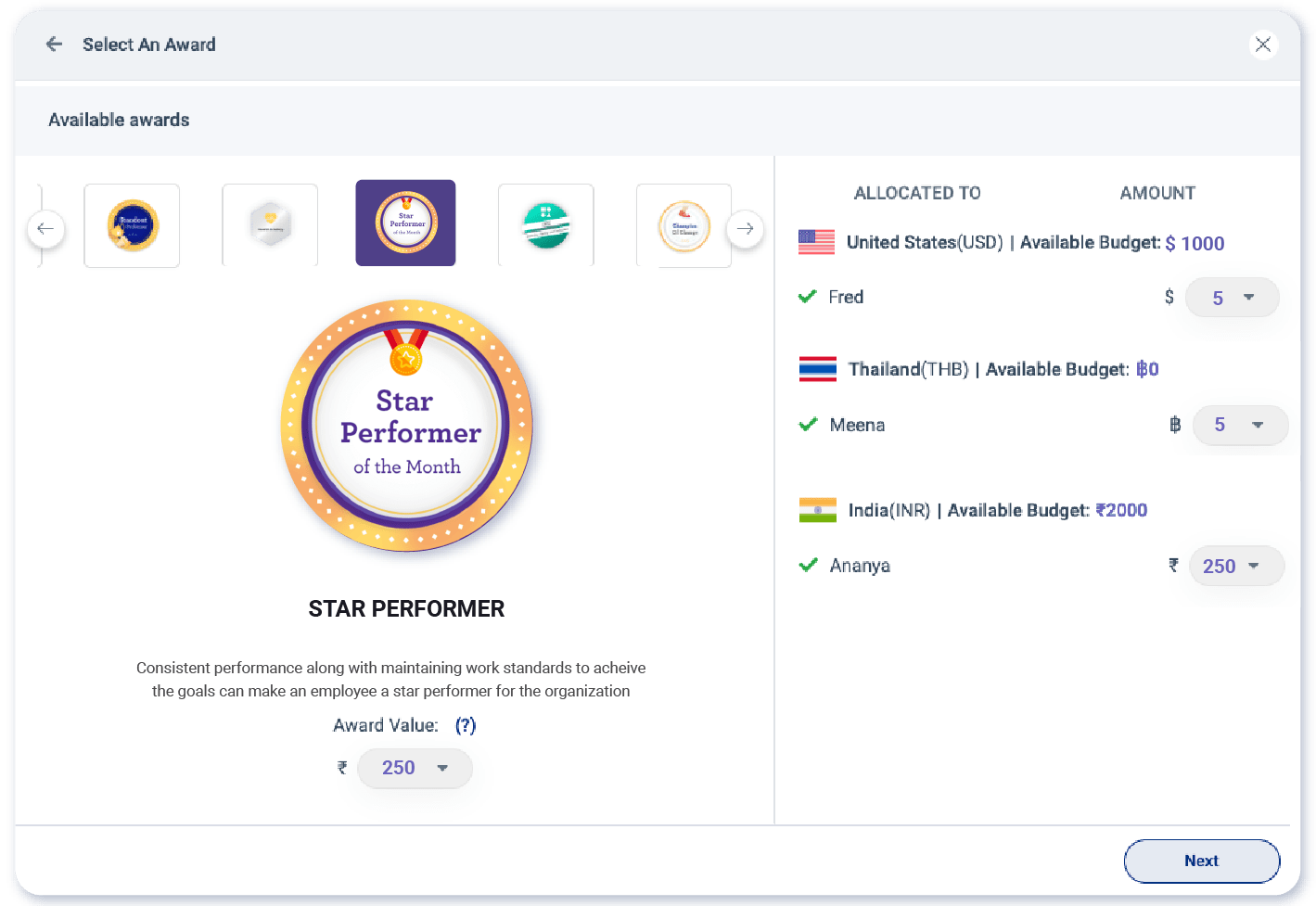
Most employee rewards and recognition platforms sell a SaaS license and leave implementation to the client. Vantage Circle takes a different approach: every enterprise client gets a dedicated success manager whose job is not just to answer support tickets, but to actively drive adoption, track usage patterns, and flag disengagement risks before they surface in attrition data.
The second layer of differentiation is geographic. Most Western-origin recognition platforms offer thin catalog coverage in markets like India, Southeast Asia, and the Middle East — meaning HR teams in those regions get a globally branded tool that doesn't actually work locally. Vantage Circle was built for these markets first, with local-language support, regional reward catalogs, and currency coverage across 100+ countries. For a multinational running a single global recognition program, that's the difference between a tool that works everywhere and one that quietly fails in half their offices.
The result: enterprise HR teams don't choose Vantage Circle because it has the most features — they stay because the relationship makes the program actually run.
Relationship differentiation is especially effective in B2B markets where deals are high-value, long-cycle, and driven by trust.
5. Image (Brand) Differentiation
Brand differentiation means owning a position in the customer's mind — closely related to brand positioning — not just selling a product, but representing a set of values, an identity, or a status signal.
Example: Patagonia
Patagonia's "Don't Buy This Jacket" campaign told customers to think before purchasing. That counterintuitive move generated $10 million in additional sales and deepened brand loyalty. By differentiating on environmental values rather than product features, Patagonia built a customer base that actively evangelizes the brand — a textbook example of employer branding working as competitive strategy. Patagonia's voluntary employee turnover is approximately 4%, compared to the retail industry average of 57–60% — a direct consequence of values alignment that reinforces the brand externally.
6. Price Differentiation
Price differentiation (also called price discrimination) means charging different prices for the same or similar product based on customer segments, timing, or volume.
Example: SaaS tiered pricing
Virtually every major SaaS company — HubSpot, Salesforce, Notion — uses tiered pricing to serve startups, mid-market, and enterprise simultaneously. The product is broadly the same; the price is differentiated by use case, team size, and support level. This allows companies to capture maximum willingness-to-pay across all segments without cannibalizing premium offerings.
Price differentiation is less about "being cheap" and more about serving multiple segments without a single price point that leaves value on the table.
Employee-Driven Differentiation: The Overlooked Competitive Edge
This is the angle almost no business strategy article covers — and the one most directly relevant to sustainable competitive advantage.
Competitors can copy your product in 18 months. They can match your price in a quarter. They can replicate your distribution channel in a year. But they cannot copy your company culture, your people, or the way your team treats customers — at least not quickly.
The business case is striking:
- Only 23% of global employees are engaged at work (Gallup, 2024 State of Global Workplace) — meaning 77% of your potential talent pool is functionally disengaged, a structural opportunity for companies that invest differently
- Highly engaged business units achieve a 23% increase in profitability compared to disengaged peers (Gallup Q12 Meta-Analysis)
- Companies in the top quartile for employee experience deliver 4x the average profit of bottom-quartile companies (MIT CISR)
This is not soft. It is a structural advantage.
How it works in practice:
When employee engagement is embedded into daily operations — not just annual reviews — employees feel ownership over outcomes. That ownership changes how they interact with customers, how they solve problems, and how long they stay.
Southwest Airlines built its entire differentiation strategy around employee culture. The result: consistently the lowest complaint rate in the US airline industry for over two decades (US Department of Transportation data), despite competing on price in a commoditized market. The product — a seat on a plane — is identical to competitors. The experience, driven by people, is not.
Three ways to activate employee-driven differentiation:
- Recognition infrastructure — systems that make it easy to recognize contributions in real time, not just at performance reviews
- Employee autonomy — giving frontline employees decision-making authority (see: Ritz-Carlton, Zappos)
- Values alignment — hiring for culture fit and reinforcing values through how people are rewarded
If your differentiation strategy does not account for your people, it has a gap that a competitor with better culture will eventually exploit.
How to Build a Differentiation Strategy: A 4-Step Framework
Step 1: Audit Your Competitive Landscape
Good strategic planning skills start with knowing the terrain. Map what competitors offer and where they are identical. The gaps are your differentiation opportunities. Look for:
- Features everyone has (table stakes — not differentiators)
- Experiences that are consistently poor across the category
- Customer complaints that competitors have ignored for years
Step 2: Identify Your Sustainable Advantage
Not every strength is a differentiator. Ask: Can a competitor replicate this within 12–24 months? If yes, it is a temporary advantage. Durable differentiators are typically rooted in:
- Proprietary technology or IP
- Network effects (the product improves as more people use it)
- Culture and people (genuinely hard to copy)
- Brand reputation built over years
Step 3: Define Your Target Customer Precisely
Broad differentiation requires a large market with shared needs. Focused differentiation requires a clearly defined segment with specific unmet needs. Trying to differentiate for everyone usually means you are differentiated for no one.
Ask: Who is your differentiation most valuable for? What do they lose if they choose a competitor?
Step 4: Build Proof Points
Differentiation claims without evidence are marketing, not strategy. Build proof:
- Data — benchmarks, case studies, third-party validation
- Policy — like Ritz-Carlton's $2,000 guest resolution rule
- Awards or certifications — third-party signals customers trust
- Testimonials from customers describing the specific difference in concrete terms
When Differentiation Fails: 5 Pitfalls to Avoid
1. Differentiating on What Customers Do Not Value
Adding features or complexity the target customer does not care about. Solution: validate differentiation claims with customer research before investing.
2. Over-Engineering
Building a product so specialized it serves a segment that is too small to be profitable. Solution: size the segment before committing to focused differentiation.
3. Failing to Communicate the Difference
A product can be genuinely different but lose because customers do not understand why. Dyson's marketing budget is enormous precisely because explaining cyclone technology to mainstream consumers requires consistent, sustained effort.
4. Differentiation That Is Easy to Copy
A feature or pricing model a competitor matches within six months. Durable differentiation must be rooted in something that takes time to build — culture, brand, network effects, or proprietary IP.
5. Neglecting Internal Alignment
A differentiation strategy that lives in the marketing deck but is not embedded in operations, culture, or hiring will erode from the inside. The people delivering your differentiated experience must believe in it.
Which Differentiation Strategy Is Right for You?
Answer 5 questions to get a recommendation based on your business context.
Strategy Selector: 5 Questions
1. What is your biggest competitive challenge right now?
FAQs
1. What is the main goal of a differentiation strategy?
The main goal is to create a competitive advantage by making your product, service, or brand distinct enough that customers choose you over alternatives — ideally at a premium price. Done well, differentiation reduces price competition, increases loyalty, and builds long-term market position.
2. What is the difference between broad and focused differentiation?
Broad differentiation targets a wide market with a universally appealing unique value proposition — Apple's design-led ecosystem is the classic example. Focused differentiation targets a specific niche with a highly tailored offering — Community Coffee dominating Louisiana with 50% market share despite minimal national presence. Broad requires scale; focused requires deep niche understanding.
3. Can a small business use a differentiation strategy?
Yes — in fact, small businesses are often better positioned for focused differentiation than large ones. A boutique accounting firm specializing in e-commerce sellers, or a local coffee roaster differentiating on single-origin sourcing, can own a niche that a national competitor cannot economically serve.
4. What are the risks of a differentiation strategy?
The core risks are: differentiating on something customers do not value; features that competitors copy quickly; over-specializing for a segment that is too small; failing to communicate the difference effectively; and not embedding the differentiation into operations and culture — so it lives in the marketing deck but not in how the business actually runs.
5. How does employee experience drive differentiation?
Engaged employees deliver differentiated experiences that competitors cannot replicate from a product roadmap. Companies like Southwest Airlines and Ritz-Carlton built durable competitive advantages not on product features but on how their people behave. Gallup's Q12 Meta-Analysis found that highly engaged business units achieve a 23% increase in profitability compared to disengaged peers — and only 23% of global employees are currently engaged (Gallup 2024 State of the Global Workplace), making this a significant competitive opening.
6. How long does it take to build a differentiation strategy?
Product differentiation can be established in 6–18 months with focused R&D. Brand differentiation typically takes 3–5 years of consistent positioning. Employee-driven differentiation builds continuously — culture compounds over years and is the most durable form, but requires sustained investment in people systems and recognition infrastructure.
7. What is the difference between differentiation strategy and competitive advantage?
Differentiation strategy is a method of competing. Competitive advantage is the outcome — a position in the market where you outperform rivals sustainably. Differentiation is one path to competitive advantage; cost leadership is another. Not all differentiation produces lasting competitive advantage — if the difference is easy to copy, it is a temporary edge, not a structural one.
Conclusion
A differentiation strategy is not a marketing campaign or a product feature. It is a deliberate choice about what makes you irreplaceable — and it requires that choice to be embedded across your product, service, people, and brand.
The companies that sustain differentiation over time do not just build better products. They build cultures, systems, and customer relationships that competitors cannot copy from a slide deck.
Start with your sustainable advantage. Build from there. And do not underestimate your people — in a world where every product feature can be replicated, how your team shows up for customers is often the last true differentiator.

This article is written by Susmita Sarma. She is a Digital Marketer at Vantage Circle, making employee recognition less of a checkbox and more meaningful - helping organizations say “we value our people” and truly mean it.
Connect with Susmita on LinkedIn.