Modern HR technology is facing an interesting paradox. New tools are being introduced to simplify work, yet with every additional platform on the rise, the employee experience becomes more fragmented.
Organizations today use specialized systems for payroll, recruitment, learning, performance, recognition, wellbeing, benefits, and core HR. While each platform may serve its purpose well, managing them separately can create unnecessary complexity.
The challenge, therefore, is not limited to choosing the right HR technology. It is about ensuring that those technologies can work together.
This is where integration plays a pivotal role. By enabling relevant data and workflows to move between systems, integrations can turn a collection of HR tools into a more connected ecosystem.
What Is a Connected HR Ecosystem?
A connected HR ecosystem brings different HR technologies together, enabling them to share information and support connected processes.
A core HR system, for example, may contain employee information such as job roles, departments, reporting relationships, and employment status. Other platforms may specialize in learning, recognition, performance management, or benefits.
When these systems are integrated, relevant updates made in one HR system get automatically reflected in another system. This helps reduce the need to maintain the same employee data separately.
These systems often connect through Application Programming Interfaces, or APIs. Simply put, APIs allow software applications to communicate and exchange information.
Having said that, the real value of integration comes from the outcomes it supports, such as smoother processes, more consistent data, and a more connected employee experience.
Where Fragmentation Creates Friction
Fragmented HR technology often shows up through small operational inefficiencies.
Take an example of an employee who changes departments. The change may first be recorded in the core HR system. If other HR platforms aren’t connected to that system, the same update will have to be entered separately elsewhere.
The same pattern arises when an employee joins, changes roles, receives a new manager, or leaves the organization. Manual updates in these systems add administrative tasks and create inconsistent records. One system may contain the latest information, while another still reflects an earlier version.
Fragmentation can look different for employees. They have to juggle between separate platforms to complete training, access benefits, receive feedback, or even participate in recognition programs.
Integration reduces this friction by letting systems share relevant information and support connected workflows rather than operating entirely on their own.
Why Integration Matters to Employee Experience
Employees hardly think about the technology architecture behind HR processes. They experience HR through everyday interactions. Submitting leave, completing training, receiving feedback, updating personal details, or being recognized for good work are all part and parcel of the broader employee experience.
The quality of that experience also depends partly on how smoothly those interactions take place. With the connected systems sharing information, employees and managers can avoid repeating the same steps across multiple platforms. Relevant information becomes available where it is most needed and useful.
This closely relates to bringing HR processes into the workflow. Instead of requiring employees to navigate several unrelated systems, connected technology can make HR interactions more continuous and contextual.
Here, the goal is not to eliminate multiple platforms, but to help them work together as part of a more unified employee experience.
From Data Transfer to Connected Workflows
Different integrations operate in different ways.
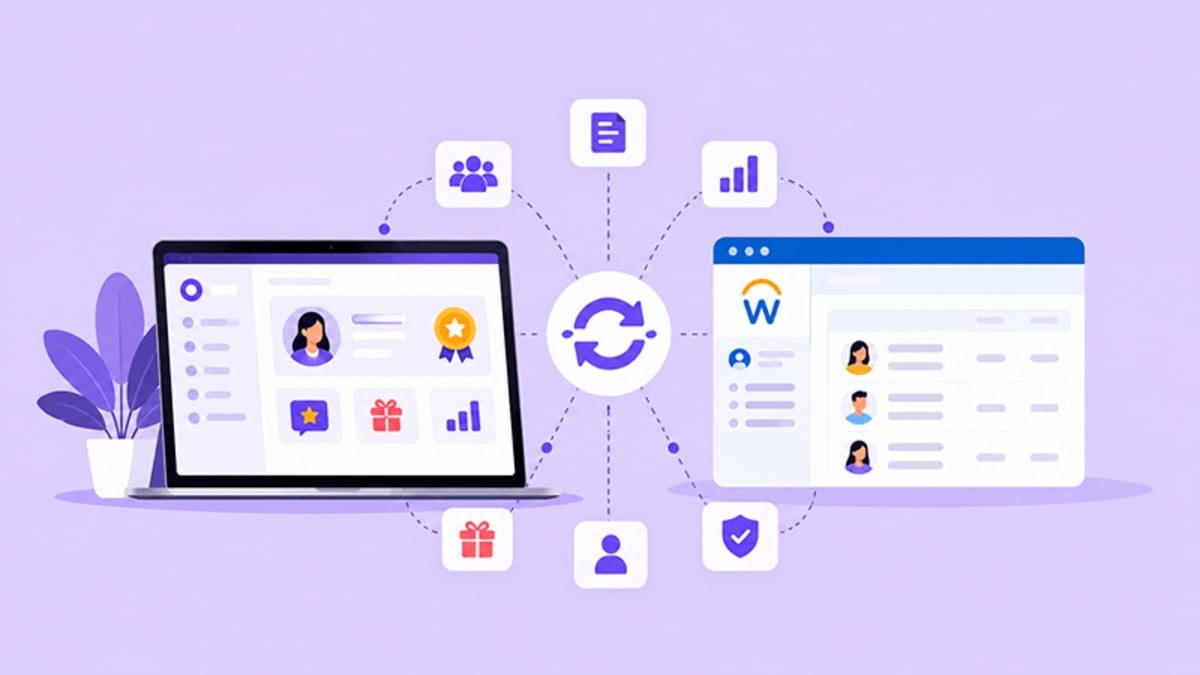
A one-way integration transfers information from one system to another. For instance, a core HR system may send employee information to another application to keep user records updated.
Bidirectional integration enables relevant information to flow both ways. This can support more connected workflows because each system can contribute information to the broader process.
An example worth considering is the integration between Vantage Circle and Workday. Employee information can flow from Workday into Vantage Circle, while recognition activities from Vantage Circle can appear within Workday Anytime Feedback.
The key takeaway is that specialized HR platforms do not need to handle every function. They can focus on what they do best while sharing relevant information with other systems.
What Should a Strong HR Integration Enable?
Integration alone does not guarantee a better experience. The quality of the connection equally matters. Here’s what a strong connection should enable:
Data consistency is one important consideration. Relevant systems should be able to reflect necessary employee changes without creating unnecessary duplication.
Automation with visibility is another. Routine updates can reduce administrative effort, but organizations still need clarity on what information is being exchanged and how often.
Security and governance are equally important. Since HR systems contain sensitive employee information, integrations need appropriate authentication, access controls, and data-sharing rules. The objective should be to exchange only the information relevant to a particular process.
Configurability also matters as organizations evolve. Reporting structures, workforce needs, and technology stacks can change, so integrations should be flexible enough to adapt.
Scalability is another factor that enables integrations to support reliable data exchange as organizations continue to grow across teams, business units, and geographies.
Returning to this example, the Vantage Circle–Workday integration incorporates API-based connectivity, authentication controls, a least-privilege security model, and a configuration-based implementation approach.
Integration Requires Clear Data Ownership
A well-connected HR ecosystem involves more than moving data between systems. Organizations also need to be clear about which system is responsible for each type of information.
For example, a core HR platform may serve as the main source for employee details such as job roles, departments, and reporting relationships, while specialized platforms may remain the primary source for areas such as learning, recognition, or benefits.
Defining ownership prevents conflicting records and clarifies where to create, update, and maintain information. It also helps determine what data needs to move between systems and in which direction.
This will shift the integration conversation from simply asking, “Can these systems connect?” to a more practical question: “Which information should move between them, and what process will that support?”
Clear data ownership, therefore, helps ensure integrations are built around specific business and employee needs rather than connectivity alone.
The Next Stage of HR Technology Is Connection
Organizations will continue to use specialized HR technologies because different workforce needs require different capabilities.
The opportunity lies in making those technologies work together more effectively.
A connected HR ecosystem can reduce unnecessary administration, improve information consistency, support related workflows, and make HR interactions feel more coherent for employees and managers.
The future of HR technology may therefore depend less on adding more tools and more on strengthening the connections between the ones already in place.
Ultimately, an HR ecosystem’s value depends on how well its platforms work together.

Riha Jaishi is a Content Marketing Specialist at Vantage Circle and host of the HR Vantage Influencers podcast, sharing insights that help organizations build recognition-rich, people-first cultures!!
Connect with Riha on LinkedIn.