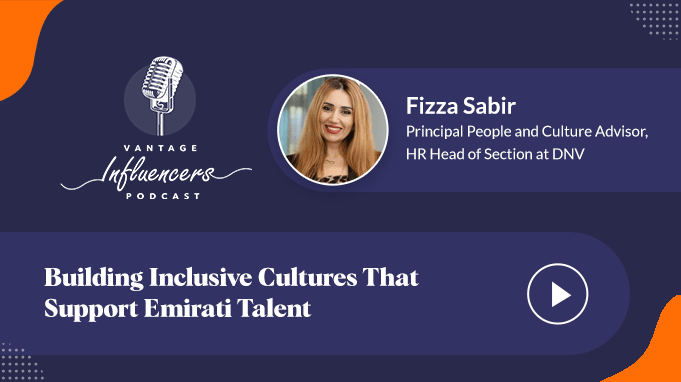
Building Inclusive Cultures That Support Emirati Talent
Episode Overview
Fizza opens up a conversation that most Emiratisation discussions skip entirely: what happens after someone is hired. Numbers, targets, and hiring percentages dominate the public narrative, but she argues that the real measure of progress is whether Emirati professionals actually feel seen, heard, and valued once they are inside an organization. A strong chart can hide a very different internal reality, and she draws a clear line between companies that comply with mandates and companies that genuinely commit to building a culture where Emirati talent can grow.
The conversation moves through the forces that shape whether inclusion is real or performative, from the outsized influence of line managers on day-to-day belonging, to the disconnect that can form when leadership sits far from the region's cultural context. Fizza also pushes back on the idea that inclusion is something organizations owe Emirati professionals without any reciprocal effort, making the case that ownership, feedback-seeking, and openness to new challenges have to come from both sides. She closes by sketching what a workplace led by Emirati talent could look like by 2030, and what has to shift in mindset, hiring, and pipeline-building to get there.
Episode Highlights
- Hiring alone does not create inclusion. A strong Emiratisation number on paper can mask an employee experience where people still do not feel seen.
- True inclusion goes beyond meeting targets. It shows up as belonging, meaningful work, and a genuine seat at the decision-making table.
- Many organizations sit in a gray zone between full compliance and full commitment, often shaped by limited regional autonomy or headquarters that do not fully grasp local context.
- A single supportive manager can transform a career, while one disconnected leader can make even the strongest inclusion strategy feel hollow.
- Emirati professionals also carry responsibility in this equation. Asking for feedback, seeking opportunities, and staying open to discomfort accelerate their own growth.
- A 2030 vision of Emirati-led workplaces depends on expanding representation beyond government and support functions into technical and operational roles, backed by stronger academia-to-industry pipelines.
About the Guest
Fizza Sabir, Principal People and Culture Advisor, HR Head of Section, DNV
An early supporter of the Emiratisation and Nationalisation agendas, Fizza Sabir brings over 18 years of versatile HR experience spanning multiple countries and diverse industries. Driven by innovation and growth, she has led impactful projects that transform organizational cultures and redefine the way people experience work. Her influence extends beyond the workplace: recognized as the "Most Popular LinkedIn Profile in the Middle East" in 2013, she demonstrated an early mastery of personal branding long before it became a professional necessity, and as co-founder of a premier HR networking platform with active chapters in Dubai, Abu Dhabi, and Riyadh, she has built a community that continues to shape HR conversations across the region. In 2024, Fizza was appointed as a DNV Brand Ambassador, a recognition that reflects her unwavering commitment to cultivating exceptional workplace cultures.
Connect with Fizza on LinkedIn
Host
Sanjeevani Saikia, Vantage Influencers Podcast Host
What You Will Learn
- Why hiring targets alone cannot create genuine inclusion for Emirati professionals
- How to tell the difference between a compliance-driven approach to Emiratisation and a truly sustainable one
- Why line managers, not just policies, determine whether inclusion is felt on the ground
- What HR can do to prepare and equip managers to lead inclusively
- The role Emirati professionals themselves play in shaping their own career growth
- What an Emirati-led workplace could look like by 2030, and what needs to change to get there
Key Topics & Timestamps
| Timestamp | Topic |
|---|---|
| 01:30 | Fizza shares her corporate journey so far |
| 03:19 | Why inclusion for Emirati professionals is about much more than meeting workforce targets |
| 05:38 | The difference between genuine commitment to Emiratisation and a compliance-driven approach |
| 08:26 | Why managers and mentors often have a greater impact on inclusion than policies and programmes |
| 13:46 | The role Emirati professionals can play in shaping their own career growth and workplace experience |
| 16:25 | What a workplace led and championed by Emirati talent could look like by 2030 |
Full Transcript
Click to read the full episode transcript
Welcome to the Vantage Influencers podcast. This podcast is sponsored by Vantage Circle, the simple and effective recognition platform for employee engagement.
Sanjeevani Saikia: Conversations around Emiratisation often become very number driven, as we see. We hear targets, we hear percentages, we hear hiring goals. But somewhere in between all of that, there's also a very human side to the conversation, be it identity, belonging, and whether people truly feel seen inside organizations. And honestly, that's what makes this discussion so interesting right now. Because the UAE is evolving rapidly, workplaces are evolving as well, and naturally, the expectations of Emirati professionals are evolving as well. So today, I want to unpack the deeper realities behind Emiratisation. And to help us unpack this, we have with us Fizza Sabir, Principal People and Culture Advisor, HR Head of Section at DNV. Hi, Fizza. Thank you so much for joining. It's a pleasure to have you on the show.
Fizza Sabir: Hi. Hi, Sanjeevani. How are you?
Sanjeevani Saikia: I'm fine. How are you?
Fizza Sabir: Oh, well, thank you so much. Thanks for having me today. It's a pleasure to have you on the show once again.
Sanjeevani Saikia: Before we dive into the heart of the conversation, would you like to share your corporate journey with us so far? Would love to hear it from you.
Fizza Sabir: Sure, very briefly I'll introduce myself. My name is Fizza Sabir, and I have been living in Dubai, United Arab Emirates for nearly 20 years. And I come from a corporate HR background, but I will focus on my current role with DNV. I have been serving DNV for over 12 years. I'm based in Dubai and looking after Middle East and Africa, close to 15 countries in terms of legislation. And Emiratisation has been always at the heart of our operations here in the UAE. We have established our operations nearly 45 years ago, so we have a very well established footprint in the UAE and the Middle East. And for Emiratisation, since 2017, that is when I remember we started really looking to understand Emiratisation, what it is, and how we can first comply, and then of course embrace and make Emiratisation sustainable for the business. So I have Emiratis in my team. I worked very closely with Emiratis, attracting, retaining, developing in our organization. So yeah, I would love to share my input and thoughts around Emiratisation.
Sanjeevani Saikia: Wonderful. Thank you so much, Fizza, for joining us today. With your permission, I'd like to delve straight into the topic.
Fizza Sabir: Let's do it.
Sanjeevani Saikia: Great. I think one thing that's becoming increasingly visible is that hiring alone doesn't automatically create inclusion, because someone can be present in the organization but still may not feel seen. And sometimes organizations may genuinely believe they are doing enough, when they are not doing enough. The number on the chart looks good externally, but internally the employee experience may tell a very different story. And we have seen this time and again. So I think the conversation becomes much deeper than just simply compliance or representation alone, which naturally makes me wonder: when we talk about inclusion for Emirati professionals, is it really just about hitting the numbers? Or is there something really deeper than that organizations are missing at this point in time? What do you have to say about that?
Fizza Sabir: Well, inclusion is part of D&I, right? Diversity, equity and inclusion. And yes, as part of D&I, attracting, retaining and developing Emiratis is essential. And inclusion, in my opinion, goes far beyond meeting the Emiratisation targets. Numbers will satisfy the compliance and the directive, but true inclusion will start when you create the belonging, when you create the culture where Emiratis feel valued, feel heard. You create an environment where they can thrive, they are given meaningful work and tasks, they're part of decision making, they are trusted with meaningful projects and work. And then there's also measurement that you can use in terms of engagement, how engaged they are. I'm sure many organizations use various types of engagement surveys and tools, and trust me, these days everyone is very open to give feedback. So really assessing the engagement level, whether they are truly included in the organization and it's not just isolation for Emiratis, that in itself will create sustainable Emiratisation.
Sanjeevani Saikia: Capability building for the organization.
Fizza Sabir: Correct.
Sanjeevani Saikia: Now, building on that, there's also this interesting tension organizations are navigating today. Because on one side there's regulatory responsibility and business pressure, but on the other hand there's the question of intent: whether companies are truly investing in Emirati talent in a sustainable way, or just simply responding to mandates because they have to. So I'd like to understand, where do most companies fall when it comes to Emiratisation, when it comes to genuine commitment? Or are they just ticking a compliance box?
Fizza Sabir: Very, very good question. And how I see it is many organizations still operate somewhere in between. You do have fantastic examples of companies that are really, really committed to Emiratisation, that truly and genuinely embrace it, that invest in the Emiratisation directive and the government strategy. At the same time, there are many organizations that are still compliance and number driven, and there are reasons for that. I'm not saying that they don't try, but there are also certain restrictions for these organizations, could be limited operations, limited opportunities, or a lack of understanding from headquarters. We have many regional offices here whereas the headquarters is outside of the region, so there's an inability to understand how important and essential it is to embrace Emiratisation and make it truly successful and sustainable. And you can see the difference between organizations that just simply comply, whereas other organizations will do everything in terms of creating various development programs, investing in rotations, international assignments, international exposure, and trusting business decisions to the Emiratis. So it really varies. It's important to understand that there are some differences between where organizations sit. Some are compliance driven, and some are really doing a phenomenal job when it comes to Emiratisation.
Sanjeevani Saikia: Agree. Now moving on, Fizza, please let me know if I'm correct here or not. I want to talk about a supportive manager's role in this regard. A supportive manager can completely change someone's career.
Fizza Sabir: Yes.
Sanjeevani Saikia: You can change someone's career if you give them confidence, visibility, and a growth trajectory, whereas one disconnected leader can make even the strongest inclusion strategy feel very performative. So in many ways, inclusion becomes deeply personal at the team level, which brings me to this question: policies and programs can only take you so far, but how much of real inclusion actually comes down to one good manager or mentor?
Fizza Sabir: Yeah, absolutely. As you said, a manager can either make it or break it. And from my experience, and I'm sure the same goes for you, people don't leave organizations, they leave bad managers. So empowering line managers to lead is critical. And again, some organizations fail because there is no true integration and cultural understanding when they onboard Emiratis, because line managers need to be trained. They need to be empowered and equipped with the necessary support and tools. And again, because of certain biases available in the market, or what I have observed, there is a disconnect between some of the expat line managers and Emiratis overall. It is down to, of course, the cultural differences and the cultural nuances. But as an organization, if we equip line managers and empower them to integrate Emiratis, follow up, set the right goals and KPIs, do the regular check-ins, listen, coach, and mentor, then it works. Because you may have an amazing framework and policies and processes in place, but if the managers are not utilizing it, and not really making the space for Emiratis to do the work, then they are not going to be able to truly feel included and heard and valued and developed at the same time. That is not going to work in the long term. We will have a lot of disconnected Emiratis in the workplace, feeling isolated, feeling not welcomed into the wider organization, and they will just operate in small silos, unfortunately.
Sanjeevani Saikia: Correct. I agree with that. I think I have to ask one more thing to you. Managers are not some standalone thing that just emerges out of nowhere. Their ideas, their ideologies are also shaped by the very environment they reside in. And we have to agree, somewhere down the line, not all workplaces are really perfect when it comes to DEI. So what suggestions or tips would you like to give managers to really practice DEI more proficiently? I understand the HR point of view, but is there anything you'd like to say to managers, other than HR or other departments?
Fizza Sabir: Yeah. Ideally, before taking on people management roles, managers should be prepared for that, right? Not everyone has naturally strong people management skills. They could be an excellent individual contributor in their role as an expert, or in whatever job track you can think of, but when it comes to managing people and managing a team, things change. If you do have some leadership programs in the organization, that's great. But again, HR will play an instrumental role in continuously coaching and training line managers on how to create a truly inclusive work culture. And that goes hand in hand with the organizational purpose, vision, and values. Your line managers should be living up to those values, and they should be representing the cultural values and belonging of the organization. Some managers do a fantastic job, and some fail, and that is when we need to really step in and try to help managers as well as their teams.
Sanjeevani Saikia: Correct, true. I think so far you have highlighted each of the nitty gritties of this particular topic so well. Thank you so much. Moving on, I hope we do realize that this conversation can't be one sided. Yes, organizations need to create the right opportunities, but professionals also have a role to play in shaping their own growth and journey. So what do Emirati professionals themselves need to own in this conversation, beyond what organizations are expected to provide? Because at the end of the day, we all know that the individual's role is also important.
Fizza Sabir: I love this question, and I'll tell you why. As you rightly said, organizations can have a framework, strategy, policy, processes, amazing induction and onboarding programs and so forth, but it needs to go both ways. When you attract an Emirati, there are also expectations from the organization that these individuals will take ownership of their performance, ownership of their development, their career acceleration. They will be open to integrate and really understand the corporate work culture, the challenges the business may face, what chargeability is. A lot of organizations are driven by chargeability, so if they are in a service or client-facing industry, are they open for international assignments, international exposure, and making certain decisions? So that goes down to really taking ownership and driving those conversations to make Emiratisation sustainable. One way will never work. It needs to come both ways, where organizations are creating the space, the environment, the right framework, and at the same time you have people ready to embrace, ready to make this work. Even for me, in my organization, I continuously have these conversations with my team and with other Emiratis, that they need to raise their hand, be open for feedback, ask for feedback, ask for opportunities, ask for more, don't be afraid to learn, don't be afraid to put yourself in an uncomfortable situation, because this is the only way we learn. So a lot will also depend on Emiratis, how they want to embrace, grow, and accelerate in their career, especially in the private sector.
Sanjeevani Saikia: Yes. Fizza, we are reaching the end of today's episode, and maybe this is the perfect point to look a little ahead, because when we think about the UAE's long-term vision, the bigger aspiration is not just participation but leadership: Emirati professionals influencing industries, shaping culture, driving innovation, and defining the future of work itself. So if we fast forward to the future, what would a workplace that Emirati talent genuinely champions and leads look like by 2030? And what needs to change to get there?
Fizza Sabir: Well, definitely the mindset of compliance and a number-ticking exercise for a lot of organizations, that mindset we need to shift away from. We're not there yet, but if we are looking ahead, from the organizational perspective, we need to really embrace and embed Emiratisation as part of the business directive, as part of sustainable business operations. Here in the UAE, we live in the UAE, so we need to embrace what the government is asking us, the directive from the government. And on the other side, what I would love to see is Emiratis not only in support functions or the government sector, we need to see more Emiratis across a broader spectrum of jobs and careers, whether it's operational or technical niche industries like maritime, for instance. My organization is a maritime-driven organization, so I would love to see more Emirati surveyors, and building that pipeline, even female surveyors, really moving away from traditional jobs and making sure that we have enough available talent across the board. And in order to achieve that, there is a need for academia and universities to work hand in hand with the business, with the corporate world, to prepare the pipeline, to prepare the programs, and really integrate more sustainable and long-term Emiratisation requirements.
Sanjeevani Saikia: Sure. I think everything that you have said, for the organization, the professionals, the managers, it kind of really sums up the need of DEI when it comes to really making Emiratisation function properly in that particular area. So it was wonderful to have this conversation with you. We have reached the end of today's episode. Is there any message that you'd like to give to our listeners, anything that you'd like to say? I'm sure they'd love to hear it from you.
Fizza Sabir: As a final piece of advice, my final word will be around really embracing Emiratisation and making it sustainable, and changing the mindset from compliance driven to sustainability. It's business sustainability. If we want to operate, if we want to continue our business operations, we need to integrate and make Emiratisation an essential and integral part of our business.
Sanjeevani Saikia: Thank you.
Fizza Sabir: Thank you so much for joining us.
Sanjeevani Saikia: It's my pleasure.
Fizza Sabir: Thank you. It's a pleasure to have you. Thank you so much.
Thanks for listening to Vantage Influencers Podcast. Be sure to subscribe on Apple Podcasts, Spotify, and our Vantage Circle YouTube channel for the latest episodes. We'll see you next time. Bye for now.
FAQ
What does Emiratisation mean beyond hiring targets?
Emiratisation is often measured through hiring percentages and workforce quotas, but Fizza Sabir argues that true progress goes further. It means building a culture where Emirati professionals feel a genuine sense of belonging, are trusted with meaningful work, and are included in decision-making, not just counted on a headcount chart.
How can organizations tell if their Emiratisation approach is compliance-driven or genuine?
According to Fizza, compliance-driven organizations focus on meeting numbers to satisfy directives, while genuinely committed organizations invest in development programs, international exposure, and rotational assignments for Emirati talent. Limited regional autonomy or a headquarters unfamiliar with local context often keeps organizations stuck in compliance mode.
Why do managers matter more than policies for inclusion?
Fizza explains that a supportive manager can change the trajectory of someone's career by offering visibility, confidence, and growth opportunities, while a disconnected manager can undermine even the best inclusion strategy. Line managers need training and cultural understanding to bridge gaps that may exist between expat leadership and Emirati employees.
What role do Emirati professionals play in their own inclusion?
Inclusion is not one-sided. Fizza emphasizes that Emirati professionals also need to take ownership of their performance and development, ask for feedback, seek out opportunities, and stay open to challenging assignments like international exposure, since sustainable Emiratisation depends on effort from both the organization and the individual.
Related Reading
Also listen on