Employee Engagement Trends During The Era Of Covid-19
Episode Overview
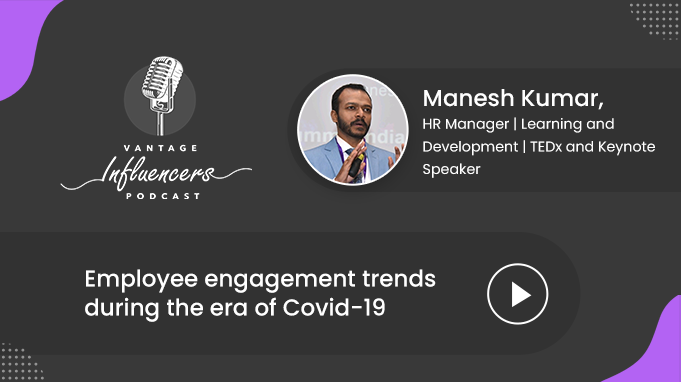
Manesh Kumar moved into HR after starting out as an engineer, and that path shaped how he talks about people management: practical, outcome-focused, and skeptical of easy narratives. Now HR Manager for the Asia Pacific region at EFI, after earlier stints at ABB and Nvidia, he walks through how his team rebuilt hiring, onboarding, and learning and development around a fully virtual model during the pandemic, while trying to keep the same human touches, coaching conversations, informal check-ins, and a global engagement committee running one virtual event a month, that used to happen in person.
His sharpest point pushes back on the idea that COVID-19 has been "the best thing" for employee engagement. He argues that framing is premature given the real job losses and burnout it's also caused, and offers a more useful lens instead, drawn from his TEDx talk "Limitless Employee": the difference between a limit, an external boundary like a job description or a crisis, and a limitation, the internal assumptions people build on top of it. Treat the pandemic as the former, he says, and employees can keep growing instead of shrinking to fit the moment.
Episode Highlights
- EFI formed a global engagement committee with representatives from every region the company operates in, running one virtual event a month, including a company-wide trivia quiz, to keep remote employees connected.
- Team meetings now deliberately set aside the agenda for games and casual catch-ups, a small ritual Manesh credits with keeping morale up through the pandemic.
- Manesh pushes back on the idea that COVID-19 is "the best thing" for employee engagement, pointing to job losses and prolonged remote-work fatigue as real, ongoing costs.
- EFI is taking its annual users' conference fully virtual for the first time, redesigning it around individual sessions instead of large in-person gatherings.
- His TEDx talk "Limitless Employee" draws a line between a limit, an external boundary like a job description, and a limitation, the internal assumptions people build around it.
- He argues managers need as much support as their teams do during a crisis, since they're absorbing the same uncertainty while also being expected to keep others motivated.
About the Guest
Manesh Kumar, HR Manager, EFI
Manesh Kumar is a specialist in Human Resources and Learning & Development, currently leading HR for the Asia Pacific region at EFI after earlier roles at ABB and Nvidia. His key focus areas include HR management, compensation and benefits, employee communications, employee relations, leadership and management development, and training effectiveness. He is a two-time Toastmasters champion, a TEDx and keynote speaker, and an experienced storyteller with a background in TV hosting and cricket commentary at ESPN-Star Sports, and has also been featured in The Times of India.
Connect with Manesh on LinkedIn
Host
Susmita Sarma, Vantage Influencers Podcast Host
What You Will Learn
- How EFI built a company-wide virtual engagement committee to replace in-person events during lockdown.
- Ways to keep team culture alive through informal rituals like trivia quizzes and unstructured meeting time.
- Why declaring COVID-19 "the best thing" for engagement oversimplifies a much messier reality.
- How organizations can redesign large-scale events, like annual conferences, for a fully virtual format.
- The distinction between a "limit" and a "limitation," and how it applies to working through a crisis.
- Why managers need direct support, not just directives, when leading teams through uncertainty.
Key Topics & Timestamps
| Timestamp | Topic |
|---|---|
| 02:50 | Focus areas and how EFI's HR priorities shifted before and after COVID-19 |
| 04:40 | Creative engagement initiatives EFI introduced during the pandemic |
| 06:30 | Challenges of running engagement virtually and how EFI addressed them |
| 08:50 | Supporting managers and leaders under pandemic pressure |
| 09:52 | Sustaining employee engagement in the new world of work |
| 11:35 | Whether COVID-19 has really been "the best thing" for employee engagement |
| 13:22 | The "Limitless Employee" TEDx talk and the limit vs. limitation concept |
| 15:13 | Book and leader recommendations |
| 16:16 | How to connect with Manesh |
Full Transcript
Click to read the full episode transcript
Welcome to the Vantage HR Influencers Podcast. This podcast is sponsored by Vantage Circle, the leading employee benefits and engagement platform.
This global pandemic has prompted corporations to make dramatic changes in the workplace, resulting in total disruption to the employee experience or employee engagement. But despite COVID-19's negative effects, it is likely that we will all agree on one thing: HR managers, or organizations as a whole, have learned a lot. Some are even saying that COVID-19 made the best thing that ever happened to employee engagement.
Welcome to another episode of the Vantage HR Influencers Podcast. In today's episode, we'll talk about employee engagement trends during the era of COVID-19. For the same, we have with us today guest speaker Mr. Manesh Kumar, an HR, resources, and learning and development professional, TEDx and keynote speaker. He is currently the HR Manager at EFI.
Susmita Sarma: Welcome to the show, Manesh.
Manesh Kumar: Thank you very much, Susmita. Glad to be here.
Susmita Sarma: So before we start, please let us know a little bit more about your journey in the corporate world.
Manesh Kumar: Well, I started my corporate journey as an engineer actually, because in the traditional family, there were only two career options: you could either be an engineer or a doctor. I knew I wasn't cut out for medicine, so by default engineering became the choice, and that's how it started. I did my B.Tech in electronics and communication engineering, and I worked for a year as a software engineer as well before I realized that working in software wasn't quite utilizing my full potential in some way. That's when I decided to make the switch to HR full time via an MBA in HR, and I would say it's been a very good career choice for me. It's been a very enriching journey. I've had the opportunity to work with very different organizations, each one a world leader in their domain but very different in culture, the way they operate, and of course the role that HR plays in the company.
Throughout this journey, the HR function itself has also been evolving over the years. I started my career in HR with ABB, an engineering giant with a 125-plus year history. I got to work in one of ABB India's biggest factories in Gujarat before I moved to the corporate office in Bangalore, and then I worked with Nvidia, a world leader in AI and engineering technologies. Very exciting company to have been part of. I was HR partner to the software engineering team there in Bangalore, and now I'm working with EFI, a technology leader in the field of digital and industrial printing and imaging for over 30 years. Part of a great team, we have a very agile culture, and my role gives me exposure to APAC, which has been exciting and challenging at the same time. So overall, I would say a very satisfying journey, and definitely a good choice to take that turn towards HR from engineering.
Susmita Sarma: So at EFI you lead and manage the HR portfolio for organizations in the Asia Pacific region, and your focus areas, as I could see on LinkedIn, are leadership development, employee engagement, change management, and manager essentials, to name a few. Most of these are tremendously important for the ultimate employee experience, especially during a crisis. So what are some of the things that you had in place in these areas before COVID-19, and what significant changes have you been making since the pandemic?
Manesh Kumar: So the focus areas you mentioned are addressed through a combination of my role as an HR partner as well as the L&D interventions that we do, and as you rightly said, all these aspects are very important at any point in time, but even more so in the current environment. As a company, we've always been very focused on enabling both our managers and employees, so we've always had a number of training initiatives, both in-person based and e-learning based, which covered content around these areas. In addition to this, there are of course regular connects at the individual and team level, which are opportunities to coach and mentor.
Significant changes since the pandemic: of course, like most companies have had to do, we too had to revamp all our HR processes and engagements to be able to go virtual. So whether it's our hiring and onboarding or learning and development initiatives, all of them had to go virtual. At the same time, we wanted to ensure that we still got the best outcome from each of these. We've been very conscious about it, and we've also been very conscious that in all our efforts, whether it's leadership communication to all employees or these smaller connects and interventions I spoke about, we keep sending out a message that we're all in this together, and that we can lean on each other for support whenever we need to.
Susmita Sarma: So are there creative things that you have done to keep the dedication going through these times?
Manesh Kumar: Well, one of the things we've tried to do is bring in the element of fun to work. It was always there, but obviously it was managed differently, in a more in-person manner. Now we're being much more mindful of the need to reintroduce or keep going with the element of fun at work, because it helps break what can feel like the monotony of remote work in the current situation.
One major initiative we've taken at EFI is that we formed a global engagement committee, which has representatives from various regions, in fact every region that EFI has a presence in, and this committee organizes one virtual event every month so that all employees can participate. We recently had a "fastest finger first" trivia quiz kind of event, which was very engaging and had very good participation. That's one very creative initiative that's going on.
Plus, in our Bangalore office, we always had dedicated internal teams that organized cultural, sports, or technical fun events. Those were of course in person at the time, but the teams are actively exploring how to move these to a virtual mode so that employees remotely can participate in them. I would say the third thing is that in our team meetings, we've made it a point to, every once in a while, put aside our set agenda and just lighten ourselves up with games or activities, something to keep the energy buzzing, reminisce about times at the office, and build on the connections we share. I would say these things have really helped keep that dedication going through these very tough times.
Susmita Sarma: Yeah, so most people are saying that doing all these things virtually is actually a big challenge. I'm sure you must have also faced some of it, so what are the challenges that you faced, and how did you overcome them?
Manesh Kumar: Yeah, so in general, these have been extremely challenging times for all of us, and we're no exception. We've also obviously had to come to terms with the suddenness of the lockdowns initially, and then of course the continued environment we're in, as the economy tries to recover globally.
I would say even before the engagement piece, what has become paramount for us is of course the safety and well-being of our employees, the communities they live in, and our customers and partners. Our internal occupational health and safety teams and customer-facing teams have worked extremely hard to ensure the right measures, being sensitive to the COVID situation in each country.
Another challenge, pertaining to what you asked, is how do you keep the relationships and engagements going, given the absence or severe curtailment of in-person interaction. One thing we've been doing is running webinars and an online training series for our industry professionals in print and packaging. These sessions are taken by the company's industry experts, where the company's products and solutions are showcased and attendees are educated on how to create efficiencies, how to increase revenues, and how to run a more cost-effective business. We've received a lot of good, positive feedback for these sessions. We'll also be taking our annual users' conference virtual for the first time next year, so participants will get the same access to top-level executives, there'll be networking opportunities, in-depth best-practice sharing and training sessions, and of course, since it's virtual, it will be more focused on individual kinds of sessions rather than in-person ones.
I've already mentioned the initiatives around engagement, but even our L&D efforts are really focusing on how to make them more interactive in a virtual format, and also talking a lot about the e-learning avenues available so that our employees can utilize all these opportunities to upskill themselves.
Susmita Sarma: Right, so while doing all these things, managers and leaders are the ones who face most of the challenges. So how can we engage managers and leaders, as the pandemic is imposing a significant burden on them?
Manesh Kumar: Yeah, I think that's right, the pandemic has posed a particularly significant challenge for leadership and management teams of companies. I think the first thing we must all remember is that our leaders and managers are human beings too, so they have the unenviable task of trying to make decisions and navigate business successfully through these uncharted waters, while at the same time ensuring that teams remain focused and motivated. It's extremely daunting and demanding, even for them, so I think we have to do our best to support them in their efforts by ensuring there is constant two-way feedback and communication, and doing all we can to help them build an environment that enables success and growth at all levels. That's what they're really trying to do, and I think it's imperative that we support them in their efforts.
Susmita Sarma: Right, so how can employee engagement efforts be maintained in this new world of work?
Manesh Kumar: Yeah, that's a good question, I think it's a wonderful question. Even if we return to office anytime soon, these efforts will be different.
Susmita Sarma: True, true.
Manesh Kumar: Yeah. I think, like I was saying, it's a work in progress, and I think in many ways we are rising to the challenge, or have risen to the challenge, but for quite some time we're going to have to keep making the internal adjustments we've put in place now, some of which I've already mentioned: the adjustments to our thought process, to the design of our programs, and our work practices. I think we'll have to keep going with some of those, but for engagement efforts to be successful, ultimately we as employees need to play a central role in this. We have to take utmost care of our safety and well-being, and of our loved ones, first of all, and use this time to make efforts to communicate more with our managers, colleagues, and people we trust. It's very important that we don't end up mentally or emotionally painting ourselves into a corner, or feeling like an island; it's very easy for that to happen, so we should make sure we don't. Use this time to upskill yourself, and participate and give feedback when it comes to company or team initiatives around engagement, even lead and drive some of those initiatives.
So I think we as employees owe it to ourselves and to our organizations to be engaged at work, and we must do whatever it takes to get there. And of course, as organizations, we have to keep tweaking our engagement efforts, the changes we've made so far, and seeing whether they're relevant in the current context or not.
Susmita Sarma: During the pandemic, companies are protecting workers, as you already said, with an increased focus on personal productivity, well-being, and personal resilience. Huge growth in learning, and working from home is working great for most of us. So it's said that COVID-19 may be the best thing that ever happened to employee engagement. What would be your bottom line on this crisis as a lesson learned for businesses?
Manesh Kumar: Well, I suppose it can sound a little premature to conclude that COVID-19 is the best thing to ever happen for employee engagement. We do see so many reports of job loss, of course personal losses as well, and also reports of employees struggling to cope with the suddenness of working from home for long periods of time. While there are many segments of employees who are doing well, this is also true, so what the after-effects of all this are on the individual and collective psyche, we are still yet to fully see.
I would say that, for sure, this has been one of the most significant things to have happened, at least in our time. I think it has certainly made us question all ways of working or doing business like nothing else has; it has made us introspect and perhaps even shown us the art of the possible. Some of the things being done today would have been unthinkable even at the start of the year, so yes, our hand got forced, but here we are, getting used to the new normal. I would say the pandemic situation has made us adapt more, be more innovative. We keep talking about things like learning to expect the unexpected and respond rather than react, so I would say it's probably a real, solid test for all those principles we were talking about, and a test to see how much we're really able to practice them.
Susmita Sarma: So your TEDx talk is titled "Limitless Employee." Can you tell our audience what it is about, and can an employee actually be limitless in the current pandemic situation?
Manesh Kumar: So my TEDx talk was about how there are a few things that I thought we as employees can do to be the very best as professionals, and why it's important, given how much of our time and life we spend at work. I think it's even more important now, with the current pandemic, and the way our work life and personal life have gotten so completely intertwined.
One of the things I spoke about in that talk was the difference between limit and limitation, and how realizing this difference is very important. A limit is a boundary; it's something that gives scope or context to work or the work environment. It's usually an external factor, like a job description, a work process, or the work culture that's there, and so on. But it doesn't have to become a limitation. A limitation is when, because of those limits, we make assumptions, or we close and box our thinking, or we limit our creativity. So that's more of an internal thing, a limitation. It's about realizing the difference, and once we realize that, we can actually become a much better professional.
So even now, in fact even more so, if we can realize that the current pandemic situation is a limit, a serious limit, a major one no doubt, but a limit, it's the context that we are in. We should not try to make it a limitation as to how we express ourselves as employees. If we can do that, we can be what I call limitless employees. So I think it's even more relevant in the current situation.
Susmita Sarma: Right, so any HR business book or any HR leader that you follow?
Manesh Kumar: Well, I think there's a lot of very good content out there today, probably much more accessible today than ever before, to all of us. I often find myself saying this, but one of the good things that's probably come out of this pandemic is the way conferences have opened up to the public in the virtual format. Many of these conferences would have been limited-audience or closed-door events, but now they've just opened up to everyone. So I think, in addition to that, there are also the blogs and so much e-learning content, there's plenty for all of us to benefit from. I find myself relating to leaders or their thoughts depending on context, so I don't think it would be fair for me to make an absolute recommendation. I would encourage the audience to explore and find what works best for themselves, given their situation and the aspirations and personal choices they may have. So follow the book or the leader that works for you; it doesn't only have to be in HR, by the way, it can be in any sphere. It depends on each of our interests.
Susmita Sarma: Yeah, absolutely. So how can listeners reach out to you?
Manesh Kumar: The best way is on LinkedIn. You can look me up on LinkedIn, message me, or connect with me, and that's how we can connect.
Susmita Sarma: Okay, so that was a really insightful conversation, Manesh. Thanks for your time, and thanks a lot for joining me.
Manesh Kumar: Thank you once again for having me. It's a pleasure.
Thanks for listening to the Vantage HR Influencers Podcast. Do subscribe to the Vantage HR Influencers Podcast on Apple Podcasts and Spotify for new episodes.
FAQ
What changes did EFI make to employee engagement during the pandemic?
EFI shifted hiring, onboarding, and learning and development programs to fully virtual formats while trying to preserve the outcomes managers and employees were used to in person. The company also formed a global engagement committee with representatives from every region, running one virtual event a month, and encouraged team leads to build informal connection time into regular meetings.
Is COVID-19 really "the best thing" that happened to employee engagement?
Manesh Kumar disagrees with framing it that simply. He points to real job losses, personal hardship, and employees struggling with the sudden, prolonged shift to working from home as evidence the picture is far more mixed than the "best thing" narrative suggests, even as some employees and teams have adapted well.
What is the difference between a "limit" and a "limitation," from his TEDx talk?
A limit is an external boundary, like a job description, a work process, or the pandemic itself, that gives context to how work happens. A limitation is internal: the assumptions and boxed-in thinking people layer on top of that limit. His argument is that professionals can operate as "limitless employees" by treating the pandemic as a limit to work within rather than a limitation on how they show up.
How can organizations better support managers during a crisis?
Manesh Kumar stresses that managers are absorbing the same uncertainty as everyone else while also being expected to keep their teams focused and motivated. He says the priority should be constant two-way feedback and communication, plus deliberate effort to help managers build environments where their teams can still succeed and grow.
Related Reading
Also listen on