When To Deliberate The Re-evaluation Of Workplace Benefits?
Episode Overview
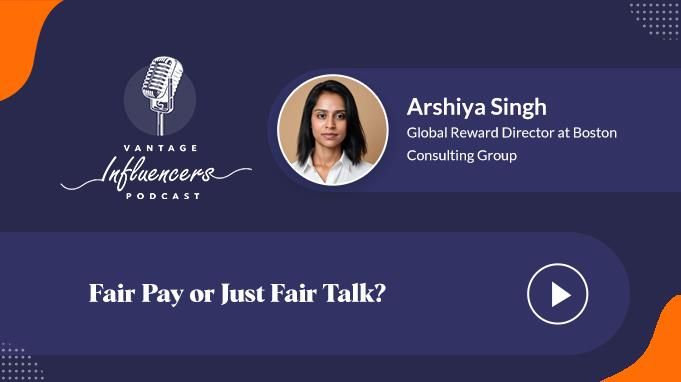
In this episode of the Vantage Influencers Podcast, Bob makes the case that most companies are optimizing the wrong benefit. Health insurance, he argues, has become such a baseline expectation that spending more on it rarely moves engagement or retention. The real opportunity lies in personalizing the rest of the benefits budget so it reflects the different needs of employees at different life stages, from caregiving and student loans to pet insurance and mental health support.
Bob also unpacks two under the radar signals that should trigger a benefits review: the shortening tenure of the average employee and the generational handoff happening inside most workforces right now. He explains why communicating benefits early and often matters as much as designing them well, and why decisions about what to offer should be driven by culture and employee needs first, with tax treatment as a secondary consideration rather than the starting point.
Episode Highlights
- Health insurance is table stakes, not a differentiator, so extra spending there rarely lifts morale.
- Lifestyle spending accounts let employees direct part of the benefits budget toward what matters to them personally, from commuting to caregiving to pet insurance.
- Two big signals point to a benefits review: employees now change jobs roughly every two and a half years, and workplaces are mid way through a generational handoff.
- Benefits only work if they are marketed consistently; telling employees once a year is not enough to make a program stick.
- Tax treatment should guide the details of a benefits plan, not the decision of whether to offer it in the first place.
- Companies like June and Forma show what personalized, portable benefits look like in practice, with real case studies to learn from.
About the Guest
Bob Gaydos, Founder and CEO, Pendella
Bob Gaydos is the Founder and CEO of Pendella, where he leads a team of innovators in the insurance industry, automating the underwriting process through AI and big data. Over the last 10 years, Bob has founded, invested in, advised, and operated innovative companies in the benefits and insurance industry, such as Maxwell Health, an online benefits administration platform acquired by Sun Life in 2018; Connected Benefits, an online insurance agency acquired by GoHealth in 2016; Limelight Health, a group underwriting platform acquired by Fineos in 2020; GoCo, an online platform for HR, benefits, and payroll; and Ideon (formerly Vericred), an innovative data services platform powering digital quote-to-card experiences in health insurance and benefits.
Host
Susmita Sarma, Vantage Influencers Podcast Host
What You Will Learn
- Why health insurance is table stakes and not a lever for boosting employee morale
- How lifestyle spending accounts let employees personalize their own benefits
- The two clearest signals that it's time to re-evaluate a benefits package
- Why benefits need to be marketed and communicated repeatedly, not just once a year
- How to treat tax treatment as a secondary factor, not the starting point, in benefits design
- Real world examples of companies offering flexible, portable benefits
Key Topics & Timestamps
| Timestamp | Topic |
|---|---|
| 01:00 | Bob's background and the founding story behind Pendella |
| 03:00 | How workplace benefits shape employee well-being and motivation |
| 05:12 | Which benefits build a genuinely positive workplace culture |
| 07:40 | Signs it's time to re-evaluate a benefits package |
| 10:48 | Limitations holding back US employee benefits today |
| 13:52 | Real world examples of successful benefits optimization |
Full Transcript
Click to read the full episode transcript
Welcome to the Vantage HR Influencers Podcast. This podcast is sponsored by Vantage Circle, the simple and AI powered rewards and recognition platform for employee engagement.
In today's job market, ensuring your team's satisfaction goes beyond just salary. Join us as we discuss when and how to reassess your organization's benefit package to boost team morale, retain top talent, and foster a productive and engaged workforce.
Susmita Sarma: Hello, listeners. I'm your host, Susmita Sarma, and welcome to the Vantage Influencers Podcast. For this conversation, I have with me Bob Gaydos, the CEO and founder of Pendella. Welcome to the show, Bob.
Bob Gaydos: Well, thank you for having me. Excited to be here.
Susmita Sarma: Yes, thank you for joining us today in this episode, Bob. So before we dig into that topic today, would you like to tell us about yourself and your corporate journey? Also, I'd like to know about Pendella.
Bob Gaydos: Well, a little bit about myself. I'm a serial entrepreneur. I've been in the insurance technology space for about 30 years. I've done companies that were insurance sales, insurance administration, or insurance underwriting. I've really just been an entrepreneur the whole time, either as a co-founder, founder, or investor in startups. I really looked at the insurance industry and said there are certain things that are inevitable, and I wanted to play a role in making those inevitable things become a reality.
Pendella was started five years ago, really based on the inevitability that life insurance in particular, but also disability insurance or accident and critical illness carriers, would use big data and AI to personalize, not only automate the underwriting, that's the obvious one, but personalize the individual's journey. And that would actually allow them to bring those individual products into the employer marketplace, which is kind of back to the future, because most people don't realize that if you go back to before the 1990s, most of the products sold to employees in the lunchroom were actually individual products, not group insurance products. That really stopped because the underwriting got too difficult. But big data and AI make that instant, automated, and personalized, and can bring it back.
So that's a little bit about myself, the journey I've been on, and what we're doing today at Pendella.
Susmita Sarma: Yes, wonderful work at Pendella, I must say, Bob. And thank you for sharing your insightful journey with us. Your experiences and accomplishments are truly inspiring. So now let's bridge the gap and dive into our topic today, where we can explore how your corporate journey has influenced your perspective on workplace benefits and morale, and share all the insights you have on this today.
So as we begin, let's first explore the fascinating relationship between workplace benefits and how they can significantly impact employees' overall well-being and motivation.
Bob Gaydos: Well, I'd say the biggest message I'd give to anybody in the employer benefits market is that there's been way too much focus on health insurance. You're not going to win over the employee and increase their morale with health insurance, that's just table stakes. Most of the time when you get into an employer, they're overly focused on that one product, that one benefit.
What's happening now is you can personalize these benefits. So I really think it's time for employers to realize: how can I make this more personal? I've got five different generations in my workforce, how can I adapt to the fact that they're going to move from job to job? How can I look at the money I'm spending differently and try to create a benefit that's meaningful to that individual employee, allowing them to personalize the use of the employer's money?
At the end of the day, what is the employer doing? They're subsidizing something. Get out of the box of health insurance and figure out how you can subsidize something that's a more personalized benefit for them.
The other message I'd give to any employer is: whatever you decide to do, get out there and talk about it. Don't just talk about it once a year. There's a rule that until you tell somebody something seven times, seven different ways, they're not going to retain it. So promote whatever you're doing often, through multiple mediums. Really look at it as a marketing job. If I want employees to feel good about the benefits I'm spending money on and have those benefits be meaningful to them, I need to market and message these benefits to them, and make sure they know which ones are important to them and are participating in those, not just once a year or once when I hire them.
Susmita Sarma: Let's dive deeper into the specific benefits that can create a positive work environment and have a direct impact on boosting morale. Could you share some insights on which specific workplace benefits are most effective in fostering a positive workplace culture and morale?
Bob Gaydos: Well, again, let me repeat a bit of what I touched on. This isn't an expense to the employer, it should be an investment. So I'd say to any employer: what's your budget? A lot of times it's like a deer in headlights, they've never thought about it like a budget. It's about deciding what amount of money you're willing to invest in your employees. Say it's $10,000, okay, great, let's take a portion of that money and let them do something personal with it.
I like what I see out there with new companies like June and Forma, which are creating lifestyle spending accounts, and really saying to the employer: let employees spend the money the way they want. Maybe they want to spend some of it on caregiving. Maybe they need to spend it on commuting. Maybe they want to pay down their student loans. Maybe they want more than ordinary wellness, they want mental health support. Maybe they have pets and want to apply that money to pet insurance.
Maybe these benefits you've been providing as group products, which aren't portable, should have been individual instead, letting employees buy individual life, dental, vision, or disability insurance, whatever individual products they already have, so they can take those products with them and they're buying the benefit that's meaningful to them. They have kids or they don't, they have elder care needs or they don't, they have a spouse or they don't, they have pets or they don't. Let them get portable, personalized, individual benefits that are meaningful to them.
And fine, you've got to provide health insurance, I get that, that's table stakes, like I said. But you have the opportunity to let employees take that money, with the way debit cards work and lifestyle spending accounts, to subsidize a benefit that's meaningful to them, their situation, and their family.
Susmita Sarma: So indeed, finding the right balance between cost effectiveness and meaningful offerings can be a challenging task for companies, isn't it, Bob? In the ever evolving landscape of employee engagement and team morale, HR experts are crucial in ensuring that workplace benefits are effective. Could you shed some light on the key signs or indicators that suggest it's time for HR to evaluate and potentially revise workplace benefits to positively impact employee morale?
Bob Gaydos: Well, there are two big things every employer needs to realize. One is obvious: people are changing jobs every two and a half years, which means they're going to have about 20 employers in their lifetime. Now, how can you turn that into a good thing? Don't fight it. How can you make that work for you? The fact that they're not going to work at one place for 30 years, they're not working toward a pension. It's a much more personalized experience now, and you have to adapt to that.
The thing that's less obvious is generational, because it only happens about once every 20 years: you have a generation leaving the workforce while a new generation is coming in. Those two generations can be three or four generations apart, which means their behaviors, needs, and skill sets are very different. Right now you've got the boomers leaving while Gen Z is coming in the door. That's an important thing to think about, because the people leaving have proven leadership skills, proven experience, they've been in the market for 30 or 40 years, maybe they've been at your company for 10 or 20 years, they have institutional knowledge and skill sets around your business, and probably leadership skills too. Coming in the door are brand new people who have none of that.
So what do you do with that? Do you create leadership training? Do you create interaction between the generation leaving and the generation coming in, around leadership and around the skill sets specific to your business, because people don't come out of college trained on your business, you have to take on that responsibility.
If we go back to the idea of letting employees do what they want with some of their benefits, it plays into both of those things. If you realize they're going to move around and won't be with you for 10 years, and you're training them in a skill set that lets them contribute and feel appreciated, while also letting them spend some of the benefit money on things meaningful to them, maybe you can get them to stay a little longer, and they can contribute to your company a little longer. Those are the two obvious signs to me: people are going to have 20 jobs in their career, and there's a generational shift going on.
Susmita Sarma: As we explore the landscape of employee benefits in the United States, I'm curious to know if there are any specific challenges or limitations that impact the effectiveness of these benefits in boosting morale. We've talked about factors like personalization complexity, cost, communication, and alignment with the changing needs and expectations of the modern workforce. All of this can definitely impact the efficacy of employee benefits. Could you share your insights on any potential limitations in the current employee benefits offered in the US that could impact their effectiveness in enhancing morale?
Bob Gaydos: Well, there are two obvious limitations: tax laws, and the fact that employees are responsible for a significant part of health insurance costs, which is an uncontrollable situation.
One thing I'd say to employers is that too often their planning is driven by tax laws. That's not really what they should be doing. They should be planning what works for their company and their culture, and treating tax consequences as a secondary issue, not the primary one. For example, if it was important for you to make funds available for commuting but you didn't know how to do it in a tax advantaged way, who cares, just do it. The tax consequences aren't significant enough to stop you from doing it. Employers get locked into asking, is this tax deductible, is there a tax vehicle like an HSA, HRA, or FSA, is it tax free to the employee? That's important, but don't start there. Start by looking at what's important to your business and your culture, what you want to sponsor, because that will drive the kind of culture and productivity you want. Whether or not you can make it tax deductible or tax free is secondary.
The other thing I'd say is that what's going on in health insurance, no one really knows, it's just a fact of life that a huge amount of your business's spend gets absorbed by health insurance. Don't make the mistake I see a lot, which is paying for the increase in health insurance costs by taking away other benefits. Don't do that, it's such a negative move. You've got to maintain the other benefits, and even find ways to increase them. Invest in them, stay in them, they have a phenomenal return and aren't subject to the wild increases that health insurance is, they're subject to exactly the expense you want them to be. But don't pull back on them, because that's a very negative thing to recover from.
Susmita Sarma: Brilliant explanation. I'm also very interested in learning about some real world examples of organizations that have successfully assessed and optimized their benefits offerings to improve morale. It would be really valuable to hear about specific organizations that have taken proactive measures to evaluate, refine, and enhance their benefits program, and the lessons other organizations can take from their experience.
Bob Gaydos: Well, I'm actually going to promote the two companies I mentioned earlier again, and I have nothing to do with them, I just love what they're doing: companies called June and Forma. These companies are facilitating well known brand companies to do everything we've talked about inside these lifestyle benefit accounts. You can go to their websites and read their case studies and white papers on this. They're really out in the forefront of this idea of giving employees access to funds that the employer has and letting them do what they want with it. They're doing it through a combination of debit cards and reimbursements, literally hooking up a card so employees can charge and pull the money right from the employer to pay for commuting or wellness. So for real world examples, go look at June and Forma, it's joinforma.com and June.com. I think what they're doing is a great example, and they've got the case studies of how to do it.
Susmita Sarma: Brilliant. There's so much to learn from you, Bob. I'm sure that after listening to this podcast, our audience will want to connect with you. Could you let us know how listeners can reach out to you?
Bob Gaydos: Of course. Our website is www.pendella.com, that's P-E-N-D-E-L-L-A. Feel free to reach out to me at bob@pendella.com. I'd love to talk to anybody about these topics. I think we're at an inflection point where employers are realizing there's an opportunity in front of them to personalize benefits, give people access to those funds, and really move away from the health insurance mentality.
Susmita Sarma: Thank you so much, Bob, for sharing your valuable insights today. Your expertise has delivered a wealth of knowledge that our listeners will truly appreciate and put into action. Thank you once again for being an esteemed guest on the podcast today.
Bob Gaydos: Thank you very much for having me.
Thanks for listening to the Vantage HR Influencers Podcast. Please subscribe to the Vantage HR Influencers Podcast on Apple Podcasts, Spotify, and our YouTube channel for new episodes. Thank you.
FAQ
Why shouldn't companies focus their benefits budget mainly on health insurance?
Because health insurance has become table stakes. Employees expect it, so extra spending there rarely moves the needle on morale or retention. Bob Gaydos argues the bigger opportunity is personalizing the rest of the benefits budget so it actually reflects what different employees value.
What are lifestyle spending accounts?
Lifestyle spending accounts let employers set aside a benefits budget and give employees the flexibility to direct it toward what's meaningful to them, whether that's caregiving, commuting, student loans, wellness, mental health support, or even pet insurance.
What signals suggest it's time to re-evaluate a benefits package?
Two signals stand out: employees now change jobs roughly every two and a half years on average, and many workplaces are in the middle of a generational handoff as one generation exits and another enters, each with very different needs and expectations.
How often should companies communicate their benefits to employees?
More than once a year. Bob Gaydos argues that benefits need to be marketed continuously and through multiple channels, since a single annual mention isn't enough for employees to understand or use what's being offered.
Related Reading
Also listen on