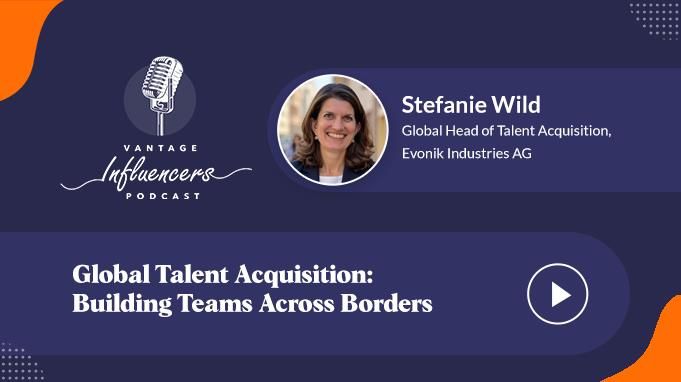
Global Talent Acquisition: Building Teams Across Borders
Episode Overview
Stefanie Wild argues that global hiring breaks down the moment a company treats it as "one headquarters team serving the whole world." In this conversation, she walks through the operating model questions that come first: whether talent acquisition sits in-house or with vendors, whether it runs regionally or globally, and how a single global leadership structure can still flex to very different regional needs. She also makes the case for building global hiring processes and policies with regional teams in the room from day one, rather than writing them at headquarters and pushing them out, since local teams best understand the compliance requirements and cultural nuances that make or break adoption.
The discussion moves through forecasting talent needs across countries, deciding which parts of the hiring stack should stay global (a single ATS, a single assessment vendor) versus which should flex locally (background checks, headhunters), and where AI genuinely helps versus where it still falls short. Stefanie is candid that AI tools work best for high-volume, similar-profile hiring like call center or sales roles, but remain hard to deploy for niche positions, and that candidates still want a human conversation before accepting an offer. She closes with practical advice on remote and hybrid work trends, navigating labor law and compliance differences (including her own experience with UAE nationalization requirements), and how to build genuine connection across time zones without excluding anyone from the conversation.
Episode Highlights
- Scaling talent acquisition globally starts with an operating model decision: in-house versus outsourced, regional versus global, and how much flexibility to build in.
- Building global processes works best when regional teams help write the policies, not when headquarters imposes them afterward.
- Forecasting hiring needs across countries lets a global TA team shift capacity between regions when workload is uneven.
- A single global vendor rarely delivers consistent quality everywhere, so many companies keep core tools (ATS, assessments) global while leaving background checks and headhunters local.
- AI-driven sourcing and screening tools work well for high-volume, similar-profile roles but struggle with niche positions, and most candidates still want a personal conversation before accepting an offer.
- Cross-border compliance, from labor law to nationalization quotas, needs to be understood before recruiting starts, not discovered mid-process.
About the Guest
Stefanie Wild, Global Head of Talent Acquisition at Evonik Industries AG. Stefanie is an initiative-taking and results-driven HR executive with over 15 years of experience across human resources, sales, and procurement, including more than 5 years in senior leadership roles. At Evonik, a global specialty chemicals company with more than 33,000 employees, she leads talent acquisition strategy across more than 100 countries, manages a high-performing global team, and partners closely with stakeholders to roll out new HR technologies. Earlier in her career she worked at a headhunting firm specializing in executive search, and she has held talent management roles at other major companies where she developed strategies to identify and grow high-potential employees. She is passionate about mentoring the next generation of HR professionals and about the ongoing evolution of the HR field.
Connect with Stefanie on LinkedIn
Host
Sanjeevani Saikia, Vantage Influencers Podcast Host
What You Will Learn
- How to think through the core operating model decisions before scaling talent acquisition into new countries.
- Why involving regional teams early prevents global policies from being ignored or resisted later.
- How a global TA team can shift hiring capacity between regions to handle uneven workloads.
- Which parts of the recruiting tech stack are worth standardizing globally, and which should stay local.
- Where AI genuinely helps in recruiting today, and where it still needs a human alongside it.
- How to navigate international labor law and compliance risks without slowing down the candidate experience.
- Practical ways to build trust and shared purpose across teams spread over multiple time zones.
Key Topics & Timestamps
| Topic | Timestamp |
|---|---|
| Stefanie's career path from economics and procurement into global HR leadership | 01:56 |
| The biggest operating model challenges in scaling talent acquisition across borders | 03:20 |
| Building global processes with regional input instead of top-down mandates | 04:29 |
| Forecasting and flexing hiring capacity across countries | 05:28 |
| Choosing which recruiting vendors and tools to standardize globally versus keep local | 06:18 |
| Balancing local cultural needs with a consistent global employer brand | 08:31 |
| Where AI and technology genuinely help in global talent acquisition, and where they don't | 10:05 |
| Remote work's impact on global hiring strategies and the shift toward hybrid | 13:29 |
| Navigating labor law, visas, and compliance in international hiring | 15:24 |
| Nationalization quotas and other region-specific compliance challenges | 17:39 |
| Building connection and shared purpose across distributed, multi-time-zone teams | 18:31 |
| Closing advice for leaders starting their first international hiring efforts | 20:29 |
Full Transcript
Click to read the full episode transcript
Welcome to the Vantage HR Influencers Podcast. This podcast is sponsored by Vantage Circle, the simple and AI-powered rewards and recognition platform for employee engagement.
Sanjeevani Saikia: Welcome back to the Vantage Influencers Podcast. I'm your host, Sanjeevani Saikia, and today we are diving into a topic that's reshaping the business landscape lately: global talent acquisition. As companies expand internationally, the demand for skilled professionals is intensifying. But a study by Korn Ferry predicts that by 2030, there'll be a global human talent shortage of 85 million people, potentially resulting in $8.5 trillion in unrealized annual revenues. Now, this looming talent gap underscores the critical importance of effective global hiring strategies. But again, hiring globally isn't that simple. We all know that. It comes with its own unique challenges, from navigating cultural differences and compliance laws, to building teams that collaborate seamlessly across time zones. To explore how companies can effectively attract and retain top talent worldwide, I'm thrilled to welcome Stefanie Wild, the Global Head of Talent Acquisition at Evonik Industries AG. With her extensive experience in international recruitment, Stefanie will share valuable insights on overcoming cross-border hiring challenges, and most importantly, fostering inclusive, high-performing teams. So guys, let's get started.
Hi, Stefanie, thank you so much for being here today. We are diving into an insightful topic, global talent acquisition, building teams across borders. And I'm really looking forward to hearing your thoughts and insights on this. But before we get into the discussion, could you start by sharing a little bit about your professional journey so far? It would be great for our listeners to hear how you got to where you are today.
Stefanie Wild: Absolutely. Thank you, first of all, for inviting me. I'm really happy to be here today. Yeah, so my professional career started with a study of economics. And from there, I had different roles and career in procurement, first of all, then went into more sales role. And now, since I think over 15 years, I'm really into the HR topic, worked for a head-hunting company for a short amount of time, and then started with talent acquisition in-house teams, working as a talent acquisition manager by myself, taking some further steps in HR professional roles. And today, I'm the global head of talent acquisition for Evonik, which is a specialty chemical company.
Sanjeevani Saikia: Great. Thank you so much for sharing your journey with us. It's fantastic to have you on the show. Now, with your permission, I'd like to begin today's conversation on the topic.
Stefanie Wild: Absolutely. You're welcome.
Sanjeevani Saikia: We are aware of the fact that hiring globally isn't just about posting jobs in different countries. There's a lot more to it, like dealing with different regulations, understanding new talent pools, and most importantly, managing expectations that vary from place to place. Now, you know, I think it can be pretty overwhelming, although it sounds exciting, but it can be challenging too. So, according to you, Stefanie, what are some of the biggest hurdles leaders face when scaling talent acquisition across borders? And how do you make sure everything runs smoothly?
Stefanie Wild: Yeah. So, I think when we started to develop our global TA organization, one of the first biggest questions was how will the TA operating model look like. So, global hiring doesn't simply involve having a single headquarters team handling all the requirements for the entire world. It's much more about it. So, there are different various options to consider, right? How will you build up the team? Is it in-house? Is it operating globally or regionally? Are you considering RPO solutions as well or hybrid models more and more? What we have really done is we have talent acquisition function under one roof and one global leadership, but we continuously adapt our operating models and also see what are the very specific regional needs to do so.
The second, maybe even bigger challenge sometimes was how to create a global process while also giving enough space for all the regional different requirements. You mentioned compliance, for example, already.
Sanjeevani Saikia: Yes.
Stefanie Wild: So, defining this process globally and also the global policies can be really challenging, especially when there are already different regional processes, but established in different countries. And for sure, people usually like to keep what they already have. So, there is a lot of change management necessary as well. So, what I would recommend and what we did as a global team, we have been working together. So, we involve people from all the regions to develop the processes and policies, to incorporate the best practices from all the regions, while then also being able to ensure compliance with the regional legal requirements because they are best known by the people working there. So, it's really essential from my perspective to avoid creating a process out of the headquarter and then imposing it to all regions without even considering local differences.
Sanjeevani Saikia: Yeah.
Stefanie Wild: The third challenge is forecasting and scaling the team properly. So, especially in this current also worldwide environment, most of the talent acquisition teams I know are really challenged with having a proper forecast, especially when it comes to really ensuring which candidates need to be placed in which countries. One of the huge advantages of having a global talent acquisition team is, and also those standardized processes, the ability that we can support hiring efforts also across the countries. So, for example, if there is less workload in China, but more workload in India, teams from China can pick up roles from India, support there, and the other way around. And this is really, really helpful that we have this flexibility and the knowledge also to recruit across the borders.
And the fourth big challenge we face is when we started, we thought we will have one global vendor helping us for our different needs. But we found out pretty soon that most of the vendors are not really able to deliver consistent quality and cost efficiency globally. So, what we decided is we have a global ATS tool, we have a global assessment tool vendor. But for the other areas, for example, background check, headhunters and so on, we really also allow flexibility also for the regions. And I think in conclusion, this is something really important. It's great to scale talent acquisition across borders and really have the flexibility, but you need to be able for some localizations as well.
Sanjeevani Saikia: Like you've mentioned, that work can be managed more efficiently when it's distributed across different locations. For example, if there's a heavy workload in China office, someone from India can step in to help. But when talent acquisition teams facilitate this kind of global work distribution, what specific challenges do they face according to you?
Stefanie Wild: I think it's very important that also the talent acquisition team from the country where they are located will make themselves very aware about cultural special needs or requirements from the countries they are hiring for. And that they really work closely together also with the talent acquisition manager then from their certain country to ensure that they follow the proper process. I think for the sourcing and so on, it's pretty global, we are mostly using the same tools. But even when it comes to, for example, background knowledge, about job postings or what are very special recruiting channels for the country, it's very helpful if you have people in different countries who can support each other and learn from each other as well.
Sanjeevani Saikia: Yeah. 15 years when you are hiring internationally, it's important to respect local cultures. But at the same time, you need to make sure your global vision and values stay intact. That I believe can be tough at times, you know, striking that balance. So how do organizations really pull this off, and how can they respect local cultures while staying true to what makes them unique on a global level? This can be challenging. But what's your take on that?
Stefanie Wild: Yeah, definitely. It is challenging, and not only to define it, but also really to live it in the daily operations all the time. For example, what we are doing is whenever we build global processes or work on visions and values, we already try to include as many people from different cultures and different countries as possible. So that we ensure that also what we create as a global vision is something where diverse people can identify with. So, for example, we build an employer brand that really appeals cross-culture. And by doing this, we also invited employees from very different countries to define this employee value proposition and hear from them what it stands for and what we are working towards. Also, it really helps to involve the local teams already when we're talking about recruiting strategy and promoting flexibility. But also, like I said, leaving this space for sometimes very special cultural needs in the different locations.
Sanjeevani Saikia: Stefanie, we have seen a lot of advancements in HR technology again. And I think this is a very organic question that definitely would be asked in any HR podcast for sure. That has really transformed the HR space, from AI-powered tools to advanced analytics. There are so many innovations that make it easier to find and connect with the right talent. But again, at the end of the day, it's about knowing what truly makes a difference and brings results to the table. So in your experience, what tools or strategies do you think are genuinely making an impact in global talent acquisition? And it would be great if you can share any example of how leaders are using these tools to find top talent across borders.
Stefanie Wild: Absolutely. I think in global talent acquisition, technology has become essential. I think we could do a whole podcast just talking about technology and AI, as this is really developing very, very fast. And it's sometimes even hard to catch up with all the different tools and AI solutions, and all these startups providing some great ideas. I think worldwide TA teams are really leveraging AI-driven platforms, especially for matching candidates, sourcing, and assessing candidates. But especially for companies who have more niche roles, or roles where you're not expecting a lot of applicants, it's really still hard to find good technology. So what is really helpful is when you have mass recruiting activities, for example, for call center agents or for salespeople, where you look for a pretty similar profile and you hire those profiles more often for your company. Then you can really put great matching and screening technologies behind that, or even assessment tools where you can run complete online interviews, and then the candidates get assessed automatically and ranked afterward.
So there is a lot possible. But I think what we still need to be aware of is that those tools need to be trained somehow for the specific needs of the companies. So whenever you have very different roles you're working on, it's hard to find good matches. We tried this out, for example, for trainee recruiting, where we used AI assessment tools, which is pretty exciting. But still, we try to make sure to also have the people side involved. So from a technology perspective, you could run the whole recruiting process without involving any personal conversation until there is an AI making a decision for you. This is what technology can do. But I think then you really need to know from your company what your values are and what you want to do. And also from a candidate experience perspective, what we learn from candidates is that a lot of them still prefer personal conversations and really learning about the culture of the company by talking to different people and meeting them before making their personal decision on taking the job.
Sanjeevani Saikia: Fascinating. Again, you know, there's one question that I have been literally kind of persistently asking people about, and it's something that everyone really keeps on asking in any HR podcast, and somehow we are unable to do away with it. That is remote work. Remote work has truly changed the way companies hire. So, you know, how do you see it influencing global hiring strategies now, and what trends do you think will shape its future?
Stefanie Wild: I think what helped us really a lot with remote work is that it has expanded the talent pools by opening up new markets for roles which are 100 percent remote, where you can be more flexible with locations for candidates. I think also this topic of remote work brought up a lot of great tools that make it easier to collaborate globally. And for example, things like video interviewing for first interviews of candidates, I think they will stay and they will not go away. And this is something which really helped. However, most candidates and companies, from my perspective, now prefer more hybrid models, so where employees work in the office a few days a week. Some companies are now pushing for full-time office return, which from my perspective, I think, could make it hard for them to attract and retain talent in the future. Especially imagining many young professionals, especially those who started their careers in the last five years, they never experienced the traditional five-day office week. So they just are used to having this flexibility, working from home or from other areas as well. And I personally believe the trend will continue towards hybrid models as really the preferred approach from the employee side and also from the employer side.
Sanjeevani Saikia: Again, Stefanie, international hiring is full of legal and compliance challenges, from labor laws to taxes. It's a lot to handle, and leaders have to manage it without making things too complicated for candidates. So when it comes to hiring internationally, how can leaders navigate compliance issues while keeping things efficient and candidate-friendly, most importantly?
Stefanie Wild: Yeah, I think first of all, luckily, in most global companies, they usually already have a lot of knowledge regarding local labor laws, because they have regional local HR teams, they have local legal teams, and they have global mobility teams supporting maybe with international hirings. But from my perspective, it's very important that talent acquisition teams and hiring managers need to be aware of the specific requirements in different countries really before starting the recruiting process, to avoid any surprises. So to keep things efficient and candidate-friendly, the talent acquisition team can discuss important topics like visa requirements, for example, at a very early stage in the recruiting process. Or they can even flag that there might be candidates we cannot hire, or we are not allowed to hire from certain countries, or whatever is behind that. We know it's very, very complicated sometimes. And yeah, we just need to know it, and we need to know before we start the hiring process how we want to move forward with certain issues we might face.
In countries or companies who maybe just started with international activities and don't have this internal knowledge available, I think there are different options to use external vendors, like local legal advisors, for example, or global payroll solutions. And what I'm hearing more and more from vendors is really this way of using employer of record, where you can hire the employees via another employer. So you don't need to have your own legal entity from the beginning in each and every country, but still can continue hiring candidates on a global scale.
Sanjeevani Saikia: Yeah, is there any particular legal or compliance challenge you face in the region where you are operating, anything in particular that you're trying to kind of really tackle over a period of time?
Stefanie Wild: So I live in the UAE at the moment, but I see really a challenge, for example, is nationalization. So it means as a company, you need to have a certain amount of UAE citizens working in your company, otherwise you get fined, and this is what a lot of people struggle with. Or you have countries where maybe candidates can only bring their family when they are really married, and then especially European countries, it's becoming more and more common that also couples living together, having kids and not married, but you cannot then allocate them to other countries where you have those requirements, for example.
Sanjeevani Saikia: Interesting. Now, although we know that global teams are awesome, but there can be cultural differences that can sometimes make communication and collaboration really tricky. Still, when handled right, those differences can actually make teams very stronger, I believe. So Stefanie, how can leaders create a real sense of connection and shared purpose when their teams are spread across different time zones?
Stefanie Wild: From my perspective, it's really, really crucial to create a psychologically safe environment for the teams, where everyone feels comfortable sharing their ideas and opinions. So we really try to encourage the team to share cultural perspectives and practices, learning from each other, fostering a deeper understanding of the challenges teams from other countries might face. Because I think that transparency, first of all, is really key to building a more inclusive environment. And then there are sometimes very, it looks like simple things, but I see companies who are not dealing with this properly, for example, making sure if you have meetings with the global team, really plan those at times where everyone can participate, not in the middle of the night for some of them. Or what we try to really encourage is that when we're working on new ideas and processes, we don't develop it in one country and then bring it to the other country, but we really try to develop it directly on a global scale, with input from participants and project members from different countries and cultures. And I think tools like collaboration platforms, messaging apps, video conferencing help a lot in breaking down those geographical barriers and enabling a global team to stay aligned.
Sanjeevani Saikia: Yes, incredible. Thank you so much, Stefanie, we have arrived at the end of today's episode. Thank you, first of all. Thank you so much for sharing insights. It has been a great conversation. I'm sure our listeners have picked up some really fantastic ideas from this discussion that we had. Before we wrap up, do you have any final thoughts or advice for leaders who are taking their first steps into international hiring? And for anyone who would like to connect with you or learn more about your work, what's the best way to reach out to you?
Stefanie Wild: Yeah, so first of all, whenever you have questions, I would like people to reach out to me. I'm happy to connect via LinkedIn, or you can also share my email address so people can reach out to me personally. But I feel most valuable, whenever you start something new, is to try to connect with peers, maybe from similar companies, from a similar environment, and learn from them. I think peer networking, from my experience, helps a lot, helps also to evaluate and learn from others, and take your time and not be afraid of making some mistakes. I think there are a lot of things you can try, and also redo it later if it's not working out, especially in talent acquisition. The world is changing so fast every day. I think it's really helpful to just stay curious and try what works best for you.
Sanjeevani Saikia: Yes. Stefanie, thank you so much for being here with us today. It has been incredible to have you, and we're looking forward to more such interactions with you.
Stefanie Wild: Thank you so much. Have a wonderful day.
Thanks for listening to the Vantage HR Influencers podcast. Please do subscribe to Vantage HR Influencers podcast on Apple Podcast, Spotify, and our YouTube channel for new episodes.
FAQ
What is the biggest mistake companies make when scaling talent acquisition into new countries?
According to Stefanie Wild, the biggest mistake is building a hiring process at headquarters and then imposing it on every region without factoring in local compliance and cultural differences. She recommends involving regional teams from the start so the global process incorporates best practices and stays compliant with local legal requirements.
Should a global talent acquisition team use one vendor for every country?
No. Stefanie explains that most vendors cannot deliver consistent quality and cost efficiency across every region. Her team keeps core tools like the applicant tracking system and assessment platform global, while allowing regions flexibility on background checks and local headhunters.
Where does AI actually help in global recruiting today?
AI-driven matching, sourcing, and screening tools work best for high-volume, similar-profile hiring such as call center or sales roles. For niche positions with fewer applicants, Stefanie says good technology is still hard to find, and most candidates still want a personal conversation before accepting an offer.
How can leaders build connection across global teams spread over different time zones?
Stefanie recommends creating a psychologically safe environment where team members share cultural perspectives openly, scheduling meetings at times that don't exclude anyone, and developing new processes with input from multiple countries from the outset rather than building them in one location first.
Related Reading
Also listen on