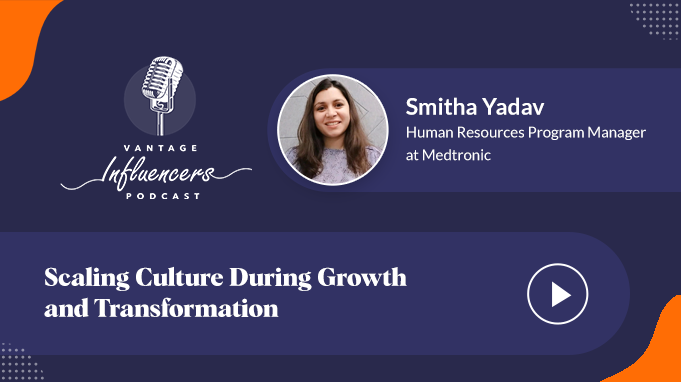
How leaders can communicate a company's culture to employees
Episode Overview
Anish Aravind argues that leaders are the glue connecting people inside an organization to the goals they are meant to serve, and that a crisis is simply the moment that role gets tested hardest. Speaking about the shift to remote work during COVID-19, he pushes back on the assumption that a physical, always-on presence is what drives engagement in a country like India. Instead, he makes the case for asynchronous work, using the company behind WordPress.com and Tumblr as a reference point for how far a distributed team can be trusted to operate on its own schedule while still delivering results.
The conversation moves through what that trust actually requires: rethinking reward systems, rethinking how manufacturing companies define productivity, and rethinking whether remote work is treated as a genuine business opportunity or a "necessary evil" forced by the pandemic. Anish's central argument is that personalization and community, not proximity, are what make recognition land, and that leaders who design for freedom rather than control will get more out of their people, not less.
Episode Highlights
- Leaders act as the connective glue between individual employees and organizational goals, especially during a crisis.
- Asynchronous work, drawn from how the company behind WordPress.com and Tumblr operates, can unlock freedom and higher contribution even in industries like manufacturing.
- Remote work integrates work, life, and family rather than simply "balancing" them.
- Personalization and community are the two forces that increase the perceived value of recognition and rewards.
- Manufacturing companies must rethink time as the default productivity metric to enable asynchronous, remote-friendly models.
- Companies that treat work from home as a genuine business opportunity, not a pandemic-driven necessity, will find it easier to sustain.
About the Guest
Anish Aravind, Co-founder & Principal Consultant at SS Consulting, Kochi, Kerala. Anish is a Human Capital Management professional with over two decades of experience delivering people-to-business results across manufacturing, FMCG, IT product, and ITES organizations, having worked with companies including Marico India and Wipro before becoming an HR entrepreneur in 2014. He now works as an HCM and Organisation Effectiveness coach to IT small and medium businesses, volunteers with SHRM India, the National Institute of Personnel Management (NIPM), and the National HRD Network of India, and serves as Honorary Secretary of NIPM's Kerala chapter. SHRM India placed him in the Expert Cohort of the India HR Influencer Report for 2019. Outside HR, he is an avid birder, a citizen science contributor from Kerala, and a member of the Kerala Cricket Association's Professional Panel of Umpires.
Connect with Anish on LinkedIn
Host
Rohit, Vantage Influencers Podcast Host
What You Will Learn
- Why leaders, not systems, are the connective force that drives engagement during a crisis.
- How asynchronous work models can be applied even in industries assumed to require physical presence, including manufacturing.
- Why remote work should be framed as integration of work, life, and family rather than "balance."
- How personalization and community increase the perceived value of employee rewards.
- What manufacturing leaders need to rethink about using time as a productivity metric.
- How technology enables pool-based hiring and hyper-personalized recognition at scale.
Key Topics & Timestamps
| Timestamp | Topic |
|---|---|
| 00:10 | Introducing Anish Aravind and his background in HR |
| 01:22 | Anish's HR journey, from a sense of responsibility to give back to two decades in the field |
| 03:23 | Driving engagement remotely, and why leaders act as the glue connecting employees to organizational goals |
| 05:21 | Upsides and downsides of remote work, asynchronous models, and the WordPress.com/Tumblr example |
| 14:13 | Rewarding employees in a crisis: personalization and community as the two levers of perceived value |
| 16:19 | Manufacturing and crisis response, repurposing operations and rethinking time-based productivity |
| 19:39 | The future of work from home, and whether it becomes a lasting opportunity or stays a temporary necessity |
| 21:27 | Technology in rewards and hiring, hyper-personalized recognition, and pool-based hiring |
| 26:30 | Quick-fire round: Anish's favorite business book, an HR leader he follows, and advice for young HR professionals |
Full Transcript
Click to read the full episode transcript
Welcome to the Vantage HR Influencers Podcast. This podcast is sponsored by Vantage Circle, the leading employee benefits and engagement platform.
Rohit: Hi, everyone. This is Rohit from Vantage HR Influencers Podcast. And today, I'm excited to have Mr. Anish Aravind, who's a co-founder and principal consultant at SS Consulting. He's from Kochi, Kerala. And he's a human capital management professional with over two decades of experience in enabling people to business results in manufacturing, FMCG, IT products, and ITES industry segments. Anish has been employed in companies like Marico India, Wipro, and many others. And he became an HR entrepreneur in 2014. And since then, Anish has been playing the role of an HCM organization effectiveness coach to IT small and medium businesses and also volunteers for SHRM India. SHRM India placed him in the expert cohort of the India HR Influencer Report for 2019, besides being an avid birder and a citizen science contributor from Kerala state. Anish is also a member of the Kerala Cricket Association's professional panel of umpires. Welcome to the show, Anish.
Anish Aravind: Thanks a lot, Rohit. My pleasure to be part of this podcast with you. Looking forward.
Rohit: Awesome. So you have a long journey. How did you get into the role of HR and what got you excited by human resources?
Anish Aravind: Thanks for the question. It's a long story. For this podcast, what I would do is, by the way, it's also a subject which I plan to write a blog about, but I haven't been able to do it yet. Watch out for it, I can say. So because it's important as context to what we follow, let me share that it was during my college days, graduation time. A combination of things led me to believe that I have a responsibility to give back to society. So in a way, society has kind of conspired to make me face success. And this feeling has to be more when actual success happens. So at that young age, maybe I was in my early 20s, 18 to 20 kind of period, I was nudged enough to believe that an HR role would make this aim easier and would also put me in a kind of decision or design role to spread this to other parts of the company, a team, or a community. So that was really exciting when it started off. And looking back over two decades, it's been a very fruitful journey. Although now I know that it's not just HR, it's a lot of other connected functions that are needed to foster this giving back. So the journey continues. The excitement is on and off.
Rohit: And you know, during the times of crisis and the COVID times, a lot of companies have been either forced or asked their employees to work from home. But how can leaders drive engagement in a remote work culture, especially in a country like India, where we would want a physical presence and the culture has not been attuned to work from home? How can leaders drive engagement in such a culture?
Anish Aravind: Something that you asked. So in these 20 years, one of the things that helped me realize is that leaders are that kind of glue, a kind of glue that connects human beings inside any organization to the various causes they are after, which can be designed as individual, team, or group goals for that set of humans. So it took me a while to connect to this. So even in this opportunity, if you're looking at it as a true leader, then every crisis is an opportunity. I tend to use this again and again, because even in the last two months, some of the mentors and people I follow have been taking this stand. So from a leadership perspective, I think this is the biggest experimental stage we've got to drive engagement, because it is the leader's role. I am a strong believer that it is the leader's role to drive engagement or connection, and not always the employee or the human being themselves, to look forward to some of those things from leaders.
Rohit: That's my current question. And what do you think are the upsides and downsides of working in a remote company, especially since you have varied experience in IT, IT services, and other industries?
Anish Aravind: Yeah, I'll give a slightly longer version. To me, the downsides can be managed. I started in manufacturing and stayed there for about the first five years, then got into IT and ITS for the last 11, 12 years, almost 15 to 16 and a half years in total. So what I've seen is that the downside can be managed or designed to be prevented. So anybody who believes the upsides are more rewarding will focus on designing for those upsides. My proposition would be for all leaders, even within manufacturing, to be able to design for that. Let me focus on the upside. In IT, or places where this is enabled, at the highest level, and this is for listeners who want to get more into this, there's a podcast called Making Sense by a gentleman named Sam Harris. He had a conversation in April with Matt. Matt is the founder of a company known for Tumblr and WordPress fame. He started off a company which is now known as WordPress.com. It powers almost 30% of the websites across the globe. They started with about five employees, and now they are 1,200 people spread all across the globe. In this podcast, he explained five different levels, all of them upsides, and I'm talking about the fifth level here. What's important is that it enables an asynchronous mode. The possibility of asynchronous work becoming activated is far better in a remote working model. Now, if you look at the manufacturing side, we've all been trained to believe asynchronous work isn't possible, apart from the assembly line concept, where one person moves to the next, which is about as asynchronous as you can get in a manufacturing situation. However, over the last 10 to 15 years, you've seen that asynchronous work can actually be done even in manufacturing. So in a remote work environment, this asynchronous concept, let me take some examples so it's understood better. WordPress is the best example. It's a high-end IT development ecosystem, not just creating websites. In fact, I've recently signed up with a client whose products are about creating plugins for WordPress. So it's enabled an entire ecosystem, almost like a platform, similar to what Facebook or Google has become. We're talking about a high-end tech company that, through this asynchronous mode, enables the best talent to contribute. And this is what I explained in the earlier question, that leaders are the ones who help connect the human to the cause. This is what Matt and his team have established, and there are very interesting conversations around this. There's actually a Microsoft session taken by somebody who joined Matt's team as a consultant. I happened to listen to that as well. So it kind of connected well. There's this person who was in Microsoft as a senior professional, then Matt took him on board as a consultant, and he became an employee later on. Then he goes back to Microsoft and explains the experience. As an example, I can take my own case. Ever since I became a consultant, I've been working almost two to three days completely from home, because once you set up with a client, you don't need to be physically present, you can take those things online with a video call. So what happens in such a situation is, we've been made to believe there is a balance we want between work and life. But what it essentially means is not balance, but integration between work, life, and family. I'm not just talking about the marriage-and-family kind of stuff, but even for bachelors or somebody who doesn't wish to get married, there's still a family connection. So I'm saying work, life, and within life, family. These three complex aspects can be much better integrated in a remote setting. And another aspect is employee freedom, I can use that word as a concept. It's maximized in such a situation. Let's say there's an employee who loves the outdoors and wants to take breaks and come back to work. That will only be possible in an asynchronous mode. If the employee is part of a team that expects them to be available at 4:30 p.m., let me take an example from a Kerala-based company whose CEO I know very closely. He was explaining to me, and after listening to this example, I decided this is a CEO I should work with, so I ended up choosing a lot of my projects around people like him. So this friend of mine was explaining some of the challenges his HR team faced. There was a group of tech folks at this company who wanted to play badminton. The park that housed this company had a badminton court, a series of about three or four courts inside an indoor stadium, and each company had to apply for time slots. This particular company got a time slot at 4:30 or 5:30 p.m. Now, these employees had clients outside India, mostly in the western side, US, Europe, Middle East, so their timings got stretched. When they came back and said, hey, at 5:30 we have to be away for an hour, the HR team said no, this can't be done, because if these people go, what about the rest of the employees, since only about 10% of people play badminton. But when it came up to the CEO, he said, what do we want here? We want these people to be free to do what they need to do, and we applied for the time, this is the only slot available. We really can't go back and say we can't do this because there are 200 other companies in the park and we got this time slot, that's great. So they built a system to accommodate this, and it was a win-win. Now, if that was possible in the office, even more is possible with the remote situation. That's what asynchronous mode enables, and contributions can be much higher. Employees, when they contribute, get more excited. So I'm a proponent of freedom. Anything that enables freedom, I will go for.
Rohit: That's interesting, because freedom also gives you freedom to express and to innovate, and it lets you give your output in a much better way. So what are your suggestions for leaders on how to reward and motivate employees in such times of crisis, since you're not facing them one on one and there could be some morale issues with employees? What are your suggestions for them to reward such employees?
Anish Aravind: Okay, so on rewards, one of the ways is that we're now in a position where science has given us a lot of research-based data on how human beings behave, and in the last 20 years, this has grown almost 100 times compared to the previous 20 years. I'll take two points from this data. Personalization is a key influencer of the success of rewards. What this means is, if you're able to personalize rewards, the impact is much greater, and reward as an influencer of motivation also goes up. So technology, at the moment, allows leaders to personalize rewards using data that employees are willingly sharing. If you connect with an employee, they'll be able to share a lot of data that helps you personalize recognition. That's the first part. The second part is what I now call the power of community, because you build communities within your organization and use that power to increase the perceived value of your recognition efforts. These two might look like extreme opposites, but they're not, and the second part is where I've seen the magic lies. When perceived value goes up, it can lead to very different levels of results.
Rohit: And you mentioned you worked in a manufacturing company before. How can manufacturing companies look at dealing with a crisis like this?
Anish Aravind: I'm very lucky to have worked in manufacturing. In the last two months, we've seen that the word "essential" within manufacturing has been refined, it's only essential items that are being manufactured now. A lot of car companies are moving toward manufacturing ventilators, just as one example. My take is that as "essential" gets refined, some of the fringe manufacturing may get reviewed as a business itself, and new business models may get formulated. I'm bringing this up because it's something for those companies, HR, and leadership to be watching out for. If they don't watch out for it, they'll be caught by surprise. Some repurposing will happen, and that may bring more opportunities to such companies, and it may also open up models the leadership may have been reluctant to try earlier. Let me bring an example. A lot of manufacturing companies may have wanted to visualize or create visual documentation of the design process that ends up in, say, a car or a particular system, but they hadn't been able to do it. Now there are tools available to help make that documentation into a visual model. What that brings within the organization is that more people, when looking at it, start contributing, saying, oh, this is what it was, I can do this. So there's more employee contribution, more ideas bubble up because it's visual, it's like a picture board on the floor. Earlier, nobody cared to spend time on this. I know of companies that have done this in the last two months because they had a lot of time. The first three or four weeks, manufacturing companies didn't know what to do, so some of the better ones started spending time on things kept on the back burner, and this was one of them, all using free tools they already had access to. The second thing is manufacturing companies will have to revisit using time as a metric for productivity. This applies to other companies too, but for manufacturing, because it started in the industrial revolution era, it's going to be tougher to review this, but it's a need of the hour. Only then will they be ready to enable an asynchronous mode and move to a work-from-home model. So these are two things that keep manufacturing companies tied down.
Rohit: Interesting. Twitter, Shopify, and Google have already been looking at work-from-home culture in a more permanent way. Do you think we could see that sort of trend in India or specific industries across the world?
Anish Aravind: To me, I think all companies that employ human beings can enable their business if they embrace work from home as a solution to their business needs, as against a necessary evil induced by COVID-19. If they take it as a necessary evil, they may not succeed in positioning it. But if they look at it as an opportunity, position it, and don't push it onto people, they'll have to use online as an adjective to pull employees into this new space and involve them in the design of some of these things. There are various tools that can help with this, and it will also bring out the better leaders from among the companies and functions. So I'm looking forward to a lot of this, and some of it is already happening. You can see this across nations, across political leadership globally. You can see who the leaders are who connect to science better, who are using advancements in technology across industries to fight back. The same thing will happen in manufacturing and other industry segments as well.
Rohit: Correct. And since Vantage Circle is a reward and recognition platform, how has technology helped HR in rewarding and also hiring employees? What has been your experience since you've been in the industry for the last two decades?
Anish Aravind: Great question. Let me start with rewards. Technology can enable the use of the advanced research I mentioned earlier, research about human behavior, to design reward systems and processes. That might sound like a big statement, so let me take an example from my own life, a story from 2006. The word to watch out for is hyper-personalization. My proposition is that hyper-personalization is easier with technology, if you're able to use technology well. Here's the example. In 2006, I was working at a large BPO company. We had been married about two years, and our third anniversary was coming up, August 22nd. We had a baby by then. Around that time, I get a call from my wife, I was in the office, we had shift-based working then, my shift was from 1 to 10. Around 4:30 or so, I get a call from my wife asking, who's Piyush Mehta? It turns out Piyush Mehta was our HR head. She was very excited, saying Piyush Mehta had sent us roses, red roses, and everybody was loving it, the family got involved, the entire community where we stayed got involved, saying, they've got roses from the HR leader of the company. It took me a while to realize that the company's Oracle HRMS system had taken this date, gotten a local Hyderabad vendor to give a set of gifts to a specific set of people. You can imagine the level of personalization when you look at how that reward landed, it's immense. And the way the family got connected shows another angle, when you bring in family, it's a much stronger connection. You're rewarding a particular employee, but the way it connects the family, all of this is available because of the use of technology, and this is an example from 2006. Technology and design have advanced to very different levels now, so these are possibilities for supervisors, HR teams, and companies looking to evolve their own reward systems. Now let me come to hiring. Again, technology can be used to activate what I call pool-based hiring or selection, as against the push-based selection that's predominant today. Here's where I bring in the power of the internet. We know that there are over 4 billion humans with access to the internet now. This whole approach wouldn't have been possible 20 years back, but with 4 billion of us online, it's become much easier to do, and people are doing it. The front-runners were big tech companies themselves, like Google, who used to put puzzles on the internet, kept in the form of job descriptions. People solving the puzzle wouldn't know these were job descriptions, but after two or three levels of puzzles, the hiring manager would reach out and roll out an offer. I read about this happening at Google about 10 years back. This is possible for any small company now, since almost 90% of companies are on the internet in some form, even if it's just email. So it's not about geography or anything that differentiates. Those are the two areas, reward and hiring, and for hiring, I'd say it's more about talent attraction.
Rohit: Correct. Now I quickly want to do the top three. What's your favorite business book?
Anish Aravind: My favorite is Good to Great, by Jim Collins, because it set the sail for a lot of my own exploration afterward. I read it somewhere around 2001 or 2002, when it came out. I know some of those companies mentioned aren't around anymore, but that's fine, it set me on a different path that I've been exploring even now. That's my best book.
Rohit: Do you follow any HR leader or CEO?
Anish Aravind: Yes, it was Ricardo Semler, CEO, whom I got to know since my college days. It was one of my professors who mentioned this book, and I didn't end up reading it until a lot later. There were a lot of reviews and I read those, and I somehow connected to the concept. It was a 1993 book, but some of the things described happened from 1988 onwards, so some of the things we were studying as the next level of HR were already being practiced. In terms of an HR figure, I've been following him since around '97 or '99 onwards.
Rohit: We'll put that in the show notes. And what is one piece of advice you'd give to young HR leaders who want to grow as HR professionals?
Anish Aravind: My advice would be to strive to stay current and keep trying to connect to the context of the business. A lot of HR people have found that helps a lot, it might get you into a lot of conversations that take you deeper, get you a lot of friends and relationships within the business that end up giving you more connections later. People believe connections are difficult, but I've seen that connections are much easier when you have context as a base. And connect to science as well, especially four areas: neuroscience, brain science, evolutionary biology, and behavioral economics. If you look at advancements in these four areas, you'll have a very stellar career coming up, because these things keep changing, so your ego won't get the better of you. It's natural for ego to be there, that's a natural human thing, but when you connect to something that keeps moving, you know you can't really get ahead, you'll always be catching up, because these fields keep advancing.
Rohit: That's absolutely great. And what is the best way for people to reach out to you and know more about you?
Anish Aravind: Ever since 2015, thanks to social media and SHRM building out these reports, and also Twitter, LinkedIn, and Facebook, if people know my name and can spell it correctly, they'll find me on Google pretty quickly. All this internet-related activity I've been doing since 2012 has helped ensure that. These three platforms work pretty well, and my companies are also on the internet. SS Consult is the first venture we started, and Mars, which we've recently launched, has a website that's also on all these platforms. The second company helps people understand the internet and strategize their business better around it. So it won't be very difficult to find me, we'll put that in the show notes.
Rohit: Anish, thank you so much for taking the time and speaking to us. I really enjoyed speaking to you, sir.
Anish Aravind: My pleasure, Rohit, all the best to you and your venture, and hope to catch up soon.
Thanks for listening to the Vantage HR Influencers Podcast. Do subscribe to the Vantage HR Influencers Podcast on Apple Podcasts and Spotify for new episodes.
FAQ
What does Anish Aravind mean when he calls leaders "the glue" during a crisis?
He means leaders are the connective force between individual employees and the goals of the organization. During a crisis, that role becomes the most important lever for driving engagement, because employees look to leaders to make sense of what's changing.
How can manufacturing companies apply asynchronous work when the industry has traditionally relied on physical presence?
Anish points to visual documentation of design processes as an example: tools that let more employees see and contribute to a workflow, rather than relying on one person handing off to the next in sequence. He also argues manufacturing leaders need to stop treating time spent as the default measure of productivity before asynchronous or remote models can take hold.
What makes employee rewards land better, according to Anish?
Two factors: personalization, using data employees willingly share to design rewards that matter to them individually, and community, building a sense of shared recognition within the organization that increases the perceived value of the reward itself.
Should companies treat work from home as temporary or permanent?
Anish argues it should be treated as a genuine business opportunity, not a "necessary evil" forced by COVID-19. Companies that position it that way and involve employees in designing how it works are more likely to succeed than those that simply push it onto people.
Related Reading
Also listen on