The Evolving Role of HR in Boardroom Decision Making
Episode Overview
Dr. Sarmistha Roychowdhury opens this episode with a simple but pointed argument: boardrooms have stopped being conversations about revenue, margin, and market share alone. Behind every major strategic bet, whether it is a digital transformation, a market expansion, a merger, or an ESG commitment, there is one common thread that determines success or failure, and that thread is people. She walks through why technology investments so often fail to deliver expected returns, tracing the gap back not to the technology itself but to whether employees were ready and equipped to adopt it. That single observation becomes the spine of the conversation: strategy does not fail because the plan was wrong, it fails because organizational readiness was overestimated.
From there, the discussion moves into what boards actually need to be reviewing. Dr. Roychowdhury makes the case that talent risk and culture risk now belong in the same conversation as financial and operational risk, and that culture is no longer about workplace happiness but about how decisions get made and how leaders behave under pressure. She also addresses the tension HR leaders face in balancing employee advocacy with business priorities, why credibility depends on consistency rather than picking a side, and how AI, hybrid work, and shifting skills expectations will pull HR further into strategic territory rather than replace its relevance. The episode closes with her advice for HR leaders who want to move from operational partners to boardroom influencers: understand the business first.
Episode Highlights
- Boardroom conversations have shifted from being purely financial to being fundamentally about people, capability, and organizational readiness.
- Technology transformations often underdeliver not because the technology fails, but because employee adoption and readiness were never built into the plan.
- Talent risk and culture risk deserve the same board-level scrutiny as financial, operational, and market risk.
- Culture today is defined by how decisions are made and how leaders behave under pressure, not by workplace happiness alone.
- Balancing employee advocacy with business priorities requires transparency and trust rather than choosing a side, and credibility comes from consistency.
- AI and hybrid work will make HR more central to business strategy by pushing boards to ask harder questions about capability, reskilling, and responsible governance.
About the Guest
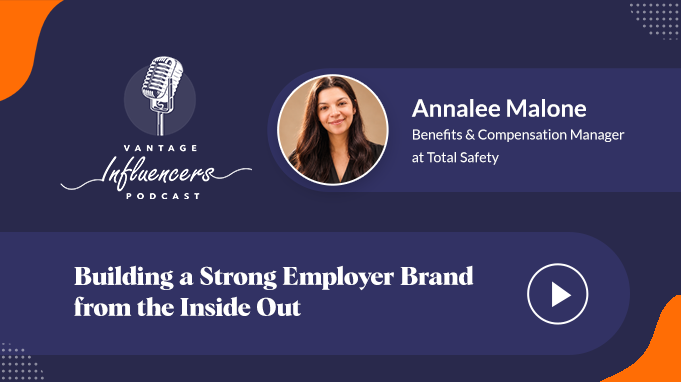
Dr. Sarmistha Roychowdhury, CHRO, Group Head HR, and Principal HR Advisor, Vform Tecnopacks Limited
Dr. Sarmistha Roychowdhury is a Board and CXO Advisor, former CHRO of NSE Group, and an IICA-Certified Independent Director with over 25 years of experience in strategic human resources leadership. She has partnered with boards and executive teams across listed, regulated, and high-growth organizations to shape enterprise-wide people strategies, strengthen governance, and lead organizational transformation. A PhD in Human Resource Management from TISS, she specialises in talent strategy, succession planning, leadership development, people risk, DEI, HR analytics, and workforce transformation. She is also an award-winning HR leader, published thought leader, and frequent speaker on HR innovation, governance, leadership, and the future of work.
Connect with Sarmistha on LinkedIn
Host
Riha Jaishi, Vantage Influencers Podcast Host
What You Will Learn
- Why business and people transformation have effectively become the same conversation for today's boards
- The business decisions where HR's voice is no longer optional, from mergers to executive compensation
- How to make the case that talent and culture risk belong alongside financial and operational risk at the board level
- How HR leaders can balance employee advocacy with business priorities without losing credibility on either side
- How AI, hybrid work, and changing skills expectations will reshape HR's role in board decision-making
- What it takes for an HR leader to move from operational partner to strategic boardroom influencer
Key Topics & Timestamps
| Timestamp | Topic |
|---|---|
| 05:46 | What has caused HR to move from a people function into strategic boardroom conversations |
| 11:27 | The key business decisions today where HR's voice is no longer optional |
| 15:41 | Why talent and culture risk should be treated as board-level risks alongside financial and market risk |
| 19:23 | Balancing employee advocacy with business priorities without losing credibility |
| 23:28 | How AI, hybrid work, skills shortages, and employee expectations will reshape HR's role in board decisions |
| 27:41 | Advice for HR leaders moving from operational partners to strategic boardroom influencers |
Full Transcript
Click to read the full episode transcript
Welcome to the Vantage Influencers podcast. This podcast is sponsored by Vantage Circle, the simple and effective recognition platform for employee engagement.
Riha Jaishi: Hello, everyone. Welcome back to another episode of the Vantage HR Influencers podcast. I'm your host, Riha. And today we are diving into an important topic, that is the evolving role of HR in boardroom decision making. For a very long time, HR was seen mainly as a function that managed people, processes, hiring policies, and employee concerns. But today, that role has changed significantly. HR is now expected to contribute to business strategy, culture, leadership, workforce planning, and long-term growth. This boardroom is no longer just about the financial and operational decisions. It is also about people, capability, and organizational readiness.
However, the challenge is that many organizations still view HR through a narrow lens, even when business outcomes are deeply connected to people's strategy. And that is where the conversation becomes very important. And to help us unpack this, I'm joined by Dr. Sarmistha Roychowdhury, CHRO, Group Head HR, and Principal HR Advisor at Vform Tecnopacks Limited. Thanks, Riha.
Dr. Sarmistha Roychowdhury: Thanks. Yeah, thanks, Riha. So, the topic seems to be quite interesting. And thank you for having me here. It's a great opportunity and pleasure to talk to you.
Well, let me introduce myself. I started my journey way back in 2003 or so. I began my journey with a strong foundation in operations, people management, and HR. I have done transactional HR into leadership development. From there, I have worked with several companies across different industries, building a strong passion for strategic HR. And I pursued my PhD from TISS, Tata Institute of Social Science, Mumbai. My thesis subject was strategic human resource management. I focused on strategic human resource management in FinTech 3.0 organizations. Currently, I'm serving as Principal HR Advisor, CHRO Group Head HR at Vform Tecnopacks Limited, an SIPL group, and leading people, strategy, leadership development, workforce planning, and entire organizational capability development. So this is a little bit about me.
Riha Jaishi: Yeah. First of all, welcome to the show. We are pleased to have you with us today. And that was such an inspiring journey. Thank you for sharing it. So the topic that you have chosen is very interesting, HR in the boardroom, from people partner to strategic advisor.
Dr. Sarmistha Roychowdhury: Yeah. When we think about today's boardroom, the conversation is no longer only about revenue, margin, and market share. And behind every strategic decision, whether it is a digital transformation, or expansion into new markets, mergers and acquisitions, or even ESG, there is one common factor, and that is people. Strategy succeeds or fails not only because the right structures are in place, but because people are willing or able to execute it. That's why HR has evolved from being a support function to becoming a strategic function in today's world.
For example, I have seen organizations making significant technological transformations. They have invested a lot, but the expected business outcomes didn't materialize. In my journey, I have seen that it is because employees were not ready to take the change, or the organizations did not make the employee ready. So the technology worked perfectly, but the adoption didn't. That's where I realized the most important part in transformation is fundamentally about people. And this topic definitely interests me a lot.
Riha Jaishi: Oh, that's great, Sharmistha. It's such a strong start to our session, and I'm really looking forward to the conversation ahead. Okay, shall we begin then into our topic further?
Dr. Sarmistha Roychowdhury: Yes, please.
Riha Jaishi: Okay, great. So, Sharmistha, HR has traditionally been seen as the people function. But today we are seeing HR leaders entering into more strategic boardroom conversations. So what do you really think has caused this shift?
Dr. Sarmistha Roychowdhury: Yes. I think there are several forces behind it that have played out over the past few years, that is my observation. The first thing is that business transformation is no longer just business transformation, it is more about people transformation. Whether we are talking about AI, digital transformation, automation, or global expansion, success depends obviously on technology, but I would say less on technology and more on the people, how they embrace the change. As I was talking in the beginning, I have seen large transformative projects in my journey where transformation was implemented, huge investments were made, but the effectiveness was not that high. That is because the adoption remained very low. Managers weren't equipped to lead the transition. It is more of a people challenge than a technology challenge, I would say. That is one of my experiences in my journey.
The second shift came from the pandemic. We all have observed the pandemic in 2020, how we were shut down in our homes, yet there was business continuity. And boards realized from that time that employee well-being and resilience are very important. It's a part of organization culture. And from the board's perspective, organization culture wasn't just an HR topic anymore. That time it was more about business continuity issues, and that was a great takeaway during the pandemic.
And the third factor to me is how investors today evaluate companies. Earlier, investors would evaluate mainly on financial performance. But my observation, as I am getting groomed as an independent director and going through courses, and in my current and past companies, is that leadership capability, succession planning, diversity, ESG, and governance have become just as important as the focus on financial performance. Therefore, I think in all these areas, HR plays a more strategic role.
The talent landscape has also changed a lot during these phases. Organizations today are competing as much for skills as they are competing for customers. Therefore, talent becomes a strategic asset, and boards are increasingly discussing workforce capability as a competitive advantage. So finally, what HR brings to the table is data. Without workforce analytics, any decision is at risk, whether we are talking about attrition risk, identifying capability gaps, or supporting business decisions with evidence. Without evidence, it becomes just an intuition. So the conversation has shifted more toward how we manage people and how people create business value. That's my take on this beautiful question.
Riha Jaishi: Sharmistha, I must say that you have beautifully given a structure to this question. What really stood out for me personally is how you mentioned that people are meant to embrace the change and not just the transformation or technology. That's where mainly people get stuck, or basically that's the point where transformation or transitions happen, when people have things but they're not well equipped for it. And I really liked how you talked about the times during the pandemic which changed the entire workforce scenario, and about leadership capability and the importance of workforce analytics, which we really can't give up given the situation and how things are transforming.
Dr. Sarmistha Roychowdhury: Absolutely, absolutely. You've taken it very point by point, very correctly.
Riha Jaishi: Okay, great. So moving ahead, Sharmistha, what are the key business decisions today where HR's voice is no longer optional? What do you think?
Dr. Sarmistha Roychowdhury: Good question. I believe that HR should be involved earlier. HR from a standpoint is no longer a transactional leader, it has become a transformational function nowadays, isn't it? So I believe that HR should be involved much earlier in strategic discussions than any other discussions. Because when the discussions have already been made and then the organization involves HR, it becomes a very difficult thing to do. So whether it's organizational restructuring, mergers or acquisitions, leadership succession, digital transformation, business expansion, global market expansion, workforce planning, or executive compensation, the people implications are very critical in today's scenario. Therefore, the deciding factor between success and failure is the people function.
Let us take AI as an example. Many organizations focus on selecting the technology, but the real question is, we may have invested a lot in the right technology, but we have to reflect on whether our employees have the skill and the confidence to use it effectively. Without reskilling or change management, even the best technology may not deliver the results the organization is investing for. Similarly, I have seen expansion plans where the market opportunity was ample and lucrative, but in some of the cases it has fallen flat because the leadership capability on the ground wasn't ready. So we as leaders in the organization need to first understand how we equip our leaders and our people with the change. The challenge is never the strategy in the failed cases, it is about organizational readiness. And that's where HR adds value by asking one question: do we have the leadership capability to execute this strategy? If we are able to answer this, we have done it. That's my take on this.
Riha Jaishi: Okay, Sharmistha, that was a brilliant take, particularly on the leadership capability and the organizational readiness that you have completely stressed on. I totally agree with what you say, that HR's role has often been limited to the transactional, like you mentioned earlier, but it's more in the transformational stage, its importance lies mainly in the decision-making process, not post-decision. And how to equip leaders to do the right thing with the change and to make the organization ready.
Dr. Sarmistha Roychowdhury: Absolutely, yes. That's where organizations falter, and that's where HR comes into the picture, to analyze and assess whether things are in control and whether things are in order.
Riha Jaishi: Right, absolutely. So moving ahead, Sharmistha, boards often discuss financial risk, operational risk, and market risk, as you know. But do you think talent and culture risk is also a board-level risk now? What do you have to say about this?
Dr. Sarmistha Roychowdhury: Oh yes, a hundred percent. In fact, I would argue that talent risk and culture risk are among the most critical and significant business risks today, unlike yesteryears. Culture isn't simply about employee engagement or workplace happiness, which we used to think in our previous years, when it was more about building a happy workplace and building the right employee engagement. But that is not what defines culture anymore. It is about how decisions are made, how leaders behave, how organizations respond when they are under pressure. That's where the right culture sets in.
We have seen organizations with excellent products and wonderful financial performance, but we have also seen some of these organizations face major setbacks because of leadership failure, governance issues, or unhealthy cultures. Those weren't HR problems, they became business problems. So that's why boards in today's scenario should regularly review, not only financial performance, but also leadership succession, critical talent retention, employee engagement in terms of how productive and how happy employees are, ethical culture, diversity, leadership effectiveness, and future skills, with the same discipline and same vigor as financial performance. Ultimately, culture shapes business outcomes. If we don't focus on culture, we don't get the right output that we are willing to achieve. So that's what I think about this question.
Riha Jaishi: Okay, Sharmistha, I believe there is a very significant key takeaway that you have given in this answer, and that is how culture shapes business outputs. That is central to this answer, because that is what connects culture and business outcomes. They do not work in isolation, they work together. Just like you said, culture and talent are important factors which should be a part of the board-level discussions. So when this is impacted by culture, definitely the business outcomes will inevitably get impacted.
Dr. Sarmistha Roychowdhury: Yes, yes, yes. And at the board level, it used to always be about financial performance, but now it is more about leadership capability, how to do succession planning, and how to retain the critical talent workforce. These reviews have to be done at the board level too. I believe then only will the organization get the right culture and the right output.
Riha Jaishi: Absolutely, well said. So moving ahead, Sharmistha, sometimes HR is expected to balance employee advocacy with business priorities. So how can HR leaders manage that tension without really losing credibility on their side? What do you think?
Dr. Sarmistha Roychowdhury: You're very right, this is probably the most challenging aspect of the HR role, because I don't believe HR should choose between the employee and the employer, or the employee and the business. Our responsibility is to create a solution that is sustainable for both the employer and the employee. The key is transparency and trust, because as HR, I need to be able to run my business too. If restructuring becomes really necessary, the business decision may be unavoidable, and how it's implemented is actually critical. How much fairness, dignity, honesty, and trust is applied determines whether people continue to trust our organizations or not. Similarly, when employees consistently raise concerns about workload and pressure, it is HR's responsibility to present those realities objectively to the management and the leadership, because ignoring them eventually affects productivity and retention. And when productivity and retention are hit, it hits the entire output and disturbs the ecosystem.
I have found that credibility comes from consistency. This is very important for HR, to be consistent in the way they work. For example, if employees consistently see HR merely implementing management's decisions, it becomes very difficult, because we are advocates of both the employee and the employer, from both sides. So if employees consistently see HR implementing management's decisions, then trust declines. And similarly, if management sees that HR is consistently defending and advocating for employees, the strategic influence declines. So we are in the middle, getting pulled by both employee and employer. Therefore, to be a strong HR leader, I think it is very important to align people outcomes with business outcomes. This is indeed a difficult question, but that is the balanced way we can advocate. That is my take on this.
Riha Jaishi: Sharmistha, I mean, the balance that you talked about, keeping both the employers and employees at par with each other, I guess that's the most important point here for HR leaders. And like you mentioned, HR's credibility also comes from that understanding, understanding both the sides, supporting them, and aligning their goals to the business direction.
Dr. Sarmistha Roychowdhury: Yes, absolutely, absolutely.
Riha Jaishi: Great. So moving ahead, as AI, hybrid work, skill shortages, and employee expectations continue to reshape work, how will HR's role in board decision-making evolve further? What do you have to say about this?
Dr. Sarmistha Roychowdhury: Well, yes, I believe HR will become more central to business strategy over the next few decades. The question is not whether AI is going to take over, because this is the most talked-about fear, that AI is going to take over people and reduce headcount, and what will HR do. No, that is not the contest. I believe that HR is going to be stronger and more central to business strategy.
And why, because boards will increasingly ask us questions like, which jobs will AI automate, which capabilities should we build internally, how do we redesign work rather than simply replace people, how do we maintain culture in hybrid organizations, how do we govern AI responsibly. There are immense questions that will come up in the next few years. And one thing I strongly believe is that AI should be viewed as an opportunity to redesign work, not simply reduce headcount, because at the end of the day, who has created AI? That is a human. So the human will remain, obviously there will be certain monotonous jobs which will reduce, but redesigned work will come, I believe.
And for many organizations, the bigger challenge won't be technology, it will be how to reskill thousands of employees for new roles. Therefore, as a CHRO of any group, or any head of HR, I think it is important for the head of HR and organizations of the future to rely more on workforce analytics, insights, and scenario planning to help the board make strategic decisions. I often say that tomorrow's CHRO will need to be just as comfortable discussing business strategy and technology as discussing people. Therefore, people are going to be central, and HR will never lose its role at the center of that.
Riha Jaishi: Sharmistha, first of all, thank you for clarifying the role of AI, because many are in a skeptical mode about how AI is going to take over things, and you have brought in a very fresh perspective here. I really liked how you framed it as an opportunity to redesign work, that's a very positive and new perspective toward AI. And I really liked how you mentioned that HR is going to be more central to organizations, because HR will be bringing in more insights, more data, and more foresight into boardroom discussions.
Dr. Sarmistha Roychowdhury: Yes, yes, absolutely, absolutely. And also about the importance of workforce analytics, that is the most important part here, which HR is central to, looking after and managing.
Riha Jaishi: Okay, yeah. So Sharmistha, before we wind up our session, what advice would you give to HR leaders out there who want to move from being operational partners to strategic boardroom influencers? What do you have?
Dr. Sarmistha Roychowdhury: Yeah, this is a very nice question. What advice do I give? Well, my advice, if you ask me in one word, I would say business. Why? Because as HR, we must understand the business before the business understands us. HR should understand the business, so apart from HR, we need to learn more about finance, operations, governance, risk, and customer strategy. Second is, we have to always speak the business language, rather than saying employee engagement improved by 10 percent, we should be able to explain how that translated into productivity, how that translated into better results, how did...
FAQ
What is the central argument of this episode?
Dr. Sarmistha Roychowdhury argues that HR has moved from a support function into a strategic one because business transformation is now inseparable from people transformation. Strategy rarely fails because the plan itself was wrong, it fails because organizations underestimate whether their people are ready and equipped to execute it.
Why should talent and culture risk sit alongside financial and operational risk at the board level?
Because leadership failure, governance issues, and unhealthy culture have repeatedly turned into business problems, not just HR problems. Culture today is defined by how decisions are made and how leaders behave under pressure, and it directly shapes business outcomes, so boards need to review it with the same discipline they apply to financial performance.
How can HR balance employee advocacy with business priorities without losing credibility?
By staying consistent rather than picking a side. If employees see HR only implementing management decisions, trust declines. If management sees HR only advocating for employees, strategic influence declines. The goal is transparency and trust that keep both sides aligned to outcomes that work for the business and its people.
Will AI reduce HR's importance in the boardroom?
No. Dr. Roychowdhury believes AI will make HR more central, not less, because boards will need HR's guidance on which capabilities to build internally, how to redesign work rather than simply cut headcount, how to maintain culture in hybrid organizations, and how to govern AI responsibly.
Related Reading
Also listen on