
An employee on a $75,000 salary has no idea the company is actually spending over $100,000 on them. They just see the number on their offer letter, compare it to a recruiter's pitch that sounds bigger, and quietly start updating their resume. Nobody lied to them. Nobody showed them the rest of the picture either.
A total rewards statement is the document that closes that gap. It's a personalized breakdown of the full value of an employee's compensation package beyond base salary, covering 7 components from cash pay to recognition value, and its job is to make invisible value visible before someone assumes they're underpaid.
Key Takeaways
- The 7 components of a total rewards statement, and why most templates stop at 6.
- A real worked example showing the gap between base salary and total value.
- The 5-step process for building one, and why employees rarely see it done well.
What Is a Total Rewards Statement?
A total rewards statement is a personalized document that lists everything a company pays for on an employee's behalf, not just the number that lands in their bank account. It adds base salary to health coverage, retirement contributions, paid time off, equity, perks, and recognition value, turning value most employees never see into one total they can actually read.
Salary is one line item. Health coverage, retirement contributions, paid time off, equity, perks, and recognition value make up the rest, and most employees have never seen all of it added up in one place.
I've built two of these documents from the ground up at two different companies. The reaction in both cases was nearly identical. Someone opens the file expecting a formality and instead does real math for the first time in their career. "Wait, they're spending that much on my health plan?"
That reaction is the whole point of building one. A total rewards statement isn't a compliance form to tick off during open enrollment. It's a corrective document. Pay, on its own, tells an incomplete story. People fill in the rest themselves, and most of the time they land on underpaid, even when the actual numbers disagree.
This matters most at two moments. One is when someone's deciding whether to stay. The other is when they're sizing up a competing offer. Recruiters are good at making a number look bigger than it is, and a total rewards statement is one of the few documents an employer actually controls that can push back on that. It swaps a vague appeal to loyalty for actual figures.
The 7 Components of a Total Rewards Statement
Every total rewards statement is trying to answer one thing from seven different angles: what is this company actually spending on someone, broken down line by line.
The first six show up on almost every total rewards template you'll find with a quick search. Most HR teams stop there. That's the gap.
1. Direct Cash Compensation
Direct cash compensation is the easy one: base pay plus anything variable, bonuses, commissions, overtime.
2. Equity and Incentives
Equity is trickier. A vesting schedule isn't cash in hand, so most statements convert it into an estimated annual value using the current share price or the last valuation round. Early-stage companies tend to overvalue this line. A strike price set three funding rounds ago rarely reflects what the shares would actually sell for today. It's worth being conservative here. An inflated equity number is the fastest way to make the rest of the statement look untrustworthy.
3. Insurance and Health Benefits
Insurance is usually the biggest surprise. Most employees have no real sense of how much of their premium the company is covering until it's written down next to their name.
4. Retirement Contributions
Retirement contributions follow the same pattern as insurance. A 4 percent match sounds abstract until someone sees the actual dollar figure it adds up to over a year.
5. Paid Time Off
PTO gets valued at a daily pay rate multiplied by days earned, which sounds simple until a company has to decide whether unused sick leave counts the same way accrued vacation does. Most don't count it the same way. The statement should say so plainly. Blending both into one PTO number just invites questions nobody wants to answer during open enrollment.
6. Perks and Extra Benefits
Perks get bundled last: wellness stipends, learning budgets, meal programs, whatever falls under the company's broader employee benefits umbrella. If a company runs a structured employee perks program, this is where that data belongs too. A 2023 study from The Josh Bersin Company found that US employers now spend roughly 32 percent of payroll on benefits like these, on top of base salary. That's not a rounding error. That's a second paycheck most employees never see itemized.
A quick gut check before moving on to the seventh: if an employee can't recognize their own paycheck in the first line of the statement, the rest of it won't earn any trust either. Get that one number right before worrying about the other five.
7. Recognition Value
Recognition value is the component every competing total rewards template skips. It's the dollar and social value an employee has earned through peer and manager recognition over the statement period, redeemed or still sitting in their account.
Here's what I've noticed working around recognition and rewards platforms for years: companies track this data obsessively on the backend and then never put it in front of the employee who earned it. Points get issued. Redemptions get logged. None of it ever makes it into a document that says "you did this, and here's what it was worth."
McKinsey's 2022 research on employee experience found that up to 55 percent of employee engagement is driven by nonfinancial recognition, more than any other single factor they measured. I'd push back slightly on treating that number as a standalone case for adding a recognition line to a comp statement. Correlation between recognition and engagement doesn't automatically mean employees want that value quantified next to their salary. But the underlying logic still holds. If recognition is doing that much of the engagement work, leaving its value out of the one document meant to show total value is a strange place to draw the line.
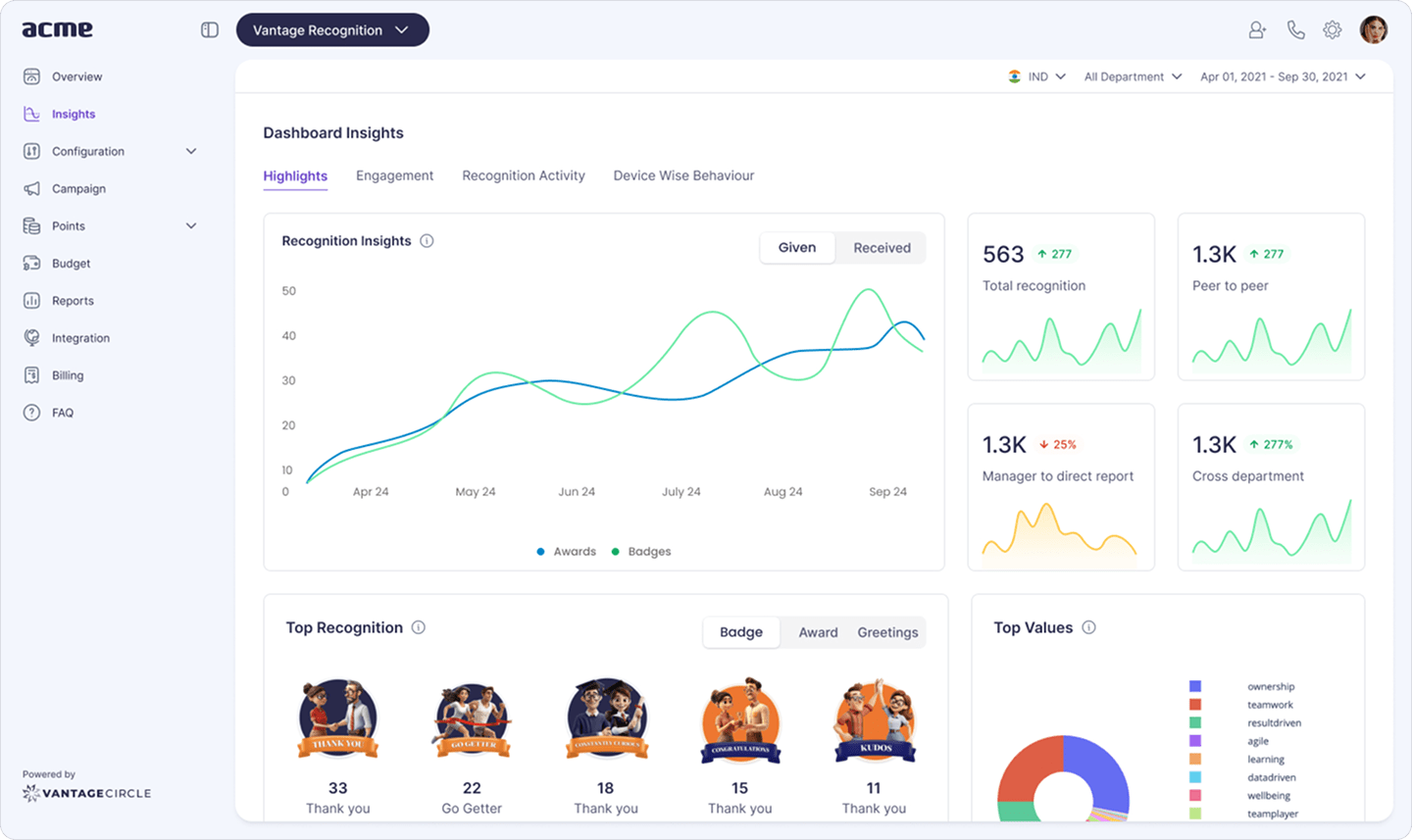
Source: Vantage Rewards
Vantage Rewards' Recognition Analytics tracks exactly this: the points an employee has earned through peer-to-peer and manager recognition, plus what they've redeemed through Vantage Perks. Pulling that number into a total rewards statement turns an abstract "we value recognition here" claim into an actual figure.
In practice this usually breaks into two numbers worth showing separately: points earned during the period, and value actually redeemed. Someone sitting on a few thousand unredeemed points has real, trackable value they haven't cashed in yet, and seeing that number next to what they've already used tends to prompt people to actually open their perks platform. A platform sitting unused is money left on the table, and most employees never realize it.
Six components measure what a company already reports to payroll and benefits admin. The seventh measures what a company already tracks in its recognition platform and simply never connects to the other six. The data exists in both cases. Only one of them makes it onto the statement.
A Real Example: What a Total Rewards Statement Looks Like
Numbers help more than definitions do. Here's a sample statement for an illustrative mid-level marketing employee on a $75,000 base salary, built to show the shape of a real statement. It doesn't represent an actual employee.
Look at the gap between the top line and the bottom line: a $75,000 base salary against a total rewards value of just over $101,000. That's roughly a 35 percent difference between what shows up on a paystub and what the company is actually investing in them, and almost none of that gap gets communicated anywhere unless someone builds a document like this one.
The Recognition Value line deserves a second look too. $640 sounds small next to a six-figure total, and on its own, it is. But it's also a number most companies have never shown an employee before. Vantage Rewards' Long Service Awards feature captures a version of this that grows over time: milestone bonuses tied to tenure that rarely show up on any comp statement even though most companies already budget for them every year.
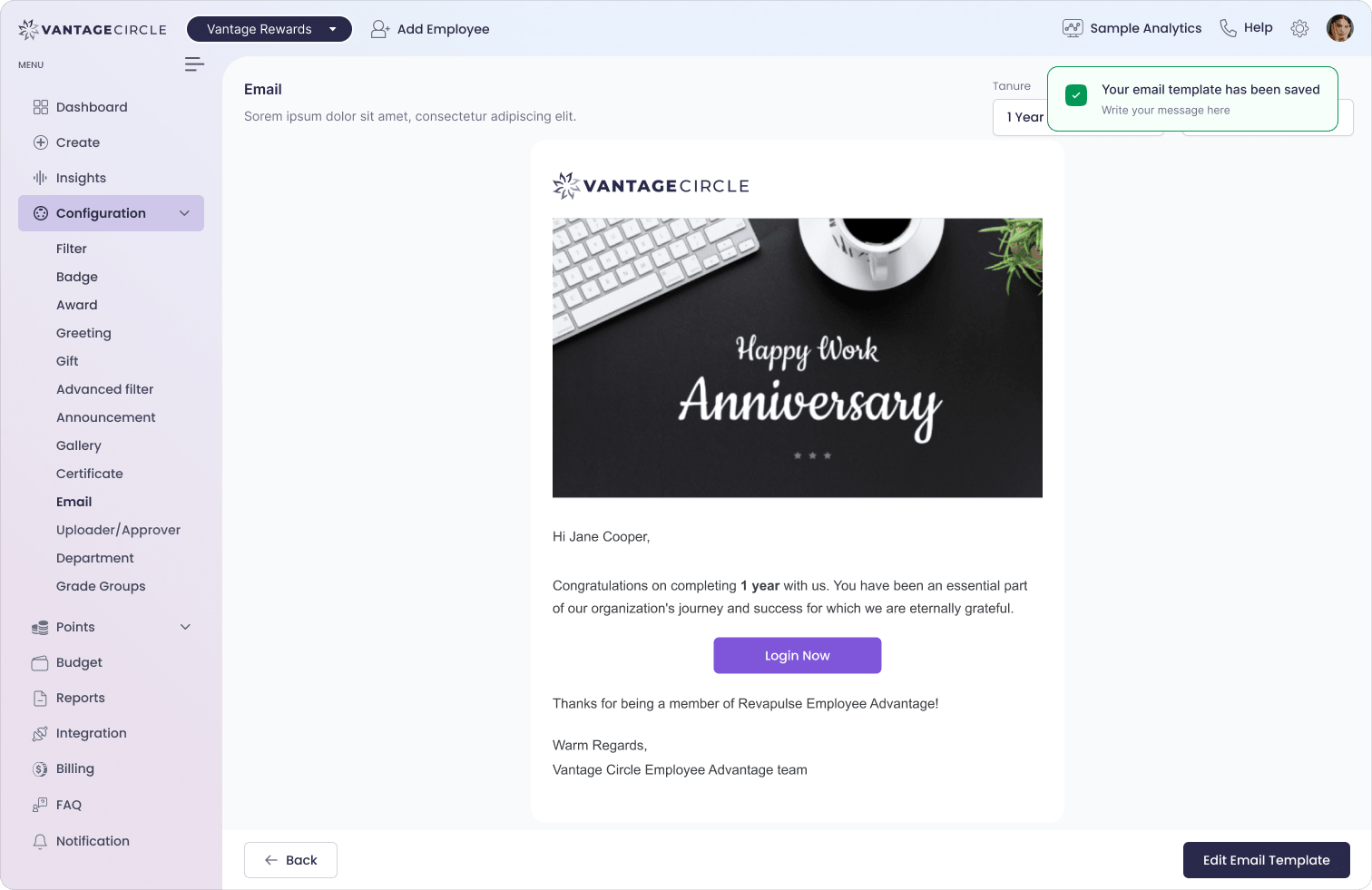
Source: Vantage Rewards
How to Build a Total Rewards Statement: 5 Steps
Building one isn't complicated. Keeping it accurate is where most attempts fall apart.
Pull real compensation data, not estimates. Base pay is easy. Bonus, commission, and any variable comp need to come from actual payroll records for the statement period, not a projected number.
Get the true cost of benefits from your provider or finance team. What the company pays toward insurance premiums, retirement matches, and other benefits is different from what employees pay out of pocket. The statement should reflect the employer's cost.
Value PTO at the employee's actual daily rate. Multiply days earned or used by that rate. Skip this step and the PTO line either looks inflated or gets left off entirely. Both erode trust in the rest of the document.
Pull recognition data from your R&R platform. Points earned, redemptions made, milestone awards, whatever your system tracks. This is the step most companies skip, mainly because their recognition data lives in a separate tool that never talks to payroll or benefits admin. Most recognition platforms have an export or API built for exactly this, and it's usually a smaller lift than people expect once someone actually asks IT to set it up.
Make it look like something worth opening. A total rewards statement that looks like an export from a benefits system gets ignored. One built for a person to actually read, with plain language and a clear total, gets opened. Give it a real title. Add a short line explaining what it is. Make the total impossible to miss. The format matters almost as much as the numbers inside it.
None of these five steps require new software if a company already has payroll, benefits admin, and a recognition platform running. The work is mostly pulling data that already exists into one place, not generating anything new.
This connects back to a broader total rewards strategy. The statement is the communication layer. The strategy is what decides what goes into it in the first place.
Why Employees Should See This (and Why Most Don't)
Most employees underestimate what they're actually paid. Most companies never correct that.
A 2022 Gartner survey of over 3,500 employees found that only 32 percent believe their pay is fair, and just 38 percent say they understand how their pay is even determined. That second number is the one worth sitting with. It's not that employees think their pay is unfair because it actually is. Gartner's own research points to organizational trust and communication as the bigger driver than compensation itself. That's precisely the gap a well-built total rewards statement is designed to close.
Only 14% of employers believe their employees understand the value of their total rewards package, down from 25% the year before. That's an 11-point drop in a single year, and it moved in the wrong direction. Source: Aon's 2025 Benefits Survey.
Newer research backs up the fix, not just the problem. A 2025 study published in Harvard Business Review, examining what happened after the SEC began requiring companies to disclose CEO-to-median-employee pay ratios, found that giving employees an accurate reference point for their own pay raised average pay satisfaction. It didn't erode it. Most HR teams assume disclosure backfires, and this research found the opposite. Before the disclosure, employees relied on gossip and incomplete online data and tended to overestimate what their peers earned. Seeing the real number corrected that, and the effect was strongest exactly where employees had the least information to begin with.
Visibility only does half the work on its own, though. A statement can show someone their value and still land flat if there's no way to check whether it actually changed how they feel about the company. McKinsey's 2024 retail workforce research found something worth sitting with. Companies in the top quartile on employee experience are more than twice as likely to also land in the top quartile on customer experience. It's one of the clearer links between what happens inside a company and what customers eventually notice. Pairing a total rewards statement with a quick pulse survey, something like eNPS tracking through Vantage Pulse, closes that visibility loop and turns a once-a-year document into an ongoing signal.
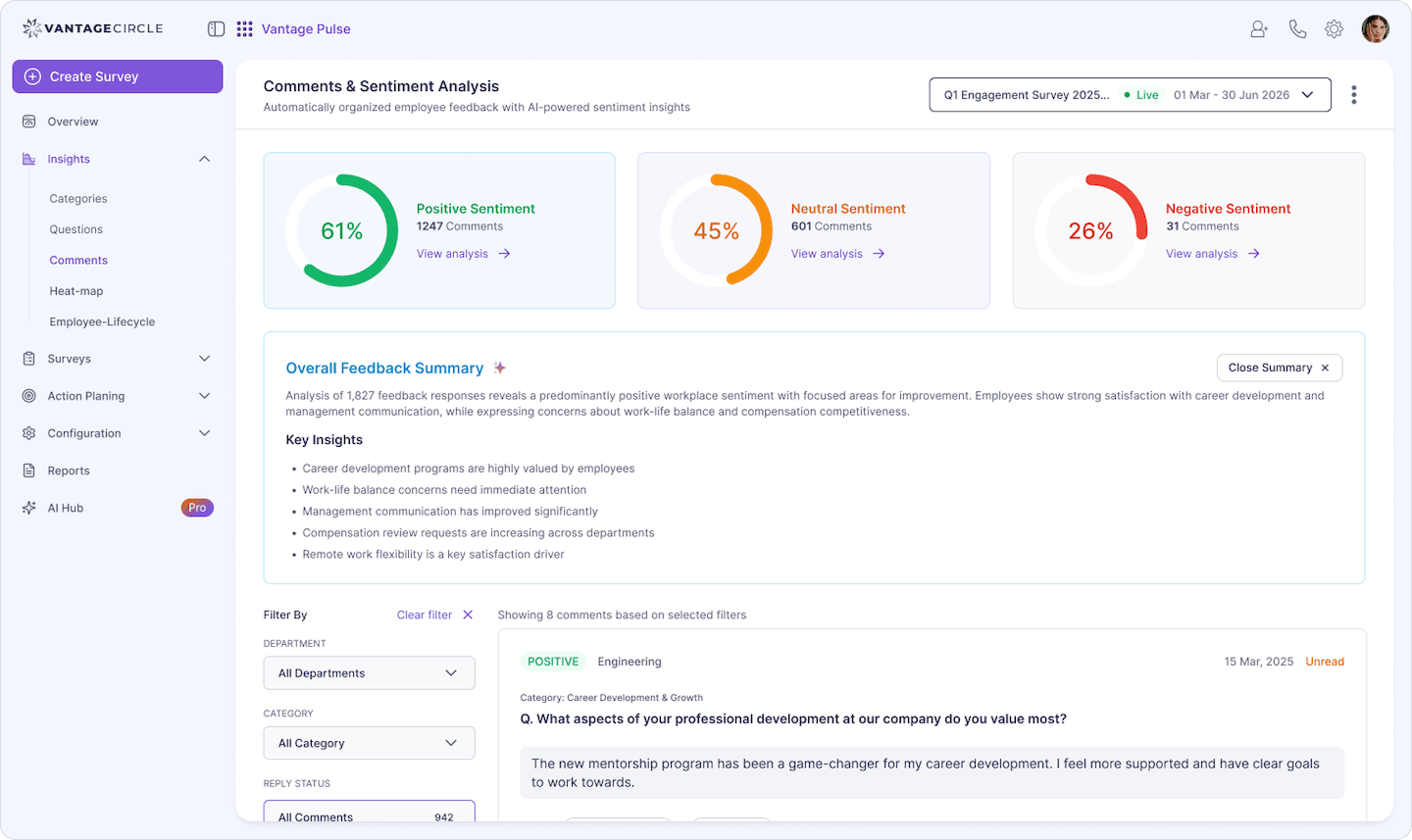
Source: Vantage Pulse
This is also where a broader communicating total rewards to employees strategy matters more than the statement itself. A once-a-year PDF is closer to an artifact than a communication strategy, something HR ships once and nobody reopens. Companies serious about closing this gap build the statement into a recurring habit. It becomes one touchpoint in an ongoing conversation about total rewards and employee retention, sent on a real cadence and tied to review cycles, something people can actually expect.
💰 Put recognition on the statement
Six components measure the paycheck. The seventh measures what people actually did.
Vantage Rewards tracks the points, redemptions, and milestones most companies already have but never put in front of the employee who earned them. See what a real recognition value line looks like.
Explore Vantage Rewards →Conclusion
Employees rarely leave because a company underpays them. More often, they leave because they never found out what they were actually getting, assumed it probably wasn't much, and started looking elsewhere before anyone corrected that assumption.
Most companies already spend the money. What they skip is showing employees where it went.
A total rewards statement isn't complicated to build once the data is in one place, and the seventh component, recognition value, is the piece almost nobody includes even though it's often the easiest one to pull. If a company runs any kind of structured recognition program, that data already exists. It's just sitting in a different system than payroll.
Build the statement with all seven components. Send it to someone who's never seen their total value written down before. Watch what happens.
FAQ
Q1. What is a total rewards statement?
A. A personalized document that adds up everything a company actually pays for on someone's behalf, not just their salary. Benefits, retirement contributions, PTO, perks, and recognition value all get folded into one total.
Q2. How do you write a total rewards statement?
A. Pull real payroll and benefits data for the period, value PTO at the employee's actual daily rate, add recognition data from whatever platform tracks it, and present the whole thing as a document a person would actually want to open. Skipping the recognition step is the most common gap.
Q3. What should a total rewards statement template include?
A. At minimum: base pay, bonus or variable comp, equity if applicable, insurance value, retirement contributions, PTO value, perks, and a recognition value line if the company runs any kind of formal recognition program. Seven components, one total. Skip the line items that genuinely don't apply. A statement full of $0 rows for benefits a company doesn't offer just looks unfinished.
Q4. How often should a total rewards statement be sent?
A. Annually at minimum, though more companies are moving to twice a year, once at review time and once mid-year, since compensation and benefits value shifts more than most HR calendars account for. New hires are the other trigger point worth building into the calendar. A first-90-days statement, sent right when someone is deciding whether the offer they accepted actually matches what's showing up in their paycheck and benefits enrollment, does more for retention than the identical document sent a year later.
Q5. Is a total rewards statement the same as a total compensation statement?
A. Functionally, yes, and most companies use the terms interchangeably. Where a distinction gets drawn, "total compensation statement" sometimes refers to a narrower cash-and-benefits-only version, while "total rewards statement" is more likely to include recognition, perks, and career development value alongside the financial components.

He has worked in the human resources environment and has elevated recognition and rewards through his insightful and detailed writing. He aims to enhance the practice of Recognition in the workplace with new ideas and innovation that will help shape the work culture. For any related queries, contact editor@vantagecircle.com