
Your team meeting ends ten minutes early. Nobody pushes back on the timeline. The person who always flagged the broken process now walks past it.
None of that lands in a report. Low morale rarely announces itself. It arrives as a series of things that stop happening, and absence is the hardest thing to notice.
Every team has bad weeks, and bad weeks recover on their own. Low morale does not. That difference is where most organizations lose a quarter.
It is also getting harder to ignore. Employee thriving (Mercer's measure of how many employees self-report that they are prospering at work) fell to 44% in 2026, down from 66% in 2024. That is the lowest reading since Mercer introduced the measure in 2018, and lower than anything recorded during the pandemic, according to Mercer's Global Talent Trends 2026 study of roughly 12,000 respondents across 16 geographies.
What follows is how to tell the two apart, the five causes behind most of it, and what to track so the next decline does not take three months to surface. For how morale is defined and measured across a whole organization, start with employee morale.
Key Takeaways
- How to tell a bad week apart from a real morale problem
- The leading indicators managers can observe this week, not the lagging ones that arrive too late
- The 5 root causes behind most morale decline, and the fix that matches each one
- What to measure, and at what cadence, so you catch the next dip earlier
What is Low Employee Morale?
Low employee morale is a sustained decline in how a team feels about its work, its leadership, and the organization. It shows up as reduced discretionary effort, quieter meetings, and rising absence. The defining trait is duration. Morale problems persist after the pressure that seemed to cause them has passed.
Duration is the whole diagnosis. Get it wrong and every fix you choose afterward will be aimed at the wrong problem.
Low Morale vs a Bad Week: Situational or Structural?
A bad week resolves when the project ends. A morale problem persists even when the workload lightens. Getting this wrong is the most common and most expensive diagnostic error in people management.
Every team has hard stretches. A difficult client, a launch, a quarter-end crunch. Energy drops, then it comes back. That is situational, and it needs resourcing rather than intervention.
Structural problems behave differently. The workload eases and nothing returns. The team stays quiet. Participation stays low. This is the error that sinks most morale initiatives: a structural problem treated with situational remedies looks like effort and produces nothing.
| Situational dip | Structural morale problem |
|---|---|
| Traceable to a specific event or deadline | No single triggering event |
| Recovers when the pressure lifts | Persists after the pressure lifts |
| People still complain openly | People have stopped complaining |
| Affects the whole team roughly equally | Often concentrated under one manager or team |
| Lasts days to weeks | Lasts months |
| Needs support and resourcing | Needs a change to how the team operates |
What Low Employee Morale Looks Like in Practice
Definitions are easy to nod along to. These are harder to miss.
The silent team. A 30-person agency, no complaints in any weekly all-hands, leadership reading the quiet as contentment. Then three senior managers resigned inside a month. The exit conversations surfaced eight months of frustration about blocked promotions that nobody had raised. They had not been content. They had given up on being heard, and from the outside those two look identical.
The shrinking room. Optional lunch-and-learns that drew 80% attendance last year now draw 30%. No policy changed. Nobody objected. People stopped opting in, one calendar decline at a time. Voluntary attendance is where belief in a culture shows up before it shows up anywhere you are measuring.
The reminder tax. Timesheets and inventory counts that used to close on the first ask now take two or three nudges each. Nobody is refusing, and that is exactly the problem. Refusal is a conflict you can address. Withdrawal just raises the cost of running the team, quietly, with nothing to point at.
Signs of Low Employee Morale
The signs of low employee morale split into two groups: leading indicators you can observe within a week, and lagging indicators that confirm the damage after it is done. Most organizations track only the second group, which is why they find out too late.
Leading Indicators You Can Observe This Week
Leading indicators are behavioral changes that appear before productivity or turnover moves. They are subtle, observable, and easy to dismiss individually. The pattern matters more than any single instance.
- Optional attendance slides. Voluntary sessions, social hours, and non-mandatory meetings lose participants over months. Your team is voting with its calendar.
- Follow-up reminders double. If routine tasks now need two or three nudges where one used to work, discretionary effort has withdrawn.
- Nobody flags broken processes. In a healthy team, people report the jammed printer or the clunky workflow. When they walk past it, they have stopped believing that reporting changes anything.
- Absence drifts to the edges of the week. Everyone gets sick, and illness does not check the calendar. When call-outs concentrate on Mondays and Fridays, people are avoiding the workplace rather than fighting a virus. Watch it alongside broader absenteeism trends.
- Meetings get agreeable. A room where nobody debates, nobody asks a clarifying question, and everyone logs off the moment the clock hits the hour is not an aligned room. It is a disengaged one.
The most dangerous signal in a team meeting is not an argument. It is silence.
Lagging Indicators That Confirm the Damage
Lagging indicators are the outcomes that appear once morale has already declined. They are easier to measure and far more expensive to act on.
Work quality drops and error rates climb. Deadlines slip on projects that used to land. Nobody volunteers for anything new. Gossip fills the space clear communication used to occupy, and then resignations start arriving in clusters.
By the time these show up, you are not diagnosing a morale problem anymore. You are absorbing the bill for one.
| Signal | Type | What it actually tells you |
|---|---|---|
| Optional event attendance falling | Leading | Belief in the culture is eroding |
| Follow-up reminders doubling | Leading | Discretionary effort has withdrawn |
| Broken processes going unreported | Leading | People expect no response to feedback |
| Monday and Friday absence clustering | Leading | Workplace avoidance, not illness |
| Meetings with no disagreement | Leading | Psychological safety has dropped |
| Rising error rates | Lagging | Focus and care have already declined |
| Missed deadlines | Lagging | Motivation gap is now affecting output |
| Resignation clusters | Lagging | The problem is months old |
What Causes Low Employee Morale?
Most low morale traces back to five root causes: leadership and communication breakdown, absent recognition, lost autonomy, stalled growth, and imbalance between reward and workload. Applying the wrong fix to the wrong cause wastes budget and signals that leadership is not listening.
1. Leadership and Communication Breakdown
When employees are left out of decisions that affect them, trust erodes and rumor fills the vacuum. This is the most frequently cited cause of morale decline, and the cheapest to address.
Two failures do the damage. The first is silence about direction, so people cannot see how their work connects to anything. The second is asking for feedback and then doing nothing with it. Running a survey about the breakroom coffee and leaving the coffee unchanged teaches a team that their voice does not matter.
Where communication breaks down, conduct usually follows.
Even relatively modest levels of toxic behavior can cause major organizational cost, including customer loss, loss of employee morale, increased turnover, and loss of legitimacy among important external stakeholders. Harvard Business School
Fix it: Communicate decisions before the rumor does. Close the loop visibly on every piece of feedback you collect, including the ones you decline to act on. Build the conditions for psychological safety so concerns surface while they are still small.
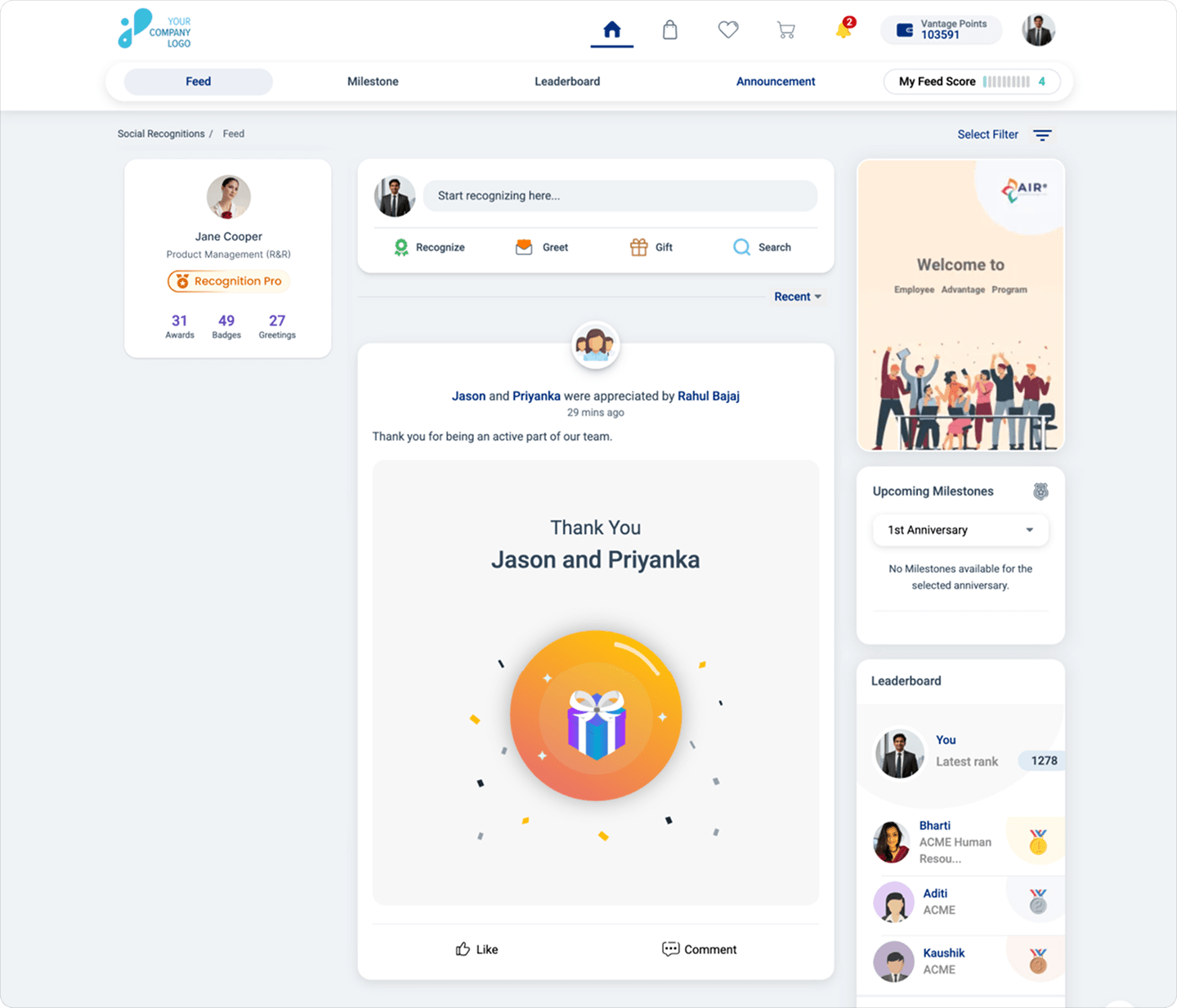
2. Recognition That Never Arrives
When contribution goes unnoticed, employees stop believing effort is worth extending. This is the fastest-acting morale cause and the one most often mistaken for a compensation problem.
It is rarely about the absence of praise in general. It is about the absence of praise for work the person knows was good. Credit that flows upward does particular damage. An employee who stays late to fix an error, then watches a manager report it as their own resolution, learns something they do not forget.

Vantage Influencers Podcast
"Feeling invisible at work is a fast track to disengagement."
— Vineet Kumar, Regional HR Manager, Al Rashid Food Company
Listen to the EpisodeFix it: Name the specific work, not the person's general attitude. Then widen who is able to do the naming. Peer recognition matters most on large teams, where one manager physically cannot see everything worth noticing.
3. Autonomy Stripped Away
Employees who cannot make meaningful decisions about their own work stop bringing judgment to it. They execute exactly what is asked and nothing beyond it.
Micromanagement is the obvious culprit, but it is not the only one. Rigid approval chains, processes that require three sign-offs for reversible decisions, and shifting priorities all remove the sense that a person controls their own output. The opposite extreme causes the same damage. A manager who provides no direction at all leaves people feeling abandoned rather than trusted.
Fix it: Push decision rights down to the level where the work happens. Reserve approval gates for choices that are expensive to reverse. Micromanagement is where that line most often gets crossed.
4. Growth That Has Stalled
When employees cannot see a future version of themselves at your organization, they start looking for one elsewhere. This is the leading morale killer among high performers specifically.
Stalled growth does not always mean a missed promotion. Often it means the same tasks, at the same level, with no new skill in sight. Hiring senior roles externally while internal candidates watch sends the message faster than any policy document.
Fix it: Make career paths explicit and revisit them in regular one-on-ones rather than annual reviews. Offer lateral moves, stretch assignments, and cross-training where vertical promotion is not available.
5. Compensation and Workload Imbalance
Morale declines when the effort a job demands stops matching what it returns. That imbalance is about workload and equipment as much as salary.
Underpaying relative to market creates resentment that no amount of culture work will offset. But so does asking a team to deliver with outdated tools, chronic understaffing, or hours that make life outside work impossible. Sustained overload turns into burnout, and burnout is not reversible with a wellness day.
Fix it: Benchmark pay against the market your people could actually leave for, and be transparent about how ranges get set. Audit workload in the same review. Where the cause is exhaustion rather than pay, treat it as a burnout problem and take work off the team.
The Real Cost of Low Morale
Low morale is not a soft cost. It lands in turnover, output, absence, and customer experience, and every one of those is already on a dashboard somewhere.
Start with the size of the hole. Gallup puts the cost of low engagement at $10 trillion in lost productivity globally, or 9% of GDP.
Instability widens it. A study on job insecurity and engagement found 85.69% of job-secure employees were engaged at work, against 78.59% of those who believed their role was at risk. Seven points of engagement, lost to uncertainty alone.
| Business metric | How low morale shows up | Why it compounds |
|---|---|---|
| Voluntary turnover | Strongest performers leave first | They have the most options, and replacement costs land immediately |
| Productivity | Output drops to the stated minimum | Discretionary effort disappears before anyone misses a target |
| Absence | Unplanned absence and presenteeism both rise | Remaining workload shifts to colleagues, spreading the problem |
| Customer experience | Errors and slower response times reach customers | Disengaged teams stop catching each other's mistakes |
| Employer brand | Negative reviews and weaker referrals | Hiring gets harder precisely when you need to backfill |
The pattern behind all five is the same. Morale problems surface first as things that stop happening, which is exactly why they escape notice until employee turnover makes them impossible to ignore.
How to Fix Low Employee Morale
Fixing low morale starts with matching the response to the cause. Diagnose whether the problem is situational or structural, address the specific root cause, then change the operating rhythm that let it go unnoticed.
Fix the Diagnosis Before the Symptom
Most morale initiatives fail because they treat an emotional symptom rather than a structural cause. A team lunch, a wellness stipend, or an offsite feels like action. None of them changes what happens on Tuesday morning.
The arithmetic is simple. A morale problem is a daily experience. A quarterly event cannot outweigh it. Worse, employees read the gap between gesture and substance accurately, so a badly matched intervention costs more trust than doing nothing at all.

Vantage Influencers Podcast
"You're not going to win over the employee and increase their morale with the health insurance. That's just table stakes, right?"
— Bob Gaydos, Founder and CEO of Pendella
Listen to the EpisodeBenefits and events are the floor. Nobody's morale recovers because the floor exists. What moves it is what changes in the working week.
What Managers Can Do This Week
Managers hold most of the levers that move morale. Almost none of them require budget.
- Ask a specific question in your next one-on-one. Not "how are things?" but "what is the most frustrating part of your week right now?"
- Close one open loop. Find a piece of feedback your team gave you and either act on it or explain plainly why you will not.
- Recognize one specific contribution. Name the work, not the person's general attitude. Specificity is what makes recognition land.
- Remove one approval step. Pick a reversible decision your team currently escalates and stop requiring escalation.
- Say the quiet part. If a restructure or budget freeze is coming, tell your team what you know and what you do not. Uncertainty is more corrosive than bad news.
What HR Can Do This Quarter
HR owns the structural layer no individual manager can reach.
Start by finding out whether morale is org-wide or concentrated, because the answer changes everything you do next. If three teams are struggling and twelve are fine, you have a manager capability problem wearing a culture problem's clothing. Train managers on the conversations that surface issues early. Review compensation bands against the market rather than against last year. And where teams are stretched thin, fix staffing before you launch another engagement campaign, because no campaign survives contact with an understaffed team.
Recognition is worth building into the operating rhythm rather than the events calendar. Structured programs like Vantage Recognition, Vantage Circle's employee recognition platform, make appreciation consistent enough to survive a busy quarter, which is when it usually lapses. For team-level tactics, see how to build team morale.
How to Measure Morale So You Catch It Earlier
Measuring morale means tracking a small number of leading signals at a cadence short enough to catch movement. Annual surveys report on a problem a quarter after it mattered.
The Four Metrics Worth Tracking
Four measures carry most of the signal without asking employees to fill in one more form.
eNPS, or employee Net Promoter Score, asks how likely someone is to recommend the organization as a place to work. The absolute number is blunt. The trend line is honest. Participation rate on voluntary activities costs nothing, because you already collect it. Voluntary turnover by manager tells you whether the problem is the company or one reporting line. Absence pattern, specifically day-of-week clustering, separates illness from avoidance.
Cadence: Why Annual Surveys Miss Morale Entirely
Morale moves in weeks. An annual survey samples it once. By the time the results are analyzed and shared, the conditions that produced them have changed.
Short, frequent pulse surveys catch movement while it is still reversible. Anonymity matters more than length, because the employees furthest into disengagement are the least likely to sign their name to a complaint. If you need question sets to start from, our morale survey questions cover what to ask.
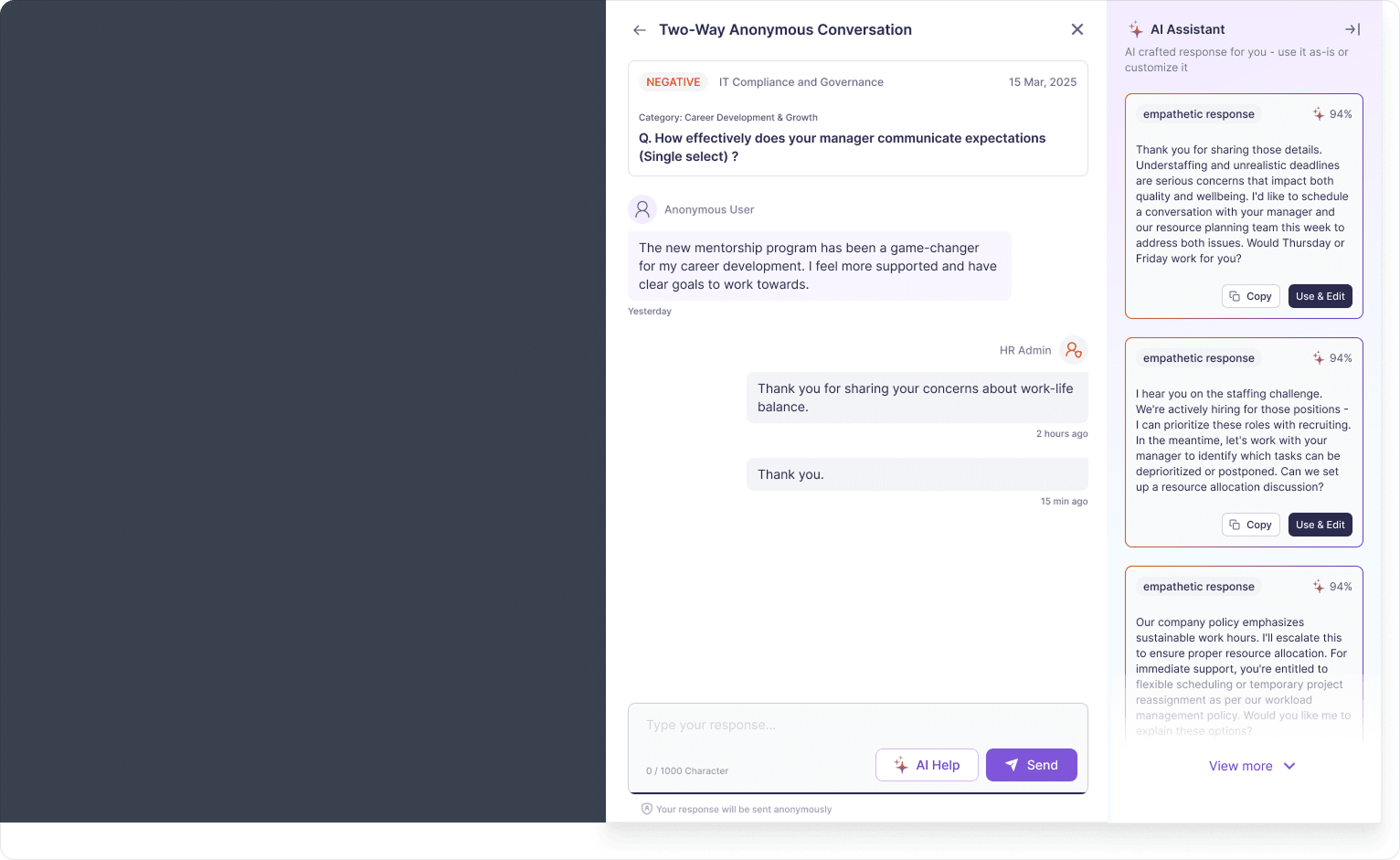
Tools like Vantage Pulse, Vantage Circle's employee engagement and pulse survey tool, run eNPS and anonymous feedback at a monthly cadence and break results down by department, which is what tells you whether you have a company problem or a manager problem.
| Metric | What it catches | Cadence |
|---|---|---|
| eNPS | Overall sentiment trend | Monthly or quarterly |
| Voluntary participation rate | Belief in the culture | Per event, reviewed monthly |
| Voluntary turnover by manager | Whether the problem is local or structural | Quarterly |
| Absence day-of-week pattern | Workplace avoidance | Monthly |
| Open-text sentiment | Themes before they become resignations | Monthly |
Summing It Up
Go back to that meeting that ended ten minutes early. Nothing about it was reportable. Nobody did anything wrong. That is exactly why low morale runs for months before anyone puts a name to it.
So name it earlier. Separate a bad week from a structural problem before you respond to either. Watch what stops happening instead of waiting for turnover to confirm what you already suspected. Match the fix to the cause, because no team lunch has ever repaired a blocked career path.
Morale is not fixed once. It is maintained. The organizations that catch the next decline are the ones looking on a short enough cycle to see it while it is still cheap.
Want to know where your team actually stands? Book a demo and we will walk you through it.
FAQs
What is a low employee morale?
Low employee morale is a sustained drop in the confidence, motivation, and job satisfaction a team feels toward its work and organization. It is distinct from a temporary bad week because it persists after the pressure that appeared to cause it has lifted. It typically shows up first as reduced discretionary effort rather than as open complaint.
What are common signs of low morale?
The most useful early signs are behavioral. Attendance at optional events declines over months, routine tasks start requiring multiple reminders, employees stop reporting broken processes, absences cluster around Mondays and Fridays, and meetings become agreeable rather than debated. Later signs include rising error rates, missed deadlines, and clustered resignations, though by then the problem is usually months old.
What to do when employee morale is low?
Start by diagnosing whether the cause is situational or structural. If it persists after the workload eases, it is structural and needs a change to how the team operates. Then match the response to the specific cause, whether that is communication, recognition, autonomy, growth, or workload. Avoid defaulting to events and perks, which cannot counteract a daily experience.
What happens when morale is low at work?
Low morale reduces discretionary effort first, then output quality and deadline reliability. Unplanned absence rises, strong performers leave earliest because they have the most options, and errors begin reaching customers. Employer brand suffers through reviews and weaker referrals, which makes backfilling those departures harder at exactly the wrong moment.

Nilotpal M Saharia is an Assistant Manager, Content Marketing at Vantage Circle and a recognition-and-rewards (R&R) strategist with 9 years of experience spanning Marketing, HR, and content strategy. He helps HR leaders turn employee recognition and leadership research into practical workplace programs.
Connect with Nilotpal on LinkedIn.