
Most of us have been in a feedback conversation and felt the urge to explain ourselves before the other person even finished, even when their intent was clearly to help. That urge is not a sign that you handle criticism poorly. It follows a predictable pattern, and once you can see it, you can work with it.
Douglas Stone and Sheila Heen (Thanks for the Feedback, 2014) identify 3 triggers that make feedback sting: truth, relationship, and identity. When you can name which one just fired, you get a small but real gap between the moment of impact and your response. This blog works through that gap: a 6-step framework for the first few seconds, 8 response scripts for when words don't come easily, and a specific approach for the 5 hardest feedback situations at work. For the giving side, see effective feedback.
Why Is Receiving Feedback So Hard? The 3 Triggers
Most people who struggle with feedback are not difficult people. Something in the message reached them before they had a chance to think. That is a very human reaction, not a personal failing.
Each of Stone and Heen's 3 triggers operates differently. The way it fires shapes what you need to do in response.
Fires when the feedback feels factually wrong, incomplete, or unfair. The receiver is not being obstinate. They genuinely disagree with the assessment, and without a process for evaluating the claim separately from the emotion, that disagreement turns into dismissal.
Fires when the receiver has a problem with the person giving the feedback. Trust, credibility, delivery style, or a history of conflict all sit under this trigger. The message may be accurate, but the relationship interference makes it almost impossible to hear clearly.
Fires when the feedback feels like a statement about who you are rather than what you did. "Your report was unclear" is data. "You are not a clear communicator" is an identity threat. The brain processes social identity threats in the same region as physical threats, which is why this trigger produces the strongest reactions and the strongest urge to push back.
Naming the trigger does not make the feedback easier to take. What it does is buy you a second between the stimulus and your response. That second is enough to choose what comes next rather than just react. Building a culture with enough psychological safety for people to name these reactions openly makes the whole team faster at closing the loop.
How to Receive Feedback: A 6-Step Framework
The 6 steps below are not a complicated system. They are a sequence for the moment feedback lands: something to fall back on when your first instinct is to defend, deflect, or go quiet. Each step has a specific job, and they work best in order.
Pause. Do not respond in the moment of impact. A pause of even a few seconds prevents the amygdala threat response from taking over. If the feedback is significant, buying time is a legitimate response: "This is useful. Give me a day to think about it properly."
Listen. Hear the full message before forming a response. Most people start building their rebuttal at the first sign of criticism. Let the full thought land before you evaluate any part of it.
Paraphrase. Repeat the feedback in your own words: "What I hear you saying is X. Is that right?" This confirms you understood, surfaces any misinterpretation, and signals that you are processing the message rather than waiting for your turn to speak.
Thank. Acknowledge the act of giving feedback regardless of how you feel about the content. Giving candid feedback is risky for the giver. Thanking them makes it more likely they will do it again.
Ask for specifics. Vague feedback cannot be acted on. "Can you give me a specific example?" converts an impression like "your presentations lack focus" into something usable: "the Q3 slide deck introduced five different themes in the first ten minutes."
Decide. Not all feedback deserves equal weight. After reflection, decide what you will act on, what you will monitor, and what you will leave for now. Then close the loop with the giver.
| Step | What to say |
|---|---|
| Pause | "This is useful. Can I come back to you tomorrow after I've had time to think about it?" |
| Listen | Stay silent. No words needed here. Maintain eye contact and let the full comment land. |
| Paraphrase | "What I hear you saying is [X]. Is that right?" |
| Thank | "I appreciate you telling me this directly." |
| Ask for specifics | "Can you give me a specific example so I know exactly what to change?" |
| Decide | "I've thought about it. Here's what I'm going to change, and here's where I've decided to hold course." |
The First-Reaction Window: Regulating the Amygdala Response
The hardest part of the 6-step framework is the first 10 seconds. Daniel Goleman documented in Emotional Intelligence (1995) that when the brain perceives a threat (including the social threat of criticism), the amygdala activates before the rational prefrontal cortex has time to respond. The result is a spike of defensiveness, anger, or shutdown that has nothing to do with whether the feedback is accurate.
The practical fix is a deliberate pause: slow breathing, a phrase that buys time, or simply staying silent for a moment. The physiological response settles quickly once the initial signal passes. "Sleep on it" is not a cliché. It is the neurological window between threat response and thoughtful evaluation. Self-management skills like this are what separate people who grow from feedback from those who just endure it.
What to Say When You Receive Feedback: 8 Response Scripts
Knowing what to say in the moment of feedback is a skill, and like any skill it can be practiced in advance. These 8 scripts cover the most common situations. Use them as written or adapt them to your voice.
How to Handle 5 Hard Feedback Scenarios
When the Feedback Is Vague
Vague feedback is not useful feedback. "Be more proactive" or "improve your communication" tells you nothing specific enough to act on. The right response is one precise question: "What would that look like specifically? Can you give me an example of a time when it fell short?"
Do not fill in the blanks yourself. Assuming you know what the giver meant usually means you act on the wrong thing. Keep asking until the feedback produces one clear behavioral change you can test.
When the Feedback Feels Unfair or Wrong
You can disagree with feedback without dismissing it. Dismissing means deciding it is wrong and moving on. Disagreeing means engaging with it properly: hearing the full claim, paraphrasing it back, asking what evidence led to it, and then offering your own read.
"I want to understand this properly because I see it differently. Can you walk me through what you observed?" gives you the information you need to evaluate whether the feedback is accurate, partially accurate, or off base. Feedback that feels unfair often reflects a perception gap that is useful to understand, even when the underlying claim is wrong.
When It Comes From Your Boss
Feedback from a manager carries a power dynamic that makes the identity trigger more likely to fire. The stakes feel higher, the relationship is ongoing, and there is less psychological safety to push back in the moment.
The approach: receive it the same way you would from a peer: pause, paraphrase, thank, ask for specifics. But give yourself more time before deciding. "This is useful to hear. Can I follow up in a day or two once I've had time to think about it properly?" removes the pressure to respond immediately and signals that you are taking it seriously. A follow-up conversation also gives you the space to share your perspective calmly rather than defensively.
When the Feedback Is Positive
People mishandle positive feedback more often than they admit. Common mistakes: deflecting ("The team did all the work"), minimizing ("It was nothing"), or simply not understanding specifically what worked.
Deflecting positive feedback discourages the giver and sends the signal that recognition is unwelcome. Accepting praise well uses the same skills as accepting criticism: listen to the full comment, thank the person, and ask what specifically worked so you can repeat it. See positive feedback examples for how high-performing managers frame recognition on both sides.
"Thank you. I want to make sure I understand what landed well. Was it the structure of the proposal or the way we framed the ROI?" turns a vague compliment into usable information about what to do again.
When It Arrives in Writing
Written feedback strips out tone, body language, and context. The same sentence reads differently depending on the relationship and what the reader expects. Before responding to a difficult written message, read it twice and hold the reply.
Written feedback loops can escalate faster than spoken ones because both sides are responding to their interpretations rather than to the actual person. When the stakes are high, request a conversation: "I've read your message carefully and want to respond properly. Can we get 15 minutes to talk it through?" moves the exchange out of writing before it becomes a paper trail neither side intended.
How to Ask for Feedback (So You Get the Useful Kind)
Proactive, specific asks produce better feedback than open-ended ones. "Any feedback for me?" invites nothing useful. "I just finished the client proposal. Was the pricing section clear enough, or did it raise more questions than it answered?" invites a precise response.
The specificity of the ask signals that you are ready to hear something real, not just looking for reassurance. It also makes it easier for the giver to be honest because they are answering a narrow question rather than delivering a verdict on the whole person.
Three habits that make feedback-seeking routine rather than an event:
- Ask after a specific output. Directly after a presentation, a project milestone, or a key decision. Not vaguely at the end of a quarter.
- Limit to one area. Asking for feedback on everything signals you are not ready to act on any of it.
- Close the loop. Tell the person what you did with their feedback. People give better input to those who demonstrate they actually use it.
Regular feedback cadences also change what feedback feels like. When input is normalized, no single conversation carries the weight of a verdict. Vantage Pulse lets teams ask for and receive anonymous, candid input on specific questions at regular intervals, turning feedback from a high-stakes event into a normal part of how work improves.

Why the Best Feedback Cultures Recognize First
People receive criticism better when they trust the person giving it and feel generally valued by the team. That trust is not built during the feedback conversation. It is built in every interaction before it.
Research by Jack Zenger and Joseph Folkman (The Extraordinary Leader, 2002) found that high-performing managers consistently gave more positive feedback than corrective feedback, and that this ratio mattered independently of how accurate the criticism was. Teams that experience consistent recognition are more likely to hear hard feedback as an investment rather than an attack, because the relationship already carries evidence of good intent.
When employees feel regularly acknowledged for what they do well, a piece of tough feedback does not feel like a summary judgment. It reads as one data point in a relationship that also contains genuine appreciation. Teams that feel consistently valued are far more likely to hear hard feedback as information rather than as judgment. That foundation only exists if employee recognition is already part of how the team operates.
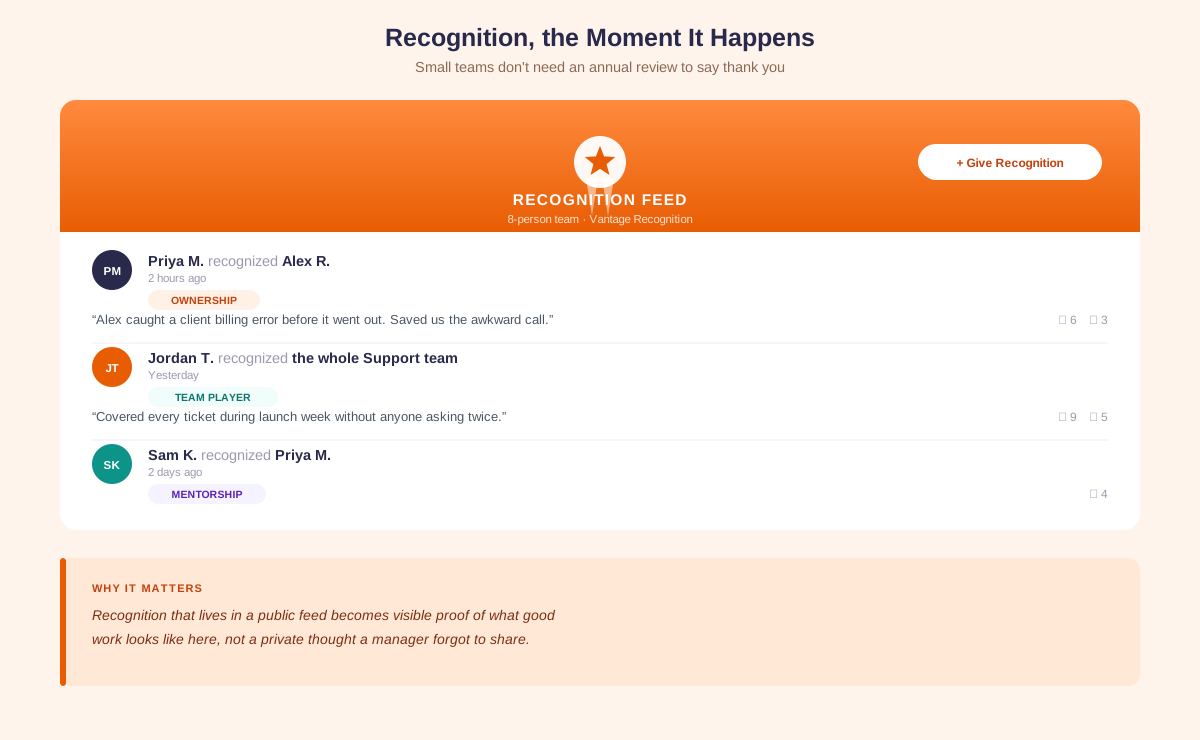
Vantage Recognition helps build that baseline. Peer-to-peer recognition, values-tagged shoutouts, and a visible social feed create a sustained record of good work before any difficult conversation begins. When feedback arrives in that context, it lands differently.
"How Do You Receive Feedback?": Answering the Interview Question
When an interviewer asks "How do you receive feedback?", they are testing for self-awareness, coachability, and emotional regulation. Not whether you enjoy being criticized. A strong answer covers three things: how you respond in the moment, how you process feedback after the fact, and a specific example that shows both.
Sample answer 1 (individual contributor): "I try to listen to the full comment before responding, and if something catches me off guard I'll ask for a specific example so I can act on it clearly. After significant feedback I usually need a day to reflect before I know how I feel about it. The most useful feedback I've received came early in my career when a manager told me my written communication was hard to follow. I didn't fully agree at first, but I thought it over and realized she was right about a specific pattern. I changed how I structure documents and it made a real difference."
Sample answer 2 (manager/team lead): "I try to model the behavior I want from my team, which means receiving feedback transparently. I acknowledge it, ask for specifics when I need them, and come back to close the loop on what I did with it. I also ask for feedback regularly rather than waiting for performance reviews. People give more honest input when it is a normal habit and when they see that you actually act on what they say."
Frequently Asked Questions
1. What are the 5 R's of feedback?
The 5 R's of feedback are Receive, Reflect, Respond, Request, and Repeat. Receive means listening without interrupting. Reflect means sitting with the message before reacting. Respond means engaging with the specific claim. Request means asking for more detail when needed. Repeat means returning to the giver to close the loop on what changed. The framework is commonly used in leadership development programs as a recall tool for turning a feedback moment into a behavior change.
2. What are the 5 steps to receiving feedback?
The 5 steps to receiving feedback are: listen fully, paraphrase to confirm understanding, thank the giver, ask for specifics, and decide what to act on. What makes this sequence work is that each step delays evaluation until you have enough information. Most feedback conversations go wrong not because the content is hard to hear, but because the receiver reacts before they have fully understood what is actually being said.
3. What are the 3 R's of feedback?
The 3 R's of feedback are Receive, Reflect, and Respond. Receive means hearing the full message without judgment. Reflect means processing the feedback before replying. Respond means engaging thoughtfully, asking clarifying questions, and closing the loop with the giver. The 3 R's are a simplified version of the longer receiving process, often used in coaching as a quick recall framework for high-stakes feedback moments.
4. What are the 3 C's of feedback?
The 3 C's of feedback are Clear, Constructive, and Caring. Clear means specific enough to act on. An impression is not feedback. Constructive means focused on behavior rather than character. Caring means delivered with the recipient's development in mind, not to relieve the giver's frustration. The 3 C's framework is most often applied to the giving side, but it gives recipients a useful lens for evaluating a piece of feedback and for asking follow-up questions when it falls short of one of the three. For examples of feedback that meets this standard, see constructive feedback examples.
Conclusion
What separates people who grow from feedback from those who just endure it is not a higher tolerance for criticism. It is preparation: a process for the first reaction, a way to evaluate what they hear, and something to say when they need time to think.
That process starts before the feedback arrives. Teams that feel regularly recognized and valued receive criticism differently from teams that only hear from management when something goes wrong. Building both sides of that culture, the recognition habit and the feedback habit, is what makes feedback a loop rather than an event. Vantage Recognition helps organizations build the recognition side so the feedback side has somewhere to land.

Susmita Sarma is a Digital Marketer at Vantage Circle, making employee recognition less of a checkbox and more meaningful - helping organizations say we value our people and truly mean it.
Connect with Susmita on LinkedIn.