
Every performance review season produces the same artifact: a document written in a hurry, from memory, about a year nobody can fully remember. The result is predictable. Comments drift toward the same handful of phrases: "worked hard," "great attitude," "needs to communicate more," language vague enough to apply to almost anyone and specific enough to help no one.
The employees who read these comments know the difference immediately. So does HR, when a vague line meets a calibration meeting and nobody in the room can produce the example behind it. The comment that survives is the one built on a record, not a recollection, naming a behavior, a date, a number. Everything else is filler dressed up as feedback.
What follows is a library built on that distinction: over 150 comments organized by what actually moves a review forward, not by what fills space in one.
Key Insights
- What Makes a Performance Review Comment Effective?
- The Evidence Method: How to Write Comments From a Record, Not Memory
- Comments by Rating Level: Positive, Meets-Expectations, and Needs-Improvement
- 5 Scenario-Based Performance Review Samples
- How to Write Performance Review Comments: 4 Practical Steps
What Makes a Performance Review Comment Effective?
The best performance review comments name a specific behavior, connect it to a measurable outcome, and point to a next step. Gallup's research on manager feedback found that only 16% of employees say their most recent conversation with a manager felt extremely meaningful, largely because most comments describe effort or attitude instead of a result (Gallup, 2023). "Worked hard this quarter" is forgettable. "Cut the client escalation queue from 40 open tickets to 6 by rewriting the intake checklist" is not, and it also holds up in a calibration meeting where someone will ask, "how do we know?"
Vantage Circle's own State of Recognition & Rewards Report 2025 found that organizations with the most effective recognition programs are 2 to 3 times more likely to recognize a specific behavior rather than a general outcome. The same discipline that makes recognition land also makes a review comment land: specific enough that the employee could repeat it on purpose.
Two more filters matter before a comment goes into a review. Strip absolutes: "always misses deadlines" invites a single counterexample that undermines the whole comment, while "missed four of the last six deadlines" does not. And separate the behavior from the person: a comment about what someone did survives calibration; a comment about who someone is rarely does.
The Evidence Method: Write From a Record, Not From Memory
Most review comments turn vague because they're written from memory, and memory keeps the dramatic and drops the routine. The fix is to write from a record instead: a running log of what actually happened, tagged to the person and the date.
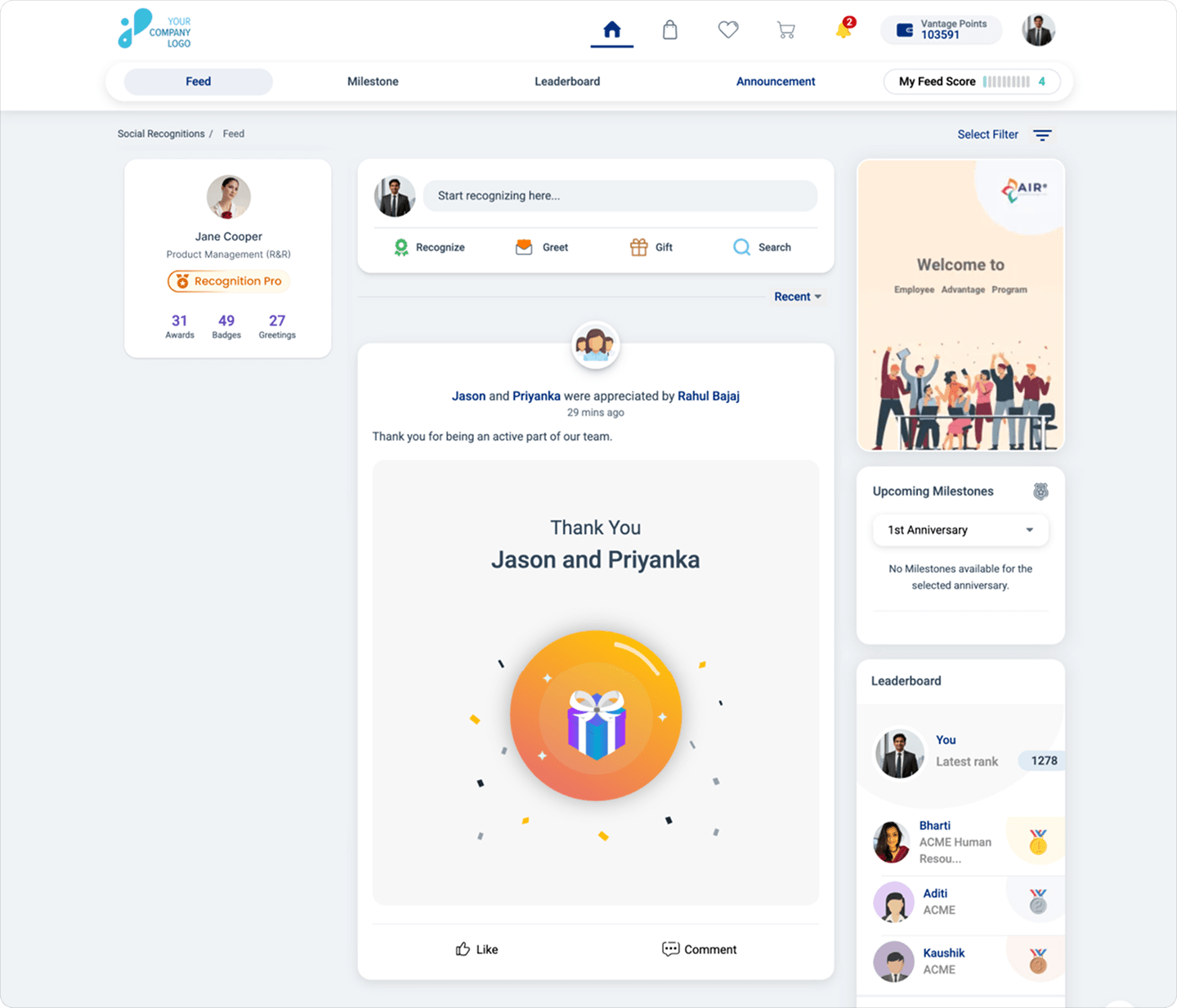
In practice, that means pulling a quarter's worth of recognition entries before writing anything. A manager preparing a review for a support lead might filter the recognition feed by name and find three entries: a shoutout for stabilizing a client escalation in February, a peer nomination for mentoring a new hire in March, a values-tagged recognition for owning a migration rollback in May. Each already has a date, an action, often a number. Turning that into a review comment is mostly transcription: "Stabilized the February client escalation within four hours, preventing contract cancellation, then mentored two new hires through onboarding in March." The manager didn't have to remember the quarter. The record did.
Where the evidence lives: A year of recognition entries turns review writing from recall into citation. Recognition Analytics lets a manager filter a full cycle's recognition history by person, so the evidence for a review comment is a search away, not a guess.
Positive Performance Review Comments (Exceeds Expectations)
Comments for employees exceeding expectations should name the specific result and the behavior behind it, not just the rating. The 48 comments below are grouped by results, initiative, collaboration, and growth; for a broader library of positive framing beyond the review cycle, see positive feedback examples.
Results & Execution
Closed the Q2 pipeline gap by generating 18 qualified leads against a target of 12.
Reduced average ticket resolution time from 36 hours to 14 hours this quarter.
Delivered the platform migration two weeks ahead of the revised deadline with zero rollback incidents.
Cut the monthly reporting cycle from five days to two by automating the data pull.
Hit 112% of the sales quota for three consecutive quarters.
Brought the defect rate on the checkout flow down from 4.2% to 0.8%.
Renegotiated the vendor contract and saved the team $22,000 annually.
Shipped the redesigned onboarding flow that lifted activation rate by 9 percentage points.
Kept the support backlog under 20 open tickets through the entire product launch.
Completed audit prep two weeks early, leaving time to fix every flagged gap.
Turned around the client's escalated account and retained a $180,000 contract.
Consistently met every sprint commitment this quarter without a single carryover story.
Initiative
Spotted the billing discrepancy before finance did and flagged it with a fix already drafted.
Built the onboarding checklist the team now uses for every new hire, without being asked.
Volunteered to lead the cross-team retro after the outage and turned it into a documented runbook.
Proposed the vendor switch projected to save $40,000 next fiscal year.
Took ownership of the orphaned API integration and got it stable within a week.
Started the weekly customer-feedback digest that product now uses to prioritize the roadmap.
Raised the risk on the Q3 timeline early enough that the team could replan calmly.
Created the shared troubleshooting doc that cut new-hire ramp time by half.
Identified the process bottleneck in intake and redesigned it without waiting for direction.
Picked up the client call nobody wanted and converted it into a renewal.
Built a lightweight dashboard the whole team now checks before the Monday standup.
Flagged the compliance gap in the vendor contract before legal review caught it.
Collaboration
Mentored two new hires this quarter, and both hit full productivity a month early.
Stepped in to cover a teammate's deliverables during medical leave without dropping their own.
Ran the cross-functional syncs that finally got design, product, and engineering aligned on scope.
Gave feedback in code reviews that consistently made the final product better, not just correct.
Built trust with the finance team fast enough that budget approvals now take days, not weeks.
Shared credit visibly when the marketing campaign succeeded, naming each contributor by name.
De-escalated the conflict between support and engineering by proposing a shared triage process.
Consistently makes space for quieter teammates to speak first in planning meetings.
Partnered with the design team early enough that the handoff needed zero rework.
Took the unpopular but necessary role of note-taker and turned it into a decision log everyone uses.
Coached a peer through their first client presentation and sat in to support, not take over.
Bridges the gap between the remote and in-office halves of the team better than anyone else on it.
Growth & Development
Went from needing every ticket reviewed to reviewing others' tickets in two quarters.
Completed the advanced certification ahead of schedule and is already applying it to live projects.
Took the lead on a stretch project after asking for it directly in the last 1:1.
Turned last quarter's feedback on presentation skills into visibly sharper client decks this quarter.
Asked for and acted on peer feedback without needing a manager to broker it.
Grew from owning a single feature to owning the roadmap for an entire module.
Built the skill gap identified in Q1 into a strength recognized by two other teams.
Volunteered for a public speaking opportunity clearly outside their comfort zone and delivered well.
Shows up to every 1:1 with a self-assessment already drafted, not waiting to be asked.
Took the constructive note on delegation from last cycle and now delegates two full workstreams.
Is visibly more confident pushing back on scope creep in planning than six months ago.
Has gone from asking how to do the job to asking how to do it better.
Meets-Expectations Comments That Still Motivate
The meets-expectations rating is the hardest one to write well, because damning with faint praise is easy and demotivating. The comments below are grouped by reliability, communication, and growth in progress, and each one names something concrete instead of settling for "solid performer."
Reliable Delivery
Met every sprint commitment this quarter, with clear, proactive updates when scope shifted.
Delivered the client report on time in all six cycles, with no follow-up corrections needed.
Keeps ticket resolution steady at the team average of 24 hours, quarter over quarter.
Handles the recurring monthly close process independently and flags exceptions before they become problems.
Maintains a clean, current project tracker that the rest of the team relies on for status.
Consistently shows up prepared to every client call with the account history reviewed in advance.
Owns the weekly inventory count with zero discrepancies for four consecutive months.
Follows the QA checklist thoroughly enough that defects rarely make it past this stage.
Keeps the shared calendar and meeting notes reliable enough that nobody has had to double check them.
Processes expense approvals within the two-day SLA every cycle this quarter.
Runs the weekly status update without reminders and keeps it to the point.
Manages the vendor relationship steadily, with no missed renewals or lapsed contracts this year.
Communication & Collaboration
Communicates blockers early enough that the team can replan instead of scrambling.
Gives clear, actionable updates in standup without needing follow-up questions.
Responds to cross-team requests within a day, even when the answer is "not yet."
Writes documentation that the rest of the team can actually follow without asking clarifying questions.
Handles disagreement in meetings calmly and without needing a manager to step in.
Keeps stakeholders informed on the project timeline without being prompted for updates.
Asks clarifying questions before starting work rather than guessing and redoing it later.
Shares context with new team members without being asked to onboard them formally.
Flags scheduling conflicts early enough that they rarely become last-minute fire drills.
Gives feedback to peers that is direct and specific, if occasionally light on next steps.
Represents the team accurately in cross-functional meetings, even on topics outside their usual scope.
Follows up on action items from meetings without needing a reminder from the lead.
Growth in Progress
Is building confidence in client-facing conversations, and it shows compared to two quarters ago.
Handles routine parts of the role independently, with support still needed on edge cases.
Applied the feedback from the last review cycle on meeting prep, and it is visibly working.
Is starting to spot problems before they are flagged, though not yet consistently.
Took on one stretch task this quarter, a good first step toward more ownership.
Asked for feedback twice this quarter without prompting, up from not at all last cycle.
Is more comfortable pushing back on unclear requirements than at the start of the year.
Shows steady technical growth, though decision-making under ambiguity is still developing.
Took the initiative to shadow a senior teammate to build skills for the next level.
Is reliable on individual tasks and is ready to start owning small group efforts.
Has started documenting their own work without being asked, a habit worth building on.
Meets the bar on current scope and has expressed interest in taking on more.
Needs-Improvement and Constructive Comments
The most useful needs-improvement comment pairs a specific concern with a specific next step, so the employee leaves with something to do instead of something to feel bad about. Comments below are grouped by quality, deadlines, communication, collaboration, and adaptability; for more on this style of feedback, see constructive feedback examples.
Quality & Accuracy
Three client deliverables this quarter needed a second review before they were ready to send. Building in a self-review step before submission would catch most of this.
Recurring formula errors on the monthly forecast point to a process gap, not a one-off mistake. A shared checklist for the close process would help.
Code reviews are flagging the same indexing issue across multiple pull requests. Pairing on the next two features would help this stick.
The client presentation had two outdated figures that should have been caught in a final pass. A dedicated proofing step before external sends would close this gap.
QA is catching defects that unit tests should have flagged first. Time spent strengthening test coverage would reduce rework downstream.
The onboarding doc had gaps that new hires kept surfacing. A quarterly review cycle would keep it current.
Two vendor invoices were approved with pricing errors this quarter. A second set of eyes on invoices over $5,000 would add a useful check.
The audit found three records missing required sign-off. Building sign-off into the workflow, rather than relying on memory, would prevent repeats.
Data entry errors in the CRM are creating extra cleanup work for the reporting team. A validation step at entry would save that time downstream.
Deadlines & Time Management
Four of the last six deliverables came in past the agreed date without an earlier flag. Raising timeline risk as soon as it appears would give the team room to adjust.
The sprint has carried the same two stories for three cycles running. Breaking large stories into smaller, shippable pieces would help momentum.
Status updates are usually accurate but arrive after the deadline has already passed. Sending a heads-up two days ahead of a miss would be more useful than the update itself.
Meeting prep is often finished the morning of, which shows in the first few minutes. Blocking prep time the day before would raise the quality of the room.
The report is consistently the last one submitted in the monthly cycle. Working backward from the due date with buffer built in would help.
Follow-ups from client calls are taking a week or more to go out. Sending them within 48 hours would keep momentum with the client.
Three deadlines slipped this quarter because dependencies on another team weren't flagged early. Surfacing cross-team blockers in the weekly sync would prevent this.
Task estimates have been optimistic by roughly 30% across the last two projects. Padding estimates based on actuals from past work would improve planning accuracy.
The certification deadline was missed without an earlier heads-up that it was at risk. A calendar reminder two weeks out would help catch this before it becomes urgent.
Communication
Updates in the team channel are often too brief to act on without a follow-up question. Adding one line of context, what changed and what's next, would save the back-and-forth.
Disagreements in planning meetings have twice escalated in tone before being resolved. Taking disagreements offline first would keep the room more productive.
Stakeholders have twice learned about a delay from someone other than this person. Being the one to deliver the update, even the uncomfortable one, builds more trust.
Client emails sometimes go unanswered for two or more days without an acknowledgment. A same-day "got it, more by Thursday" reply would close that gap.
Feedback given to junior teammates has occasionally landed as criticism rather than direction. Leading with the specific behavior and the fix would land better.
Meeting notes are inconsistent, which has caused confusion about who owns what. Assigning and confirming owners before the meeting ends would help.
Cross-team requests are sometimes met with a flat "no" without an alternative offered. Pairing a no with a next-best option keeps the relationship intact.
Important context is sometimes shared in a hallway conversation instead of in writing. Putting decisions in the shared doc would keep the rest of the team aligned.
Collaboration & Ownership
Two projects this quarter stalled while waiting on a decision that could have been escalated sooner. Flagging a stuck decision within 48 hours would keep things moving.
Credit for the campaign result was taken individually, even though three people contributed. Naming collaborators explicitly would strengthen trust on the team.
Onboarding the new teammate was left mostly to others despite having the most context. Taking a visible role in onboarding would put that context to better use.
Requests for help are rare even when workload is visibly over capacity. Raising capacity concerns earlier would prevent quality slipping under pressure.
The handoff to the support team lacked enough detail for them to act without follow-up questions. A short handoff template would close that gap.
Ownership of the shared dashboard has been unclear, and it has gone stale twice this quarter. Naming a single owner would fix this.
Feedback from peers in the last engagement survey noted this person is hard to loop in on decisions. A standing 15-minute weekly sync would open that door.
The project plan didn't account for a dependency on another team, which surfaced late. Mapping dependencies at kickoff would catch this earlier next time.
Adaptability & Problem-Solving
The process didn't change even after the tool it was built around was replaced. Revisiting standard workflows after a tool change would keep them relevant.
Pushback on the new reporting format took two cycles longer than the rest of the team needed to adjust. Raising concerns early, before rollout, would be more useful than after.
When the client changed scope mid-project, the plan took a week to catch up. Building a lighter, faster replanning step would help here.
The same manual workaround is still used for a problem that automation now solves. Revisiting old workarounds after new tools ship would save time.
Three separate small fires this quarter were treated as one-offs rather than a pattern. Naming the pattern early would prevent the fourth one.
New process changes are often the last one adopted on the team. Asking what's blocking adoption directly would surface the real reason.
The escalation path wasn't followed when the usual approver was out, which delayed a client fix. A documented backup approver would prevent this next time.
Feedback on the new tool was that it "doesn't work," without specifics on what failed. Naming exactly what broke would get it fixed faster.
Constructive comments also land better when they're anchored to a shared standard instead of personal opinion. Recognition tagged to a specific company value, the kind Vantage Rewards' Core Values Alignment tracks automatically, gives managers that anchor, so the gap is measured against a named value, not the manager's mood.
| Weak comment | Calibration-safe rewrite |
|---|---|
| Always misses deadlines. | Missed 4 of the last 6 deadlines without an earlier flag; a two-day risk update would help. |
| Bad attitude in meetings. | Twice raised disagreement in a tone that shut down discussion; taking it offline first would help. |
| Not a team player. | Has not looped teammates into two recent decisions that affected their work; a standing sync would close the gap. |
| Lazy this quarter. | Delivered 3 of 8 sprint commitments; a mid-sprint check-in would catch slippage earlier. |
| Can't handle pressure. | Quality dropped on the two projects with compressed timelines; flagging capacity limits earlier would help protect output. |
| Doesn't listen to feedback. | The formatting note from Q1 recurred in two more reports; confirming the change in writing would help it stick. |
| Poor communicator. | Status updates arrive after the deadline has passed twice this quarter; a same-day heads-up would be more useful. |
| Not leadership material. | Has not yet taken on a cross-team initiative; volunteering for one next cycle would build that track record. |
Comments for Top 3 Areas of Improvement
The areas of improvement that come up most often for employees across review cycles are communication timing, delegation, and strategic framing. Here are three ready-to-use comments for each.
Communication
Bring the client update one day earlier than feels necessary; it is rarely too early.
Write the one-line "what changed, what's next" summary before sending any status update.
Take disagreements offline first, then bring the resolved version back to the group.
Time Management
Flag timeline risk the moment it appears, not once the deadline is already close.
Break the next large deliverable into pieces that can ship every two weeks.
Build a two-day buffer into every estimate based on the last two projects' actuals.
Delegation
Hand off one recurring task next quarter that doesn't require this person specifically.
Write a short handoff doc before delegating, not after the first question comes back.
Check in at the milestone, not the deadline, on anything delegated.
Strategic Thinking
Connect the next project update to the team's quarterly goal in one sentence.
Ask "what problem does this solve" before scoping the next request.
Bring one recommendation, not just a status, to the next leadership review.
Overall Performance Summary Comments
The best comments for overall performance summarize the cycle in one or two sentences, naming the single strongest result and the single clearest next step, rather than listing everything that happened. The 12 below cover exceeds, meets, and mixed cycles so you can adapt the closest match.
Consistently exceeded targets this cycle while also raising the bar for the rest of the team through mentoring and process improvements.
Met every core commitment this quarter and is ready to take on one stretch project next cycle.
Delivered strong, reliable results with two clear opportunities, faster escalation and more proactive updates, that would sharpen next cycle's performance.
A strong quarter of individual delivery; the next area of growth is extending that same reliability to supporting teammates.
Solid, dependable performance across every core responsibility, with initiative on the vendor contract that saved the team real money.
Performance met expectations overall, with quality and deadlines the two areas most worth focused attention next cycle.
An above-expectations quarter driven by the client save and the onboarding doc the whole team now relies on.
Reliable and well-organized this cycle; the next step is bringing that same rigor to cross-team communication.
Strong technical execution this quarter, paired with visible growth in giving feedback that used to be avoided.
Overall a steady cycle with no major gaps; ownership of the shared dashboard is the one area to tighten.
Exceeded expectations this quarter through consistent delivery and a genuine willingness to take on the work nobody wanted.
A mixed quarter: strong client outcomes offset by deadlines that slipped more than once; the next cycle should focus on earlier flagging.
5 Scenario-Based Performance Review Samples
A full review sample works better than a phrase when the situation itself is complicated, which is why these five are written as paragraphs, not comments.
Promotion-Ready Performer
This cycle, [Name] operated a full level above their current title. They owned the vendor renegotiation end to end, saving the team $22,000 annually, and stepped into the team lead role for six weeks during a hiring gap without being asked. Peer feedback specifically calls out mentoring two new hires to full productivity a month ahead of the usual ramp time. The gap between current scope and the next level is no longer skill, it is title. Recommend evaluating for promotion this cycle, with a stretch project in cross-team strategy to round out the case before the next calibration.
First Review After Onboarding
[Name] joined the team 90 days ago and is ahead of the typical ramp curve. They completed onboarding two weeks early, are already handling the recurring monthly close process independently, and asked for feedback twice without prompting, which is unusual this early. The one area to develop is confidence in client-facing calls, where they are still deferring to a senior teammate more than the role requires. The next 90 days should include one client call led solo, with a debrief immediately after.
Remote Employee
Working fully remote this cycle, [Name] kept every deliverable on time and communicated proactively enough that time zone gaps were never a blocker for the team. Their written updates in the team channel are consistently more detailed than what the in-office team provides verbally, which has made async handoffs smoother for everyone. The one gap is visibility in cross-functional forums, where quieter contributions sometimes go unrecognized simply because they happen in writing rather than in the room. Making a point of speaking up live in the next two leadership reviews would close that gap.
Inconsistent Performer
[Name]'s results this cycle were strong on paper, exceeding target on two of three core metrics, but the pattern underneath is uneven. The client escalation save in April was excellent work; the missed handoff to support in May, which led to a repeat client complaint, points to the same root cause: work that isn't fully planned before it starts. The strongest weeks this year followed a plan written down first. Making that a standing habit, not just an occasional one, is the single change most likely to convert strong weeks into a strong quarter.
Employee on a Performance Improvement Plan (PIP)
[Name] is currently on a performance improvement plan (PIP) focused on deadline reliability, following four missed deliverables last cycle. This cycle shows early, real progress: three of four deliverables landed on time, and for the one that slipped, the risk was flagged five days in advance instead of after the fact. That advance flag is the behavior the plan was built around, and it is now happening consistently rather than occasionally. Two more cycles of this pattern would support closing the plan; the immediate next step is applying the same early-flagging habit to the recurring monthly report, which hasn't yet shown the same improvement.
What HR strips out in calibration: Six patterns get flagged or rewritten before a review goes final: absolutes ("always," "never"), personality judgments ("lazy," "difficult") instead of named behaviors, unverifiable claims with no example attached, direct comparisons to named colleagues, any reference to a protected characteristic, and comments recycled word for word from last year's cycle. If a comment wouldn't survive being read aloud to the employee's face, it won't survive calibration either.
How to Write Performance Review Comments: 4 Practical Steps
Writing a defensible performance review comment takes four steps: gather the evidence, name the behavior and its impact, attach a next step, and read it aloud before it goes final.
- Gather the evidence. Pull the cycle's recognition entries, project trackers, and 1:1 notes for this person before writing a single comment. Working from a record instead of recall is what separates a specific comment from a generic one.
- Name the behavior and its impact. This is where the Situation-Behavior-Impact (SBI) model earns its place: describe the situation, the specific behavior observed, and its measurable impact, in that order. "During the March escalation (situation), you rewrote the intake checklist yourself (behavior), which cut resolution time by 60% (impact)" reads as evidence, not opinion.
- Attach a next step. Every comment, positive or constructive, should end with something the employee can act on next cycle. A comment without a next step is a verdict; a comment with one is a plan.
- Read it aloud for calibration. Before submitting, read each comment as if saying it to the employee's face. If it sounds like a judgment about who they are rather than what they did, rewrite it.
What to Do Between Reviews So Comments Write Themselves
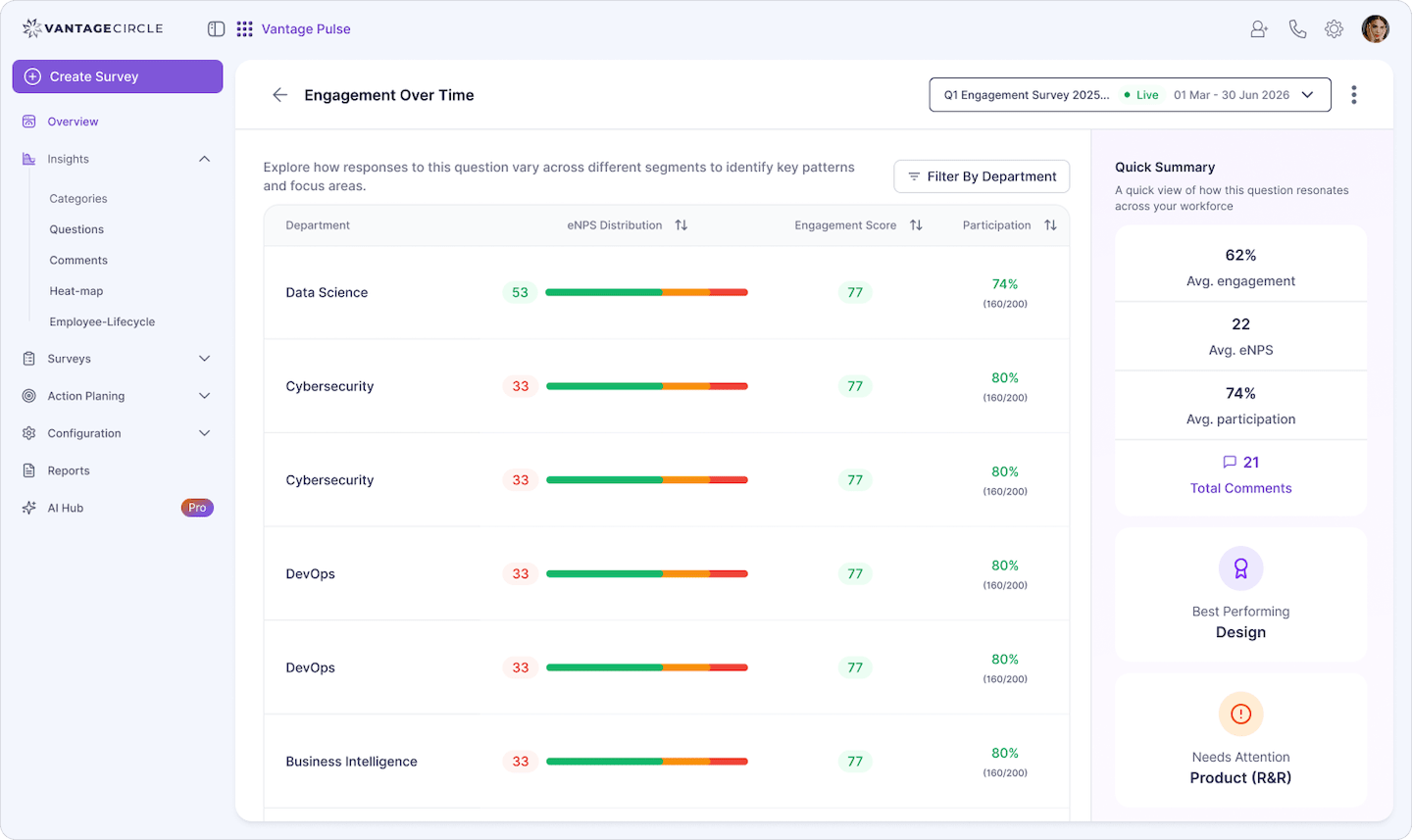
The single biggest predictor of an easy review cycle is what happened in the ninety days before it, not the hour spent writing comments. An annual review should never be the first time an employee hears about a win or a concern. Managers who recognize contributions with Vantage Rewards' manager recognition feature in the moment build a running record over the year, and the year-end comment becomes a summary instead of a surprise.
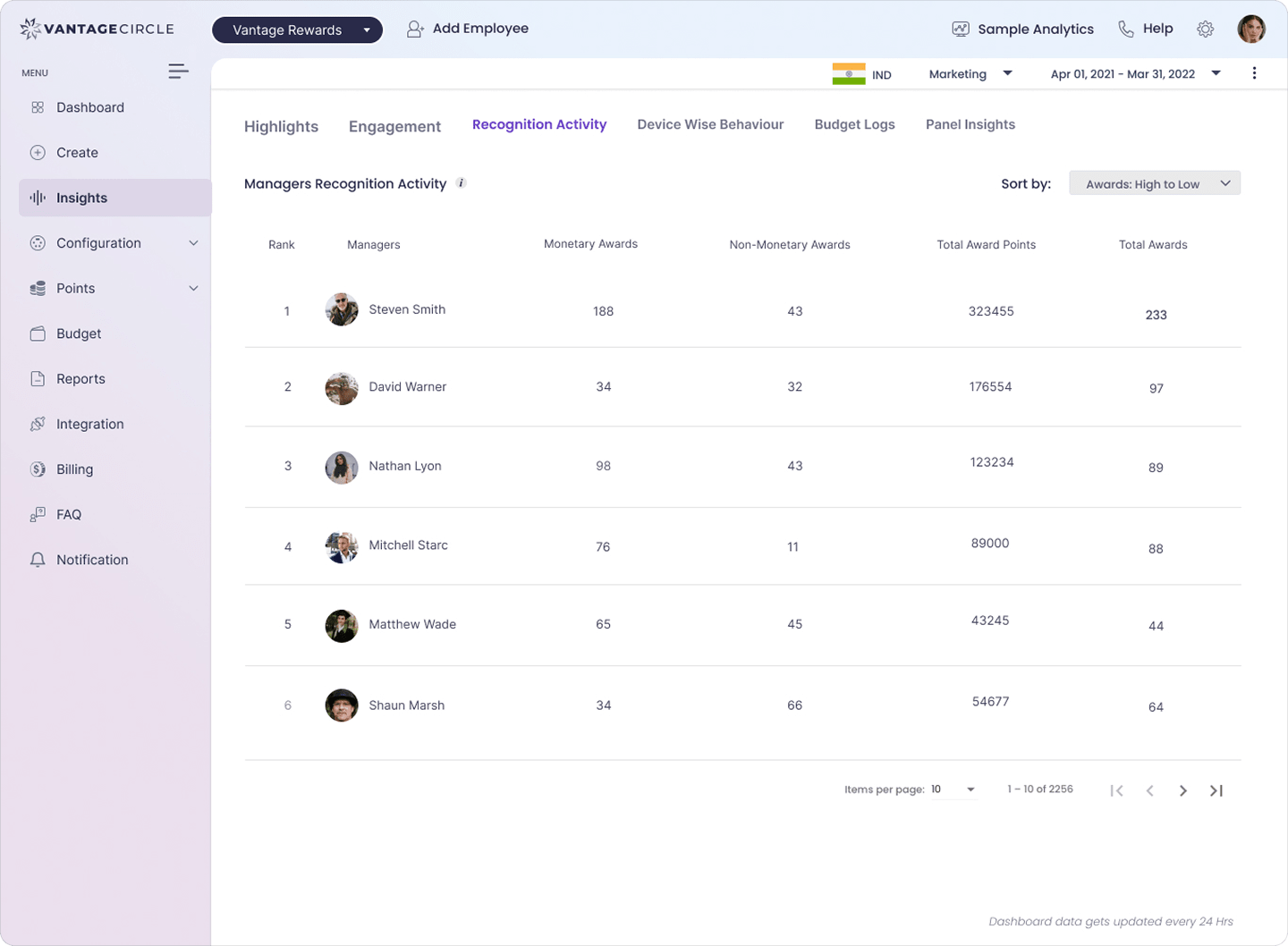
Review cycles also change how employees feel about the company, and most organizations never measure it. A short employee Net Promoter Score (eNPS) pulse survey after review season, with anonymous responses and department-level cuts through Vantage Pulse, shows whether the process built trust or burned it, and where. Combined with a habit of ongoing employee recognition between cycles, the next review's comments write themselves from the record you've already been keeping.
Writing Your Own Self-Review?
If you're the one being reviewed rather than doing the reviewing, the comment bank above still applies, but the framing shifts: you're building the evidence case for yourself instead of a direct report. For a full set of self-review phrases organized by competency, see self-appraisal comments. And if you're looking for the competency-based version of this library, organized by the twelve core skills reviews typically assess, performance appraisal comments is the companion piece to this page.
FAQs
What are the best comments for overall performance?
The best overall performance comments name one strongest result and one clear next step in a single sentence, rather than summarizing everything that happened. For example: "Exceeded target on two of three core metrics this cycle, with faster escalation handling the clearest opportunity for next quarter." Specific beats comprehensive.
How do I comment on my own performance review?
Comment on your own performance review the same way you'd want a manager to: name a specific result, attach a number where you can, and note one honest area to grow. Avoid vague self-praise like "worked hard," and point to evidence instead, a project shipped, a metric moved, feedback you acted on. See self-appraisal comments for a full set of phrases.
What are my top 3 areas of improvement?
The three areas of improvement that come up most often across review cycles are communication timing, delegation, and strategic framing. In practice, this means flagging risk earlier, handing off recurring work instead of holding onto all of it, and connecting daily work back to team goals in updates and meetings.
What are some positive comments?
Strong positive comments name a specific behavior and its measurable result, such as "cut ticket resolution time from 36 hours to 14" rather than "did a great job." The most useful ones are specific enough that the person could repeat the behavior on purpose next cycle. See the full comment bank above, organized by results, initiative, collaboration, and growth.
Conclusion
Performance review comments do their job when they're specific enough to be useful and evidenced enough to survive calibration. The library above gives you 150+ ready-to-use comments across every rating level, 5 full scenario-based samples, and a repeatable method for writing from a record instead of memory. The comments only get easier to write if the record behind them gets better between now and the next cycle, which is really the whole point of the evidence method.
Want the entire comment bank, plus all 5 samples and the calibration checklist, in one document you can keep open while you write? Download the Performance Review Comment Kit below.
Download the Performance Review Comment Kit: The full comment bank, 5 scenario-based samples, and the calibration-safe language checklist in one PDF. Get the Comment Kit

Shaoni Gupta is a content marketing specialist at Vantage Circle, with expertise in scriptwriting and copywriting in the field of employee rewards and recognition.
Connect with Shaoni on LinkedIn.