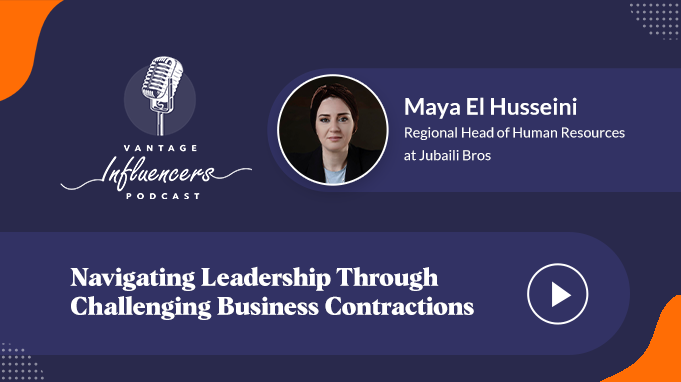
Navigating Leadership Through Challenging Business Contractions
Episode Overview
When markets tighten and organizations are forced to scale back, leadership stops being about big gestures and starts being about hard, unglamorous choices made under pressure. This conversation digs into what actually separates leaders who steer their teams through contraction from those who simply survive it. Maya breaks contraction down into three recurring pressure points: the growing scarcity of leaders who can operate through complexity and hybrid ways of working, intensifying competition that forces constant recalibration, and the relentless push toward profitability amid rising costs. Rather than treating these as abstract themes, she connects each one to the everyday tension leaders feel between running the business as usual and pushing transformation forward at the same time.
The discussion then moves into the practical mechanics of leading through that tension: how to make high-stakes calls without falling into analysis paralysis, why emotional intelligence matters more than raw data when a team is anxious, and how a clearly communicated sense of purpose keeps people focused instead of scattered. Maya also makes the case that resilience is not something leaders can simply declare into existence; it has to be built deliberately, with empathy as its foundation. Listeners walk away with a grounded, experience-based framework for balancing stability and growth without burning out the people responsible for delivering both.
Episode Highlights
- Business contraction shows up in three recurring forms: scarcity of leaders equipped to operate through complexity and hybrid models, intensifying competition, and constant pressure to protect profitability amid rising costs.
- Balancing business-as-usual performance with transformation requires two disciplines: a clearly communicated sense of purpose and a concentrated, focused resource model.
- Leaders often lose time to decision fatigue; calculating risk deliberately, rather than over-investing in mitigation, keeps decisions moving.
- Emotional intelligence helps leaders separate objective facts from emotional reactions when making high-pressure calls.
- Employee well-being improves when people have clarity on how their work contributes, feel a sense of fulfillment, and are protected from unnecessary organizational noise.
- Upskilling and reskilling only create real impact when tied to specific business priorities, not treated as generic training for its own sake.
About the Guest
Maya El Husseini, Regional Head of Human Resources, Jubaili Bros
Maya brings more than two decades of regional HR experience across the Middle East and Africa, spanning industries including technology, medical and surgical, petrochemical, retail, real estate, research and development, and food and beverage. She has scaled HR functions from the ground up, led culture and leadership alignment across multiple organizations, and built a strong focus on business agility and agile ways of working. Certified across employee experience, performance management, and organizational competencies, she brings deep expertise in HR infrastructure, talent acquisition, and change management, alongside experience in office management functions such as health and safety, budgeting, and event coordination.
Host
Susmita Sarma, Vantage Influencers Podcast Host
What You Will Learn
- The three most common forms of business contraction leaders face today
- How to balance business-as-usual performance with transformation initiatives
- Practical tactics for making tough decisions without falling into decision fatigue
- Why emotional intelligence is critical to objective decision-making under pressure
- How to protect employee well-being and engagement during uncertain times
- Why upskilling and reskilling must be tied to business priorities to be effective
- How resilience and empathy work together to help teams recover from setbacks
Key Topics & Timestamps
| Timestamp | Topic |
|---|---|
| 00:57 | Maya's journey into her current role as Regional Head of HR |
| 03:03 | Overview of the common types of business contraction |
| 05:13 | Strategies for balancing stability and growth |
| 07:15 | Making tough decisions for survival while investing in the future |
| 09:45 | Supporting employee well-being and engagement during uncertainty |
| 11:58 | Why upskilling and reskilling are critical to staying competitive |
| 14:07 | Building resilience and empathy during business contraction |
Full Transcript
Click to read the full episode transcript
Welcome to the Vantage HR Influencers Podcast. This podcast is sponsored by Vantage Circle, the simple and AI-powered rewards and recognition platform for employee engagement.
Leading through tough times requires leaders to be resilient, adaptable and strategic. When businesses face economic challenges or industry changes, leaders must guide their teams through uncertainty while keeping everyone motivated and productive. This means that they must take clear actions, communicate openly and find creative solutions to their problems.
Susmita Sarma: Hi everyone, this is Susmita, your host for the show, and in this episode of the Vantage Influencers Podcast, we'll discuss practical strategies and principles that leaders can use to navigate this difficult situation and come out stronger in the end. For the same, I have with me Maya El Husseini, the Regional Head of Human Resources at Jubaili Bros. Hello Maya, it's wonderful to have you here with us today. Before we delve into our discussion, could you kindly share with our audience a little bit about the journey that brought you to your current role?
Maya El Husseini: Absolutely, thank you so much, Susmita, for having me and hosting me today. I think we have a very interesting topic today, business contraction. So just to give a quick introduction, this is Maya. I have been building my experience in HR for 25 years. I had the opportunity to work in multiple industries. I have scaled many HR functions from ground level up. I have also had the mission of aligning the culture of a leadership team and executives across various organizations and businesses. I've definitely focused a lot on business agility, and I've been working a lot on the agile mindset and the agile methodology. And recently, in the last one and a half years, I stepped into a new role. What obviously attracted me to the role is the fact that this company is, without a doubt, a global leader in conventional and renewable power solutions. The company has been around for more than 45 years. We cater to various markets and applications, including residential, commercial, industrial, healthcare, data centers, and so on. We've been really building our portfolio. We have around 1,600 employees across Africa and the Middle East. We focus on power solutions between conventional and renewable, which really brings a better quality of life. So the role has been very attractive, focusing on many transformational initiatives for the business.
Susmita Sarma: Brilliant, Maya. Listening to your journey, it strikes me how each step led you to where you are today. I'm sure your listeners are eager to learn more about the experiences and inspirations that shaped you. So Maya, in your current role, you must have encountered various types of business contractions. Could you provide us with an overview of the common challenges from your perspective?
Maya El Husseini: Absolutely. So I would summarize it based on all the journeys I've had across the Middle East and Africa. There have been many contractions that I've experienced in business. One of them, and the recent one that's been top of mind, is the availability of leadership and the quality of leadership required today to lead through complexity, to influence others, and even to adapt to hybrid models, which have become very popular. So we're working in the industry and also working on digitization, so really a combination of humans and technology, and definitely working at a very fast pace without compromising quality. So that's the availability of leadership. The second thing is obviously competition and market excellence. There's a lot happening in the market, you have large enterprise organizations, SMEs, and even startups. We've had to find ways to analyze consumer behavior. I've also been learning a lot about how customer behavior brings different types of market dynamics that put pressure and cause business contraction, whether for well-established organizations or ones that need to adjust course. So really a lot around competition and market acceptance, and I'd say profitability as well. Everybody wants to bring their organization into a profitable state, but with the cost of living, currency fluctuations, and everything going on in the market, you need to keep an eye on how you price your product, and the market intelligence you need to bring in to achieve that profitability. So I'd say those are the three things that are top of mind when it comes to business contractions.
Susmita Sarma: Yeah, rightly said, Maya. During any challenging time, we find ourselves at a crossroads, torn between maintaining stability and driving growth for organizations. So I'm curious to hear your thoughts on specific strategies and tactics that leaders can employ to navigate this delicate balance.
Maya El Husseini: I think the thing that stands out most today in leadership, to navigate or manage the balance you've just mentioned, is ensuring you can concentrate on business as usual, meaning doing the regular performance of the business, while also ensuring the team stays engaged in transformational initiatives they can own within the organization. Doing performance and transformation at the same time is not easy and is very complex. I'd say there are certain tactics I'd share with leaders here, and it comes down to two things. One, they need to establish a sense of purpose. Today, everybody is craving direction and clarity on where the organization is heading. So having a sense of purpose that is very clearly communicated and expressed within the team brings a much stronger sense of direction, focus, and a rallying point. So it's important to have this sense of purpose. And the second thing, alongside clarity on purpose and direction, is to make sure you concentrate your resources. This has also been a trending topic around talent and resource allocation, but you really need a focused, concentrated resource model that helps you decode the complexity between people who can perform business as usual and people who can solve for the transformation initiatives that will keep you growing in the market. Some organizations have reached maturity and need to break that maturity and reinvent themselves, which is where transformation initiatives become key. So purpose plus concentration, backed by a strong resource model, will help the team navigate well.
Susmita Sarma: Brilliant answer, Maya. Moving forward, one of the biggest dilemmas leaders face during a contraction is the need to make tough decisions for immediate survival while also investing in the organization's future. What do you suggest leaders do to effectively navigate this balancing act?
Maya El Husseini: Absolutely. We make a lot of decisions every day, but a lot of leaders undergo some fatigue in decision-making because today your decisions have to cover strategy, investments, funding, or market penetration. It's not easy to manage all of this through leadership alone. So my advice to leadership teams for balancing decision-making comes down to maybe three things. One, calculate the risk. In decision-making, you need a lot of critical reasoning and the facts around you, but don't over-invest in risk mitigation. A lot of leaders spend too much time mitigating risk rather than actually engaging with it. So it's important to know how to put the right effort and energy into calculating the risk behind the decision you're making. The second essential thing is that during your day-to-day work, catch-ups, or planning meetings, you talk about very complex things and need to bring alignment among the team. That requires strong emotional intelligence. You need to know why you're deciding on certain critical matters and be able to hold your emotions in check so you can see things objectively. I know it's hard because we're human and controlled by emotions, but emotional intelligence helps you navigate how you read information. I'd also say it's important to focus on behavioral science, meaning reading the behaviors around you, whether it's the customer, the vendor, or the employee, which helps you make better decisions that fit the community and support the future growth and sustainability of the organization.
Susmita Sarma: Yeah, and in the same vein, employee well-being and maintaining high levels of engagement become paramount. I'm sure you'd agree with that. So would you like to tell us about initiatives you've seen, or implemented yourself, that have been particularly effective in this regard?
Maya El Husseini: Yes, I think that's one of the most popular topics across many forums and summits I've attended. Employees have started to realize how important well-being is for them to navigate business, professional, and personal conditions around them. Leaders have taken on much more responsibility for managing the mental well-being of their employees. There are many things leaders can do around well-being. As we discussed earlier, there's the sense of purpose. People need the right clarity and direction to understand how they're contributing in their role. If you're clear on how you're contributing, it gives you a sense of fulfillment. When you have a sense of fulfillment from doing things the right way, from being present, from shining, from being appreciated and engaged, it helps you have a good level of well-being professionally. Organizations also need to ensure the right level of workload, delegation, and everything people are handling day-to-day. Having the right allocation of business priorities helps the team put in the right effort, in the right way, at the right time. We don't want people going in every direction with no clarity on where to focus. So I'd say it comes down to a lot of focus on sense of purpose, ensuring people feel a sense of fulfillment because that brings more engagement, and third, ensuring complexity and noise around them are well filtered by the leadership team.
Susmita Sarma: Yeah. So Maya, in today's rapidly evolving business landscape, terms like reskilling and upskilling have become quite the buzzwords. However, some might wonder why we're emphasizing these strategies so much. So can you shed some light on why reskilling and upskilling are so crucial for businesses striving to remain competitive?
Maya El Husseini: Absolutely. As we said earlier in the conversation, one of the contractions in business is competition. To stay competitive, you also need to invest in yourself and your time to ensure you have the resilience and agile response to what's happening around you. And to do that, you really need a strong system in place, or a mechanism that helps the team grow through certain career tracks or learning and development programs that fit the business. Today, training or learning shouldn't happen just for the sake of skilling. It should address specific business priorities so the impact is stronger and the team has a higher response rate to market conditions around them, ensuring the leadership and their teams are reinventing themselves regularly to stay relevant in the market. I know competition will always move at a fast pace and it's not easy to keep up, but you need to invest time in a tailored, personalized approach to learning and development, particularly for the leadership team and their extended teams, to make sure they have the right skills and competencies to serve the business and the communities they work with, whether that's customers, vendors, or the broader market.
Susmita Sarma: Yeah, and most importantly, apart from this, I think, Maya, in these difficult times, resilience and empathy are the bedrock of any successful organization, especially during turbulent times. I've been fortunate enough to work with leaders who understand the importance of fostering resilience within their teams. So would you like to share some insights on how you think it plays the most important role during periods of business contraction?
Maya El Husseini: I think this became a very high priority when COVID hit us. The team had been through a period where we all knew that resilience and empathy, and ensuring you embrace the people around you, mattered. COVID made sure this rose to the very top of the priority list. Now, both are connected to each other, because today, empathy means not leaving anyone behind, and when you have a very strong sense of connection and support from others, the team becomes even stronger. The team comes together and they build good resilience. Resilience is something you need to work on, it's not plug and play, and it's not built overnight. But empathy is definitely a trigger, or a support system, for the team to strengthen that resilience, and to practice more of it through culture and values, even rewarding people who demonstrate them so others can replicate them elsewhere.
Susmita Sarma: Sure, Maya. Your insights have been incredibly valuable. Before we conclude our podcast today, is there any final message you want to leave our audience with?
Maya El Husseini: I think it's important that the leadership team understands how important their role is. Sometimes when we tell leaders, "you have to do this and that," we give them a lot of recommendations. In the context of expectations, what we need to ensure is that the organization has the right working environment set up for everybody, including the leadership team, to be successful and to always explore options around best practices. It's important for the leadership team to understand that their role will help them manage business as usual alongside transformational initiatives, but they really need to spend time on themselves so they can take care of others. I think it's definitely a great mission to have, not an easy one, but when you see the fulfillment and success it brings, you'd want to do even more of it.
Susmita Sarma: Yeah, and as we navigate the complexities of leadership during such challenging times, remember that resilience, empathy, and strategic foresight are our greatest allies. Together, we can overcome any obstacle and emerge stronger on the other side. Maya, thank you so much for your insights. They've been incredibly insightful and thought-provoking, and they've truly enriched our conversation today. So on behalf of our audience, Vantage Circle, and myself, I extend heartfelt gratitude for your time and valuable contributions. We truly look forward to welcoming you back in the future for more enlightening conversations.
Maya El Husseini: Thank you so much, Susmita, again for hosting me, and I hope to bring even more interesting topics to the table.
Thanks for listening to the Vantage HR Influencers Podcast. Please do subscribe to the Vantage HR Influencers Podcast on Apple Podcasts, Spotify, and our YouTube channel for new episodes.
FAQ
What are the most common forms of business contraction leaders face?
Maya identifies three recurring pressure points: a shortage of leaders equipped to operate through complexity and hybrid work models, intensifying competition and shifting market dynamics, and constant pressure to protect profitability amid rising costs.
How can leaders balance business-as-usual performance with transformation?
By establishing a clearly communicated sense of purpose so teams understand the direction they're heading, and by concentrating resources deliberately so the right people are focused on daily operations while others drive transformation initiatives.
How should leaders approach tough decisions during a downturn?
Calculate risk deliberately rather than over-investing in mitigation, apply strong emotional intelligence to separate objective facts from emotional reactions, and pay attention to behavioral signals from customers, vendors, and employees before deciding.
Why do resilience and empathy matter during business contraction?
Empathy ensures no one is left behind and builds a strong sense of connection and support, which in turn strengthens team resilience. Resilience itself has to be built deliberately over time; it cannot be established overnight.
Related Reading
Also listen on