
Resilience has become one of the most overused, and misunderstood, words in leadership today.
In boardrooms across the globe, we talk about resilience as if it were a personal trait employees should simply "summon" when things get hard.
Work harder. Stay strong. Push through.
The assumption is easy to make: pressure builds toughness. But pressure, by itself, does not make people more resilient. Without the right support, it can just as easily make them exhausted, disconnected, and ready to leave.
And the engagement numbers reflect that strain.
31% of U.S. employees are actively engaged, unchanged from 2024 and at a decade low. Low engagement often reflects environments where people feel unseen and unsupported under pressure. (Gallup, 2025)
That gap is not incidental. It points to a deeper problem with how organizations think about resilience. We keep asking people to withstand difficult conditions without always examining the conditions themselves.
If pressure is rising while connection, recognition, and support are falling, resilience has very little room to take hold.
Resilient leadership, then, is not about asking people to absorb more pressure. It is about creating the conditions that help people function through it.
And one of the most overlooked of those conditions is recognition.
When work gets harder, recognition is often one of the first leadership behaviors to disappear. Yet those are precisely the moments when people need to know that their effort is visible, their contribution matters, and they are not carrying the pressure alone.
That is where resilient leadership begins. This guide covers the definition, the four traits that define it, seven practices to build them, the 7 C's of resilience applied to leadership, real examples, and how HR teams measure it.
What Is Resilient Leadership?
Resilient leadership is the ability to maintain clarity, composure, and direction when conditions are unstable, and to create an environment where the team can adapt and recover. It is not the same as absorbing strain without showing it, and it is not the same as staying relentlessly positive through a crisis.
The concept builds on Dr. George Everly Jr.'s foundational definition: leadership behaviors that help others withstand adversity and rebound from it. In practice, that means the leader stays functional under pressure, communicates clearly when information is incomplete, and protects the psychological conditions, including trust, clarity, and recognition, that allow the team to do the same.
Resilient leaders do not eliminate stress. They help people function through it.
Resilient leadership vs. emotional endurance
Resilient leadership is not emotional endurance. Emotional endurance asks people to bear pressure silently. Resilient leadership means adapting intelligently to what the situation requires, not just absorbing the strain until it passes.
The distinction matters because leaders who confuse the two often model silence and stoicism during hard periods, which their teams read as instability or indifference. Resilience includes the recovery and adaptation phase, not just the absorption phase. It is an active skill, not a passive state.
Also Worth Reading: 9 Most Popular Leadership Styles to Lead Effectively. Find Yours!
4 Core Traits of Resilient Leaders
Resilient leaders consistently show four traits: a calm presence under pressure, adaptability when conditions shift, emotional intelligence in reading and responding to the team, and a clear vision they hold through disruption. Each of these can be developed deliberately. None is a fixed personality attribute.
| Trait | What it looks like | What it is not |
|---|---|---|
| Calm presence | Clear communication during high-stress situations; slowing down when others speed up | Forced positivity or suppressing genuine concern |
| Adaptability | Adjusting strategy when circumstances change without losing the underlying goal | Indecisiveness or abandoning plans at the first obstacle |
| Emotional intelligence | Reading the team's emotional state accurately and responding to what people actually need | Performing empathy or avoiding hard conversations |
| Vision under disruption | Holding the direction and repeating it clearly during uncertainty | Rigid adherence to a plan that no longer fits the reality |
Calm presence
A calm presence does not mean being emotionally flat or performing confidence the leader does not actually have. It means that when a situation escalates, the leader's communication and decision-making do not escalate with it. Teams look to their managers for cues on how to interpret ambiguous situations. A leader who visibly panics narrows the team's capacity to think clearly, because the team is now managing both the external problem and the leader's emotional state simultaneously.
Adaptability
Adaptability in a resilient leader means updating the plan quickly when conditions change while keeping the goal intact. The ability to separate strategic intent from tactical execution, allowing execution to shift without losing the underlying goal, is a defining characteristic of leaders who navigate disruption effectively, as documented in McKinsey's 2020 research on leadership in a crisis. For the team-level parallel, the same principle applies: see building a resilient workforce for how adaptability at the leadership level creates the conditions for organizational adaptability below it.
Emotional intelligence
Emotional intelligence (EI) in a resilient leader specifically means reading the team's actual state rather than the state they are performing for the manager, and responding to what people need rather than what is convenient. A 2022 peer-reviewed paper published in PMC (Grimes et al., 2022) found that leaders who build psychologically safe workplaces score significantly higher on emotional attunement, specifically the ability to notice and respond to emotional cues before they become behavioral problems. For more on applying EI in the workplace, see emotional intelligence in the workplace.
Vision under disruption
The fourth trait is a clear, communicable direction that the leader holds and repeats during disruption. When information is scarce and plans are shifting, a consistent articulation of "here is what we are trying to achieve and why it still matters" gives the team an anchor. Without it, the team spends cognitive energy on speculation rather than execution.
Why Resilience Matters in Leadership
Resilience matters in leadership because a leader's response to pressure sets the ceiling for the team's response. When leaders lose composure or go quiet under stress, decision quality drops, communication becomes sparse, and recognition stops. Each of those failures compounds the team's difficulty, because the team is navigating both the external pressure and the absence of the leadership behaviors it relies on.
Pressure reduces strategic capacity
Research from the American Psychological Association's 2023 Work in America Survey shows that chronic stress impairs working memory and narrows decision quality. Under sustained pressure, leaders shift from strategic thinking to short-term threat management. That same cognitive contraction affects the team. The ability to adapt, which is the core of resilience, erodes quietly when stress is sustained without relief.
Silence breeds uncertainty
When leaders go quiet during difficult periods, teams fill the information gap themselves, and rarely with optimistic assumptions. The reason is straightforward: uncertainty is more disruptive than bad news, because uncertainty is unbounded. A team that knows what is wrong can organize around it. A team that does not know what is happening organizes around anxiety instead. Frequent communication, even when the news is incomplete, prevents that dynamic from taking hold.
The leadership burnout link
Leadership resilience and leadership burnout are closely connected. In 2019, the World Health Organization classified burnout as an occupational phenomenon in the ICD-11, defining it as a syndrome resulting from chronic workplace stress that has not been successfully managed, characterized by energy depletion, mental distance from work, and reduced professional efficacy. Deloitte's 2024 Global Human Capital Trends research found that leadership burnout rose from 52% in 2023 to 56% in 2024. When leaders are depleted, they communicate less, recognize less, and tolerate less risk.
The burnout loop: Leadership burnout reduces recognition, which reduces engagement, which increases pressure on the remaining engaged employees, which accelerates further burnout. Interrupting this loop deliberately is the work of resilient leadership. The loop does not self-correct under continued pressure.

Vantage Influencers Podcast
"Culture works like an organization's immune system: it won't stop disruption from happening, but it determines how fast people recover from it."
Sana Khammash, Culture and Leadership Consultant, EquaMind Consultancy
Listen to the Episode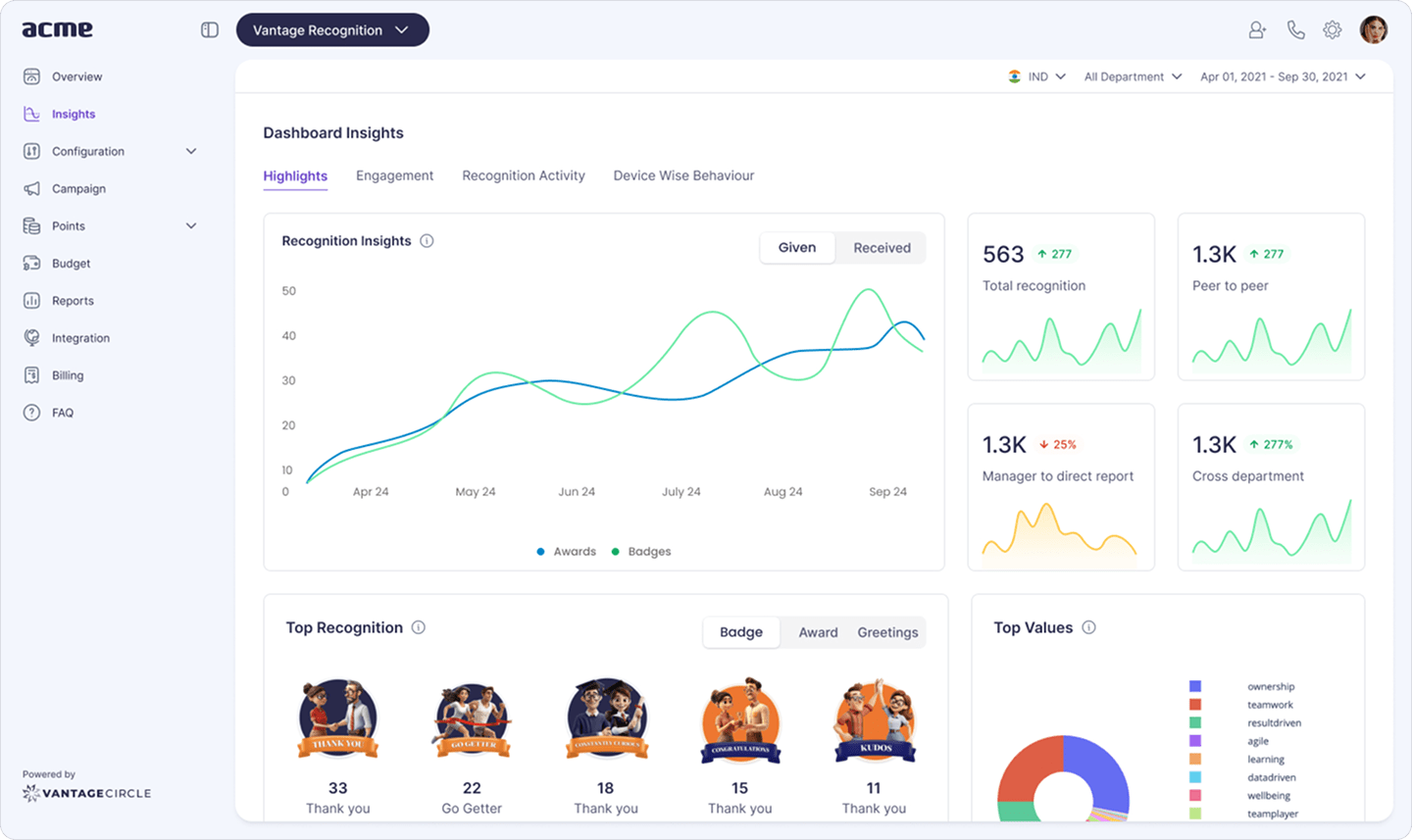
How to Build Resilience as a Leader: 7 Practices
You build resilience as a leader by training four areas: a physical baseline, mental habits, social support, and recovery routines. The seven practices below operationalize each area. Two of them, narrating the plan and recognizing the team, are outward-facing behaviors that directly shape the team's resilience as well as the leader's own.
| Practice | What to do this week | What it protects |
|---|---|---|
| 1. Prioritize physical recovery | Protect sleep, movement, and nutrition as non-negotiable, not as rewards for finishing work | Cognitive capacity for decision-making under pressure |
| 2. Practice mindfulness | 10 minutes of focused breathing or reflection before the first meeting of the day | Emotional regulation; reduces reactive decision-making |
| 3. Challenge catastrophic assumptions | When a worst-case scenario appears, write down what is actually known versus what is assumed | Mental clarity; prevents anxiety from narrowing strategic thinking |
| 4. Build a peer network | Identify two or three leaders outside your team with whom you can discuss pressure candidly | Social support; prevents the isolation that accelerates burnout |
| 5. Protect recovery time | Block two 30-minute windows per day with no calendar access | Sustained performance; recovery capacity sets the resilience ceiling |
| 6. Narrate the plan out loud | Communicate progress and next steps to the team even when the plan is not final | Team stability; fills the information vacuum that anxiety occupies |
| 7. Recognize the team consistently | Acknowledge specific behaviors weekly, not quarterly | Team trust and morale; recognition is the leadership behavior that stops first under pressure and costs the most when it does |
Practice 7 deserves specific attention. Recognition is the one practice that simultaneously maintains a leader's own sense of contribution, which supports their resilience, and directly builds the team's psychological safety. No other item on this list produces both effects. Why it lapses first under pressure, and what the data shows about the cost when it does, is covered in the section below. Vantage Circle's Manager Recognition feature keeps recognition on a weekly cadence through prompts, maintaining the behavior even when the manager's attention is elsewhere.
This is easier to understand in context. When Arne Sorenson faced the COVID-19 shutdown as CEO of Marriott, the crisis did not give him more certainty, more time, or more control. It gave him less of all three. What he could control was how he communicated with his people and what he chose to protect in the process. Every item in the list above is exactly what he did. He did it while managing his own cancer treatment simultaneously. The framework is not abstract. It describes a set of choices that real leaders make, or fail to make, when the pressure is actual.
The 7 C's of Resilience Applied to Leadership
The 7 C's of resilience are competence, confidence, connection, character, contribution, coping, and control. They were developed by Dr. Kenneth Ginsburg, a pediatrician and resilience researcher at Children's Hospital of Philadelphia, as a framework for building durable resilience from the inside out. Applied to leadership, each C maps to a specific behavior that helps a leader stabilize themselves and create the conditions for team resilience.
| Principle | Meaning | Leadership application |
|---|---|---|
| Competence | Knowing how to handle situations effectively | Develop genuine expertise in your domain and invest in it deliberately; confidence under pressure requires real capability, not just a calm affect |
| Confidence | A solid belief in one's own abilities | Act from conviction, not from certainty you do not yet have; communicate clear decisions while acknowledging open questions honestly |
| Connection | Close ties to others that provide support | Build relationships strong enough to hold under strain, with your team, with peers, and with people who will tell you the truth when you need it |
| Character | A fundamental sense of right and wrong | Hold your values under pressure, not just when it is easy; consistency between stated values and pressured behavior is what builds trust |
| Contribution | Understanding that one's presence makes things better | Understand and articulate why the team's work matters; give people a reason to keep going when the outcomes are not yet visible |
| Coping | Learning to manage stress constructively | Develop specific practices for handling pressure without passing it downstream; unmanaged leader stress concentrates in the team |
| Control | Understanding that decisions and choices shape outcomes | Focus energy on what you can actually influence; let go of what you cannot; the attempt to control the uncontrollable produces the paralysis that prevents resilience |
Recognition Is the Leadership Behavior That Fails First Under Pressure
Recognition is usually the first leadership behavior to stop when pressure rises, and it is one of the most costly to lose. When leaders are overloaded, recognition drops out of the weekly rhythm because it requires deliberate attention, and deliberate attention is exactly what intense periods redirect toward task management. The result is predictable: the period when the team worked hardest is also the period when they felt least seen.
The mechanism is not complicated. Dr. Amy Edmondson of Harvard Business School defined psychological safety in 1999 as a shared belief that the team is safe for interpersonal risk-taking. Recognition is one of the primary signals that creates and maintains that belief. When recognition disappears, the signal reverses: effort may not be noticed, risk-taking may not be rewarded, and the team begins to minimize exposure rather than maximize contribution. Google's Project Aristotle (2016) confirmed psychological safety as the single most important factor in high-performing teams, and recognition is one of the concrete, repeatable behaviors that sustains it day to day. When that behavior lapses, the safety it was generating erodes quietly, often before any survey or exit interview captures the change.
What the data shows: The Recognition Effect 2025, a joint study by Great Place To Work India and Vantage Circle drawing on 5.7 million employees across 1,810+ organizations, found that 91% of employees in high-recognition cultures report feeling motivated at work, compared to significantly lower rates in low-recognition environments. The same study found that only 55% of employees currently feel truly recognized. That gap is not abstract: it is the difference between a team that holds under pressure and one that quietly disengages before anyone tracks the signal.
Deloitte's 2023 Workplace Trust research found that employees who trust their leadership are more than twice as likely to go above and beyond expectations. That trust is built in ordinary conditions through the consistent behaviors, recognition, communication, and acknowledgment of mistakes without blame, that most leaders deprioritize when pressure peaks. See leadership's role in shaping employee recognition for how to build that cadence systematically.
Vantage Circle's Recognition Analytics show which teams are receiving recognition and at what frequency. Recognition cadence is an early-warning signal precisely because it is logged in real time as managers act, rather than captured quarterly in a survey. A drop is visible in the data days or weeks before it shows up in an engagement score or an exit interview, which means a leader who monitors it can intervene while it is still a morale problem rather than a retention one.
For the full case on how recognition affects team resilience and retention, see the resilient workforce guide.
Resilient Leadership Examples
Resilient leadership shows up in how a leader handles a specific crisis, not in calm conditions. Three examples illustrate what it looks like in practice.
Satya Nadella, Microsoft (2014 onward)
When Satya Nadella took over Microsoft in 2014, the company had spent a decade losing ground in mobile, search, and consumer technology. His first move was not a restructuring plan. It was a cultural reframe: from a "know-it-all" culture, where status came from appearing to already have answers, to a "learn-it-all" culture, where status came from learning and adapting fastest. Nadella sustained that framing consistently through competitive pressure and internal resistance over multiple years. The behavioral change in leadership preceded the structural recovery. Microsoft's cloud leadership and the company's subsequent growth are widely attributed to this shift.
Arne Sorenson, Marriott International (2020)
As the COVID-19 pandemic shut down global travel, Marriott International faced one of the most severe crises in its history. CEO Arne Sorenson, who was simultaneously managing his own cancer treatment, recorded a direct video message to Marriott's 174,000 employees rather than issuing a written statement. He declined his salary and forfeited his annual bonus. He communicated what was known, what was unknown, and what the company's commitment to employees remained. The response was widely noted as an example of resilient leadership because it combined transparency with empathy under conditions where neither was legally required.
Brian Chesky, Airbnb (2020)
When Airbnb cut 25% of its workforce in May 2020, CEO Brian Chesky chose to communicate the decision directly and in full, rather than through managers or automated HR notifications. He provided 14 weeks of severance, extended health insurance through the end of 2020, offered equity vesting acceleration, created an alumni talent directory to help departing employees find new roles, and committed to not hiring for any role that an affected employee could fill. The specificity of the support, rather than just the language of empathy, is what distinguished the decision as resilient leadership.
How to Measure Leadership Resilience
Track four signals: confidence-in-leadership pulse scores, manager eNPS, recognition cadence by team, and voluntary turnover on high-pressure teams.
| Signal | What it measures | How to track it |
|---|---|---|
| Confidence-in-leadership pulse score | How much the team trusts and feels supported by their direct manager, especially during difficult periods | Short pulse surveys (monthly or bi-monthly) with a dedicated leadership confidence question |
| Manager eNPS | Whether team members would recommend their manager as someone they would want to work for again | Employee Net Promoter Score surveys, run separately from general engagement surveys |
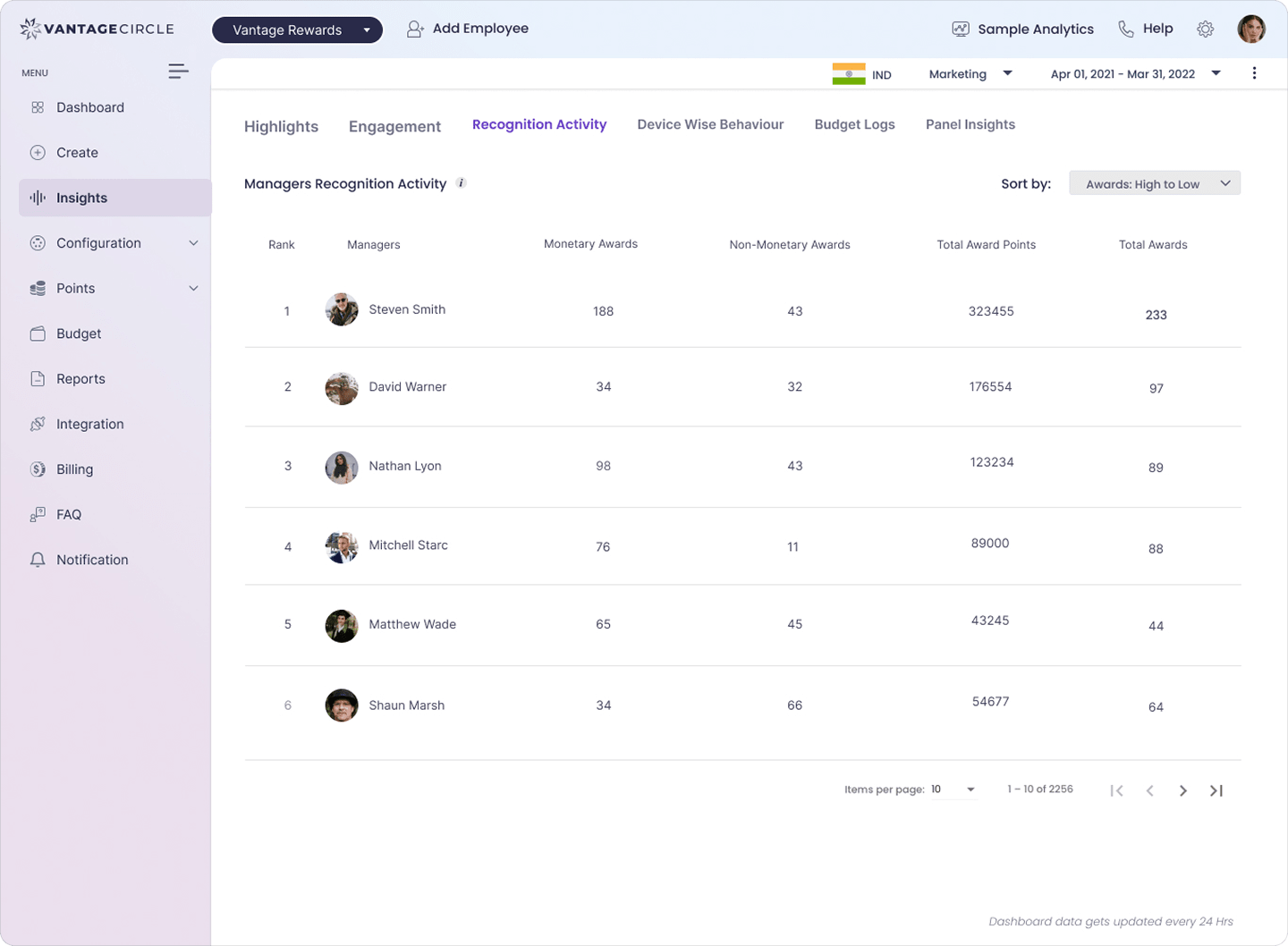
| Recognition cadence by team | How frequently each manager gives recognition, and whether that frequency holds or drops during high-pressure quarters | Recognition platform analytics |
| Voluntary turnover on strained teams | Whether teams that have been under sustained pressure are losing people at a higher rate than baseline | HRIS data segmented by team, comparing turnover rates before and during high-pressure periods |
The recognition cadence signal is the most actionable leading indicator of the four. Because recognition is logged in real time rather than captured in a periodic survey, a drop is visible earlier than engagement scores or turnover figures reflect it, giving a manager time to intervene before it becomes a hiring problem.
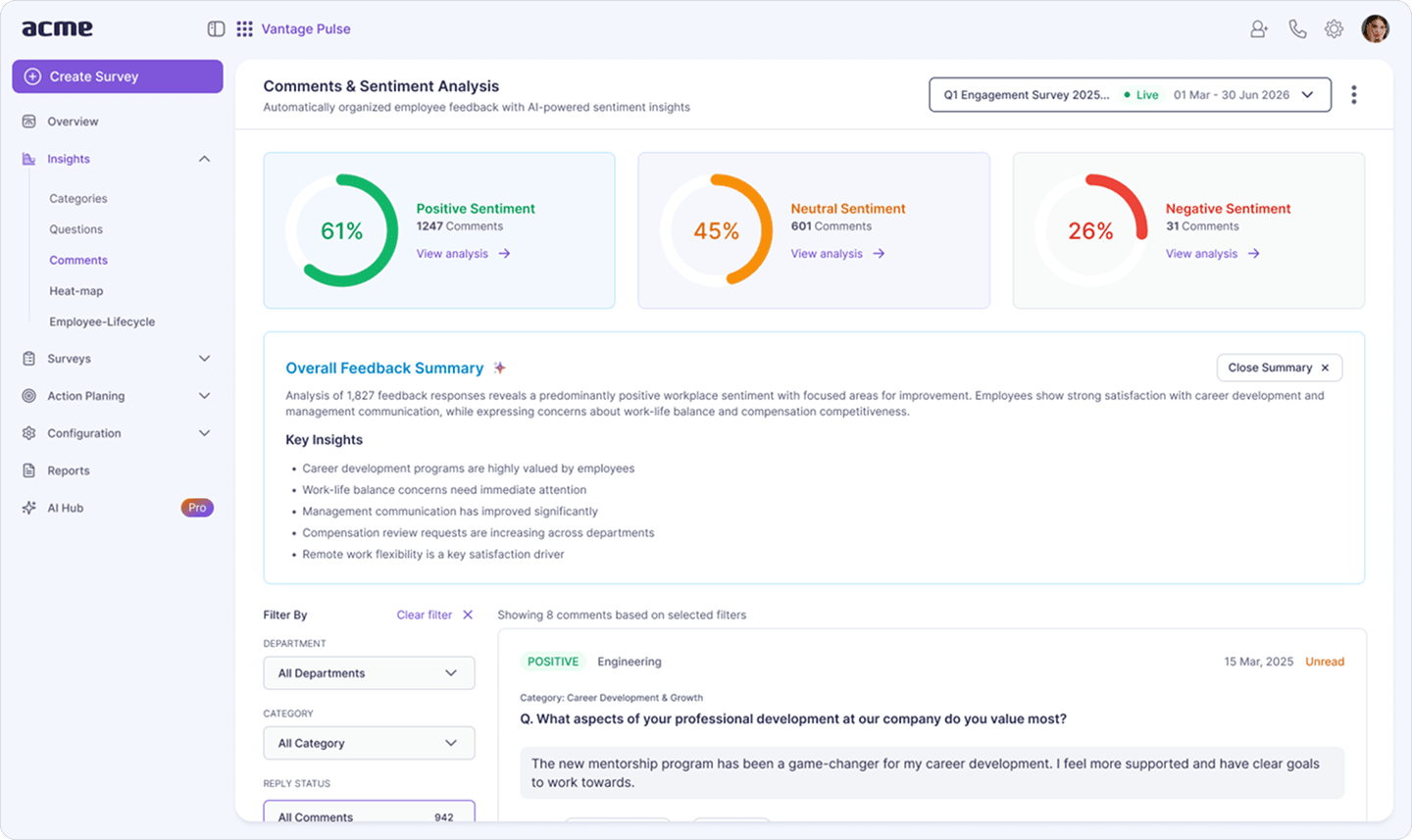
Vantage Pulse tracks confidence-in-leadership and manager eNPS on a rolling basis, so a dip after a reorg or a product launch is visible early rather than discovered at the annual engagement survey. Sentiment analysis on open-text pulse responses adds the qualitative layer: numbers tell you something changed, and the comments tell you what the team is actually responding to.
Frequently Asked Questions
What does resilient leadership mean?
Resilient leadership is the ability to stay clear, steady, and decisive under stress, change, or crisis, and to help a team regain its footing quickly afterward. It differs from emotional endurance in that it includes active recovery and adaptation, not just absorbing pressure. Resilient leadership is a set of learnable behaviors, not a fixed personality trait.
What are the 7 C's of resilience?
The 7 C's of resilience, developed by Dr. Kenneth Ginsburg, are competence, confidence, connection, character, contribution, coping, and control. Applied to leadership, they describe the specific capacities a leader needs to stay functional under pressure and to create the conditions that help a team do the same. Each C can be built deliberately through consistent practice over time.
What are the 5 C's of resilience?
The 5 C's of resilience are competence, confidence, connection, character, and control. They represent a condensed version of Ginsburg's 7 C's framework, omitting contribution and coping. Both frameworks describe the same underlying principle: resilience is a collection of distinct, learnable capacities rather than a single innate trait.
Can you give an example of a resilient leader?
Satya Nadella at Microsoft is a well-documented example. When he took over in 2014, he reframed the company's culture from "know-it-all" to "learn-it-all" and held that framing consistently through competitive pressure and internal resistance over multiple years. The specific behavior, modeling learning and adaptability rather than certainty, is what made the leadership resilient before any structural changes took effect.
What are 10 qualities of a resilient person?
A resilient person demonstrates clear-headedness under pressure, adaptability when plans change, emotional regulation in difficult conversations, the willingness to ask for help, a realistic rather than uniformly optimistic assessment of situations, recovery habits that prevent long-term depletion, a strong connection to their own values, a support network they use actively, the ability to separate what they control from what they do not, and a sense of contribution that gives their work meaning beyond the immediate task.
What are some signs that someone is highly resilient?
Highly resilient people maintain decision quality under pressure while others become reactive. They communicate clearly when information is incomplete rather than going silent. They return to baseline quickly after a setback rather than dwelling in the disruption. They hold their values consistently in difficult conditions, not just easy ones. And they maintain relationships under stress rather than becoming isolated, because they understand that connection is part of the resilience mechanism, not a resource reserved for calm periods.
Conclusion: Resilience Is a Practice, Not a Trait
Resilient leadership does not begin in a crisis. It is built in the ordinary interactions that precede one: the recognition given when results were still weeks away, the communication offered when the plan was still unclear, the composure held when the team needed a steady reference point more than it needed certainty.
The four traits, the seven practices, the 7 C's, and the measurement signals in this guide all point to the same conclusion: resilience in a leader is a system, not a personality. Like any system, it can be built deliberately, tracked accurately, and strengthened over time. The leaders who build it before the pressure arrives are the ones whose teams recover fastest when it does.
That building happens in ordinary moments: a recognition given when the outcome is still uncertain, a status update shared when the plan is still incomplete, a conversation that names what is going well when everything else feels like it is not. Resilient leadership is not a crisis response. It is a practice that makes the crisis response possible.
See Leadership Resilience in Your Data
Vantage Pulse tracks confidence-in-leadership and recognition cadence so you can see resilience building, or eroding, before it shows up in attrition.
Explore the Resilient Workforce Guide →
Supriya is a Content Marketing Lead at Vantage Circle, where she writes on employee engagement, recognition, workplace communication, and culture. Her work on remote team recognition draws on primary research from Vantage Circle's platform data and customer deployments across distributed workforces. She spent the earlier part of her career in corporate communications at Burson, ESPN Star Sports, and CBRE, advising organizations on the messages employees actually hear.
Connect with Supriya on LinkedIn.