Performance Management Beyond Review Cycles
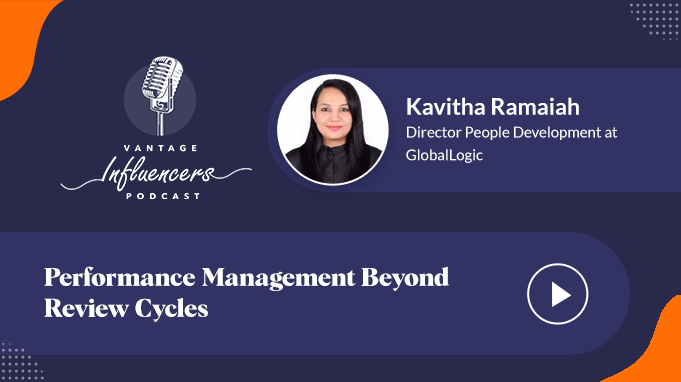
Episode Overview
Kavitha Ramaiah opens this episode by naming what most professionals feel but rarely say out loud: performance reviews still function as a rating exercise instead of a real conversation about growth. She argues that annual and even mid-year cycles are structurally too slow to create change, since by the time formal feedback arrives, the moment to act on it has usually already passed. When ratings, promotions, or compensation are attached to a single review, people become defensive rather than open, which strips the process of the honesty it needs to work.
The conversation moves into what Kavitha calls the biggest mindset shift required of leaders: trading the role of evaluator for the role of coach. Rather than asking how to rate a team member, she pushes managers to ask how to help that person succeed, which reframes performance conversations around curiosity and collaboration instead of judgment and hierarchy. She closes by describing what a growth-focused system would look like if redesigned from scratch: continuous coaching, two-way feedback woven into everyday interactions, and employees who actively own their own development rather than waiting for an annual verdict.
Episode Highlights
- Traditional performance reviews often fail because they evaluate the past instead of developing the future, and infrequent feedback cycles mean opportunities to improve have usually already passed.
- Tying reviews directly to ratings, promotions, or compensation makes employees defensive, which undermines the honesty performance conversations are meant to create.
- The biggest shift leaders need to make is moving from evaluator to coach, asking "how do I help this person succeed" instead of "how do I rate this person."
- Building a real feedback culture means embedding feedback into everyday one-on-ones, project reviews, and team discussions rather than saving it for a formal cycle.
- Leaders who openly ask for feedback on their own performance and act on it set a powerful example of two-way trust for their teams.
- Employees share responsibility for their own growth by seeking feedback, reflecting on their progress, and proactively asking managers for the support they need to succeed.
About the Guest
Kavitha Ramaiah, Director, People Development, GlobalLogic
Kavitha is an HR professional with 18+ years of experience in Talent Acquisition, Employee Engagement, Performance Management, HR Business Partnering, and Organizational Development across global tech and services companies. She has demonstrated success in M&A integration, workforce transformation, and HR operations, delivering measurable business impact such as improved retention, reduced time-to-hire, and increased employee engagement, and is recognized for building scalable HR frameworks that support growth and innovation.
Connect with Kavitha on LinkedIn
Host
Sanjeevani Saikia, Vantage Influencers Podcast Host
What You Will Learn
- Why most performance reviews fail to drive real growth, even when they are designed with good intentions
- The mindset shift that moves managers from evaluator to coach
- How to build a feedback culture that is continuous, specific, and two-way
- What obstacles most commonly get in the way of effective coaching conversations
- The role employees themselves play in owning their development
- What a fully growth-focused performance management system could look like
Key Topics & Timestamps
| Timestamp | Topic |
|---|---|
| 01:18 | Kavitha shares her professional journey so far |
| 02:11 | Why traditional performance reviews fail to drive real employee growth |
| 04:50 | The mindset shift leaders need to turn evaluations into development conversations |
| 12:09 | Building a culture where feedback is continuous and welcomed, not saved for review season |
| 14:50 | How employees can own their growth and make performance conversations a two-way dialogue |
| 19:36 | Kavitha's take on redesigning performance management to be truly growth-focused |
Full Transcript
Click to read the full episode transcript
Welcome to the Vantage Influencers Podcast. This podcast is sponsored by Vantage Circle, the simple and effective recognition platform for employee engagement.
Sanjeevani Saikia: You know, performance management is something almost every employee experiences, yet it's often one of the most debated aspects of work. While it's intended to support growth and development, many employees still view it as a box-ticking exercise rather than a meaningful conversation, unfortunately. And as workplaces continue to evolve, there's growing pressure on organizations to rethink how they measure, discuss, and develop performance. So today, I'd love to explore what effective performance management really looks like. And to help us with that, we have with us Kavitha Ramaiah. She is the Director, People Development at GlobalLogic.
Hi, Kavitha.
Kavitha Ramaiah: Hi, Sanjeevani. Thank you so much for having me. I'm very delighted to be here.
Sanjeevani Saikia: Thank you so much, Kavitha, for joining us today. It's a pleasure to have you on the show. Before we begin today's conversation, would you kindly walk us through your corporate journey so far? I think our listeners would love to hear that.
Kavitha Ramaiah: Sure, absolutely. Thank you so much. I'm Kavitha Ramaiah. I've had the opportunity to work with a few established organizations before joining GlobalLogic, where I'm currently leading one of the delivery groups. A big part of my role involves working with teams and leaders to deliver business outcomes, while also working with people to create opportunities for them to grow and succeed. I'm looking forward to sharing my thoughts and learning from this conversation as well.
Sanjeevani Saikia: Thank you so much, Kavitha, for sharing your journey with us. Once again, welcome to our show. With your permission, I'd like to begin today's conversation on the topic.
Kavitha Ramaiah: Sure, absolutely.
Sanjeevani Saikia: Perfect. So we do understand that performance reviews were originally designed to help employees improve and grow. But for many people, they have become more about ratings and evaluations than development. The general view is that it's just a rating sheet to evaluate performance and nothing beyond that. And despite all the time organizations invest in review cycles, employees don't always walk away with a sense of clarity on how to move forward. So according to you, Kavitha, why do traditional performance reviews often fail to drive real employee growth despite being designed to improve performance?
Kavitha Ramaiah: I think over the period of time, traditional performance reviews often fail because they're most focused on evaluating the past rather than developing the future. Most reviews look backward. They assess what has happened over the last six or 12 months, but growth happens only when we focus on what's next, not on what has already happened. Another challenge, based on my overall experience, is timing. Feedback is delivered once or twice a year, during the mid-year review or the annual appraisal cycle, and that's usually too late to create meaningful conversations or meaningful change. By then, the opportunities to learn and improve may have already passed. Apart from this, there's also a human aspect: when performance reviews are tied to ratings, promotions, or compensation, people naturally become defensive rather than open to learning. I believe real growth happens only through ongoing coaching, timely feedback, and regular conversations. So in my view, performance management works best when it is a continuous process and not just an annual event. People grow through continuous coaching, not just through annual report cards. This is one of the biggest reasons traditional performance reviews often fail. It's a widely debated question, and I know a lot of people have their own views on it, but this is what I feel.
Sanjeevani Saikia: Yes. So you've rightly mentioned that performance review is not just the end goal, it is a continuous process.
Kavitha Ramaiah: Absolutely, yes.
Sanjeevani Saikia: So shifting gears, perhaps part of the challenge isn't just the process itself, but also how leaders and managers approach it. Because when conversations focus primarily on evaluating past performance, opportunities for coaching and development can sometimes take a backseat. So what mindset shift do you think leaders and managers need to make to transform performance management from an evaluation process into a more development-focused conversation?
Kavitha Ramaiah: As I mentioned earlier, it's always important that we talk about coaching, and this is also the biggest mindset shift leaders need to make: moving away from being an evaluator to being a coach. Instead of asking, "how do I rate this employee," I think leaders should ask, "how do I help this person succeed, how do I help this team member grow into a higher, better role?" That shift changes the entire tone of the conversation. It encourages curiosity instead of judgment, collaboration instead of hierarchy, and sets a tone for growth rather than compliance. The best leaders don't see performance management as an administrative task. They see it as an opportunity to unlock the potential of the team member, remove obstacles, help them build skills, and give them the confidence and tools they need to succeed in the future. As they often say, the best managers don't just measure performance, they develop potential. That shift in mindset will make a real difference for team members, rather than creating fear or pushing people to look for opportunities outside the team.
Sanjeevani Saikia: So when we talk about leaders coaching their team members, what are two or three obstacles that they face during this coaching process? What are the more prevalent obstacles leaders face while coaching their team members?
Kavitha Ramaiah: I think one obstacle is how well leaders themselves are trained. How heavily has the organization invested in giving managers the coaching tools they need? Are they even enabled to coach? Are they trained well enough? Secondly, it's the mindset of the employee as well. What is the level of trust that the manager and the employee have built between them, so that the employee can openly have a conversation with the manager? It's important that managers build that trust with team members so that anything shared is taken positively and not seen as a judgment. Having that two-way communication between the employee and the manager is an absolute must, and it's on the managers to build that trust so employees feel comfortable having that conversation.
Sanjeevani Saikia: So a two-way conversation is important from both sides.
Kavitha Ramaiah: Yes, absolutely.
Sanjeevani Saikia: Now, if growth is the goal, feedback can't be limited to a few formal conversations throughout the year. So I want to understand, how can organizations create a culture where feedback is continuous, meaningful, and welcomed, and not just reserved for performance reviews? You've already mentioned the importance of a two-way conversation, and I strongly believe in that, but what problems do organizations usually face, and how can they really create that culture?
Kavitha Ramaiah: I think creating a feedback culture starts with making feedback part of an everyday process. It shouldn't be limited to a review cycle, or only surface when an employee isn't performing well. In many organizations I've seen, feedback only happens during the formal review cycle, and that's often intimidating and stressful for both managers and employees. So instead of doing this once a year, feedback should be embedded into regular one-on-ones. That breaks the ice and makes employees more comfortable with their manager over time. It should be part of project reviews, team discussions, and day-to-day interactions. If something isn't working, talk about it then and there rather than waiting for an annual review cycle. Leaders play a very critical role here. When a leader openly asks for feedback themselves, listens without becoming defensive, and acts on what they've heard, that sets a powerful example. It should be a two-way dialogue. Having a two-way feedback mechanism also gives employees the confidence that their leader is asking for feedback, taking it positively, and acting on it, which sets a powerful example not just for the team but for the whole organization. Feedback also can't be generic. It needs to be specific, timely, and actionable for it to add real value. It should flow regularly between managers, peers, and teams, and that's when it becomes a tool for growth rather than something people fear. This is a culture you start from your team as a leader, and eventually it spreads across the organization. Feedback cultures are built through habits, much like it takes time to build any habit, not through policies alone. But once you start, it really does help build that culture within the organization.
Sanjeevani Saikia: We've seen that feedback is mostly top-down, where the manager gives feedback to their team members, and that's how it's been for a long time. Somewhere, I think it's changing now. Employees, or team members, are becoming comfortable sharing feedback with managers, and managers are accepting it too. However, I think the overall annual review cycle hasn't changed much. The conversation still tends to happen at the end of the year or the beginning. So I do want to acknowledge that acceptance is rising among managers.
Kavitha Ramaiah: Absolutely, we are accepting the feedback. However, the process remains quite the same. Let me take my own example. As a leader, I encourage my team members that before I do a feedback review with them, I actually seek feedback about myself from them first. I check in on what went well and what they think I need to improve on, and I take that positively and work on it. That's very important for building trust within the team. Once you make that happen, it becomes a form of continuous feedback. At the end of the day, we shouldn't wait for or limit ourselves to the annual review process, which typically means once a year, or at most a mid-year review every six months. It's important to have regular check-ins through the team's day-to-day conversations. You anyway have team meetings with your employees, maybe daily or weekly, so use that time to understand what's happening, what's going well, and what the employee wants from you to help them succeed in their role, whether that's training, coaching, support, or certification. That's the kind of conversation that should happen on a weekly or daily basis, alongside regular task updates, so that it doesn't get limited to the annual appraisal cycle. That change is important because it takes time for an organization to change its process, but as a manager, you can own that change within your team, and it will be helpful for both you and your team members by the end of the year.
Sanjeevani Saikia: Growth isn't something that organizations and managers can drive alone. I think you'll agree with me here.
Kavitha Ramaiah: Absolutely.
Sanjeevani Saikia: Employees also have a role to play in shaping their own development journey, which I believe makes performance management feel less like a one-way assessment and more like a shared responsibility. So what role should employees play in owning their growth, and how can performance conversations become more of a two-way dialogue?
Kavitha Ramaiah: While organizations and managers definitely play an important role in supporting employee development, I often say employees have to own their careers. Employees need to be active participants in their own development. Only then can they truly work toward growth. At the end of the day, managers can provide guidance and opportunities, but it's up to the individual how they use them to succeed. Employees need to seek feedback, reflect on their progress, and take ownership of their learning. An employee has to think about what they want, what they need to succeed, and how they can use their manager to help them get there. If a manager isn't having weekly conversations with you, nothing stops you from proactively blocking time with your manager to talk through what you need and what you want them to help you with. The best performance conversations are, as you rightly said, a two-way dialogue between the manager and the employee, and the employee also needs to contribute to the discussion. It can't be a monologue, it has to be a two-way exchange. The employee needs to seek the guidance and support they need, the manager helps provide it, and together they agree on a path forward. I truly believe career growth happens with employees, not to employees, and both sides have to walk toward the same common path together rather than in parallel. That's when growth happens and employees are able to succeed in their roles.
Sanjeevani Saikia: So, Kavitha, we are almost arriving at the end of today's episode. But before we wrap up, if you were designing or redesigning performance management from scratch today, what would a truly growth-focused approach look like in practice? We've used the term "growth" multiple times.
Kavitha Ramaiah: Yeah, I think it is the very essence of performance management. Throughout this conversation, I've mainly talked about coaching, because I truly believe coaching is a continuous conversation. So if I were to redesign performance management today, I would start by moving away from the idea that it's a once-a-year event. Instead, I would focus on building a system around continuous conversation, regular coaching, and ongoing development. At the end of the day, the focus should be on goals, learning, and skill development, and what future growth looks like, rather than just ratings. As I mentioned before, helping managers become better coaches is essential, so I would invest heavily in that. Ultimately, performance management should answer three questions: what did we achieve, what did we learn, and how do we grow from here? When an organization gets this right, continuous growth becomes a natural outcome, and these changes create a pathway for employees and managers to have regular conversations, not just at the end of the year. The future of performance management is continuous growth, not annual evaluation, and the focus should shift from evaluation to development.
Sanjeevani Saikia: So as you've rightly mentioned, we have to focus on three important questions: what did we achieve, what did we learn from the experience, and how can we go forward. These are the three focal areas leaders have to focus on.
Kavitha Ramaiah: Absolutely, agreed.
Sanjeevani Saikia: So, Kavitha, we have reached the end of today's episode. But before you go, is there any message for our listeners? Anything you'd like to say, or any thoughts on performance management you'd like to add?
Kavitha Ramaiah: Yeah, I think one thing I'd like to leave listeners with is the thought that people perform at their best when they feel supported in their growth. Performance management shouldn't be an annual evaluation exercise. It should be an ongoing commitment focused on development. And when leaders create an environment of trust, feedback, and continuous learning, performance becomes the natural outcome. I want to leave this thought with listeners and encourage them to start embedding it within their circles and their teams, so that it becomes a culture within their organization.
Sanjeevani Saikia: Thank you so much for sharing that message with our listeners, and thank you for joining us today for this episode. It was a pleasure to have you, Kavitha.
Kavitha Ramaiah: Thanks a lot. Thank you for having me on the podcast. It's been a pleasure to be here and be part of this conversation. Thank you so much, Sanjeevani.
Thanks for listening to Vantage Influencers Podcast. Be sure to subscribe on Apple Podcasts, Spotify, and our Vantage Circle YouTube channel for the latest episodes. Thank you.
FAQ
Why do traditional performance reviews often fail to drive employee growth?
Most reviews are backward-looking. They assess a period that has already ended, they come only once or twice a year, and when they're tied to ratings, promotions, or compensation, they encourage defensiveness rather than open, honest conversation.
What mindset shift should leaders make in performance management?
Leaders need to move from being evaluators to being coaches. Instead of focusing on how to rate an employee, the question becomes how to help that person succeed, which shifts the entire conversation toward curiosity and collaboration rather than judgment.
How can organizations build a continuous feedback culture?
By embedding feedback into everyday interactions such as one-on-ones, project reviews, and team discussions, rather than saving it for a formal annual cycle. Feedback also needs to be specific, timely, and two-way to genuinely support growth.
What role do employees play in their own performance and growth?
Employees need to actively own their development by seeking feedback, reflecting on their progress, and initiating conversations with managers about the support and guidance they need, rather than waiting passively for an annual review.
Related Reading
Also listen on




You might also like
 Performance Management
 Building a Superhuman Company in the Age of Human-Agent Workforces
 Performance Management
 Rethinking Performance to Build and Lead High Performing Teams
 Performance Management