What is the future of Employee Engagement?
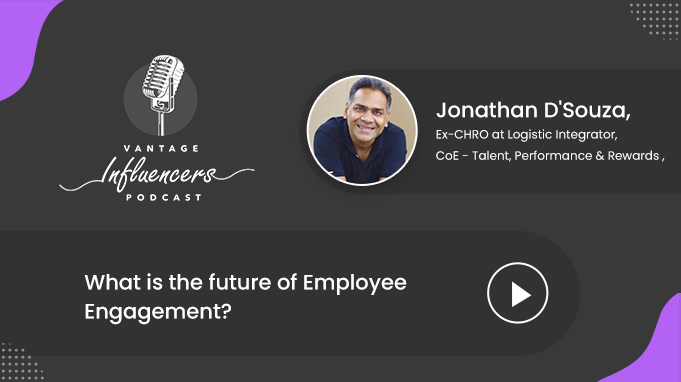
Episode Overview
Jonathan D'souza opens the conversation with a simple but pointed argument: employee engagement built only on perks and benefits will not survive the next few years. In his view, three shifts are already reshaping what workers expect from their organizations. First, people want to be upskilled and reskilled, not just retained, because career security now feels tied to capability rather than tenure. Second, they want clear, honest communication about where the business is headed and how their role fits into that direction. Third, and most consistently across the conversation, they want transparency and accountability to be part of how decisions actually get made, not just language used in a values deck.
That last point becomes the throughline of the discussion. Jonathan describes transparency as something that has to survive difficult moments, arguing that saying yes or no matters less than actually closing the loop with an employee once a decision has been made. He connects this directly to trust: when people believe leadership will tell them the truth, even an unfavorable one, they stay engaged through uncertainty instead of disengaging from it. Layered on top of that, he makes the case that reskilling conversations and organizational purpose have to be communicated repeatedly, not announced once, because most employees are too buried in day to day work to piece the bigger picture together on their own.
Episode Highlights
- Jonathan traces his path into HR back to growing up in a household shaped by workplace dynamics, and to realizing early that people, not just processes, energized him more than an engineering or medical career would have.
- He argues rewards only work when they are designed as a direct reflection of the culture a company is trying to build, not treated as a separate transactional layer.
- He describes reworking an entire rewards system to reward sales teams for landing the right long-term customers instead of short-term revenue, even when it slowed down the sales cycle.
- On generational expectations, he pushes back against the idea that younger employees want more, arguing what they actually want is clarity, transparency, and continuous conversation.
- He rejects the idea of work-life balance outright, describing his organization's shift toward flexible, outcome-focused work integration instead of rigid boundaries between work and life.
- Looking ahead, he names reskilling, communication of organizational purpose, and transparency as the three trends that will define employee engagement in the coming years.
About the Guest
Jonathan D'souza, HR Leader, Ex-CHRO of Logistic Integrators
Jonathan D'souza is an HR leader with more than 16 years of experience, previously serving as CHRO of Logistic Integrators. Earlier in his career, he held HR roles at ING Investment, Hutchinson, and Tech Mahindra, and he is an alumnus of the ISB 2017 Executive MBA batch. His work has centered on building reward systems that reinforce organizational culture, and on helping companies balance structured HR processes with the flexibility today's workforce expects.
Connect with Jonathan on LinkedIn
Host
Rohit, Vantage Influencers Podcast Host
What You Will Learn
- Why rewards and recognition only work when they mirror the culture a company is trying to build.
- How to design reward structures that reinforce long-term thinking over short-term wins.
- What today's workforce actually wants from employers beyond conventional perks and benefits.
- Why "work-life balance" may be the wrong goal, and what work-life integration looks like in practice.
- How technology and automation free up HR to focus on strategic, front-line business needs.
- Why understanding individual employee aspirations is the foundation of any effective engagement strategy.
- The three trends Jonathan expects to shape employee engagement over the next few years.
Key Topics & Timestamps
| Timestamp | Topic |
|---|---|
| 00:00 | Show introduction and Jonathan's background |
| 00:34 | How Jonathan got into HR |
| 01:58 | The role of rewards and recognition in shaping culture |
| 03:48 | Redesigning rewards to build a collaborative culture at scale |
| 07:07 | What perks and benefits Gen Z and millennials actually expect |
| 09:26 | Finding balance between work and life without hurting productivity |
| 11:59 | How technology and automation are changing HR |
| 15:05 | The most effective employee retention strategy |
| 16:56 | Top three trends in employee engagement for the next few years |
| 19:49 | Advice for young HR professionals |
| 21:04 | Favorite HR thought leaders and how to connect with Jonathan |
Full Transcript
Click to read the full episode transcript
Welcome to the Vantage HR Influencers Podcast. This podcast is sponsored by Vantage Circle, the leading employee benefits and engagement platform.
Rohit: Hello everyone, this is Rohit from Vantage HR Influencers. I'm totally excited to have Jonathan D'souza, who's an HR leader with more than 16 years of experience. Jonathan is Ex-CHRO of Logistic Integrators, and has previously worked at ING Investment, Hutchinson, and Tech Mahindra. Jonathan is an alumnus of the ISB 2017 Executive MBA batch. Welcome to the show, Jonathan.
Jonathan D'souza: Hi Rohit, good morning, and thank you for having me on the show.
Rohit: Awesome. Jonathan, how did you begin in HR, and what got you excited about getting into the field of human resources?
Jonathan D'souza: This is a very practiced question because whenever I go for a meeting or an interview, that's the first question which comes up. But I come from a fairly middle-class family. During my school days, there was no guidance on what career you should choose, other than engineering or becoming a doctor. I always had a high EQ but a comparatively low IQ, so my grades in school were nothing to boast about. But I realized I had a lot of exposure to team sports, and because of that, I got a lot of energy from being around people.
Secondly, my parents used to work in the hotel industry, and their company went through a lockout. A lot of the conversations at home used to revolve around the personnel department and how management and employees differed in their views. That got me interested. By the time I was in 12th grade, I realized engineering wasn't for me, and a master's in science wasn't what I wanted to do either. I felt I should probably have studied psychology rather than chemistry in college. So I decided to change track and do an MBA in HR. Between 12th grade and graduation, the idea was clear: get through graduation and then go ahead and do an MBA in HR. That's the story.
Rohit: Okay. And I want to talk about the role of rewards and recognition in your experience across the companies you've worked with.
Jonathan D'souza: I actually started my career in HR as a management trainee, and unlike most people who start in recruitment, I started in performance management and rewards. One of the critical things I've learned over the years is that rewards is a loosely used term. But in the HR and leadership space, if you want to embed a culture, and culture matters so much for companies today, rewards play a huge role in embedding that culture.
There are two reasons for this. First, you cannot really define culture in any organization. Culture is what you feel. Throughout my career, whenever it came to rewards, recognition, managing performance, or leading teams, my approach has always been that rewards should be a reflection of the culture you want to drive. There isn't enough literature on how this needs to be done, and that's where HR has to be innovative and understand what culture it's trying to build, and whether it's rewarding in line with that culture.
So I find that one of the most important aspects of reward, other than the employee experience of motivating a person to perform beyond themselves and their team, is combining that human side with the structural side. Combining both is very important.
Rohit: That makes total sense, because rewards and recognition become very important in times like these. But what is your company doing with R&R to keep it relevant for today's workforce?
Jonathan D'souza: My company is an entrepreneurial company, and a lot of our people have been with us for an average of six to seven years. About three years ago, we started seeing issues where newer, younger employees coming in weren't able to relate to our culture. When we did a culture scan, we realized we were moving from an entrepreneurial culture to a clan culture. While we had a clear definition of our values, most of them were artifacts, things on our logos and in our emails, but we were actually quite far from living them.
One of the things we quickly did was relook at how we wanted to call out our values, how we wanted to repurpose the organization, and how we could help both our long-tenured and new employees assimilate into the culture. One of the things we wanted to quickly improve was collaboration, so we moved away from individual rewards and changed our entire rewards mechanism to promote a collaborative culture. That was one of the first things we did.
Secondly, we wanted to ensure our sales teams got a lot of respect internally, so that they could carry that respect and sell with belief externally when they met customers. What generally happens when a company is doing fairly well and customers are staying with you is that the first fingers get pointed at the sales team. So I quickly engaged with the board and management to ensure we started respecting our sales team, even though, in revenue terms, they were only contributing about 20% of the revenue. The culture we wanted to drive was about how many good, long-term-fit customers we were onboarding, not just how much revenue we were driving. So we became okay with a sales cycle moving from three months to nineteen months, because we were rewarding the quality of the customers being onboarded, not just speed.
We used rewards very effectively to drive this. A lot of our sales team members would have their rewards charted out during the hiring phase itself, with the appointment letter clearly stating what we were looking for, how we would reward them, and what our commitment to their career growth was. It was never verbal; once a verbal agreement was reached, it went into the offer and was documented in the appointment letter. That built a lot of trust with people coming in, and it's helped us reduce sales exits and given sales a leading position in the organization.
Rohit: Very interesting, because once rewards and recognition are documented like that, people feel more respected and trusted. But Jonathan, the problem a lot of modern organizations have to embrace is that millennials and Gen Z coming into the workplace want something very different from previous generations. They want a lot of exposure in a shorter time frame. So what kind of perks and benefits do Gen Z and millennials expect from a company?
Jonathan D'souza: I've done a lot of research on Gen Z and millennials, and we also have a lot of millennials joining us. We don't offer the kind of perks that large organizations offer, to be very honest with you. But one thing I've realized is that generational differences in the workforce have always existed, it's just that because of social media, and because data is now available on every organization, people form opinions about companies, whether right or wrong, and it becomes effective.
What I've realized is that the new folks coming in are much more focused on their career aspirations, and second, they expect transparency. If you don't have something, you need to say you don't do this at this point in time. There are times I've had very critical and difficult conversations where it wasn't just about saying yes or no, but about clearly saying whether we are going to do something or not.
So the idea that Gen Z expects too much isn't completely true. I think Gen Z and millennials expect a lot of clarity, transparency, and continuous conversation in the way things operate. If you're able to sort that out, a lot of the battle is won, because they feel comfortable when their own purpose and the organization's purpose are aligned. They're okay waiting it out until the organization has the capability to offer more, even if it can't match what large organizations do right away. That's the learning I've seen.
Rohit: Work-life balance has been a buzzword among employees. How can employers and managers help people find that balance between work and life without compromising productivity, especially with a lot of companies now offering remote work as an option? Do you think work-life balance can be achieved in these setups?
Jonathan D'souza: My stand, and my organization's stand, on work-life balance is that it's a myth. I'm very clear and open about that, even at the interviewing stage and within the organization. What we promote instead is that you should join us if you feel this work adds meaning to you and you enjoy what you're doing. We're more proponents of work-life integration, meaning there will be times when there's a lot of work and you'll need to put in long hours, and there will be times when work is well managed and you can take time off.
To encourage that, when I joined the organization we were working all Saturdays. Within a year, we shifted to alternate Saturdays. We upgraded our infrastructure, moving not just our ERP but also our mailboxes and documents to the cloud, and gave employees laptops to work from home. We told people that if they can't commute, especially with traffic and weather in major cities eating up an hour or two each way, they should feel comfortable working from home. One of our top values is trust, so we said we want to focus on outcomes, not inputs. We changed our performance management approach to focus on outcomes: this is what's expected of you, and how you get there is up to you, as long as it's ethical and within our code of conduct.
So instead of promoting work-life balance, we're clearly promoting work-life integration, with flexible shifts, alternate Saturdays off, and encouragement to work from home whenever needed. We had a lot of doubts when we started doing this, but we decided to experiment, and it worked really well.
Rohit: Jonathan, you talked about technology. I want to understand how HR technology and automated tools are making processes smoother and more efficient. Do you think technology has helped management and HR people in organizations?
Jonathan D'souza: I'm a big believer and advocate of technology. I believe the quality of the work we do will drastically improve over the next ten to fifteen years with AI, machine learning, and all these newer developments. Yes, there's going to be some job loss, but I think that job loss is actually pushing people to reskill themselves, and people with a growth mindset will overcome that and do much better in their lives.
In my organization, the entire HR function is completely automated. One of the critical things for employee experience is the interpretation of policies in the workplace. If you have multiple HR business partners and not everyone remembers every policy by heart, it becomes difficult to interpret policy consistently, and frontline HR partners can end up interpreting things differently from each other. With technology, whether it's a chatbot or a portal with the full policy interpretation built in, employees feel much more secure doing it themselves. When technology comes into the HR space, a lot of routine HR transactions get automated, which frees up HR to spend more time on the frontline of the business, focusing on what matters.
One of the first things I always tell HR teams is to adopt technology. It's not going to take your job away; it's going to help you earn a seat at the table, which has been one of the biggest HR debates for the last couple of decades. The reason HR often isn't at the table is that we spend too much time on transactions, we're too busy, and that keeps us far away from the customer and the business. With technology, HR gets a much better chance to be closer to the business and to the customer.
Rohit: That's a great point about technology making processes smoother rather than just eliminating jobs. It reminds me of the IT revolution in India. People were resistant to it when it started, but it ended up transforming India into one of the fastest-growing economies in the world. Change is always going to happen.
Jonathan D'souza: Correct.
Rohit: So, Jonathan, in your experience, what are the most effective employee retention strategies that HR practitioners can implement in their companies?
Jonathan D'souza: With technology, a lot of what we do can be made bespoke, depending on the size of the organization and the design principles applied. Take employee value proposition or "great place to work" recognitions as measures of engagement. I think one of the biggest inputs to engagement is understanding your team's and your employees' aspirations. If you can't understand what your employees aspire to, it becomes very difficult to build a great program around it.
We take a lot of time to understand our employees' aspirations. I personally believe an organization is a vehicle for employees to live out their dreams and aspirations. It might sound philosophical, but I'm a firm believer in it. As long as employees see that they can meet their personal and career aspirations within your organization, you've created a great engagement model. If you understand your team's and your people's aspirations, you can innovate a lot around career paths, succession, and development architecture. For me, one of the most critical things for people managers, line managers, and HR is to continuously understand employee aspirations. That's the cornerstone of building a great employee experience and a strong value proposition within any engagement model.
Rohit: Jonathan, what do you think are the top three trends in employee engagement that you'll see over the next couple of years?
Jonathan D'souza: The top three trends I see over the next couple of years: the first, and very critical one, is reskilling and upskilling. The media is creating a lot of anxiety in the minds of employees, and if you look at what's happening with large banks and large organizations running into trouble and laying off workforces, everybody is becoming more concerned about their own career than about the organization itself. You can love your organization, but at the back of your mind, if you're not already thinking like an entrepreneur, you need to start, and that means you need to upskill, reskill, and possibly even change career tracks. That's going to be the number one issue organizations need to openly discuss, given how much disruption is happening. You don't know which organization might run into trouble, and the pace of disruption doesn't take a decade anymore, it can take just a couple of years for an organization to fall. So protecting what an employee looks for, the psychological contract and sense of safety, becomes critical. That safety comes from an organization clearly communicating where it's going, what skills will be needed for the future, even a year ahead, and how employees can align their own aspirations to that. I think those conversations are going to become center stage.
Number two is that organizations need to clearly communicate, and over-communicate, their purpose, and that purpose has to be part of the culture. Most employees are busy with their day-to-day work and find it difficult to piece together the bigger picture on their own. As leaders, continuously helping them connect the pieces of that picture becomes very important. I believe communication at the leadership level and across the organization will need to increase drastically for employees to understand how the organization's purpose aligns with their own.
The third trend is fairness and transparency. People expect to be told things and communicated with. From my experience, even saying no is fine, as long as you close the loop. Closing the loop matters more than whether the decision itself is favorable or unfavorable. That's the third trend that's going to take center stage.
Rohit: Okay, Jonathan, let's do a quick round. What's one piece of advice you'd give to young HR professionals who are just getting into the workforce?
Jonathan D'souza: One quick piece of advice: don't just keep reading a lot of HR books, because a lot of them are outdated. I'd always advise HR folks to read posts on LinkedIn, Twitter, or Instagram, wherever you find them, and follow some of the thought leaders in HR. Speak to your colleagues who aren't from HR, to understand what they feel about the HR department and how it can evolve, because they're essentially the customers of what you're trying to build, so connecting with non-HR colleagues is so important; it helps you set expectations correctly.
Lastly, we're lucky to live in a world where you can type a query and get a lot of research reports. Apart from reading books, read a lot of research reports too. In the beginning it might not make much sense, but believe me, a lot of my own learning has come from reading research reports. They're quick to read, quick to absorb, and they give a real boost to your knowledge in a short span of time. That's my advice.
Rohit: Do you have a favorite HR thought leader you follow?
Jonathan D'souza: I have three favorites. Internationally, there's one thought leader I follow, and locally, there are two more. I try to bring some of their thinking into my day-to-day work.
Rohit: And lastly, do you have a favorite business book?
Jonathan D'souza: Actually, strangely, no. I read a lot, but I mostly love reading research. So I don't really have a favorite book on the business side. I tend to read widely and pick up whatever is useful for a particular context or moment. That's how it is.
Rohit: What's the best way for people to reach out to you?
Jonathan D'souza: I think people can reach out to me on LinkedIn. I'm fairly active there. I'm on Twitter too, though less actively. WhatsApp also works, it gives me the chance to respond when I'm free and available. Email is something I'm a little poor with; it's not that I don't read my emails, but I tend to delay responding to them. I think email is one of the mediums that will fade out over the next couple of years, so that's okay.
Rohit: Thank you very much for coming onto the show and giving us your valuable time.
Jonathan D'souza: Thank you so much, Rohit. I completely believe this is one of the best ways to disseminate knowledge, and I think you're doing a great job. Today, knowledge doesn't only exist in literature, it exists in people's heads, and the more we speak about it and take feedback on it, the better we learn. So thank you for creating something like this. I feel really great to have spent this time with you on the podcast. Thank you very much.
Rohit: Sure.
FAQ
What does Jonathan D'souza say is the biggest myth about work-life balance?
Jonathan argues that work-life balance is a myth and that organizations should instead aim for work-life integration, where employees put in longer hours during demanding periods and take time off when work allows, supported by flexible schedules and remote work options.
What do Gen Z and millennial employees actually want from employers, according to Jonathan?
According to Jonathan, Gen Z and millennial employees are less focused on flashy perks and more focused on clarity around their career aspirations, transparency in decision-making, and continuous, honest conversation from their employers.
What three trends does Jonathan predict will shape employee engagement in the coming years?
Jonathan names reskilling and upskilling, clear and repeated communication of organizational purpose, and fairness paired with transparency as the three trends he expects to define employee engagement.
How does Jonathan connect rewards and recognition to company culture?
Jonathan explains that rewards only work when they're designed as a direct reflection of the culture an organization wants to build, rather than treated as a standalone transactional program disconnected from values.
Related Reading
Also listen on