
I will never forget the day when a high-performing colleague handed in her resignation papers, not for a pay or a workload issue, but because she felt utterly invisible.
Her case was far from unique. In my work with leaders and teams, I've observed talented people disengage when their efforts go unappreciated.
This disconnect, known as the recognition gap, bears real implications for employees' morale, mental health, and business outcomes. If you're seeing drops in engagement or spikes in turnover, it's time to examine your recognition practices.
The recognition gap is not just an HR issue but a critical business challenge that requires your full attention.
Join me on this blog as we explore this gap, its causes, its impact, and a 5-step plan to close it. This discussion will highlight the true significance of recognition and its potential to bridge the gap, making your employees feel seen, valued, and motivated to contribute their best.
What Is a Recognition Gap?
The Recognition Gap is a damaging distance between the recognition employees expect for the quality of their contributions and the acknowledgment they actually receive. The gap widens when recognition becomes infrequent, more manager-dependent, or unevenly distributed across roles, genders, and generations.
And the result?
Sheer disengagement, higher turnover, and lost productivity. And closing it will require consistent, fair, and visible recognition.
This disconnect that we're talking about is hardly the result of bad intentions. It is the clash between what managers and employees believe. Most managers believe they recognize their teams well. Most employees disagree. That disconnect between how often leaders think they recognize people and how often employees genuinely feel recognized is the most common form of recognition gap.
It is not just a morale issue. It is a measurable business problem with a measurable cost.
What Causes the Recognition Gap?
The gap does not arise from a single cause. It builds from several compounding failures in how recognition is designed, delivered, and distributed across an organization.
| Cause | Why It Happens | Quick Fix |
|---|---|---|
| Manager-only recognition | Recognition depends on one busy person noticing one moment. Managers miss what they cannot see, especially across hybrid or remote teams. | Enable peer-to-peer recognition so that acknowledgment is not bottlenecked at the manager level. |
| Infrequent recognition | Annual reviews and quarterly shoutouts arrive too late to reinforce the behavior they are meant to reward. | Set a goal for recognition frequency. Weekly or bi-weekly touchpoints are the evidence-based standard. |
| Generic recognition | "Great job!" without context does not land. Employees cannot connect vague praise to specific contributions. | Train managers to specify the behavior, the impact, and the value it reflects. |
| Uneven distribution | Recognition is focused on visible, vocal employees and overlooks quieter contributors, remote staff, or frontline workers. | Use recognition analytics to audit distribution across roles, teams, and demographics. |
| No formal system | Recognition relies on individual memory and goodwill rather than a consistent, structured process. | Implement a recognition platform that makes the recognition process easy, timely, and trackable. |
Why the Recognition Gap Matters: The Cost of Feeling Unappreciated
The need to understand the importance of the recognition gap lies in the fact that it comes with a cost.
Disengagement and Lost Productivity
Disengaged employees are not neutral. They can actively drag down team performance, customer experience, and output quality.
- A Gallup study reveals that actively disengaged employees cost the world $8.8 trillion in lost productivity, equivalent to 9% of global GDP.
- According to a study, 69% of employees report they would work harder if they felt their efforts were better appreciated.
The Psychological Toll
The persistence of recognition gaps has psychological implications for employees. The impact of feeling undervalued and unrecognized has been measured and documented in the figures below.
Increased Burnout: According to Gallup's report, 76% of employees experience burnout on the job at least sometimes, and 28% report being burned out "very often" or "always" at work.
Do not mistake burnout for mild fatigue. It is a clinical-level exhaustion that impacts every aspect of an employee's life.
A SHRM study reveals that 30% of workers say their jobs often make them feel stressed, 26% often feel overwhelmed, and 22% often feel anxious.
The numbers reveal the mental toll employees undergo at the workplace.
Turnover and the Financial Cost
Employees who feel unappreciated leave. And replacing them can be expensive.
- A Forbes study reveals that 66% of employees would quit their jobs if they didn't feel appreciated.
- A Gallup study reveals that the cost of replacing an individual employee can range from one-half to two times the employee's annual salary.
Employer Brand Damage
When your recognition gaps create disengaged employees, they are inclined to share negative experiences, which directly hinders your ability to attract top talent and costs your brand significant damage.
- Research shows that a strong employer brand can reduce costs per hire by up to 50% and decrease employee turnover by 28%.
- According to LinkedIn's employer branding research, 75% of job seekers evaluate an employer's brand before deciding to apply by checking out the company's website and social media.
The negative reviews spread through word of mouth make it harder and more expensive to attract the talent you need.
Who Gets Overlooked: The Recognition Gap Across Demographics
The gap does not fall evenly. It lands hardest on specific groups, and ignoring those patterns is both an equity failure and a business risk.
Gallup puts it plainly: unfair recognition doesn't just hurt the people who are overlooked — it sends the wrong message to everyone watching. When employees sense that recognition is playing favorites, they stop believing in the system entirely.
| Group | How the Gap Shows Up | What Closes It |
|---|---|---|
| Women | Disproportionate take on "invisible labor" (mentoring, conflict resolution, culture work) that is rarely reflected in performance reviews or recognition. | Formally include non-project contributions in recognition criteria; audit recognition data by gender. |
| Millennials (born 1981–1996) | Value purpose-driven recognition tied to career growth, but often receive generic or infrequent praise that does not connect to advancement. | Link recognition to values and career milestones; offer a mix of public and private acknowledgment. |
| Gen Z (born 1997–2012) | Expect frequent, specific, and authentic feedback; distrust performative recognition that feels scripted. | Increase check-in frequency; prioritize peer recognition and real-time feedback over formal awards. |
| Frontline, remote, and contract workers | Physically or structurally separated from the manager and team moments where recognition typically happens. | Use digital recognition platforms that reach distributed teams; enable peer-to-peer recognition across locations. |
The Gender Gap and "Invisible Labor"
When the gender perspective comes into play, things become more complex. The recognition gap tends to affect women disproportionately, and it is tied to what researchers call "invisible labor" or "office housework."
- Research found that 30% of women feel underappreciated at work compared to just 20% of men.
- A research paper from MIT Sloan reveals that women receive higher performance ratings than men but get 8.3% lower ratings for "potential." This translates to women being 14% less likely to be promoted than their male colleagues.
A key finding in the McKinsey Women in the Workplace report has consistently found that companies do not formally recognize "office housework" — the mentoring, note-taking, conflict management, and DEI work that falls disproportionately on women — in performance evaluations. This converts cultural misrecognition into economic disadvantage. As a result, talented women get trapped in career-limiting cycles.
The Generational Divide
Recognizing Millennials (Born 1981–1996)
Millennials currently comprise the largest employee demographic and are stepping into leadership roles. Understanding what truly motivates them is not optional but essential for retention.
Key Motivators:
- Purpose-driven work: They want to know that their contributions matter beyond profit margins.
- Clear career progression: They desire a path forward and want to understand how recognition ties to advancement.
- Collaborative environments: They thrive on peer acknowledgment and team-based recognition.
Preferred Recognition Approach:
- Frequent and meaningful feedback: They want regular feedback that acknowledges both achievements and areas for growth — not just annual reviews.
- Flexible rewards: They resonate with extra PTO, professional development opportunities, and experiences over traditional bonuses. As per a study, 78% of Millennials prefer experiential rewards over material items.
- A mix of public and private acknowledgment: They appreciate both team-wide recognition and personal conversations with their managers.
Recognizing Gen Z (Born 1997–2012)
With the rapid entry of Gen Z into your workforce, you must be aware that their recognition preferences differ from those of previous generations. Ignoring these differences can cost you talent.
Research shows that 94% of Gen Z workers desire frequent feedback and recognition.
Key Motivators:
- Authenticity: They instantly spot insincerity and value genuine, personalized recognition.
- Value alignment: They seek to work for organizations whose DEI efforts are real and not performative.
- Social impact: They want to see how their work contributes to the broader societal good.
Preferred Recognition Style:
- They prefer immediate, specific, and frequent recognition.
- A GenHQ study found that over 60% of Gen Z employees want multiple check-ins from their managers during the week.
- They value recognition that comes with opportunities to acquire new skills and enhance their expertise.
Recommended reading: Leadership and Recognition: Bridging Generational Gaps in the Workplace
Frontline, Remote, and Contract Workers
Out of sight often means out of mind when it comes to recognition.
Frontline workers — in retail, manufacturing, healthcare, and logistics — rarely sit in the same meetings, Slack channels, or town halls where recognition typically happens. Remote employees face a similar barrier: they deliver results but miss the informal, visible moments that tend to trigger acknowledgment. Contract and gig workers are often excluded from recognition programs entirely, despite contributing meaningfully to team outcomes.
The structural problem is simple. Most recognition systems are built around physical presence and permanent employment. If you are not in the room, it is easy to get overlooked.
The consequences are real:
- Research shows that 33% of frontline employees report doing the bare minimum at their jobs.
- According to research, 82% of remote workers feel unrecognized by their employers.
What closes the gap for these groups is not complicated:
- Digital recognition platforms like Vantage Recognition that reach every employee regardless of location or contract type.
- Peer-to-peer recognition that does not rely on manager visibility. Start with these peer-to-peer recognition ideas.
- An explicit policy decision to include non-permanent workers in recognition programs.
These three changes remove the structural barriers that keep this group invisible.
How to Measure the Recognition Gap
You cannot close a gap that is not visible to you. Most organizations have no idea how uneven their recognition distribution actually is until they measure it.
| Metric | What It Reveals | Tool |
|---|---|---|
| eNPS (Employee Net Promoter Score) | Whether employees would recommend the organization — a proxy for how valued they feel overall. | Vantage Pulse eNPS surveys |
| Recognition frequency | How often employees receive recognition per week or month, and whether it meets the evidence-based threshold. | Recognition platform analytics |
| Recognition distribution | Which teams, roles, genders, or locations are being recognized least — where "cold spots" exist. | Vantage Rewards recognition analytics |
| Sentiment analysis | The emotional tone of open-text survey responses — surfaces dissatisfaction that scores alone miss. | Vantage Pulse sentiment analysis |
| Turnover by team | Whether teams with lower recognition frequency have higher attrition — connects the gap to a business outcome. | HRIS cross-referenced with recognition data |
How to Close the Recognition Gap: A 5-Step Plan
Closing the recognition gap is not a single initiative. It is a system built on frequency, fairness, visibility, and measurement. Here is a proven framework for getting there.
Step 1: Make Recognition Frequent, Not Annual
Annual reviews and quarterly awards come too late. The moment has passed, the behavior is forgotten, and so is the employee's motivation.
Recognition needs to be timely. It is best to acknowledge contributions as soon as possible — ideally weekly or at least monthly — to maximize their impact on engagement and motivation.
Recognition should not be an event. It should be a daily habit.
Step 2: Move Beyond Manager-Only Recognition
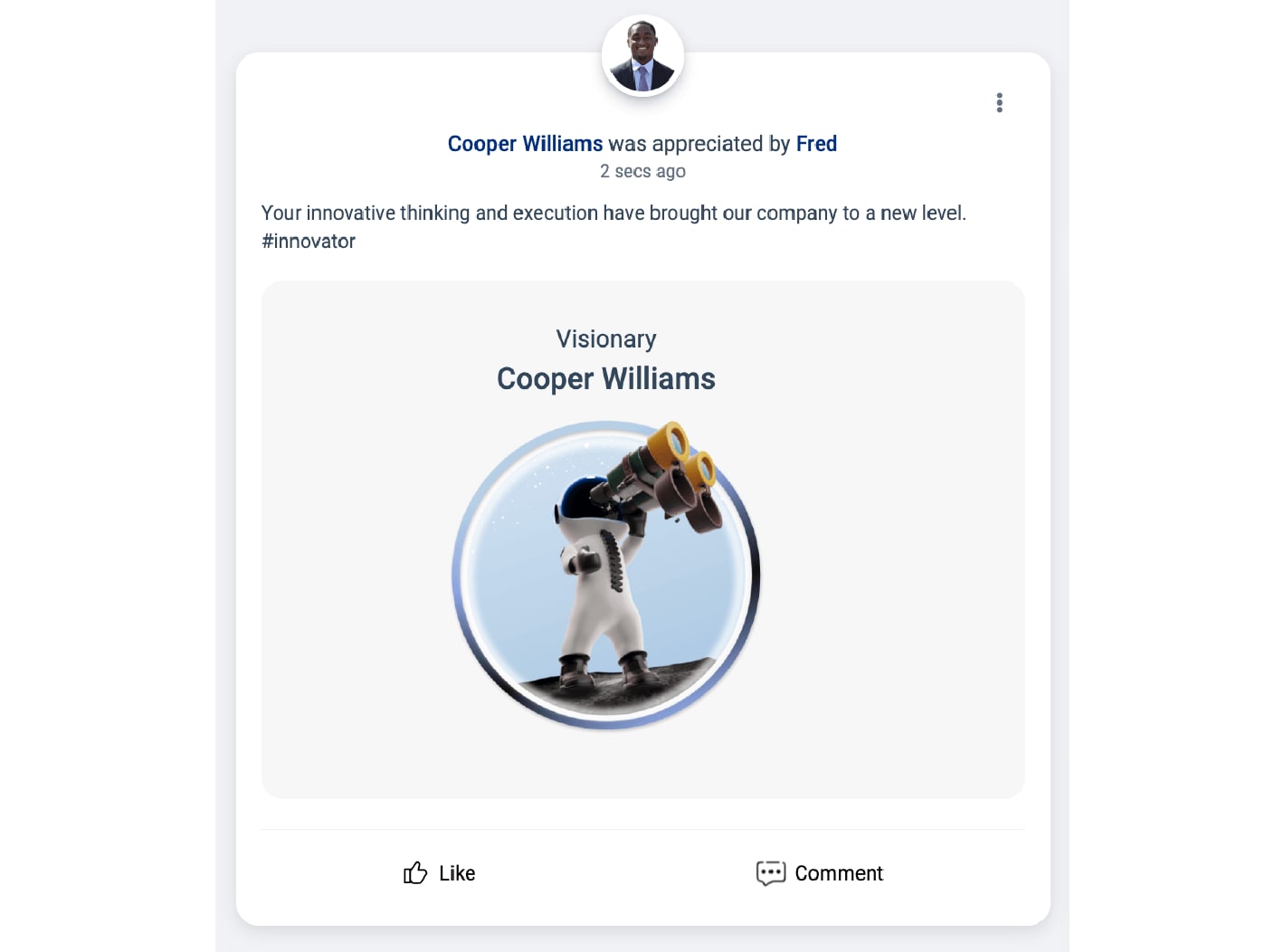
When recognition depends entirely on one manager seeing that one moment, most good work goes unseen. Managers cannot observe everything — especially across hybrid teams, remote workers, and cross-functional projects.
Source: Vantage Recognition
Peer-to-peer recognition closes the gap that manager-only systems leave open. When colleagues can recognize one another directly, the pool of people who can notice and acknowledge contributions expands dramatically.
Research shows that for 28% of employees, feedback received from their peers has the most impact on their feelings of acknowledgment.
Step 3: Tie Recognition to Values, Not Favoritism
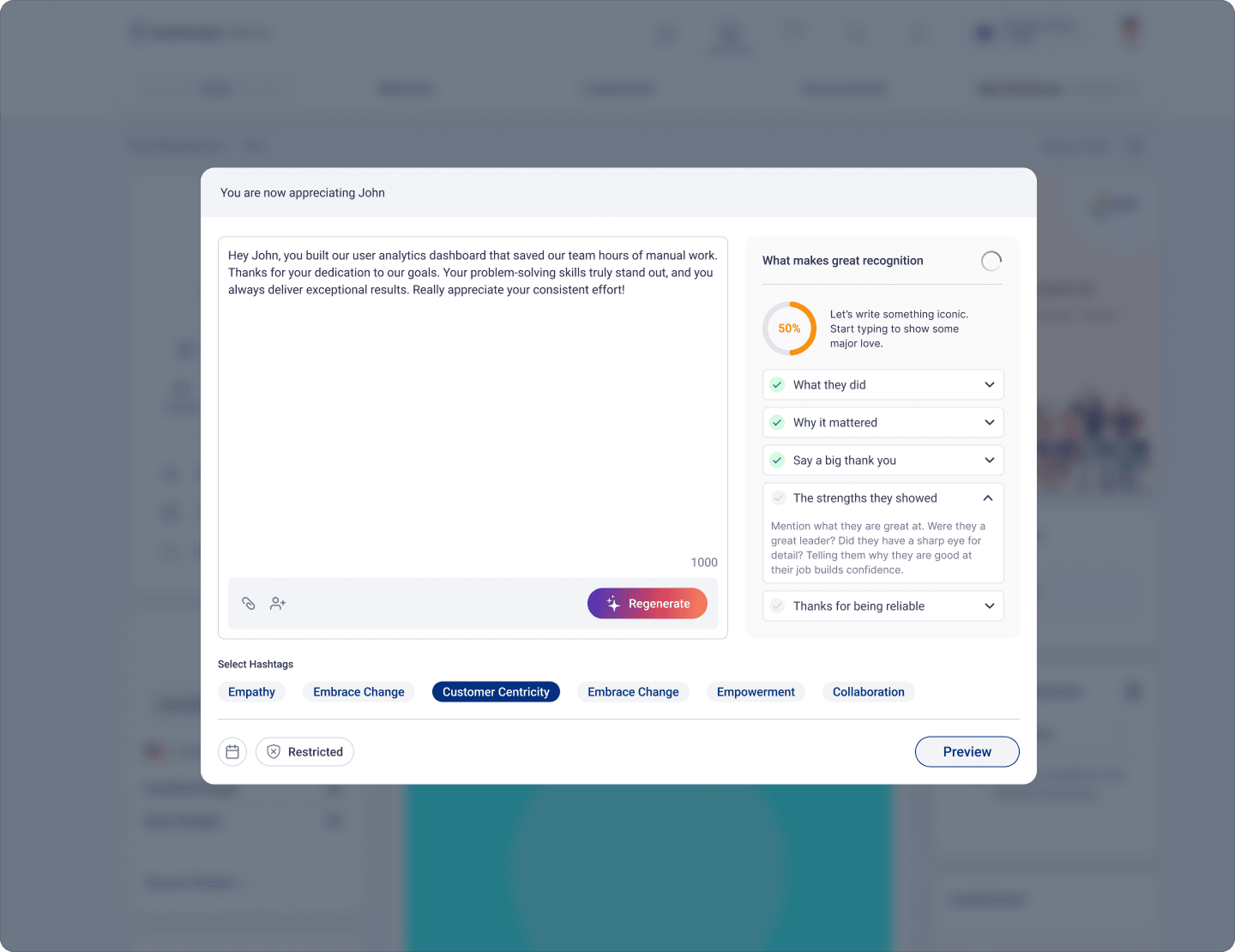
Recognition that feels arbitrary or driven by personal relationships deepens the gap. If employees cannot see why someone was recognized, they stop believing in the system.
Tying recognition to clearly defined company values ensures transparency and fairness. When a manager recognizes someone for demonstrating "ownership" or "collaboration," employees can connect the recognition to behavior — not to proximity to power.
Source: Vantage Recognition
Step 4: Make It Inclusive and Visible
"Invisible labor" stays invisible when recognition happens in private. The work that holds teams together — mentoring, conflict resolution, culture-building — rarely reaches the public moments that build reputations and careers.
A public recognition feed makes overlooked contributions visible to the whole organization. It also signals what the organization actually values, which is more powerful than any policy statement.
Step 5: Measure and Course-Correct
What gets measured gets managed. Without tracking recognition, gaps quietly widen and nobody notices until people start leaving.
Start by auditing who gives and receives recognition across your organization. Look for cold spots — teams, roles, or groups that are consistently being overlooked. When you find them, dig into why and fix them.
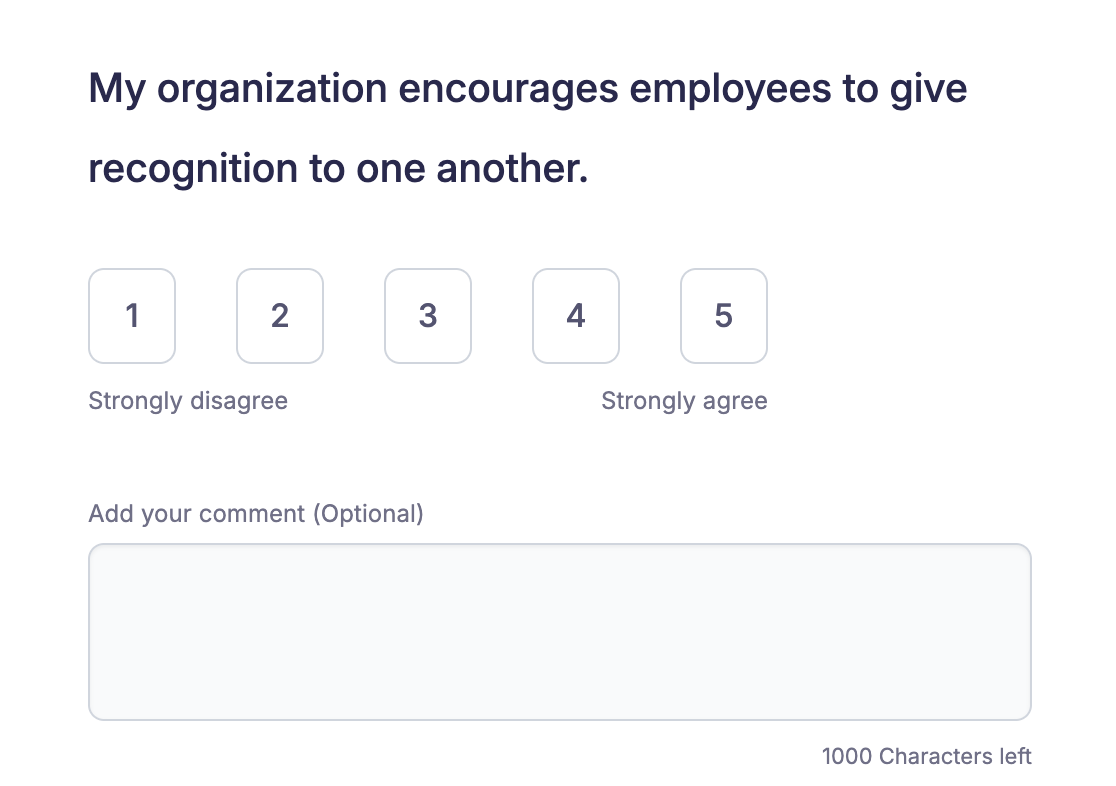
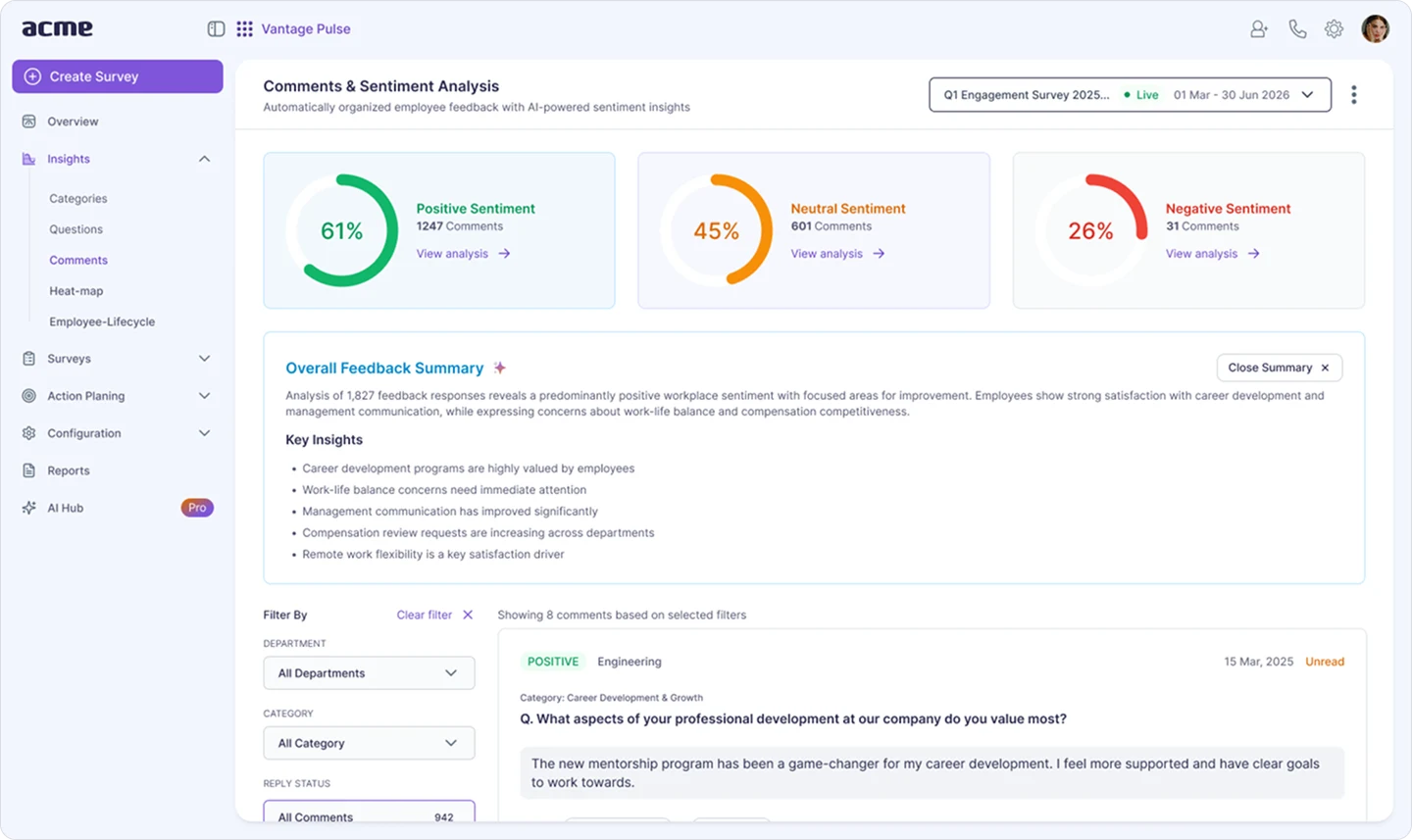
Numbers alone will not tell the full story. Pair your recognition data with eNPS surveys and sentiment analysis to understand not just whether recognition is happening, but whether employees actually feel valued. There is a meaningful difference between the two.
Source: Vantage Pulse
And when employees feel genuinely valued and safe to speak up, they stay. In fact, a study says that when psychological safety is high, only 3% of employees are at risk of quitting.
Wrapping Up
The recognition gap is not abstract. It shows up in exit interview data, in engagement scores, in the career trajectories of employees whose work quietly holds teams together but never makes it into a performance review.
Closing it is not complicated — but it does require intention, consistency, and the right systems. Organizations that get this right do not just improve morale. They build the kind of workplace where people choose to stay, contribute, and grow.
FAQs
1. How can leaders identify if a recognition gap exists in their organization?
Leaders can look for signs such as:
- Declining engagement scores
- Increased turnover rates
- Feedback from exit interviews citing lack of appreciation
- Disparities in recognition data across departments or demographics
2. How often should employees be recognized?
Recognition should be timely and consistent. Many experts recommend acknowledging contributions as soon as possible — ideally weekly or at least monthly — to maximize its positive effects.
3. Why do employees feel unrecognized at work?
Employees feel unrecognized when their contributions go unacknowledged, when recognition feels arbitrary or unfair, or when the work they do — especially behind-the-scenes, relationship, or culture work — is simply not visible to the people who control recognition. Remote and frontline employees face an additional structural barrier: they are physically separated from the moments where recognition typically happens.
4. What are the benefits of closing the recognition gap?
Closing the recognition gap improves employee engagement, reduces voluntary turnover, strengthens employer brand, and increases productivity. It also has an equity dimension: a fair recognition system helps ensure that "invisible" contributions — disproportionately performed by women and underrepresented groups — are finally seen and rewarded.

Riha Jaishi is a Content Marketing Specialist at Vantage Circle and host of the HR Vantage Influencers podcast, sharing insights that help organizations build recognition-rich, people-first cultures!!
Connect with Riha on LinkedIn.