
Only 44% of employees are thriving at work in 2026, down from 66% in 2024.
That is the lowest Mercer has recorded since it began tracking the measure in 2018. Every HR leader reading that number knows what it means for retention, productivity, and the next board conversation.
Yet recognition budgets still get cut, deferred, or capped, usually because the case for them was made in the language of culture rather than the language of finance.
This blog gives you the exact numbers to put in front of your CFO:
- what disengagement costs,
- what a recognition program costs as a share of payroll,
- what real enterprise programs returned, and
- the measurement plan that makes the case credible.
It is structured in the order a CFO actually evaluates a spending decision, so you can lift it straight into your proposal.
Key Takeaways
- Why recognition keeps losing budget battles, and how finance framing changes the approval odds
- The four things a CFO wants in sequence: cost of doing nothing, cost of the proposal, evidence, and measurement
- What the research returns: 23% higher profitability, 12% higher productivity, 31% lower turnover
- The honest cost picture: 1–2% of payroll, with the spend controls that keep it there
- The four-number measurement plan on a 30/90/365 cadence that makes the case credible
Why Recognition Needs a Business Case Now

Recognition fails in budget meetings for a predictable reason. It gets pitched as a culture initiative, and culture initiatives are the first line items to slip when finance tightens.
The financial framing is available, and it is stark. Gallup finds that 77% of employees are not engaged or are actively disengaged at work. Disengagement of that scale drains an estimated $84 billion annually in lost productivity. Those are not culture problems. They are cost problems that happen to have a people-shaped cause.
There is a second reason to build the case now rather than at renewal time. Budget cycles reward line items that arrive with evidence attached. A recognition proposal that shows up mid-year with sentiment quotes competes for discretionary spend. The same proposal, submitted at planning time with retention math and named enterprise results, competes as a cost-avoidance measure. Same program, different category, very different approval odds.
A CFO evaluating any proposal wants four things in sequence:
- the cost of doing nothing,
- the cost of the proposal,
- the evidence it returns more than it costs, and
- the plan to measure whether it did.
Most recognition pitches lead with sentiment and end with a software quote, which answers none of those questions in order.
Turnover is the line item to anchor on
Engagement and morale are real, but they are hard to price. Turnover is already priced. Your finance team knows the fully loaded cost of a departure: recruiting, onboarding, lost productivity during ramp-up. Anchor the business case on the departures recognition prevents, and every other benefit becomes upside rather than the argument itself.
The mechanics are simple. Take last year's voluntary exits, apply finance's own cost-per-exit figure, and you have the baseline. Apply the retention gap from the research above to model the preventable share.
Now, you're not promising to eliminate turnover. You are showing that even a conservative reduction pays for the program several times over, using numbers finance already trusts because finance produced them.
What the Research Says Recognition Returns
The behavioral research gives the business case its multiplier. Three findings matter most for a finance audience:
23% higher profitability in highly engaged teams. Gallup's Q12 meta-analysis, covering 183,806 business units and 3.3 million employees, found that top-quartile teams outperform bottom-quartile teams by 23% in profitability, 18% in sales productivity, and 10% in customer loyalty.
Recognition is one of the twelve conditions Gallup measures to define engagement, making it one of the most direct levers a business has on these outcomes.
12% higher productivity from employees who feel valued. In controlled experiments published in the Journal of Labor Economics, University of Warwick researchers found that employees who were made to feel happier became approximately 12% more productive, while lower well-being consistently predicted lower output.
Recognition is among the lowest-cost, most repeatable ways an organization can move that well-being needle.
31% lower voluntary turnover with recognition programs. Deloitte's Total Rewards research notes that organizations with recognition programs see 31% lower voluntary turnover and are 12 times more likely to have strong business outcomes.
With replacement costs running 50% to 200% of salary, this is where recognition spend most visibly returns to the P&L.
The mechanism behind those numbers is not mysterious. Dr. Bob Nelson, author of "1,501 Ways to Reward Employees" and a doctoral researcher on employee recognition, put it plainly on the Vantage Influencers Podcast:

Vantage Influencers Podcast
"Whatever you recognize will be repeated. If you pay attention to and acknowledge and thank people for the desired behavior and performance that they do, they will do more of it."
Dr. Bob Nelson, Inventor of Employee Appreciation Day, Author of 1,501 Ways to Reward Employees
Listen to the EpisodeRecognition is behavioral reinforcement applied to the outcomes you already pay for: performance, retention, and customer experience. That is why the psychology of employee recognition matters to a budget conversation. The spend does not buy warm feelings. It buys repetition of the behaviors the business values.
What Real Enterprise Programs Delivered
Research averages persuade analysts. Real program results persuade executives. This is where most recognition business cases go generic, so this is where yours should get specific.
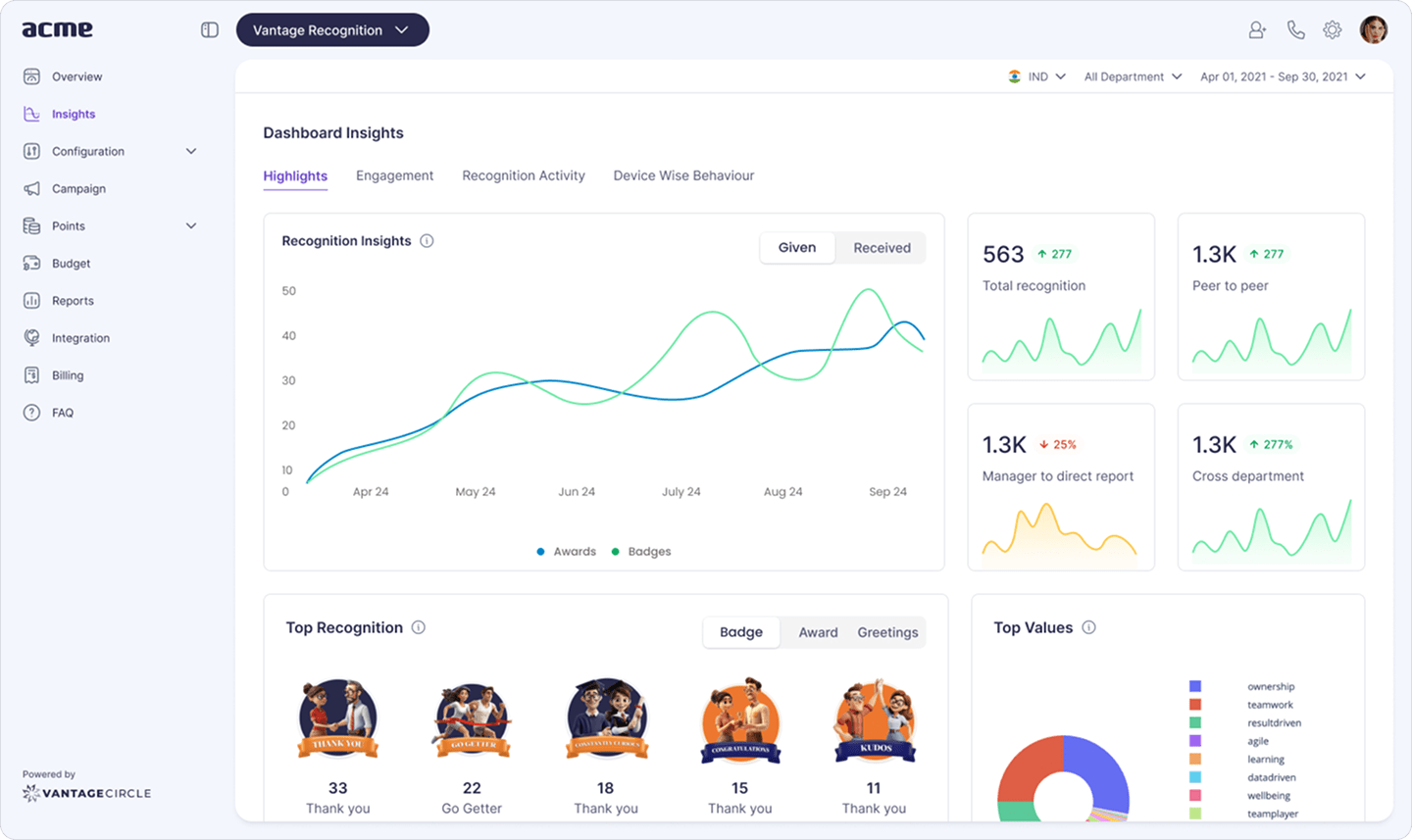
Four enterprise programs, each honored with a Brandon Hall Group award for recognition excellence, show what recognition delivers at scale:
A global IT services company with 230,000+ employees reached 57% employee recognition coverage in a single fiscal year and recorded 553,490+ total awards across two years. Its program won Brandon Hall Gold in 2023.
A global engineering services firm achieved a 93% employee participation rate, with 83% of active users receiving recognition. Brandon Hall Gold, 2024.
A global digital infrastructure provider drove a 185% surge in peer-to-peer non-monetary recognition, reaching one recognition every 2 minutes in FY 2024–25. Brandon Hall Gold, 2024.
A global software quality engineering company grew reward distribution 86% over two years. Brandon Hall Gold for Technology Excellence, 2024.
Case Study Library
All four programs run on the Vantage Circle platform
The full stories, with the numbers behind each award, are in our case study library.
Explore the Case Studies →Notice what these numbers are not. They are not survey sentiment or projected returns. They are participation, coverage, and frequency figures from live enterprise programs, the same metrics your own program would report. For the broader research picture behind them, the full roundup of employee recognition statistics is worth a scan before you draft the proposal.
For a CFO, the takeaway is auditability. Award-validated programs publish coverage and participation numbers because the underlying platforms track them natively, which means the returns in your proposal can be verified quarterly rather than asserted annually.
What a Recognition Program Costs
A business case with benefits and no price is a wish. Here is the honest cost picture.
SHRM research found that organizations spending 1% or more of payroll on employee recognition see measurably better business results, and the widely used industry benchmark has settled at 1–2% of payroll. Payroll-anchored budgeting beats the flat per-employee figures you will find elsewhere because it scales with your actual compensation structure, keeps the spend proportional in every market you operate in, and gives finance a familiar denominator.
Presenting cost as a payroll percentage also reframes the conversation. At 1–2% of payroll, recognition is priced like a modest benefits line, while the turnover costs it offsets routinely run multiples of that.
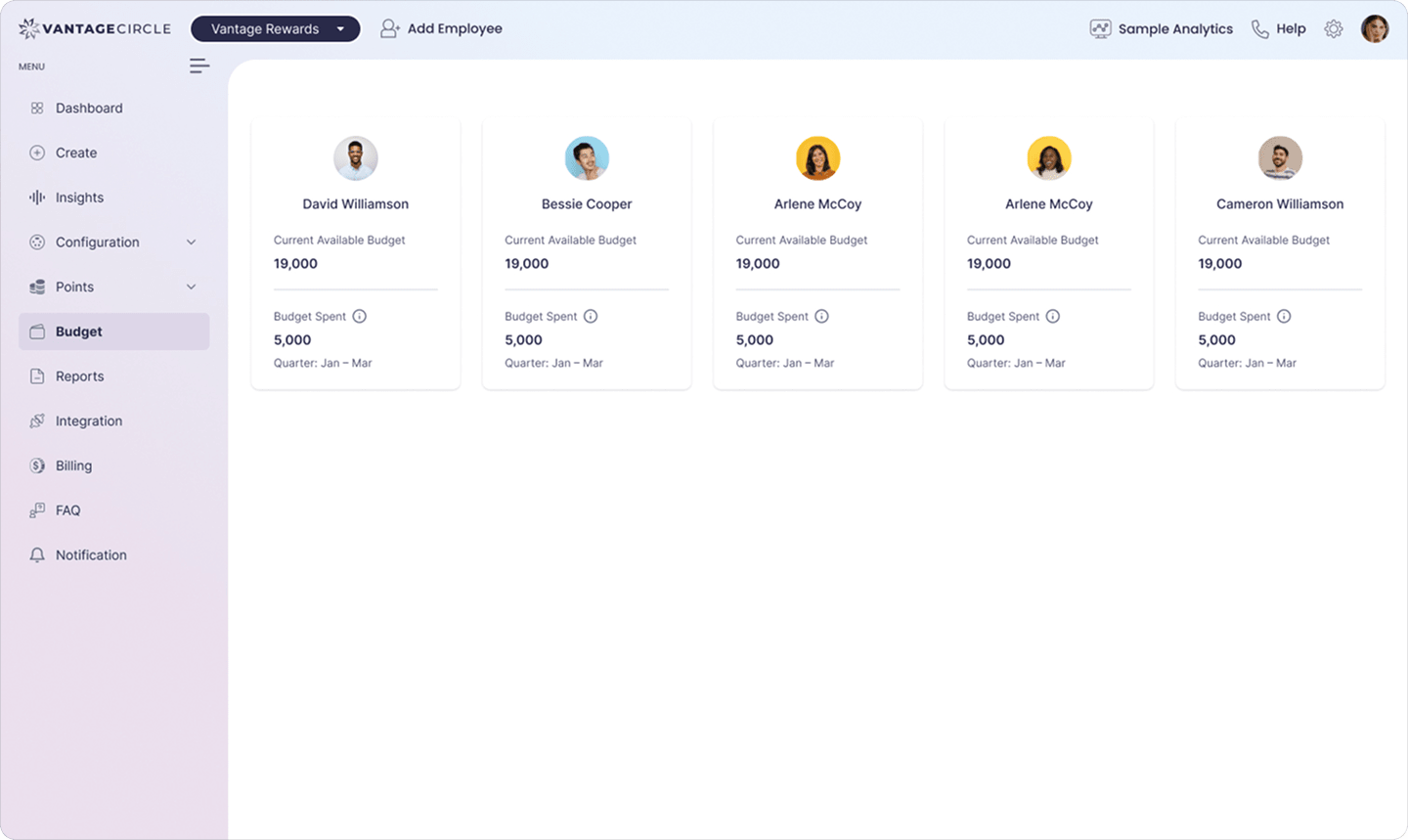
Spend control is what usually closes the deal with finance. Whatever platform you evaluate, please look for real-time budget dashboards, per-employee award limits, and cost-center reconciliation exports, so finance approves the budget once instead of chasing spreadsheets every quarter. For the detailed math on allocation, see how to size an employee recognition budget.
The Measurement Plan That Makes the Case Credible
Nothing builds executive trust like proposing your own accountability. Commit to a measurement plan before anyone asks for one.
Rebecca Oppenheim, Co-founder of nextOPP Search, made this point on the full conversation with Matt Burns about building the recognition business case:
You need to establish baselines of where you are today. Do you have the appropriate measurements and metrics to establish how you're performing against your own goals? And then set those stretch targets.
In practice, that means baselining before launch and reporting on a 30/90/365-day cadence: adoption at 30 days, participation trends at 90, and retention correlation at one year. Each checkpoint has a distinct job. The 30-day number proves the rollout worked. The 90-day number proves the behavior is sticking beyond launch novelty. The one-year number connects the program to the turnover baseline you opened the business case with, which is the moment the case stops being a projection and becomes a result.
Putting the One-Page Business Case Together
Assemble the business case in the order finance evaluates it:
1. The problem, in financial terms
Current voluntary turnover cost and the engagement drag, using the disengagement research above.
2. The evidence
The research multipliers and two or three real enterprise results.
3. The cost
1–2% of payroll, with the spend controls that keep it there.
4. The measurement commitment
Four numbers on one slide, reviewed on a 30/90/365 cadence:
- Cost of voluntary turnover today. Your baseline, using finance's own cost-per-exit figure.
- Receiver coverage. The percentage of employees recognized each quarter.
- Giver coverage. The percentage of employees giving recognition, which shows whether the culture is participating or spectating.
- Recognition frequency. How often recognition happens, the leading indicator that predicts the other three.
One page is the discipline. If the case does not fit on one page, it is not ready for the CFO. And whichever platform you evaluate, confirm these four numbers exist in the product before you sign, because a board or finance review will ask for them.
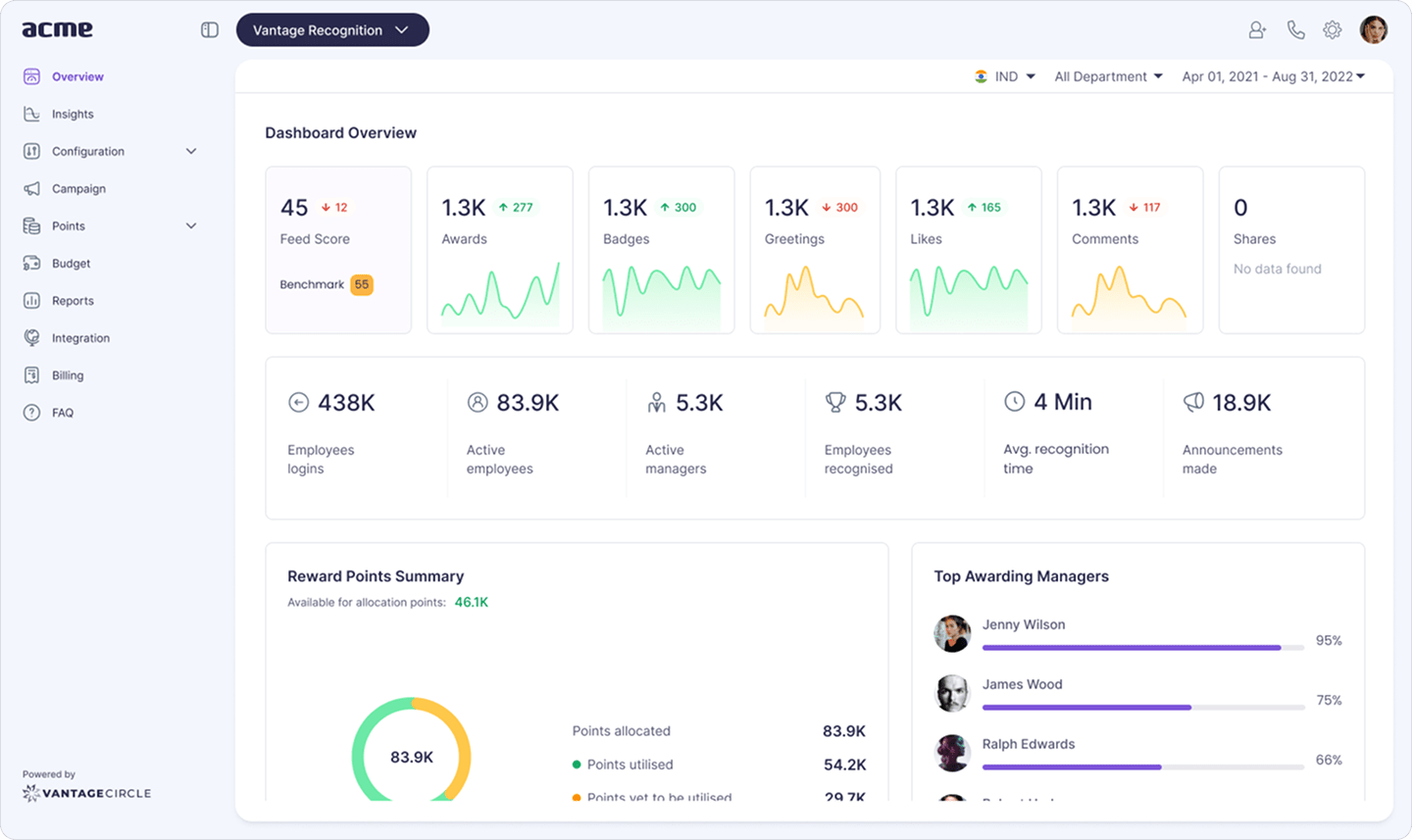
Now, this is where Vantage Circle takes the manual work off HR's plate. Receiver coverage, giver coverage, and recognition frequency are tracked natively in the platform's analytics dashboards, so the quarterly review takes an export rather than an analyst, and the turnover baseline sits alongside them once finance supplies its cost-per-exit figure. The same dashboards give managers and HR the live budget visibility that keeps the program inside the 1–2% commitment made in the cost section.
Vantage Rewards
See what that reporting looks like in practice
Receiver coverage, giver coverage, and recognition frequency, tracked natively in one dashboard your CFO can audit.
Explore the Vantage Rewards Platform →The CHRO Test: can you tell your board what percentage of employees gave recognition last quarter? If yes, your program is measurable. If no, that is the gap this business case closes.
Frequently Asked Questions (FAQs)
1. How much does an employee recognition program cost?
A useful benchmark is 1–2% of payroll. Payroll-anchored budgeting scales with your compensation structure and gives finance a familiar denominator, unlike flat per-employee figures.
2. How do you measure the ROI of a recognition program?
Baseline voluntary turnover cost first, then track receiver coverage, giver coverage, and recognition frequency on a 30/90/365-day cadence. Correlate year-one retention against the baseline to close the loop.
3. How do you convince leadership to invest in recognition?
Present it as a financial decision, not a culture initiative: cost of inaction, program cost as a share of payroll, evidence from real enterprise programs, and a measurement plan you commit to before anyone asks.
Wrapping It Up
Recognition rarely loses in budget meetings because the evidence is weak. It loses because the case shows up in the wrong language. Translate it into numbers finance already trusts, and what looked like a culture pitch becomes a straightforward cost-avoidance decision.
You now have all four pieces: the cost of doing nothing, the price tag, the proof, and the measurement plan. Put them on one page, take it into the next planning cycle, and let the numbers do the persuading.

Sanjeevani Saikia is a Senior Content Strategist at Vantage Circle, where she leads end-to-end content strategy across SEO, thought leadership, brand storytelling, podcasts, and video. She is also the host of the Vantage Influencers Podcast, where she brings conversations with HR and business leaders from top global organisations, including Fortune 500 companies.
Connect with Sanjeevani on LinkedIn.