
When a performance review season arrives, you are suddenly expected to summarize an entire year of work in a few paragraphs. The challenge is hardly about knowing how to write but remembering what you accomplished, choosing the right examples, and proving the impact without sounding too modest or overly self-promotional.
And the stakes are higher than a single form suggests. According to Gallup, only 14% of employees strongly agree their performance reviews inspire them to improve. A specific, evidence-based self-evaluation is your best chance to make yours one of the few that actually counts.
Self-evaluation can be challenging because you not only describe your performance, but you have to build an accurate record of your contribution before someone else defines it for you.
Having said that, this blog is particularly designed to make that process easier for you. It includes 60 curated self-evaluation examples covering achievements, communication, initiative, leadership, strengths, growth areas, and future goals. You will also learn which phrases to avoid and how to replace vague claims with credible evidence.
Whether your review form is due this week or you are responsible for improving employee feedback across your organization, this practical kit will help you write self-evaluations that are clear, balanced, and evidence-based.
What Is Self-Evaluation?
Also known as self-assessment or self-appraisal, self-evaluation is a structured written review of your own performance, covering your strengths, growth areas, and goals, submitted as part of a performance review.
In most modern review processes, it is often the first step in a 360-degree feedback cycle, where you rate yourself first, followed by your manager and peers, who rate you on the same dimensions. It is not about grading yourself kindly or harshly. It is more about giving reviewers an accurate and verifiable record of your year before anyone else shapes the narrative for you.
Self-evaluation is one of six recognized types of employee assessment. See what employee assessment covers for how it compares to performance reviews, skills, behavioral, 360-degree, and potential assessments.
How to Write a Self-Evaluation: 4 Actionable Steps
Writing a self-evaluation requires you to follow the following 4 actionable steps:
Step 1: Collect your evidence:
Trace your yearly work record: the tasks you completed, goals you achieved, meetings you led, and recognition you received. Do not solely rely on memory. Use records wherever possible.
Step 2: Connect your achievements to business goals:
Link every accomplishment to a company goal or value. For example, values-based recognition in Vantage Rewards can show how your work supported specific company values.
Step 3: Use a clear structure:
For every achievement, explain what you did, attach the proof, and the result. You can use the SBI method: describe the situation, the action you took, and the impact it created.
Step 4: Keep it balanced:
Support your strengths with evidence. Mention areas for improvement and include a plan for addressing them. Remove statements that are based only on opinion.
The receipt test:
Ask yourself, “Can I show my manager where this happened?” If the answer is no, rewrite the sentence or remove it.
60 Self-Evaluation Sample Answers by Competency
The 60 sample answers below are distributed across seven competency areas. Each one follows the same structure: one claim, one piece of evidence, and one clear result.
Treat these as examples and replace them with your own version. Using an inaccurate metric is worse than using no metric at all.
Performance and Goal Achievement
These 10 sample answers show how to present results, including setbacks, without undervaluing your contribution.
"I closed the year at 112% of quota after rebuilding my outreach sequence in Q2."
"I delivered all 4 product launches on schedule, one on a timeline cut by three weeks."
"I cut average ticket resolution from 26 hours to 14 by rewriting our triage playbook."
"I missed my Q2 pipeline goal by 8%, traced it to late handoffs, and my fix is now standard.”
"I took over monthly reporting and cut turnaround from five days to two."
"I completed the analytics certification I committed to and used it to redesign our dashboard."
"I maintained 99% accuracy across the 340 contracts I processed this cycle."
"Renewed both at-risk accounts flagged to me in January, one at a higher tier."
"I set a stretch goal of automating three workflows and shipped four."
"I deprioritized two smaller requests to finish the migration, unblocking three downstream teams."
Communication and Collaboration
These 10 sample answers demonstrate how strong communication translates into clear, observable actions.
"I ran 12 cross-functional syncs, each under 30 minutes, each with a written decision log."
"I translated engineering constraints into plain language for sales, and escalations between the teams dropped."
"My teammates recognized my sprint handoff notes three times this quarter on our recognition feed."
"Flagged a client scope misunderstanding in week two instead of at delivery."
"Onboarded two new hires as their buddy, and both ramped ahead of schedule."
"I acted on mid-year feedback about my demos, and my last three generated zero clarification emails."
"I disagreed with the rollout plan in writing, then committed fully once the team decided."
"I kept three stakeholders with competing priorities aligned through one weekly status note."
"I answered every partner escalation within one business day."
"I presented our quarterly results to leadership twice, and both sessions ended with approved next steps."
Problem-Solving and Initiative
These eight sample answers demonstrate initiative in action: spotting a problem, taking action, and creating a lasting solution.
"Built an interim churn tracker that caught two at-risk accounts before renewal."
"When a vendor missed the integration deadline, my workaround protected the launch date."
"I tested an alternative to our underperforming campaign format, and it now outperforms the original."
"I traced a recurring invoice error to a template bug, removing about six hours of monthly rework."
"I wrote the incident runbook after the March outage, and it has guided two incidents since."
"I proposed the feedback tagging system that turned an unstructured inbox into a ranked backlog."
"I shadowed the support team for a week, and three product fixes came from what I heard."
"I flagged the data retention gap before the audit, not after."
Leadership and Ownership
These eight sample answers are useful for managers and anyone responsible for delivering results, regardless of their job title.
"I coached two direct reports through promotion cycles, and both earned their new titles."
"I owned our campaign miss publicly, ran the post-mortem, and shipped the fix plan within a week."
"I delegated sprint planning, and the team now runs it without me."
"I made the unpopular call to retire a legacy feature and explained the why to affected customers."
"I held weekly one-on-ones with all six team members, even through launch season."
"I sponsored a junior colleague's first conference talk and stepped back so the stage was theirs."
"I slowed a hire to raise the bar, and that person now leads a workstream."
"I tied our team shout-outs to a specific company value each week, turning values into habits."
Strengths: How to Claim Them with Evidence
These eight sample answers show how to present strengths with credible proof. Peer recognition, such as feedback recorded through Peer-to-Peer Recognition in Vantage Rewards, adds evidence from others instead of relying only on self-praise.
"My strength is turning ambiguity into plans: three projects I scoped this year began as one-line requests."
"Teammates bring me first drafts, and my edits shipped in a dozen client-facing documents this cycle."
"My peers recognized my calm during the outage twice, which reflects how I work under pressure."
"I learn tools fast and became the team's reference for the new CRM within a month."
"Every action item I owned this year closed on or before its due date."
"Finance and product both asked me to broker their shared roadmap."
"My pricing model surfaced an anomaly two teams had missed."
"My explainer doc became standard onboarding reading for new analysts."
Areas of Improvement Without Self-Sabotage
These eight sample answers show how to acknowledge a real area for growth while presenting a clear plan to improve, refraining from self-sabotage.
"I default to doing instead of delegating, so I am handing off two recurring tasks this quarter."
"I underestimate creative timelines, so I now build review buffers into every content plan."
"I hold back in large meetings, so I now send written input beforehand and speak first on one item."
"I over-polish before sharing, so I now circulate drafts at 70% and ask for direction, not approval."
"I let my inbox run my mornings, so I blocked daily focus hours, and throughput already shows it."
"I delayed corrective feedback until it became urgent, so I now raise concerns within two days."
"My documentation lags my decisions, so I now write the decision log during the meeting itself."
"I say yes too quickly, so I now check every request against my quarter's three priorities."
Goals for the Next Review Period
These eight sample answers show how to set clear goals with specific outcomes and deadlines.
"I will earn my project management certification by Q3 and run our next launch end-to-end."
"I will move from contributor to reviewer on client proposals, co-reviewing two per month."
"I will halve our report preparation time by automating the data pulls I run manually."
"I will mentor one junior teammate through their first full project cycle."
"I will speak at one industry event to stretch beyond internal presentations."
"I will bring my code review turnaround from three days to one with a reserved daily hour."
"I will ship the first quarterly customer insights digest I proposed."
"I will log wins weekly on our recognition feed so next year's review starts from a record, not memory."
12 Weak Self-Evaluation Lines, Rewritten
While weak self-evaluations rely on personal opinions, strong ones are built on clear evidence. Below are 12 before-and-after examples, along with an explanation of why each weak version falls short and a suggested rewrite.
| Instead of | Why it fails | Write this |
|---|---|---|
| "I'm a great team player." | Opinion, no evidence | "I unblocked two teammates' launches this quarter by pairing on their deliverables." |
| "I always go above and beyond." | Unevidenced superlative | "I took on the vendor audit outside my role and closed it two weeks early." |
| "I think I did okay this year." | Hedging erases wins | "I met 9 of my 10 goals and have a plan for the one I missed." |
| "I failed at time management." | Confession, no fix | "Two timelines slipped; I now front-load scoping, and both current projects are on track." |
| "My numbers suffered because sales sent poor leads." | Blame reads as deflection | "Lead quality dropped in Q2, so I tightened qualification, and conversion recovered." |
| "Sorry I'm not more vocal in meetings." | Apologizing for a weakness | "I contribute best in writing, so I send pre-reads that shape the agenda." |
| "I did lots of things across many projects." | Vague, nothing checkable | "I shipped 3 campaigns, 2 webinars, and the partner newsletter relaunch." |
| "I deserve a promotion." | Claim without a case | "I have operated at the next level for six months; the examples above show scope, not workload." |
| "I struggled silently with my workload all year." | A surprise reviewers never heard | "When workload peaked in Q3, I flagged it, and we re-prioritized two deliverables." |
| "I'm passionate about excellence." | Corporate filler | "I rewrote our QA checklist, and defect reports fell in the next release." |
| "Everyone says I'm doing great." | Unattributed praise | "My manager and two peers recognized my June client save, and the account renewed." |
| "I'll try to do better next year." | No direction, no measure | "Next year I own two goals: automate reporting and mentor one new hire." |
What Not to Say in a Self-Evaluation
Many self-evaluations fail because they include things that should be avoided.
- Unproven superlatives: Words like “always,” “best,” and “exceptional” can sound exaggerated without evidence.
- Fix: replace the adjective with a specific example that proves it.
- Blaming others for missed goals: Pointing fingers at others can make you seem defensive.
- Fix: Acknowledge the missed goal, explain what caused it, and state what you will change.
- Apologizing for weaknesses: An apology can make a development area sound like a personal flaw.
- Fix: Discuss it directly first, then document it in the review.
- Unexpected issues or requests: A self-evaluation should not be the first time your manager hears about a major challenge or promotion case.
- Fix: Discuss it directly first, then document it in the review.
- Claims without examples: A statement with no project, date, result, or person behind it adds little value.
- Fix: Use the receipt test. If you cannot prove it with a specific example, rewrite it or remove it.
Self-Evaluation in a 360 Review: Mind the Rating Gap
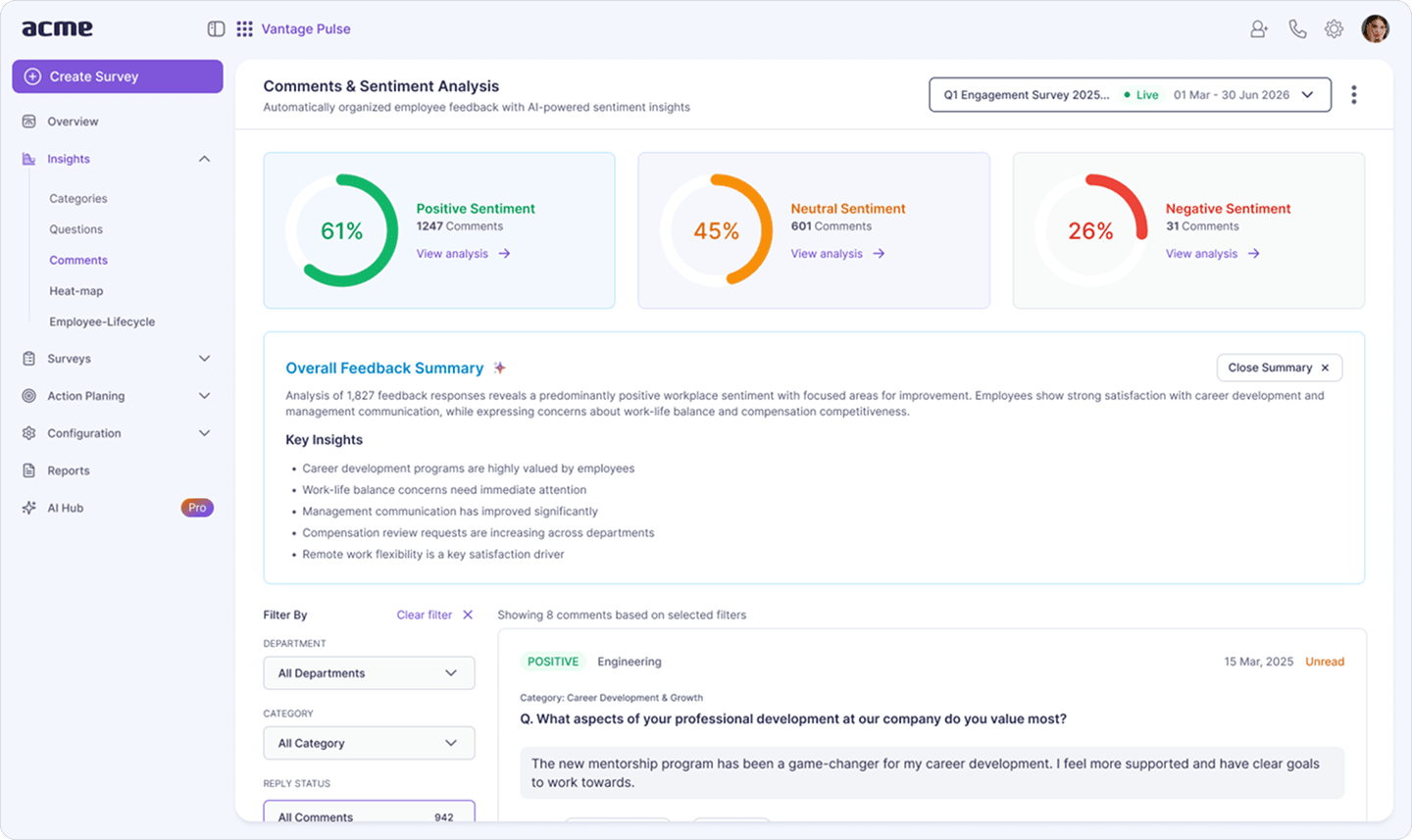
In a 360-degree review, the difference between how you rate yourself and how peers and managers rate you is meaningful. Consistently rating yourself highly can suggest low self-awareness, while rating yourself harshly can hide your real contribution.
Since everyone evaluates the same competencies, reviewers pay attention not only to your score but also to how closely it matches others’ feedback.
Scoring yourself high in every area can make the rating gap the main focus. On the other hand, scoring yourself low can shift the conversation toward reassurance instead of development.
Before submitting, review the feedback and recognition you received during the year. Rate yourself according to that very evidence, not based on instinct.
Organizations can strengthen this habit, too. Teams that regularly reflect through tools such as eNPS surveys are more likely to treat self-assessment as an ongoing practice rather than a once-a-year exercise. Over time, that can reduce the gap between how you perceive your performance and how others perceive it.
Source: Vantage Pulse
The Evidence Habit: Never Start from a Blank Page Again
The toughest part of self-evaluation is not about writing but remembering everything you accomplished. The best solution is to keep a running evidence log throughout the year. By the time review season arrives, you should be involved in selecting and organizing examples, not trying to reconstruct months of work from memory.
The evidence habit has four simple steps:
Record wins as they happen. Add a short note during the same week.
Link each win to a goal or company value. This makes it easier to sort later.
Review your history when the evaluation cycle begins.
Write from evidence. Use the accomplishment formula to explain what you did and the impact it created.
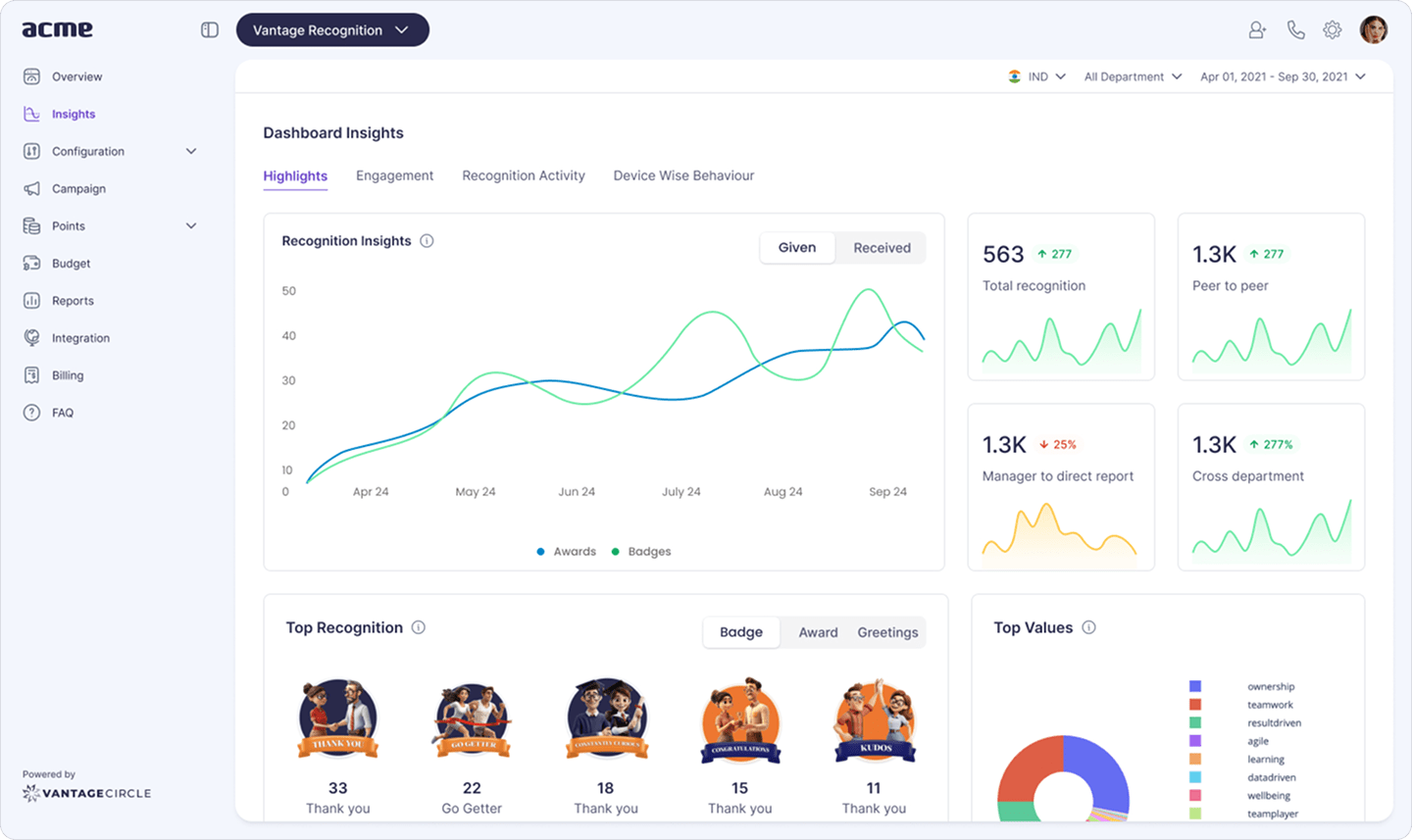
A social recognition feed automates the first three steps. Every shout-out on a rewards and recognition platform becomes a dated, peer-validated record of achievement and is linked to company values. This way, employees will have an organized history of accomplishments waiting for review season.

Source: Vantage Recognition
The same habit can also benefit HR teams at scale. Recognition analytics allow employees to review their own activity from the evaluation period, while helping HR identify which teams consistently document contributions and which may be starting with little evidence.
Source: Vantage Recognition
Conclusion
Now that you know how to write a clear, balanced, and evidence-based self-evaluation, you can present your work in a way that reflects its true impact.
With 60 examples, one simple formula, and five things to avoid, you are ready for review season. The only question is: will you be trying to remember your year, or reading from the evidence you collected along the way?
FAQs
What not to say in a self-evaluation?
Leave out unevidenced superlatives, blame, apologies for weaknesses, surprises, and claims without examples. State misses factually, with the fix attached.
How do I comment on my own performance examples?
Comment using the formula: one accomplishment, the evidence, and the measurable impact. For example: "I rebuilt the onboarding sequence, and new hires now ramp two weeks faster."
How do I write my self-performance evaluation?
Follow the 4 steps above: gather evidence, map wins to goals and values, apply the accomplishment formula, and edit for balance. Draft achievements first, then growth areas with plans, then goals.
What should I write for my self-assessment?
Write four sections: achievements with evidence, strengths someone else can vouch for, growth areas with a plan, and goals with a finish line. Keep every claim checkable.
What is a good example of self-evaluation?
A good example: "I closed the year at 112% of quota after rebuilding my outreach sequence in Q2." It names the result, the action, and the timeframe in one sentence; all 60 sample answers above follow the same pattern.
What are examples of strong performance comments?
Strong performance comments pair a specific behavior with its impact, written about yourself or others. The 60 answers above cover the self-written kind; for manager-written comments, see our guide to performance appraisal comments.

Riha Jaishi is a Content Marketing Specialist at Vantage Circle and host of the HR Vantage Influencers podcast, sharing insights that help organizations build recognition-rich, people-first cultures!!
Connect with Riha on LinkedIn.