Think about the last person who left your team.
Chances are, cold brew was not the reason. People leave for reasons that are harder to see: the rent that keeps rising while their paycheck barely moves, a student loan that takes a sizeable chunk of their income, childcare that no longer makes financial sense, or the slow realization that years of good work have gone largely unrecognized.
Yet employee benefits are still often judged by how good they look on a recruiting page. Free meals. Wellness rooms. Office games. A climbing wall.
There is nothing inherently wrong with these perks. But a pleasant workplace and a workplace that makes someone's life easier are not always the same thing.
That distinction is at the heart of this blog. The question is not simply, “What is the most unique benefit we can offer?” It is, “Which benefits genuinely improve employees’ lives and make them more likely to stay?”
What Counts as a "Unique" Employee Benefit?
A unique employee benefit goes beyond the standard package of health insurance, retirement plans, and paid time off. It addresses a specific financial, personal, or lifestyle need that employees genuinely care about.
But “unique” doesn’t mean rare or expensive. It means useful and targeted.
A unique benefit is something that solves a real problem, whether that’s student loan payments, childcare costs, flexible schedules, or mental health support.
Vantage Influencers Podcast
What Employee Benefits Work Best and What Don't?
with Enrique Rubio, Founder, Hacking HR
Listen to the EpisodeFoundation of a Strong Benefits Package
Before we dive into the unique benefits that set companies apart, let’s talk about the non-negotiables. A solid benefits package has comprehensive health insurance, paid time off (PTO), retirement plans, and wellness support.
These benefits are the bare minimum. But that doesn’t mean they’re not important. Without them, even the flashiest perks like office baristas or meditation pods, won’t keep employees engaged.
So, let’s look at the benefits that form the foundation of a strong employee benefit package:
Comprehensive Health Insurance
In a world where a single medical emergency can derail financial stability, comprehensive health coverage is nothing short of a lifeline. With the average annual premium for family coverage approaching $24,000, many companies are investing a significant portion of these costs in their most valuable asset: their people.
Paid Time Off (PTO)
Did you know despite the critical need for rest, more than half of U.S. workers don't use all their vacation days. And that’s a problem. To solve this issue companies now are realizing that they need to not just offer PTO but actively encourage employees to use it. They have finally realized that well-rested employees are better employees.
Retirement Plans (401(k) & Pensions)
A robust 401(k) match or pension plan is a powerful signal that a company views its employees as long-term partners, not disposable resources. It shows that the organization cares about their life trajectory beyond the daily grind and wants to contribute to their long-term financial security.
Exploring 25 Unique Employee Benefits
The foundational benefits matter. But in a talent market where employees hold power, companies can’t stop here. The real differentiator lies in how these benefits are enhanced and what companies offer beyond the basics.
So, let’s take a look at some unique, next-level perks that are redefining employee experience and making companies irresistible to top talent.
Financial Wellness: Investing in Employee Financial Health
1. Earned Wage Access
Earned wage access lets employees access part of their pay as they earn it, rather than waiting for the next payday. For hourly and shift workers especially, that flexibility can make an unexpected expense easier to manage without turning a two-week wait into a financial problem.
It is also one of the benefits employees can feel almost immediately.
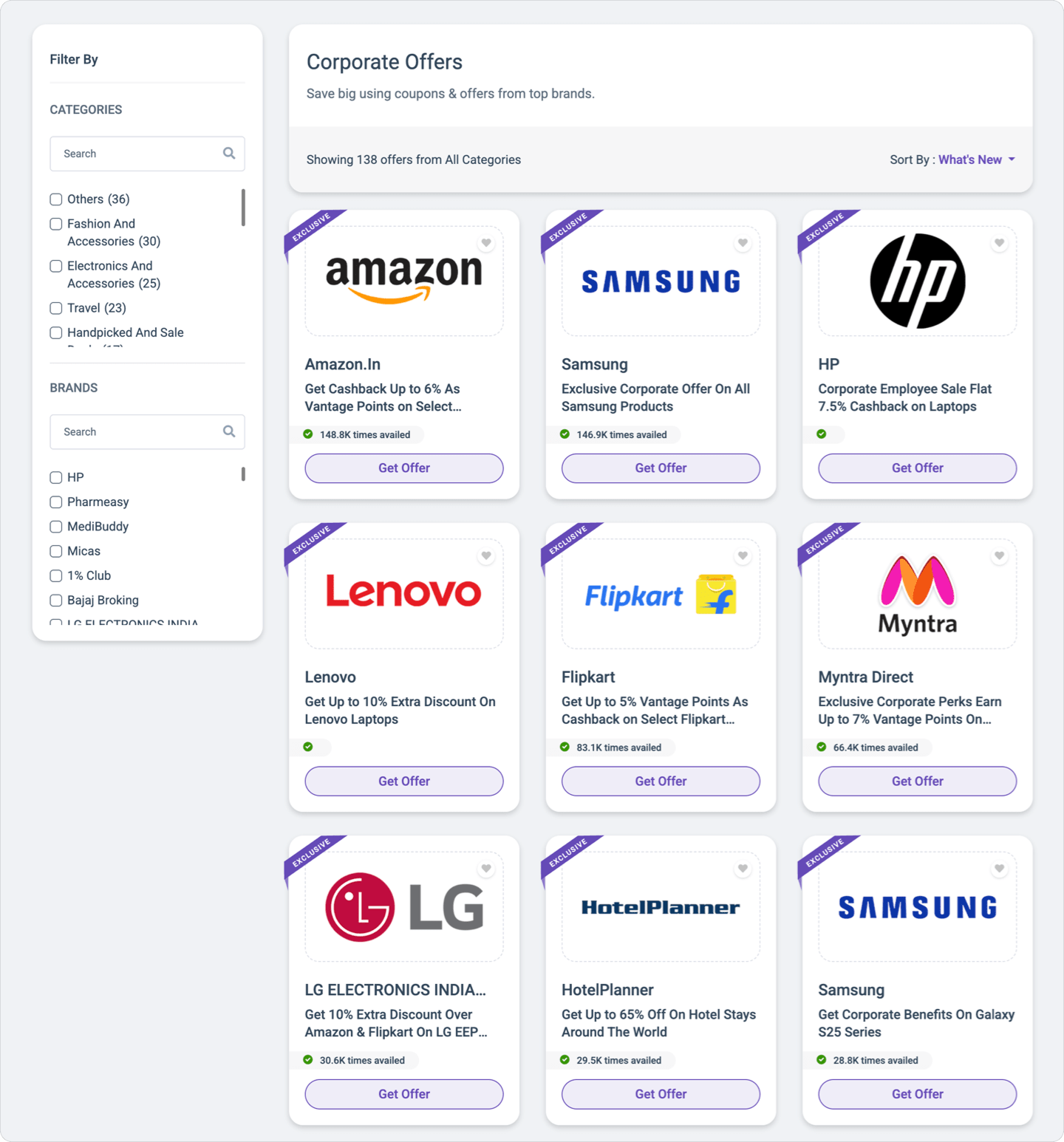
2. Employee Discount Marketplaces
A benefit does not have to be flashy to be valuable. Employee discounts can help reduce the everyday cost of groceries, travel, technology, and other things people are already spending money on. A signing bonus may be memorable for a few months but saving money on regular purchases can make a difference all year.
The key is making those savings easy to access. And, Vantage Perks is best in bringing employee discounts into one place, alongside the rewards and recognition employees already use. Making it easier to find and use the benefit when they actually need it.
3. Financial Coaching
Navigating financial decisions can be overwhelming, but having access to one-on-one financial coaching can make a whole lot of difference. Most of us would really appreciate having a Certified financial planner to help us manage debt, plan big purchases, or optimize investments without making anyone feel stupid.
But offering the benefit is only part of the equation. Employees also need to feel comfortable using it. PwC’s 2026 research found that 33% of people feel embarrassed asking for financial guidance. That makes privacy and easy access essential. If getting help feels exposing or complicated, employees are far less likely to use it.
4. Student Loan Repayment Assistance
You can put up to $5,250 per employee per year toward their student loans, and since 2025 that money is permanently tax-free under the One Big Beautiful Bill Act. The old expiry date is gone.
Why it lands? According to EducationData.org (2025) report around 43 million Americans carry student debt, with the average federal balance above $38,000. For a lot of your younger employees, that payment is the single biggest line in their budget after rent.
And it works. An American Student Assistance survey found 86% of young workers would stay with an employer for at least five years if it helped repay their loans.
5. Emergency Savings Support
Most Americans struggle to cover a $1,000 unexpected expense without going into debt. But knowing that your employer offers an emergency savings fund can make a real difference. It provides security in tough times and keep financial stress at bay.
Some employers now match emergency savings contributions the same way they match a 401(k). Delta Air Lines has done exactly this.
Family Support: Empowering Working Families
6. New Baby Bonuses
Becoming a parent is exciting but expensive! From hospital bills to diapers and childcare, the costs add up fast. That’s why I truly value companies that offer a new baby bonus.
A one-time payment to help offset the financial strain can allow you to focus on bonding with the child rather than worrying about expenses.
7. Fertility and Family-building Benefits
Coverage for fertility treatment, adoption, and surrogacy has gone from rare to expected at competitive employers. For employees in the middle of their careers, when family-building decisions often coincide with major financial commitments, that support can be especially valuable and can give employers another reason to retain experienced talent.
Walmart, for example, offers eligible employees up to $20,000 in lifetime fertility benefits and a separate $20,000 lifetime reimbursement for eligible adoption and surrogacy expenses.
8. Dependent Care Flexible Spending Accounts (FSA)
Childcare and dependent care can take a significant bite out of a household budget. A Dependent Care FSA gives employees a way to make those expenses a little more manageable by setting aside part of their paycheck before taxes for eligible care expenses.
For example, an employee paying for daycare while they work could use their FSA funds toward that cost, reducing the amount of income they have to pay taxes on. The same can apply to eligible care for a spouse or dependent who cannot care for themselves.
It is not a flashy benefit, but it can have a very practical impact.
9. Extended Parental and Family Leave Policies
The U.S. lags behind other developed countries when it comes to paid parental leave, with no federal requirement for companies to provide it. But few companies are stepping up.
Take Netflix, for example. In 2015, the streaming giant shook up the industry by introducing unlimited paid parental leave during the first year after a birth or adoption, though the policy didn't extend to its DVD and call-center staff. Even with that carve-out, the move helped Netflix stand out in the war for talent.
10. Childcare Stipends and Backup Care
For working parents, childcare can be the difference between making it to work and having to call out. Daycare costs can take a significant share of a household’s income, while an unexpected closure or a sick child can turn an ordinary workday into a scramble.
Employers can help in two practical ways: childcare stipends that offset regular care costs and backup care that employees can use when their usual arrangements fall through. For example, a company might reimburse part of an employee’s monthly daycare expenses or provide a set number of emergency childcare days each year.
11. Elder Care Support
A growing share of your workforce is caring for aging parents while working full time. To give you a deeper perspective as to why it is crucial, here is a report by AARP, that says that nearly 53 million Americans serve as caregivers, often balancing full-time jobs with family responsibilities.
Employers can help by offering elder-care resources such as care-navigation services, referrals to local providers, backup care, counseling, or financial assistance. For example, an employee caring for a parent after a sudden hospitalization could use a care-navigation service to find an in-home caregiver instead of spending hours trying to sort through options alone.
It is a benefit that may not be used by everyone, but for the employees who need it, the value can be significant.
Work-Life Balance: Fostering a Healthy Equilibrium
12. Mental Health Support
A 2023 APA survey found that 77% of employees experienced work-related stress, with many citing lack of employer support as a key issue. This highlights the urgent need for organizations to go beyond surface-level wellness initiatives and seamlessly integrate mental health support into their workplace culture.
Free therapy sessions, on-demand counseling services, and confidential support hotlines should be essential rather than optional perks. Additionally, organizations can also partner up with platforms like Calm or Headspace to provide guided meditation and virtual therapy sessions to help employees manage stress.
13. Pet-friendly Workplace and Pet Insurance
For pet parents, heading back to the office often means leaving their furry best friends behind. But what if you didn’t have to? Companies like Amazon, and Ben & Jerry’s are making the workday more paw-some by allowing employees to bring their pets to the office!
To make it even better! Companies can go the extra mile by offering pet insurance to help with vet bills. Because let’s be honest, pets are our family too!
14. Flexible Work Arrangements
Gone are the days of rigid 9-to-5 schedules. Now, you can choose flexible work arrangements to fit your lifestyle. Companies today are creating policies that align with employee preferences by offering hybrid flexibility and shorter workweeks to win the talent war.
15. Sabbaticals
A sabbatical is a paid extended break from work that some companies offer as a reward for employees who have dedicated a certain number of years to the organization.
Sabbaticals can range from a month to a full year, depending on company policies and tenure. And the best part? Employees can spend the time off traveling or pursuing long-lost hobbies. It’s a game-changing perk that promotes work-life balance and keep employees motivated in the long run.
To Know More. Read: Benefits of Granting Sabbatical Leave In the Workplace
16. Wellness stipends
Wellness stipends give employees a guilt-free way to invest in their mental and physical health without worrying about the cost.
Whether it’s a gym membership, yoga sessions, or even home fitness gear, wellness stipends give employees the flexibility to choose what suits their lifestyle best. This way they can prioritize their health in ways that work best for them.
Learning & Development: Cultivating Growth and Potential
17. Learning and Development Budgets
Gone are the days when employees learned once and worked the same way for decades.
Providing a dedicated learning budget gives employees the freedom to upskill, explore new fields, and stay ahead of industry trends. They can use it to take courses, attend conferences, or participate in specialized training programs.
18. Tuition Reimbursement Programs
Education can be expensive, even when it directly benefits an employee’s career. Tuition reimbursement helps remove that barrier by covering part of the cost of degrees, certifications, or job-related courses.
For example, an employer might reimburse up to $5,000 a year for an employee pursuing a part-time degree or professional certification. Employees gain new skills without carrying the full financial burden, while employers develop talent they can retain and grow from within.
19. Mentorship Programs
Sometimes, the best learning comes from those who’ve been there before. Try to match employees with mentors based on their skills, interests, and career goals. Mentorship programs create stronger workplace connections, improve leadership pipelines, and help employees navigate their career paths.
20. Cross-departmental Training Opportunities
I love the idea of being able to explore different roles within my company. It keeps things fresh and fuels innovation.
Did you know? Google’s 20% Time policy that allows employees to dedicate part of their week to projects outside their main job led to groundbreaking ideas like Gmail and Google News. Just imagine what a little creative freedom and cross-departmental training could do for your team.
Uniquely Unique: Creative and Innovative Benefit Ideas
21. Values-Based Spot Rewards
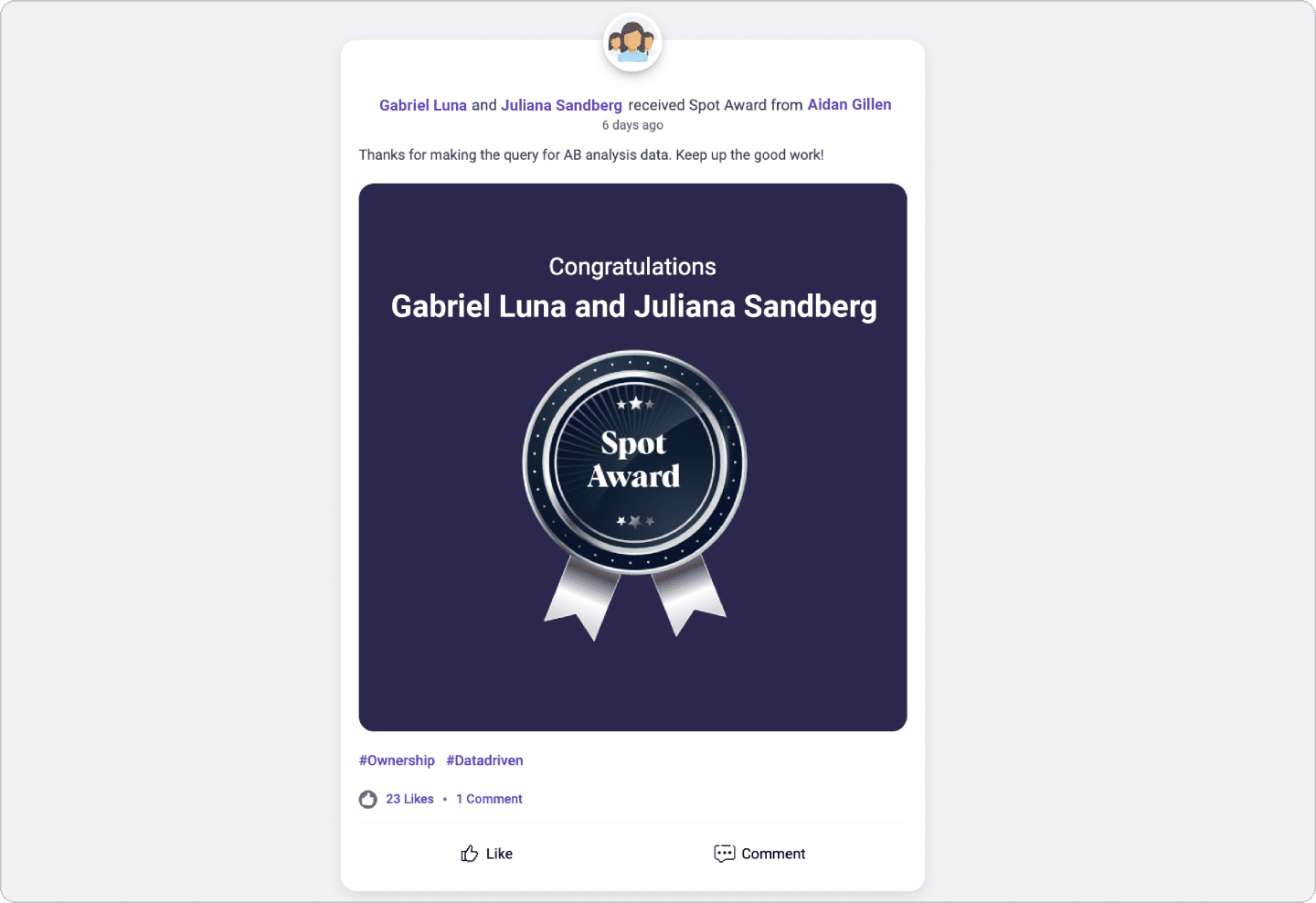
Values-based spot rewards are small, timely rewards given when an employee demonstrates a behavior the company says it values. The reward might be points, a gift card, extra time off, or simply public recognition.
For example, if collaboration is a core value, a manager could recognize an employee who stays late to help a teammate meet a deadline. If customer obsession is the priority, an employee who goes out of their way to solve a customer’s problem could receive a spot reward that same day.
Source: Vantage Recognition
22. Personalized Birthday Gifts or Experiences
A birthday benefit becomes more meaningful when employees can choose what they actually want. Instead of sending everyone the same gift card or generic basket, give employees a budget and let them decide how to use it, whether that means a spa treatment, a nice dinner, a new book, an extra day off, or putting it toward a weekend trip.
The flexibility is what makes the benefit personal. Someone who loves to travel may value a hotel stay, while someone else might prefer a shopping voucher or a quiet day to themselves.
23. Service Anniversary Memories
Not every meaningful milestone needs a big reward. Sometimes, it is simply recognizing that someone has stayed, grown, and contributed over the years.
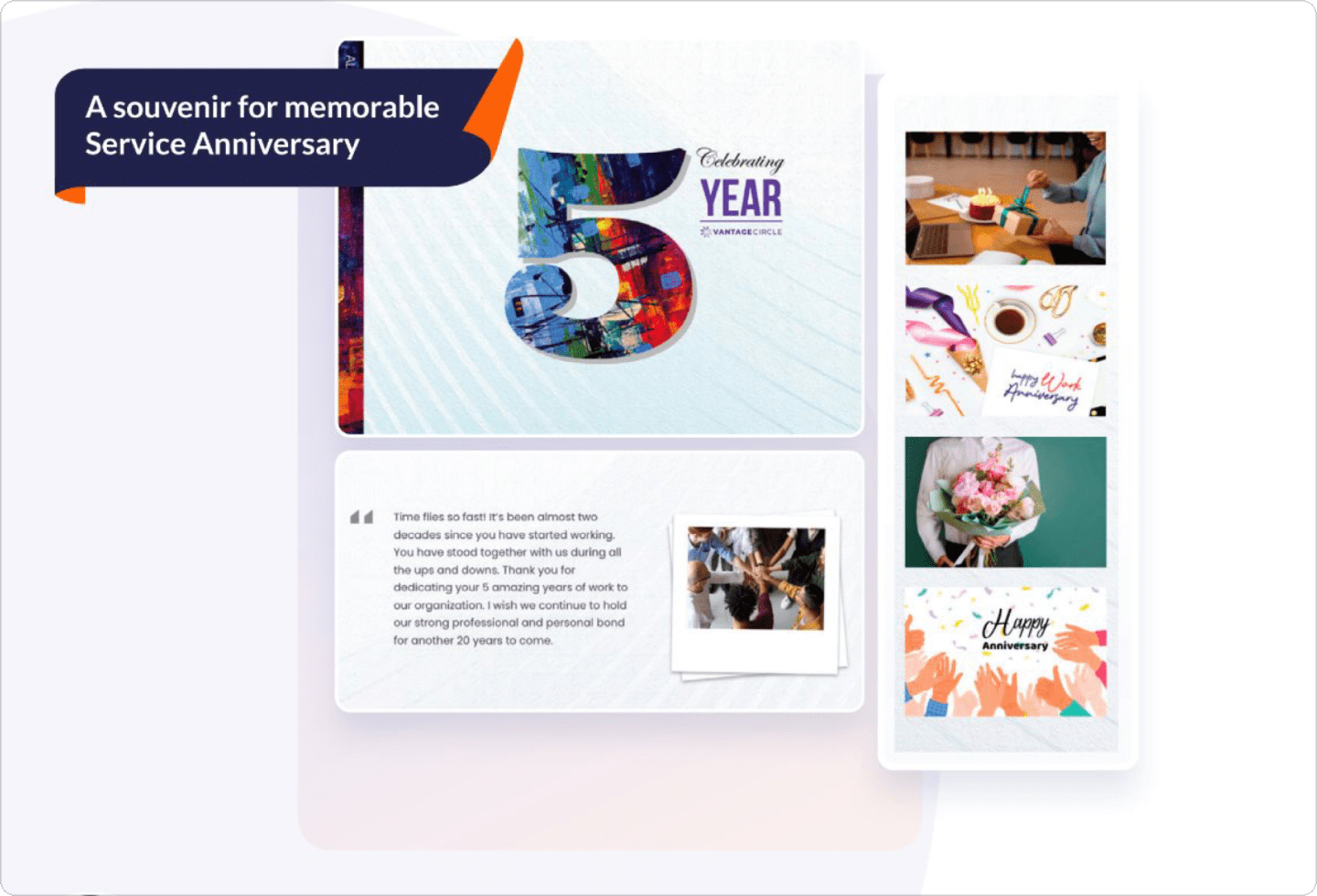
Vantage Recognition’s Service Yearbook turns those anniversaries into lasting memories, letting colleagues add messages, photos, badges, and personal notes. It transforms a work anniversary from a date on the calendar into a shared record of the employee’s journey. It is something they can look back on long after the celebration ends.
Source: Vantage Recognition
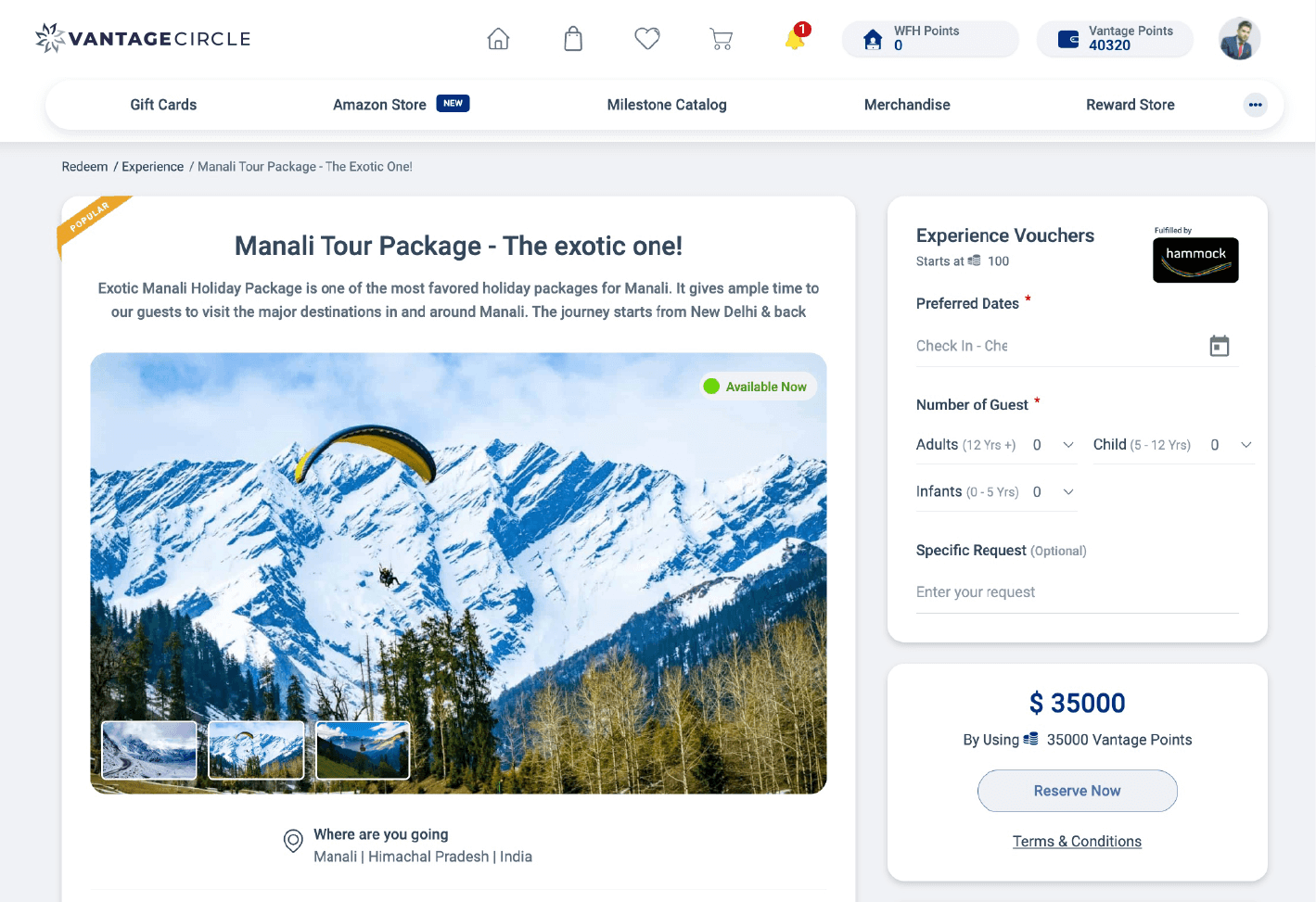
24. Experience-Based Rewards
Not every reward needs to be something an employee can put in a shopping cart. Experience-based rewards let people use their points or recognition credits for things they would genuinely look forward to. It could be a dinner out, concert tickets, a weekend trip, or a family activity.
Think about it. A gift card can disappear into the next grocery run or online purchase. An experience gives employees something to anticipate and remember, making the reward feel less like a transaction and more like a moment worth celebrating.
Source: Vantage Recognition
25. Personalized Milestone Celebrations
Work anniversaries are only one part of an employee’s life. A new baby, a wedding, a birthday, or another important personal milestone can matter just as much—and acknowledging those moments can make employees feel seen beyond their job title.
The key is personalization. Instead of sending everyone the same generic message, employers can offer a small gift, points, a meal, or a handwritten note that reflects the occasion. For example, a new parent might receive a meal-delivery credit, while someone celebrating a milestone birthday could choose a gift they actually want.
Cost and Implementation: Making it a Reality
So, you’re excited about offering unique, employee-centric benefits but don't want to drain your budget. The key is to invest wisely and track their impact. Ensure that they bring real value to both your employees and your business.
Start Small & Scale Up
Not every benefit needs to be a massive, company-wide program right away. Pilot programs are a great way to test the waters before making a full commitment.
For instance, if you are thinking about offering volunteer time off (VTO)? Start with a few designated days per year and track participation. This will save you time and money while helping you gauge whether the program truly resonates with employees.
And remember you don't have to offer the most expensive or extravagant perks to make a difference. Sometimes the simplest benefits can have the biggest impact.
Find the Right Providers & Plans
When it comes to health insurance, retirement plans, or other benefits, shopping around is key. Try to compare providers for the best group rates or consider using self-funded insurance if your company is large enough.
And always remember that the government offers tax credits for small businesses that provide employee benefits. Those tax credits can come in handy when you’re trying to offer competitive benefits packages to your employees.
Measure Return on Investment (ROI)
You wouldn’t invest in a new software tool without measuring its impact, so why should employee benefits be any different? To ensure your perks are making a difference, track key engagement and retention metrics through employee pulse surveys or focus groups.
Analyze trends in absenteeism, turnover rates, and benefits utilization to see what’s working and what’s not. This will save you time and money while helping you refine your offerings.
Vantage Influencers Podcast
"Money will get employees through your company's door. But it's the non-monetary motivators that make them want to stay with you."
Vineet Kumar, Regional HR Manager, Al Rashid Food Company
Listen to the EpisodeDo Unique Benefits Actually Improve Retention? What the Data Shows
Yes, but only the ones that target a real stressor and actually get used, and the strongest single predictor in the research is recognition rather than any novelty perk.
Every CFO eventually asks this, so here is the straight version.
The clearest evidence points to recognition. Vantage Circle's Recognition Effect study, conducted with Great Place To Work India across 5.7 million employees, found 92% retention intent in high-recognition cultures, compared to just 76% in low-recognition ones.
On money, PwC (2026) found financially stressed employees are roughly twice as likely to be job hunting. So a benefit that lowers that stress lowers your flight risk.
On student loans specifically, the signal is concrete. Fidelity has reported attrition roughly 78% lower among repayment-program participants. And Applied Materials more than doubled its per-employee contribution, from $2,000 to $4,800, after seeing the results, according to a 2025 SHRM panel.
But there is an important caveat: a benefit only works if employees actually use it. Sorbet found that 62% of workers left paid time off unused in 2023. The lesson is straightforward: even a benefit employees value can have little impact if workplace culture, workload, or manager expectations make it difficult to use.
The takeaway is not to keep adding perks. It is to identify the pressures employees are actually facing, offer benefits that address them, and make those benefits easy—and acceptable—to use.
Conclusion
The landscape of employee benefits has dramatically transformed. No longer are we living in an era where a ping-pong table and standard health insurance suffice.
Today's workforce craves meaningful, personalized experiences that demonstrate genuine care and investment in their holistic well-being. Don't just offer a job, offer an experience that empowers, supports, and inspires.
FAQs
What is a Unique Benefit?
A unique benefit is anything beyond the standard package of health insurance, retirement, and paid time off that targets a specific money, time, or life need.
What are Some Examples of Unique Employee Benefits?
Examples include student loan assistance, childcare support, earned wage access, financial coaching, employee discount programs, tuition reimbursement, and mental health benefits.
Do Unique Employee Benefits Improve Employee Retention?
They can, especially when they address a real employee need. Benefits that reduce financial stress, provide flexibility, or support employees outside work can give people stronger reasons to stay.
How can Companies Choose the Right Unique Employee Benefits?
Start by understanding what employees actually need through surveys, focus groups, and benefits usage data. The goal is not to offer the most unusual perks, but the benefits that solve the problems employees face.
How much Should Companies Spend on Unique Employee Benefits?
There is no universal number. Companies should weigh the cost of a benefit against its expected use, employee value, and potential impact on retention, engagement, and recruitment.

Shikha Gogoi is a Content Marketing Specialist focused on SEO-driven content around employee engagement, recognition, and workplace culture, helping build people-first workplaces.
Connect with Shikha on LinkedIn.