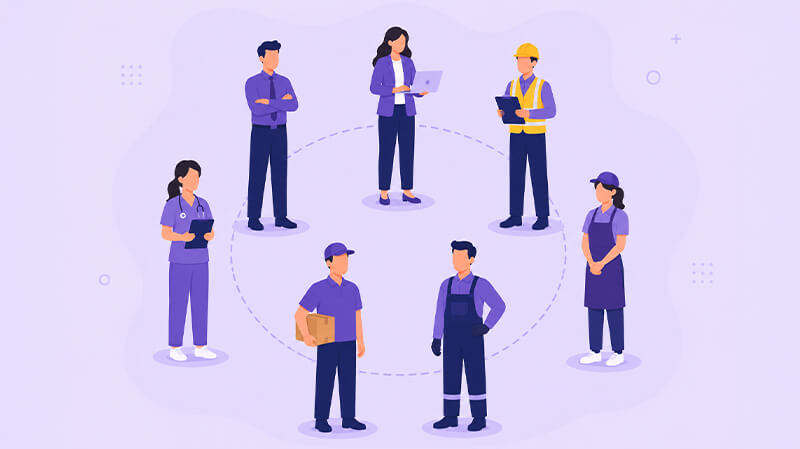
That last point matters more than most plants realize. According to UKG's Manufacturing Industry Report, 62% of manufacturing organizations reported a year-over-year increase in turnover. Every departure on the floor carries a hidden cost in lost output, retraining, and slipped institutional knowledge.
So the question is not whether to recognize manufacturing workers. It is how to do it in a way that reaches people who are not at a desk. The answer starts with employee recognition built for the realities of the shop floor.
This guide covers why recognition is a retention lever in manufacturing, what to recognize, 12 practical recognition ideas, how to design a program around them, and how to measure the impact. We will also look at two manufacturers who did it and have the numbers to show for it. Let's get into it.
Key Takeaways
- Recognition is a retention lever, not a perk: manufacturing turnover is high and expensive, and recognition is one of the cheapest ways to slow it.
- Reach the floor, not the inbox: most shop-floor workers have no corporate email, so recognition has to be built for non-desk access.
- Recognize the right behaviors: safety, quality, teamwork, continuous improvement, and reliable attendance.
- Mix the tactics: the strongest programs blend instant peer praise, structured awards, and tangible rewards across every shift.
- Proof it works: Tata Motors doubled engagement and ran 85,000+ recognition moments; Blue Star lifted active users 35%.
Employee Recognition in Manufacturing at a Glance
| Aspect | Detail |
|---|---|
| What to recognize | Safety, quality and output, teamwork, continuous improvement, attendance |
| The core challenge | Most frontline workers have no corporate email or laptop |
| Best-fit tactics | Peer-to-peer, phygital (QR), in-the-moment, shift-win displays |
| How to measure | Coverage, giver/receiver rates, turnover delta, safety correlation |
| Best for | Plant managers, HR leaders, and operations heads in manufacturing |
Why Recognition is a Retention Lever in Manufacturing
Recognition is one of the cheapest retention tools a plant has, because manufacturing turnover is both high and expensive. Frontline and shop-floor roles see some of the steepest voluntary attrition of any sector, and each exit costs a meaningful share of that worker's annual salary to replace.
Here is the structural barrier. A large majority of manufacturing workers do not have a corporate email or a laptop. They are on the line, not in an inbox. So the daily stream of praise, updates, and acknowledgment that desk employees receive simply never reaches them. Without it, people feel invisible, and invisible people leave.
Recognition closes that gap. It tells workers their effort is seen, even when they are wearing safety gear instead of a headset. The payoff is concrete: recognition-rich cultures hold 92% retention versus 76% in cultures without it, according to the AIRe report. That difference is the gap between a stable line and a constant rehiring cycle.


Vantage Influencers Podcast
"I think that's a big thing when it comes to hourly workers: that they can feel seen and heard in their organizations."
— Shari Simpson, Senior Manager, Thought Leadership, Paylocity
Listen to the EpisodeStrong recognition also reinforces the behaviors manufacturing cares about most. When you celebrate safe practices and quality catches, you get more of them. That is why recognition belongs in the same conversation as employee engagement on the shop floor, not in a separate HR silo.
What to Recognize on the Shop Floor
Recognition lands when it spotlights the behaviors that keep a plant safe, productive, and staffed. Vague praise does little. Tie acknowledgment to specific shop-floor contributions and it starts to shape culture.

Safety and Compliance
Safety is the highest-value behavior to recognize in manufacturing, because the cost of getting it wrong is measured in injuries, not dollars. Acknowledge workers who follow protocols consistently and report hazards early. Highlighting safety champions sends a clear message that caution is valued as much as speed.
Quality and Output Milestones
Recognize teams the moment they hit or exceed a production or quality target. Whether it is meeting a quota or maintaining a defect-free run, calling it out keeps the line motivated and reinforces that the standard matters.
Teamwork and Training
Spotlight the people who support coworkers during peak loads or train new hires. Manufacturing runs on coordination. Recognizing those who lift the team, not just their own numbers, builds the cooperation a busy shift depends on.
Continuous Improvement and Innovation
Reward employees who suggest changes that cut downtime, reduce waste, or improve a process. Even small floor-level ideas add up. Celebrating them builds a culture where workers keep looking for the better way.
Attendance and Reliability
Acknowledge consistent attendance and punctuality, because reliable staffing is what holds a production schedule together. When people show up ready, the whole operation runs smoother, and recognizing that reinforces accountability.
| What to recognize | Shop-floor example | Suggested cadence |
|---|---|---|
| Safety and compliance | 30 days incident-free on a line | Monthly, plus instant for hazard catches |
| Quality and output | Hitting 100% of a quota with zero defects | Per shift or per milestone |
| Teamwork and training | Onboarding a new hire on the line | Real time, peer-driven |
| Continuous improvement | An idea that cuts changeover time | Quarterly award, instant shout-out |
| Attendance and reliability | Perfect attendance across a quarter | Quarterly |
12 Employee Recognition Ideas for Manufacturing
These 12 employee recognition ideas for manufacturing are built for the floor, not the office, so they reach workers whether or not they sit at a screen. Mix several of them rather than relying on one. The strongest programs blend instant peer praise with structured awards and tangible rewards.

1. Peer-to-Peer Recognition
Let workers recognize each other in real time, because peers see the effort a supervisor misses. A quick shout-out from a colleague on the line builds camaraderie and reinforces good work in the moment. It also spreads recognition across every shift, not just down from management.
2. Phygital Recognition for Non-Desk Workers
Use a phygital approach, a blend of physical and digital recognition, to reach workers without devices. A supervisor can hand a worker a printed thank-you card with a QR code. After the shift, the worker scans it to see the appreciation on the recognition platform. It makes recognition accessible to people away from screens, without losing the digital record.

3. In-the-Moment Supervisor Recognition
Give supervisors a mobile way to recognize a worker on the spot, the moment they earn it. Recognition delayed to a monthly meeting loses its punch. A 20-second mobile recognition during the shift, tied to a specific action, carries far more weight than a generic award weeks later.
4. Safety-Streak Recognition
Recognize safety milestones with the same energy as production milestones. Celebrate a line that hits 30, 60, or 90 days incident-free. Linking recognition to safety streaks turns compliance into a shared goal people actively protect, rather than a rule they tolerate.
5. Production Milestone Awards
Award teams when they hit a defined production or quality milestone. Public acknowledgment of a quota met or a record run keeps momentum high and makes the target feel worth chasing. It works best when the criteria are clear and visible to everyone.
6. Monthly and Quarterly Awards
Run regular monthly or quarterly awards to keep recognition consistent across the year. Celebrate standouts in safety, innovation, or teamwork. Automating the nomination and voting keeps the process transparent and easy for floor workers to join.
7. Production-Based Incentives
Tie reward points or perks directly to performance goals. When workers earn points, bonuses, or extra time off for hitting targets, recognition connects straight to the company's output. A platform that tracks milestones and lets workers redeem points makes the reward feel tangible.
8. Public and Social Recognition
Celebrate top performers where the whole company can see it. Feature wins on a shop-floor display, the intranet, or a company newsletter. Public recognition lifts the individual and sets a visible standard for everyone else.
9. Long-Service and Tenure Awards
Recognize tenure milestones, because loyalty is exactly what a high-attrition sector needs to reward. Marking work anniversaries and long service tells experienced workers their commitment is valued, and signals to newer hires that staying pays off.
10. Multi-Shift Recognition Cadence
Make sure recognition reaches every shift equally, not just the day shift HR sees. Night and weekend crews are the easiest to overlook and often the hardest to retain. Build recognition into each shift's rhythm so no team is invisible.
11. Continuous-Improvement Recognition
Reward the floor-level ideas that make the operation better. When a worker suggests a fix that saves time or reduces waste, recognize it publicly. This turns recognition into an engine for the kaizen mindset manufacturing depends on.
12. Team-Board and Digital Signage Displays
Put recognition where the work happens, on a board or screen at the point of work. A shift-win display that supervisors update in seconds keeps appreciation visible to people who never open an inbox. It also makes recognition feel like part of the floor, not an HR afterthought.
Designing a Manufacturing Recognition Program
Ideas only stick when they sit inside a structured program, not a scattering of one-off gestures. Recognition that depends on individual managers remembering to say thanks fades fast. A program makes it consistent, measurable, and fair across every line and location.

A useful way to structure that rebuild is the AIRe framework, which scores a program on four dimensions: Appreciation, Incentivization, Respect, and eMotional Connect. Applied to the floor, it asks practical questions. Is appreciation timely and specific? Are incentives tied to real behaviors? Do workers feel respected across shifts? Is there genuine emotional connection, not just transactions?
A comprehensive employee recognition program ties these together with a platform that handles the logistics. Vantage Recognition, Vantage Circle's employee recognition platform, automates nominations, peer-to-peer shout-outs, points, and rewards so managers can recognize in real time and HR can see what is actually happening on the floor.
It is also worth being clear on the difference between recognition versus appreciation. Recognition rewards what a worker did. Appreciation values who they are. A strong manufacturing program needs both, because the second is what makes people feel seen as more than a pair of hands.
Before redesigning your program, audit your current one against the four AIRe dimensions. Most plants discover their recognition is heavy on incentives and thin on timely appreciation.
Proof It Works: Manufacturing Recognition Case Studies
Two manufacturers show what a well-built recognition program does to engagement and participation on the floor. These are not hypotheticals. They are documented outcomes from large, multi-site manufacturers.
Tata Motors
Tata Motors built a digital recognition program, Accolades, across a workforce of 19,000+ and doubled engagement in three years. The challenge will sound familiar to any large plant: sustaining a consistent culture of appreciation across many business units and locations. Real-time recognition is what made that possible at scale.
Blue Star
Blue Star moved from a manual recognition model to a digital-first program, Shining Stars, and won a Brandon Hall Gold Excellence Award for it. The HVAC manufacturer, with 3,000+ employees across 7 plants, saw recognition transform once it went real time and personalized.
The common thread across both is simple. Recognition stopped being a slow HR task and became an everyday, visible part of how the floor operates.
How to Measure the Impact of Recognition in Manufacturing
You cannot improve what you do not measure, so track recognition the same way you track output and safety. The right metrics tell you whether your program is reaching the floor or just head office, and whether it is moving the outcomes that matter.
| Metric | What it tells you | How to track it |
|---|---|---|
| Recognition coverage | How many employees were recognized at least once | Platform analytics, by shift and site |
| Giver and receiver rates | Whether recognition is broad or concentrated | Unique givers vs unique recipients |
| Turnover delta | Whether recognition is moving retention | Voluntary turnover before vs after |
| Safety correlation | Whether safety recognition reduces incidents | Incident rate vs recognition activity |
Coverage is the first number to check. If only a fraction of your workers are ever recognized, the program is not reaching the floor, no matter how good the headline awards look. Strong giver and receiver rates show recognition has become a habit, not a top-down event.
For a deeper set of measures, the recognition program KPIs worth tracking go beyond participation into business outcomes. And if you want sector context for your own numbers, the broader employee recognition statistics give you a benchmark to measure against.
Track recognition coverage by shift. A program that looks healthy in aggregate often hides a night-shift blind spot that is quietly driving attrition.
Ready to see what shop-floor recognition looks like in practice? Book a demo and we will walk you through a program built for manufacturing.
Summing It Up
Manufacturing workers face long hours, demanding tasks, and real safety risk every shift. They also keep the entire operation running. Recognition that reaches them, including the majority without a corporate inbox, is one of the most direct ways to lift morale and keep them.
The tactics are not complicated. Recognize the right behaviors, reach every shift, blend instant peer praise with structured awards, and measure coverage so no one is invisible. Tata Motors and Blue Star prove the payoff is real and measurable.
Start with one change this quarter. Pick the recognition idea that fits your floor, build it into a program, and track who it reaches. The plants that get this right do not just feel better to work in. They keep the people who are hardest to replace.
FAQ
What are good employee recognition ideas for manufacturing workers?
Good ideas include peer-to-peer recognition, phygital recognition with QR codes for non-desk workers, in-the-moment supervisor shout-outs, safety-streak awards, production milestone awards, and long-service recognition. The best programs combine several so recognition reaches every shift.
How do you recognize factory workers who do not have email?
Use phygital recognition, which pairs a physical item like a printed card or QR code with a digital platform. Shop-floor displays, team boards, and supervisor mobile recognition also reach workers who are away from a screen during their shift.
Does employee recognition reduce turnover in manufacturing?
Yes. Recognition-rich cultures show much higher retention than those without it, and manufacturing has high, costly turnover to begin with. Consistent recognition makes frontline workers feel valued, which is a direct driver of staying.
What should manufacturers recognize on the shop floor?
Recognize safety and compliance, quality and output milestones, teamwork and training, continuous-improvement ideas, and reliable attendance. Tying recognition to these specific behaviors reinforces what keeps a plant safe, productive, and staffed.
How do you measure the impact of a manufacturing recognition program?
Track recognition coverage, giver and receiver rates, turnover before and after the program, and the correlation between safety recognition and incident rates. Coverage by shift is especially important to spot blind spots.

Nilotpal M Saharia is an Assistant Manager, Content Marketing at Vantage Circle and a recognition-and-rewards (R&R) strategist with 9 years of experience spanning Marketing, HR, and content strategy. He helps HR leaders turn employee recognition and leadership research into practical workplace programs.
Connect with Nilotpal on LinkedIn.