
Most managers know they should praise more. The gap is not willingness, it is method. Praise that is vague, late, or performative does little, and a few common habits make it quietly backfire. Get the method right, though, and positive feedback becomes one of the highest-return, lowest-cost things a manager does all week.
This guide is the method: a 5-part framework for delivering praise, the science of why it works, the public-versus-private call, and the 4 mistakes that make praise fall flat. It builds on the fundamentals of effective feedback and sits inside the wider practice of employee feedback. Ready-to-use wording lives in our example bank, linked below. This page is about how to deliver praise so it lands.
How to Give Positive Feedback: The 5-Part Method
Give positive feedback in five parts: name the specific behavior, explain its impact, deliver it promptly, keep it sincere, and choose the right setting. Each part fixes a way that praise usually goes wrong.
| Step | What it looks like |
|---|---|
| 1. Name the specific behavior | "You restated the client's objection before answering it" (not "great meeting") |
| 2. Explain its impact | "...which is why they signed off on the spot" |
| 3. Deliver it promptly | Say it the same day, not at the next review |
| 4. Keep it sincere | Your own words: "That genuinely impressed me" |
| 5. Choose the right setting | A 1:1 for personal wins; a team channel for behavior worth copying |
- Name the specific behavior. Praise a concrete action, not a trait. "You're a star" flatters and teaches nothing. "You caught the pricing error before it shipped" tells the person exactly what to do again. Specificity is what separates feedback from flattery.
- Explain its impact. Connect the behavior to what it changed for the team, the customer, or the work. Impact turns a compliment into a reason. Without it, praise is a pat on the head. With it, praise is information the person can act on.
- Deliver it promptly. Praise decays fast. A thank-you the same day lands, while the same words at a quarterly review feel like an afterthought. Employees are 3.6 times more likely to be motivated when managers give frequent rather than annual feedback (Gallup, 2022).
- Keep it sincere. Say it in your own words. Formulaic or over-polished praise reads as a performance, and people can tell. A short, honest "that genuinely impressed me" beats a paragraph of manufactured enthusiasm. Sincerity also means not inflating: praise you do not fully mean spends credibility you will want later.
- Choose the right setting. Match the moment to the channel. Personal or sensitive praise belongs in a private 1:1, while behavior you want the whole team to copy belongs somewhere visible. For a distributed team, that is a channel decision as much as a place: a note in a shared channel does the public job when there is no room to walk into. More on that call below.
None of the five parts require a natural talent for praise. They require slowing down for ten seconds to say what you saw and why it mattered, which is a habit anyone can build.
Why Positive Feedback Works: The Science of Praise
Positive feedback works because the brain processes recognition as a genuine reward, and because high-performing teams run on a steady surplus of it.
When you praise someone, you are not just being polite. You are triggering the brain's reward system. In an fMRI study, earning a good reputation activated the striatum, the same reward center that responds to money (Izuma, Saito and Sadato, 2008). Recognition is, quite literally, a reward the brain values.
The same finding hints at why recognition can outperform a bonus. Because social approval and money activate the same reward circuitry, a sincere, specific word from a manager or a peer registers as a genuine reward, not a consolation prize. Money is transactional and quickly normalized. Recognition is relational, and it holds its value because it signals something a payment cannot: that a specific person noticed.
That reward compounds at the team level. The highest-performing teams give an average of 5.6 positive comments for every negative one, while the lowest-performing teams run nearly three negatives per positive (Zenger and Folkman, Harvard Business Review, 2013). Praise is not soft. That ratio is one of the clearest markers separating teams that thrive from teams that grind.
Two practical lessons follow. First, the brain rewards the behavior you name, not the person you flatter, so specific praise changes what people do while generic praise evaporates. Second, if the best teams run better than five positives to every negative, most managers are underspending on praise rather than overspending. The common instinct to save recognition for big, formal moments gets that ratio backwards.
This is why employee recognition is more than a morale exercise. Praise that names a specific behavior tells the brain exactly which action earned the reward, which is what makes the behavior repeat.
Praise tied to a company value does even more. It teaches everyone what the company rewards, turning a single compliment into a culture signal. Vantage Recognition lets managers tag praise to a specific value, so a thank-you also reinforces the standard behind it.
Public vs. Private: Where and When to Give Positive Feedback
Give personal or sensitive praise privately, and recognize behavior you want the whole team to copy publicly. When you are unsure, remember that timing matters more than setting: praise delivered now beats polished praise delivered late.
Private praise is for personal wins, growth moments, and anyone who dislikes the spotlight. A quiet "I saw how you handled that, and it was impressive" in a 1:1 can mean more than a public callout. Public praise does a different job. It sets a standard, because it shows the whole team what good work looks like here.
A quick way to decide:
- Effort, wins, and any behavior you want repeated: make it public.
- Personal growth, a quiet turnaround, or anyone who dislikes attention: keep it private.
- Anything that also carries a correction: always private.
For a distributed team, the setting is also a channel choice. A written note in a shared channel does the public job when there is no room to walk into, and a direct message does the private one. The medium changes; the rule does not.
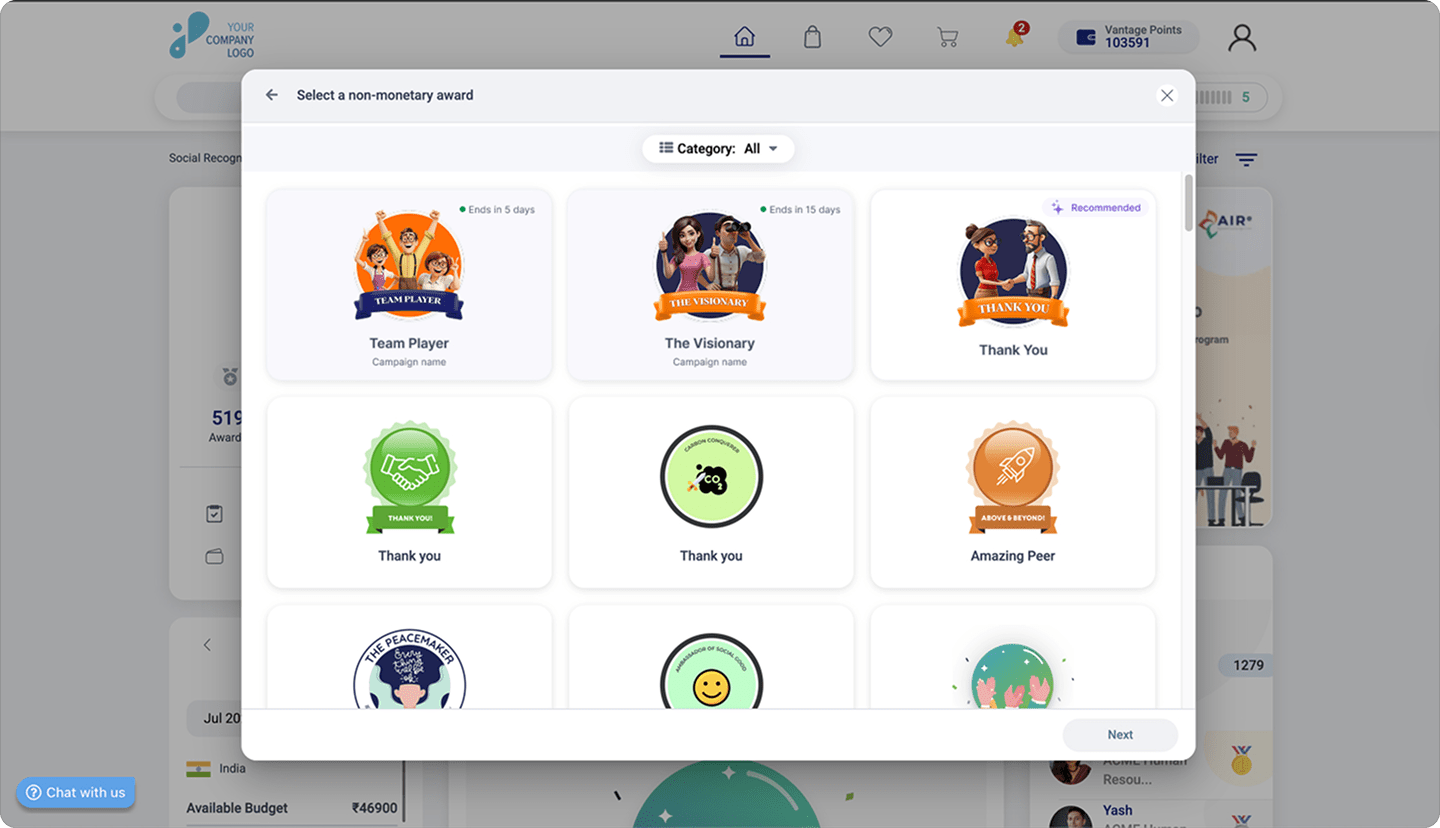
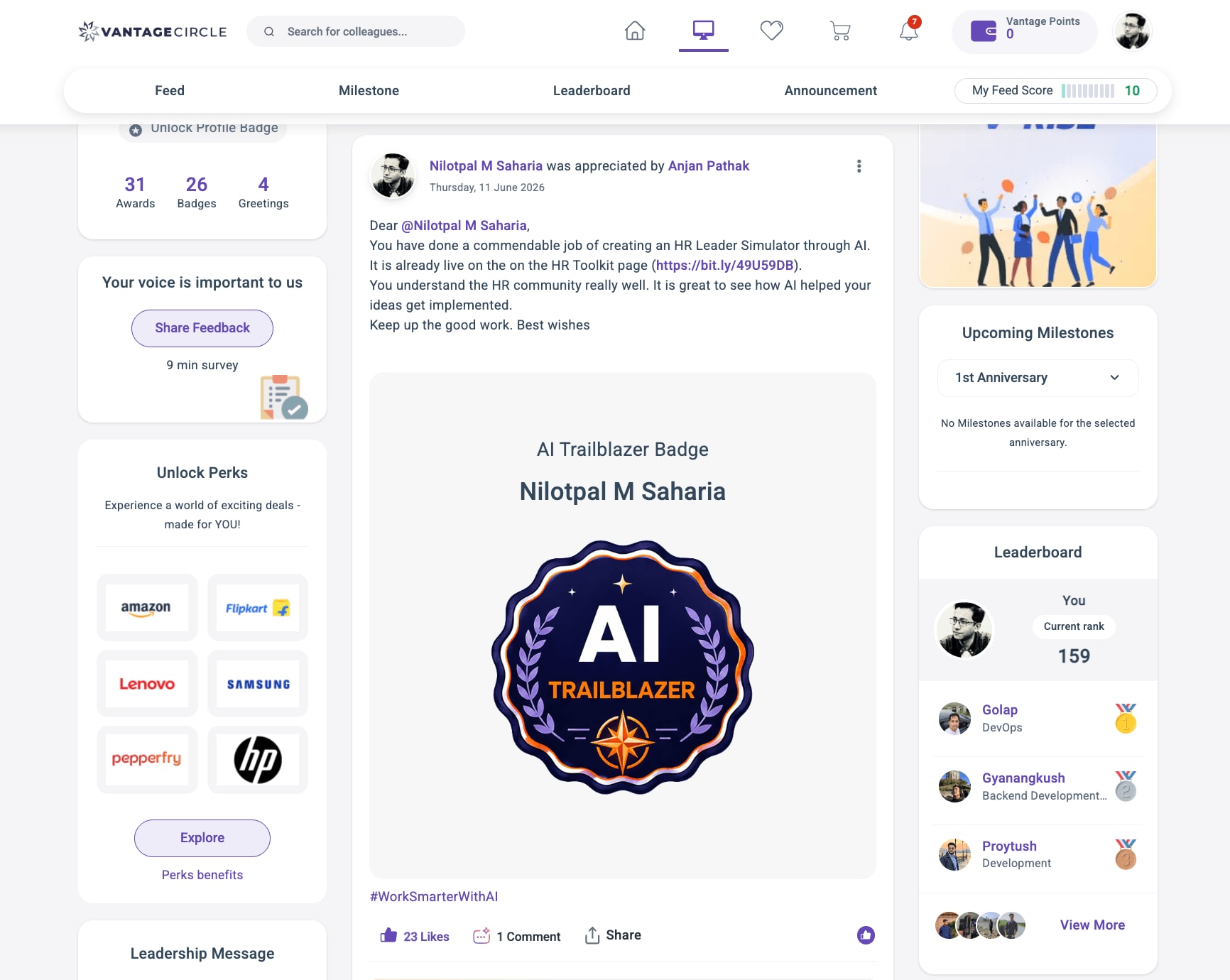
Said in a meeting, public praise fades when the meeting ends. Posted on a recognition feed, it lasts, and everyone sees the behavior worth repeating. A social recognition feed is the scaled version of praising someone out loud: the moment becomes visible, permanent, and contagious.
The timing rule. Praise delivered within a day of the behavior lands far harder than praise saved for a review. If you notice it Tuesday, say it Tuesday. Late praise reads as an afterthought, however sincere it is.
4 Mistakes That Make Positive Feedback Backfire
Four mistakes turn positive feedback into noise, or worse: vague praise, over-praising, the praise sandwich, and comparison praise.
- Vague praise. "Good job" and "great work" name no behavior, so there is nothing for the person to repeat. It feels nice for a second and teaches nothing. Do this instead: name the action and the result it produced.
- Over-praising. When everything is "amazing," nothing is. Constant, unspecific praise loses its signal, and your genuine recognition gets discounted along with the filler. Do this instead: praise less often, but always tie it to something specific.
- The praise sandwich. Burying a criticism between two compliments trains people to brace for the "but." The praise gets heard as setup, not as recognition, and the correction gets softened into vagueness. Do this instead: give the praise and the correction as two separate, honest conversations.
- Comparison praise. "You're the best on the team" praises one person by diminishing everyone else. It breeds rivalry instead of motivation and can sour the recognition for the person receiving it. Do this instead: measure the person against the work, not against their teammates.
The over-praising trap. The instinct to praise more can backfire. In the recognition programs I have watched up close, the teams that struggle are rarely the ones that praise too little. They are the ones that praise vaguely, so the words stop meaning anything. Specificity, not volume, is what keeps praise credible.
The praise sandwich fails because redirection deserves its own honest conversation. When you do need to correct something, keep it separate and direct, the way our constructive feedback examples handle it.
Positive Feedback Words and Phrases That Work
The best positive feedback words are specific and impact-focused: reliable, resourceful, thorough, proactive, steady. The trick is to pair the word with the behavior that earned it, so the label has evidence behind it.
- "You were thorough. The report had zero errors, which saved us the usual review round."
- "That was resourceful. You found a workaround when the vendor tool went down."
- "You are reliable. I have never once had to chase you for a deliverable."
- "That took real ownership. You flagged the risk before anyone asked."
These four are a starting point. For 50+ ready-to-use lines organized by scenario and relationship, see our positive feedback examples.
How to Make Positive Feedback a Habit, Not a One-Off
Positive feedback becomes a habit when you build it into the week instead of waiting for the perfect moment: make it everyone's job, give it a cadence, and tie it to the behaviors you want to see more of.
Praise should not wait for a manager to notice. Peer-to-peer recognition lets the teammate who actually saw the great work say so in the moment, which is when it means the most. That spreads the load and catches the wins a manager never sees.
The mechanics are simple enough to sustain. Block five minutes at the end of each week to ask who did something worth naming, then send it before people log off. Prompt praise around milestones, launches, and project closeouts, when there is always something real to recognize. Tie the recurring praise to the behaviors and values you want more of, so recognition compounds into culture instead of scattering at random.
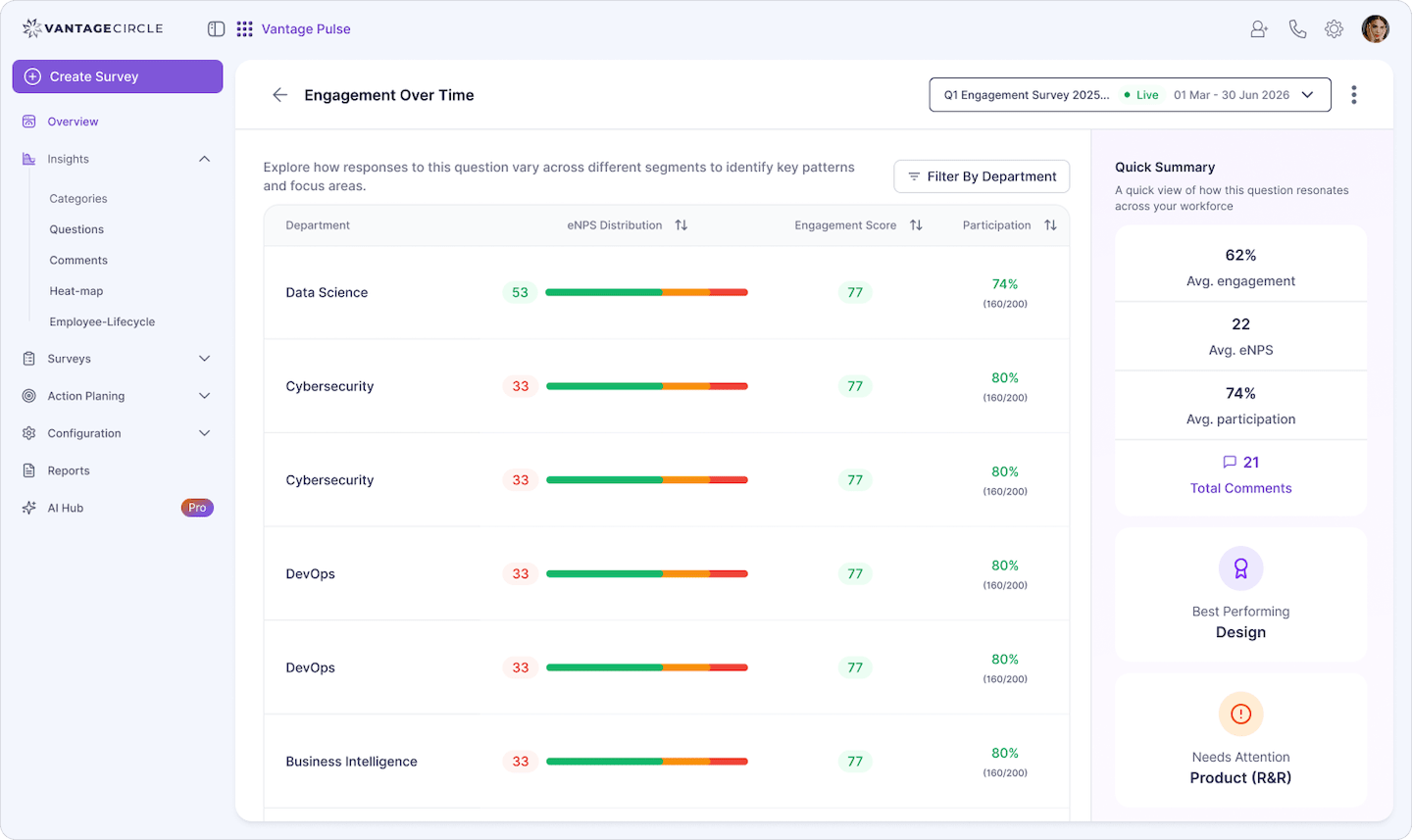
Most managers believe they praise often. The data usually disagrees. Recognition analytics show how frequent and how specific praise really is, and which teams are running dry, so a good intention becomes a measurable habit rather than a New Year's resolution.
The payoff is not only morale. Organizations with recognition-driven cultures hold 92% retention versus 76% in low-recognition ones, according to The Recognition Effect (Great Place to Work and Vantage Circle, 2025). A habit of specific praise is one of the cheapest retention levers a manager has.
Conclusion
Giving positive feedback well is a method, not a personality trait. Name the behavior, explain the impact, say it promptly and sincerely, and pick the right setting. Avoid the four traps, make it a weekly habit rather than an annual event, and praise stops being awkward. It starts changing how your team works. The managers who do this well are not more charismatic than the rest. They have simply made noticing good work out loud part of how they run the week.
Positive feedback is only working if morale actually moves. To see whether praise is landing across a team or fading unnoticed, book a demo with Vantage Circle.
Frequently Asked Questions
What is a good example of positive feedback?
A good example of positive feedback names a specific behavior and its impact, such as "You restated the client's objection before answering it, and that is why they signed off on the spot." It works because it tells the person exactly what to repeat. Our positive feedback examples guide collects dozens more by scenario.
What are the 5 R's of feedback?
The 5 R's of feedback are Request, Receive, Reflect, Respond, and Resolve. It is a model for both giving and receiving feedback: you ask for input, listen without interrupting, process what you heard, react constructively, and then act on it. The point is to treat feedback as a two-way loop, not a one-off comment.
What are the 4 C's of feedback?
The 4 C's of feedback, used most in coaching, stand for context, content, consequence, and change: set the situation, describe the behavior, explain its impact, and agree on what happens next. For positive feedback, the same structure keeps praise specific and tied to a result rather than vague.
What are some positive feedback words?
Strong positive feedback words are specific and impact-focused, such as reliable, resourceful, thorough, proactive, and steady. The word alone means little. "You were proactive" lands only when you add the behavior behind it: "You flagged the risk before anyone asked, which was proactive." Pair the word with the evidence.

Nilotpal M Saharia is an Assistant Manager, Content Marketing at Vantage Circle and a recognition-and-rewards (R&R) strategist with 9 years of experience spanning Marketing, HR, and content strategy. He helps HR leaders turn employee recognition and leadership research into practical workplace programs.
Connect with Nilotpal on LinkedIn.