
Gratitude is not only the greatest of virtues, but the parent of all others.
— Cicero
Observed every November in the United States, National Gratitude Month arrives at a convenient moment in the workplace calendar. Thanksgiving is around the corner, appreciation is already part of the cultural conversation, and HR teams have a natural opening to make recognition a little more visible.
But gratitude at work does not need to arrive with a catering order or a themed Slack banner.
The gestures people tend to remember are often much smaller: a manager calling out the thinking behind a great piece of work, a colleague thanking someone for quietly picking up the slack, or a team taking a moment to recognize what usually goes unnoticed. The difference is not how elaborate the gesture is. It is whether the appreciation feels specific, timely, and meant for the person receiving it.
So this November, consider retiring the generic gratitude campaign. Here are 20 ways to celebrate National Gratitude Month at work, from thoughtful gestures for in-office teams to ideas that work across screens and time zones.
Vantage Influencers Podcast
Debunking The Myths About Employee Appreciation
What is National Gratitude Month?
National Gratitude Month is observed every November in the United States as a time to intentionally practice and express gratitude. It was founded in 2015 by author Stacey Grewal, who paired it with a 30-day gratitude challenge, sending participants daily prompts to explore gratitude in a structured way.
At work, that can mean recognizing employees, thanking colleagues, celebrating contributions, or simply creating more opportunities for people to notice what is going well. However, there is no single way to celebrate it, and that is part of the appeal.
Feeling gratitude and not expressing it is like wrapping a present and not giving it.
— William Arthur Ward
Why Does National Gratitude Month Matter at Work?
A month dedicated to gratitude gives you a reason to pause the usual business rhythm and make appreciation more visible.
That matters because workplace recognition can easily become reactive. Someone finishes a huge project, goes above and beyond, or hits a milestone, and then someone remembers to say thank you. National Gratitude Month creates an opportunity to widen the lens and recognize the everyday contributions that keep teams moving, too.
10 Ways to Celebrate National Gratitude Month in the Office
Open the Month by Naming Something Exact
Start November 1 with one thank-you that names a person, an action, and why it mattered.
Ask managers to start the month by recognizing one specific contribution from the past few weeks. Give them a simple prompt if they need one: What did this person do? What did it change? Why did it matter?
And do not leave this to memory. Set a reminder for October 30 and ask managers to come prepared with one genuine example.
Build a Gratitude Wall People Will Actually Use
Put your gratitude wall somewhere people already stop, such as near the coffee machine, cafeteria, or printer. Then give people a prompt so they do not have to manufacture inspiration on the spot:
- Someone who made your week easier
- A colleague who deserves more credit
- Something a teammate taught you
- Someone who helped when they did not have to
Turn Gratitude into a 30-day Challenge
Create one tiny gratitude prompt for each day of November. Keep participation voluntary and the assignment almost comically easy.
Post the prompt in Slack, Teams, email, or wherever employees already communicate. The trick is to make each one take less than a minute. And resist the urge to turn it into a participation contest. Gratitude gets awkward very quickly when people feel they are being graded on it.
Let Peers Take the Microphone
Managers see a lot. But they do not see everything.
The colleague who stayed behind to help someone troubleshoot a presentation. The designer who rescued a last-minute request. The person who always explains the spreadsheet nobody else understands. Much of that work happens between peers, not above them.
So, during November, make peer recognition the default rather than the exception.
Ask employees to recognize coworkers directly and give them a simple formula:
"When you [specific action], it helped [specific impact]. I appreciate it because [reason]."
Ask Leaders for Handwritten Notes
A handwritten note from a senior leader can feel surprisingly personal in a workplace where most appreciation arrives as a Slack message, email, or automated badge. For National Gratitude Month, ask leaders to write a few short notes to employees who made a meaningful contribution this year.
The key is to make the notes specific, not ceremonial. Leaders can write the notes themselves and leave them on desks or hand them over during a team meeting.
Host a Gratitude Lunch, Not a Gratitude Meeting
Nobody needs another meeting disguised as an appreciation initiative. Instead, put food on the table.
Host a simple team lunch and give people the option to publicly thank someone who made their work easier, better, or more enjoyable. Keep the speaking portion short. No slides. No 45-minute icebreaker. A potluck can work especially well because the meal itself becomes part of the gesture.
Recognize the People Whose Work Disappears When It Goes Well
Nobody sends a thank-you email because the Wi-Fi worked all month. Payroll rarely gets applause when everyone's paycheck arrives on time. Facilities gets noticed when the air conditioning breaks, not when the building quietly works exactly as it should.
Give those teams a week of their own.
Ask employees to recognize someone in IT, facilities, payroll, security, reception, or another behind-the-scenes function who has made their work easier. It is a small exercise reminding employees that the workplace experience is built by people they may not interact with every day.
Turn Service Milestones into Actual Celebrations
If someone has spent five, ten, or fifteen years with the organization, an automated "Happy Work Anniversary!" email is probably not the moment the company wants to communicate how much that time means. Use the month to make those milestones visible.
Bring the team together. Share a specific story about the employee's contribution. Ask a longtime colleague to say a few words. Give the employee the floor, too.
The point is not to make every anniversary elaborate. It is to make the recognition proportional to the history behind it.
Give People Time Instead of Things
Close the office early one Friday. Protect a no-meeting afternoon. Give teams an extra hour for lunch. Let employees finish early before the Thanksgiving holiday.
Otherwise, people may assume the calendar simply happened to work out that way.
Time is particularly useful as a gratitude gesture because employees can spend it however they need. One person may use it to pick up their kids. Another may run errands. Someone else may simply go home and do absolutely nothing, which is also a perfectly respectable use of company-sponsored free time.
Point the Gratitude Outward
Organize a volunteer day, food drive, donation campaign, or community project and let employees have a say in the cause. November also sits close to GivingTuesday, making it a natural time to connect workplace gratitude with community giving.
The important part is choice. Let teams nominate causes that matter to them rather than handing everyone a preselected charity and calling it engagement.
10 Ways to Celebrate National Gratitude Month Remotely
Start Every Standup with One Shout-out
Give gratitude the first 60 seconds of the meeting instead of squeezing it into the last five minutes.
Ask one person to thank one other person for something specific they did that week. Rotate who goes first.
It takes almost no time, but repeated often enough, it changes what people pay attention to. Employees start looking for contributions worth mentioning instead of waiting for the annual recognition campaign to tell them when appreciation is allowed.
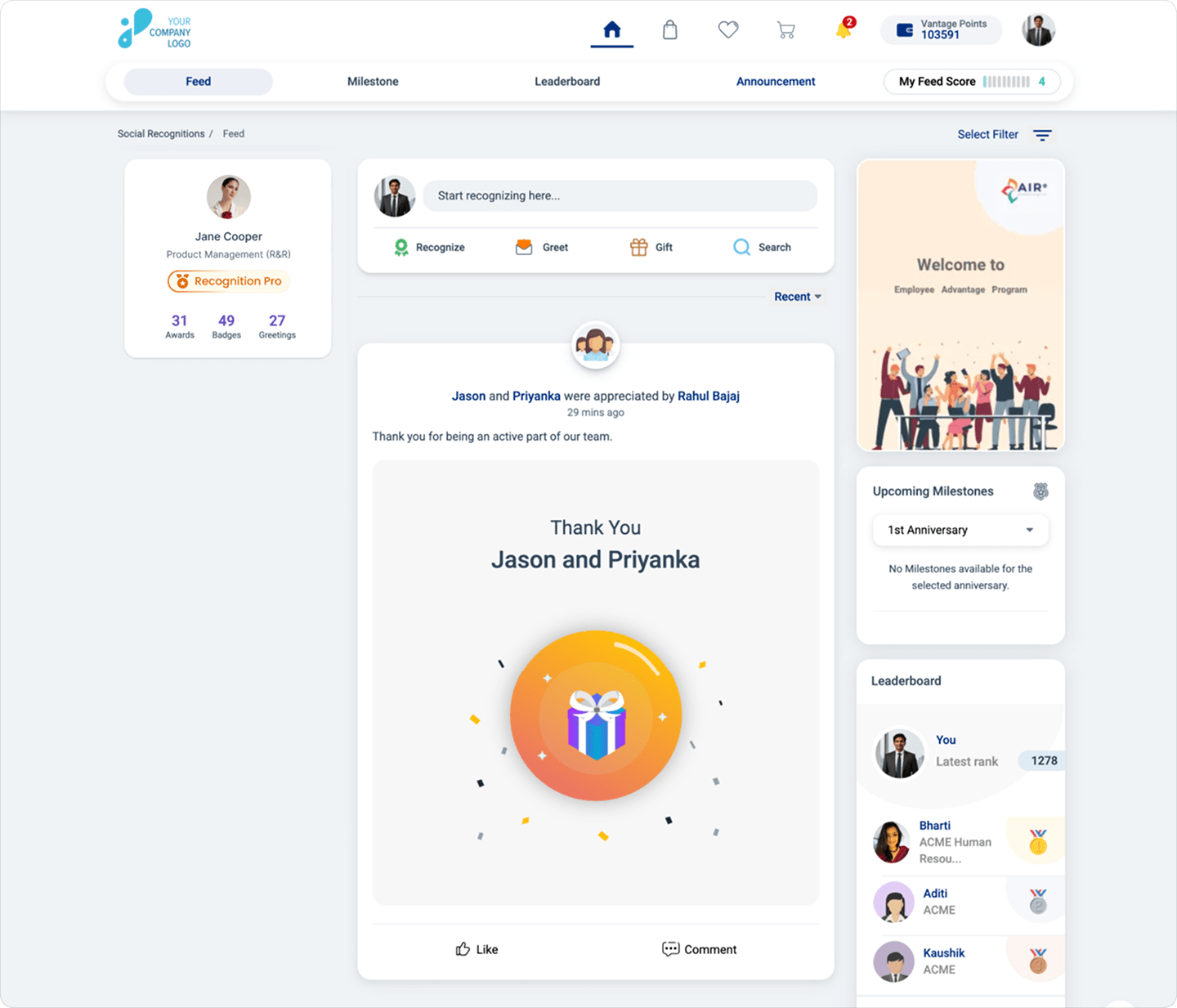
Move the Gratitude Wall into the Feed
Create a dedicated recognition space where employees can post thank-yous and colleagues can react or add their own comments. You can also give people a prompt to get things moving:
- Someone who saved you time this week
- A colleague who made a difficult project easier
- Someone whose work deserves more attention
- A teammate you learned something from
A social recognition feed also gives appreciation a longer shelf life than a chat channel. A thank-you posted in November can still be found later, rather than disappearing beneath a day's worth of GIFs, meeting reminders, and "quick questions."
Source: Vantage Recognition
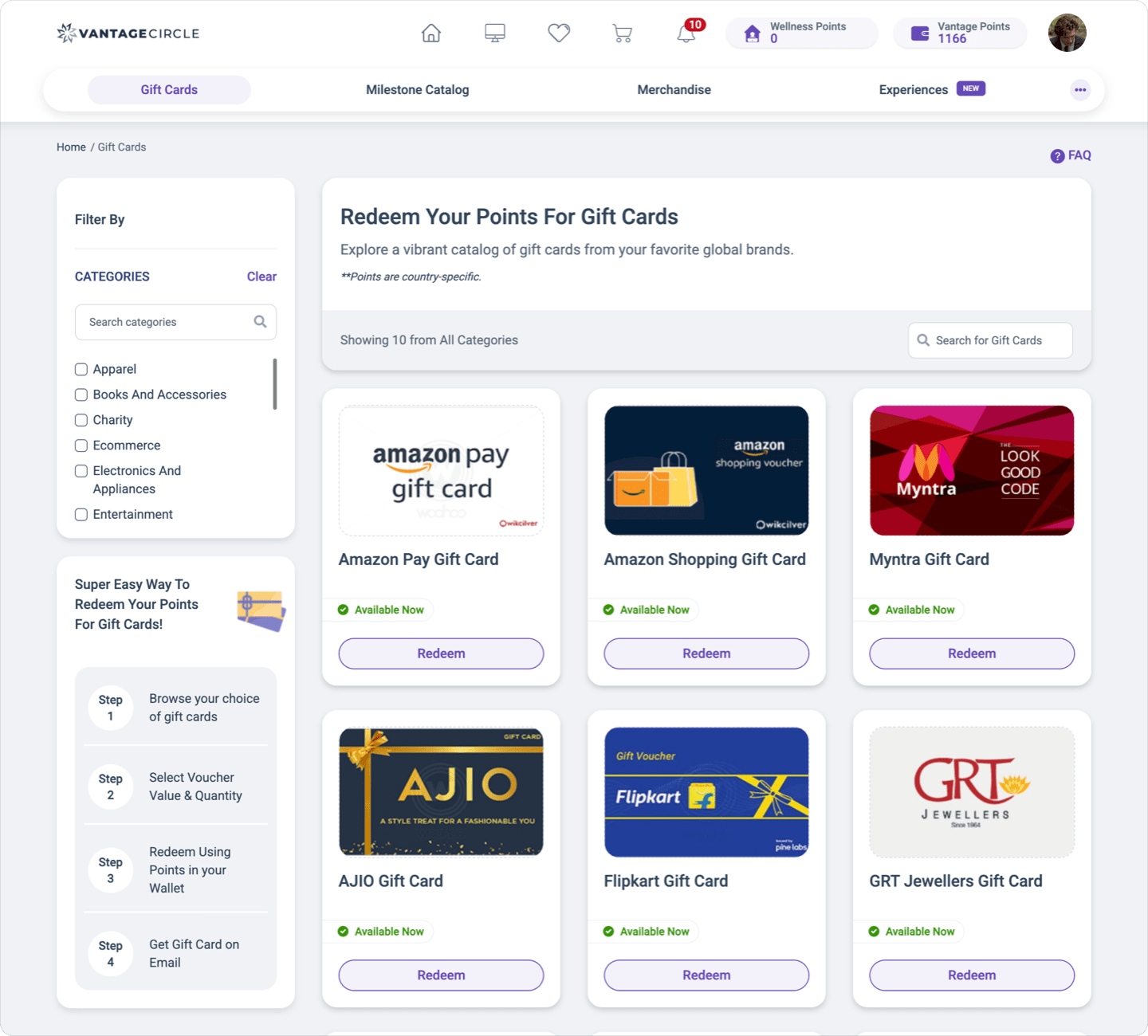
Let Employees Choose their Thank-you
Gratitude feels more thoughtful when people get to choose what it looks like.
Give employees a few options and let them pick their thank-you. It could be a meal delivery credit, gift card, subscription, experience, or something for the family. Giving people a choice puts them in control of how they receive appreciation, making the gesture feel more personal and less like a one-size-fits-all perk.
Source: Vantage Perks
Make Wellness More than a One-hour Event
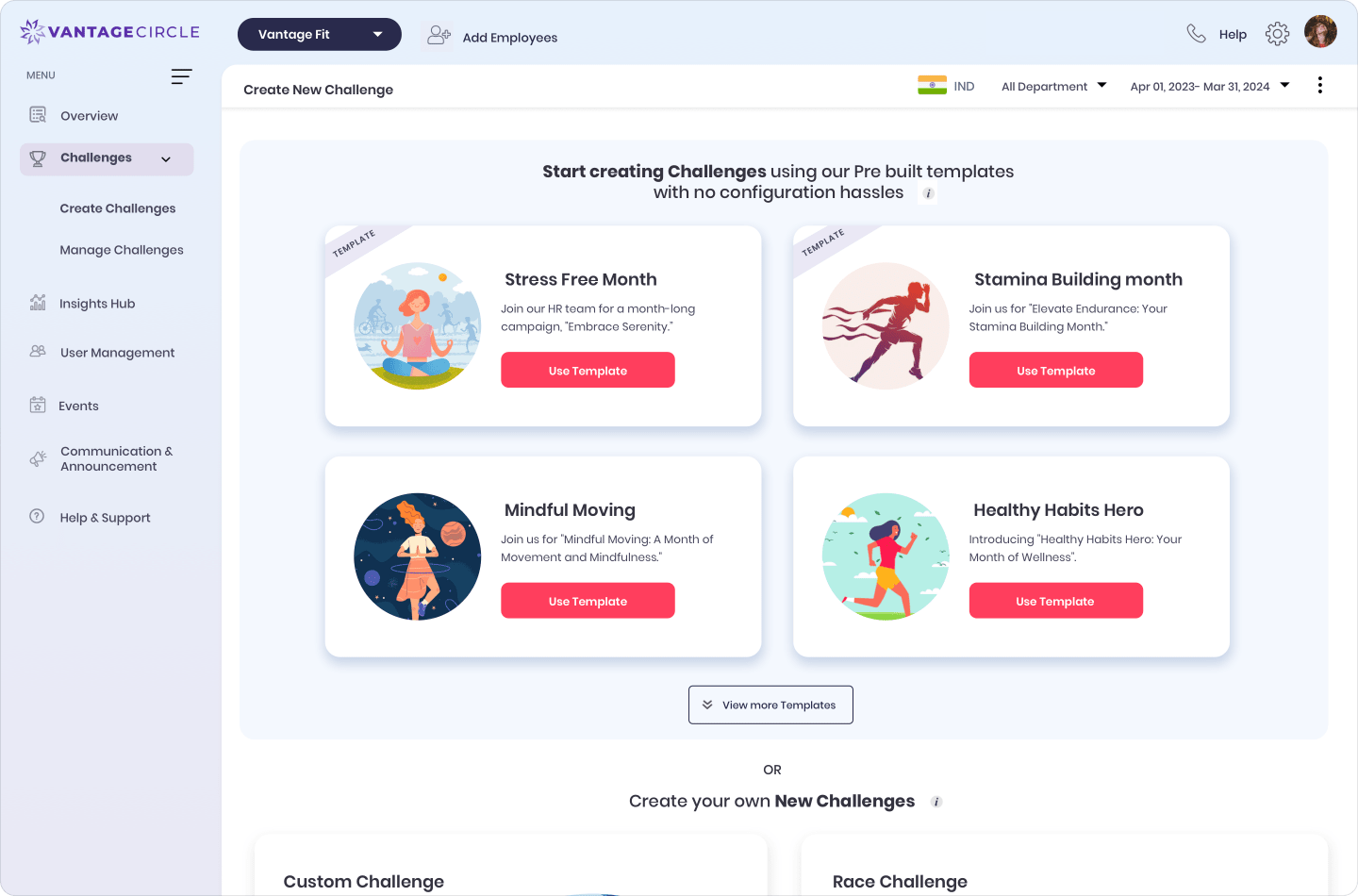
If wellness is part of your gratitude month, pair a live session with an ongoing benefit employees can use throughout the year, whether that's fitness resources, mental well-being support, or challenges that help healthy habits stick.
You could also give employees access to a platform such as Vantage Fit, where they can keep engaging with wellness activities beyond the month itself. The idea is simple: make wellness something employees can use, not just something they attend.
Source: Vantage Fit
Send a Care Package to the Person
Send a small care package to employees' homes with things they'll actually enjoy or use. Think good coffee, favorite snacks, a notebook, a local treat, or something the whole family can share.
And collect shipping details early. October is a much better time to discover that your employee in Colorado moved than November 20, when the package is already halfway to their old apartment.
Host an Optional Gratitude Circle
Video calls already get a bad reputation. Do not make your gratitude session another mandatory calendar invitation people attend with their cameras off.
Instead, host one optional 30-minute gratitude circle. Give employees a prompt in advance and let people decide whether they want to speak.
Sharing the prompt ahead of time matters, particularly for quieter employees who would rather think about their answer than improvise one in front of 30 colleagues. And if someone wants to listen instead of speak, let them. Appreciation loses some of its charm when attendance is compulsory.
Recommended Read: Virtual Team Building Activities and Games: 30 Ideas by Category, Duration, and Team Size
Create a "Caught You Doing Something Great" Thread
Start a company-wide or team-level thread where employees can post quick examples of colleagues doing something helpful, thoughtful, or quietly excellent. The rule is that every post has to name the thing they noticed.
Keep the thread open throughout November and encourage people to add to it whenever they spot something worth mentioning. It turns recognition into a kind of workplace scavenger hunt: notice something good, write it down.
Give Managers a Small Thank-you Budget
Give managers a modest, predefined budget they can use during November for small, meaningful gestures. The amount matters less than the combination of discretion and speed.
One manager might send lunch to an employee who carried a difficult client project. Another might send a book to someone who helped onboard a new teammate. Another might simply use the budget to recognize several people rather than one.
Give Everyone a Gratitude Time Capsule
Ask employees to write a short note to their future selves or teammates answering one question:
"What is something about this team you hope you still appreciate a year from now?"
Save the notes and send them back the following November. It gives remote teams a simple way to preserve the people, moments, and small things that made work meaningful, long after the campaign ends.
And unlike an engagement survey, the answers aren't about what needs fixing. They capture what people hope never changes.
Make the Final Friday a "No-Agenda" Day
Pick one Friday afternoon in November and make it an agenda-free zone. No team-building exercise. No gratitude workshop. No presentation on the importance of gratitude. Just fewer meetings.
Managers can use the time to send personal thank-you notes, employees can catch up on unfinished work, or everyone can simply get a little breathing room before the Thanksgiving rush.
Gratitude Messages and Quotes to Share With Your Team
Sometimes the hardest part of recognition is not finding something to appreciate. It is figuring out how to say it without sounding like it came from the bottom of a corporate greeting-card generator.
The safest rule is simple: be specific, and connect the person's action to its impact.
Instead of "Thanks for all your hard work," try something that tells the employee what you actually noticed:
For a Teammate
"Thank you for jumping in when the project got messy. You made a stressful week considerably easier for the rest of us."
For a Behind-the-Scenes Contributor
"A lot of what you do only gets noticed when something goes wrong. Thank you for making sure things keep running smoothly."
For a Manager
"Thank you for giving me room to figure things out instead of always giving me the answer. It has made me much more confident in my work."
For a Cross-Functional Partner
"Thank you for making time for our team when you had plenty on your own plate. Your help kept the project moving."
For Someone Who Went Above and Beyond
"You did not have to take that on, but you did. It made a real difference, and I wanted you to know it did not go unnoticed."
For a New Employee
"You have only been here a short time, but you have already made the team better. Thank you for bringing your perspective and energy to the group."
For a Colleague Who Helped You Learn
"Thank you for explaining something that could easily have taken me hours to figure out on my own. I appreciate both the help and the patience."
For the Whole Team
"Thank you for the way you handled a demanding month. The result matters, but the way everyone showed up for one another mattered just as much."
Where to Take Gratitude Month Next
November is a good time to talk about gratitude. But it should not be the only time.
Once December arrives, the gratitude wall comes down, the thank-you messages stop, and everyone gets back to work. That is where many workplace recognition efforts lose momentum.
The numbers make the case.
of U.S. employees said they had received recognition or praise for good work in the previous seven days — as of May 2026.
So, the goal is not to make every month another November. It is to make recognition more regular.
Start by planning the year once. Use an employee engagement calendar to add a few simple moments of appreciation to each month. A work anniversary. A peer shout-out. A team lunch. A volunteer day. Even a manager taking five minutes to thank someone properly is a great way to keep the momentum going.
November also has plenty going on beyond gratitude. Veterans Day and GivingTuesday fall in the same month, and our November employee engagement ideas can help you plan without piling too many activities onto the same week.
Planning a team meal? Try these Thanksgiving potluck ideas. Have a budget for employee gifts? Here are some Thanksgiving gifts for employees people may actually enjoy. And if you want to take gratitude beyond the workplace, consider a CSR activity.
The idea is simple. Let November start the conversation, but do not end it there.
In the End
A good National Gratitude Month does not need a big budget, a clever theme, or a calendar packed with activities. It needs people to notice each other.
Thank someone for staying late. Call out the person who always helps behind the scenes. Give a team a little time back. Let employees choose how they want to be appreciated. Most of all, make the thank-you specific enough that the person knows you meant it.
FAQs
1. When is National Gratitude Month?
A. National Gratitude Month is observed throughout November every year in the United States, running from November 1 to November 30.
2. How is National Gratitude Month different from Employee Appreciation Day?
A. Employee Appreciation Day is one day in early March driven by the employer, while National Gratitude Month is a full month in November where gratitude flows in every direction, including peer to peer.
3. How can remote teams celebrate National Gratitude Month?
A. Remote teams do best with asynchronous recognition that stays visible, such as a recognition feed, standup shout-outs, and a month-end compilation of everything people said.

Shikha Gogoi is a Content Marketing Specialist focused on SEO-driven content around employee engagement, recognition, and workplace culture, helping build people-first workplaces.
Connect with Shikha on LinkedIn.