
More than half of employees say company culture matters more to job satisfaction than their salary. That comes from a Glassdoor survey of over 5,000 workers, where 56% put culture ahead of pay and 77% weigh a company's culture before they even apply.
It confirms what most HR leaders already feel in their gut. Culture is not a poster on the wall. It is the reason people stay. It is the reason they leave. It is the quiet force behind your employee engagement scores, your hiring win rate, and your turnover line.
Get it right, and you build a team that weathers any storm. Get it wrong, and no perk, raise, or rebrand will save you.
This guide pulls everything into one place. What company culture actually is. The types you will recognize. The misconceptions that trip up smart leaders. Real examples, good and bad. And a practical path to build it and measure it.
So, let's get into it.
Corporate culture is the only sustainable competitive advantage that is completely within the control of the entrepreneur. – David Cummings, Co-Founder, Pardot
What is Company Culture?
Company culture is the personality of your organization. It is the set of values, beliefs, behaviors, and unwritten rules that decide how work actually gets done.
It shows up in the small things. How people talk in meetings. Who gets recognized. What happens when someone makes a mistake. Whether a new idea gets heard or buried.
Every organization has one, whether or not it was designed on purpose. Some cultures are supportive and energizing. Others are quietly toxic. The difference rarely comes down to budget. It comes down to intent.
Company Culture vs. Work Culture vs. Workplace Culture
Here is a question that confuses a lot of teams. Are "company culture," "work culture," and "workplace culture" three different things?
In practice, no. People use them to describe the same idea, just from slightly different angles. The distinctions are subtle, and you do not need to lose sleep over them.
| Term | What it usually emphasizes | Common use |
|---|---|---|
| Company culture | The organization's identity, values, and beliefs as a whole | Strategy, employer brand, leadership |
| Work culture | How work gets done day to day and how people behave while doing it | Team habits, collaboration, ways of working |
| Workplace culture | The lived experience of being in the environment, physical or remote | Employee experience, well-being, belonging |
| Organizational culture | The academic term for the same thing: shared values, norms, and behaviors | Research, HR strategy, the Competing Values Framework |
| Corporate culture | The same concept, framed around the business and its leadership | Boardroom, investor, and large-enterprise contexts |
Work culture is the invisible force that shapes daily work life. It is the shared values and practices that define how things get done, from how a team communicates to how decisions are made. It touches both employee experience and business results.
Workplace culture is the most misunderstood of these. People assume it means the office vibe or the perks. It runs deeper than that. It is the collective knowledge, beliefs, and assumptions of the people in the organization, and it shapes how the whole place operates.
Organizational culture and corporate culture are the same idea under more formal names. Organizational culture is the term researchers use, and it underpins models like the Competing Values Framework you will see below. Corporate culture is the boardroom phrasing, common when the conversation turns to leadership and business performance. The substance does not change with the label.
The takeaway is simple. Treat them as one topic under several names. This guide uses "company culture" as the umbrella term, and the principles apply no matter which phrase your team prefers.
The Recognition Effect: What Great Workplaces Do Differently
Discover how recognition shapes workplace culture — insights from a joint study with Great Place To Work® on what sets top employers apart.
Download the ReportCommon Misconceptions About Culture
Before we talk about building culture, let's clear away the myths. Most failed culture efforts start with one of these.
Misconception 1: You build culture with words.
Big quotes on the office wall do not create culture. Painting your core company values across the lobby may look nice, but it adds no real value if you do not act on them. Culture is what you do, not what you frame.
Misconception 2: A strong founding team is enough.
A great founding team, good products, and funding do not guarantee a strong culture. Leaders still have to translate beliefs into everyday behavior. That takes deliberate communication and a habit of watching how people actually treat each other.
Misconception 3: Perks are the same as culture.
Benefits matter, but they are not culture. Your culture does not shift overnight because you handed out gift vouchers or free wellness classes. Perks sit on the surface. Culture is the human layer underneath that tells people what is valued and expected.
Misconception 4: Values can never change.
Everything evolves, and culture is no exception. A small startup adapts as it scales. Priorities shift as the workforce grows. Treating your culture as fixed is how it slowly goes stale.
Types of Company Culture
If you think culture is simply good or bad, the categories may surprise you. The widely used Competing Values Framework describes four common types. Most organizations are a blend, with one type dominant. For a deeper breakdown, see our guide to the types of organizational culture.
1. Clan Culture
A culture where teamwork, participation, and consensus matter most. Employees feel bound to each other. Collaboration and equality take center stage. Google and Zappos are often cited here.
2. Adhocracy Culture
The "move fast and try things" culture. It pushes people to take risks and chase bold ideas, which fuels a lot of brainstorming and innovation. Apple is the classic example.
3. Market Culture
A results-first culture. Employees are pushed hard, but the returns and benefits are strong. The focus stays on goals and outcomes. Tesla and Amazon are well-known examples.
4. Hierarchy Culture
A structured, process-driven culture built on clear levels and procedures. The motto is "do things right." It brings stability, though it can slow down creativity. Many large institutions and regulated industries lean this way.
What a Toxic Company Culture Looks Like
A toxic culture is exactly how it sounds. It is a workplace where people feel unwelcome, intimidated, or unsafe. It usually grows from internal causes like poor management and weak leadership, or external pressure like a chaotic environment and constant stress.
Think of an employee whose every idea is met with apprehension. Over time, that dread pushes good people toward the exit. A hostile work environment drags down morale and productivity, and it can create legal exposure too.

Vantage Influencers Podcast
"The problem is when fear becomes a barrier for people to speak up, to be honest, to bring their full selves to work."
— Gustavo Razzetti, CEO of Fearless Culture
Listen to the EpisodeHere is the hard truth. You can spend a fortune on engagement programs, but if the culture is toxic, the money is wasted. MIT Sloan Management Review analyzed 34 million employee profiles and found that a toxic corporate culture is the single strongest predictor of attrition. It is 10.4 times more powerful than compensation in predicting turnover.
Red Flags to Watch For
If you notice these signs, the culture needs attention fast:
- Employees feel stressed, anxious, or burnt out
- Turnover is high and climbing
- Trust and communication between staff and management are thin
- The atmosphere feels competitive in a negative way
- Work-life balance is missing
- People feel unseen, with little appreciation for their effort
The Benefits of a Strong Company Culture
Building a good culture is hard work. But companies like Wipro and Apple show the payoff is real. Here is what a strong culture returns.
Better retention. People who feel valued stay longer. That cuts the cost of constant hiring and retraining.
Higher productivity. When employees feel part of something positive, they show up more engaged and motivated.
A stronger reputation. A good culture attracts top talent, customers, and partners. It becomes a competitive edge.
Smarter decisions. Cultures built on open communication draw on diverse perspectives, which leads to better calls.
More innovation. When people feel safe to share ideas, the good ones surface more often.
According to MIT Sloan Management Review, things you might expect to matter, like friendly colleagues and flexible schedules, had little impact on a company's overall culture score. The word that mattered most was respect. It was nearly 18 times as important as the typical factor in their model for predicting a company's overall culture rating.
The Building Blocks of a Strong Culture
So what actually makes a culture strong? Across the best workplaces, the same elements show up again and again. Think of these as the foundation you build on.
1. Purpose: A clear reason for the work gives people something bigger to aim at. Most of us want to contribute to something that matters. Purpose turns a job into a contribution.
2. Engagement: This is the emotional commitment people feel toward their work and team. Engaged employees go past the line of duty because they want to, not because they have to.
3. Communication: Clear, open, respectful exchange across every level. It cuts misunderstanding, speeds up work, and builds trust.
4. Learning opportunities: When people grow, they stay. Training and development extends skill sets, lifts confidence, and signals that the company is investing in their future.
5. Appreciation: A culture of genuine appreciation gives people confidence and a sense of being seen. Without it, morale and productivity sag. With it, employee appreciation becomes a daily habit, not an annual event.
6. Well-being: If you ignore physical, emotional, and financial health, you cannot build a durable culture. Keep communication open and track how people actually feel.
7. Teamwork: Strong team building turns a group of individuals into a unit that covers for each other and moves faster together.
8. Work-life balance: Work-life balance means people are not constantly torn between work and life. It prevents burnout and produces happier, more productive teams.
9. Respect and fairness: Bias and disrespect make an environment toxic quickly. Fairness, applied consistently, is the floor a healthy culture stands on.
10. Leadership: People take their cues from leaders. The way leaders behave, decide, and communicate sets the tone for everyone else. Strong leadership qualities can make or break a culture.
How to Build a Strong Company Culture
Now the practical part. Culture is not a one-time project. It is a set of consistent habits. Here are the moves that matter most.
1. Hire for Culture, Not Just Skill
The best companies hire for attitude and personality, then train for skill. A great resume means little if the person clashes with how your team works.
But be careful here. "Culture fit" can quietly become a smokescreen for bias, where people hire others who look and sound like them. The fix is to define fit around values and behaviors, not backgrounds and hobbies. Keep your hiring panel diverse, and review your data for patterns of rejection you cannot explain. A good manager knows the difference, which is one of the core qualities of a good manager.
2. Communicate Your Values, Then Live Them
Knowing your values is not enough. You have to repeat them and model them. Communicate through regular all-hands meetings, written updates, and the everyday choices leaders make.
And remember, a value that works for one company will not fit every company. Decide what genuinely reflects your team, then act on it consistently.
3. Put Recognition First
According to The Recognition Effect, a Great Place to Work and Vantage Circle study of 5.7 million employees, companies with recognition-driven cultures see 92% retention compared with 76% in low-recognition cultures.
Recognizing and rewarding employees at the right moment is one of the strongest levers for a healthy culture. To make it count, focus on three things. Recognition should be timely. It should be frequent and consistent. And it should be specific, tied to a real action or outcome.
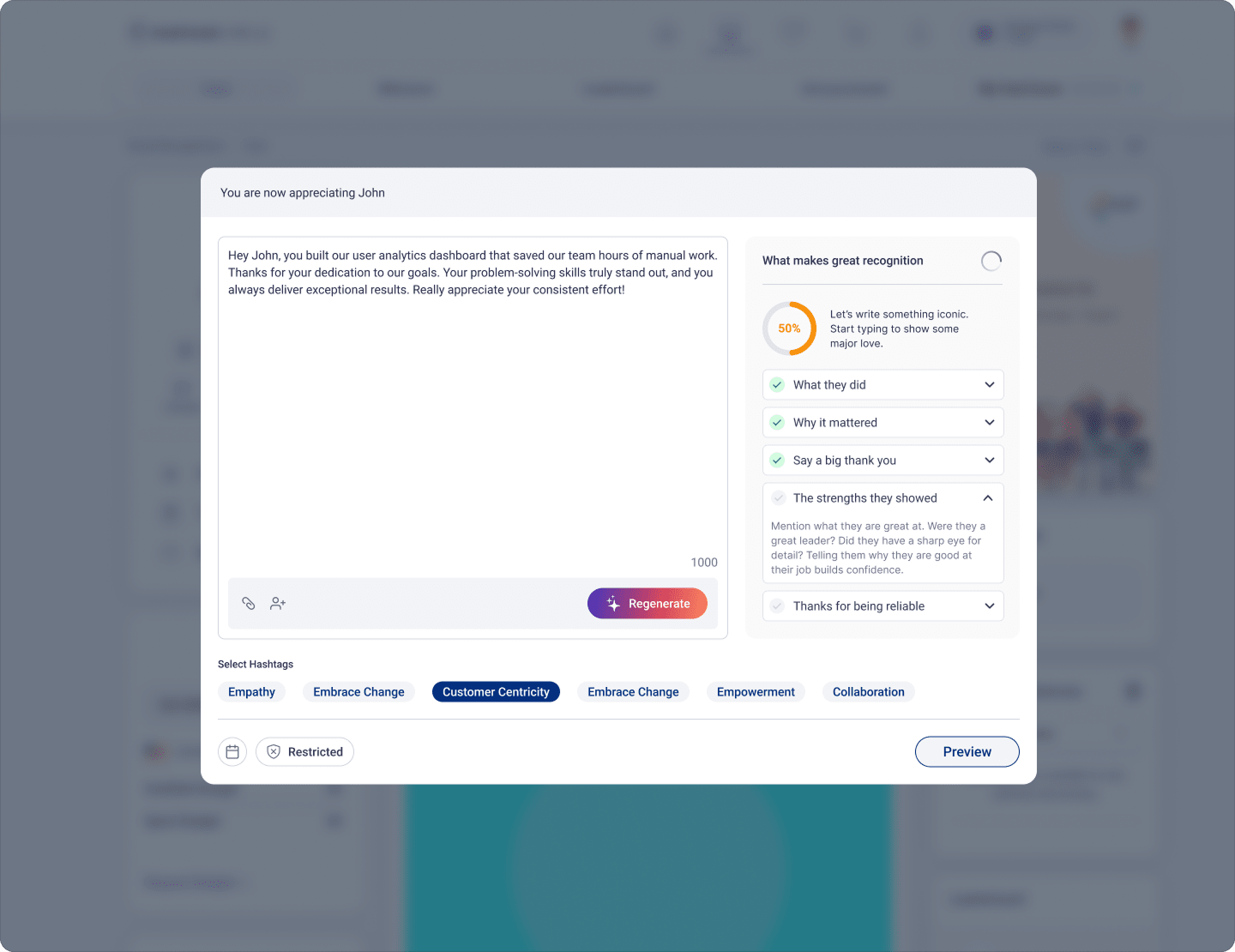
Peer-to-peer recognition matters just as much as top-down praise. When colleagues acknowledge each other, the whole environment becomes more supportive. Encourage peer-to-peer recognition and you build appreciation into the team's daily rhythm.
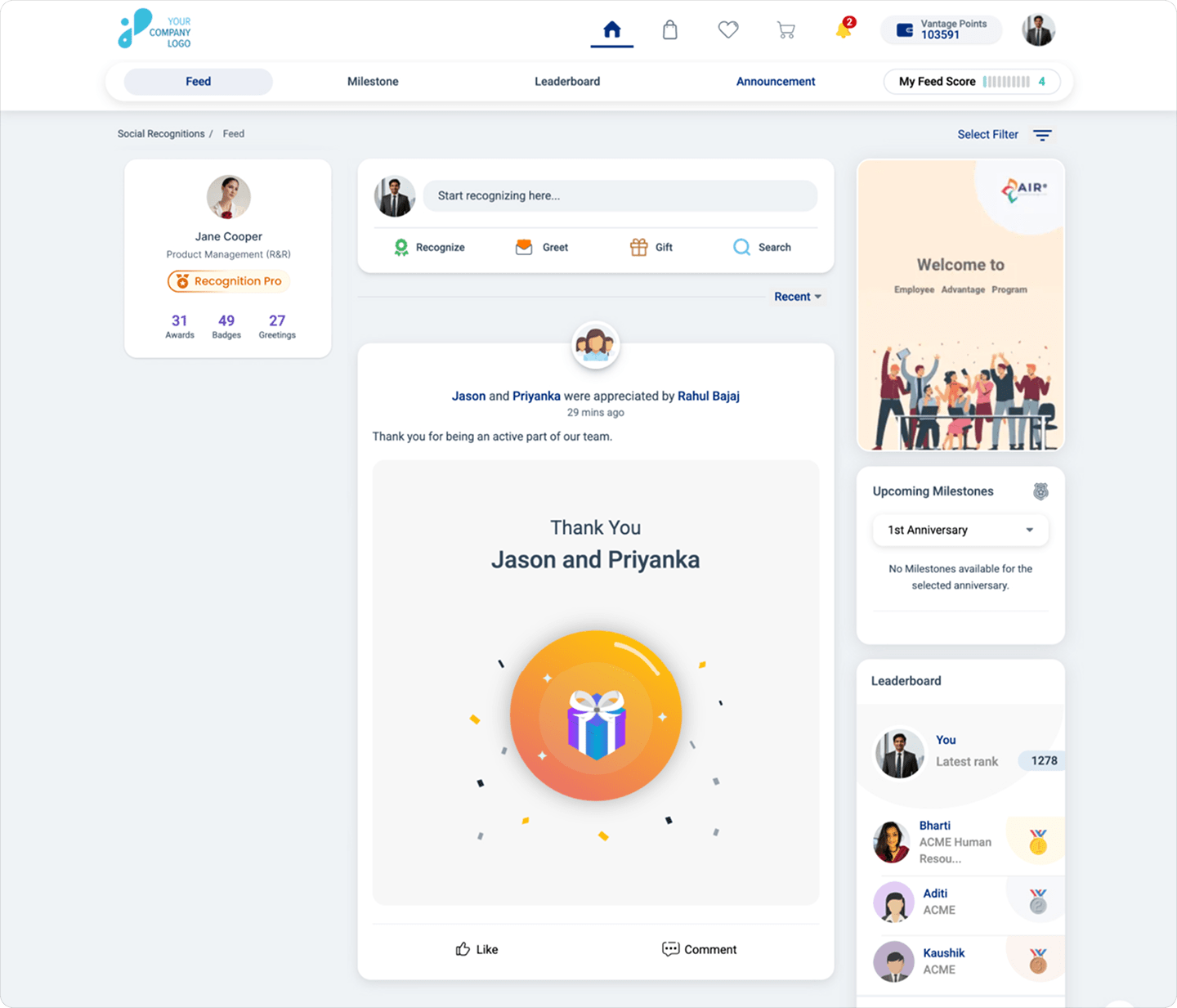
This is where the right platform helps. Vantage Recognition, Vantage Circle's employee recognition platform, gives HR teams the tools to run timely, frequent, and visible recognition at scale. It turns recognition from an occasional gesture into a consistent part of the culture. The possibility of retaining your employees increases significantly when they are recognized at the right time.
One caution. Recognition programs often fail when the criteria feel unclear or unfair. Publish the criteria. Keep selection open and transparent. Celebrate winners publicly. Make sure rewards are distributed fairly across the organization.
4. Trade Micromanaging for Autonomy
Micromanaging stifles creativity and breeds resentment. Imagine someone watching over your shoulder all day. You would eventually crack.
Avoid micromanagement by setting clear deadlines, delegating without bias, and stepping back to let people own their work. Autonomy creates a sense of ownership, and ownership keeps people engaged and inspired.
5. Build a Feedback Culture
Continuous feedback is one of the most reliable ways to improve culture. 360-degree feedback gathers input from peers, managers, and reports for a complete picture of performance.
The trick is to make feedback safe and constructive, so people seek it out instead of fearing it. Many companies now favor frequent check-ins over the dreaded annual review. Adobe, for example, uses regular check-ins to keep dialogue open and timely.

Vantage Influencers Podcast
"Treat people at work more like it's a relationship. Ask for feedback more often. Be in two-way conversation. Really listen to what people are saying."
— Jason Lauritsen, Author of Unlocking High Performance
Listen to the Episode6. Encourage Diversity, Then Protect It
A diverse workforce brings fresh perspectives and better decisions. As Harvard Business Review reports, employees at companies with diverse leadership are 70% likelier to say their firm captured a new market.
But diversity alone does not guarantee fairness. As a workplace diversifies, the risk of bias can rise too. So pair it with clear anti-discrimination policies, real DEI training, and the willingness to act when something is wrong. Hiring diverse talent is step one. Building a culture where everyone genuinely belongs is the work that follows.
7. Invest in Learning and Growth
People stay where they grow. According to PwC's 2024 Hopes and Fears survey, 67% of workers considering a job move say opportunities to learn new skills are a key factor in that decision.
Start with a learning platform that hosts courses and tracks progress. Add mentorship that pairs experienced people with newer team members. Both move knowledge through the organization and signal that you believe in your people.
8. Strengthen Peer Relationships
Peer connection creates camaraderie that formal structures cannot. When people share challenges and wins, trust grows and collaboration follows.
Even informal spaces help. As research in Harvard Business Review notes, some of the best ideas come from hallway and cafeteria conversations. Encourage these moments. Team-building events like spirit week build the trust that makes everyday collaboration easier.
9. Offer Real Flexibility
Workplace flexibility gives people more control over their work-life balance, which lifts satisfaction and lowers stress.
It does come with risks like blurred boundaries and weaker visibility on growth. Counter those with a culture of accountability, clear communication, and steady recognition. Flexibility works best when trust runs both ways.
Examples of Good Company Culture
Theory is useful. Examples make it real. Here are companies that turned culture into an advantage.
Google encourages people to be creative through its well-known "20% time" policy, where employees spend a fifth of their hours on passion projects. That approach helped create products like Gmail. The culture treats people as contributors, not cogs.
Zoom
Zoom has earned a reputation as one of the happiest places to work. Its mix of a genuinely fun work culture and meaningful benefits, from wellness stipends to mental health support, has built an unusually loyal workforce.
Airbnb
Airbnb took a heavy hit during the pandemic, then doubled down on culture to recover. The company runs an "Airbnb way" of keeping people aligned, including a candid practice of surfacing hard topics directly. A dedicated team celebrates milestones and keeps engagement high.
Atlassian
The Australian software company runs "ShipIt Days," giving employees 24 hours to build any project they are passionate about. It is a deliberate push for experimentation and out-of-the-box thinking, and it keeps the culture dynamic.
Patagonia
Patagonia shows how a mission-driven culture fuels success. Its commitment to environmental sustainability runs through everything, from product design to activism. The company even gives staff paid time off for environmental causes, closing the gap between personal values and professional life.
Examples of Bad Company Culture
Poor culture has a pattern too. Unhealthy work-life balance, harsh management, high turnover, and weak communication. A couple of well-documented examples make the point.
Uber
Uber's early culture became known as aggressive and results-at-all-costs. The growth was undeniable, but the internal environment drew heavy criticism for how people were treated along the way.
Forever 21
Forever 21 has faced repeated criticism over how it treats employees, from thin benefits to long hours. Multiple lawsuits and low leadership approval told the story of a culture that lost the trust of its own workforce.
Words to Describe Company Culture
When HR teams try to pin down their culture, they usually reach for a shortlist of words. The right adjectives make an abstract idea concrete for candidates, employees, and leadership.
Words that describe a healthy culture:
- Collaborative, transparent, and inclusive
- Supportive, flexible, and accountable
- Innovative, purpose-driven, and respectful
Words that signal a culture in trouble:
- Siloed, political, and micromanaged
- Burnt-out, opaque, and fear-driven
Pick the few that genuinely reflect how work happens at your company, not the aspirations on your careers page. Then test them against what your employees would actually say.
How to Measure Company Culture
You cannot improve what you do not measure. Culture feels intangible, but you can track it with the right indicators. Here are the ones that matter.
Employee Surveys
Surveys are the most direct way to hear how people feel about their work and the organization. The key is to ask specific questions across different facets of culture, and to mix multiple-choice with open-ended ones so you get both numbers and nuance.
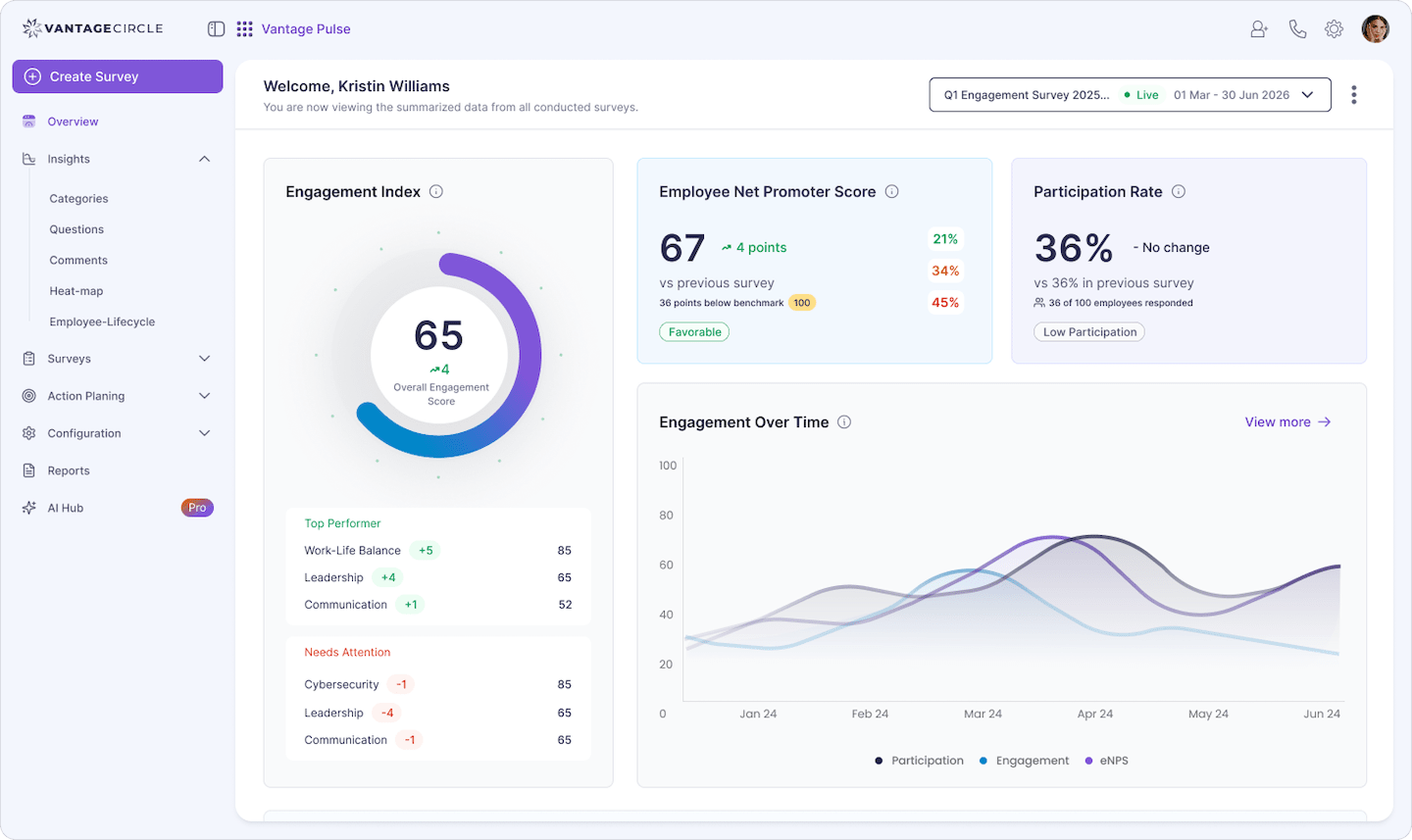
Vantage Pulse, Vantage Circle's employee engagement and pulse survey tool, helps you run these surveys, spot trends, and act before small issues become turnover.
eNPS Score
The employee net promoter score measures loyalty. You subtract the percentage of detractors from the percentage of promoters. A higher score means happier people who would recommend the company as a place to work.
Employee Satisfaction Index
The ESI measures employee satisfaction using surveys and interviews. It shows how well you are meeting employee needs and points to where to focus next.
Turnover Rate
Turnover is a blunt but honest signal. A climbing rate usually means something is wrong internally. Track it over time, compare it to industry averages, and run exit interviews to learn why people leave.
Culture Assessment
Specialized assessments dig into the core values and behaviors that define your organization. A popular one is the Organizational Culture Assessment Instrument (OCAI), which maps your culture against the four types covered earlier. It helps you see your current culture clearly and decide where to shift.
Summing It Up
Company culture is not a side project. It is the operating system your whole organization runs on.
The strongest cultures share a pattern. They lead with clear values and live them. They put recognition and appreciation first. They give people autonomy, growth, and a real sense of belonging. And they measure what is working instead of guessing.
In an MIT and Glassdoor survey, 90% of CEOs and CFOs believed improving corporate culture would raise their company's value. Nearly 80% ranked it among the top five factors driving valuation.
So start where you are. Pick two or three of the building blocks above. Make them consistent habits. Then measure, adjust, and keep going. Culture is built one deliberate choice at a time.
Ready to make recognition a daily habit in your culture? Book a demo to see how Vantage Circle can help.
Frequently Asked Questions
What does company culture mean?
Company culture means the shared values, beliefs, behaviors, and unwritten rules that shape how people work together in an organization. It is the personality of the company. It shows up in how decisions get made, how people treat each other, and what gets recognized or ignored.
What is the difference between company culture, work culture, and workplace culture?
In everyday use, they describe the same thing from different angles. Company culture refers to the organization's overall identity and values. Work culture leans toward how work gets done day to day. Workplace culture emphasizes the lived experience of being in the environment. The principles for building a healthy one are the same across all three.
What are the main types of company culture?
The Competing Values Framework describes four common types: clan culture, which values teamwork and consensus; adhocracy culture, which prizes risk and innovation; market culture, which focuses on results; and hierarchy culture, which runs on structure and process. Most companies are a blend with one type dominant.
Why is company culture important?
A strong culture improves retention, lifts productivity, attracts top talent, and strengthens your reputation. It also helps teams make better decisions and innovate more. A toxic culture does the opposite, and research shows it predicts turnover far more strongly than pay.
How do you create a company culture?
You create a company culture by defining the values you want, then reinforcing them through everyday behavior. Hire for those values, communicate them often, recognize the people who live them, and give employees autonomy and room to grow. Culture forms whether or not you guide it, so the goal is to shape it on purpose rather than leave it to chance.
How long does it take to change a company culture?
There is no quick fix. Meaningful culture change usually takes months, and often years, of consistent effort. It depends on the size of the organization, the gap between current and desired culture, and how committed leadership is to modeling the change.
How do you measure company culture?
Use a mix of indicators. Employee surveys and pulse checks capture sentiment. The employee net promoter score and employee satisfaction index track loyalty and contentment. Turnover rate flags deeper problems. Culture assessments like the OCAI map your culture type and reveal where to shift.
What are common mistakes companies make when building culture?
The usual traps are failing to define culture clearly, treating values as wall decoration instead of daily behavior, assuming perks equal culture, and under-investing in employee development. Many also forget that culture must evolve as the company grows.
How do you maintain culture during rapid growth?
Define and communicate your values clearly, then repeat them often. Set expectations and hold people accountable. Foster community and inclusion as headcount climbs. And keep investing in growth and recognition so the things that made the culture strong do not get diluted as you scale.

This article is written by Nilotpal M Saharia. He is an Assistant Manager, Content at Vantage Circle and a recognition-and-rewards (R&R) strategist with 9 years of experience spanning Marketing, HR, and content strategy. He helps HR leaders turn employee recognition and leadership research into practical workplace programs.
Connect with Nilotpal on LinkedIn.