
Your best employee just quit. And, no it wasn't a dramatic exit. They simply stopped caring months ago, and you never noticed.
Unfortunately, that quiet checkout is happening everywhere.
U.S. employee engagement has fallen to a 10-year low, with only 31% of workers engaged and 17% actively disengaged at the end of 2024 and it stayed flat at 31% through 2025.
Globally, the picture is worse.
Engagement slipped to just 20% in 2025, the first time Gallup has ever recorded two straight years of decline.
The cost isn't abstract. Low engagement now drains the global economy roughly US$10 trillion a year—about 9% of global GDP. And the drop is being driven from the top down. Manager engagement fell from 30% to 27% in a single year, taking their teams down with them.
But here's what makes this a story worth telling. While most companies watch their people drift away, a handful are doing the opposite, turning disengagement around and holding onto their best talent through one deceptively simple lever: recognition.
Let's understand it in depth.
What Is a Culture of Engagement?
A culture of engagement is the organizational environment in which employees consistently feel connected to their work, their colleagues, and the company's mission, not because they have to, but because they want to.
Unlike employee engagement, which measures how engaged each person is, a culture of engagement is about the conditions that make engagement the default, not the exception.
I am listing the key elements below which typically include:
- Psychological safety: Employees feel safe to speak up, take risks, and be themselves.
- Meaningful work: People understand how their role connects to something larger.
- Recognition: Contributions are noticed and appreciated consistently.
- Growth: Employees see a future for themselves within the organization.
- Trust: In leadership, in the organization's direction, and in their teammates.
It's interesting to know that organizations with a strong culture of engagement do not just have happy employees, they've resilient ones. In fact, when challenges hit, engaged cultures bounce back faster because people are invested in the outcome.
You may be wondering if the distinction matters.
To be honest, it does because you cannot sustain individual engagement without the cultural infrastructure to support it.
At the end of the day, programs come and go. Culture is what stays.
Do Give a Read: Company Culture: The Complete Guide to Building a Great One
Why Engagement Declines (and How to Catch It Early)
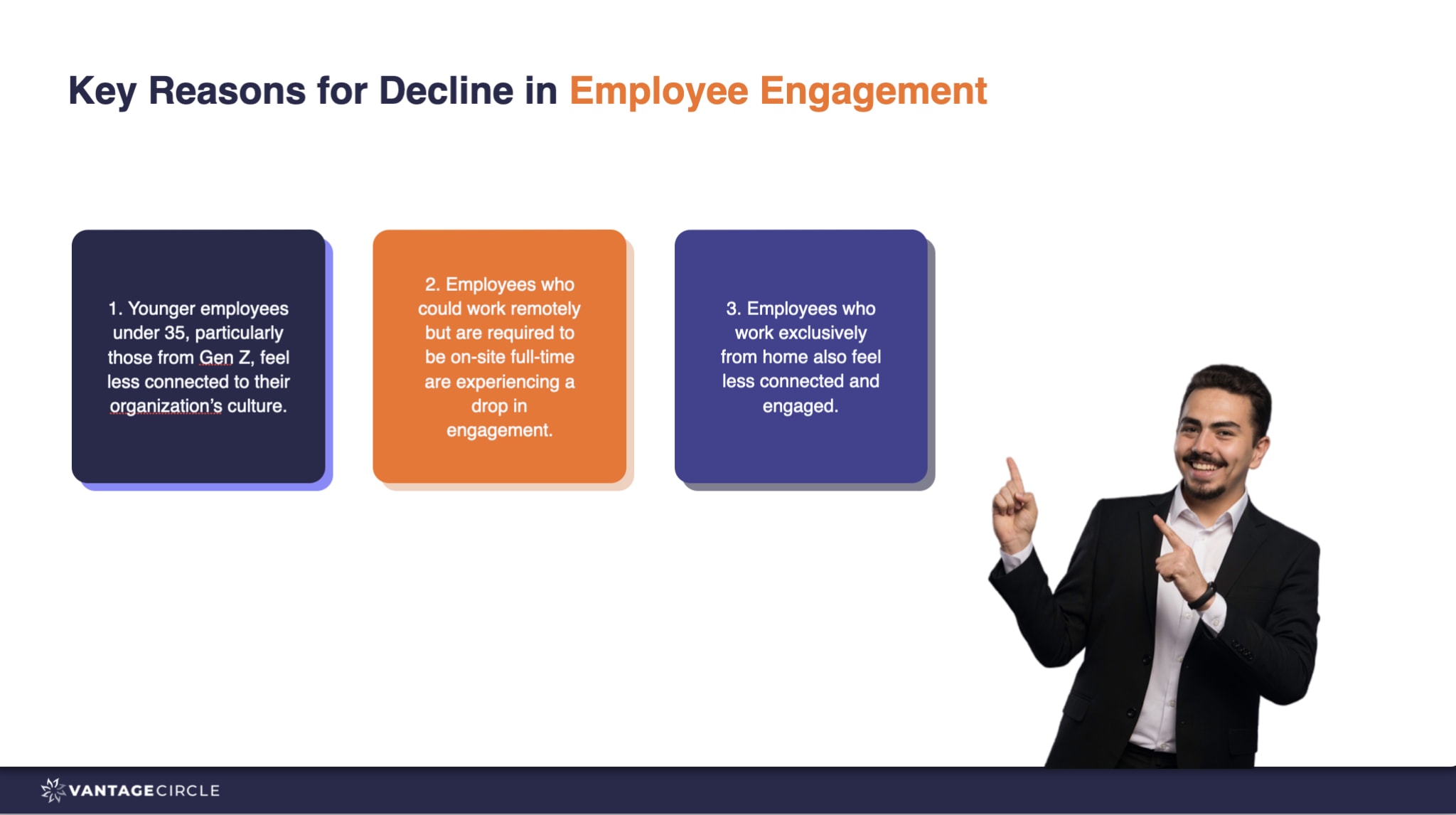
The most common cause of disengagement is not a toxic manager or a bad pay package. It is invisibility: the slow accumulation of days where good work goes unnoticed, voices go unheard, and no one seems to care.
By the time it shows up in a resignation letter, the damage is already done. The real risk is that disengagement is quiet long before it is visible.
The most common drivers of decline:
- Feeling unseen: When contributions go unacknowledged day after day, people stop making them. Recognition is not a nice-to-have; it is a signal that tells employees their work matters.
- Unclear growth paths: If an employee cannot picture where they are headed, they start looking elsewhere. Stagnation is a slow exit.
- Manager disconnect: Gallup's data is consistent on this. Managers account for at least 70% of the variance in team engagement scores, underscoring the role managers play in shaping engagement. A disengaged manager multiplies the effect downward.
- Misaligned values: Employees disengage fastest when organizational behavior contradicts stated values. The gap between what a company says and what it does is trust-eroding.
- Overload without recognition: High performers burn out when they carry more and receive less. Engagement drops sharpest among the people you can least afford to lose.
How to catch it early:
The early signals are behavioral, not self-reported. Watch for:
- A previously vocal employee who stops contributing in meetings
- A drop in discretionary effort: doing exactly what is asked, nothing more
- Increased use of sick leave or PTO in short, frequent bursts
- Withdrawal from team activities or culture initiatives
Pulse surveys, stay interviews, and regular manager check-ins are the infrastructure for catching these signals before they become exits.

Vantage Influencers Podcast
A strong culture is what holds an organization together when things get hard, through mergers, shifting technology, or labor negotiations, and it starts with genuinely balancing what employees need with what the business needs.
Hosted by Matt Burns, Vantage Circle · with Jon Petrov, HR Executive
Listen to the EpisodeKey Benefits of Employee Engagement
1. Boosted Productivity
Engaged employees are star performers who go the extra mile. Their increased productivity drives positive business results.
2. Enhanced Retention
Employees stay longer when they feel connected to their work. Recognize their efforts and support their growth to keep them committed.
3. Increased Profitability
Engaged employees boost company profits. Studies show they can generate 26% more revenue, enhancing overall performance.
4. Reduced Absenteeism
Frequent absence hurt productivity and customer satisfaction. Engaged employees love their work and show up consistently.
5. Improved Customer Satisfaction
Happy employees create happy customers. When employees are engaged, they deliver excellent service, leading to satisfied customers and higher profits.
6. Greater Employee Satisfaction
Employees feel good when they know their work matters. Recognize their achievements to lift morale and improve the customer experience.
Key Strategies for Building a Culture of Engagement
Do you think developing an employee engagement strategy is optional? Think again as;
Let's take a peek at some of the effective strategies organizations are putting into action.
1. Promote Open Communication
Encourage various channels for your employees to share their thoughts and ideas openly. It fosters transparent workplace communication, a cornerstone for collaboration. Your employees should feel empowered to communicate openly with managers, HR, or peers.
Poor communication carries a real price tag. According to Pumble, workplace miscommunication costs organizations anywhere from $9,284 to well over $30,000 per employee, per year.
How to do it?
Promote open communication through town hall meetings, suggestion boxes, anonymous feedback systems, or casual chats.
Why is this strategy crucial?
- Boosts transparency and trust.
- Sparks creativity and problem-solving.
- Minimizes misunderstandings and conflicts.
- Cultivates strong relationships and a collaborative culture.
2. Provide Growth Opportunities
Invest in your employees' future by investing in their growth. Provide them with training, education, or development programs tailored to their needs.
How to do it?
Offer a range of opportunities, such as:
- Tuition reimbursement
- Internal career mobility paths
- Mentorship programs aimed at nurturing talent within the organization, and more.
By offering these pathways, you show your commitment to their ongoing development.
Why is this approach essential?
- Retains top talent
- Elevates morale and motivation
- Enhances job satisfaction and engagement
- Builds a proficient and adaptable workforce
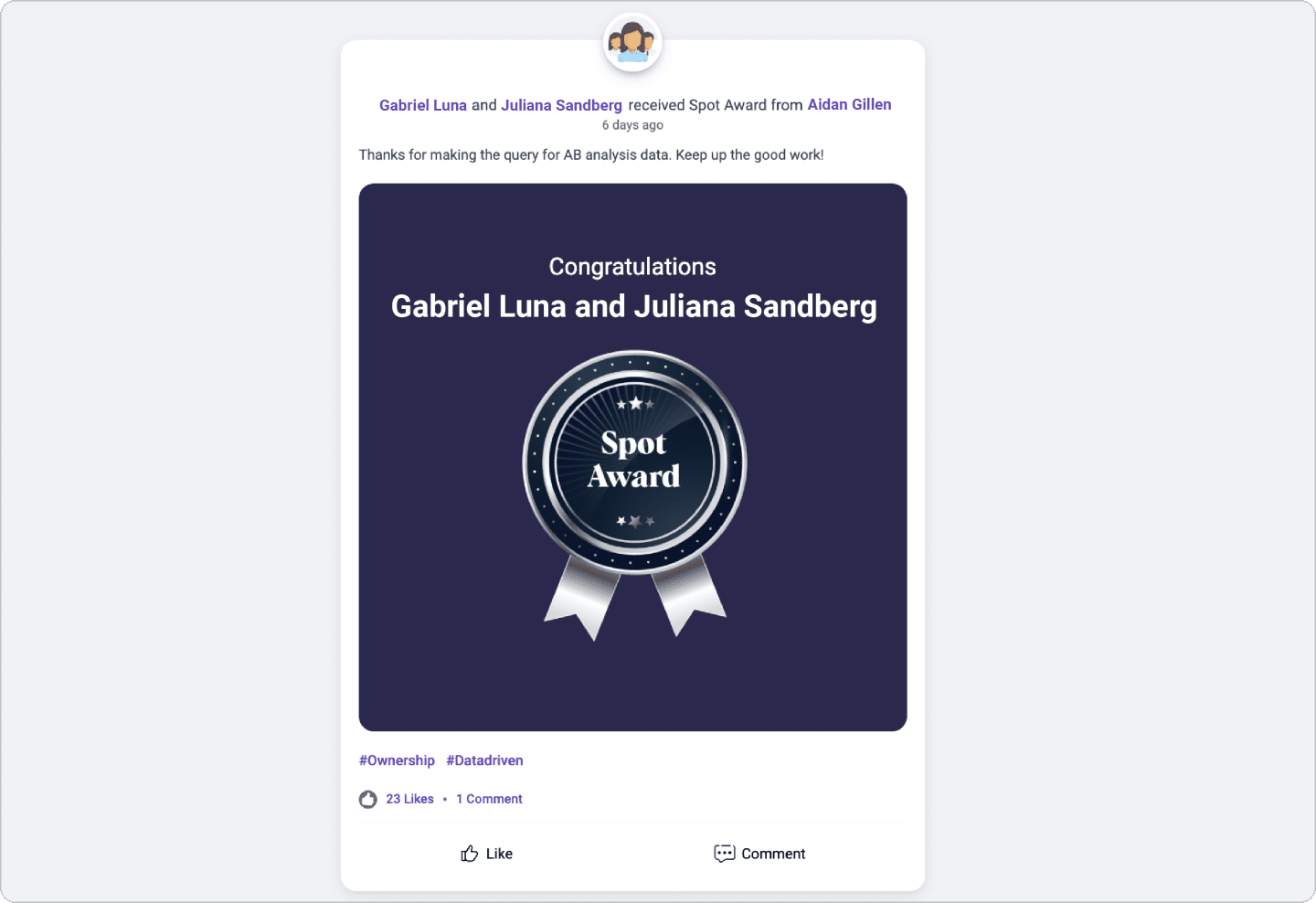
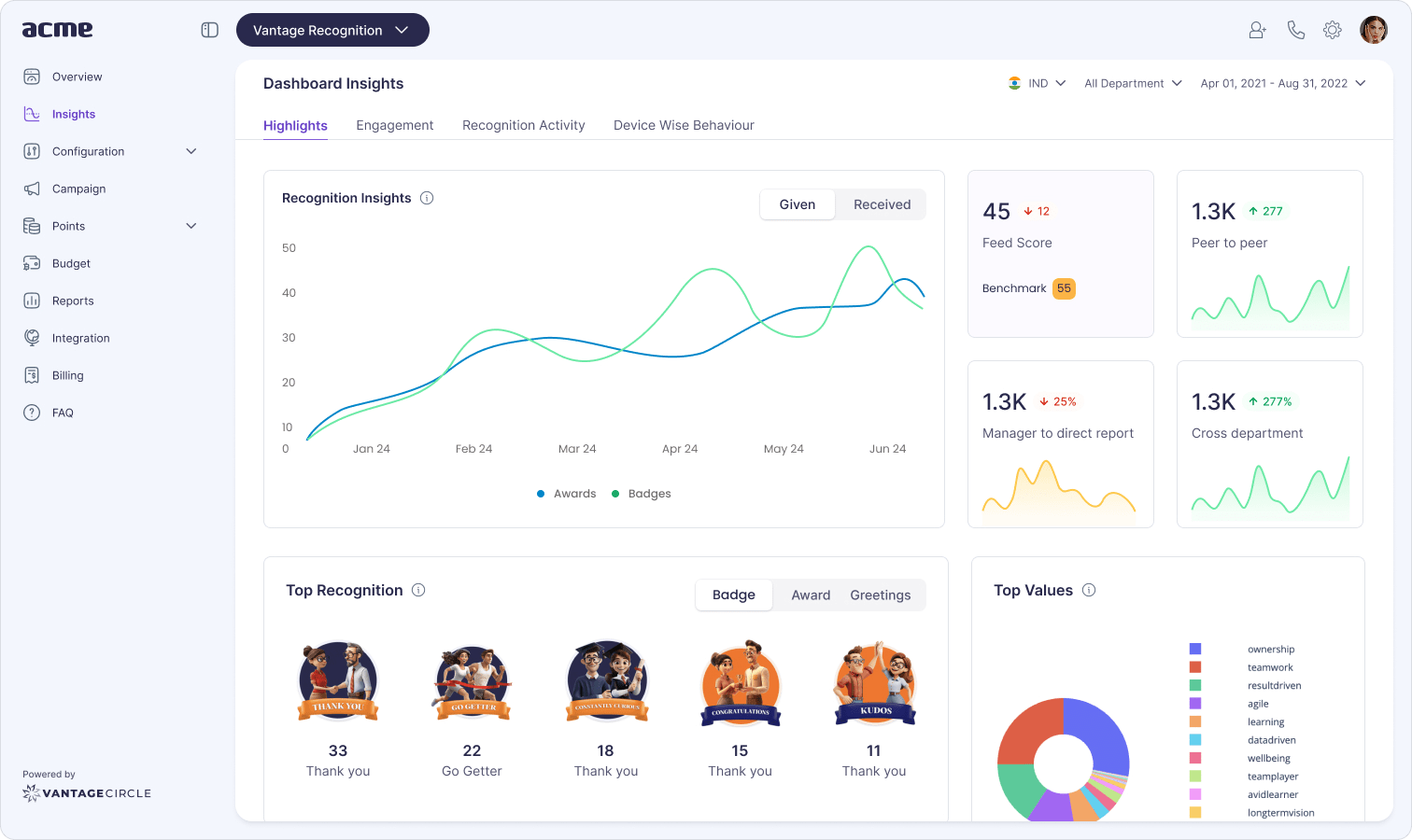
3. Recognize and Reward Achievements
Acknowledging and celebrating the hard work and dedication of our employees is crucial. Rewarding employees not only motivates them to sustain high performance but also contributes to fostering a positive workplace culture.
Therefore, prioritizing the implementation of a formal reward and recognition program within the organization is imperative.
4. Promote Team Building Activities
Building strong relationships and nurturing a sense of belonging among your employees is paramount. They serve to enhance collaboration within your workforce. The goal is to hone problem-solving abilities and foster camaraderie among colleagues.
By engaging in diverse team-building activities, you can cultivate shared experiences and forge deeper connections among your team members.
These activities, may include:
- Team-building events
- Workshops
- Retreats
Why is this approach critical?
- Bolsters relationships and camaraderie within teams
- Enhances communication and collaboration
- Boosts employee engagement and morale
- Elevates team performance and productivity
5. Offer Employee Assistance Programs (EAP)
Employee Assistance Programs (EAPs) are work-based intervention programs designed to assist employees in resolving personal problems that may be adversely affecting their work performance, health, and well-being.
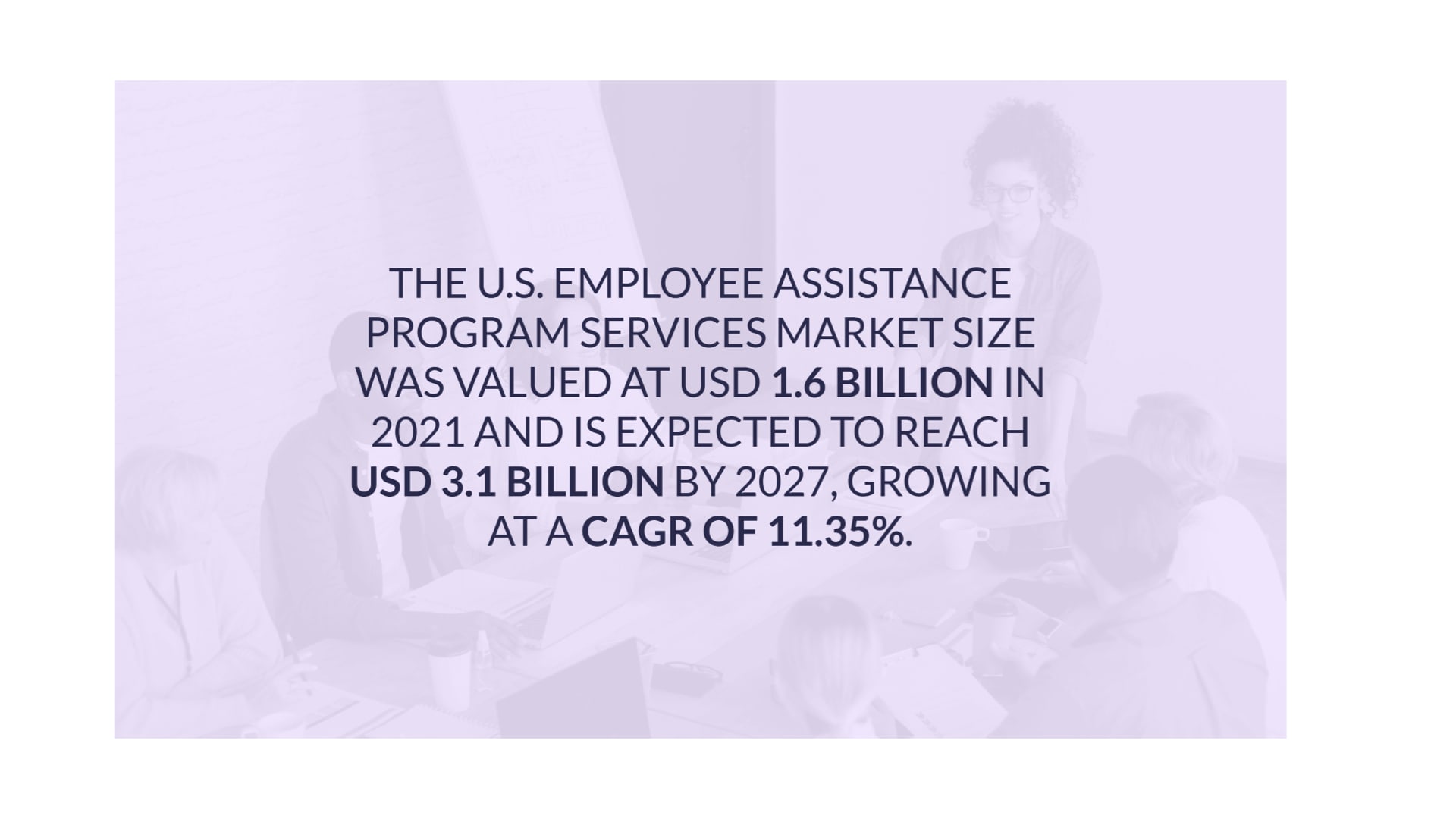
Support programs are indispensable within a company to aid employees during trying periods. These Employee Assistance Programs (EAPs) can offer invaluable support to employees grappling with stress, anxiety, depression, substance abuse issues, or relationship challenges.
How to do it?
It's imperative for management to grant access to counseling services, financial planning resources, or other assistance programs.
6. Provide Schedule Flexibility
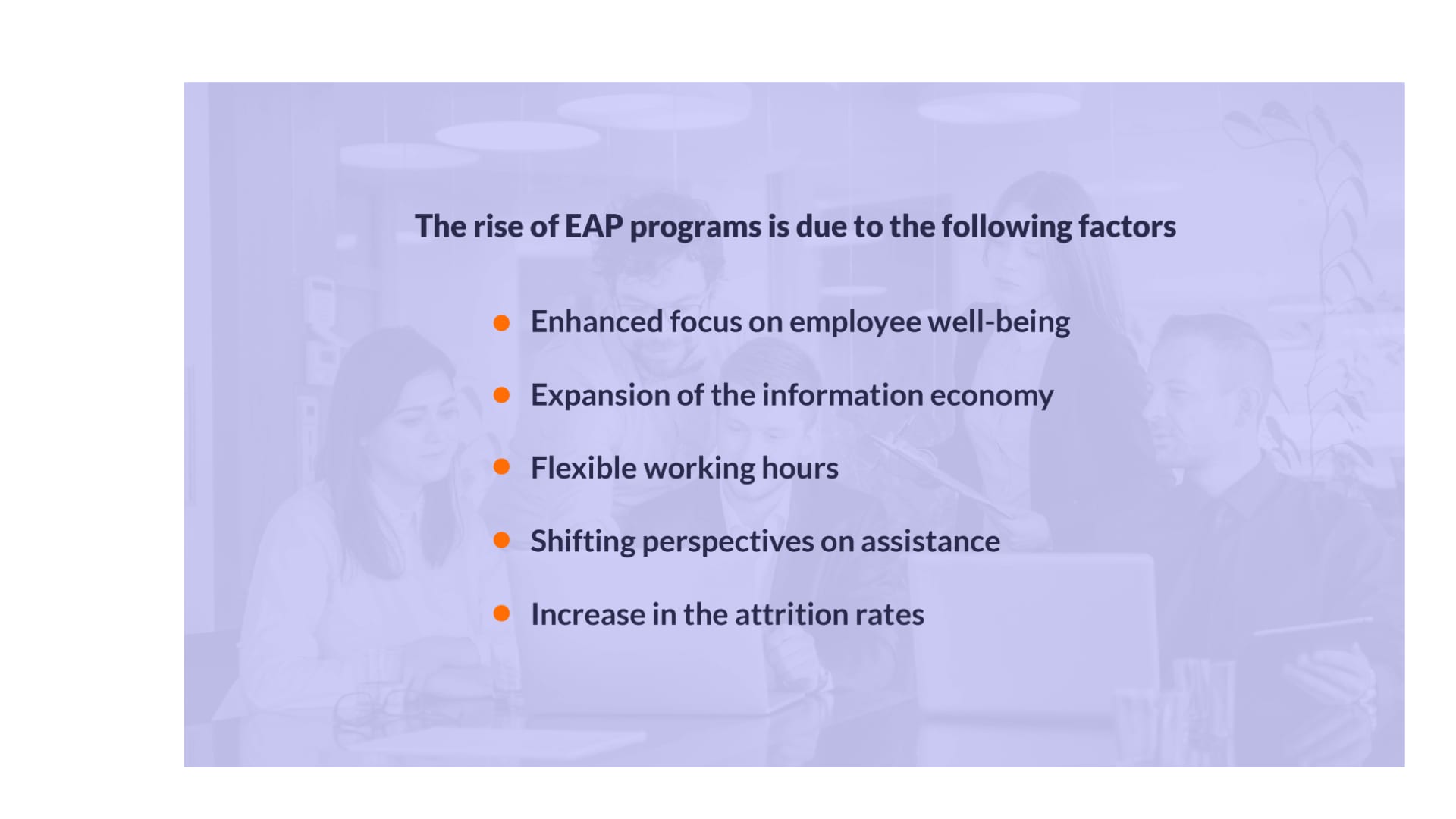
Flexibility is key to accommodating the diverse needs and preferences of our employees.
How can you achieve it?
- Flexible work hours,
- Remote work options, or
- Compressed work schedule, etc.
They help accommodate the diverse needs and preferences of employees. Although it’s important to be mindful of cultural differences and consider local regulations when designing flexible work arrangements.
Why is this strategy important?
- Accommodates diverse employee needs and lifestyles
- Increases employee flexibility and convenience
- Improves work-life balance
- Enhances employee satisfaction and engagement
7. Regularly Evaluate Engagement Levels
Conduct employee surveys, focus groups, or one-on-one meetings to gather feedback on the effectiveness of engagement initiatives' and make data-driven improvements accordingly.
What's the solution?
Measure engagement levels regularly to track progress and identify areas for improvement.
Why is this strategy important?
- Monitors employee engagement and satisfaction
- Identifies areas for improvement and growth
- Enables timely intervention and corrective action
- Increases employee motivation and engagement
Source: Vantage Recognition
4 Proven Employee Engagement Models
When it comes to creating a thriving workforce, understanding the models of employee engagement is like having the ultimate blueprint for success. But what exactly do these models tell us about keeping employees motivated, satisfied, and committed?
1. Zinger’s Pyramid of Employee Engagement
- Focuses on foundational needs like well-being and safety.
- Builds on relationships, recognition, and personal growth.
- Aims for high levels of engagement and active participation.
2. Gallup Q12 Model
- Uses 12 core questions to measure engagement levels.
- Provides insights into areas needing improvement.
- Focuses on clear expectations, recognition, development, and purpose.
3. Schmidt Model
- Emphasizes recruiting and retaining individuals who fit the company culture.
- Focuses on career opportunities, community connection, fairness, and values alignment.
4. Deloitte Model
- Highlights meaningful work, supportive management, positive environment.
- Offer growth opportunities, and trustworthy leadership.
- Aims to create a purpose-driven and engaging work culture.
Frequently Asked Questions (FAQs)
1. What is a culture of employee engagement?
It's a workplace environment where employees feel connected to their work, colleagues, and company mission by default, not because of a one-off initiative. It runs on trust, recognition, and psychological safety.
2. How do you build a culture of engagement in the workplace?
Start with the fundamentals: open communication, growth opportunities, and consistent recognition. Add team-building, employee assistance programs, and schedule flexibility, then track progress with regular pulse surveys and manager check-ins.
3. What's the difference between employee engagement and a culture of engagement?
Employee engagement measures how connected one person is to their work at a given moment. A culture of engagement is the set of conditions, trust, recognition, leadership, that makes high engagement the norm across the whole organization, not the exception.
4. Which employee engagement model should we use?
It depends on your goal. Gallup Q12 works well for measurement, Zinger's Pyramid for foundational needs, the Schmidt Model for culture fit and retention, and the Deloitte Model for purpose-driven leadership, see the four models above for a full comparison.
5. What's the biggest driver of disengagement?
Feeling unseen. Contributions that go unacknowledged for too long push people to quietly check out long before they resign, which is why early recognition and manager check-ins matter most.
Takeaway
Building a culture of engagement isn't a one-time project. It takes ongoing effort and commitment. But when you put these strategies to work, you create a place where people feel valued, motivated, and genuinely connected to what they do.
And that's what drives better performance, bigger ideas, and lasting success.

Sanjeevani Saikia is a Senior Content Strategist at Vantage Circle, where she leads end-to-end content strategy across SEO, thought leadership, brand storytelling, podcasts, and video. She is also the host of the Vantage Influencers Podcast, where she brings conversations with HR and business leaders from top global organisations, including Fortune 500 companies.
Connect with Sanjeevani on LinkedIn.