
Two employees can work for the same company, have the same benefits, sit in the same office, and follow the same policies, yet have very different experiences at work.
Often, the difference is their manager.
A manager decides what gets attention, how clearly expectations are set, whether good work is noticed, and what happens when something goes wrong. Those daily interactions may seem small on their own. Over time, they shape how people feel about their work, their team, and the company itself.
So what does that responsibility look like in practice?
It is less about having the perfect leadership style and more about getting a handful of everyday things right. Here are five areas where managers have a direct role to play in employee engagement, along with the habits that can undermine it and a practical 30-60-90 day plan to turn the ideas into action.
Why Managers Matter More to Employee Engagement Than Ever
Managers are being asked to do more at a time when their own engagement is slipping, according to Gallup's 2026 State of the Global Workplace report. In the U.S., 36% of managers were engaged in 2025. At the same time, overall U.S. employee engagement remained at 31%.
That puts managers in an awkward middle.
They are expected to turn company priorities into something employees can actually work with. They explain the strategy, set expectations, give feedback, recognize good work, handle difficult conversations, and help people navigate change. Increasingly, they are also expected to help employees adapt to AI and new ways of working.
Employees, meanwhile, experience all of this at a much more personal level. Leadership may announce a new direction. But it is the manager to whom the employees turn to when they ask, “So what does this mean for me?”
That is the real connection between managers and engagement. Managers don't create every condition that shapes the employee experience. But they translate many of those conditions into everyday interactions. And when managers themselves are stretched, under-supported, or disengaged, that translation becomes harder.
For HR leaders, the question is no longer simply how to engage employees. It is also: what do managers need to make engagement possible for the people they lead?
What is the Cost of the "Accidental Manager"?
An accidental manager is someone who becomes a manager because they were good at their previous job, not because anyone prepared them to manage people.
It is a common promotion story. The best salesperson gets the team, the strongest engineer gets the direct reports, and suddenly technical expertise has to stretch into coaching, feedback, delegation, and difficult conversations.
It is a bit like being the best player on the court and suddenly being handed the clipboard. But the training gap is real.
The problem is not promoting strong individual contributors but assuming that being good at the work automatically teaches someone how to lead the people doing it. Organizations need to recognize that good employees need support and development to grow into effective leaders.
A new manager now has to set expectations, give feedback, recognize good work, resolve conflict, delegate effectively, and help employees grow. None of those skills comes bundled with a promotion letter.
What is the Manager Engagement Operating Model? (The 5 Pillars)
After analyzing what actually works in American workplaces, we have noticed that there are five pillars that separate managers who build engaged teams from those who don't. These aren't revolutionary concepts, but they require a fundamental shift in how most managers operate day-to-day.
Pillar 1: From Directive to Developmental
Good managers do more than solve the problem in front of them. They help employees get better at solving the next one. And that’s the difference between directing and developing.
A directive manager gives the answer and moves on. A developmental manager slows down enough to help the employee build the judgment to find the answer themselves. The distinction matters because managers cannot be the answer desk for every decision. The more employees learn to think through problems, the less they need their manager to step in and solve them.
In practice, the shift can be surprisingly small:
Instead of “Here’s how to fix it,” try “What have you tried so far?”
Instead of “Just send it to me,” try “Walk me through how you’re thinking about it.”
Instead of “Good job,” try “The way you handled that client pushback showed strong judgment. That’s worth repeating.”
None of these conversations takes much longer. But they change the manager’s role from the person with all the answers to the person helping others find better ones.
Pillar 2: Personalize the Recognition
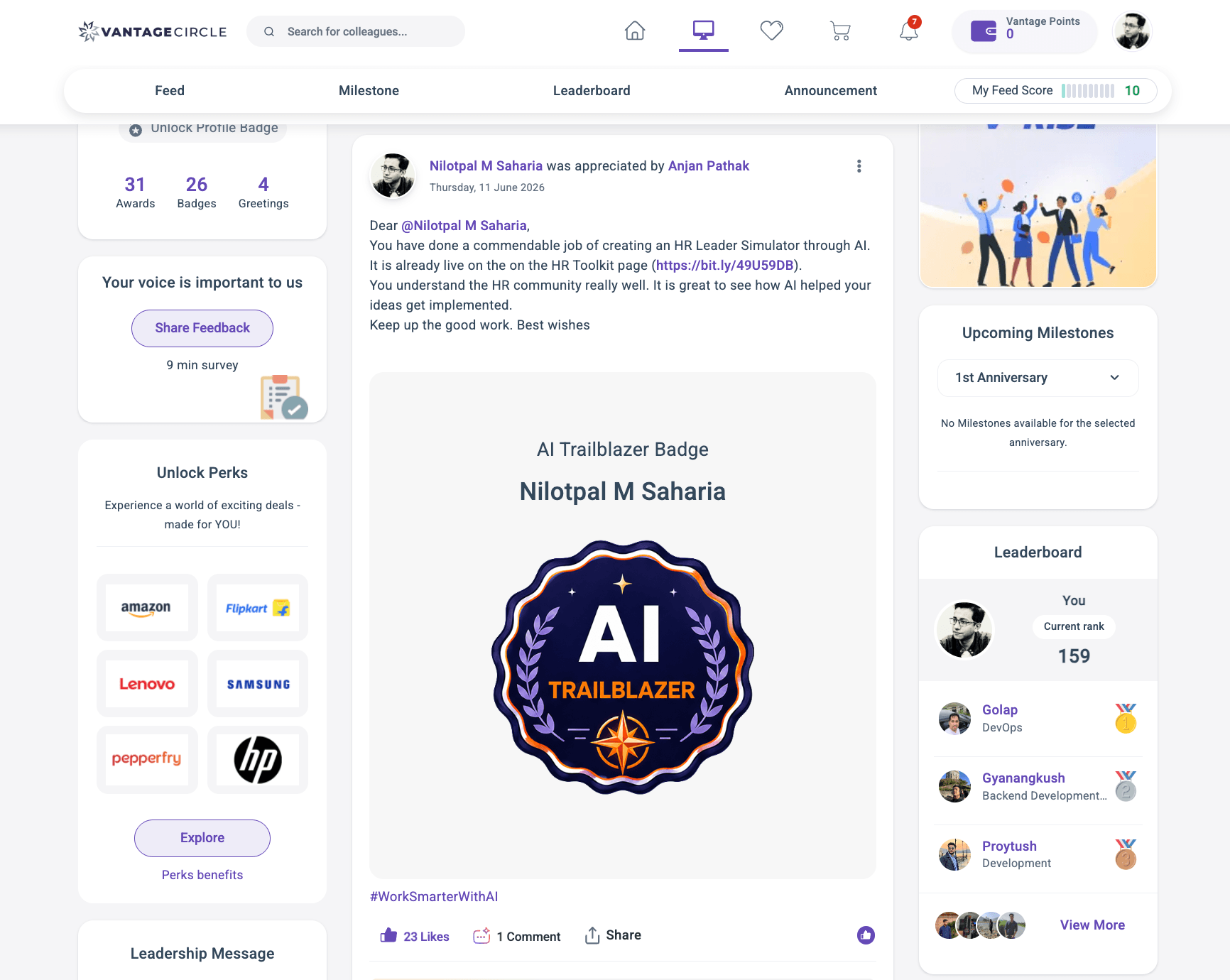
Personalization does not have to mean making every thank-you elaborate. It can be as simple as naming the contribution, connecting it to a team value, or knowing how someone prefers to be recognized.
Some employees love a public shoutout. Others would rather receive a quiet message and get back to work. A good manager learns the difference.
The timing matters, too. Recognition loses some of its meaning when it arrives weeks after the moment that earned it. Managers need ways to recognize people while the contribution is still fresh, not when they finally remember it.
Tools such as Vantage Recognition can make that easier by giving employees and managers a place to recognize specific contributions and connect them to company values. It also takes some of the pressure off managers because recognition doesn’t have to depend on one person noticing every good thing that happens.
Pillar 3: How Do Micro-Conversations Drive Employee Engagement?
Micro-conversations are short, frequent check-ins that catch small problems before they turn into resignation letters.
They are not another meeting to add to the calendar. Often, they are two minutes at the end of a one-on-one, a quick question after a difficult client call, or a manager noticing that someone who is usually engaged has gone unusually quiet.
The value is in the frequency. When managers only ask how things are going during a quarterly review or annual engagement survey, they are asking employees to remember three months of frustrations, wins, and unanswered questions. By then, some problems have already become habits.
A manager’s goal isn't to talk to employees more. It is to make it easier for employees to say what matters while there is still time to do something about it.
| What It Means | What to Ask in a 1:1 |
|---|---|
| Purpose — Employees need to see how their work connects to something bigger than the task in front of them. | “How does this project fit into what the team’s trying to do?” |
| Progress — Feeling stuck disengages people faster than almost anything else, even when the work itself hasn’t changed. | “What’s one thing that felt like progress this week?” |
| People — Isolation and unsupported teamwork quietly erode engagement long before anyone says so out loud. | “How are things going with the rest of the team right now?” |
| Process — Friction and inefficiency drain motivation even when the work itself is meaningful. | “What’s slowing you down that I could help remove?” |
Pillar 4: How Do Managers Build Psychological Safety and Remove Friction?
Psychological safety is not about making work comfortable all the time. It is about making it safe to be honest when work is not going well.
A psychologically safe team is one where people can raise a concern, admit a mistake, disagree with a decision, or ask a question without worrying that they will be dismissed, embarrassed, or punished for speaking up.
Managers have an outsized role in creating that environment because employees watch what happens when someone speaks up. If a manager responds to bad news with curiosity, others learn that problems can be discussed. But if the response is blame or defensiveness, people learn to keep problems to themselves.
On the other hand, friction is the quieter half of this pillar. Think of the approval that takes four days. The tool nobody knows how to use. The meeting that could have been a message. Each one is small. But they quietly consume time, attention, and goodwill.
Pillar 5: How Does Radical Transparency Improve Engagement?
Radical transparency means managers explain the "why" behind decisions and make expectations crystal clear. People can handle bad news. What wears them down is guessing.
Clarity has been slipping in American workplaces.
That's more than half the workforce showing up every day slightly unsure what winning looks like.
Transparency doesn't mean sharing every board meeting detail. It means answering three questions consistently: What are we doing? Why are we doing it? And what does great look like for you?
How Do Managers Unintentionally Kill Employee Engagement?
Most managers don't kill engagement on purpose; they do it through well-meaning habits that slowly erode trust. Nobody wakes up planning to demoralize their team. It happens one hovering Slack message at a time.
The Micromanagement Trap
Micromanagement rarely starts with bad intentions. It often comes from anxiety.
For instance, you as a manager want the project done right. So, you step in, take tighter control, and tell yourself it's temporary. Except it never is.
What micromanagement actually communicates regardless of intent is the fact that you don't trust your employees. And once an employee realizes that, they stop making decisions independently. They wait to be told what to do next because every time they've shown initiative, it's been overridden.
Vantage Influencers Podcast
Micromanagement And Its Consequences
The Feedback Vacuum
Many managers assume that no news is good news, that employees know they're doing well because nobody's complained. But in the absence of feedback, people assume the worst. They start interpreting silence as being overlooked or undervalued. They start wondering if their contributions matter.
Favoritism and the Slow Erosion of Trust
Even if unintentional, favoritism creates division. It can show up by giving stretch assignments to the same person repeatedly. Praising one team member publicly while overlooking others. Or allowing certain employees flexibility while holding others to rigid standards.
The slow erosion of trust that favoritism causes is particularly brutal. Employees can feel unfairness and the invisible hierarchy within the team. So instead of speaking up, they disengage quietly. They think why go above and beyond for a manager who's already decided who matters most?
To know more, read: How To Avoid Favoritism in the Workplace While Rewarding Employees
What Is the 30-60-90 Day Plan for Managers to Improve Engagement?
The 30-60-90 approach gives managers three jobs in sequence: listen and learn, build better routines, then lead with ownership. It helps new managers earn trust before making big changes, and helps experienced managers reset a disengaged team with a clear, staged approach.
Learn Before You Fix
Start with conversations, not initiatives.
Meet with each team member one-on-one. Ask what is working, what gets in the way of good work, what they wish you understood about their role, and how they prefer to receive feedback and recognition.
Look for patterns rather than isolated complaints. If three people mention the same approval bottleneck, that is probably a process problem. Remember, your goal for the first month is not to change everything. It is to understand what needs changing.
Build the Routines
Once you know what the team needs, turn the useful parts into habits.
Set a consistent rhythm for one-on-ones, feedback, recognition, and team communication. Then tackle two or three of the friction points your team identified. They do not need to be dramatic fixes. Removing an unnecessary meeting or clarifying who owns an approval can make more difference than launching another engagement initiative.
This is also where managers should start paying attention to their own habits. Are one-on-ones becoming status updates? Is recognition specific and timely? Are problems being discussed early or only after they become urgent?
The aim is consistency. Employees should not have to guess when they will hear from their manager or whether speaking up will lead anywhere.
Lead With Ownership
By the third month, the manager should have enough context to move from observation to action.
Set clear team goals and make sure people understand how their work connects to them. Start career conversations rather than waiting for a formal review. Use engagement data, pulse surveys, recognition patterns, and one-on-one conversations to see where the team is improving and where the gaps remain.
Ninety days should not produce a perfectly engaged team. It should produce a manager who knows the team better, has built better habits, and is paying attention to what happens next.
How Can Managers Use Tools and Technology to Improve Employee Engagement?
Technology doesn't engage employees, managers do. But the right tools give managers better intelligence, faster feedback, and more consistent habits.
Here's how the best companies are combining human leadership with smart technology to keep up with employee engagement:
How Do Top Companies Train Managers?
In leading US companies, manager development programs focus heavily on coaching conversations rather than just performance management. Managers are taught how to ask better questions, how to guide rather than direct, and how to create space for honest dialogue.
Another major focus area is emotional intelligence. Managers are trained to recognize emotional cues, respond constructively to tension, and deliver feedback in ways that build growth instead of defensiveness.
What Software & Platforms Help Managers Track Engagement Metrics?
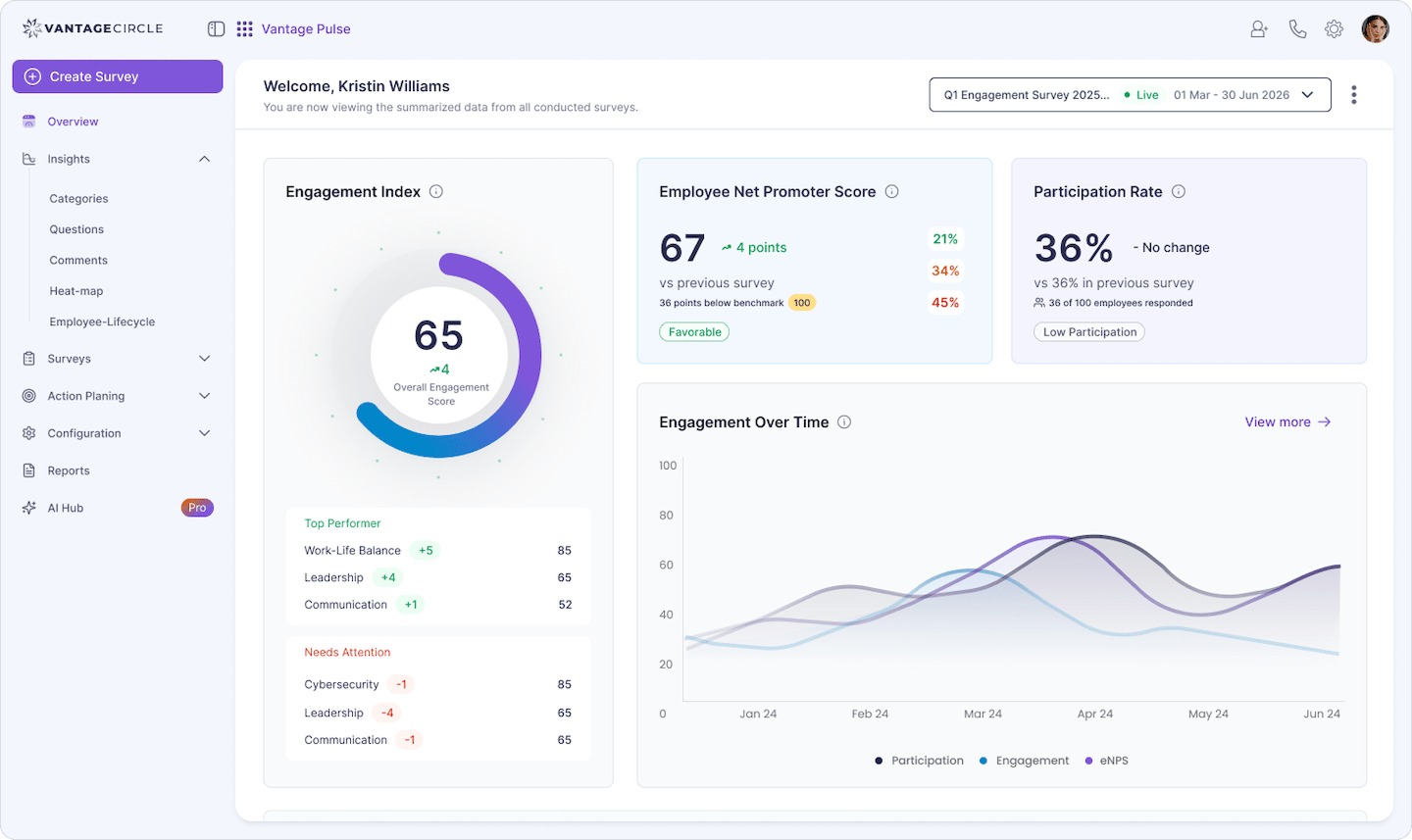
Engagement today has become measurable, giving managers more visibility than ever. In many U.S. organizations, pulse surveys have replaced the traditional annual engagement survey.
Instead of waiting 12 months for insights, managers can now track team sentiment monthly or even biweekly. These short, focused surveys help surface early warning signs like burnout risk, workload pressure, and declining morale, before they turn into turnover.
Source: Vantage Pulse
But surveys alone don’t tell the full story.
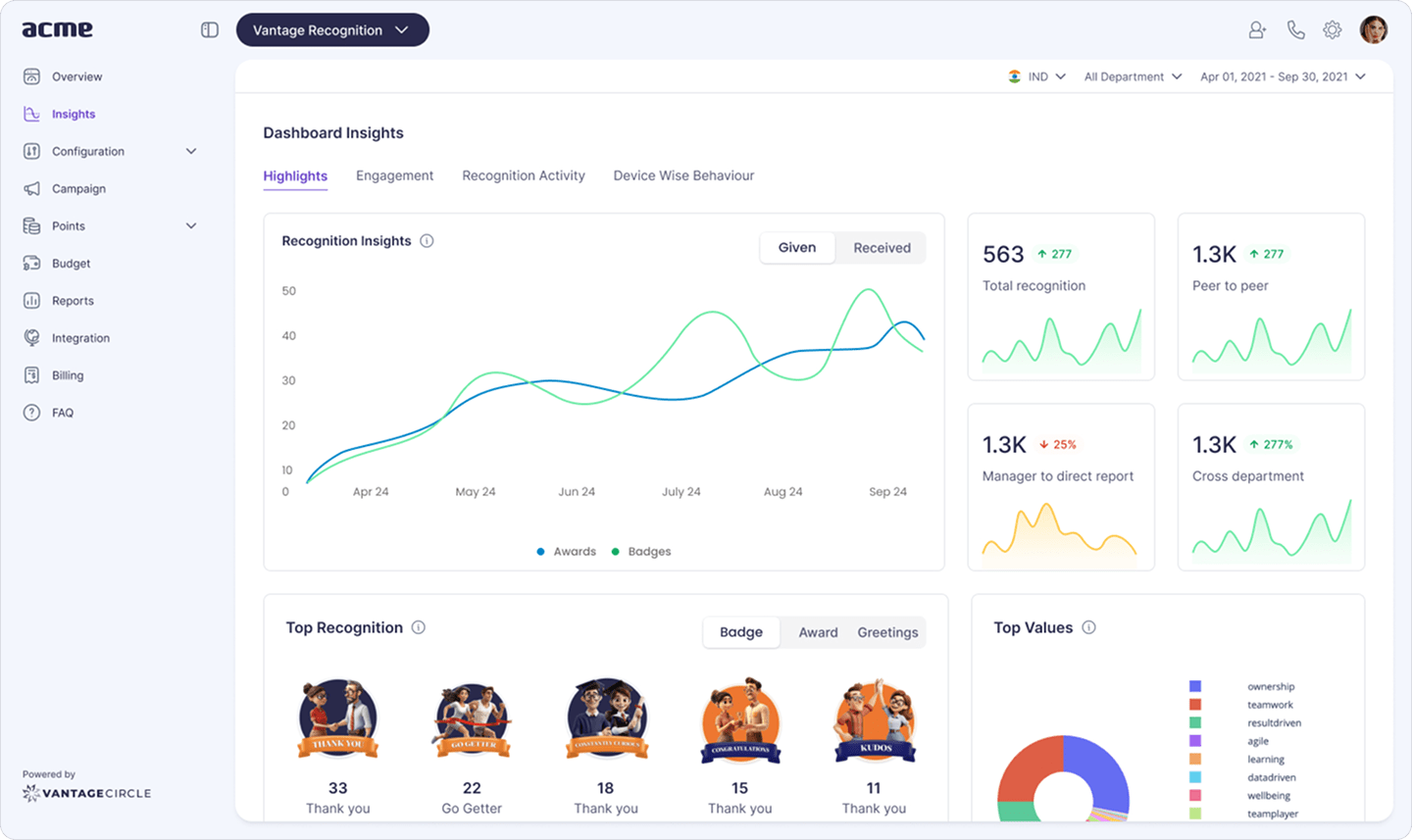
Recognition and Reward Platforms add another critical layer of insight. They show who is being recognized, how frequently appreciation is shared, how are they rewarded, and whether certain employees or teams are being overlooked. In doing so, they help managers spot patterns, close gaps, and reinforce company values in real time.
Source: Vantage Recognition
How Can Managers Improve Employee Feedback Loops Using Tools?
One of the biggest engagement mistakes organizations make is running surveys and then forgetting about it.
But strong managers close the loop. They acknowledge concerns openly. They outline what can be addressed immediately and what may take time. Even when changes aren’t possible, transparency builds trust.
Technology also helps turn data into conversations. Instead of viewing engagement dashboards privately, effective managers bring insights into one-on-ones and team meetings. This way data becomes a starting point, not a report card.
Conclusion
Employee engagement has never been more measurable, more visible, or more consequential than it is today. And after everything we've covered in this blog, one truth stands above the rest. It is the fact that HR can build infrastructure. But managers are the ones who determine whether it actually works.
The companies winning at engagement right now are investing in their managers deliberately and consistently. They're training them to coach, not just direct. Because when managers get it right, everything else follows.
FAQs
What is the 30-60-90 Rule for Managers?
The 30-60-90 rule is a plan for a manager's first 3 months: learn for 30 days, build routines for 60, and lead with ownership by day 90.
What are the Responsibilities of an Employee Engagement Manager?
An employee engagement manager is responsible for creating the conditions that help employees feel connected, supported, recognized, and motivated at work.
What are the 5 C's of Employee Engagement?
One widely used framework lists the 5 C's as Care, Connect, Coach, Contribute, and Congratulate.
What are the Top 3 Weaknesses of a Manager?
The 3 most common manager weaknesses are poor communication, avoiding difficult feedback, and micromanaging.

Shikha Gogoi is a Content Marketing Specialist focused on SEO-driven content around employee engagement, recognition, and workplace culture, helping build people-first workplaces.
Connect with Shikha on LinkedIn.