
A workiversary is the anniversary of the day someone joined your company - the informal, increasingly common way to say "work anniversary." It's not a different occasion. It's the same milestone, just said the way people actually say it in Slack messages and LinkedIn posts.
Most companies still handle it the same way regardless: an automated email, maybe a mention in a team channel, and nothing else. That approach treats a first workiversary and a fifteenth workiversary identically, which is exactly the problem. A new hire hitting one year needs something different from a veteran hitting fifteen.
This guide covers what a workiversary actually is, why the earliest ones matter more than most recognition programs assume, and 30+ ways to celebrate one - organized by milestone year, not dumped into one generic list.
What Is a Workiversary?
A workiversary is the anniversary of an employee's start date at a company - a celebration of the day they joined and every year since. It's a blend of "work" and "anniversary," and while "work anniversary" is the more formal, dictionary-safe term, "workiversary" has become the common shorthand people actually use when they post about it or bring it up at their desk.
Some write it "workaversary." Both point to the same thing. "Workiversary" is simply the spelling that's caught on more widely, likely because it sits closer to the original word "anniversary."
Why the Early Workiversaries Matter More Than Companies Think
Most milestone programs are built around 5-year, 10-year, and 20-year intervals - a structure that assumes people stick around long enough to hit them. That assumption is getting shakier every year.
4.1 years
Median tenure with a current employer in the U.S. as of January 2026, up from 3.9 years in January 2024, according to the U.S. Bureau of Labor Statistics. For workers aged 25 to 34, median tenure is just 3.0 years.
Do the math on a program that only recognizes years five and up: for a meaningful share of the workforce, that program will never trigger before they leave. The first and second workiversaries aren't a warm-up act before the "real" milestones. For a lot of employees, they're the only ones that will happen.
And most companies are already missing them. Research from the O.C. Tanner Institute found that 59% of employees don't have their 1-year anniversary celebrated, and 57% miss out at the 3-year mark. That's not a small gap - it's most of the workforce going through an early milestone with nothing to mark it.
The upside of getting this right is well documented. Gallup's longitudinal research, tracking nearly 3,500 employees from 2022 to 2024, found that well-recognized employees were 45% less likely to have changed organizations two years later. A workiversary is one of the easiest, most predictable moments to deliver that recognition - the date is already on the calendar.
For a deeper look at why tenure-based programs need rethinking and how to handle milestones beyond just work anniversaries, see our guide on celebrating employee milestones.
The Recognition Effect: What Great Workplaces Do Differently
Discover how recognition shapes workplace culture — insights from a joint study with Great Place To Work® on what sets top employers apart.
Download the Report30+ Ways to Celebrate a Workiversary, By Milestone Year
Most "workiversary ideas" lists read the same regardless of how long someone's been there - a cake suggestion sits next to a company-trip suggestion with no distinction. That doesn't hold up in practice. A first-year celebration should be quick, warm, and low-cost. A twentieth-year celebration should feel like an event. Here's what fits at each stage.
Year 1: The First Workiversary
The first workiversary is the one most likely to get skipped, and the one that does the most for early retention. Keep it fast and personal - it shouldn't wait for a program to catch up.
- A handwritten note of appreciation from their manager, naming one specific thing they did well this year. Specific beats generic every time.
- A desk surprise waiting for them that morning - a card, a small treat, something that says someone remembered without being asked.
- A public shoutout in the team channel or company social feed, tagging the people they worked closest with.
- A team lunch, even a short one, to mark the date as a group rather than a solo email.
- An early check-in conversation about how their first year actually went, separate from a performance review.
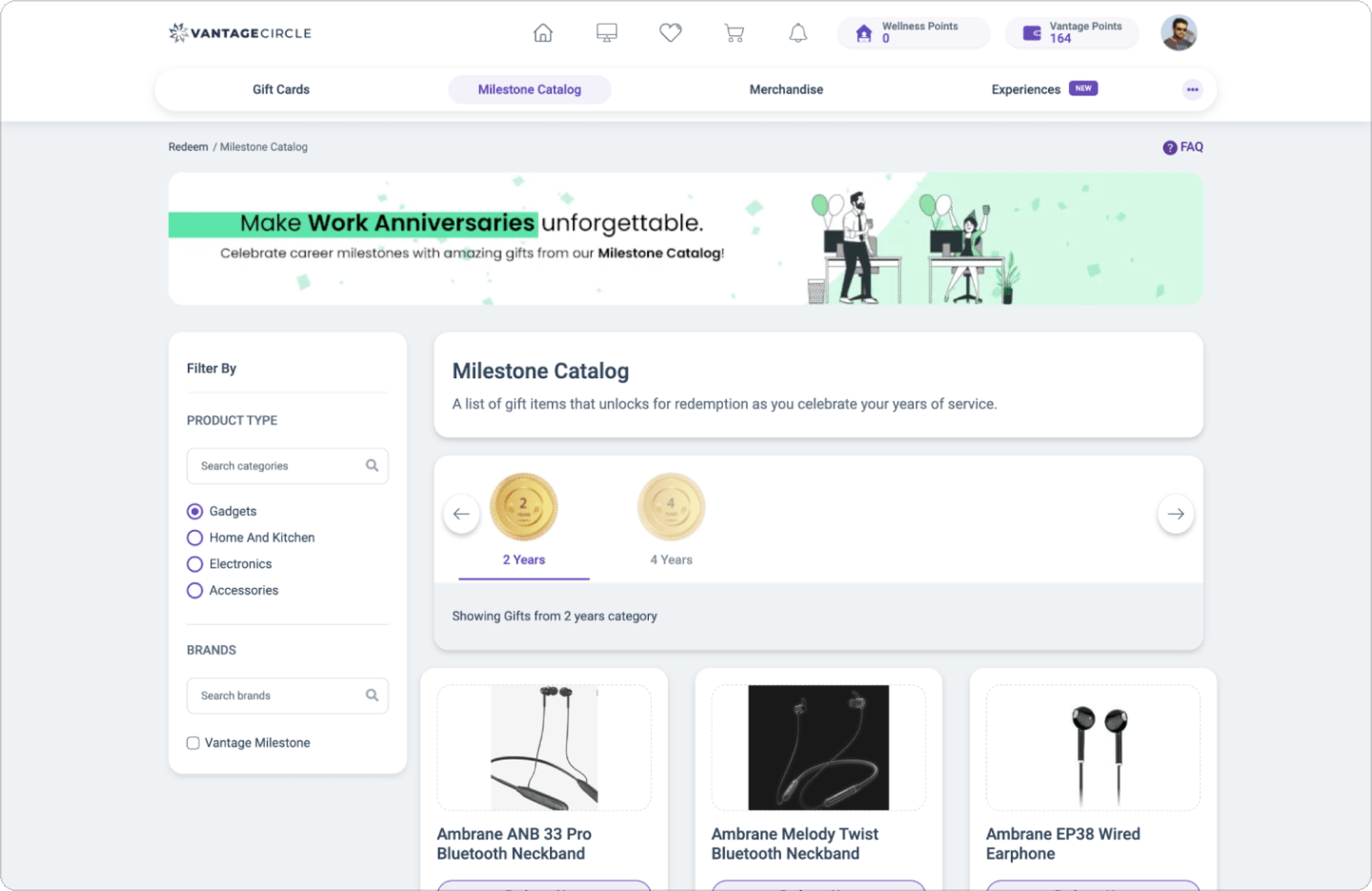
A platform like Vantage Recognition helps here in a small but real way: it flags upcoming anniversaries to managers ahead of time, so a first workiversary doesn't get remembered the day after it happened.
Years 2 to 4: Building the Habit
This stretch is where most programs go quiet, since it falls before the "real" milestones start. That's a mistake - this is exactly the window where median tenure sits for younger employees.
- A peer-nominated shoutout, letting coworkers (not just managers) mark the date publicly.
- A skill-based gift - a book, a course credit, or a subscription tied to something they're genuinely interested in.
- A flexible half-day off, no questions asked.
- A small gift card, sent with a specific note rather than a generic template.
- A "what's next" conversation about growth, framed around the milestone rather than a formal review cycle.
Year 5: The Halfway Milestone
Five years is where most formal recognition programs start, and where the celebration can reasonably get a bit bigger.
- A personalized keepsake or trophy marking the specific year, not a generic service pin.
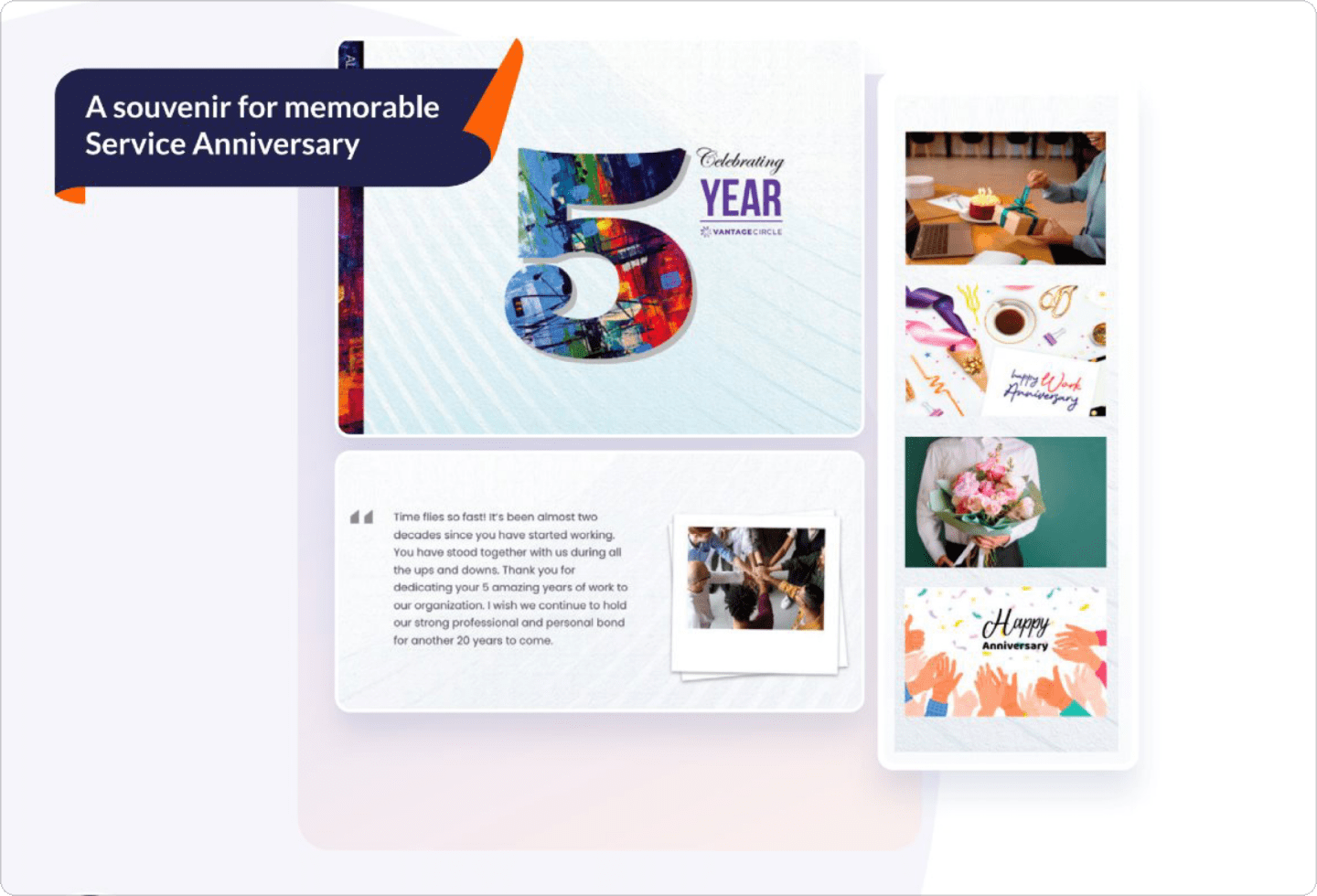
- A service yearbook or digital tribute compiling photos, notes, and memories from their time there.
- A team dinner or outing, rather than a lunch, to signal the milestone is a step up.
- A LinkedIn recommendation written by their manager, describing specific skills and contributions.
- A milestone catalog gift, letting the employee choose their own reward from a curated list rather than receiving something generic.
- A career check-in focused specifically on where they want to be in the next five years.
Year 10: A Decade of Impact
Ten years is a genuinely rare milestone against a 4.1-year median tenure. Treat it that way.
- A meaningfully upgraded gift tier - something with real value, not a scaled-up version of the year-5 gift.
- A short video tribute, with messages from colleagues across the years they've worked there.
- A "master of the day" role, where they help onboard new hires or lead a session drawing on their experience.
- Recognition from a senior leader or executive, delivered in person or on a video call, not just a company post.
- A charitable donation made in their name, to a cause they care about.
- A dedicated sabbatical day or two, separate from standard PTO.
Years 15 to 20: Long-Tenure Recognition
At this stage, the person has outlasted several reorgs, product pivots, and probably a few managers. The celebration should acknowledge that history specifically.
- A milestone trip or experience voucher, sized to reflect the tenure.
- A feature story on the company blog or internal newsletter, telling their actual career arc at the company.
- An equity or stock-linked reward, where the company's compensation structure supports it.
- A dedicated retrospective event, where their journey is the explicit focus rather than a footnote at an all-hands.
- A peer-nominated legacy award, voted on by the people who've actually worked alongside them.
Year 20+: Lifetime Milestones
This is a career, not just a job. The recognition should reflect that scale.
- A retirement-style yearbook or keepsake, even if they're not retiring - a full career retrospective.
- A spot in a company "hall of fame" or long-tenure recognition wall.
- A named scholarship or fund, set up in their honor for a cause tied to their interests.
- A multi-day celebration, involving family, not just coworkers.
- A personal letter from the CEO or founder, acknowledging specifics from across their career, not a form letter.
Make It a Program, Not a Lucky Guess
None of this works if it depends on a manager remembering a date. The gap the O.C. Tanner data points to - 59% missing their 1-year celebration - isn't usually a lack of care. It's a lack of a system.
That's the actual fix: build workiversary recognition into a process that doesn't rely on memory. A platform like Vantage Recognition surfaces upcoming anniversaries in advance, lets peers and managers post recognition publicly, and gives employees a milestone catalog to redeem gifts from - so the celebration matches the year automatically instead of getting improvised on the day.
If you're building or fixing a tenure-based program specifically (not just one-off celebrations), our guide to years of service awards covers the program-design side in more depth.
FAQs
1. Is it "workiversary" or "work anniversary"?
They mean the same thing. "Work anniversary" is the formal term; "workiversary" is the informal shorthand people use in conversation, on social media, and in company shoutouts. Either is understood the same way.
2. What's a good gift for a 5-year workiversary?
Something the employee chooses rather than something generic - a milestone catalog with curated options, a personalized keepsake, or an experience like a team dinner. At five years, a specific, well-written note or LinkedIn recommendation from their manager often matters more than the gift itself.
3. How do you wish someone a happy workiversary professionally?
Name something specific they contributed, not just the number of years. "Happy workiversary - the way you handled [specific project or moment] this year stood out" lands better than a generic "congrats on one year!"
4. Should companies celebrate every workiversary, or just the big ones?
Every one deserves acknowledgment, but the scale should match the year. A quick shoutout or note works for years one through four. Years five, ten, and beyond can carry a bigger gesture - a gift, an event, or public recognition.
5. Why does the first workiversary matter more than people assume?
Because median employee tenure is now 4.1 years in the U.S., and closer to 3.0 years for workers under 35. For a large share of employees, the first or second workiversary will be the only one that happens before they move on - which makes it the highest-leverage moment most recognition programs currently ignore.
The Bottom Line
A workiversary isn't a different occasion from a work anniversary - it's the same milestone, said the way people actually say it. What matters isn't the word. It's whether the celebration matches the year, and whether it happens at all. With average tenure sitting at 4.1 years, that means treating the first workiversary with the same intention most companies reserve for the tenth.

Lupamudra is a content marketing specialist at Vantage Circle, where she has written 50+ articles on employee recognition, rewards, and workplace culture, alongside employee engagement, diversity and inclusion, and HR compliance topics, including how India's tax rules apply to recognition and rewards programs.
Connect with Lupamudra on LinkedIn.