Think about an employee on their first day. They are learning names, figuring out how things work, and trying to find their place in the team.
Now imagine the same employee five years later. They know the business inside and out, have built strong relationships, handled difficult projects, and have become someone others rely on. Fast-forward to ten or twenty years; their journey now includes new roles, mentorship, new changes, shared successes, setbacks, and countless contributions that have become part of the organization’s story.
This trajectory shows what makes years of service awards worth celebrating.
It is not only about how many years an employee has stayed. It covers everything that happened during those years and the value they created along the way. And when recognition reflects that journey, a work anniversary feels far more meaningful than a routine certificate or standard message.
This blog explores the key service milestones to celebrate, meaningful years-of-service award ideas, virtual recognition options, and practical ways to build a program that employees genuinely value.
What Are Years of Service Awards?
Years of service awards are designed to recognize and celebrate employees as they reach important milestones in their tenure with an organization.
They are also known as employee service awards, long-service awards, length-of-service awards, milestone awards, or service anniversary awards.
Traditionally, organizations observed these milestones with certificates, trophies, plaques, watches, or service pins. Although these options are still relevant, service awards have evolved over time to prioritize personalization.
The focus is shifting from simply saying, "You have been here for ten years," to recognizing what happened during those ten years.
For example, an employee may have:
helped build a new team
supported important projects
mentored colleagues
developed deep expertise
strengthened customer relationships
taken on leadership responsibilities
contributed to the company's culture and values
A good anniversary award highlights these contributions at the moment of recognition.
This is what separates meaningful recognition from a participation certificate. The employee isn’t being rewarded only for showing up year after year. The organization is acknowledging the value of their time, effort, and experience over the years.
In Alberta, over 80% of companies rely mainly on service awards for recognition, according to Reimagining Recognition, a report by CPHR Alberta and Vantage Circle.
Why Should Companies Recognize Years of Service?
Recognizing years of service lets organizations acknowledge the experience, contributions, and relationships employees build over time.
As employees spend years with an organization, they develop deeper business knowledge, take on greater responsibilities, support newer colleagues, and become part of the company’s history. A service milestone gives organizations a natural moment to recognize these contributions instead of focusing only on the number of years completed.
According to Vantage Circle's AIRe Benchmarking Report (USA, 2023-24), over 75% of US companies include service or tenure awards in their recognition programs, which makes them the most common program element. Only 55% offer monthly, quarterly, or annual awards.
Years of service recognition caters to several purposes:
Recognize sustained contribution: Service milestones provide an opportunity to acknowledge the projects, responsibilities, achievements, and relationships an employee has built over the years.
Highlight career progression: They allow organizations to recognize how an employee’s skills, responsibilities, and impact have grown throughout their journey.
Strengthen a sense of belonging: Recognizing an employee’s journey can help them see how their work has contributed to the organization’s larger story.
Value experience and institutional knowledge: Long-tenured employees often carry knowledge about processes, customers, teams, and past decisions that newer employees may not yet have. Recognizing their service also acknowledges the value of this experience.
Encourage mentorship and knowledge sharing: Experienced employees often support newer colleagues by sharing lessons, context, and practical knowledge gained over the years.
Create consistent recognition moments: A structured years of service award program makes it easier to recognize important anniversaries across the organization instead of relying on individual managers to remember them.
Years of service awards should therefore be about more than rewarding longevity. They provide a way to recognize the complete journey of an employee, including how they have grown, what they have contributed, and the impact they have had on the people and organization around them.
Years of Service Award Milestones to Celebrate
Each service milestone represents a different stage of an employee’s journey. So, recognition should reflect how their role, contribution, and connection with the organization have grown over time.
For example, a first anniversary is usually about growth and belonging. But a 20-year or 25-year anniversary calls for deeper reflection, a look at history, and appreciation.
Note:
Employees do not always need to spend ten or twenty years with an organization before their service is worth recognizing.
The latest U.S. Bureau of Labor Statistics Employee Tenure release reported that the median tenure of wage and salary workers was 3.9 years in January 2024, down from 4.1 years in January 2022 and the lowest overall median since January 2002. Tenure also varied significantly by age. Workers aged 25 to 34 had a median tenure of 2.7 years, compared with 9.6 years for those aged 55 to 64. The BLS also found that 22% of wage and salary workers had been with their current employer for one year or less in January 2024.
This makes earlier milestones such as 1, 3, and 5 years increasingly relevant. Recognizing employees at these stages allows organizations to acknowledge meaningful contributions throughout the employee journey rather than waiting only for traditional long-service milestones.
Here is a simple way to structure the career-stage milestones covered in this blog.
| Milestone Year | Career Stage | Award Focus | Example Award |
|---|---|---|---|
| 1 year | Learning | Growth, potential, and early contribution | Rising Star or Learning Champion Award |
| 3 years | Fitting in | Performance, development, and stronger contribution | Excellence in Performance Award |
| 5 years | Expertise | Expertise, teamwork, and emerging leadership | Leadership Achievement Award |
| 10 years | Belonging | Loyalty, mentorship, and organizational knowledge | Decade of Dedication Award |
| 20 years | Veteran | Expertise, mentorship, and long-term impact | Legacy or Distinguished Service Award |
| 25 years | Reflection and legacy | Lifetime contribution, influence, and organizational history | Quarter-Century or Lifetime Service Award |
| 30 years | Enduring legacy | Long-term dedication, institutional knowledge, mentorship, and lasting influence | 30 Years of Excellence or Legacy of Service Award |
Service Awards for 1 Year
A 1-year service award should celebrate an employee’s growth and contributions in their first year instead of simply marking their work anniversary.
The first year is largely a learning stage. Employees gain exposure to how the organization functions, build relationships, understand expectations, and build confidence in their roles.
Completing that first year is therefore an opportunity to recognize early progress. You could highlight a project they completed successfully, a skill they developed, positive feedback they received, or the way they adapted to the team.
Awards such as a Rising Star Award or Learning Champion Award fit particularly well at this stage because they focus on potential and development.
Recognition can also include:
a personalized message from the manager
a public team acknowledgment
a learning or development opportunity
a small choice-based reward
messages from colleagues
Instead of an elaborate reward, what really counts is showing the employee that you noticed their progress in the first year.
Service Awards for 3 Years
A 3-year anniversary award should recognize an employee’s transition from a newcomer to an established contributor.
At this point, employees have developed a sound understanding of their responsibilities, know their colleagues, and have completed enough work for managers to identify meaningful patterns in their contributions.
This makes the three-year milestone a good time to talk specifically about development. Instead of saying, "Thank you for three years," mention what really changed during those three years.
Perhaps the employee became a dependable member of an important project, developed specialist knowledge, improved a process, helped onboard colleagues, or took on broader responsibilities.
Awards can reflect this progression. Examples include an Excellence in Performance Award or a Career Growth Achievement Award.
You can also use this milestone to discuss the next steps for growth. Recognition becomes more meaningful when employees can see that the organization values what they have already contributed and where their career could go from here.
Service Awards for 5 Years
A 5-year anniversary award should celebrate an employee's established expertise and the measurable impact they have made on the team or organization.
Five years marks a significant milestone that guarantees the employee has accumulated considerable organizational knowledge and experience.
At this stage, generic appreciation would do no good. Talk about specific achievements. Share examples of projects they influenced, people they helped, customers they supported, or problems they solved.
Depending on the employee's role, awards such as a Team Excellence Award, Expertise Award, or Leadership Achievement Award can make the occasion more personal.
A five-year celebration can also include a development budget, a conference opportunity, a personalized keepsake, a team celebration, or a choice-based gift.
Public recognition can add another dimension to their celebration. Featuring the employee's story in an internal newsletter, recognition feed, or company meeting will highlight add to the milestone’s significance.
Service Awards for 10 Years
A 10-year long service award should reflect the employee's decade of contributions, organizational knowledge, loyalty, and influence on other people.
Ten years tell a much bigger story than one successful project. An employee celebrating a decade with the company may have worked under different leaders, experienced organizational changes, supported multiple teams, or helped colleagues who joined years after them.
That history should be visible in their recognition.
Consider inviting colleagues and leaders to contribute stories about the employee's impact. The employee can also reflect on the journey and share lessons with newer team members.
Appropriate awards might include a Decade of Dedication Award or Mentorship Excellence Award.
The reward itself can also become more substantial. Depending on organizational policy and employee preferences, companies might consider an experience, professional development opportunity, personalized keepsake, additional time off, or flexible reward choices.
The main principle is simple: a ten-year award should be distinct from a one-year award.
Service Awards for 20 Years
A 20-year service award should recognize the employee as an experienced contributor whose knowledge, relationships, and influence have developed over two decades.
At this stage, recognition should look beyond loyalty alone. You should consider these factors:
What has the person built?
Who have they helped develop?
What knowledge would the organization lose if their experience were not passed on?
Employees celebrating 20 years may have seen major changes in the business, industry, technology, leadership, or company culture. That history makes the milestone an ideal time to acknowledge both contribution and mentorship.
Recognition ideas can include:
executive acknowledgment
a personalized experience
an industry conference or learning opportunity
a premium choice-based reward
stories or messages collected from colleagues
a digital or physical keepsake documenting their journey
Rather than automatically choosing an expensive gift, organizations should consider what the individual actually values. One employee may prefer travel. Another may prefer additional leave, professional learning, a meaningful object, or something they can enjoy with their family.
Service Awards for 25 Years
A 25-year long service award should celebrate the employee’s legacy, long-term impact, and their place in the organization's history.
A quarter-century of service contains far more than a joining date and an anniversary number. The employee may have influenced teams, customers, systems, processes, products, or company culture across generations of colleagues.
Their celebration should match the significance of history.
Ask current and former colleagues to contribute memories. Highlight important milestones from the employee's career. Involve senior leadership where appropriate. Give the employee space to reflect on changes they have witnessed and lessons they would like to pass on.
The organization might offer a customized experience, including a family-focused option, a significant choice-based reward, a personalized keepsake, a leadership tribute, or legacy-focused recognition.
A 25-year award becomes much more powerful when people can see why the employee's 25 years mattered, rather than simply seeing the number "25" engraved on an object.
Service Awards for 30 Years
A 30-year service award should recognize an employee’s enduring contribution, deep institutional knowledge, and lasting influence on the organization.
Three decades with one organization means the employee has experienced major changes in leadership, culture, technology, teams, and ways of working. During that time, they may have helped shape processes, supported several generations of colleagues, mentored future leaders, and contributed hard-to-replace knowledge.
At this stage, recognition should focus on legacy, tenure alone. The celebration should include messages from current and former colleagues, a tribute from senior leadership, stories from key moments in the employee’s journey, or a personalized keepsake that reflects their time with the organization.
Awards such as a 30 Years of Excellence Award, Legacy of Service Award, or Distinguished Contribution Award can suit this milestone.
Organizations can also consider experience-based rewards, additional time off, premium choice-based gifts, or something employee can enjoy with their family.
Most importantly, the recognition should show the employee how their 30 years of contribution have influenced the people, culture, and organization around them.
What to Say: Sample Years of Service Award Wording by Milestone Year
An impactful long-service award wording highlights both the employee’s years of service and the contributions they have made throughout their tenure.
The wording does not need to be long. A few genuine lines that describe the employee's impact will feel more meaningful than a formal paragraph of broad praise.
You can use the following examples as starting points for certificates, cards, plaques, recognition posts, or milestone messages.
| Milestone Year | Sample Certificate or Card Wording |
|---|---|
| 1 year | "Congratulations on your first year with us. Your curiosity, commitment, and willingness to learn have already made a difference. Thank you for everything you have contributed during your first chapter with the team." |
| 3 years | "Three years of growth, contribution, and progress deserve to be celebrated. Thank you for the energy and commitment you continue to bring to the team and for the difference your work has made." |
| 5 years | "Congratulations on five years of meaningful contribution. Your expertise, reliability, and commitment have helped strengthen the team. Thank you for everything you have built with us so far." |
| 10 years | "A decade of dedication is an extraordinary milestone. Thank you for ten years of knowledge, commitment, mentorship, and contributions that have helped shape both the team and our journey." |
| 20 years | "For 20 years, your experience and dedication have been part of our organization's story. Thank you for the knowledge you have shared, the people you have supported, and the lasting impact of your work." |
| 25 years | "Twenty-five years represents a remarkable legacy of commitment and contribution. Thank you for being part of so many chapters of our journey and for the impact you have made on the people and organization around you." |
Be sure that you add a touch of personalization before using them. Add the employee's name, mention an accomplishment, refer to an important moment, or include a quality colleagues genuinely associate with them.
For more examples, organizations can also draw from words of appreciation for employees and adapt them to the milestone being celebrated.
Free Template: Download the Years of Service Recognition Certificate Template and add your own milestone wording.
Years of Service Award Ideas
Distinguished service year award ideas align recognition with employees' contributions, preferences, and tenure stage.
No single award works for every employee.
A standardized program can define milestones and a budget while giving employees some liberty in how they are recognized.
1. Symbolic Awards
Certificates, trophies, plaques, and commemorative objects continue to mark work anniversaries because they give employees something tangible to associate with the milestone.
The key here is to personalize them by including the employee's name, milestone, and perhaps a line about their contribution.
2. Additional Time Off
Additional leaves make a service milestone feel valuable without adding a physical item to the employee's desk.
Employees can use the time for travel, family, rest, or a personal priority.
Organizations considering this option should establish a clear policy to keep the benefit fair and easy to administer.
3. Personalized Rewards and Gifts
Preparing a personalized gift shows that the organization has considered the employee’s individual preferences and interests, making the recognition feel more thoughtful and meaningful.
However, this does not imply that you will inscribe their names on a mug or watch.
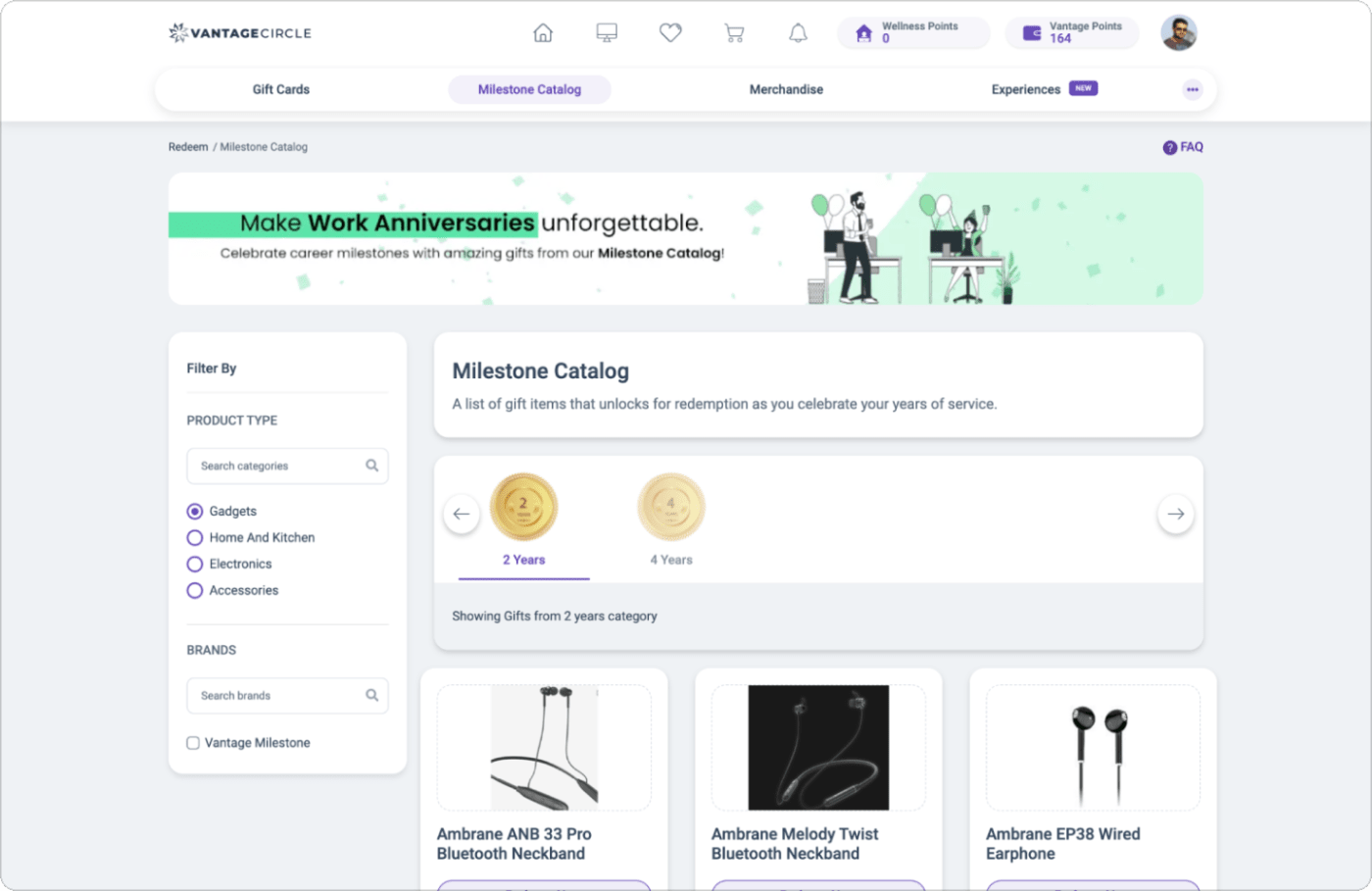
Personalization can best be summed up as giving employees a choice. Someone may prefer electronics, while another may choose travel, wellness, dining, learning, home products, or something for their family.
Flexible reward options are particularly useful when employees reach the same milestone but have very different interests.
 Source: Vantage Recognition
4. Stock or Ownership-Related Benefits
Some companies may connect long-term milestones with stock or ownership-related benefits, where organizational policies allow it.
This option isn’t appropriate for every organization and should always follow the company's compensation, legal, and eligibility rules.
5. A Recognition Letter from Leadership
A personal message from a senior leader can add significance to an important service anniversary.
Keep in mind that the message should not feel like a template.
A more impactful approach would be for the leader to focus on the employee's work, journey, or contribution. Managers can offer specific examples, so leadership messages remain personal even in large organizations.
6. Gift Cards, Points, or Flexible Rewards
Choice is always more valuable than guessing what an employee wants.
You can let employees choose by offering Gift cards or points-based rewards, giving employees the liberty to use their rewards as they see fit. This is especially useful across large or geographically distributed workforces where preferences, retailers, currencies, and available products can differ.
7. Career Growth and Development Opportunities
A service milestone can be a good time to discuss an employee’s future growth and how the organization can support it.
Managers can use the occasion to talk about career goals, new responsibilities, skill development, or future opportunities. Support career progression through certifications, courses, workshops, conferences, coaching, or professional membership.
Emphasize opportunities that match the employee’s interests and career goals, rather than treating development as another standard reward.
8. Shared Celebration or Experience
A service milestone can also be celebrated through an experience that brings the employee together with the people who have been part of their journey.
Organizations can arrange a team lunch, milestone celebration, special outing, or experience based on the employee’s interests. For major milestones, include colleagues, former teammates, or even family members.
The idea is to create a memorable moment around the milestone instead of limiting it to a physical gift.
Virtual Years of Service Award Ideas
As virtual service awards should make employees feel included in the celebration, let’s do away with the traditional recreation of an office ceremony on a video call.
Remote and distributed employees often feel the brunt of missing the informal moments that make an in-person anniversary special. A virtual celebration, therefore, needs deliberate participation.
Colleagues can record short video messages, share memories during a team call, create a digital appreciation wall, arrange a surprise delivery, or send a personalized reward to the employee's location.
Managers can also take a step to upgrade an employee's home office setup or organize a virtual activity based on their preferences.
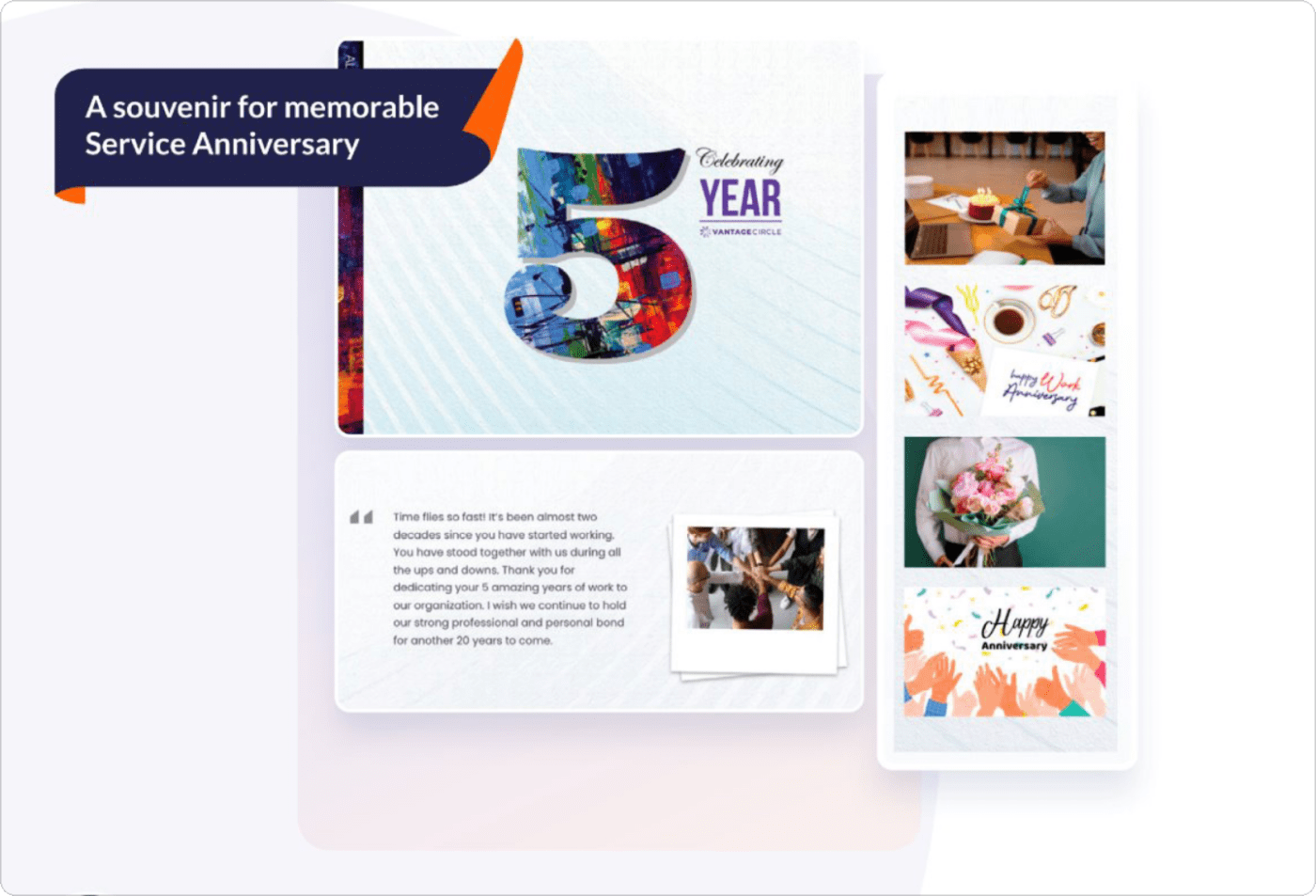
To add a more personal touch to an employee’s long service award celebration, organizations can create a shared collection of memories and messages from colleagues. That’s exactly what Vantage Recognition's Service Yearbook is designed for. Instead of receiving one congratulatory message from a manager, the employee can look back at contributions from people they have worked with throughout the organization.
 Source: Vantage Recognition
Benefits of a Years of Service Award Program
A structured service anniversary award program helps organizations add a special touch to milestone recognition by making it more consistent, personal, and visible.
Its value comes less from the object being awarded and more from the experience created around the milestone.
1. Supports Employee Retention
Recognition can contribute to the conditions that encourage employees to remain with an organization.
It would be too strong to claim that a service award by itself prevents turnover.
However, research supports a broader connection between recognition and employees' intentions to stay.
Gallup research reveals that well-recognized employees are 45% less likely to change organizations after two years.
An anniversary award gives organizations one structured opportunity to provide this kind of meaningful recognition.
2. Reinforces Employee Loyalty
Long service awards acknowledge the relationship an employee has built with the organization over time.
Employees who have spent five, ten, or twenty years with a company have contributed far more than just individual tasks.
Recognizing that history can reinforce a sense of belonging and mutual appreciation.
3. Creates Meaningful Employee Moments
Important career milestones give organizations an opportunity to create employee experiences that stand apart from everyday work.
The experience may include colleagues, managers, senior leaders, rewards, memories, or stories from the employee's journey.
When done thoughtfully, the celebration can become etched in an employee’s memory rather than being limited to another automated HR notification.
4. Strengthens a Culture of Recognition
Publicly recognizing service milestones signals that the organization values sustained contribution.
In The Recognition Effect, a 2025 report by Great Place To Work and Vantage Circle, 71% of employees with five or more years of tenure said they feel recognized, compared with 69% of new employees.
It also gives teams a chance to appreciate colleagues whose work they may otherwise take for granted.
Peer participation plays an important part here. Long service recognition becomes richer when coworkers share stories and express appreciation.
5. Makes Recognition More Consistent
A structured program reduces the risk of one employee receiving an elaborate anniversary celebration while another employee's milestone is forgotten.
This becomes increasingly important as organizations grow. Solely relying on spreadsheets, calendars, or individual managers to remember every anniversary can lead to inconsistent experiences.
Automation can support the administrative side. For example, milestone triggers can alert the relevant people before an anniversary, giving them enough time to prepare meaningful recognition.
The technology should manage the reminder. However, the human part should still come from managers, colleagues, and leaders.
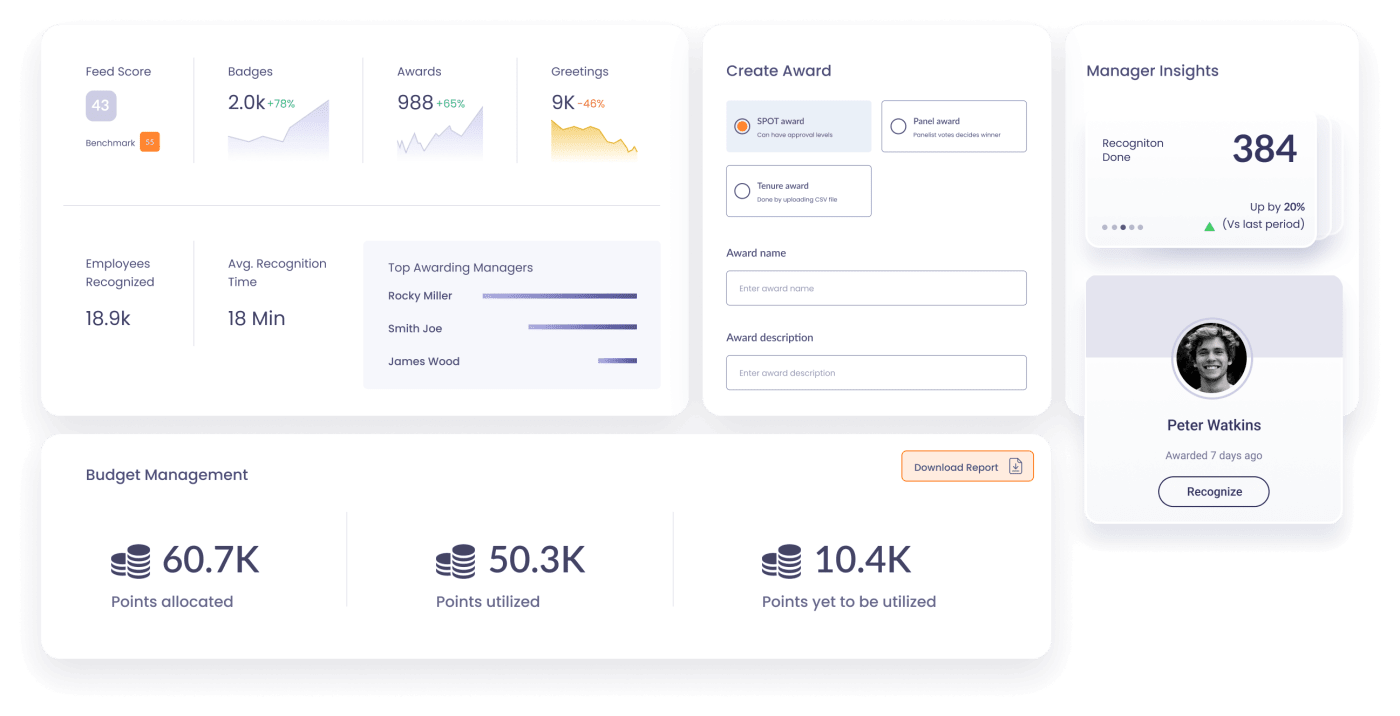
Recognition analytics can also help HR assess whether departments consistently recognize milestones rather than assuming a program works simply because it exists.
Wipro case study highlights that since 2021, almost 30,000 Long Service Awards (LSAs) have been given, and engagement (Wishes and praise) on the LSA post has increased by about 9.8 times over the last 2 years.
How to Build a Successful Years of Service Award Program
A successful service award program combines organizational consistency with employee-level personalization.
Start by defining why the program exists in the first place.
Is your goal to create stronger work anniversary experiences? Improve recognition consistency? Celebrate long-term contributions? Support a wider culture of appreciation?
Once the goal is clear, consider several practical questions:
Which tenure milestones will you recognize?
What budget will be available at each milestone?
Will reward value increase with tenure?
How much choice will employees have?
Who should participate in the recognition?
How will managers learn about upcoming milestones?
How will remote and frontline employees be included?
What feedback will you collect after each milestone?
How will you measure whether recognition is consistent?
The milestone structure should reflect the workforce.
An organization with shorter employee tenure may focus more on 1-, 3-, and 5-year milestones, while companies with a more long-serving workforce may also need clearly defined recognition for 10-, 15-, 20-, and 25- year milestones.
Avoid giving every milestone the same treatment. A one-year recognition can be warm and relatively simple. A 25-year anniversary deserves massive reflection, involvement, and personalization.
- Employee preferences should also shape the program.
Ask recently recognized employees what they valued about the experience and what felt unnecessary. That feedback helps HR refine future celebrations.
Automation can reduce administrative work. Campaign Management, for example, can support timely milestone triggers so anniversaries are flagged rather than tracked manually.
However, automation should not make recognition sound automated. A manager’s message should still be personal. Peer contributions should feel genuine. Rewards should make sense for the individual.
Organizations should also consider the tax treatment of certain rewards when designing award tiers. Tax rules depend on the award’s type, value, timing, and jurisdiction, so HR teams should verify the applicable requirements before finalizing the program.
- Finally, measure what is happening.
Review milestone coverage, missed anniversaries, reward redemption, employee feedback, and participation from managers or peers.
Recognition Analytics can show whether recognition is reaching employees consistently across teams. The goal isn’t to reduce personal moments to a dashboard. It is to identify gaps before employees experience them.
 Source: Vantage Recognition
Final Takeaway
Years of service awards are most meaningful when they recognize the story behind the number of years.
An anniversary may begin with a date in an HR system, but the recognition should go further.
Think about what the employee learned, built, improved, shared, and contributed during that period. Involve the people who were part of the journey. Give employees some choice in their rewards. Adjust the experience as milestones become more significant.
Most importantly, do not allow the program to become automatic in the emotional sense.
Automation can remind HR that a ten-year anniversary is approaching. It can help manage award tiers and reduce missed dates. But it cannot replace the manager remembering the employee's biggest contribution or a colleague sharing a story that makes them smile.
That is where a years of service award becomes more than a certificate, plaque, or gift.
It becomes a genuine recognition of time well spent and contributions that mattered.
FAQs
What are some examples of awards for years of service?
Examples include Rising Star Awards, Long Service Awards, Decade of Dedication Awards, Mentorship Excellence Awards, Legacy Awards, and Quarter-Century Awards.
Organizations can pair these titles with certificates, points, experiences, additional leave, personalized gifts, or employee-selected rewards. The award should reflect both the length of service and what the person contributed during that period.
How can companies ensure the effectiveness of their years of service awards program?
Companies can improve long service award programs by reviewing them regularly, collecting employee feedback, personalizing recognition, and checking whether milestones are being recognized consistently.
HR teams should also examine whether award tiers still reflect employee expectations, whether managers participate meaningfully, and whether remote, frontline, and distributed employees receive an experience comparable to office-based employees.
Can years of service awards be customized to reflect individual preferences or interests?
Yes. Years of service awards can be personalized by giving employees choices in rewards, experiences, messages, and even how their milestone is celebrated.
Some employees enjoy public recognition, while others prefer a smaller team celebration or private acknowledgment. Providing flexible options helps maintain a consistent program without giving every employee an identical experience.

Riha Jaishi is a Content Marketing Specialist at Vantage Circle and host of the HR Vantage Influencers podcast, sharing insights that help organizations build recognition-rich, people-first cultures!!
Connect with Riha on LinkedIn.