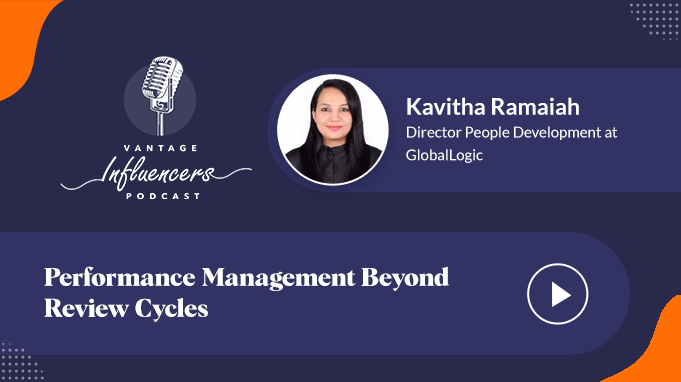
Transformative Performance Management For Dynamic Workplace
Episode Overview
Bunmi opens with a simple observation: change is the only constant in the modern workplace, and performance management is the mechanism that keeps organizations aligned through it. She frames it as more than a review cycle, calling it a strategic tool for organizational resilience that keeps individual and team goals pointed in the same direction as business objectives. Citing Gallup research showing highly engaged teams post a 21% jump in profitability, she argues that performance management is the backbone of any engaged culture, built on three pillars: regular feedback, recognition, and dedicated development opportunities, backing each with data on how they lift morale and output.
The conversation turns to technology, where Bunmi points to research showing organizations that embrace digital HR tools are three times more likely to land in the top quartile of business outcomes. She walks through how real-time feedback platforms, automation, and AI-powered analytics let managers spot skill gaps and personalize development at scale, replacing the once-a-year appraisal with an ongoing loop. She also lays out the metrics leaders should track to judge whether transformative performance management is working, from engagement and productivity to talent retention and training effectiveness, and shares real-world examples, from quarterly goal-setting cycles to talent mobility programs, that show how agile, continuously adjusted performance systems help organizations pivot faster while keeping employees and customers satisfied.
Episode Highlights
- Performance management is a strategic tool for organizational resilience, keeping individual and team goals aligned as businesses pivot quickly in a changing market.
- Gallup research shows highly engaged teams post a 21% increase in profitability, making regular feedback, recognition, and development the three pillars of an engaged culture.
- Companies that invest in employee development report over 200% higher income per employee than those that don't.
- AI-powered analytics help leaders identify performance patterns, spot skill gaps, and recommend targeted training, turning performance data into strategic talent development.
- Leaders should track a mix of traditional and forward-looking metrics, employee engagement, productivity, talent retention, and training effectiveness, to gauge whether performance initiatives are working.
- Shifting from annual reviews to quarterly goal-setting and continuous feedback loops helps organizations and their sales and service teams adapt faster to shifting market and customer demands.
About the Guest
Bunmi Olaniyan, Senior Consultant, Deloitte
Bunmi specializes in organizational transformation and change management, with a track record of leading human-centered business transformations across global organizations. She holds an MBA, is a certified professional of the Society for Human Resource Management, and carries additional certifications in people analytics and agile project management. She is particularly interested in how rapidly evolving technologies are reshaping the future of work, and their impact on organizations, their people, and their processes.
Connect with Bunmi on LinkedIn
Host
Sanjeevani Saikia, Vantage Influencers Podcast Host
What You Will Learn
- Why performance management is a strategic tool for organizational resilience in dynamic workplaces
- How regular feedback, recognition, and development opportunities build an engaged workforce
- Ways technology, from real-time feedback tools to AI-powered analytics, is reshaping performance management
- How leaders can use performance management tools to guide teams through constant change
- Which KPIs matter most when evaluating the success of performance management initiatives
- How agile goal-setting and continuous feedback loops help organizations adapt faster
Key Topics & Timestamps
| Timestamp | Topic |
|---|---|
| 01:07 | Welcome and introduction to Bunmi Olaniyan |
| 01:31 | Bunmi's corporate journey and areas of specialization |
| 02:33 | Why performance management integration is critical in dynamic workplaces |
| 05:31 | Building high-engagement cultures through feedback, recognition, and development |
| 09:45 | Integrating technology and AI-powered analytics into performance management |
| 13:16 | How leaders can use performance management tools to guide teams through change |
| 17:08 | Key metrics and KPIs for evaluating performance management initiatives |
| 22:19 | Real-world examples of agility, quarterly goal-setting, and talent mobility |
| 28:30 | Closing message and how to connect with Bunmi |
Full Transcript
Click to read the full episode transcript
Welcome to the Vantage HR Influencers Podcast. This podcast is sponsored by Vantage Circle, the simple and AI-powered rewards and recognition platform for employee engagement. Hello listeners, welcome to another insightful episode of the Vantage Influencers Podcast. Through this podcast, we'll decipher the intricacies of the modern workplace. In today's episode, we'll dive deep into transformative performance management for dynamic workplace. We'll explore how reimagining performance management can redefine employee and organization success. From leveraging cutting-edge technologies to fostering a culture of continuous feedback, our discussion will navigate the transformative strategies that shape effective performance management. For this episode, joining us is Bunmi Olaniyan, senior consultant at Deloitte. So stay tuned for an enriching conversation on reshaping how we measure, enhance, and celebrate performance in the workplace.
Sanjeevani Saikia: Hi Bunmi, welcome to the conversation.
Bunmi Olaniyan: Hi Sanjeevani, thank you very much for having me.
Sanjeevani Saikia: It's our pleasure to have you. First of all, I want to convey my heartfelt appreciation for your valuable time in joining us for this episode. Before we embark on today's discussion on transformative performance management for dynamic workplace, could you kindly walk us through your corporate journey so far?
Bunmi Olaniyan: Oh, thank you very much again. I'm currently a senior consultant in transformation, change management, and HR strategy. I work with Deloitte, but I've been privileged to gain a decade of global experience in leading teams, optimizing organizational effectiveness, and driving transformational cultures. My area of specialization is organizational transformation and strategic human resource program implementation. I hold an MBA and I am a certified professional of the Society for Human Resource Management, and also have certifications in people analytics and agile project management. I'm very happy to be on the program today. Thank you so much for having me.
Sanjeevani Saikia: Great, thank you for sharing your journey with us. Really appreciate it.
Bunmi Olaniyan: Thank you.
Sanjeevani Saikia: With your permission, I'd like to start today's conversation. Given the fast-paced nature of modern workplaces, integrating performance management seamlessly has become a business necessity. Somehow, I believe it has garnered a strategic significance in organizations. So I'd like to hear your views on why it's crucial for businesses to effectively blend performance management into the dynamic nature of modern workplaces, and also help us understand, Bunmi, how this integration contributes to the overall success of an organization.
Bunmi Olaniyan: Absolutely, I'm really happy to share that. I believe, in my opinion, that in dynamic workplaces, change is constant. There's a saying that goes, change is the only constant thing in life. Effective performance management ensures that we're adaptable to change. It aligns the efforts of human resources with business goals, and also fosters a culture of continuous improvement. This generally boosts employee engagement and motivates the workforce. And also, in a dynamic workplace, it enables data-driven decision making. So when you nurture your talent and invest in transformative performance management, you're really aligning goals and helping your organization stay agile and thrive in the ever-evolving business landscape.
To your second question, around how this integration contributes to the overall success of an organization, businesses these days need to pivot very quickly. I think that's the unique thing we see in the business landscape today. One way performance management helps with that is by ensuring employees are agile, continuously improving, and ready to embrace change. So, in essence, performance management that is transformative is actually a strategic tool for organizational resilience that helps businesses pivot very quickly. It also acts as a compass, because it ensures everybody is growing in the same direction. And when individual and team goals align with corporate objectives, you achieve a very cohesive approach towards success.
Sanjeevani Saikia: Yes, that's a wonderful takeaway. Now turning our attention to workforce engagement, employee engagement is not just a luxury but a fundamental driver of success. And I think it's evident that performance management strategies play a central role in creating a culture where employees feel connected. Owing to its significance, I have two important questions in mind. First, to what extent can performance management strategies impact a culture of high engagement? And second, Bunmi, could you share some practical approaches for organizations to ensure sustained workforce engagement in the face of constant change?
Bunmi Olaniyan: Oh, that's a great question, thank you. I was doing a bit of research, and I came across a study by Gallup that shows highly engaged teams see a 21% increase in profitability. So what this tells me is that performance management is the backbone of any engaged culture. It provides a structured framework for setting expectations, fostering continuous communication, and recognizing achievements. And these three things help motivate employees generally, and also instill a sense of purpose and connection with the organization's mission.
In terms of practical approaches organizations can implement, I think the first would be regular feedback. That's absolutely critical. There are a lot of studies that show employees who receive regular feedback feel more valued and more engaged. And given how quickly things move in dynamic workplaces, employees need real-time guidance in that ever-evolving reality. So, to establish a high-impact performance management culture, it's very important for HR leaders to build a culture of ongoing listening and feedback, and keep everyone on track and motivated.
The second thing I'd like to touch on would be recognition. Recognition is incredibly crucial. Employees say that recognition enhances their engagement, and there's a lot of research that gives us insight into this. So it's important to acknowledge and celebrate achievements, whether big or small, individual or team-based, and ensure there's a process in place to celebrate not just individual achievements but also team wins. This helps boost morale and reinforces a positive and collaborative working environment in a very dynamic workplace. Recognition is a powerful motivator.
The last thing I'll touch on would be creating development opportunities. Companies that invest in employee development generally have a higher income per employee than those that don't, in fact, some research suggests over 200% higher income per employee, which is a big number. So as an HR leader, your role is to create avenues where you can build a culture of high engagement through development. You don't have to set up a fancy learning management system internally, you can also leverage available external platforms to drive employee development, and help employees see the value of the investment you're making in their professional growth. It's important to get creative in that space as an employer.
Sanjeevani Saikia: Yes, so regular feedback, recognition, and investment in employee development are three things you've touched upon, and really valuable ones. I think you'll agree that technology has transformed how businesses operate, and performance management is no exception. Tech integration can potentially contribute to a more transparent and efficient performance management system, but how organizations utilize tech is an important question. I'm interested to know how you see organizations effectively integrating technological solutions into their performance management. Also, Bunmi, it would be great if you could provide practical examples or best practices that stand out in this regard.
Bunmi Olaniyan: Oh, this is a very interesting one because it's really a core element of the space that I play in, and a great question, thank you for that. This also aligns with the ongoing digital transformation trend. There's research that shows organizations that embrace digital HR tools are three times more likely to be in the top quartile of business outcomes. I think that data itself emphasizes the strategic importance of technology in shaping the future of HR practices, and performance management in particular.
So one key aspect of using digital transformation to enhance performance management is real-time feedback. Technology allows for continuous feedback, we're currently on Zoom having this conversation, for example, and it enables timely recognition and course correction. Performance management software equipped with instant feedback features usually facilitates ongoing communication between managers and employees, even 360-degree peer-based conversations, and fosters a culture of continuous improvement.
Automation is also a game changer. It enhances efficiency and ensures a strategic, personalized approach to employee development. Automating the performance appraisal process, for example, frees up time for managers to engage in meaningful conversations about career development and skill enhancement.
To answer the practical examples part of your question, one is AI-powered analytics, which is gaining a lot of traction right now. This analytics provides insights for data-driven decision making, helps talent development, and helps optimize organizational strategies. For example, AI algorithms can analyze performance data to identify patterns, assess skill gaps, and recommend targeted training programs. That contributes to a more informed and strategic approach to talent development and performance management.
Sanjeevani Saikia: Wonderful, thank you. Leaders are tasked with not only steering their teams through constant change but also ensuring sustained motivation and support. Navigating this challenging terrain requires more than traditional leadership, it demands the strategic use of tools. Considering this context, could you kindly walk us through some of the significant performance management tools, and how, in your view, leaders can leverage these tools to inspire, guide, and support their teams effectively in such ever-changing environments?
Bunmi Olaniyan: Like I said, using technology for performance management reports an increase in employee satisfaction. Technology also allows for flexible goal setting and personalized career paths. In today's dynamic workplace, leadership is more critical than ever. There's a McKinsey survey where they found that executives believe leadership effectiveness is crucial for business success, and performance management tools play a pivotal role in helping leaders navigate the challenges of these agile environments.
Let me bring a real-world scenario from my experience at a previous role, where we were working on a critical product launch in a very competitive market. The leader, using a performance management tool, established clear goals for each team, aligned them with the ambition to disrupt the industry, and ensured that every team member understood how their contributions directly impacted the success of the launch. The leader was able to inspire a shared sense of purpose and dedication, and this goal alignment drove a remarkable level of enthusiasm and collaboration within the team.
So goal alignment is key, and real-time feedback is crucial here too. Imagine a marketing team launching a campaign in a changing market landscape. One of the things a leader can do is use performance management tools to provide immediate feedback on campaign performance metrics. If certain strategies aren't resonating with the audience, or if competitors shift their approach, real-time feedback allows the leader to guide the team and make swift adjustments, we spoke earlier about course correction, and do that very rapidly. This agility is really vital in dynamic workplaces, and it's driven by leadership. So real-time feedback is one crucial advantage that supports leadership effectiveness in this kind of workspace.
Another scenario I can share is if a team faces new challenges due to evolving customer expectations, leaders can leverage performance management tools to identify individual skill gaps through analytics. For example, the tool may highlight that some team members need additional training on selling techniques. These tools can then help the leader provide targeted resources and training programs tailored to each team member's needs, ensuring they're equipped to navigate the changing sales landscape. So personalized development is crucial, real-time feedback is crucial, goal alignment is crucial, and these are things that can be embedded into technology to enhance leadership effectiveness.
Sanjeevani Saikia: Bunmi, according to you, what key performance indicators or metrics should organizations focus on when evaluating the success of their performance management initiatives? Because I believe, at the end of the day, as the initiatives unfold, a critical aspect is evaluating their success. So what do you have to say about the metrics?
Bunmi Olaniyan: Okay, that's an excellent question. In evaluating the success of transformative performance management initiatives, I believe the approach should be nuanced, and organizations should consider both traditional metrics and forward-looking metrics for the future of work.
There are traditional metrics like employee engagement, which is a very crucial one. There have been several studies that consistently show a strong correlation between employee engagement and business success, highly engaged teams generally show a reduction in things like absenteeism, and an increase in productivity. So monitoring changes in employee engagement levels before and after implementing these initiatives would provide a very clear indicator of their impact on workforce morale.
A second one would be productivity metrics, and I think this is really paramount, because through productivity metrics organizations can measure both individual and team productivity using tangible output and major milestones. For instance, if a transformative performance management initiative aims to emphasize skill development, tracking how quickly these new skills are applied to projects within the organization is a sure way of gauging the effectiveness of the initiative. Increased productivity is a very tangible outcome of improved performance management.
A third one would be talent retention rate, and this is critical, because high employee turnover can offset the benefits of your initiative. The cost of replacing an employee can be as high as 50 to 60% of their annual salary, so monitoring retention rate, especially amongst your high-potential and high-performing individuals, can be an indicator of whether the initiatives are contributing to talent retention and organizational stability. Retaining talent is very crucial for the sustainability of those initiatives.
You might also want to measure something we touched on earlier in terms of development, a metric like training effectiveness or skill development effectiveness. If you track the progress of employees in acquiring skills and the effectiveness of your training programs, you can better assess the impact of your performance management initiatives on your workforce capabilities, and ensure your employees are equipped for evolving changes. So skill development and training effectiveness are very essential metrics to track in order to stay competitive in a changing landscape.
Overall, it's about having a holistic evaluation strategy that involves a combination of traditional metrics like employee engagement and productivity, and forward-looking indicators like talent retention and skill development, and tailoring those KPIs to align with the specific goals of your initiatives to create a comprehensive picture of success as your workplace moves through change.
Sanjeevani Saikia: So, as we're arriving at the end of today's episode, before we let go, there's one last thing both our listeners and I would love to know your take on. Can you share instances where effective performance management has led to remarkable adaptability and success? And do you foresee any emerging trends in this area?
Bunmi Olaniyan: Okay, thank you. I'll share an example from a company I once worked with, where I saw them shift to quarterly goal setting, which allowed teams to swiftly adapt to changing market demand. They originally had annual goal setting, but shifted to quarterly goal setting to be able to adapt quickly, and this resulted in quicker product releases and enhanced responsiveness, both for their internal and external stakeholders.
On how performance management can align with an organization's agility, I think aligning performance management with agility goals is very imperative, and one of the best ways to do that is agile goal setting, like the example I gave earlier, where annual goals are replaced with more flexible, short-term objectives. This helps carry everyone along in real time, facilitates frequent adjustment, and ensures the organization stays competitive and moves at the same pace as how dynamic the external environment is.
Continuous feedback loops are also critical, traditional performance reviews are too infrequent for an agile environment. A lot of organizations still have an annual employee engagement survey in the traditional space, and feedback surveys and performance appraisals bundled up over a 12-month period. But in these new environments, it's important to make review more continuous and more of a loop. Implementing continuous feedback mechanisms, such as regular check-ins, ensures employees are receiving timely input on their performance and adjusting accordingly. In organizations that are more service-oriented, it's very important to introduce real-time feedback, which can result in immediate adjustments to client strategies, so you're not just looking at your internal stakeholders like employees, but also moving at the pace of your external stakeholders, such as your customers or clients, and putting your organization in a place where you can showcase the power of agility in being responsive and meeting their needs promptly.
I'll share an instance where this synergy led to remarkable adaptability. I saw a retail organization adopt agile performance metrics, and instead of relying solely on annual sales targets, the company implemented real-time customer feedback and sales data to evaluate employee performance. This shift, although it looks slight, allowed the sales team to adjust their strategies on the fly, rather than waiting for a 12-month period to adjust, which isn't very responsive to a fast-changing environment. Adjusting strategies on the fly resulted in increased customer satisfaction and a boost in sales, especially during peak season. That's an example of agility in action.
I'll give another instance with respect to talent mobility programs. That's another success story I've seen in a multinational organization, the implementation of a talent mobility program helped facilitate performance management systems and allowed employees to easily transition between projects and departments based on emerging business needs, which enhanced individual skill sets and also contributed to the overall adaptability and capability of the organization.
Sanjeevani Saikia: Great, our listeners love it when speakers share real-life instances, so I suspect this is going to be one of their favorite episodes, because you've really touched upon some great examples. Thank you, Bunmi, you've highlighted some really critical points. So we've reached the end of today's podcast. Do you have any message for our listeners? They'd love to hear it from you. Our audience might also want to stay in touch with you after this podcast, so it would be great if you could tell them how they can reach out to you.
Bunmi Olaniyan: One of the things I'd like to leave listeners with is that aligning performance management with organizational goals isn't just about a shift in practice or process, it's really a shift in mindset, it's about embracing agility and fostering a culture of continuous improvement. So keep revisiting your strategies, keep an eye on them, but more importantly, keep making sure you're adapting to today's dynamic environment and mirroring the pace and responsiveness that's demanded. It's a very different landscape right now, and while I respect the traditional ways of doing things, it's important that we think about the future and what the changing business environment needs, whether you're a leader navigating a dynamic environment or an individual contributor seeking growth.
I think the next step to excellence is a collective one, stay agile, be innovative, and stay committed to the journey of continuous learning, because this isn't just a destination, it's a series of well-traveled, adaptable steps coming together. That's what I'd like to leave with our listeners today. And if anyone would like to reach out to me, I'm happy to connect on LinkedIn or via email. Thank you for having me on the podcast, and I wish all our listeners the best on their transformative journeys.
Sanjeevani Saikia: It's our pleasure, it's been a pleasure to have you as our guest today. Your insights and expertise have been invaluable, and we're grateful for the time you've taken to share your knowledge with our listeners. Thank you so much, thanks a lot.
Bunmi Olaniyan: Thank you too for having me. My pleasure.
FAQ
What makes performance management effective in a dynamic workplace?
Effective performance management aligns human resources efforts with business goals and builds in the flexibility to adapt as conditions change. Rather than a fixed annual cycle, it functions as a strategic tool for organizational resilience, keeping individual and team goals pointed in the same direction as the business so the organization can pivot quickly when needed.
How does employee engagement connect to performance management?
Research from Gallup shows highly engaged teams see a 21% increase in profitability, and performance management is described as the backbone of that engagement. It works through three pillars: regular feedback that makes employees feel valued, recognition that reinforces achievements, and development opportunities that show employees their growth is being invested in.
What role does technology play in modern performance management?
Digital HR tools give organizations a documented edge, with research showing adopters are three times more likely to land in the top quartile of business outcomes. In practice, this means real-time feedback platforms, automation that frees up manager time, and AI-powered analytics that can flag skill gaps and recommend targeted training.
Which metrics should organizations track to measure performance management success?
A holistic evaluation combines traditional and forward-looking metrics: employee engagement levels, productivity measured through tangible output and milestones, talent retention rate (especially among high performers), and training or skill development effectiveness. Together these give a comprehensive picture of whether an initiative is working.
Related Reading
Also listen on