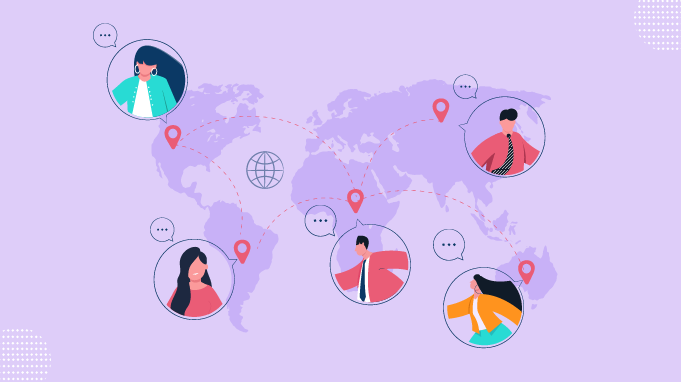
A $100 recognition bonus buys a nice dinner out for an employee in Austin. The same $100, converted to pesos for a teammate in Manila, covers close to two weeks of groceries. Same occasion, same nominal amount, wildly different real value, and most global employee rewards and recognition programs never notice the gap until an employee does, usually in a Slack thread comparing notes with a colleague overseas.
That gap is what the SOLI (Standard Of Living Index) Framework exists to handle. It's Vantage Circle's approach to building a rewards and recognition platform that treats a reward's real value as a decision an organization makes on purpose, not an accident of that day's exchange rate.
If your global recognition program can't explain why a reward feels bigger in one office than another, it isn't running on a policy. It's running on whatever the exchange rate happened to do that morning.
What Is The SOLI Framework?

(Source: Unsplash)
SOLI, or Standard Of Living Index, measures the cost of everyday goods and services in a given place. Vantage Circle applies it as a named framework for reward and recognition programs. Vantage Circle built it as an internal methodology, not an external industry standard, on an idea that already governs pay: a high-SOLI location like the USA costs more to live in, so it commands a higher pay range, while a lower-SOLI location supports a lower one. Most companies already accept this logic for salaries as part of a broader total rewards strategy. The SOLI Framework applies the same logic to recognition, where it's almost never applied today.
The concept borrows from the Big Mac Index, The Economist's well-known measure of purchasing power parity, which prices an identical Big Mac in different countries to show how far the same amount of money stretches. A recognition reward works the same way: the number on the screen means nothing until you know what it buys where the recipient lives.
The Hidden Multiplier In "Equal" Rewards
A flat currency conversion issues the same nominal amount everywhere and calls the job done, but it never checks what that amount is worth locally. Here's what that looks like across three offices, using $100 as a nominal reward.
| Office | Cost-of-Living Index (Austin = 100) | Real Purchasing Power Of A $100 Reward, Flat Conversion |
|---|---|---|
| Austin, USA | 100 | Baseline (1x) |
| São Paulo, Brazil | 58 | Roughly 1.7x the Austin reward |
| Manila, Philippines | 48 | Roughly 2.1x the Austin reward |
Cost-of-living data from Numbeo's Cost of Living Index, mid-2026, rebased to Austin = 100. Purchasing-power multiples are calculated from that index to show the mechanism, not an official SOLI table.
Nobody in this example is shortchanged. The problem is that the 1x-to-2x spread happened by accident. Nobody at the company decided São Paulo should effectively get 1.7x and Manila 2.1x, it's just where the math landed. Run the same campaign next quarter with a different exchange rate, and the spread moves again, still without anyone deciding anything. That's what "flat conversion" means in practice: recognition value that nobody owns.
What The SOLI Framework Asks You To Decide
A SOLI Framework doesn't erase that spread. It forces the organization to pick a policy for it, instead of leaving the policy up to currency markets. In practice, that comes down to one of three choices:
- Match purchasing power exactly. Scale each country's reward so $100 in Austin, $100 in São Paulo, and $100 in Manila all buy roughly the same basket of goods locally. This is the most literal reading of "equal recognition," though it means the nominal number will differ by country.
- Keep the nominal number equal, but document the swing. Some companies decide the 1x-to-2x spread is acceptable, or even a quiet perk of hiring in lower-cost markets, as long as leadership consciously signed off on it rather than discovering it during a pay-equity audit.
- Set a band. Allow purchasing power to vary by country, but cap it, for instance no office's real reward value can exceed 1.5x another's, splitting the difference between full equalization and full accident.
None of these is automatically correct. What the SOLI Framework provides is the structure to make the choice explicitly, once, and apply it consistently, rather than re-litigating it every time someone notices the gap.
Three Things A SOLI-Based Platform Should Do
1. Turn the policy into automation, not manual math
Once an organization picks one of the three options above, someone still has to apply it every time a reward goes out, across however many countries the company operates in. A reward system, like Vantage Recognition, builds that decision into the platform once and applies it automatically from then on, so recognizing a global workforce takes the same few clicks as recognizing a local one.
Take the São Paulo example from the table above, index 58 against Austin's 100. Under "match purchasing power exactly," the platform doesn't convert $100 at the day's exchange rate, it cross-references the index and issues the local-currency equivalent of $58, so the real value lands the same as it would in Austin. Under "document the swing," it keeps the reward at $100 but logs it as 1.7x Austin's real value in reporting, so the gap is visible instead of just felt. Manila runs the same calculation against its index of 48. Either way, the math happens once, in the platform, not manually for every reward.
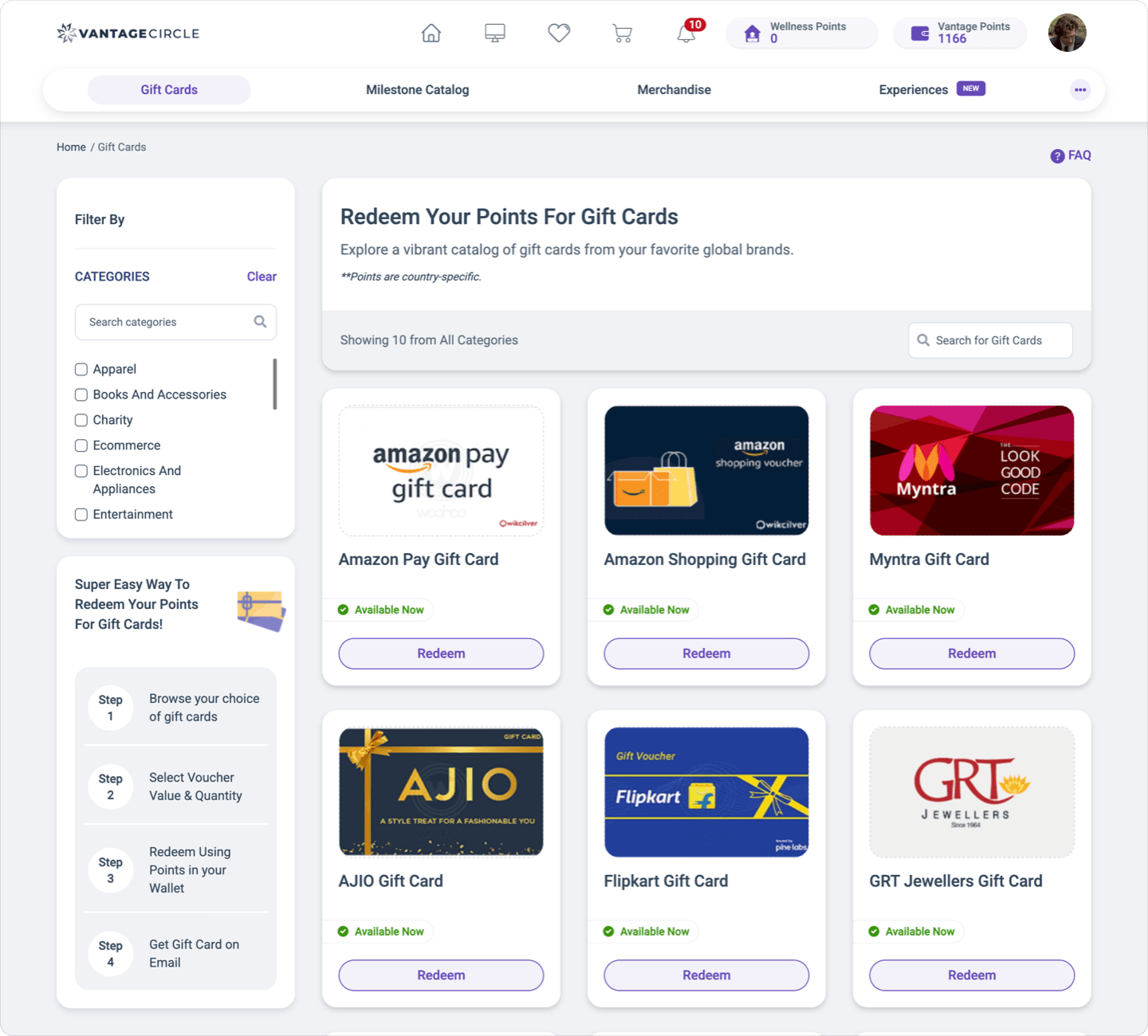
Vantage Recognition pairs this with Vantage Perks, a localized employee discount catalog, so the adjusted reward also redeems against offers that are relevant in the recipient's country, not a generic global catalog priced for nobody in particular.
Read our blog on: 11 Tips On How To Run A Global Team Engagement Program
2. Make the gap visible before an employee has to point it out
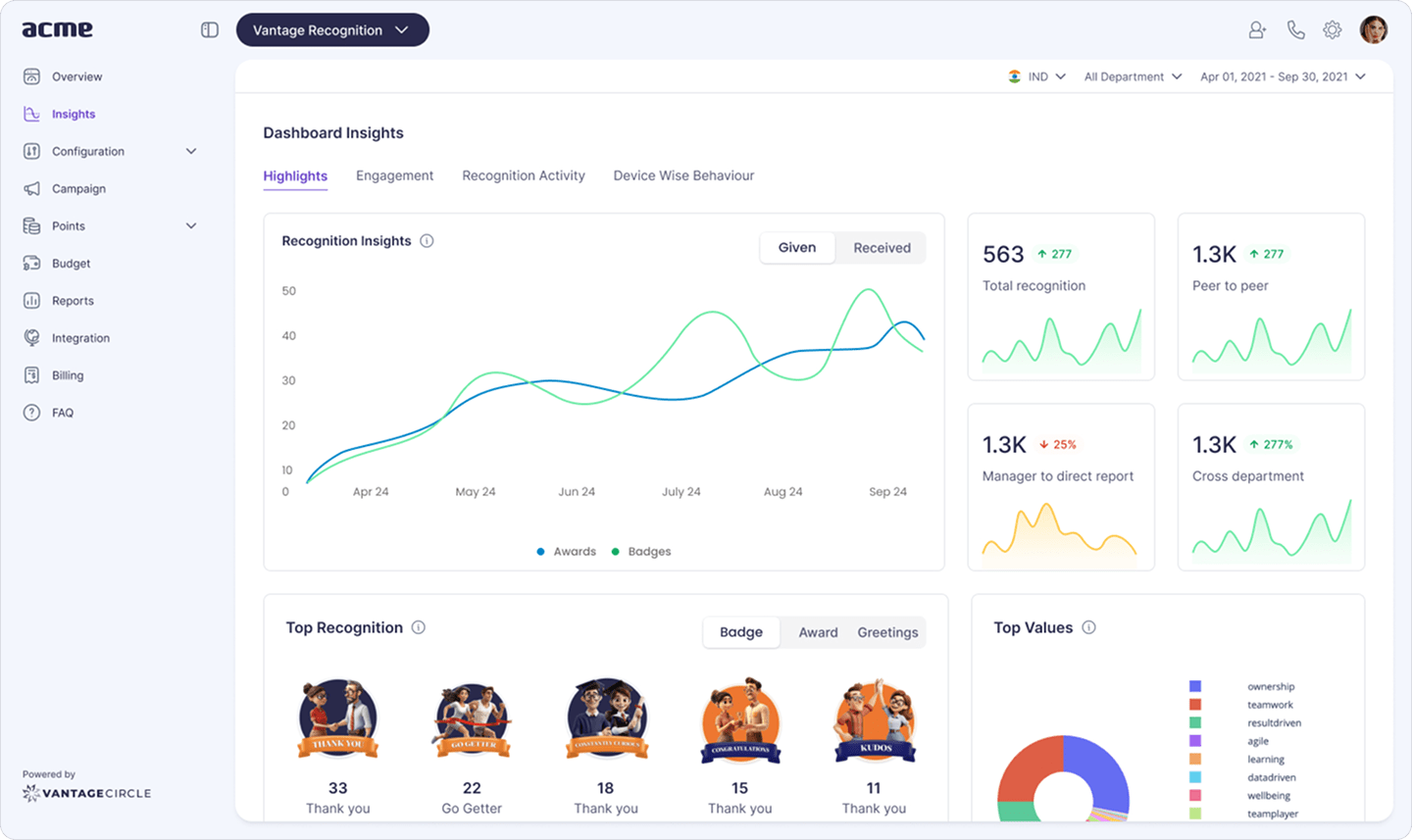
The Austin-São Paulo-Manila spread only becomes a problem when it goes unnoticed until someone complains, and that risk grows with headcount and country count. A global aviation and travel technology company running Vantage Circle across 7,000+ employees in 20+ countries is exactly the scale where an unmanaged spread compounds fastest. Recognition Analytics inside Vantage Recognition lets an HR team filter recognition activity by country, so checking whether one office's rewards are quietly falling behind is a quarterly review habit, not something that only surfaces in an exit interview.
3. Give you a repeatable answer as you add new countries
Every time a company hires in a new country, someone has to decide what a "fair" reward looks like there, from scratch, unless there's already a policy to extend. A SOLI-based framework turns that one-off scramble into a repeatable step: assign the new country's index, apply the same policy the company already chose, done.
How To Set Up A SOLI-Based Rewards Policy
- List every country with active headcount. SOLI values are set per country, so this list is the scope of the whole exercise.
- Pull a cost-of-living index for each one. Public sources like Mercer's Cost of Living City Ranking are a reasonable starting point if you don't already have this data from compensation planning.
- Pick one of the three policy options above. Match purchasing power, document the swing, or set a band. Write it down; this is the decision the rest of the setup depends on.
- Configure the adjustment in your rewards platform. This is where a platform like Vantage Recognition applies the policy automatically instead of requiring manual conversion for every reward.
- Revisit the index on a schedule. Cost of living shifts over time. A policy set once and never reviewed drifts back into the same accidental territory it was meant to fix.
Frequently Asked Questions
1. Does the SOLI Framework mean employees in cheaper countries get smaller rewards?
Not necessarily. It depends which policy an organization picks. Matching purchasing power exactly would mean a smaller nominal number in lower-cost countries. Many companies instead choose to keep nominal values equal and simply document the resulting swing, or cap it within a band, rather than reducing anyone's reward.
2. Is the SOLI Framework the same thing as purchasing power parity?
They're related but not identical. Purchasing power parity, the concept behind the Big Mac Index, measures how far money stretches in different countries. The SOLI Framework applies that same underlying idea specifically to reward and recognition programs, and adds the policy layer of deciding what an organization wants to do about the difference.
3. How often should SOLI values be updated?
Cost of living shifts gradually, so an annual review, aligned with a compensation review cycle, is a reasonable default. Companies operating in countries with high inflation or currency volatility may need to check more often.
4. Is a SOLI Framework worth setting up for a company in only two or three countries?
The fewer countries involved, the simpler the setup, since there's less variation to account for. It's worth doing even for two countries if the cost-of-living gap between them is large enough that a flat conversion would create a noticeable, undocumented swing in real reward value.
Final Thoughts
That $100 gift card still buys a dinner in Austin and two weeks of groceries in Manila. The SOLI Framework doesn't pretend that gap doesn't exist. It just makes sure the company decided what to do about it, instead of the exchange rate deciding for them.
See it in action: Book a demo of Vantage Recognition to see how the SOLI Framework works for a global workforce.

Susmita Sarma is a Digital Marketer at Vantage Circle, making employee recognition less of a checkbox and more meaningful - helping organizations say we value our people and truly mean it.
Connect with Susmita on LinkedIn.