


Two leaders can inherit the same team, the same budget, and the same business goals, yet produce entirely different outcomes. One builds a team that innovates, collaborates, and stays. The other oversees declining engagement, slower execution, and steady attrition. Strategy rarely explains that difference for long. Leadership behavior does.
Employees don't experience an organization's strategy firsthand. They experience the decisions, conversations, and actions of the person leading them. That is why leadership behaviors deserve more attention than leadership styles or personality traits.
Unlike charisma or natural temperament, these behaviors can be learned, measured, and strengthened over time.
In this blog, we'll explore leadership behaviors that consistently distinguish effective leaders. Grouped into communication, people development, and execution, each behavior is paired with practical ways to recognize it in action. After all, leadership is measured less by what leaders believe and more by what they repeatedly do.
What are Leadership Behaviors?
"Leadership is a series of behaviors rather than a role for heroes." ~ Margaret Wheatley
Leadership is often mistaken for personality. It isn't. The leaders who leave the biggest mark are rarely defined by charisma or confidence alone. They're defined by what they repeatedly do.
Leadership behaviors are the observable, repeatable actions that shape how teams communicate, grow, and perform. They show up in everyday moments, how leaders listen, give feedback, make decisions, recognize good work, and respond under pressure. Unlike personality traits, these behaviors can be practiced, measured, and improved.
That's why organizations don't build better leaders by chasing traits. They build them by reinforcing the behaviors that earn trust, drive performance, and create teams people want to be part of.
Benefits of Leadership Behavior
Better Decision-Making
Leaders who demonstrate behaviors like analytical thinking and consider multiple perspectives are more likely to make well-informed decisions.
Increased Employee Engagement
Leaders who exhibit positive behaviors like clear communication tend to foster higher levels of employee engagement within their teams.
Enhanced Innovation and Creativity
Leadership behaviors that encourage risk-taking and out-of-the-box thinking create an environment that fosters innovation and creativity.
Improved Talent Retention
Effective leadership behaviors prioritize professional development, recognition, and work-life balance, contributing to higher retention and a more engaged workforce.
The 3 Categories of Leadership Behavior
The most effective leadership behaviors fall into three categories: communication and alignment, people development and support, and execution and decision-making.
Grouping them this way turns a long, flat list into a diagnostic. If a team feels lost, look at the first category. If people are leaving, look at the second. If work stalls, look at the third.
| Category | Which of the Behaviors Belong Here |
|---|---|
| Communication & Alignment | Empathy, Effective Communication, Open to Feedback, Authenticity and Transparency, Inspirational |
| People Development & Support | Celebrating Success, Continuous Learning and Growth Mindset, Cultural Intelligence, Compassionate |
| Execution & Decision-Making | Visionary, Decisive, Versatile, Resilience, Data-Driven Decision-Making, Embracing Digital Transformation, Innovation and Creativity, Taking Accountability, Time Management |
30.3% of employees say poor company leadership is why they quit — the second most common reason, right behind a toxic work environment (Paycor).
18 Key Leadership Behavior Examples
Communication & Alignment
1Empathy
Empathy is not softness, and it is not agreeing with everyone. It is seeing a situation from another person's point of view before deciding how to act.
Leaders with this behavior can understand and share others' feelings. They actively listen, provide support, and consider others' emotions in decision-making.
2Effective Communication
A leader who possesses effective communication skills serves as a cornerstone for organizational success and employee well-being. Such a leader fosters a sense of trust, transparency, and cohesion within the organization.
Moreover, effective communication facilitates collaboration and problem-solving, as team members feel comfortable sharing ideas, concerns, and feedback. This open exchange of information enhances the decision-making processes.
3Open to Feedback
Being open to feedback demonstrates humility and a willingness to learn. Leaders who are open to feedback use it to improve themselves and refine their leadership approach. They understand that feedback is an opportunity for growth and improvement.
Additionally, being open to feedback helps leaders build trust and credibility. When team members see that their feedback is taken seriously and acted upon, they are more likely to trust their leaders and feel valued as part of the team.
4Authenticity and Transparency
Authenticity and transparency can profoundly impact team morale and overall organizational success. When leaders are authentic, they build trust and credibility with their teams and stakeholders.
Transparent leaders openly share information, admit mistakes, and are accountable for their decisions. Leaders who exhibit these behaviors inspire trust and loyalty in their teams and set a positive example for others to follow.
5Inspirational
Inspirational leaders connect everyday work to a larger sense of purpose and lift the energy of the people around them. Inspiration is less about grand speeches than about making people feel their contribution counts.
A leader who publicly shares a team win, names the specific people behind it, and ties it back to the mission generates more genuine motivation than any all-hands slide ever will.
People Development & Support
6Celebrating Success
Recognizing and celebrating the achievements and successes of your team members is an essential aspect of effective leadership. It creates a positive work environment and motivates employees to strive for excellence.
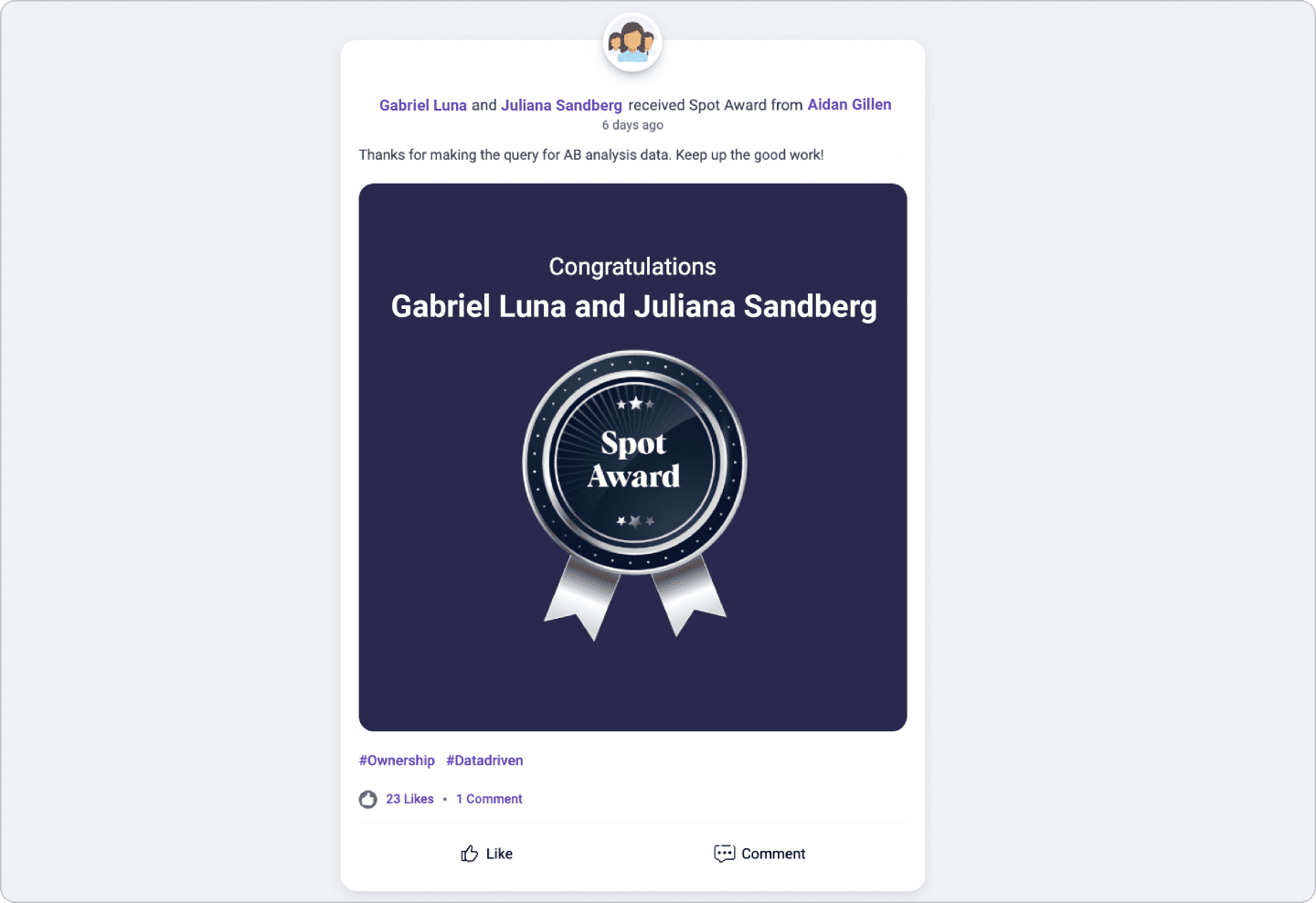
Leaders who value recognition and appreciation make it a priority to cultivate an environment where achievements, whether big or small, are acknowledged. They understand the value of rewarding and recognizing their employees. This ability helps such leaders to strategically implement it in the work culture and empower the workforce.
7Continuous Learning and Growth Mindset
Leaders with this behavioral trait prioritize continuous learning. They are always seeking new knowledge and skills to improve themselves and their teams. They have a growth mindset, believing that abilities can be developed through dedication and hard work.
Leaders with this trait also understand the importance of self-improvement in driving team success. By continuously learning and developing their skills, they set a positive example for others and create a culture that values growth and development.
96% of executives believe they have a growth mindset, but only 54% of employees say they actually observe their leaders demonstrating one (TalentLMS, 2024).
8Cultural Intelligence
To be culturally intelligent, a leader needs to be empathetic, have a high emotional quotient (EQ), and, most of all, respect people from different backgrounds.
When leaders have cultural intelligence, they can understand the varying needs and complexities of a diverse workforce. They can adapt their leadership style to accommodate cultural differences and promote inclusivity. This enables them to work effectively in diverse environments.
9Compassionate
Leaders with compassionate behavior show genuine care and concern for the well-being of their teams and stakeholders. A compassionate leader is attentive to the needs of their team members and is willing to offer support and guidance when needed.
Additionally, compassion can improve communication and collaboration within a team. When team members feel that their leader cares about their well-being, they are more likely to communicate openly and work together effectively.
🎙 Vantage Influencers Podcast
Leaders Don't Need To Be Loud To Be Influential
Hassan Trad, Head of Talent Management at Finance House, on how quiet leaders build influence and earn respect through behavior, not volume.
Listen to the Episode →Execution & Decision-Making
10Visionary
A leader with vision can predict and foresee the future. This helps them guide and motivate the employees towards achieving common goals. They set ambitious yet achievable goals and create a roadmap for others to follow.
69% of employees who strongly agreed their leader made them feel enthusiastic about the future were engaged — versus just 1% of those who disagreed (Gallup, Strengths Based Leadership).
However, to be a visionary leader, you need to understand what to prioritize and how to break them down. You need to work on the things that will benefit everyone in the future.
Take Steve Jobs, the co-founder of Apple, who revolutionized the technology industry. He was a visionary leader who envisioned a world where computers and devices would be user-friendly, innovative, and beautifully designed.
11Decisive
Decisiveness is an essential leadership behavior that is seldom discussed.
A decisive leader can make tough decisions promptly, even in the face of uncertainty or pressure. This type of leader instills confidence in their teams and ensures progress towards achieving goals.
Individuals with this leadership behavior are ready to take ownership and are willing to take calculated risks when necessary.
12Versatile
Versatile leaders are adaptable and can navigate different situations and challenges.
They are flexible in their approach and can pivot strategies when needed. This quality allows them to lead their teams through challenging times and seize opportunities as they arise.
Individuals with this leadership quality are open to change and learn from failures. For instance, Reed Hastings, the co-founder and CEO of Netflix, is known for his versatile leadership style.
When the company transitioned from DVD rentals to online streaming, Hastings embraced the change and adapted Netflix's business model accordingly. This enabled Netflix to become a global leader in the entertainment industry.
13Resilience
Resilient leaders stay steady and constructive under pressure, and help their teams do the same through setbacks and change.
Resilience is not pretending everything is fine. It is the behavior of absorbing a hit, keeping perspective, and modeling a path forward so the team does not spiral with the situation.
14Data-Driven Decision-Making
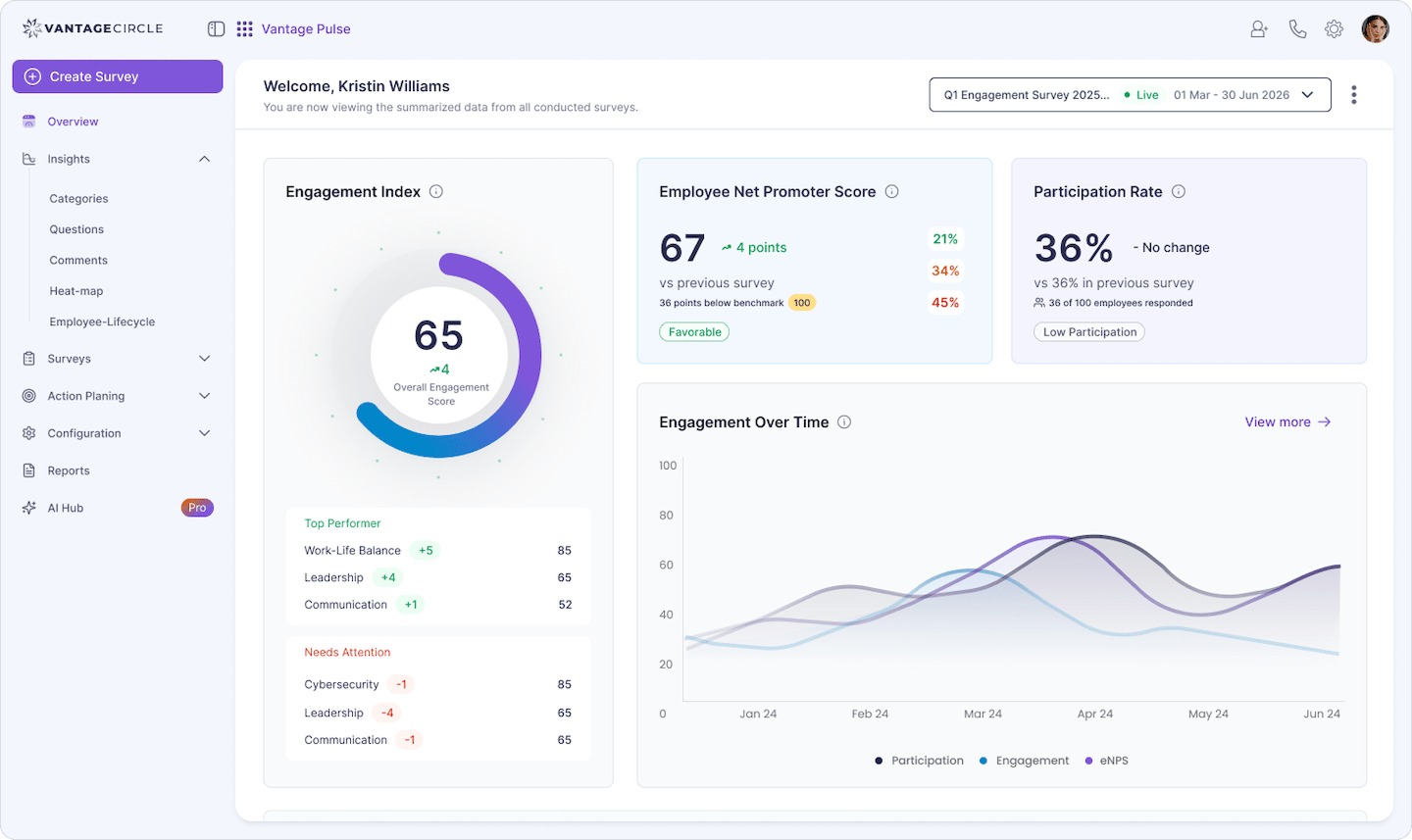
Data-driven leaders ground their decisions in evidence rather than instinct alone, especially on questions about their own team. Instinct has its place, but a leader who claims to be data-driven needs a data source, especially on team morale, where gut feel is often wrong.
This is where a listening mechanism earns its keep. Engagement analytics and pulse surveys give leaders a concrete, ongoing dataset on how their team is really doing, rather than relying on a single quarterly snapshot or a hallway read. The behavior is not "have a dashboard." It is "check the dashboard before you decide."
15Embracing Digital Transformation
Visionary leaders recognize that the future belongs to those who can seamlessly adapt to the ever-changing technological landscape. Leveraging digital tools are essential to drive innovation, enhance efficiency, and foster a competitive edge.
With this key leadership behavior, you can prepare your organization to thrive in the digital era by investing in the essential tools, platforms, and upskilling.
16Innovation and Creativity
Innovative leaders encourage experimentation and embrace new ideas. They challenge the status quo and drive creativity within the workforce. This helps the workforce try out different solutions to a problem without fear of judgment. In the long run, it improves confidence and the overall problem-solving ability of the workforce.
17Taking Accountability
Nothing builds engagement more than being accountable to the people in your organization. Leaders who own up to mistakes, learn from them, and take corrective measures when needed build trust and credibility.
Mary Barra, CEO of General Motors is a great example of a leader who demonstrated accountability when the situation demanded. In 2014, she openly acknowledged the faulty ignition switches issue at General Motors and committed herself to solve the issue.
Barra's determination to learn from the crisis demonstrated her commitment to doing the right thing.
18Time Management
Time management is a critical leadership behavior as it allows leaders to maximize their productivity and prioritize tasks effectively. They value their time and that of others, ensuring productivity and achieving goals.
A leader who excels in time management can set a positive example for the entire team, demonstrating the value of prioritization, efficiency, and productivity.
Additionally, a leader with strong time management skills can streamline workflows, ensuring that all the projects are completed on schedule.
Recommended Read: Top 15 Essential Leadership Qualities to Thrive in Today’s Workplace (with Tips)
Finally
In conclusion, effective leadership requires a combination of key behaviors that inspire, motivate, and guide teams toward success. From visionary thinking to compassionate leadership, each behavior plays a crucial role in shaping a strong organizational culture.
As you strive to enhance your leadership skills, remember that your actions today shape the organization of tomorrow. Embrace these key behaviors and cultivate a dynamic and thriving workplace now.
FAQs
What are the 5 Key Leadership Behaviors?
The five key leadership behaviors are clear communication, empathy, decisiveness, openness to feedback, and recognizing good work.
What are 5 Behaviors Good Leaders Demonstrate?
Good leaders reliably demonstrate five behaviors: they communicate with clarity, act on feedback, recognize contributions specifically, decide without stalling, and take accountability for outcomes.
What are 5 Good Qualities of a Good Leader?
Five good qualities of a good leader are integrity, confidence, empathy, humility, and vision.
What are the 8 Pillars of Leadership?
The eight pillars of leadership are commonly described as vision, integrity, communication, empathy, accountability, resilience, decisiveness, and developing others.
Written by