

“If you take out the team in teamwork, it's just work. Now, who wants that?”
– Matthew Woodring Stover
In business, success is typically the result of many hands and minds working together towards the same goal.
Leading a team to greatness is not an easy task. That is even more true in the corporate world. Every day employees are subjected to new challenges, uncertainty, stress, and anxiety. This naturally has an impact on their morale and motivation.
As leaders and managers, inspiring and motivating teams and keeping team morale high should always be a top priority.
Team Motivation: Key Statistics
- Global employee engagement has dropped to 20%, down from its peak of 23% in 2022 (Gallup, 2026)
- Disengaged employees cost the global economy $438 billion in lost productivity every year (Gallup)
- Only 31% of employees report feeling engaged, enthusiastic and energized by their work (Gartner, 2023)
- Engaged employees are 31% more likely to stay and contribute 15% more to their work (Gartner, 2023)
- Collaboration tools can raise knowledge worker productivity by 20-25% (McKinsey)
The tips below cover three areas: how you lead, how your team works together, and the day-to-day practices that keep motivation high. None of them work in isolation — the strongest teams use all three layers.
1. Recognize. Recognize. Recognize.
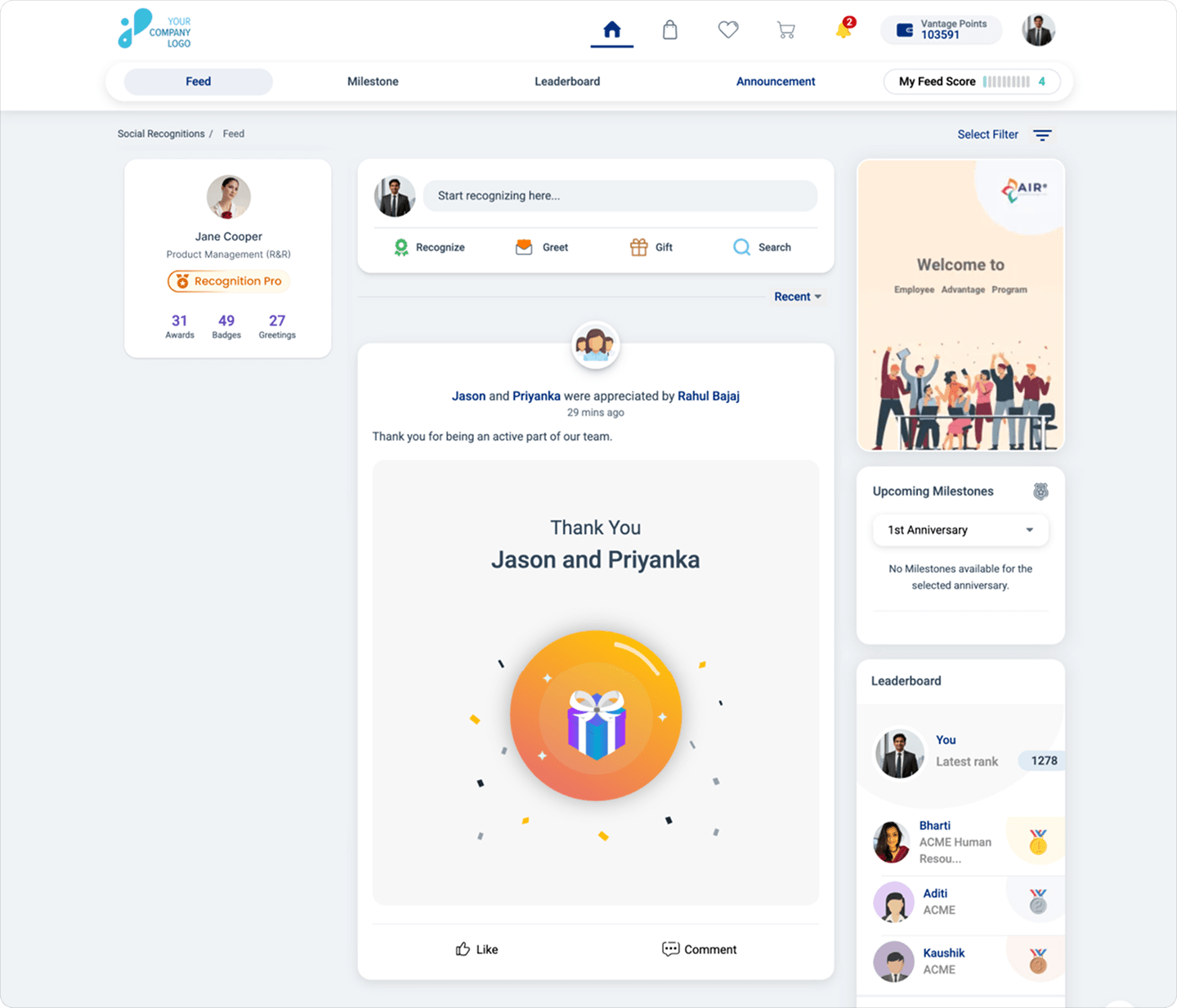
Recognition works because it makes people feel seen. That feeling is directly tied to how motivated they stay at work. Timely and meaningful recognition does not have to be grand. Small wins matter just as much as big ones, and missing those moments quietly chips away at morale.
Whether it is a personalized note of appreciation, a shout-out on the internal portal, or bringing every member together for a team lunch, try to highlight how their effort made a difference. Even a tiny gesture like praising them can uplift team motivation. Make the praise powerful by showing gratitude and recognition through unique, substantial ways.
According to Gallup, only one in three workers strongly agree they received recognition or praise for doing good work in the past seven days. That gap costs organizations in both engagement and retention. Recognized employees are 45% less likely to have left after two years. For a deeper look at how recognition programs perform across industries, see the Vantage Circle Global AIRe Benchmark Report.
Source: Vantage Rewards
2. Collaboration over Competition
For a long time, workplace culture rewarded individual performance above everything else. That created silos, internal rivalry, and teams that technically worked together but did not actually trust each other. Newer generations entering the workforce are pushing back on that model, and the data backs them up. Organizations that prioritize collaboration over competition consistently see better outcomes.
In a collaborative workspace, employees do not hoard each other’s ideas. Instead, they uplift one another and stay more focused on the greater goal. The result is a richer pool of ideas, resources, and perspectives. McKinsey research found that collaboration tools can raise knowledge worker productivity by 20 to 25 percent, making the case for investing in how your teams actually work together.
More and more organizations should mold their cultures into collaborative ones to organically boost team motivation and camaraderie.
3. Make Room for Team-building
Collaboration does not happen automatically. Teams that trust each other, understand each other’s working styles, and have built real relationships outside of project deadlines perform better under pressure. Team-building activities create those conditions deliberately.
The format matters less than the intent. What works is giving people unstructured time to connect — a problem-solving challenge, a shared learning session, or even a debrief that goes beyond the project itself. The goal is for team members to see each other as people, not just roles.
For distributed teams, the same principle applies. Here is a list of virtual team-building activities that work well across time zones.
4. Leverage Cross-functional Teams
Most high-performing organizations rely on cross-functional teams to get complex work done. When you bring together people from sales, marketing, product, and operations around a shared goal, you get perspectives that a single-function team cannot generate on its own.
Read: A Brief Guide On Cross-Functional Teams
Beyond the output, there is a motivational benefit. People who work across functions develop a broader understanding of the business, feel more connected to the company's direction, and are less likely to feel siloed or replaceable. Cross-functional work is also one of the few structures that naturally rewards collaboration over individual performance — which ties directly back to team motivation.
5. Transparency and Fairness
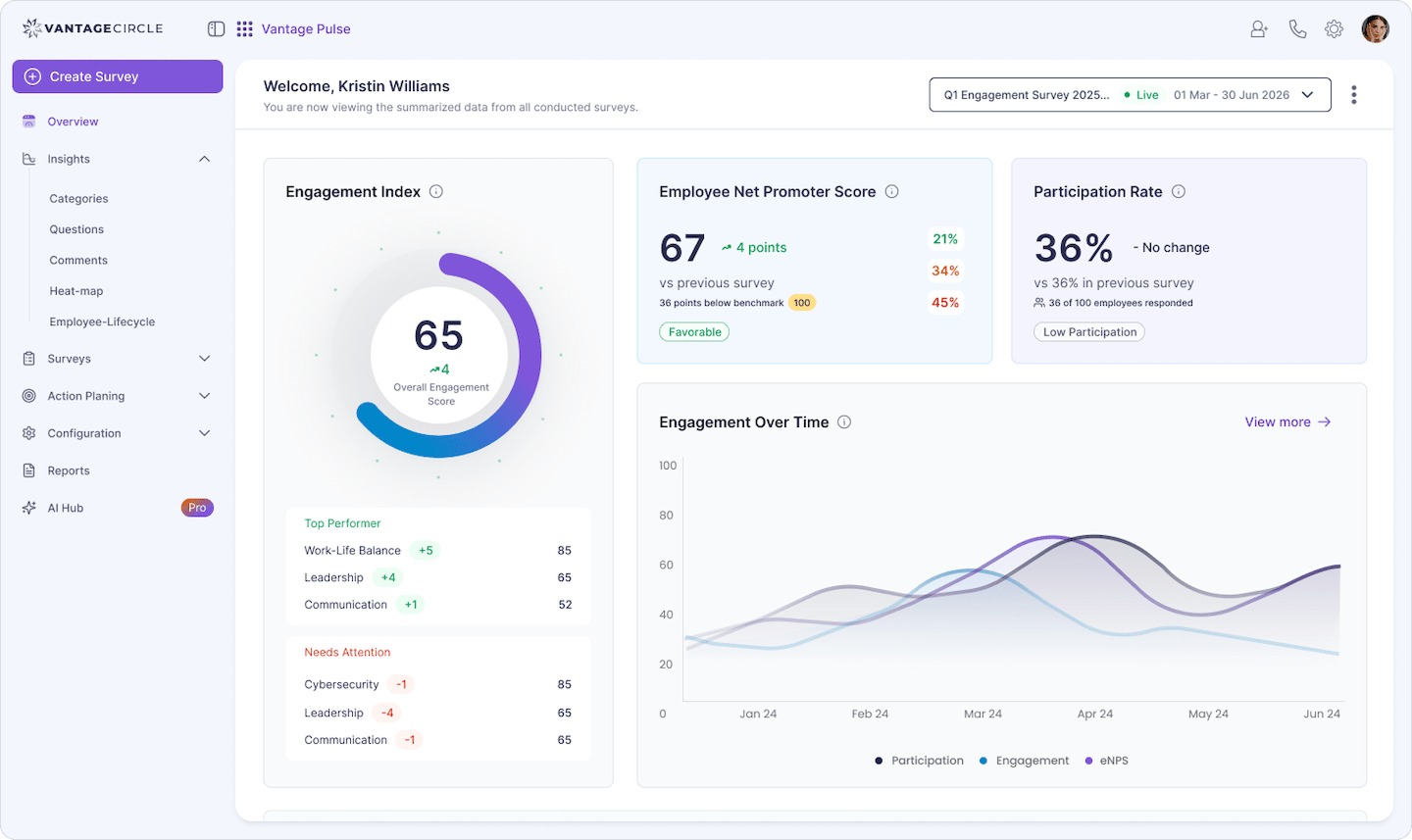
People perform best when they understand how decisions are made and feel they are being treated fairly. Unclear pay structures, inconsistent policies, and decisions made behind closed doors all quietly erode motivation — often before a manager realizes there is a problem.
Transparency in the workplace does not mean sharing everything. It means being honest and consistent about what affects your team: how performance is evaluated, how compensation is determined, and where the organization is heading. Employees do not need to be involved in every decision, but they do need to feel that decisions affecting them are not arbitrary.
Retaining good people starts with this. When teams trust that they are being treated fairly, they invest more: in their work, in the team, and in the organization’s goals.
Source: Vantage Pulse
6. Supportive Working Environment
People cannot do their best work in a broken environment. Outdated software, unclear processes, and a lack of resources are quiet motivation killers that managers often overlook. If you want your team to perform well, look at what is actually getting in their way.
The company culture should necessarily facilitate career progression. Keep an eye on whether your employees can achieve their personal goals. You should also provide them with assistance and opportunities to hone new skills or improve existing skills.
Next, you should be personable. The team should feel they can come to you at any time with a problem, issue, or concern. This openness is the foundation of psychological safety, which research consistently links to higher team performance and innovation.
7. Lead By Example
The fastest way to motivate a team is by leading them by example. If the leadership does not set the right tone at the top, you cannot expect the team to do so either. Gallup data consistently shows that 70% of the variance in team engagement can be traced directly to the manager. When you hold yourself to high standards, your team takes notice and rises to meet them.
Related: Leadership Skills For Managers | Effective Leadership in Hybrid Work Culture
8. Create Space for Creative Thinking
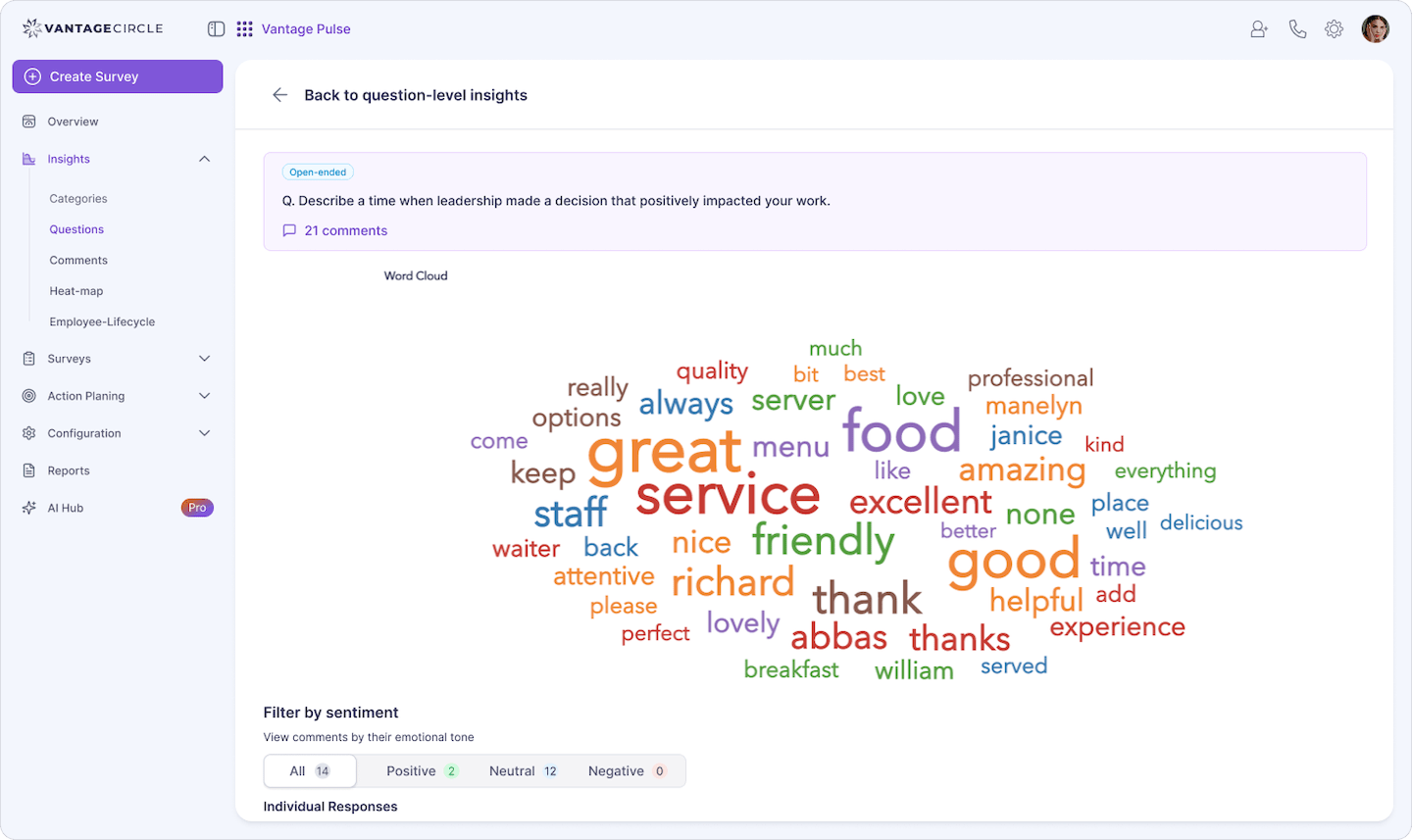
People do their best creative work when they know their ideas will actually be heard. You hired your team for what they bring to the table. If they are holding back because it does not feel safe to speak up, that is a leadership problem, not a talent problem.
Practically, this means creating structured opportunities for input: not just open-door policies. Regular brainstorms, retrospectives where honest feedback is genuinely welcome, and small experiments that teams can run without layers of approval all signal that creative thinking is valued here. The WEF Future of Jobs Report 2025 identifies creative thinking, resilience, and leadership as among the fastest-rising skills through 2030. Organizations that cultivate these now are building an advantage that compounds over time.
Source: Vantage Pulse
9. Design the Physical Environment Intentionally
The physical workspace affects how people think and feel more than most managers account for. Noise levels, natural light, access to private spaces for focused work, and areas where people can decompress all influence energy and output throughout the day.
This does not require a redesign budget. Small changes — better lighting, quiet zones, spaces that encourage informal conversation alongside heads-down work — can shift how a team feels about being there. For hybrid teams, the same logic applies to the digital environment: clear async communication norms and well-structured virtual workspaces reduce friction and cognitive load for everyone.
10. Run Better Meetings
Few things drain team motivation faster than a calendar full of meetings that could have been an email. Harvard Business Review estimates that US companies spend more than $37 billion a year on unproductive meetings — and most teams feel that cost in lost focus, not just lost time.
The fix is not fewer meetings. It is more intentional ones. Before scheduling, ask whether the outcome requires real-time discussion or whether async communication would work just as well. When a meeting is necessary, be clear about who actually needs to be there, set an agenda in advance, and end with explicit next steps. Meetings that respect people’s time are one of the quietest signals a manager can send that they value the team’s work.
Final Thoughts
Team motivation rarely comes down to a single initiative. What actually moves the needle is consistency: showing up for your team, following through on commitments, and making people feel that their work matters.
Pick two or three of these tips that fit your team's current situation. Try them, see what sticks, and adjust. The teams that perform consistently are not always the ones with the biggest budgets. They are usually the ones with managers who pay attention.
Written by