Somewhere in a Texas warehouse, there is a company-branded hoodie that has been trying to reach Manila for six weeks. It will arrive eventually, slightly crumpled, carrying an unexpected customs invoice, four weeks after the recognition moment it was meant to celebrate. Nobody will be especially happy about it.
This is the catalog problem in miniature. A recognition program can be beautifully designed, generously funded, and championed by leadership, and still produce the hoodie. The catalog is the part of recognition employees actually walk away with and the part most companies pay the least attention to.
In this blog, we will explore what makes an employee reward catalog truly effective in a global workplace. We will also look at the common mistakes that weaken recognition efforts and the strategies leading organizations use to deliver rewards that feel relevant across every location and workforce demographic.
What Is an Employee Reward Catalog?
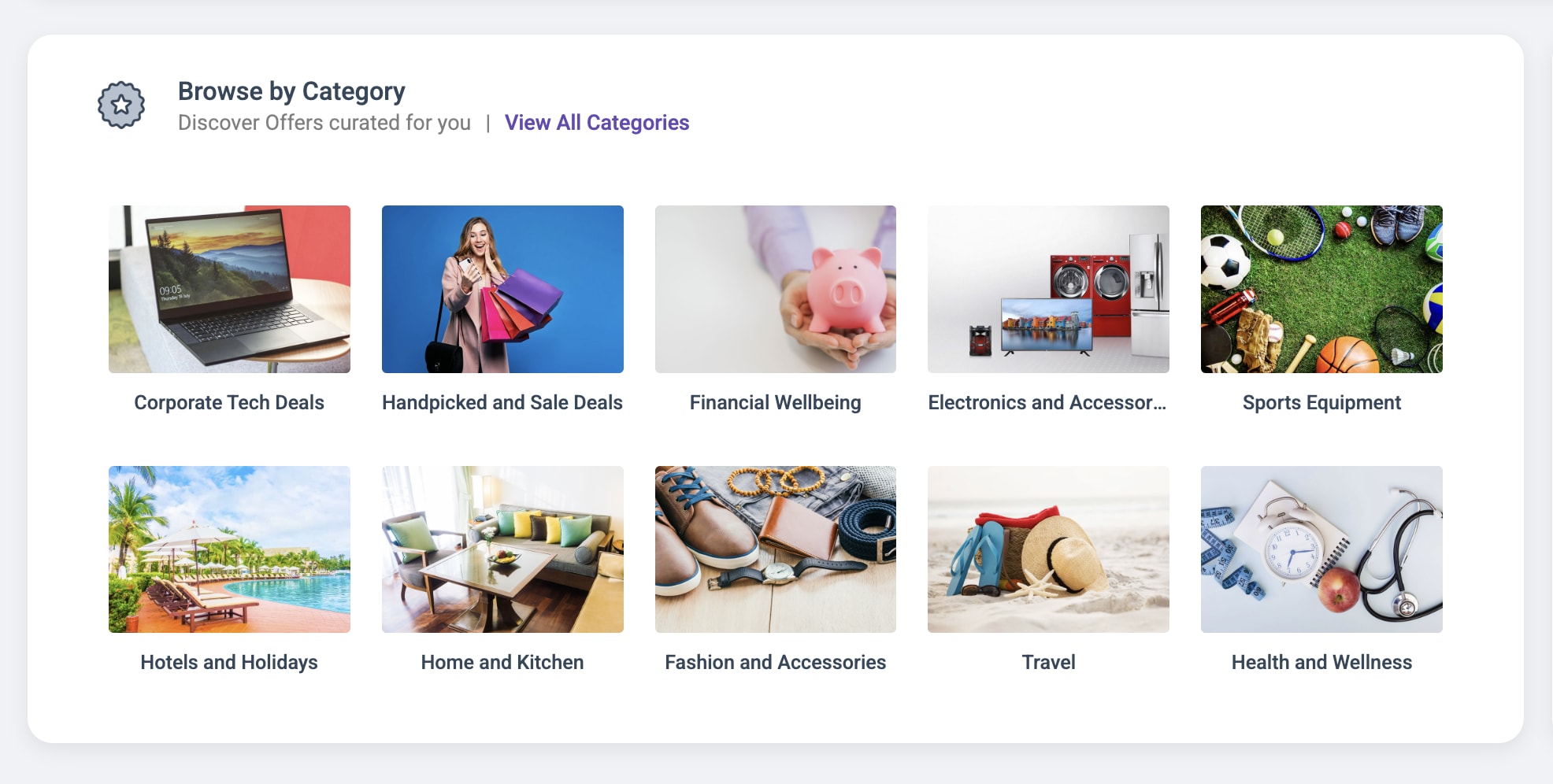
An employee reward catalog is the curated set of gift cards, experiences, merchandise, and charitable donations your people can redeem with the points they earn through recognition. Unlike a one-time spot bonus or a holiday gift, a catalog is a living system. It lets employees choose what recognition looks and feels like for them, rather than letting headquarters decide on their behalf.
Catalog vs. Recognition Program: Understanding the Difference
This is where many organizations get it wrong. A recognition program and a reward catalog are connected, but they are not the same thing. Treating them as interchangeable is often why companies build recognition initiatives that look impressive on paper but fail to create lasting employee engagement.
The recognition program is the system itself. It includes the policies, the point structure, the manager behaviors, the communication strategy, and the cultural intent behind recognition. It determines how appreciation is given, how often it happens, and what behaviors the organization wants to reinforce.
The reward catalog, on the other hand, is where employees experience the value of that recognition. It is the moment recognition becomes tangible. Employees may appreciate the praise, but the catalog determines whether the experience feels thoughtful, relevant, and worth remembering.
You can design the most sophisticated recognition strategy in the world, but if the rewards feel outdated, inaccessible, or culturally disconnected, the entire experience loses momentum. Employees stop engaging, redemption rates decline, and recognition slowly turns into background noise instead of a meaningful workplace experience.
Source: Vantage Recognition
Why a Global Team Changes Everything
Many reward catalogs are designed with one type of employee in mind and then distributed globally as if relevance automatically scales. It does not. A catalog that works beautifully in one country can feel disconnected, impractical, or even exclusionary in another.
This was the challenge Wipro faced when building recognition across a workforce of more than 230,000 employees in 66 countries. The goal was not simply to make recognition available everywhere. It was to create a system that felt equally meaningful across different employee levels, cultures, currencies, and purchasing realities.
Domestic reward catalogs succeed because the people building them and the employees redeeming from them often share the same context. They recognize the same brands, understand the same value signals, and instinctively know what makes a reward feel desirable. The moment a workforce becomes global, that shared understanding disappears.
The definition of a "good" reward changes across regions, generations, and economic realities. What feels exciting in one market may feel irrelevant in another. That is why a global reward catalog cannot simply be translated into multiple languages and rolled out worldwide. It needs to be intentionally engineered for local relevance, regional accessibility, and cultural nuance from the very beginning.
The 6 Core Categories Every Global Reward Catalog Needs
Ask ten HR leaders what belongs in a global reward catalog, and you will probably hear ten completely different answers. Most lists sound impressive in theory with branded hoodies, electronics, coffee mugs, and premium gadgets. But scratch beneath the surface, and many catalogs reveal the same problem. They are often designed around what corporate teams think employees should want rather than what employees across different countries, cultures, and lifestyles actually value.
When Globant, a technology company with 6,200+ professionals across 12 countries, came to us, their core requirement was a "platform with a wide range global catalog of brands that employees could choose from" paired with the ability to "redeem points and convert them into gift cards." Today, 35% of their workforce actively accesses benefits through the catalog.
That outcome traces back to composition. The categories below are the architecture that makes it work, and the percentages reflect where employee redemption behavior actually lands when given genuine choices.
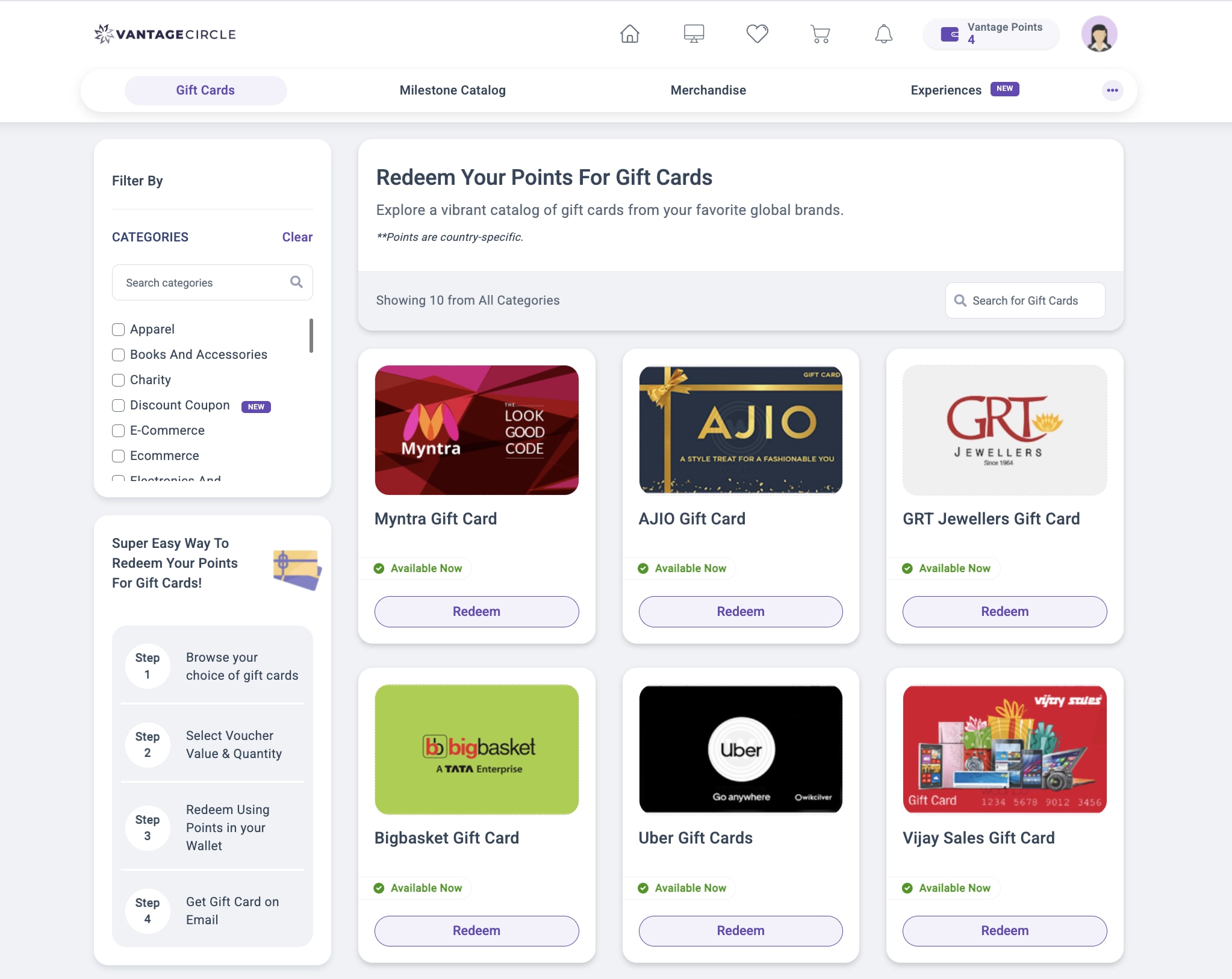
1. Digital Gift Cards (40-50% of Catalog)
If there is one category you get right, make it this one. Digital gift cards are the only reward type that is simultaneously global in reach and local in meaning, provided you curate them by region rather than dumping a US-centric list on everyone. An employee in Singapore redeems from local retailer cards. An employee in Germany redeems from European platforms. No six-week shipping windows, no customs surprises, no currency awkwardness at checkout. They work because they respect that employees know what they want better than headquarters does.
Source: Vantage Recognition
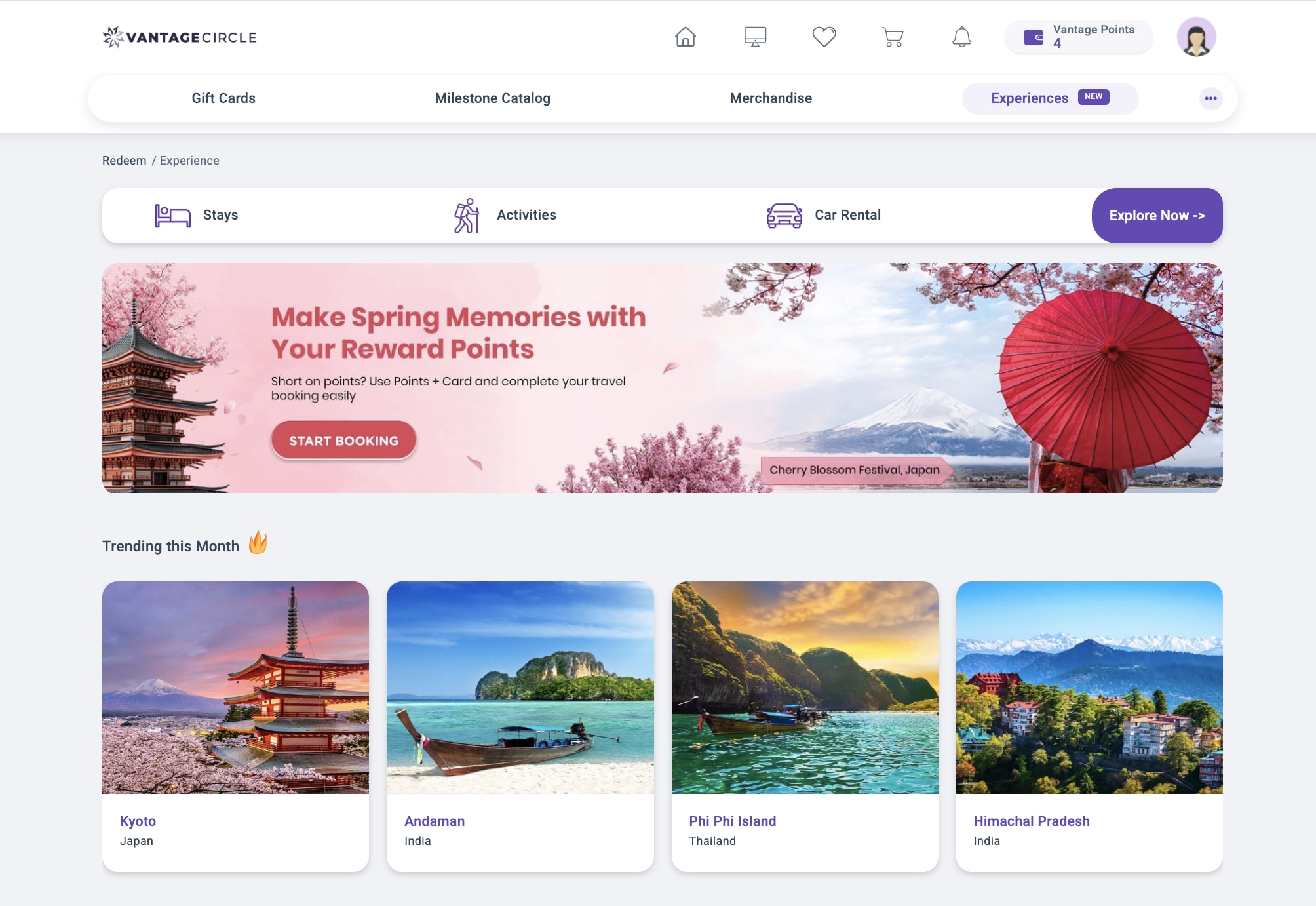
2. Local Experiences and Travel (15-20%)
Experiences almost always leave a stronger impression than merchandise. They feel personal, memorable, and tied to real life instead of sitting forgotten in a cabinet somewhere. But there is one important catch. "Local experiences" only work when they are actually local. A reward network packed with spa vouchers in London and New York but nothing meaningful in Lagos or Jakarta is not truly global. It is just a headquarters-centric perk dressed up as one.
The best catalogs avoid that trap by curating experiences within each country, updating them regularly, and paying attention to what employees in different regions genuinely enjoy. Refresh the category every quarter, keep it locally relevant, and employees are far more likely to feel like the catalog was designed with them in mind rather than copied and pasted across markets.
Source: Vantage Recognition
3. Branded Merchandise and Swag (10-15%)
Branded merchandise has its place, and that place is smaller than most HR teams assume. It works beautifully for service milestones and onboarding moments, when the brand connection feels intentional rather than convenient.
The key is making the experience feel effortless. Source locally whenever possible because nobody wants a "celebration gift" that arrives six weeks later tangled in customs fees. And only include items employees would genuinely pick for themselves, not things that looked impressive during the catalog presentation meeting.
4. Wellness and Learning Credits (10-15%)
This is the category that quietly wins people over. Not loudly. Not instantly. But over time, it becomes the reason employees feel like the company actually understands modern work. Gym memberships, therapy apps, online courses, mindfulness subscriptions, professional certifications, they all land differently because they do not feel like a transaction. They feel like investment.
And in today's workplace, that distinction matters. Employees increasingly want rewards that improve their lives, not just clutter their desks. A reimbursement for a marathon training app, access to meditation sessions after a stressful quarter, or credits toward a data analytics certification carries a very different emotional weight.
The strongest catalogs avoid prescribing wellness or learning. Give employees credits they can use where it makes sense for them. Let them choose the yoga studio, therapy platform, language class, leadership course, or certification program that fits their lifestyle and career goals. The more personal the choice feels, the more meaningful the reward becomes.
5. Charitable Donations (5-10%)
Charitable giving adds emotional depth to a reward catalog. For many employees, especially younger generations and purpose-driven professionals, the ability to donate points to causes they care about feels more personal than receiving a physical reward at all.
The key, though, is curation. Too many options create decision fatigue, while an unstructured donation system can become difficult to manage globally. Keep the selection curated to 8-12 well-known global organizations. It is enough variety to feel meaningful, but curated enough to feel intentional.
6. Cash and Prepaid Cards (5-10%)
Cash and prepaid cards solve a very specific global problem and that is consistency. When your workforce stretches across countries with different currencies, shopping habits, banking systems, and gift card availability, cash-like rewards become the universal adapter that keeps the catalog functional everywhere.
A gift card-heavy catalog may work beautifully in the U.S. or the U.K., then fall apart in regions where redemption networks are limited or international shipping is unreliable. Prepaid cards help close that gap by giving employees flexibility to spend rewards where it actually makes sense.
Designing for a Global Workforce: The 4-Layer Localization Model
Here is a mistake that costs companies more recognition goodwill than almost anything else and that is confusing localization with translation. Swapping a dollar sign for a euro symbol is not localization. It is find-and-replace.
Accor Hotels understood this when they set out to build a recognition program across 220,000+ employees in 110 countries. The result, after getting the localization layers right, was a 53% improvement in peer-to-peer recognition. That number does not come from a better communication campaign. It comes from employees finally finding a catalog that felt built for them. Real localization runs four layers deep, and most platforms only handle one of them by default.
Layer 1: Currency and Purchasing Power
Here is where global reward programs get unexpectedly complicated. On paper, equal points sound fair. Give every employee 500 points for great work and call it a day. Simple. Clean. Universally consistent.
Except money does not feel the same everywhere.
Fifty dollars in San Francisco might cover lunch and a coffee. The same amount in Manila can feel far more substantial. So when companies use flat exchange rates without thinking about local purchasing power, they accidentally create wildly different reward experiences for employees doing the same level of work.
And employees notice this faster than leadership teams think. Recognition starts feeling uneven, even when the intentions behind it were perfectly fair.
The smartest global programs adjust for purchasing power, not just currency conversion. Because the goal is not for rewards to look equal on paper. It is for them to feel equally meaningful in real life.
Layer 2: Language and UI Localization
Recognition is emotional. Language is emotional too. Which is why a reward experience instantly feels colder when it arrives in a language the employee does not naturally think in.
A surprising number of global programs still treat localization like a technical add-on. The catalog might be translated halfway, but the confirmation emails stay in English. The redemption page switches languages awkwardly. The receipt looks like it was copied from another region entirely. Employees notice all of it.
And the effect is subtle but important. The more friction employees feel while redeeming a reward, the less personal the recognition becomes. What should feel thoughtful starts feeling outsourced.
The best global catalogs localize everything, not just the homepage. Storefronts, instructions, emails, receipts, support flows, every touchpoint should feel native to the employee's experience.
Layer 3: Cultural Relevance by Region
One of the biggest mistakes companies make is assuming popular brands are universally meaningful. They are not. A retailer that feels premium in North America might mean absolutely nothing to employees in Southeast Asia or Sub-Saharan Africa. Recognition loses its impact the moment employees have to Google the reward they just received.
And this is where many "global" catalogs quietly reveal themselves to be headquarters catalogs with international shipping attached.
The best programs think locally. They curate rewards country by country, based on what employees in those markets genuinely use, value, and get excited about. That means paying attention to redemption behavior, refreshing categories regularly, and looking honestly at which rewards employees actually choose versus the ones they scroll past every single time. Because cultural relevance is not a branding exercise. It is what makes recognition feel personal instead of imported.
Layer 4: Fulfilment and Delivery Logistics
A reward might look great inside the catalog, but if it takes six weeks to arrive, gets stuck in customs, or lands damaged on someone's doorstep, the emotional moment is already gone. The recognition and the reward stop feeling connected. What should have felt immediate and thoughtful starts feeling like a delayed online order with tracking issues.
This happens constantly when companies ship physical rewards globally from one central warehouse, usually somewhere in the U.S. or Europe, and assume the experience will feel the same everywhere. It will not. An employee in Singapore, or Nairobi experiences that delay very differently than someone sitting near headquarters.
The best global catalogs solve this quietly through local fulfilment partners and regional delivery networks. When rewards arrive within a few business days, the emotional connection stays intact. The employee still remembers why they received it, not just when it finally showed up.
🎙 Vantage Influencers Podcast
Impactful Global Strategies For Inclusive Rewards & Recognition
Unlock the power of inclusive rewards and recognition. Discover impactful global strategies, insights, and best practices for building recognition programs that work across cultures, borders, and workforce demographics.
Listen to the Episode →Tax and Compliance: Country-by-Country Rules HR Cannot Ignore
United States: IRS de Minimis Rules and Taxable Rewards
The US Internal Revenue Service (IRS) allows certain low-value benefits to qualify as de minimis fringe benefits under Internal Revenue Code Section 132(e). These are items considered too small and infrequent to justify detailed accounting. Think occasional snacks, flowers, holiday turkeys, or company-branded merchandise.
The complication for HR teams is gift cards and cash equivalents. Under IRS guidance, most gift cards and gift certificates are treated as taxable compensation rather than de minimis benefits, regardless of value. A $10 Amazon gift card generally needs to be included on the employee's Form W-2 and taxed accordingly. The IRS does allow narrow exceptions for certificates redeemable only for a specific low-value item, but those exceptions are limited.
The IRS also avoids publishing a strict dollar threshold for what qualifies as "de minimis," which means employers need to evaluate both frequency and value. When rewards move beyond symbolic or occasional recognition, payroll involvement becomes essential.
United Kingdom: Trivial Benefits Exemption
The UK offers employers one of the clearest recognition tax frameworks through the HMRC trivial benefits exemption. Non-cash benefits costing £50 or less per occasion can remain outside income tax and National Insurance if they meet several conditions:
- the benefit is not cash or a cash voucher
- it is not tied to employee performance
- it is not contractual
- it is not part of a salary sacrifice arrangement
The distinction between cash vouchers and non-cash vouchers matters significantly. Cash vouchers are taxable, while certain non-cash vouchers may still qualify for exemption.
Directors of close companies face an additional annual cap of £300 across all trivial benefits, which means milestone-heavy recognition programs require closer tracking.
India: Employer Gifts, Vouchers, and Taxable Perquisites
In India, employer-provided gifts, vouchers, and tokens are governed through perquisite valuation rules under the Income Tax framework. Under Rule 15 of the Income Tax Rules, 2026 (effective April 1, 2026, replacing the earlier Rule 3(7)(iv) and its Rs. 5,000 threshold), employer-provided gifts or vouchers up to INR 15,000 in aggregate during a financial year may qualify for tax exemption. Once the threshold is crossed, the entire amount becomes taxable as a perquisite, not just the excess, and is reflected in the employee's Form 16.
The operational challenge comes from gift cards and cash-equivalent instruments. Cash gifts and benefits readily convertible into money, such as certain gift cheques or prepaid instruments, typically do not receive the same exemption treatment. In practice, payroll classification and voucher structure matter significantly, especially for organizations running digital-first reward catalogs.
European Union: VAT and Local Reporting Complexity
The European Union does not operate under a single employee rewards taxation framework. Instead, employers navigate 27 different national interpretations built around broadly similar tax and VAT principles.
In many EU countries, employer-provided rewards may trigger:
- VAT implications
- benefit-in-kind reporting obligations
- payroll taxation requirements
- social contribution liabilities
The complexity lies in local implementation. Germany operates under the Sachbezug system for non-cash benefits. France routes many employer benefits through URSSAF rules. The Netherlands applies its own work-related costs scheme.
APAC snapshot: Singapore, Australia, Japan
Singapore is one of the more employer-friendly markets on this list. Most non-cash awards below SGD 200 per quarter are exempt under the Inland Revenue Authority of Singapore minor benefits rule. Australia applies Fringe Benefits Tax to most non-cash employer benefits, with a minor benefit exemption for items under AUD 300 that are not provided regularly. Japan exempts non-cash rewards provided within an approved welfare benefit plan and valued below JPY 100,000 annually, which gives meaningful headroom for milestone recognition.
Points-to-Value Translation: Making Rewards Feel Fair Across Markets
1. Same Reward Feels Different Across Countries
A $50 reward may feel generous in one country but barely noticeable in another because of differences in purchasing power and living costs. Employees naturally compare the practical value of rewards in their own market, not the face value shown on the platform.
2. Problem With One Global Conversion Rate
A single point-to-dollar conversion model rarely works for multinational teams. What buys a premium experience in one market may only cover a basic purchase in another, weakening the emotional impact of recognition.
3. Using PPP and Cost-of-Living Adjustments
Many organizations solve this by adjusting reward values using purchasing power parity (PPP) or regional cost-of-living data. This helps maintain a more balanced and equitable reward experience across countries.
4. Manager Budgets Should Vary by Region
Recognition budgets should follow the same logic as reward values. A manager leading a team in a high-cost market may require a larger budget than one managing the same headcount in a lower-cost region.
5. Building Sustainable Global Reward Budgets
Many global companies tie recognition budgets to regional payroll costs or indexed point systems. This makes programs easier to scale while keeping recognition fair and financially sustainable across markets.
Measuring Catalog Success: 7 Actionable KPIs That Matter
Redemption Rate
Target: 70% or Above (90-day Window)
This is your headline number. Redemption rate is the percentage of earned points that employees actually redeem within a 90-day window. Below 50% and you do not have an engagement problem. You have a catalog problem. The points are sitting in accounts because nothing in the catalog felt worth choosing. The fix is curation, not a reminder email.
Time-to-Redeem
Target: 14 Days or Fewer
How quickly an employee redeems after earning points tells you how compelling the catalog is in that market. Employees who redeem within 14 days have found something they wanted immediately. Employees who take 30 or more days either had to search too hard for something relevant, or they are saving up points because the minimum redemption threshold is too high. Both are solvable catalog problems.
Category Mix by Region
Target: Monitored Quarterly; Remove Any Category below 5% Usage
Pull the redemption data by category, by country, every quarter. If 90% of your Southeast Asia redemptions are gift cards and the catalog is 40% merchandise, the merchandise is occupying space that nobody wants. Category mix data is the most direct signal you have for what to add, what to cut, and what to refresh at your next catalog review.
Repeat-Redeemer Rate
Target: 60% or Above Over 12 Months
First-time redemptions tell you that the catalog was good enough to try. Repeat redemptions tell you it was good enough to come back to. If your repeat-redeemer rate over 12 months is low while first-time redemptions look healthy, you have a catalog fatigue problem: the initial options were fine, but there is nothing new or compelling to bring employees back.
Sentiment Lift After Redemption
Target: 85% Positive on Post-redemption Survey
Two questions, sent within 48 hours of redemption: "Did this reward make you feel appreciated?" and "How relevant was this reward to your life?" Most platforms do not collect this data automatically, which means most organizations are flying blind on the one metric that tells you whether the catalog is actually doing its job emotionally. Build the survey. Read the responses.
Cost-per-Recognition by Region
Target: Flagged if 15%+ Above Prior Year Average
Divide total catalog spend in a region by the number of recognitions delivered there. This number lets you compare ROI across markets and answer the question your CFO will eventually ask: where is our recognition budget generating the most return? If cost-per-recognition in one region is running 30% above average with no corresponding engagement lift, that is a budget conversation worth having.
Manager Recognition Utilization Rate
Target: 70% of Managers Active per 90-day Period
The best catalog in the world underperforms when managers are not sending recognitions for employees to redeem from it. Track the percentage of managers who have recognized at least one direct report in a rolling 90-day period. Below 50% and the catalog is not your primary problem. Manager behavior is. Fix the behavior, and the catalog numbers follow.
What Good Looks Like in Practice
The best reward catalogs are not the biggest or the most expensive. They are the ones employees actually want to use. They stay curated, relevant, and refreshed. They evolve with employee preferences instead of sitting untouched for years. They also give HR teams visibility into what is working, what is being redeemed, and what employees are quietly ignoring.
Always remember that a rewards catalog without meaningful recognition behind it is just another corporate marketplace. What makes it work is the combination of thoughtful rewards, consistent manager participation, and a culture where appreciation feels genuine instead of transactional.
FAQ
What are the 5 C's of Employee Retention?
The 5 C's of employee retention are Care, Connect, Compensate, Coach, and Communicate.
What are the IRS Rules for Gifts to Employees?
Under IRS Publication 15-B, cash and cash-equivalent rewards, including gift cards of any denomination, are always taxable compensation and must be included in the employee's W-2 wages.
What are Some Examples of Employee Rewards?
Employee rewards include digital gift cards, local experiences such as restaurant vouchers or spa credits, branded merchandise, wellness and learning credits, charitable donation options, prepaid cards, and tenure-based milestone awards.
What Should an Employee Reward Catalog Include?
A well-designed catalog should include digital gift cards (40-50%), local experiences and travel (15-20%), branded merchandise (10-15%), wellness and learning credits (10-15%), charitable donations (5-10%), and cash or prepaid cards (5-10%).
How Big Should a Global Employee Reward Catalog be?
Aim for a minimum of 50-100 distinct redemption options per country, scaling to 500+ in your largest markets, with representation across every category.

Shikha Gogoi is a Content Marketing Specialist focused on SEO-driven content around employee engagement, recognition, and workplace culture, helping build people-first workplaces.
Connect with Shikha on LinkedIn.