Now, imagine a scenario where you landed your dream job. The office is bustling with energy, and every day feels like undertaking a new adventure. But with time, the initial excitement starts waning. You suddenly start wondering if there is more to work than just the paycheck and the free coffee you get. This reflection has hit many as this steadily contributed to what is known as "The Great Resignation.” This is where countless professionals started seeking meaningful roles.
Then you witness a sudden shift in your company where it has begun to trust and autonomy. This change seems more promising than before, where you feel empowered to make decisions and contribute meaningfully. Now, this is what we call "The Great Stay". It is a period where you do not simply work for a paycheck but want to associate with a culture that values you, your growth, and trusts you.
So, why not join me in this venture to discover how we can make today’s employees stay?
Let us explore the underlying issues that make employees leave, proven retention strategies, digital tools to amplify your retention efforts, and how to measure their effectiveness.
Why Do Employees Leave Their Jobs?

Before we directly jump into solutions, it’s essential that we discuss why people leave. Until and unless you know what you’re trying to solve, even the best of strategies will not work out its magic.
1. Lack of Growth and Career Paths
Research shows that 70% of employees are somewhat likely to leave their current job to work for an organization known for investing in employee development and learning.
Career stagnation is a pressing issue. When employees are unable to visualize their expansion, whether a promotion, a lateral shift into a new domain, or skill enhancement, they start their external search. The ambitious ones are driven to move out, which can cost your company.
The unclear career advancement criteria add additional fuel to the problem.
2. Poor Management
People leave managers not companies.
– Marcus Buckinghum
The saying is not new. It may sound cliche but it is undoubtedly true.
Poor management is reflected through multiple practices:
- Micromanagement that suffocates autonomy,
- Lack of support during challenging projects,
- Inconsistent feedback, or
- Becoming invisible when employees need guidance.
The issue here is that high performers are promoted without the necessary leadership training.
They're left to figure out people management through trial and error, and your employees pay the price.
In fact, a study reveals that 56% of human resources managers consider training and development essential to business.
3. Burnout and Workload
Burnout isn’t just limited to issues concerning long hours; it’s chronic stress without adequate recovery, unclear priorities, and the haunting feeling that, irrespective of how much you do, it's never enough.
The warning signs include working weekends consistently, delayed responses to non-urgent requests becoming the norm, and that glazed look in video calls. By the time employees admit that they're burned out, they've often already started job searching.
Post-pandemic, the boundaries between work and life have blurred tremendously. Without deliberate intervention, burnout becomes your culture's baseline.
4. Compensation and Benefits Gaps
Having a great culture and mission-driven work are valuable, but you cannot deny the significance of pay.
Here’s how the scenario changed in 2026, where compensation transparency is no longer optional. With pay ranges listed in job postings and salary data available online, employees are aware of their market value.
If there’s a significant gap between what they earn and what they could earn elsewhere, the gap becomes a regular source of resentment.
Benefits have equally evolved. Employees seek financial wellness programs, meaningful equity participation, flexible benefits that align with their life stage, and perks that improve their daily lives.
5. Lack of Recognition and Appreciation
Forbes study reveals that 66% of employees would quit their jobs if they didn't feel appreciated.
It’s basic human psychology that we seek validation for the effort we put in.
And employees, in particular, not only feel the need to be seen and valued for their contributions during performance reviews, but instantaneously as well.
When great work starts getting unacknowledged, people tend to question whether their efforts matter. That question, left unanswered, pushes them closer to resignation.
Moreover, the shift to remote and hybrid work has made this even more critical. The casual "great job” isn’t going to work anymore. A more specific, deliberate, and frequent appreciation and the building of culture around it have become the need of the hour.
What Are the 18 Proven Employee Retention Strategies for 2026?
Now that we have diagnosed the root causes of the problem, let’s dive into what really works.
Implementing these actionable strategies will help you address the problems and take your retention game to the next level.
Strategy 1 – Transparent Compensation Frameworks
SHRM study found that 73% are more likely to trust organizations that provide pay ranges in job postings than those that do not.
Transparency in compensation is no longer just a legal requirement but also a competitive advantage. This transparency should highlight -
- Clear pay bands for each role,
- Documented criteria for raises and promotions, and
- Open conversations about how compensation decisions are made.
How can you ensure this transparency?
- Craft a compensation philosophy document that outlines your market positioning.
- Discuss how you determine pay ranges and your approach to equity and bonuses. Share it with your team.
- Also, highlight how, moving forward, their performance can influence their earnings.
Strategy 2 – Structured Onboarding
Research states that organizations with strong onboarding programs see retention rates improve by 82% compared to organizations with weak programs.
Your onboarding program is perhaps the most critical opportunity to retain employees. It is the first step in giving your employees an insight into your organization.
As a key component of the onboarding process, the program should clearly communicate the policies and expectations of the employees from the beginning and provide a glimpse into the company culture.
Strategy 3 – Frequent Recognition Programs
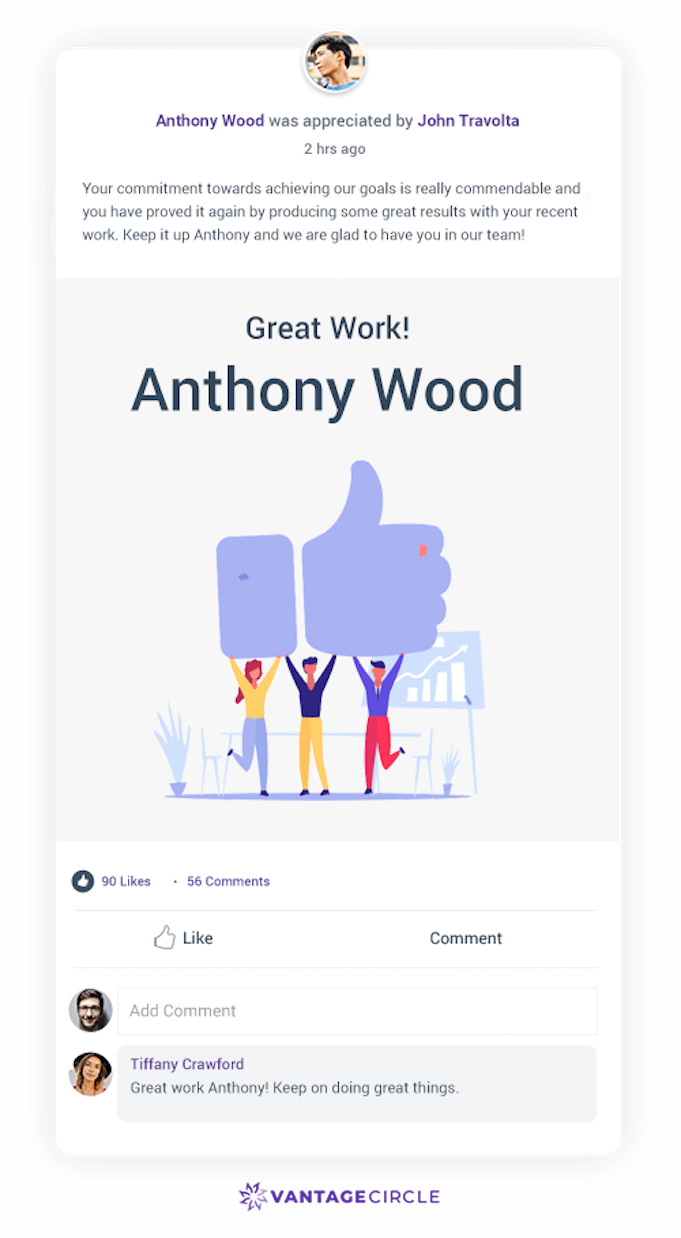
Stop waiting for annual recognition events. In 2026, recognition needs to be a consistent, ongoing practice woven into everyday work life. Make recognition frequent, specific, and peer-driven, not just top-down accolades handed out once a year.
A study reveals that the top 20% of companies with a “recognition-rich culture” have a 31% lower voluntary turnover rate.
How can you put this into practice?
- Implement multiple recognition channels like public shoutouts during team meetings, peer-to-peer recognition platforms, and manager-led appreciation that ties actions directly to company values.
- Gamifying the recognition process can enhance engagement. By incorporating features like point systems, leaderboards, and milestone badges, you make recognition more interactive and fun, encouraging employees to strive for more.
- With the rise of digitization, recognition platforms make the process more seamless and accessible. AI-driven systems can take this a step further by personalizing recognition.
- These systems allow you to tailor rewards and acknowledgements to employees’ preferences by ensuring that every form of recognition feels meaningful and relevant. The personalized approach makes recognition more impactful and encourages long-term engagement.
Source: Vantage Recognition
Strategy 4 – Career Development Roadmaps

A study shows that 93% of employees are more likely to stay with an organization that invests in their career development.
Employees never want to be led into ambiguous careers that do not give them a clear picture of where they are heading. It kills their ambitions.
One of the most crucial employee retention strategies is giving them clarity on where they can go, how to get there, and helping them in their venture.
It shows that you are invested in their future just as they are. Given that millennials and Gen-Z workers are dominating the job scenario, they are more inclined to work for organizations that promise them growth and development.
What can you do?
- Document career paths for each role family, including both vertical advancement and lateral moves.
- Include required skills, typical timeframes, and examples of what "good" looks like at each level.
Strategy 5 – Learning and Reskilling Initiatives
Learning can no longer be limited to an annual training budget that expires at a given time. Your employees need continuous opportunities to build and expand their capabilities that matter, both for current roles and future aspirations.
Therefore, in-house corporate training programs should be designed to ensure that every employee gets access to regular training and online courses to enhance their skills.
From dedicated learning hours during work time to giving access to platforms covering technical and soft skills, try creating a culture where taking a course is celebrated. Also, encourage them to attend conferences and industry events to broaden their exposure.
Strategy 6 – Manager Training
You cannot expect people to be great managers by birth. Leadership is a skill that requires continuous deliberate development.
This development can only be possible through mandatory manager training. It covers giving feedback, having difficult conversations, recognizing burnout, coaching for development, and creating psychological safety.
Make sure that the training is an ongoing one and not a one-time workshop.
Strategy 7 – Work-Life Balance Policies
An SHRM study found that 68.1% employees said they were more likely to stay if their employer prioritized work/life balance.
In 2026, work-life balance is no longer a perk but a baseline expectation for employees. Flexibility around work hours and personal time is no longer an added benefit but a necessity. And, while policies are essential, they are meaningless without organizational culture that supports them.
To truly embrace work-life balance, companies need to set clear boundaries and ensure that leadership models the right behaviors.
It’s not just about allowing employees to leave on time; it’s about creating a culture where time off is respected and even encouraged.
What this looks like in practice:
- Implement flexible and generous time-off policies that give employees the freedom to recharge without feeling guilty. Allowing for mental health days, sabbaticals, or additional paid leave increases retention and overall well-being.
- Right to Disconnect laws are critical in today’s environment. These laws guarantee employees the right to disengage from work-related communications outside office hours, preventing burnout and helping workers establish better boundaries between personal life and work.
These initiatives can make employees feel truly supported, not just in their roles but in their overall well-being.
Strategy 8 – Flexible Work Models

Flexibility has become a standard expectation. Employees want flexibility, but it needs to be structured in a way that balances individual needs with team effectiveness. Without structure, flexibility can create confusion or inequity, with different teams or managers applying it inconsistently.
A study found that 61% of workers agree that having flexible work schedules would make them more loyal to a company.
What this looks like in practice:
- Offering hybrid or remote work options allows employees to manage their personal and professional responsibilities more effectively, reducing burnout.
- Compressed workweeks (e.g., four 10-hour days) can give employees longer weekends, promoting a healthier lifestyle and improving job satisfaction.
- Avoid creating a flexibility lottery, in which some employees or teams get more flexible options than others. This creates resentment and disengagement. Instead, set up a policy that defines how flexibility is offered and ensures fairness.
- Foster an environment where flexibility is seen as part of the company culture, not just an individual arrangement.
This creates a structured flexibility framework that empowers employees to take control of their schedules without sacrificing team collaboration or productivity.
Strategy 9 – Strong Company Culture
A strong company culture has nothing to do with surface-level perks like team lunches, office games, or free snacks. It is about shared values, behaviors, and norms that define how work gets done when no one's watching.
In the present-day scenario, employees do not just stay for a paycheck; they stay when they feel connected to something stable, fair, and meaningful.
Most importantly, building a strong company culture is not a one-time event; it is a long-term commitment to consistently reinforcing the values you claim to stand for.
Now, how do you build a strong company culture?
- Start with clear values that guide decisions like hiring, promotions, and leadership expectations.
- Reinforce those values through consistent storytelling, and
- Ensure accountability when behavior doesn’t align with the company’s stated values.
Strategy 10 – Open Communication
Transparency is poignant to building trust, and trust is a contributing factor to driving retention.
And transparency is only guaranteed when there is a scope for open communication, which ensures the flow of information and ideas between employees and management.
Here’s what you can do:
- You can foster an environment where employees are unafraid to voice their opinions. In other words, they need a workplace where they can freely express their ideas and concerns.
- Conduct regular all-hands meetings with Q&A, have transparent communication about company performance (including challenges), and make leadership accessible.
- An “open-door policy” is one of the most effective communication strategies to establish a culture of transparency and trust. It shows that you're always available to listen to their opinion.
Strategy 11 – Autonomy and Ownership
Micromanagement is a disease that can counter all your efforts to retain employees, especially high performers.
Employees need space to work on problems and solve them their way without an overbearing presence or nagging.
To ensure real autonomy and ownership, you need to
- Set clear outcomes that allow flexibility in how employees achieve them.
- Push decision-making authority to the people closest to the work, so they can move faster without waiting for approvals, and
- Build a culture that supports failure, where employees feel safe experimenting, learning, and improving without fear of blame.
Strategy 12 – Competitive Benefits
A blend of perks and benefits packages can significantly address employees’ diverse needs and influence employee retention. Here are some strategic perks and benefits that can enhance employee satisfaction and loyalty:
- Offer financial counseling and retirement benefits.
- Provision of parental leave and childcare assistance, covering on-site daycare or financial subsidies.
- Support ongoing education through tuition reimbursement and access to professional development resources.
- Offer health insurance and support fertility benefits such as IVF assistance or adoption subsidies.
- Other unique lifestyle perks include free meals, transportation credits, and regular team-building events.
Strategy 13 – Mental Health Support
Recognizing the importance of employee well-being and mental health goes beyond moral responsibility; it's a strategic investment.
Comprehensive wellness programs are increasingly recognized as a key factor in boosting retention, enhancing productivity, and improving overall workplace morale.
Here’s how you can ensure employees’ well-being.
- Implement wellness programs that address both physical and mental health to show employees they are valued beyond their job performance.
- Using wellness platforms will give employees access to resources and challenges to enhance their well-being.
- Investing in wellness programs often results in a significant return on investment through reduced healthcare costs, fewer sick days, and lower turnover rates.
- You can incorporate wellness programs such as health screenings and health risk assessments, access to gym memberships and fitness centers, therapy and counseling services, and stress management workshops, set incentives against wellness challenges, and include mindfulness and resilience training.
- Train managers to recognize and respond to mental health challenges appropriately.
Strategy 14 – Continuous Feedback Systems

Regular feedback and suggestions can help you stay connected with your employees. You must empathize with your workers and keep a check on them. This helps you to get the pulse of your workforce.
Communicate as often as possible. Ask them what work challenges they are facing. Create a comfortable space where employees feel safe to express themselves freely without any hesitation.
This will increase their loyalty and trust in your leadership style and company.
Strategy 15 – DEI and Belonging
Diversity, equity, and inclusion are no longer simply HR initiatives but imperatives for running a successful business. When people don't feel they belong, they leave.
Therefore, strive to create a workplace that identifies and respects people from all backgrounds and sexual orientations.
There are ways to promote diversity and inclusion in the workplace. They are as follows:
- Provide diversity and inclusion training
- Implement fair and inclusive hiring practices
- Encourage dialogue about diversity.
- Strive for diverse leadership representation.
- Celebrate diversity through events and recognition.
Strategy 16 – Engagement Measurement

Let’s accept the fact that you can’t improve something that you don’t measure. Regular engagement measurement gives you warning signals way before retention even becomes a crisis.
To measure engagement effectively, you need a system that combines real-time sentiment tracking with deeper periodic insights.
In practice, this means running pulse surveys that monitor key engagement drivers like recognition, growth, workload, and manager effectiveness, combined with annual engagement surveys for a more detailed view.
The real value comes from analyzing results by team, tenure, and demographics, so you can spot patterns early and act before disengagement turns into attrition.
Strategy 17 – Incentives and Rewards
A comprehensive study reported that incentive programs running for a year or more led to an average 44% increase in performance.
Beyond base pay, well-designed incentives play a major role in retention because they connect an employee’s performance with the organization’s long-term success.
In practice, you can consider including spot bonuses for standout contributions, team-based incentives to encourage collaboration, retention bonuses tied to key milestones, and equity grants that vest over time, giving employees a reason to stay invested in the company’s growth.
Strategy 18 – Burnout Prevention
Burnout prevention is far more effective than burnout recovery. It requires system-level fixes and not surface-level wellness tools.
In practice, this would entail tracking workload patterns, setting realistic timelines with buffers, encouraging employees to take time off (and sometimes making it mandatory), and ensuring leaders model sustainable work habits.
It also includes reducing unnecessary meetings, limiting after-hours communication, and regularly checking capacity before assigning new work.
Recommended Resource: 14 Amazing Benefits of Employee Retention for Business Success
What are the Core Pillars of Employee Retention?
While all the 18 strategies are equally important, here are some foundational pillars that you cannot compromise on to retain employees.
1. Culture & Recognition
Culture is what people experience daily, and recognition is how you reinforce the behaviors that build the culture you want.
Real-time and Peer-to-Peer Recognition
The drastic shift from annual awards to continuous recognition changes the way appreciation flows through an organization. When recognition comes from peers and not just managers, it builds a culture of mutual support.
And the key here is to make recognition effortless. If someone has to fill out a form or wait for the right moment, it simply won’t work.
Dedicated recognition platforms make things a lot easier, where recognition is just a click away, allowing you to appreciate employees in real time.

Source: Vantage Recognition
Celebrating Milestones and Tenure
Work anniversaries, personal milestones, and project completions; all these moments matter. Observe them as opportunities to pause and acknowledge commitment, growth, and contribution.
But many organizations resort to generic recognition, which feels hollow.
A formal email on your fifth work anniversary isn't meaningful. What resonates is when someone takes the time to reflect on your specific impact, growth, and what you've meant to the team.
Hence, Milestone celebrations should be personal, public (when appropriate), and proportional to the achievement.

Source: Vantage Recognition
Scaling Recognition with Digital Platforms
As your organization grows, staying on top of recognition gets challenging. This is where digital platforms come to your rescue, helping you scale without losing your personal touch.
Basically, modern recognition platforms enable you to:
- Send instant recognition tied to company values
- Provide points or rewards that employees can redeem
- Create visibility across departments so great work doesn't stay siloed
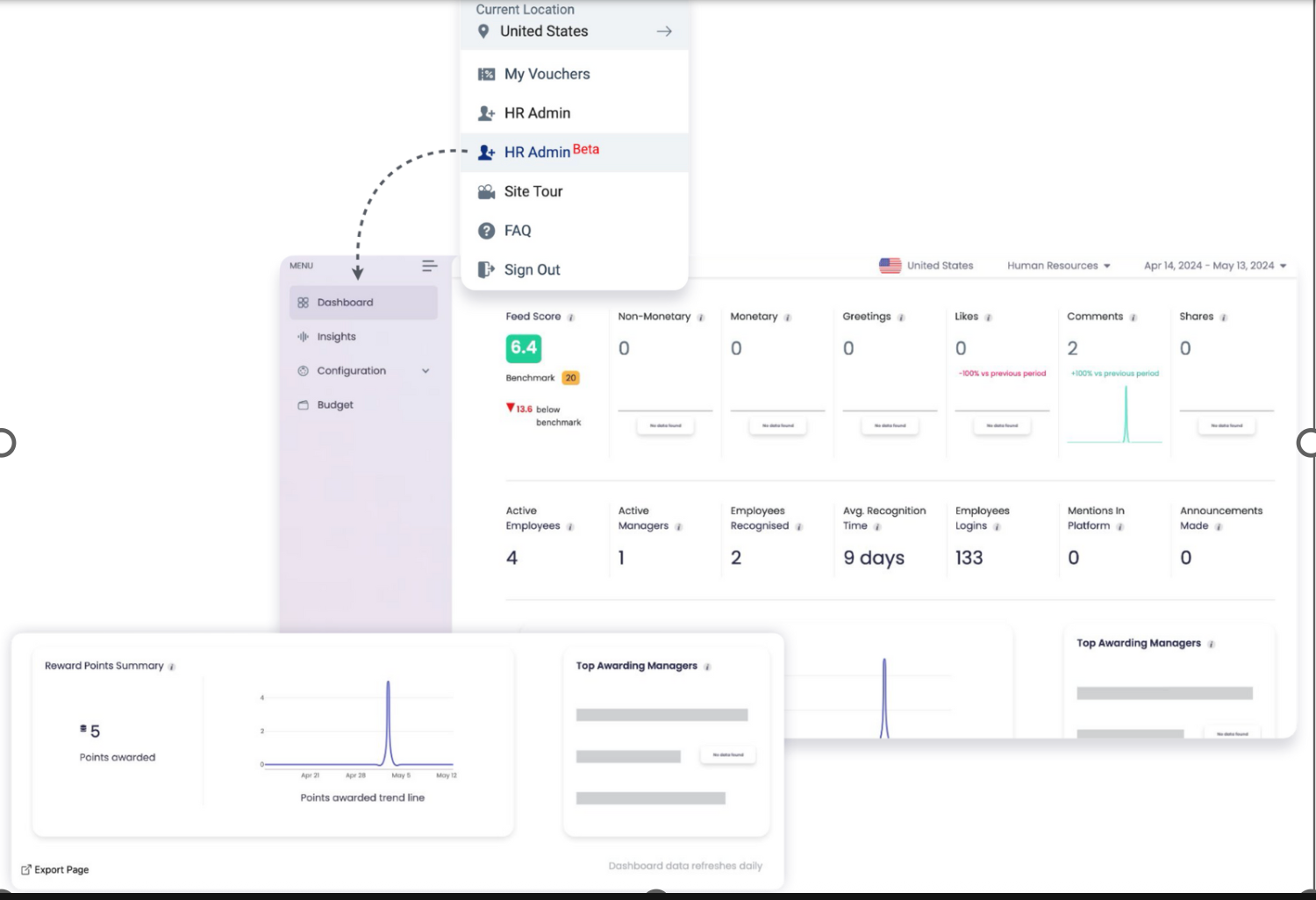
- Track recognition patterns through dashboards to identify both champions and overlooked contributors
Digital platforms give your analytics approach a major boost. If certain teams or demographics receive significantly less recognition, that's a retention risk you can address proactively.
Source: Vantage Recognition
2. Compensation, Benefits & Financial Wellbeing
Financial stress directly impacts employee stability and retention.
This pillar focuses not just on offering competitive pay, but also on supporting employees’ overall financial wellbeing, so they feel secure, valued, and less tempted to look elsewhere.
Competitive and Transparent Pay
If you still believe you are paying your employees competitively without really benchmarking against current market data, then your compensation philosophy is obsolete. Always remember that the market is never constant; it keeps changing dramatically.
Competitive pay means regularly reviewing your positioning against companies your employees could realistically move to; not just direct competitors, but any organization competing for the same talent pool.
Transparency in pay matters because it eliminates the anxiety of wondering whether you're being paid fairly. When employees understand the logic behind compensation decisions, they become satisfied even if the absolute numbers aren't the highest in the market.
ESOPs and Ownership Mindset
ESOPs (Employee Stock Ownership Program) is an excellent way to compensate your employees as a bonus or incentive. Allowing employees to become your company's stakeholders helps them stay invested in its performance. Equity participation transforms employees into owners.
ESOPs work particularly well for companies that want to build long-term commitment.
The ownership mindset extends beyond equity. It's about treating employees like partners who deserve to understand the business, participate in strategic discussions, and share the value they help create.
Flexible Benefits, Wellness & Corporate Perks
A one-size-fits-all benefits package is irrelevant in the evolving market scenario. A 25-year-old fresh out of college has different needs than a 40-year-old parent or a 55-year-old considering retirement planning.
Flexible benefits let employees allocate a benefits budget toward what matters most to them. Maybe that's enhanced childcare support, professional development, additional PTO, or wellness benefits like gym memberships or mental health support.
Corporate perks platforms aggregate discounts and benefits across travel and dining, electronics, and entertainment.
These aren't retention drivers on their own, but they're part of a total rewards package that signals you care about employees' lives beyond work.
3. Growth, Learning & Career Development
Stagnation drives attrition faster than anything else.
This pillar ensures that employees are constantly developing and can visualize a future within your organization.
Dual-Track Career Paths
The idea that career growth automatically implies moving into people management roles is not only obsolete but also harmful to both employees and the organization. Many high-performing employees, especially in technical or creative roles, are not interested in managing teams. Forcing them into management positions just to advance in their careers creates frustration, bad managers, and disengaged employees.
What dual-track career paths offer is parallel growth options: one for those who want to move into management and one for those who want to remain as individual contributors (ICs). The key is that the IC track is not a “second-best” path. Instead, it offers career progression, influence, and compensation on par with the management track.
Internal Mobility and Upskilling
Internal mobility programs allow employees to seek their next role internally before they start searching externally, making it easy to explore opportunities across the organization.
Upskilling initiatives prepare people for those internal moves. If you know that data analytics is becoming critical across functions, create learning paths that help interested employees build those capabilities, then prioritize them for relevant openings.
Mentorship Programs
Formal mentorship programs have the potential to accelerate development and build cross-organizational relationships, thereby boosting retention.
The mentor-mentee relationship fosters a sense of belonging and provides navigation support through organizational complexity.
Assigning a mentor or a buddy to a new employee is also a great onboarding idea. The newcomer can learn about their work and the existing techniques from the mentor. Moreover, a new employee can offer a fresh perspective. As a result, this will help generate creative and innovative ideas.
4. Feedback, Engagement & Listening
This pillar emphasizes understanding what your employees experience and creating mechanisms to act on that knowledge.
Stay Interviews
Exit interviews tell you why people leave, but stay interviews tell you why people stay, and what might compel them to leave in the future. This proactive approach identifies retention risks before they lead to resignations.
Stay interviews work best as structured conversations focus on questions like:
- What do you look forward to when you come to work?
- What are you learning here?
- What would make your job more satisfying?
- What would tempt you to leave?
The key is how you respond to the information. If someone tells you they're frustrated by a lack of growth opportunities and nothing changes, you've made things worse by asking.
Pulse Surveys and Continuous Feedback
Annual engagement surveys have lost their charm, as they are too infrequent to be actionable.
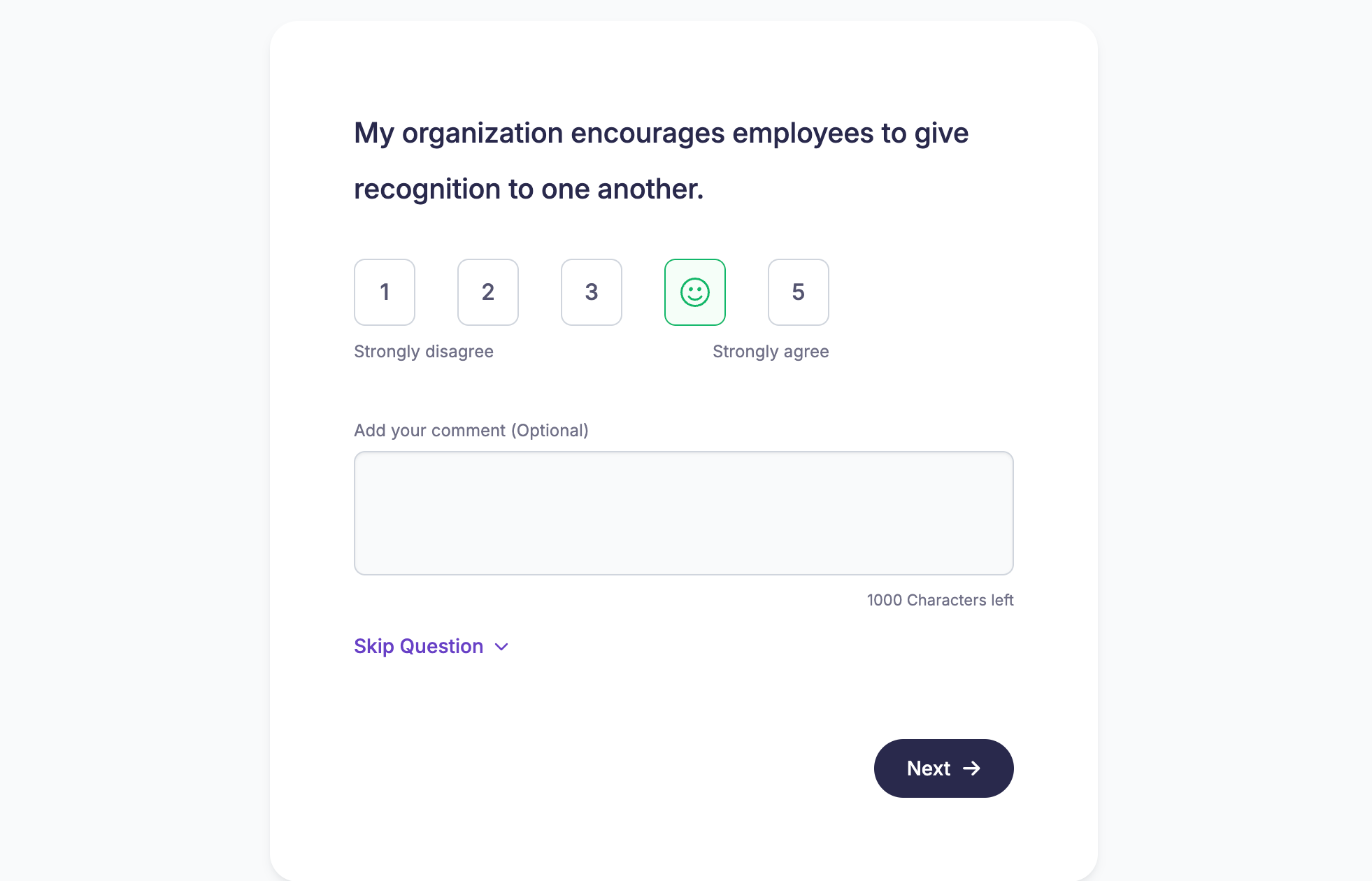
In fact, pulse surveys, short, frequent check-ins on key engagement drivers, provide real-time visibility into organizational health. They let you track trends over time and quickly see the impact of interventions.
The best pulse surveys are:
- Short (under 5 minutes)
- Focused on actionable topics
- Deployed regularly (weekly, biweekly, or monthly)
- Transparent in how results will be used
Source: Vantage Pulse
Real-time Sentiment Tracking
Advanced engagement platforms now use AI to analyze sentiment from multiple sources, such as survey responses and recognition patterns, to provide early warning signals of engagement issues.
Real-time sentiment tracking helps you identify:
- Teams showing declining engagement before it affects performance
- Common themes across exit interviews and stay interviews
- The impact of organizational changes on morale
- Differences in experience across departments, locations, or demographics
The goal isn't surveillance but understanding. And understanding enables intervention before small problems become retention crises.
How Do Employee Retention Strategies Differ by Company Size, Industry, and Work Model?
While developing retention strategies, keep in mind that strategies differ from one company to another, depending on the size and industry.
What works for a 50-person startup won't work for a 10,000-person enterprise, and vice versa.
By Company Size (Startups, SMBs, Enterprises)
Startups (under 100 employees)
Your retention advantages are mission, impact, and growth opportunities. People join startups to build something, to have outsized influence, and to grow faster than they could elsewhere. Your challenges are compensation constraints and organizational instability.
Here’s how you can strategize:
- Focus on equity participation, rapid skill development, direct access to leadership, and autonomy.
- Be transparent about risks and volatility
- Create clear career paths so people understand how they can grow as the company scales.
Retention risks include uncertainty about the company’s trajectory, competitive compensation offers from larger companies, and burnout from startup intensity.
SMBs (100-1,000 employees)
Your retention advantages include agility, culture, and a better work-life balance than what startups offer.
Here’s how you can strategize:
- Focus on strong manager relationships,
- transparent communication about company direction, and
- Creating growth opportunities through expanding scope rather than just vertical promotion.
- Invest in manager training early, as this is where manager quality becomes the dominant retention factor.
Retention risks include employees leaving for higher compensation at enterprises or more equity at startups, limited advancement opportunities as you approach the "executive ceiling," and middle managers who weren't properly developed.
Enterprises (1,000+ employees)
Your retention advantages are resources, stability, structured development programs, and brand recognition. Your challenges include bureaucracy, slower decision-making, and employees feeling like cogs in a machine.
Here’s how you can strategize:
- Focus on internal mobility programs, robust learning and development budgets, competitive total compensation, and creating smaller team environments within the larger organization where people can feel connected.
- Use your scale to offer diverse career paths, and not everyone wants to climb the same ladder.
Retention risks include entrepreneurial employees leaving for startups, high performers frustrated by the pace, and talented people stuck behind organizational bottlenecks for advancement.
By Industry (Healthcare, Tech, Manufacturing, Nonprofits)
Healthcare
Burnout is your primary retention enemy, worsened by chronic understaffing and the emotional toll of patient care.
To combat this, retention strategies must prioritize sustainable workloads, mental health support, and recognition that goes beyond just calling staff "healthcare heroes.”
Key focuses should include flexible scheduling, continuous education opportunities, peer support programs, and addressing the administrative burden that takes clinicians away from patient care.
While compensation is important, fostering a strong mission connection and creating sustainable work environments often have a greater impact on retention.
Tech
The talent war in tech is fierce, with competitors constantly looking to recruit your engineers, designers, and product managers. Hence, to retain your top talent, focus on offering interesting technical challenges, strong compensation and equity, and learning opportunities.
Key strategies should include cutting-edge technology stacks, conference and learning budgets, 20% time or innovation sprints, transparent career frameworks with senior IC tracks, and a strong engineering culture.
To mitigate the risks of talent poaching, make total compensation transparent and competitive, and create work environments that value craft and impact.
Manufacturing
Retention challenges significantly vary between floor workers and corporate functions. For production employees, the focus should be on safety, predictable schedules, clear paths from hourly to skilled trades to supervision, and recognition for quality and safety performance.
For all levels, whether on the floor or in the office, emphasize job stability, benefits quality, and community connection.
Offering upskilling programs that prepare workers for automation, rather than replacing them, fosters deep loyalty and commitment.
Nonprofits
Mission alignment is your superpower, but it doesn't pay rent. Nonprofit retention strategies must acknowledge compensation constraints honestly while maximizing other retention levers.
Focus on impact visibility (connecting daily work to mission outcomes), professional development that builds marketable skills, work-life balance, student loan repayment assistance, and retirement matching even with lower base salaries.
Set clear advancement paths and be transparent about compensation philosophy. The people who stay understand the trade-offs but need to feel valued and see growth potential.
For Remote and Hybrid Teams
Remote and hybrid work models create unique retention dynamics. Flexibility is a massive retention driver, but only if you solve connection, visibility, and equity.
For remote teams: Your retention advantages are geographic flexibility and work-life integration. Your challenges include isolation, unclear visibility into career advancement, and difficulty building culture without physical proximity.
To address these,
- Focus on regular synchronous connection points (video calls, virtual coffee chats, annual off-sites), career development conversations that don't rely on "visibility", and recognition systems that work across time zones.
- Be intentional about documenting decisions and creating shared context since you can't rely on hallway conversations.
- Invest in collaboration tools, home office stipends, and travel budgets for team gatherings. The companies that crack remote retention create belonging through deliberate design, not proximity.
For hybrid teams: Your biggest retention risk is creating two tiers: the in-office employees who get face time and opportunities, and remote employees who get overlooked.
Hence, you should focus on drafting consistent policies (if some people can be remote, unclear why others can't), equitable meeting practices (if one person is remote, everyone joins from their own device), and promotion processes that explicitly prevent proximity bias.
Document the activities that genuinely benefit from in-person collaboration versus those that are just habits.
A hybrid setting, when optimized fully, offers the best of both worlds. On the other hand, when done poorly, a hybrid setting creates resentment and drives attrition among your remote population.
What Are the Best Software Tools to Improve Employee Retention?
With the right tools at your disposal, you can give your retention strategies a boost, enabling, scaling, and measuring them effectively.
Engagement Platforms
Employee engagement platforms help you measure and enhance your workforce’s engagement. These platforms provide real-time recognition, pulse surveys, and sentiment analysis, enabling you to understand how your employees feel about their roles, the company, and their leadership.
By measuring engagement, companies can identify trends and potential issues before they escalate into major retention challenges. The following tools will be of help to you:
**Vantage Pulse:** It is a real-time employee feedback and sentiment tracking platform that helps companies gauge employee engagement and satisfaction. Regular engagement through pulse surveys and feedback loops can give HR teams actionable insights to address concerns before they lead to higher turnover rates.
Officevibe: This tool helps managers check in with their teams regularly through surveys and one-on-one check-ins to gather employee feedback on workplace factors, including job satisfaction, well-being, and team dynamics.
2. Recognition and Rewards Systems
Employee recognition and rewards systems ensure that employees feel appreciated for their hard work and achievements. Regular recognition fosters a positive and inclusive workplace culture, which is essential for long-term retention.
These systems help automate and scale recognition, making it easier to celebrate milestones, achievements, and everyday contributions.
**Vantage Recognition:** A comprehensive employee engagement platform that provides a range of recognition tools, from peer-to-peer recognition to manager-led acknowledgment and awards. Employees can earn reward points that are redeemable through gift cards and experiences. such as points, badges, or even physical gifts for their accomplishments.
Bonusly: A platform that allows employees to give and receive small, peer-to-peer bonuses in the form of points, which can be redeemed for rewards like gift cards or experiences.
3. Learning Management Systems (LMS)
A Learning Management System (LMS) is a tool that helps organizations provide continuous education, training, and professional development opportunities to employees.
When employees have access to reskilling and upskilling programs, they are inclined to feel valued and capable of growing within the company. This promotes loyalty and engagement, key factors in retention.
LinkedIn Learning: A popular LMS offering a wide range of courses for professional development, from leadership and management skills to technical training. Employees can improve their skills at their own pace, driving higher satisfaction and career growth within the organization.
Coursera for Business: A platform that offers employees access to courses from top universities and institutions. Companies can curate specific learning paths based on employee needs and career development goals.
4. HR Analytics and Feedback Tools
HR analytics tools help organizations gather data on employee behavior, performance, engagement, and satisfaction.
These tools use data to predict turnover, identify retention risks, and evaluate the effectiveness of retention strategies.
By using data-driven insights, HR teams can proactively address issues before they lead to high turnover.
Workday: A comprehensive HR management suite that provides advanced analytics on employee data, from performance reviews to compensation analysis. Workday helps HR teams identify trends, track employee performance, and implement retention strategies based on data insights.
Culture Amp: A platform that offers engagement surveys, performance feedback, and 360-degree reviews. Culture Amp uses data to help companies improve employee engagement, identify high-risk employees, and implement changes to retain top talent.
How to Measure the Success of Employee Retention Strategies
You cannot truly fathom the impact of your retention strategies until and unless you measure them.
Here's how to quantify whether your retention efforts are actually working.
Employee Retention Rate (Formula)
The retention rate gives you a percentage of employees who stayed during a specific period. It's your foundational retention metric.
Formula:
Retention Rate = (Number of employees who stayed during period / Number of employees at start of period) × 100
Track retention rate over time to see if your strategies are improving stability. Break it down by department, tenure, role level, and demographics to identify where retention is strong and where it's struggling.
If retention rates vary significantly across teams with similar roles, investigate the manager effectiveness and team culture in low-retention groups. If retention drops at specific tenure points (one year, three years), those are critical intervention moments.
Regretted Attrition
Not all attrition is equal. Losing a low performer who wasn't a culture fit is different from losing your best performer to a competitor.
Regretted attrition measures the percentage of departures you wanted to prevent. This typically comprises high performers and employees with critical skills or institutional knowledge.
After each departure, managers indicate whether this was "regretted" (you would have preferred they stayed) or "not regretted" (mutual parting or performance-based). Calculate regretted attrition as a percentage of total attrition.
If regretted attrition is concentrated in specific demographics, roles, or teams, that's where you should focus on retention investments. High regretted attrition among high performers often points to compensation gaps, limited growth opportunities, or poor manager relationships.
Engagement Score and eNPS
Engagement scores measure how committed, motivated, and connected employees feel. Employee Net Promoter Score (eNPS) measures whether they would recommend your organization as a place to work.
eNPS Formula: Ask: "On a scale of 0-10, how likely are you to recommend [Company] as a place to work?"
Promoters: 9-10
Passives: 7-8
Detractors: 0-6
eNPS = % Promoters - % Detractors
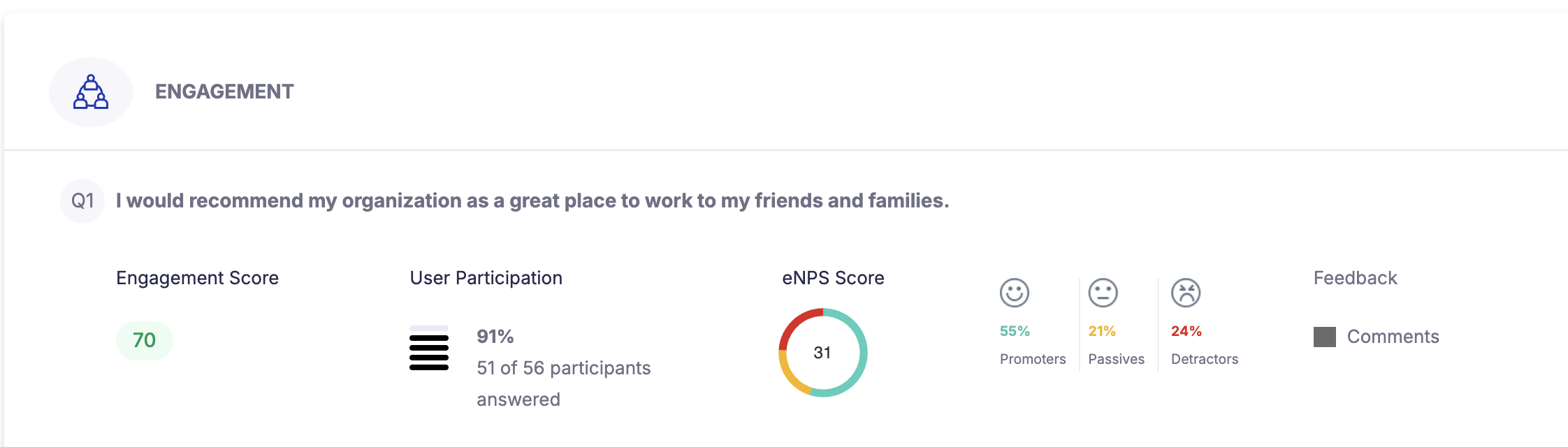
Example: 50% of employees rated 9-10 (promoters), 30% rated 7-8 (passives), 20% rated 0-6 (detractors). Your eNPS is 50% - 20% = 30.
eNPS is a leading indicator of retention. Detractors are flight risks; they're not just disengaged, they're actively dissatisfied. Promoters are your retention rock; they're engaged, satisfied, and unlikely to leave.
eNPS below zero indicates more detractors than promoters, which is a retention emergency. Track eNPS trends quarterly and investigate rapid declines. Follow up with detractors individually to understand their concerns and whether intervention can shift their experience.
Time to Productivity
This measures how quickly new hires reach full productivity, which directly impacts retention because employees who struggle to ramp up are more likely to leave within the first year.
Define what "full productivity" means for each role (completing tasks independently, meeting performance targets, requiring minimal supervision), then track how long it takes new hires to reach that standard.
Extended time to productivity often signals poor onboarding, unclear expectations, or insufficient support, all of which pose retention risks. Employees who feel lost or incompetent during their first months are already looking for the exit.
If time to productivity takes more time than expected, audit your onboarding process, manager support during ramp-up, and role clarity. Compare high-performing new hires to those who struggled and mark the difference.
Conclusion
Employee retention is more than just keeping employees. It’s about creating an environment where they feel valued, supported, and empowered to grow.
When you prioritize and put every strategy into action, retention will become a natural outcome that benefits both employees and the business.
FAQs
How do you calculate employee retention rate?
Retention Rate (%) = [(Employees at end of period − New hires during period) ÷ Employees at start of period] × 100
What is the difference between retention and turnover?
- Retention = Percentage of employees who stay.
- Turnover = Percentage of employees who leave.
They are inverse metrics.
What are the 3 R’s of employee retention? (Respect, Recognition, Rewards)
- Respect – Fair treatment and trust
- Recognition – Appreciation for contributions
- Rewards – Tangible and intangible benefits
What is a good employee retention rate?
Generally 85%–90% or higher is considered strong, depending on industry.

Riha Jaishi is a Content Marketing Specialist at Vantage Circle and host of the HR Vantage Influencers podcast, sharing insights that help organizations build recognition-rich, people-first cultures!!
Connect with Riha on LinkedIn.