



How to Engage Millennials in the Workplace (2026 Guide for HR Leaders & Managers)

A Global Employee Recognition and Wellness Platform
As of mid-2025, millennials officially became the dominant managerial cohort in the American workforce, overtaking Gen Xers who held that spot for two decades.
This is a generation that graduated into a recession, adapted to remote work overnight, and rebuilt their careers through constant economic uncertainty. And despite that they learned to adapt faster than most organizations ever did.
Given that reality, what they want is surprisingly simple. They want flexibility without micromanagement, growth without burnout, and work that feels like it actually matters.
In this blog, we’ll help you find clear, actionable strategies to engage millennials that are grounded in real-world dynamics, not generational clichés.
From manager toolkits to scalable frameworks and ready-to-use templates, this is a practical playbook for HR leaders and managers navigating millennial workforce in 2026.
Why Millennials Are Disengaged at Work (And What It’s Costing Companies)
Burnout, Stagnation, and Economic Pressure
According to the Aflac WorkForces Report, workplace burnout among Americans has reached a seven-year high, with 66% of millennials reporting work related stress and burnout.
And it’s not hard to see why. Career ladders have flattened, upward mobility has slowed, raises feel smaller, and promotions now take longer to materialize, if they arrive at all. The result is a constant sense of running without getting ahead.
For companies, this disengagement comes with a measurable price tag. Burned-out employees are more likely to make mistakes, deliver lower-quality work, and leave altogether. What starts as individual fatigue quickly becomes an organizational performance issue.
The Job-hopping Myth vs the Growth Reality
Millennials have earned a reputation for job-hopping. But that framing misses what’s actually happening.
In reality, millennials are job-hopping because staying put often doesn’t pay off. Meanwhile, switching jobs can bring better pay, faster advancement, and more flexible work. And that’s why movement has become the rational choice.
But this constant churn is costing companies far more than just recruitment fees. On average, replacing an employee costs 30% to 200% of their annual salary, depending on the role’s complexity and seniority. For high-skill positions, the financial impact is even steeper once you factor in lost productivity, onboarding time, and training investments.
Business Impact: Productivity, Turnover, Morale
The consequences of disengaged employees ripple far beyond individual performance. If truth be told, productivity is usually the first to slip.
Disengaged employees stop bringing their full energy to work. Ideas slow down. Initiative drops. Tasks get done, yet momentum disappears. As momentum drops, turnover isn’t far behind.
Then comes morale, the quiet casualty that’s hardest to measure but easiest to feel. High performers begin to disengage emotionally, collaboration weakens, and trust in leadership erodes. Over time, this creates environments where people do the bare minimum of their capabilities.
What Actually Motivates Millennials at Work in 2026
Career Growth and Skill Development
Roughly two-thirds of millennials say the chance to learn new skills is a major factor when choosing a job. Many are even willing to spend their own time and money on training to make it happen. And that's ambition.
Millennials want access to certifications, mentorship, leadership exposure, and projects that stretch their skills beyond their job title. They know the landscape is shifting fast, and they want to be ready.
Recommended Read: Practical Strategies To Boost Your Employee Development Plan
Financial Stability and Total Rewards
Millennials came of age during recessions, student debt crises, and rising living costs. That context still shapes their priorities. Which is why fair pay, bonuses, healthcare benefits, and retirement plans are more motivating to them than flashy office perks.
Today, the definition of “total rewards” has expanded well beyond base salary. It includes:
- Flexible benefits packages
- Student loan assistance
- Wellness stipends
- Performance-based incentives
- Clear pay progression
Forward-thinking companies are already offering up to $1,200 a year in student loan repayment assistance , directly addressing one of millennials’ biggest financial stressors.
Recognition and Feedback Frequency
Nobody wants to wait until their annual review to hear how they're doing. They want to know now.
But this doesn’t mean millennials are chasing constant praise. What they actually want is relevance. Real-time feedback that connects effort to impact. Recognition that explains why the work mattered, not just that it happened.
Flexibility and Autonomy
The pandemic introduced millennials to workplace flexibility. And now that they have experienced it, they’re not eager to give it up. Over 58% of U.S. employees prefer hybrid or remote work options because they do not want to be confined to rigid processes anymore.
For them, flexibility is more about having control over schedules, outcome-based performance measurement, and the freedom to design how work gets done.
Purpose, Values, and Inclusion
Millennials don't just want a job. They want to work for companies that stand for something.
Deloitte’s Gen Z and Millennial Survey found that 44% of millennials choose employers based on values alignment. They pay attention to how companies handle diversity, sustainability, mental health, and social responsibility. Moreover, purpose also connects directly to well-being.
10 Proven Strategies to Engage Millennials in the Workplace
1. Replace Annual Reviews with Continuous Feedback
You need to replace annual performance review with regular, ongoing conversations.
Companies like Adobe, Deloitte, General Electric, and Accenture have all ditched annual reviews in favor of frequent check-ins. And they are doing so because continuous feedback creates clarity. It removes anxiety. It tells employees where they stand and how to improve while it still matters.
2. Build a Culture of Real-time Recognition
What Effective Recognition Looks Like to Millennials
Recognition works best when it’s fresh. The emotional impact of appreciation fades quickly when it’s delayed or buried in annual ceremonies.
They also value appreciation that connects actions to outcomes. Instead of broad generic praise, they respond better to feedback that highlights problem-solving, leadership behavior, collaboration, or customer impact.
Public vs Private Recognition Preferences
Some millennials thrive when their wins are called out in front of the team. While others prefer a quiet, personal thank-you. That’s why the best move is to ask. Find out what each person prefers and make it a habit to recognize them the way they actually want. The key isn’t visibility. It’s preference.
3. Design Visible Career Paths and Internal Mobility
Millennials don’t expect lifelong employment, but they do expect progress. They want clear career paths, transparent promotion criteria, and internal mobility programs to grow professionally.
So, start by clearly showing employees what skills are needed to advance, what lateral moves are available, and what the timeline might look like. If your company can offer that kind of flexibility, you're already ahead of most.
4. Support Financial Wellbeing Beyond Salary
Millennials now are navigating rising housing costs, increasing healthcare expenses, and long-term retirement concerns, to say the least. And that pressure doesn’t stay at home when they log in or walk into the office. It follows them into meetings, affects concentration, and quietly erodes their engagement over time.
That’s why financial support has to go beyond paychecks. Practical resources like budgeting tools, financial planning workshops, and access to advisors can make a meaningful difference. So can modern benefits such as performance-based rewards, wellness stipends, and ongoing financial education programs.
5. Offer Flexibility Without Sacrificing Accountability
Flexibility is non-negotiable for millennials. But this demand for flexibility isn’t about avoiding responsibility. It’s about control.
Millennials value the ability to manage their schedules, choose productive work environments, and design their workdays around peak performance.
That being said, flexibility doesn’t mean anything goes. The companies that get this right are building systems that make flexible work sustainable. This includes setting clear expectations around availability and deadlines, the right tools to collaborate remotely, and a culture where results matter more than hours logged.
6. Train Managers to Coach, Not Control
Managers shape the daily employee experience more than any policy or perk.
Millennials disengage quickly under micromanagement but thrive under leaders who coach, mentor, and develop.
Coaching-oriented managers ask questions, give constructive feedback, and remove obstacles instead of creating them. This shift from authority figure to growth partner, builds loyalty, trust, and sustained engagement.
7. Create Psychologically Safe Teams
Google's famous Project Aristotle study psychological safety as the single most important factor in what makes a team effective. And for millennials, it's even more critical.
For millennials, feeling safe enough to speak up, challenge assumptions, and admit mistakes without fear of punishment is what makes them feel truly valued. And it’s that sense of psychological safety that turns employees from passive contributors into fully engaged team members.
8. Encourage Ownership Through Intrapreneurship
Intrapreneurship is basically entrepreneurship inside a company. It means giving employees the freedom to come up with new ideas, take ownership of projects, and see their innovations come to life.
LinkedIn does this well with their internal innovation program known as “[in]cubator”. They give employees dedicated time each quarter to pitch new ideas to the executive team, and if the idea gets approved, they can spend time building it up.
9. Use Digital Tools to Strengthen Connection
Using digital tools to strengthen connections doesn’t mean you flood people with different apps. It means choosing the right one and being intentional about it.
Millennials expect technology to make work feel more human, not more fragmented. The right tools make recognition immediate, collaboration seamless, and feedback easy to see and act on.
Regular virtual check-ins keep teams aligned, while built-in digital recognition ensures appreciation doesn’t get lost in private messages or forgotten meetings. When tools support how people already work, connection becomes consistent, not occasional.
10. Align Rewards with Personal Values
Millennials care about meaning as much as money. Offering choice-based rewards, sustainability-focused incentives, wellness benefits, and charitable giving options allows employees to align work rewards with personal values. This flexibility turns recognition into a personal experience.
Common Mistakes That Disengage Millennial Employees
Treating Millennials like Junior Staff
Millennials now comprise 38% of the American workforce. Yet many organizations still treat them like the youngest people in the room, leaving them out of important meetings and strategic decisions.
This treatment triggers a chain reaction. They lose autonomy, feel disconnected from their purpose, and see fewer opportunities to grow. What starts as frustration quietly turns into disengagement and often ends in resignation.
Delayed or Generic Recognition
Another fast-track way to disengage millennials is to delay recognition or make it feel generic.
A “great job” email sent weeks after the work is done, or a generic shoutout copied and pasted across teams, doesn’t land the way you think it does. And over time, this creates emotional distance.
Employees stop going the extra mile because the connection between effort and appreciation feels broken. Motivation dips, discretionary effort disappears, and recognition turns into background noise instead of a performance driver.
Unclear Growth Opportunities
Career paths used to be straightforward. You work hard, move up, and retire with a pension. But for millennials that old playbook doesn't work anymore.
Today, progress has to be visible, intentional, and earned in real time. When employees can’t see their next step inside the organization, they start searching for it elsewhere. Even the data backs this up. According to LinkedIn’s Workplace Learning Report, 94% of employees say they would stay longer at a company that invests in their career development.
Micromanagement
Millennials feel boxed when managers hover over every task, demand constant updates, and control how work gets done instead of focusing on outcomes. What could have been high-impact contributors slowly turn into disengaged task executors.
As a result, creativity drops, confidence shrinks, and employees shift into survival mode instead of growing.
Ignoring Financial Stress
According to a Lending Club survey, around 70% of millennials today are living paycheck to paycheck. And what makes this situation even worse is when organizations avoid conversations about compensation fairness, delay pay reviews or offer benefits that no longer match real-world needs. And in a tight labor market, financial neglect doesn’t just hurt morale or fuels resentment. It hands your best talent to someone else.
Manager Toolkit: Ready-to-Use Templates for Engaging Millennials
Stay Interview Questions for Millennial Employees
Core Engagement Questions
- What part of your work feels most meaningful right now?
- What’s one thing that would make your job more fulfilling?
- Do you feel your skills are being fully utilized? Why or why not?
- What would make you consider leaving this role?
- What keeps you motivated to stay here?
Growth & Career Questions
- What skills do you want to build in the next 6–12 months?
- Are there projects or teams you’d like exposure to?
- Do you see a clear career path here?
- Work Experience Questions
- How supported do you feel by your manager and team?
- Is your current workload sustainable?
- What can I do differently to better support you?
Millennial Engagement Survey Template
Short, frequent pulse surveys work better than long annual engagement surveys, especially for people who expect quick feedback loops.
Here’s a simple 10-question template you can run quarterly:
Rate on a scale of 1–5 (Strongly Disagree to Strongly Agree)
- I feel valued for the work I do.
- My manager gives me regular feedback.
- I understand how my work impacts company goals.
- I see growth opportunities at this organization.
- I feel comfortable sharing ideas and concerns.
- My workload is manageable.
- I receive recognition when I perform well.
- I have flexibility to manage my work-life balance.
- I feel connected to my team.
- I would recommend this company as a great place to work.
Open-ended questions
- What’s one thing we should improve?
- What’s one thing we should keep doing?
Growth-focused one-on-one Meeting Agenda
Weekly or biweekly 1-on-1s are one of the strongest engagement tools—when they focus on development, not just deadlines.
Use this simple 30-minute structure:
1. Personal Check-In (5 minutes)
- How are you doing this week?
- What’s been energizing or frustrating?
2. Work Progress (10 minutes)
- What’s going well?
- Where do you need support?
3. Growth & Learning (10 minutes)
- What new skills are you building right now?
- Any stretch projects you’re interested in?
4. Feedback & Recognition (5 minutes)
- Quick wins to celebrate
- One area to improve (keep it constructive)
Millennials vs Gen Z: How Engagement Strategies Should Differ
Communication Preferences
| No. | Millennials | Gen Z |
|---|---|---|
| 1 | Rely on emails, Slack threads, and structured meetings for detailed updates and planning. | Prioritize chat tools, short video messages, and quick check-ins that match their digital-first habits. |
| 2 | Schedule recurring team syncs for alignment and collaboration. | Offer on-demand communication access and flexible touchpoints. |
| 3 | Encourage two-way conversations that allow questions, feedback, and open dialogue with leadership. | Enable instant responses and real-time interaction to maintain engagement and momentum. |
| 4 | Provide transparency through regular leadership updates and town halls. | They want bite-sized information that is easy to consume on the go. |
Motivation Drivers
| No. | Millennials | Gen Z |
|---|---|---|
| 1 | Connect daily work to company mission and long-term purpose. | Emphasize skill-building that directly supports career growth. |
| 2 | Support work-life balance through flexible schedules and wellness initiatives. | Offer structured flexibility that maintains stability. |
| 3 | Invest in culture-building activities and belonging initiatives. | Focus on practical growth opportunities and real-world experience. |
| 4 | Create clear promotion and advancement pathways. | Enable fast learning cycles through short-term projects. |
Feedback Expectations
| No. | Millennials | Gen Z |
|---|---|---|
| 1 | Schedule regular coaching conversations to discuss development and career growth. | Provide frequent, real-time feedback to guide immediate improvement. |
| 2 | Offer detailed feedback focused on skills, strengths, and development areas. | Keep feedback short, direct, and action-oriented. |
| 3 | Create open forums for discussion and idea-sharing. | Utilize polls, quick surveys, and pulse tools to gather fast input. |
| 4 | Use structured review frameworks and goal tracking systems. | Use check-ins, nudges, and real-time performance updates. |
Career Progression Mindset
| No. | Millennials | Gen Z |
|---|---|---|
| 1 | Build structured career ladders with clear promotion paths. | Offer flexible, skill-based career growth models. |
| 2 | Invest in formal mentorship and leadership development programs. | Provide hands-on learning and job shadowing opportunities. |
| 3 | Offer formal training and development programs. | Offer microlearning and digital certifications. |
| 4 | Reward tenure-based career growth. | Reward performance-based and skill-driven progression. |
How Platforms/ Tools Supports Millennial Engagement at Scale
Driving Everyday Recognition with Vantage Recognition
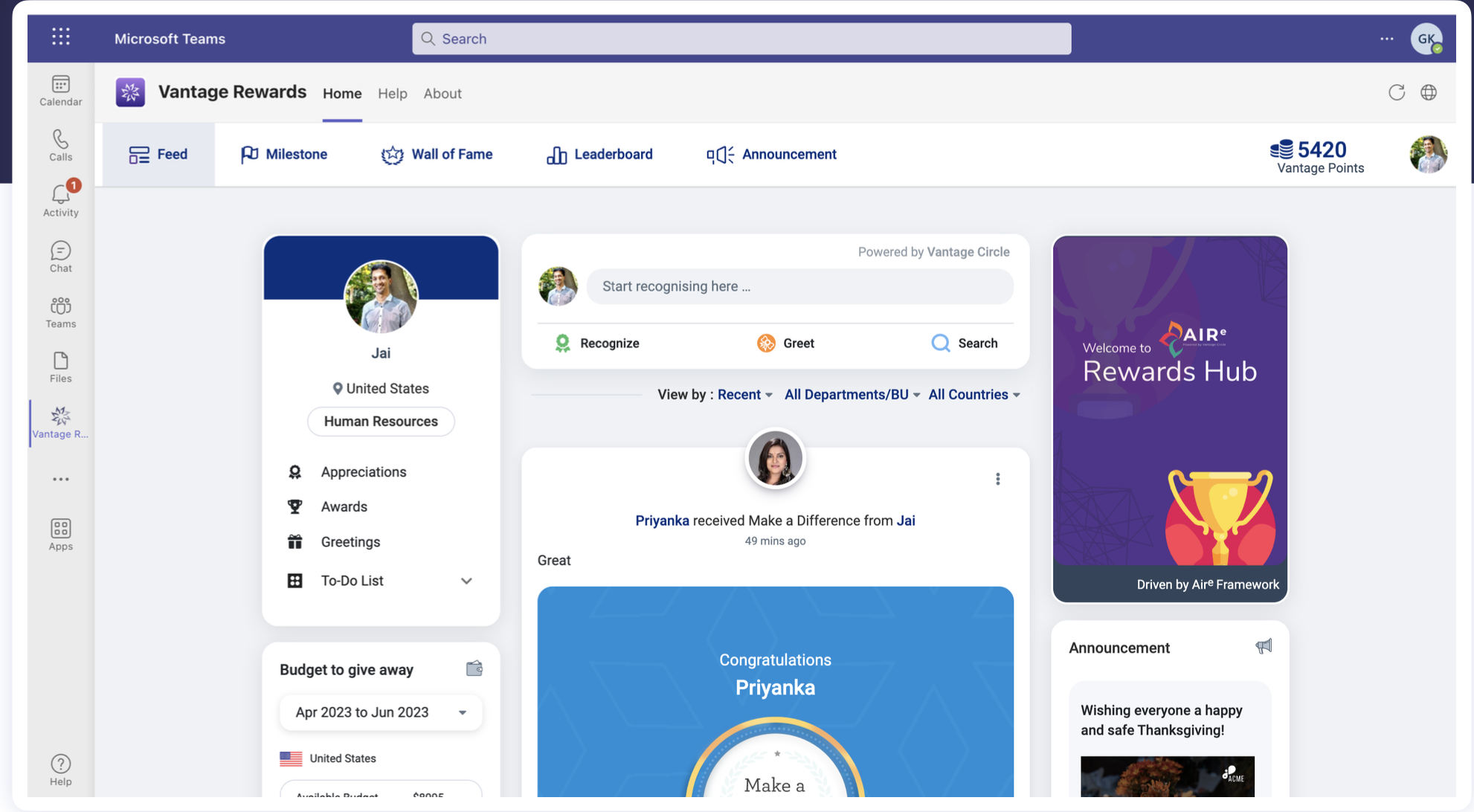
Millennials don’t want to wait a year to know if they’re doing a good job. They expect feedback in real time. And only recognition platforms like Vantage Recognition can make that possible at a larger scale.
It turns appreciation into a daily habit rather than a quarterly ceremony. Through their integration with Microsoft Teams, managers and peers can recognize key contributions in seconds. For distributed US teams, this creates a shared recognition culture, even when people never share the same office.
Improving Financial Wellbeing with Vantage Perks
Vantage Perks is a corporate discount and cashback platform with a global catalog of thousands of offers from top brands. It distinguishes itself not as a perk in the traditional sense, but as a practical financial extension of compensation. It’s about making real savings on essentials, experiences, and everyday purchases that affect household budgets.

Source: Vantage Perks
Employees can access negotiated discounts across categories like dining, travel, entertainment, electronics, personal care, and more. It’s a toolkit for lowering the cost of living itself.
Moreover, with every purchase made through the platform’s curated offers, employees can earn cashback reward points. These points can often be redeemed for gift cards or shopping rewards across favorite retailers, amplifying spending power rather than simply shaving dollars off a price tag.
Supporting Wellness through Vantage Fit
Vantage Fit is a wellness platform that integrates well-being into everyday work life through simple challenges, activity tracking, and team participation. It encourages employees to move more, stay active, and build healthier habits together.

Source: Vantage Fit
Furthermore, leaderboards, badges, and team challenges transform activity tracking into friendly competition. Whether it’s a daily step goal or a multi-week wellness journey, participation becomes both social and measurable, not merely optional.
Conclusion
Millennials survived recessions, adapted to remote work overnight, and rebuilt their careers through relentless uncertainty. In the process, they learned to adapt faster than the systems around them.
What engages them now is refreshingly practical. They want recognition that is immediate and specific. They want you to support their financial wellbeing beyond base salary and trust them with autonomy while maintaining accountability. The companies that get this right will unlock the full potential of a generation that's been ready to lead all along.
FAQs
1. How do you Motivate Millennials at Work?
You can motivate millennials at work by offering meaningful recognition, regular feedback, growth opportunities, and flexible work options.
2. Why are Millennials Disengaged in the Workplace?
Many millennials are disengaged due to limited growth opportunities, and a lack of recognition. Meanwhile, poor leadership, burnout, unclear expectations, and rigid workplace policies also contribute to declining motivation.
3. How often should Millennials Receive Recognition?
Millennials respond best to frequent, real-time recognition rather than annual or quarterly praise.
4. Do Millennials Prefer Remote or Hybrid Work?
Most millennials prefer flexible work with a strong preference for hybrid work models because it offers the structure of in-office collaboration with the autonomy of remote flexibility.
5. What is the Fastest Way to Improve Millennial Retention?
The fastest way to improve retention is to combine strong leadership with clear growth paths and meaningful recognition. When millennials feel valued, supported, and challenged, they’re far more likely to stay.

This article is written by Shikha Gogoi, a Content Marketing Specialist at Vantage Circle, where she has spent years crafting insightful, SEO-driven content on employee engagement, recognition, and workplace culture. With a strong foundation in content strategy and storytelling, Shikha is passionate about helping HR leaders and organizations build people-first workplaces through impactful content.
Connect with Shikha on LinkedIn, or reach out to editor@vantagecircle.com for inquiries.