
Research from the Japanese National Institute for Psychological Sciences found that receiving a compliment activates the same area of the brain as receiving money. So, when you tell a colleague they did great work, you're not just being polite, you're giving their brain a genuine reward.
We invest most of our time and energy at work, yet meaningful recognition often gets skipped. 50% of employees believe turnover would drop if managers recognized their efforts more often. And 69% of employees say they'd work harder if their contributions were acknowledged. Yet most workplaces still treat employee recognition as an afterthought.
Read our blog on: Top 58 Most Important Employee Recognition Statistics in 2026
This guide gives you 150+ compliments for coworkers inspired by 14 real workplace situations, a practical framework for delivering them well, and advice on how to accept a compliment gracefully. Whether it's an performance review, a team meeting, or a quick Slack message, there's something here for every moment.
150+ Compliments for Coworkers, Organized by Situation
Each section below uses a numbered list, so you can pick and use what fits. Every category includes a short introduction, so the compliments land in the right context.
No compliments found for this filter.
Why Compliments at Work Are a Business Imperative, Not Just Nice-to-Have
It's easy to treat workplace compliments as a soft benefit: pleasant, optional, and easy to skip when things get busy. But did you know there's a neuroscience behind a well-placed compliment?
When someone receives specific recognition, the brain releases dopamine - the same chemical that reinforces habits and motivates repeated behavior. It signals to the brain that the behavior was worth repeating, making it more likely to happen again.
The timing matters, too. A compliment given close to the moment it was earned creates a direct link between the action and the reward. The longer you wait, the weaker that connection gets.
Generic praise like "great job" skips this entirely. Without a specific behavior attached, there is nothing for the brain to hold onto. The more precise the recognition, the stronger the effect.
How to Give Compliments at Work (The SIR Framework)
Knowing what to say is useful. And then, knowing how to say it is what makes it land. The SIR Framework is a simple structure for giving compliments that are specific, meaningful, and memorable.
Specific
Name the exact behavior or outcome.
Impact
Connect what they did to a result that matters.
Relationship
Express what it means to you or the team.
But this structure alone isn't enough if the words you choose are wrong. That's where most workplace recognition falls flat - it sounds like a compliment, but it functions like lip service.
Understanding the difference between a genuine compliment and flattery is what makes the framework actually land.
Compliment vs. Flattery
A compliment references a real behavior, outcome, or quality. Flattery is vague and generic.
How HR Teams Can Turn Individual Compliments into a Recognition System
-
Build a recognition moment into weekly team meetings - 2 minutes is enough.
-
Create a peer recognition channel in Slack or Teams with a clear norm around how it's used.
-
Tie compliments to company values through badge or nomination systems.
-
Train managers on the SIR Framework as part of leadership development.
-
Make milestone recognition (anniversaries, promotions) a process, not an afterthought.
-
Measure recognition frequency as part of your engagement survey and act on the data.
From Words to a Recognition System
Recognition that's systematic, tied to values, and visible across the organization is what actually shifts culture.
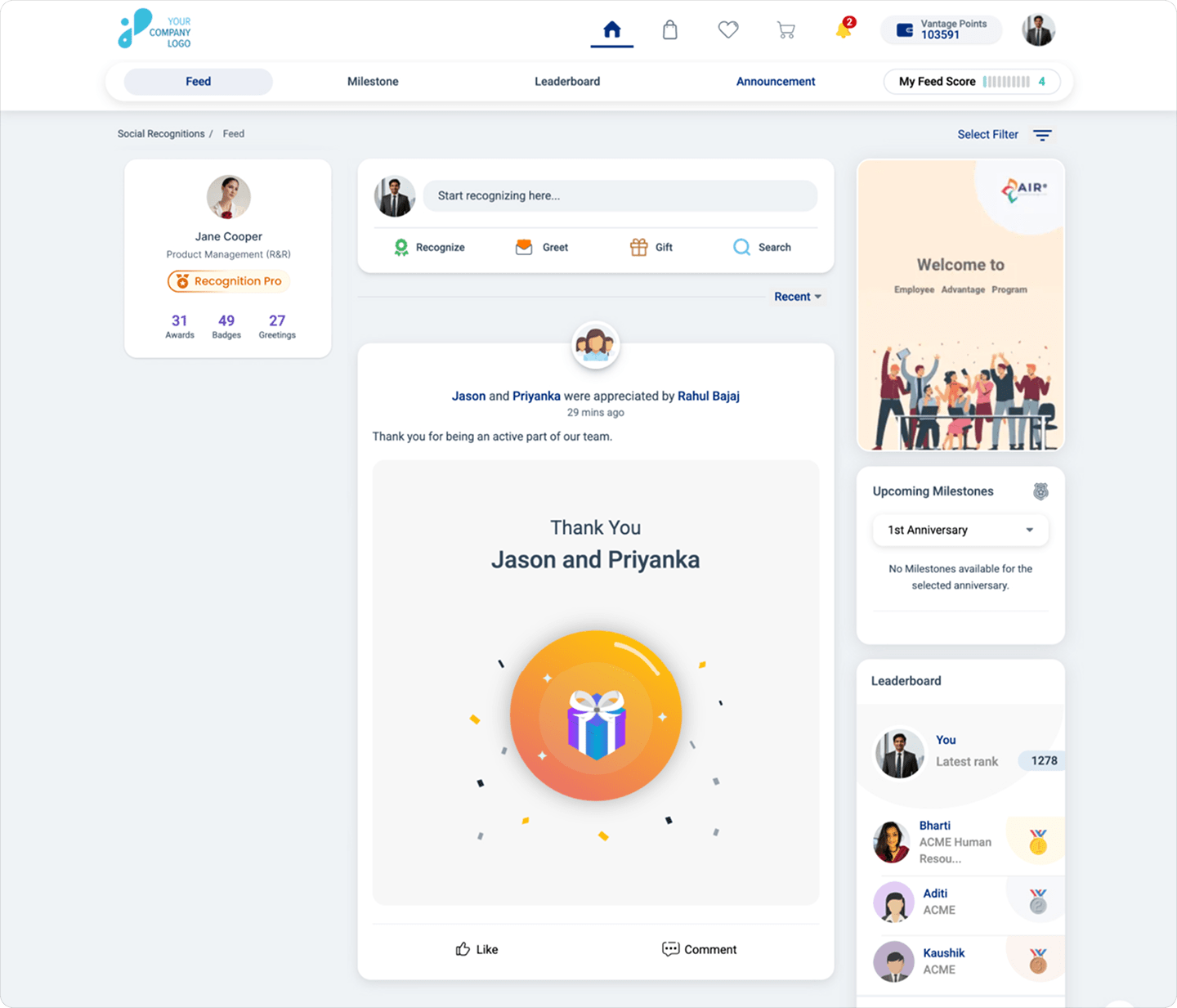
Vantage Circle's recognition platform lets employees recognize each other in real time - with points, public shout-outs, and value-aligned badges.
01
Vantage RecognitionPoints-based peer and manager recognition with a social recognition feed - so every shout-out is visible across the organization, not just between two people.
02
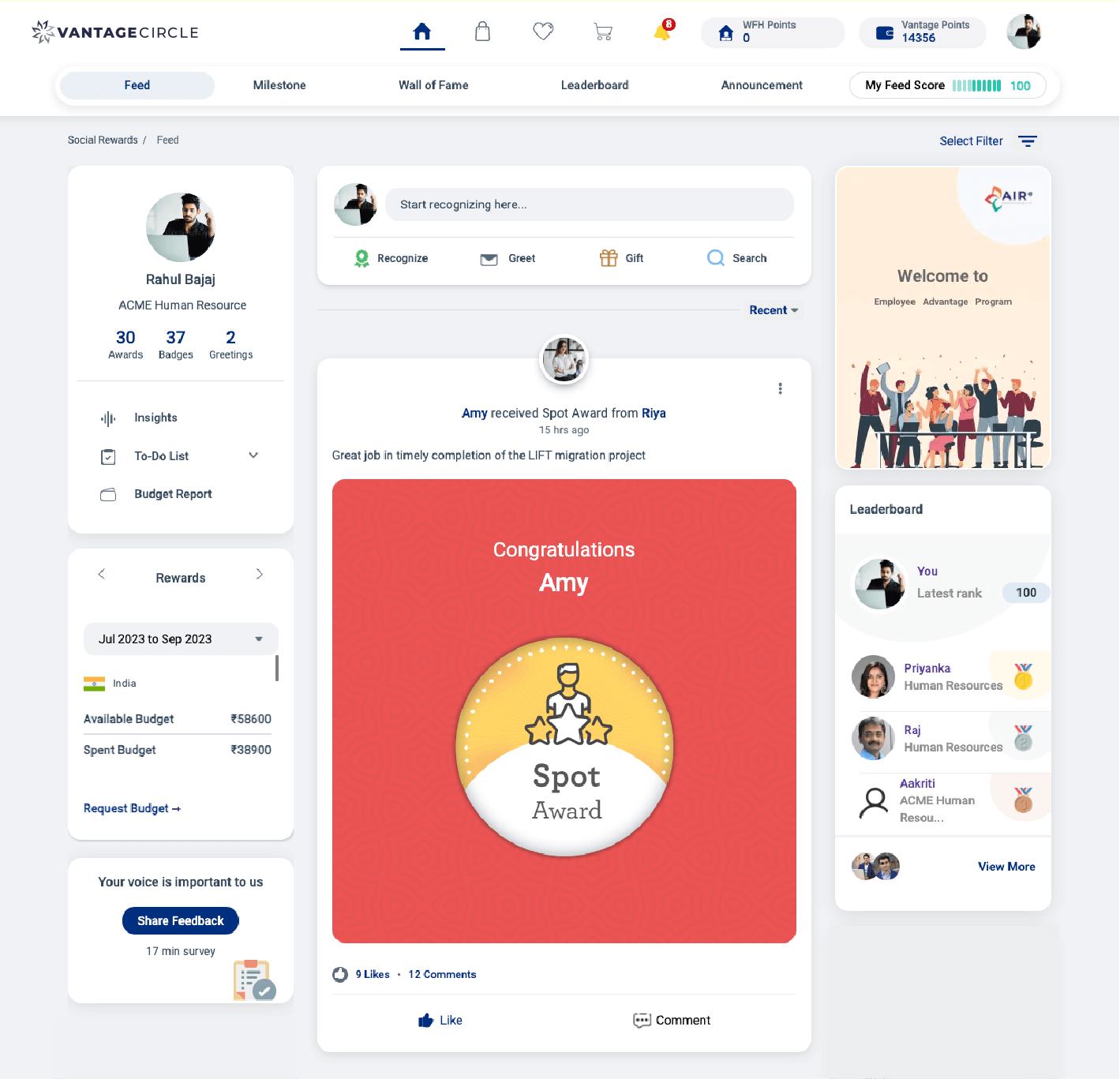
Peer-to-Peer RecognitionAny employee can recognize any colleague, any time - no manager approval needed. Recognition becomes a habit, not an event.
03
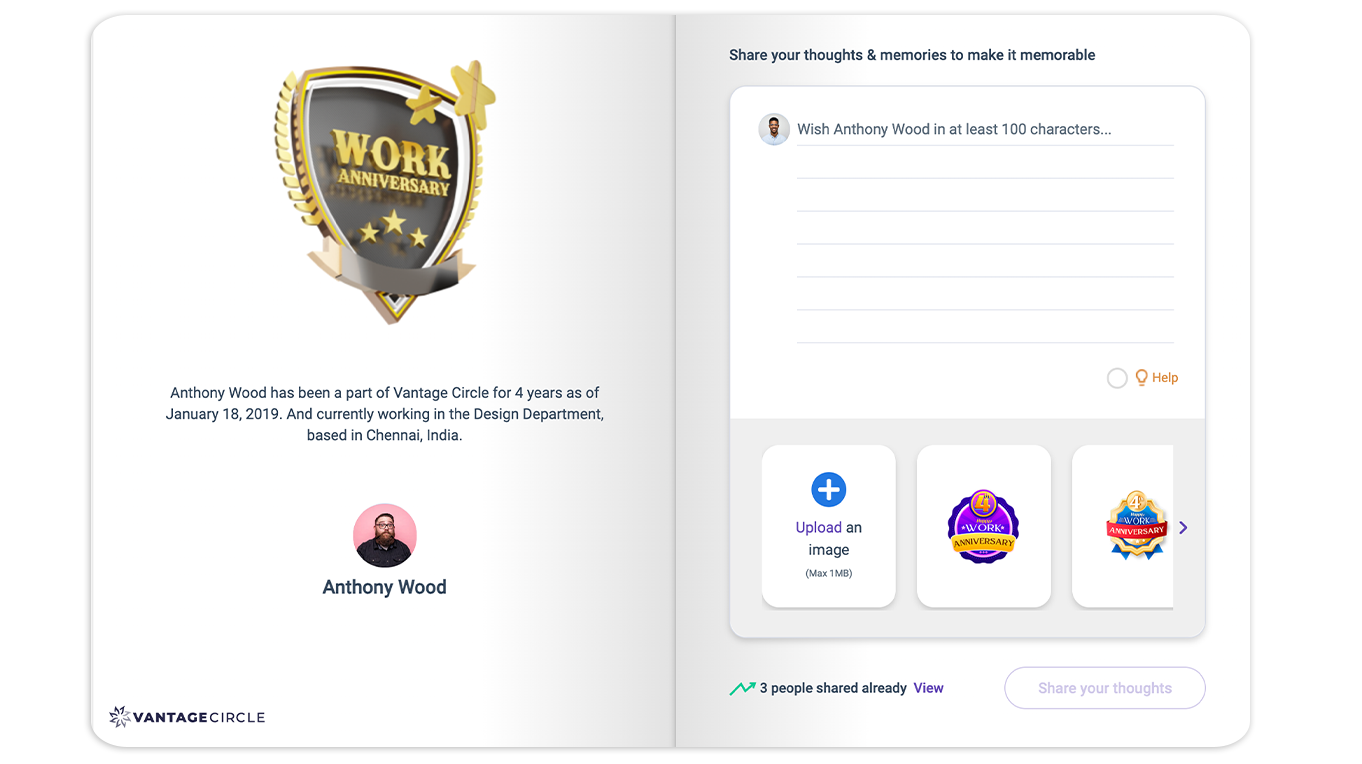
Service YearbookCollect peer messages and milestones into a personalized recognition record - a lasting reminder of the impact someone has made on their team.
04
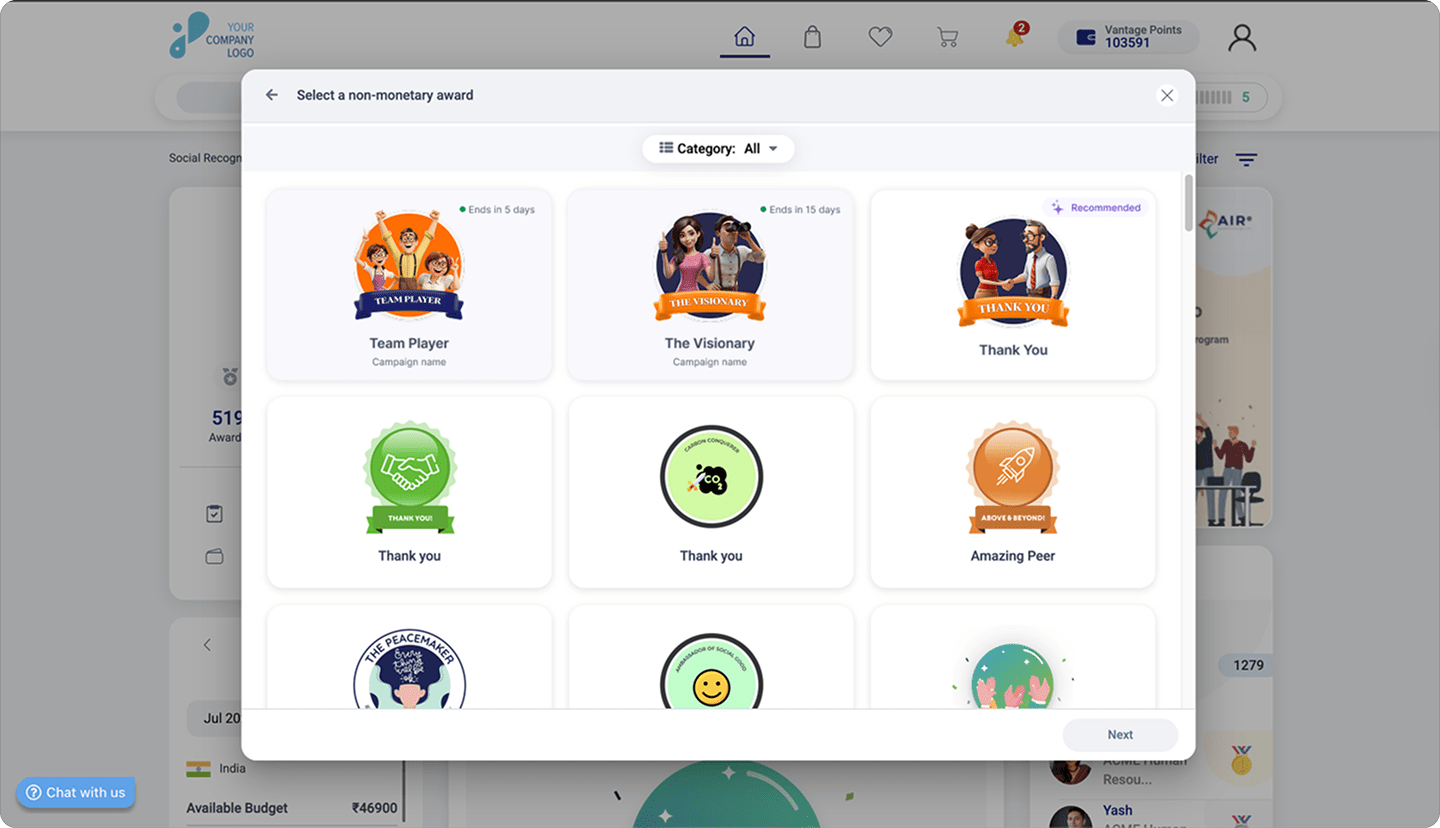
Value-Based BadgesTie every compliment back to a company value - so recognition reinforces the behaviors that matter most to your organization.
How to Accept a Compliment at Work (Gracefully and Professionally)
Accepting a compliment at work gracefully is also a professional skill.
The only required response is a sincere thank you but knowing what to say beyond that builds stronger relationships.
What to Say When a Coworker Compliments Your Work?
-
"Thank you. That means a lot coming from you."
-
"I really appreciate you saying that. This one pushed me."
-
"Thank you. I'm glad it came together the way it did."
-
"That's kind of you to notice - I put a lot into that."
-
"I appreciate the feedback. It helps to know it landed well."
-
"Thank you. The team made that possible - I'll pass it along."
-
"I really needed to hear that today. Thank you."
-
"Thank you - I'll take that as motivation to keep going."
One thing to avoid: deflecting. Saying "Oh, it was nothing" or "I just got lucky" doesn't read as humble. It dismisses the giver's observation and makes them less likely to compliment again. A direct, confident thank-you is always the right move.
Frequently Asked Questions About Compliments for Coworkers
1. What are good compliments to give a coworker?
Good compliments for coworkers are specific, sincere, and tied to an observable behavior or outcome. Rather than "great job," try "the way you handled that client call kept the relationship intact - that was impressive." The more specific the compliment, the more meaningful it lands.
2. How do you compliment a coworker professionally?
Use the SIR Framework : be Specific about what they did, describe the Impact it had, and express the Relationship dimension (what it means to you or the team). Time your compliment close to the moment it happened. Whether to do it publicly or privately depends on the person and the achievement.
3. What are some nice things to say about coworkers?
Nice things to say about coworkers include recognizing their reliability ("The team always knows you'll follow through"), their attitude ("Your energy in meetings changes the room"), and their expertise ("Your instinct on that problem saved us two weeks"). Specificity is what separates a nice thing from a meaningful one.
4. How do you accept compliments from a coworker gracefully?
Accept it with a simple, direct thank you. Don't deflect ("Oh, it was nothing") as this dismisses the giver's observation. Don't over-explain ("Well, I had a lot of help..."). A confident "Thank you, I really appreciate you saying that" is professional and complete.
5. What should I say to appreciate my colleague?
Words of appreciation for good work done to colleagues land best when they name the specific action, connect it to the team's success, and feel personal. Start with what they did, explain why it mattered, and close with genuine gratitude. Even one sentence built this way outperforms a paragraph of generic praise.
6. Can you compliment your boss without it seeming flattery?
Yes. The key here is specificity and sincerity.
"Your feedback on my presentation helped me restructure the whole argument" is a compliment. "You're the best manager ever" is flattery.
Focus on specific behavior, decision, or moment of support. Upward recognition, when genuine, strengthens the working relationship.
7. How should HR use compliments in a recognition program?
HR can formalize compliments by building structured moments into existing workflows : weekly shout-outs in team meetings, a peer recognition channel, value-aligned nomination systems, and milestone acknowledgment processes. The goal is to make compliments a habit, not an event. Platforms like Vantage Rewards help scale this across large organizations.
8. How often should employees give compliments?
There's no fixed rule, but the research suggests that timely recognition, close to the moment it's earned is more valuable than frequency alone. A specific compliment given once a week is more powerful than generic praise given daily. The quality and specificity of a compliment matter more than the volume.
Make Every Compliment Count
Compliments are the most accessible recognition tool available to anyone at any level. They cost nothing and return everything in trust, morale, and performance. The 150+ examples in this guide give you the words. The SIR Framework gives you the structure. The only thing left is to use them.
If you're an HR leader aiming to move beyond occasional gestures and create a culture where recognition is consistent and meaningful, our guide takes the conversation further with practical insights and ideas.

Susmita Sarma is a Digital Marketer at Vantage Circle, making employee recognition less of a checkbox and more meaningful - helping organizations say we value our people and truly mean it.
Connect with Susmita on LinkedIn.