





How HR Leaders Can Use Reinforcement Theory to Shape Workplace Behavior

A Global Employee Recognition and Wellness Platform
Have you ever noticed how a simple “well done” can change how someone approaches their work the next day?
In most workplaces, behavior isn’t shaped by policies alone. It’s shaped by what gets recognized, rewarded, or quietly ignored. Soon enough, employees pick up clear signals about which actions truly matter.
This is exactly where reinforcement theory comes in.
At its core, reinforcement theory suggests that people tend to repeat behaviors that lead to positive outcomes. For HR leaders trying to build the right culture and performance habits, this idea is more powerful than it sounds.
Let’s understand how it works and how HR can apply it effectively in the workplace.
What is Reinforcement Theory?
Reinforcement theory is the assumption that we can alter our behaviors by changing the consequences. In other words, a person's behavior is motivated by the repercussions of the action.
Basically, positive behaviors get repeated due to the cause-and-effect relationship. Negative behaviors do not.
E.L. Thorndike proposed this concept in 1911, which also came to be known as the "law of effect." BF Skinner, on the other hand, has given the theory a tangible form by adding several modern ideas and interpretations.
How Reinforcement Theory Differ from Other Motivation Theories
Many motivation theories try to explain what drives people at work. Some focus on human needs, others on expectations or job satisfaction.
However, reinforcement theory looks at the problem from a slightly different angle. It focuses on behavior and the consequences that follow it rather than internal motivation.
Let’s understand it through a quick comparison:
1. Reinforcement Theory vs Maslow’s Hierarchy of Needs
Maslow’s theory explains motivation through human needs such as safety, belonging, and self-actualization.
Reinforcement theory focuses less on needs and more on what happens after a behavior. If an action leads to a positive outcome, people are more likely to repeat it.
Do Give a Read: Maslow's Hierarchy of Needs in Employee Engagement
2. Reinforcement Theory vs Herzberg’s Two- Factor Theory
Herzberg suggested that motivation depends on two sets of factors: hygiene factors and motivators.
Reinforcement theory takes a simpler view. It emphasizes reinforcing desired behavior through recognition and rewards.
3. Reinforcement Theory vs Expectancy Theory
Expectancy theory suggests that employees are motivated when they believe effort will lead to performance and rewards.
But according to reinforcement theory, if employees repeatedly experience positive outcomes after certain actions, those behaviors become stronger over time.
Have a quick look on the table below as well:
| Motivation Theory | What It Focuses On | Core Idea | How It Shows Up In The Workplace |
|---|---|---|---|
| Reinforcement Theory | Behavior and consequences. | People avoid actions that lead to negative consequences. They tend to repeat the ones that have positive consequences. | Managers reinforce desired behaviors through recognition, rewards, or feedback. |
| Maslow’s Need Hierarchy Theory | Human needs and personal fulfilment. | Primary motivation comes from hierarchy of needs such as safety, belonging, esteem, and self- actualization. | Organizations can support such motivation through job security, supportive culture, career growth and recognition. |
| Herzberg’s Two Factor Theory | Job satisfaction and dissatisfaction. | Herzberg proposed that employee motivation is shaped by hygiene factors like salary and policies, and motivators such as recognition, achievement, and growth. | Companies improve motivation by ensuring fair policies. At the same time, providing meaningful work and growth opportunities. |
| Expectancy Theory | Effort, performance and rewards. | Employees feel motivated when they believe their effort will reap meaningful rewards. | Clear performance goals, transparent reward system, and fair evaluation process reinforce the believe. |
It’s worth noting for HR leaders that reinforcement theory is especially practical because it focuses on something managers can actively influence. In simple words, recognition, rewards, and feedback.
According to Gallup, the most effective recognition is honest, authentic, and individualized.
Types of Reinforcement Theory
Understanding reinforcement and its types is key to effectively shaping behavior and driving positive outcomes. So, here are the different types of reinforcement:

1. Positive Reinforcement
Positive reinforcement is when the application of a specific positive outcome increases the probability of the behavior that follows the outcome to be repeated. It implies that a positive response is given when an employee shows positive or acceptable behavior. This, in turn, motivates the employee to repeat certain behavior.
It’s the perfect way to evoke desirable behaviors in your employees regularly. Since the reinforcers motivate the employees, they complete the tasks readily. As a result, it leads to a highly productive work environment.
For Example: Rewarding employees for their work. It will not only motivate the individual to carry out the required task but also push them to be better at it.
2. Negative Reinforcements
Negative reinforcement is when you remove a negative or unpleasant consequence to increase the desired behavior. In this case, your employees are not rewarded for completing the task.
Instead, the reinforcement occurs by eliminating anything that is hindering their growth.
For Example: Let's say you transfer your employees to a new location every three years. But to boost performance, you have created a new policy that states that top performers will not be transferred. Believe me when I say that your employees will work twice as hard and produce better results to avoid the transfer.
Here, they are not getting reinforced directly. The removal of the unwanted situation is amplifying the desired behavior.
According to National Library of Medicine,
Positive and negative reinforcement are effective for treating escape-maintained destructive behavior. Results showed that a combination of positive and negative reinforcement was most effective for increasing compliance.
3. Punishment
Punishment is the kind of reinforcement used to put an end to the recurrence of an unwanted behavior. In simpler terms, it means implementing an undesirable consequence for repeating an undesirable behavior.
In the corporate world, it means penalizing your employees for doing something restricted.
Punishment is usually used by managers as a last resort when other reinforcers are not working. It’s because it might result in an inadequate response and stress out both the employee and the employer.
Punishments can be positive and negative too. Positive punishment involves adding something unappealing to minimize the behavior. On the contrary, a negative punishment consists of taking away something desirable, which helps stop that behavior.
For Example: If an employee consistently arrives late to work, a manager might implement a policy where repeated tardiness results in docking pay (negative punishment) or assigning extra tasks (positive punishment). This discourages the employee from continuing undesirable behavior.
Also, do not confuse negative reinforcement with punishment. Punishment gives a negative consequence, while negative reinforcement takes away the negative consequence.
4. Extinction
Extinction involves eliminating a reinforcer to discourage workers from performing a learned action. In other words, it means removing a motivator to stop the behavior supported by that motivator.
Unlike punishment, extinction does not provide a negative consequence but removes the reward that encourages bad practices.
For Example: Employees are often motivated to work overtime due to extra pay and benefits. If overtime pay is removed, the incentive is gone, discouraging them from working overtime. This stops the learned behavior when it is no longer reinforced.
Reinforcement Section
Reinforcement is not just about what reward you give, but also when and how often you give it.
In simple terms, reinforcement schedules refer to the pattern or timing of rewards used to encourage a behavior. The way rewards are delivered can significantly influence how consistently employees repeat a behavior.
Here are some common reinforcement schedules that HR leaders often see in workplace systems:
1. Fixed Interval Reinforcement
In this schedule, rewards are given after a specific period of time.
For example, employees receiving quarterly bonuses or annual performance reviews fall under a fixed interval schedule. Since the reward comes at predictable intervals, employees often increase their efforts before the evaluation period arrives.
2. Variable Interval Reinforcement
Here, rewards are given at unpredictable time intervals.
For instance, a manager might unexpectedly recognize an employee during a team meeting or offer spontaneous appreciation.
That uncertainty encourages employees to maintain consistent performance.
3. Fixed Ratio Reinforcement
Reinforcement happens after a specific number of actions.
Sales commissions are a classic example. A salesperson earns a reward after closing a certain number of deals. An approach like that encourages employees to maintain steady output.
4. Variable Ration Reinforcement
Some rewards don’t follow a clear pattern. They appear after a series of actions, but no one knows exactly “when." Variable Ration Reinforcement is quite the same.
In this schedule, rewards are linked to actions, but the exact number varies.
Take for example, organizations occasionally recognize outstanding contributions or give surprise spot awards for exceptional work.
In such a case, recognition is tied to effort rather than timing. It encourages employees to keep performing at a high level.
Combine structured rewards with occasional surprise recognition. The mix often keeps motivation stronger and more consistent.
How Does Reinforcement Theory Apply to the Workplace
As a manager, you must make sure you use the suitable reinforcer for the right employee. It is because a wrong reinforcer will create conflict and discontent. Some factors on which the reinforcer and employee relationship will depend are-
1. Satisfaction Factor of the Employee
For reinforcement to work, employees must find the reinforcers meaningful. If your employees are unsatisfied with the recognition and rewards, it will not inspire any motivation within them to pursue positive action.
2. Speediness
The time factor also plays a vital role in reinforcing an employee for positive motivation. If the gap between giving the reward and your employees' action is too long, it will not serve the cause. Your employees' level of motivation and the reinforcer's effect will depend on the timeliness and frequency of the reward.
3. Size Of the Reward
Size or the magnanimity of the reward is also critical for an employee to get positively reinforced. If the reward is too minute and the employee does not desire it at all, it will fail to impart a positive experience.
For example, a bigger promotion will give more motivation than a dry promotion.
Use a recognition and rewards platform to give instant rewards. It will ensures that employees are acknowledged promptly for their efforts.
In a nutshell, reinforcements act as a game of rewards and punishments to motivate your employees. Although all reinforcements are helpful, positive and negative reinforcements are more typically used to enrich a more acceptable behavior.
Key Tips for Implementing Reinforcement Theory in Your Workplace
Before you start motivating your employees, backed by this theory, here are a few things you might not want to miss.
Every person is different, and thus, each person will have a contrasting understanding of motivation.
-
Some will get motivated by a word of appreciation
-
Some others will get inspired by a quarterly bonus
-
Again, some will require extrinsic motivation from extrinsic rewards so on and so forth.
Thus, as an HR professional, you must understand your employees' wants and needs. It is the only course of action to organically motivate them. Few small factors that you can look after are-
1. Consequences Should Be Meaningful
An employee must feel connected with the consequences of the reinforcer so that they are motivated from within.
2. Fixed Interval Scheduled Between Rewards
A significant gap between the action and getting rewarded for it will cause your employees' expectations to fade. People are often less interested and less enthusiastic about delayed rewards and appreciations.
3. Use A Problem-Solving Approach
The approach while using a reinforcer should be problem-solving. The underlying undesirable actions must be determined and evaluated before implementing the solutions. It should be a collective effort of the leadership and the staff.
4. Do Not Force the Situation
No good can happen if you make people do things forcefully. Resentment and frustration will build up, leading to a very toxic work environment. To avoid this, it is essential that you know your employees. Listen to them, understand what they are saying, define the expected behaviors, and finally reinforce their actions!
5. Understand Your Employees' Self-interest
Every employee is unique, so their motivational requirements also vary from person to person. Hence, knowing their self-interest is the only way through which you will know if the efforts are going to bring fruits.
6. Communicate The Consequences
This is one of the most crucial factors before implementing a reinforcer. Without clarifying the consequences, the employees will not know why they are being reinforced. An absence of clarification will lead to confusion and conflict rather than motivation.
Recommended Resource: Key Tips To Improve Workplace Communication
Common Mistakes When Using Reinforcement Theory In The Workplace
Reinforcement theory can be powerful. But its impact depends on how thoughtfully it is applied.
In many workplaces, small missteps in how recognition and rewards are delivered can reduce their effectiveness.
So, let’s look at some of the common mistakes organizations make:
1. Delayed Recognition
According to a survey, weekly recognition plummeted from 29% to 15%. Manager recognition also saw a hit, dropping from 20% to 15%.
That said, this analysis from Forbes is quite concerning.
Reinforcement works best when it happens close to the behavior.
If recognition or rewards come too late, the connection between the action and the outcome becomes weak.
Research in behavioral psychology shows that immediate reinforcement strengthens behaviors more effectively than delayed rewards.
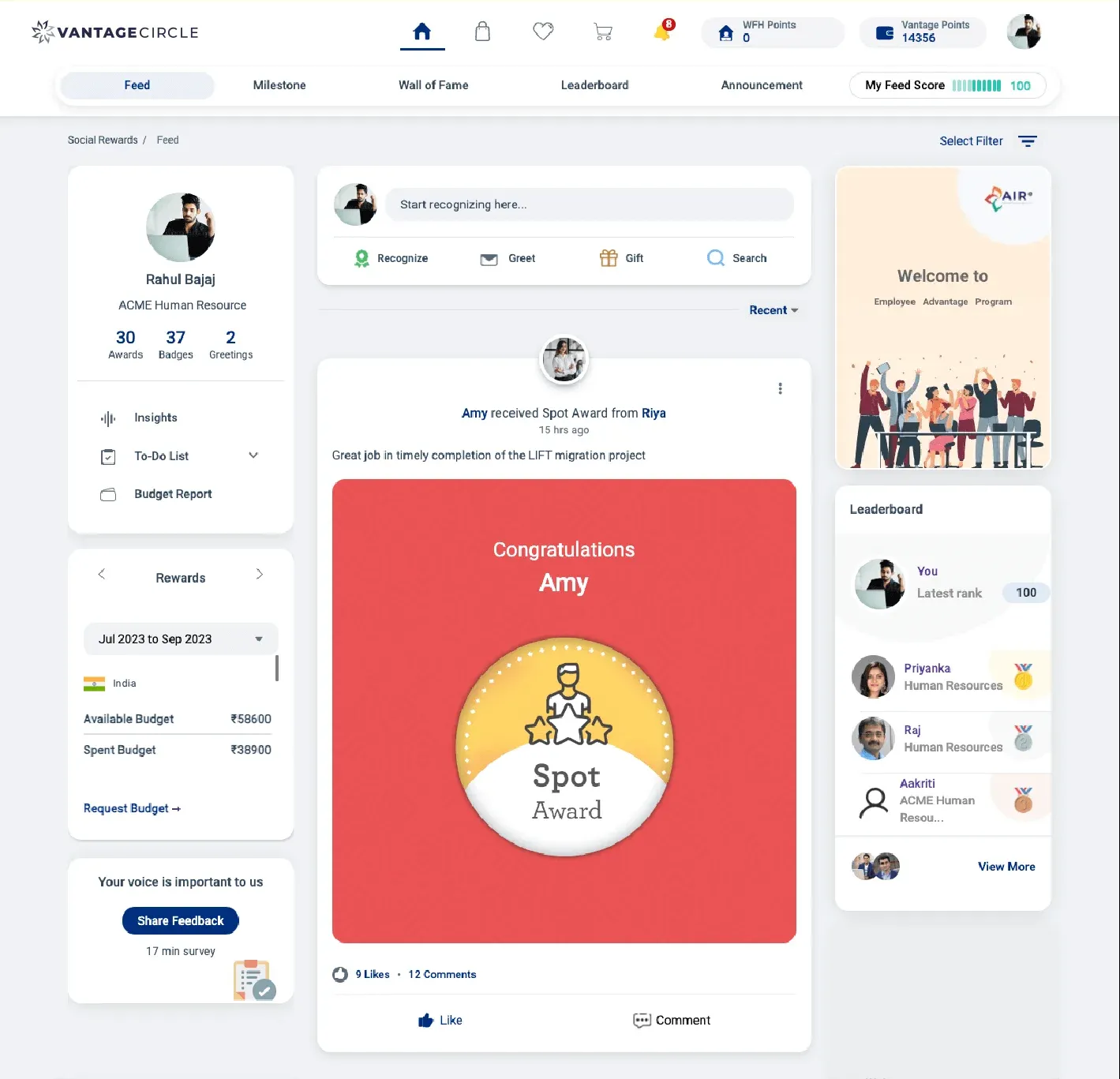
Now, this is one of the reasons many organizations are adopting recognition and rewards platforms like Vantage Recognition to streamline and scale their appreciation efforts.
Such platforms make recognition timely, visible, and consistent across teams, helping reinforce positive behaviors more effectively across the organization.
2. Reinforcing the Wrong Behaviors
Incentives tied only to outcomes are not always a great idea. Your employees will prioritize results at the expense of collaboration, ethics, or long-term thinking.
For example, a sales team in your organization is rewarded only for hitting aggressive targets. As a result, employees may focus on closing quick deals rather than building long-term client relationships.
3. Using the Same Reinforcement for Everyone
Not all employees are motivated by the same rewards. Some may value public recognition, while others prefer growth opportunities or flexible work arrangements.
Research from SHRM highlights that employees respond differently to recognition depending on their personal motivations and career stage.
For instance, a company consistently rewards top performers with gift vouchers. While some employees appreciate them, others may value career development opportunities more.
4. Overusing Extrinsic Rewards
Rewards such as bonuses or incentives can motivate behavior, relying on them too heavily may reduce intrinsic motivation over time.
Psychologists have described this as the over-justification effect, where external rewards start replacing internal motivation.
Example: Employees who initially enjoy helping colleagues may begin to expect rewards for every contribution. When the rewards stop, the behavior may decline.
Do Give a Read: Extrinsic vs. Intrinsic Motivation- An Overview
5. Inconsistent Reinforcement
Inconsistent recognition can create confusion about which behaviors are actually valued in the organization.
Studies on workplace recognition suggest that consistent and visible reinforcement helps employees clearly understand expected behaviors.
Example: One manager regularly appreciates team collaboration. And another ignores it and only rewards individual performance. Now, as a result, employees receive mixed signals about what matters.
Recognize the behaviors you want to see more of and do it quickly. Timely recognition makes reinforcement far more effective.
The Business Case for Reinforcement in the Workplace
Reinforcement theory may sound like psychology. But in practice, it often shows up as a business strategy.
Across industries, companies that consistently recognize and reinforce positive behaviors see measurable improvements in engagement, retention, and performance.
Case 1: Microsoft- Reinforcing Collaboration
When Satya Nadella took over as CEO, Microsoft made a major cultural shift.
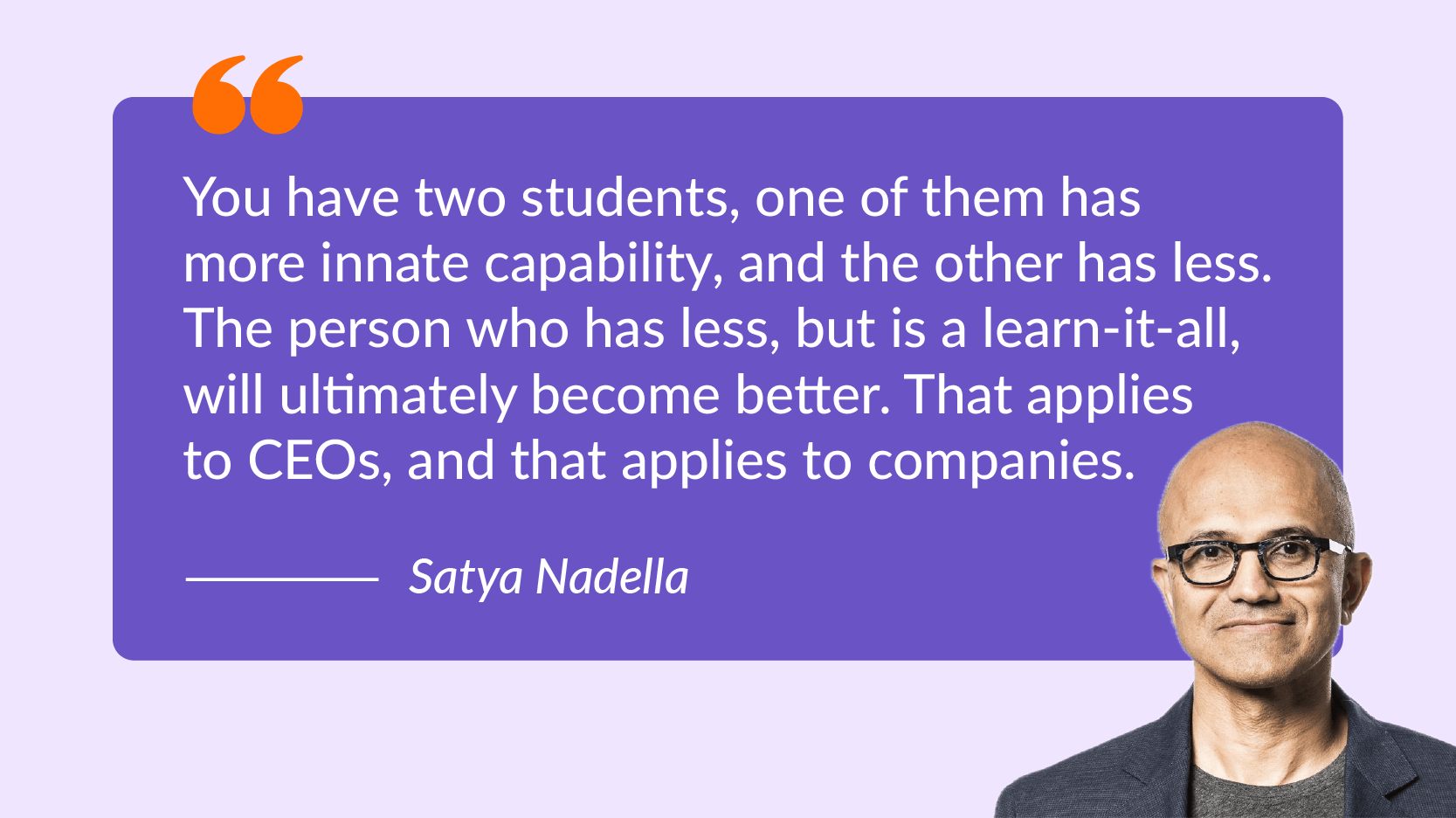
He fostered a culture of “learn-it-all" over “know-it-all." He prioritized appreciating the efforts of his team. And championed values like empathy and a growth mindset. Nadella, in fact, publicly celebrated these behaviors.
Here, you’d love to know what Nadella shared with Wharton professor Adam Grant:
Source: Inc.com
As a result, his recognition empowered employees. They felt more valued and aligned with Microsoft’s vision.
Case 2: Salesforce: Reinforcing Culture Through Recognition
At Salesforce, culture is built around four core values,
- trust
- customer success
- innovation and
- equality
Employees who live these values in their everyday work are often recognized across the company. It could be someone helping a teammate succeed, going the extra mile for a customer, or contributing to the community.
Celebrating these actions, Salesforce reinforces what truly matters in the organization. Over time, these recognitions help turn company values into everyday behaviors.
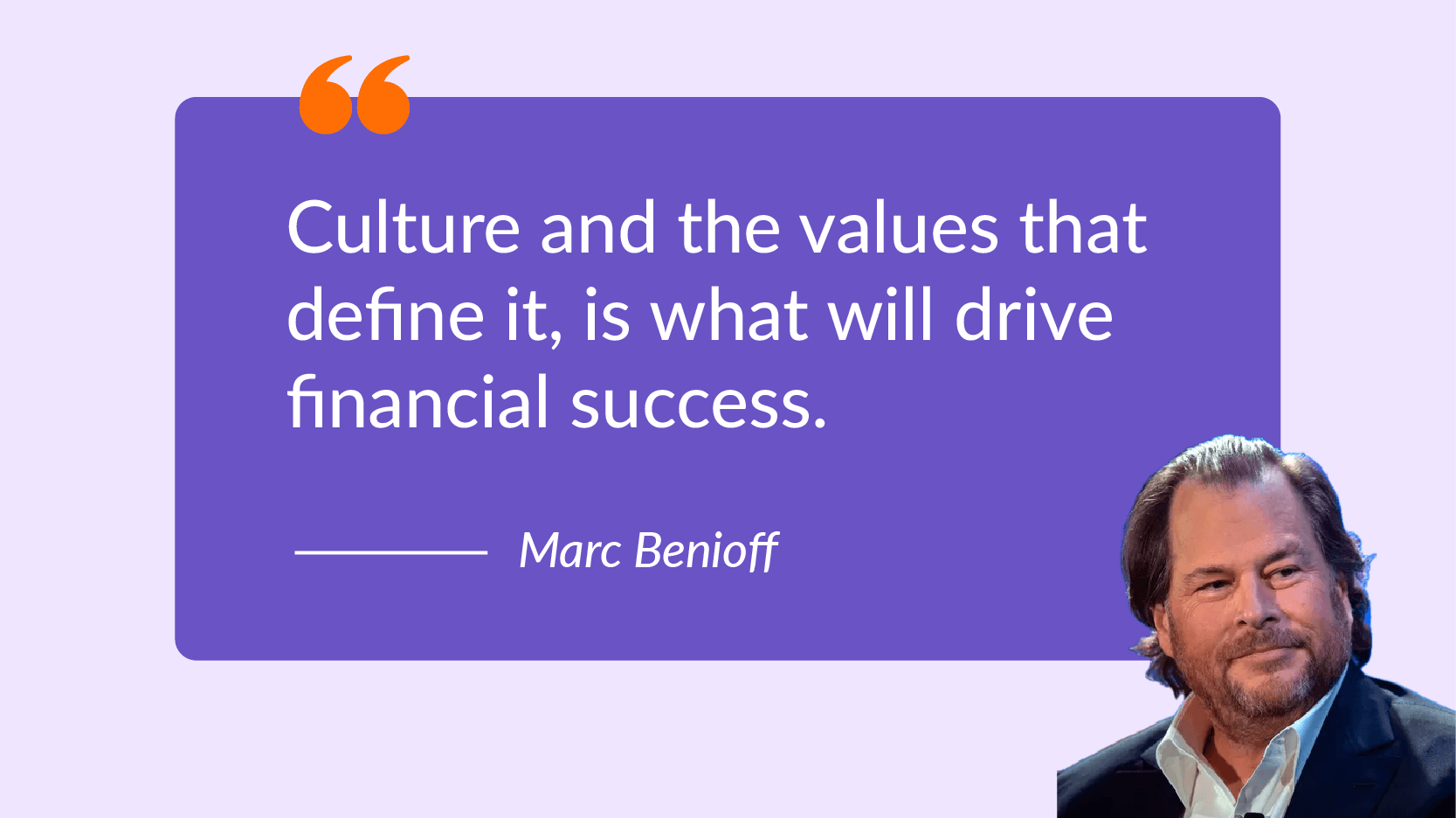
Marc Beniof, CEO of Salesforce, in his book Trailblazer: The Power of Business as the Greatest Platform for Change said,
Importance of Positive Reinforcement in the Workplace
1. Boosts Motivation
Positive reinforcement, like rewards and praise, makes employees feel appreciated and eager to continue their good work. A little praise goes a long way!
Rewards can be simple, like a thank you note, or bigger, like a bonus. It makes employees excited about their work and eager to achieve more.
2. Improves Performance
According to reinforcement theory, clear and immediate recognition of good behavior helps employees understand what is expected of them. Such clarity leads to better performance as employees strive to meet these expectations.
When employees know they will be rewarded for specific actions, they are more focused and productive.
3. Keeps Employees Happy
When employees feel valued, they are more satisfied with their job. It makes them want to stay,
Happy employees are also more engaged and loyal. They tend to speak positively about the company, which can attract new talent and improve the company’s reputation.
4. Creates a Positive Environment
A workplace that rewards good work is a happier place. A positive environment makes teamwork better and lifts everyone’s mood. It encourages collaboration and support among employees.
5. Encourages Growth and Learning
Reinforcement shows employees what they’re doing well and what they can improve. It helps them learn new skills and grow, which benefits both them and the company.
Providing opportunities for training and development as part of the rewards can further enhance their skills. Such continuous growth leads to a more skilled and versatile workforce, ready to take on new challenges.
These points explain the key benefits of using reinforcement theory in the workplace. It highlights how reinforcement can create a motivated, and positive environment.
Do Give a Read: Why The Habit Of Continuous Learning Is Important
FAQs
1. How should managers adapt reinforcement strategies for remote or hybrid teams?
Managers should make recognition more visible and timely in remote settings. Digital recognition tools, team shout-outs during virtual meetings, and quick appreciation messages can help reinforce positive behaviors. Since remote employees have fewer informal interactions, consistent and intentional recognition becomes even more important.
2. Are there ethical concerns with using reinforcement theory to shape employee behavior?
Reinforcement should be used transparently and fairly. If employees feel manipulated or rewarded inconsistently, it can damage trust. Ethical reinforcement focuses on recognizing genuine contributions rather than controlling behavior.
3. Does reinforcement theory work differently across cultures and generations?
Yes, preferences for recognition can vary. Some employees value public recognition, while others prefer private appreciation or career opportunities. Cultural and generational differences often influence what people find meaningful, so HR teams should offer diverse forms of reinforcement.
4. How can organizations measure the ROI of reinforcement-based recognition programs?
Organizations can track metrics such as employee engagement scores, retention rates, productivity, and participation in recognition programs. Improvements in these indicators often signal that reinforcement strategies are positively influencing workplace behavior.
Takeaway
Like any other techniques and theory, reinforcement theory will also be effective or ineffective, based on the situations and how it is applied.
Therefore, it is crucial to know your employees, and study the situation before you motivate your employees. From an HR perspective, this is a very effective tool to encourage acceptable behavior and enhance employee motivation.

Sanjeevani Saikia is a Senior Content Marketing Specialist at Vantage Circle and a voice behind the Vantage Influencers Podcast. As a writer and podcast host, Sanjeevani is dedicated to exploring and promoting recognition-rich, people-first cultures. Through her writing and conversations with HR leaders from around the world, she brings critical industry insights to the forefront. For any related queries, contact editor@vantagecircle.com.