
Employee Recognition goes beyond simply rewarding hard work and achievements. In fact, it’s a vital element that influences an organization’s success in profound ways. But the question that often pops up is- why is employee recognition so important?
Well, employee recognition extends far beyond merely creating a positive and motivating workplace atmosphere. It enhances employee experience and drives long-term retention. That’s exactly what Gallup highlights in its recent report,
Employee who receive high-quality recognition is less likely to leave.
Besides that, recognition is a highly effective, low-cost driver of organizational performance. Understanding its true potential is essential for building a sustainable, high-performing workforce.
In this blog, we’ll explore the transformative power of employee recognition, supported by real-world examples and statistics.
Key Takeaways
- Why recognition is a measurable business metric, not just a morale booster
- What recognition does for business performance: productivity, retention, engagement
- Importance of recognition for employees on human level
- How leadership and manager recognition shape culture
- Peer recognition in modern teams
- Three evidence-backed strategies to build a recognition culture
What is Employee Recognition and Why does it Matter Right Now?
Employee recognition is the practice of acknowledging and appreciating employees for the value they bring to the organization. It can be through their efforts, contributions, achievements, and their positive behaviors at work.
As we know, work has changed. Teams are more distributed, expectations are higher, and burnout is increasingly common. In an environment like this, people need reassurance that their work matters, and they’re adding value. That’s why appreciation and recognition are crucial. It creates a sense of connection in workplaces that often feel fast-paced and transactional.
The urgency is measurable.
Mercer's Global Talent Trends 2026 finds employee thriving at 44 percent, the lowest level it has ever recorded. And Gallup finds only about 1 in 3 employees received recognition in the past week. For HR leaders, that combination reframes recognition as a program to run and measure, with its own coverage and frequency numbers, rather than a feeling to encourage. Getting it right is one of the most direct retention levers available.
Do Give a Read: The Complete Guide to Employee Recognition
Why is Recognition Important at Work for Business Performance?
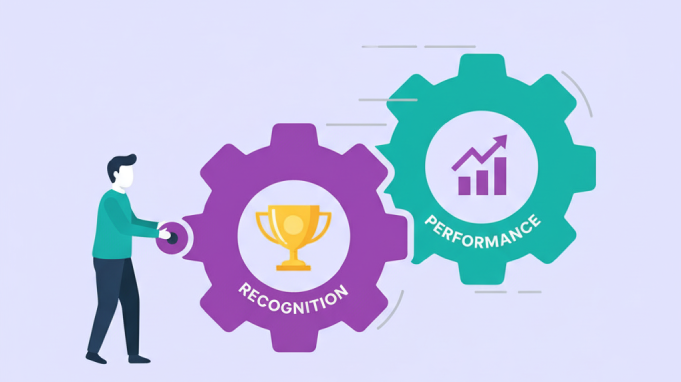
Employee recognition is important for business performance because it measurably improves three things: productivity, retention, and engagement. Leading HR teams treat these as trackable program outcomes, watching receiver coverage, giver coverage, and recognition frequency the way finance tracks spend. The three sections below quantify each lever.
A. Raises Productivity and Performance
Recognition Increase Productivity and Performance?
Feeling appreciated makes employees more focused, more confident, and more consistent in how they show up every day. The data, in fact, back this up.
Gallup research cited by Forbes, highlights that employees who feel they receive the right amount of recognition are four times more likely to be engaged. And most certainly, that engagement directly translates into stronger performance and better results for teams.
B. Reduces Turnover and Save Costs
Recognition plays a major role in whether employees choose to stay. Even with competitive pay, a lack of appreciation can push people to start looking elsewhere. According to SHRM, 71% of employees say more recognition would make them less likely to leave.
But what’s interesting is that employees who feel unappreciated are twice as likely to quit. Put together, these insights show that recognition directly influences whether employees stay or leave.
Example of Organization Boosting Employee Retention with Recognition
Cisco Systems has implemented a comprehensive employee recognition program called the "Connected Recognition" program. It is designed to celebrate and reward employees for their contributions through spot awards, manager nominations, and annual awards.
The Connected Recognition program has been highly successful in boosting employee morale, engagement, and retention at Cisco. It serves as a model for how organizations can use recognition to improve employee retention.
C. Recognition Improve Engagement
Recognition makes a real difference in how connected employees feel at work. In fact, Forbes notes that employees who see recognition as part of their culture are 3.7 times more likely to be engaged.
Employees feeling appreciated can naturally make them feel more motivated, more committed, and more inclined to stay.
Here’s an example for you to put this into perspective.
Related Resource Employee Engagement in 2026
Example of Organization Boosting Employee Experience with Recognition
Zappos, the online retailer famous for exceptional customer service, exemplifies how recognition can enhance employee experience. Their innovative "Zollar" program lets employees award each other points known as "Zollars," which can be redeemed for various rewards.
Furthermore, Zappos encourages frequent appreciation among its employees by promoting peer-to-peer shoutouts. This approach empowers employees to celebrate all achievements, fostering a sense of belonging.
At the end of the day, recognition might seem simple, but its impact isn’t. Feeling seen at work very much shapes
- how people show up,
- how they perform, and
- how long they stay
Why is Recognition Important for Employees on a Human Level?

Beyond performance metrics and retention numbers, recognition matters because it meets a basic human need, to feel seen and valued at work.
It reassures employees that their work is noticed and that they belong. Not simply as employees, but as people.
A recognition program designed around that need is what turns one-off praise into a durable recognition culture, and durable cultures are what retention data keeps rewarding.
A. Increase Belonging and Motivation
Every time an effort is acknowledged, it sends a clear message about the kind of contribution the organization values.
Belonging grows when people don’t have to second-guess whether their work is being noticed. Recognition removes that doubt and helps employees feel more connected to their teams.
That sense of connection naturally boosts motivation. Instead of feeling pushed, employees feel encouraged to share ideas.
Overtime, the impact translates into three key areas
1. Clarity and confidence:
Recognition removes guesswork. Your employees know what good work looks like and where they stand. Knowing where they stand builds confidence and momentum.
2. Momentum, not pressure:
Being appreciated builds momentum. Employees feel motivated to continue doing good work. Not because they’re pushed, but because they’re encouraged.
3. Shared identity:
When recognition highlights values and behaviors, it helps employees feel part of something bigger than their individual role.
B. Supports Mental Health and Reduce Burnout
Recognition plays a significant role in enhancing employee health and well-being by addressing the human emotional need for recognition and appreciation. When employees receive recognition for their efforts, it triggers a cascade of positive psychological and behavioral responses.
Benefits of Recognition on Employee Health and Well-being
- Improved Mental Health: Appreciation boosts self-esteem and confidence, contributing to better overall mental health.
- Stress Reduction: Regular recognition can lower stress levels by creating a more supportive work environment. When employees feel valued, they're less likely to experience work-related anxiety and burnout.
- Better Work-Life Balance: Employees who feel appreciated are more likely to maintain healthy boundaries between work and personal life, as they feel secure in their position.
Example of Organization Using Recognition to Boost Employee Health and Well-being
Patagonia's approach to employee recognition is deeply intertwined with its commitment to promoting **health, wellness, and work-life balance. **
For instance, their on-site yoga and fitness classes promote physical health and foster a sense of community and teamwork.
In addition, Patagonia emphasizes the value of well-being by directly tying recognition to participation in various wellness initiatives. Employees who engage in these programs are honored as “Most Valued Participants” and reward them with Patagonia gear.
Patagonia’s recognition efforts extend beyond the office as well, with family support programs and volunteer time-off policies that demonstrate a deep commitment to support employees beyond the workplace.
Why is Recognition Important in Leadership and Culture?
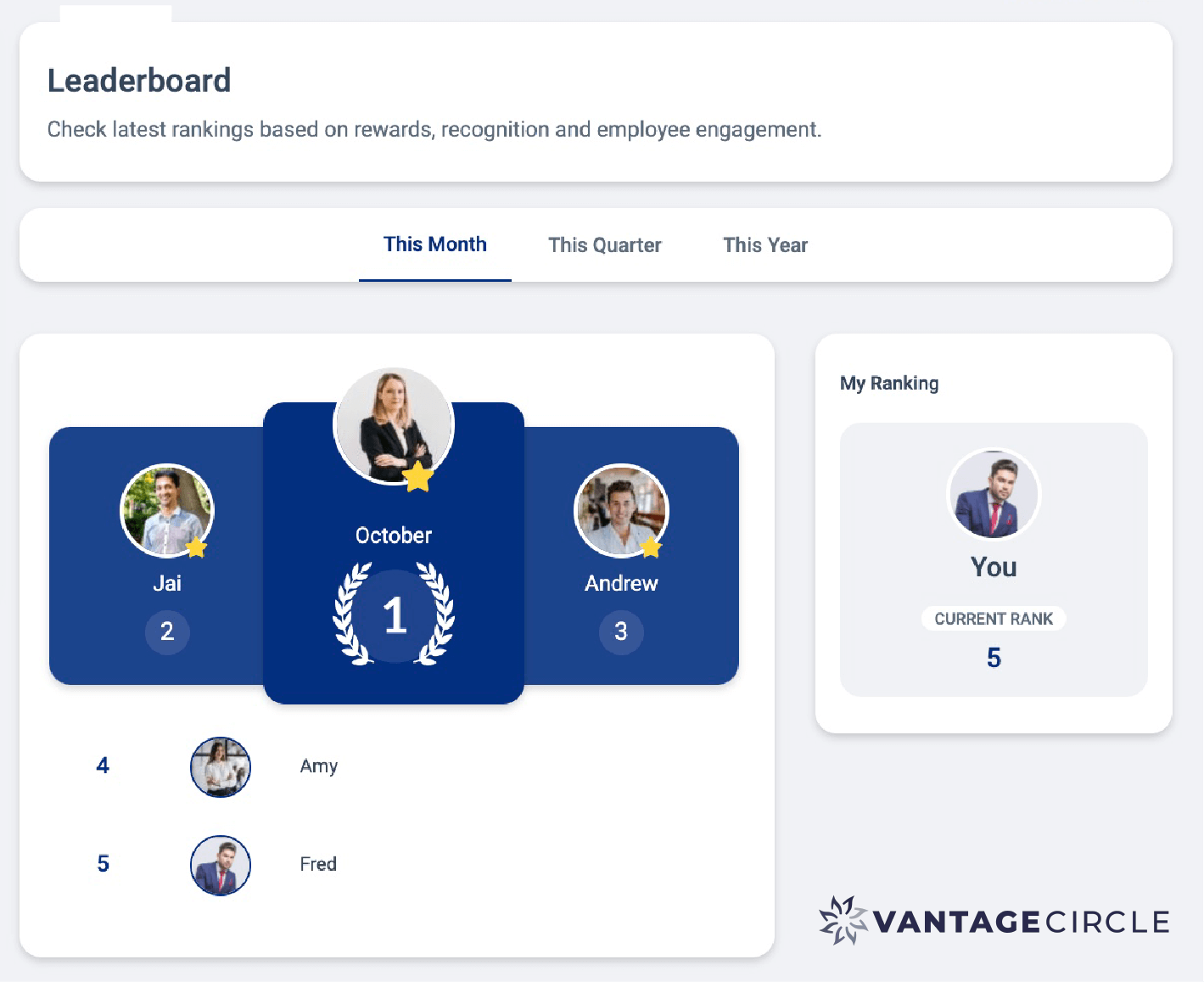
Recognition is important in leadership and culture because leaders set the tone: what they choose to recognize becomes the signal for what the whole organization values, and that signal drives manager participation and recognition-program adoption.
Only 24% of employees say their most memorable recognition came from a high-level leader.
Now, this Gallup report shows how much impact leadership recognition can have when it happens. Recognition from leaders sets the tone for what gets valued and noticed across the organization.
Leader-led recognition establishes,the tone for appreciation, guiding behavior, and embedding it into everyday culture.
A. Manager–led Recognition Strengthen Trust and Retention
Manager-led recognition works because it’s specific and timely. Managers see the efforts, the progress, the problem-solving, and the consistency that often goes unnoticed.
Now, this kind of recognition builds trust over time. Your team members know their manager is
- paying attention,
- understands their work, and
- value their contribution
That trust, undoubtedly, makes every day work feel more secure.
B. Recognition From the C-Suite
C-suite recognition has an outsized influence because it sets the cultural ceiling. What leaders choose to recognize quickly becomes a signal of what truly matters, far beyond policies or value statements.
At its best, recognition from senior leadership:
- Translates values into visible behaviors and outcomes
- Creates a sense of visibility and belonging across levels
- Reduces emotional distance and builds trust in leadership
- Encourages high performers to stay, grow, and invest long-term
- Strengthens employer brand by showing people are valued, not just results
The absence of C-suite recognition sends signals too. When appreciation rarely comes from the top, employees often assume:
- Their work isn’t visible to leadership
- Effort matters less than output
- Results are valued more than people
Example of C-suite recognition shaping culture
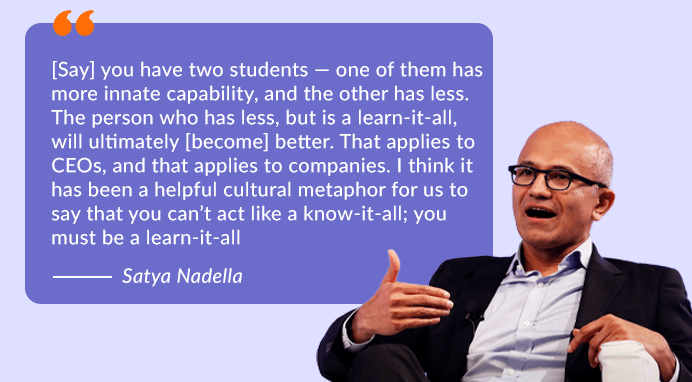
A strong example is Satya Nadella’s leadership at Microsoft. Under Nadella, Microsoft intentionally moved from a “know-it-all” culture to a “learn-it-all” one. He made it a point to recognize learning, collaboration, and effort. In fact, Satya publicly celebrates behaviors rooted in empathy and growth, not just results.
Speaking with Adam Grant, Nadella shared that building a learning culture starts with leaders acknowledging progress, not just results. That’s the real power of C-suite recognition: it quietly defines what people aspire to, repeat, and pass on.
Source: In.com
This is how C-suite recognition amplifies culture. Simply, by turning appreciation into a clear, visible signal that shapes how people think and work.
Why Is Peer-to-Peer Recognition Important In Modern Teams?
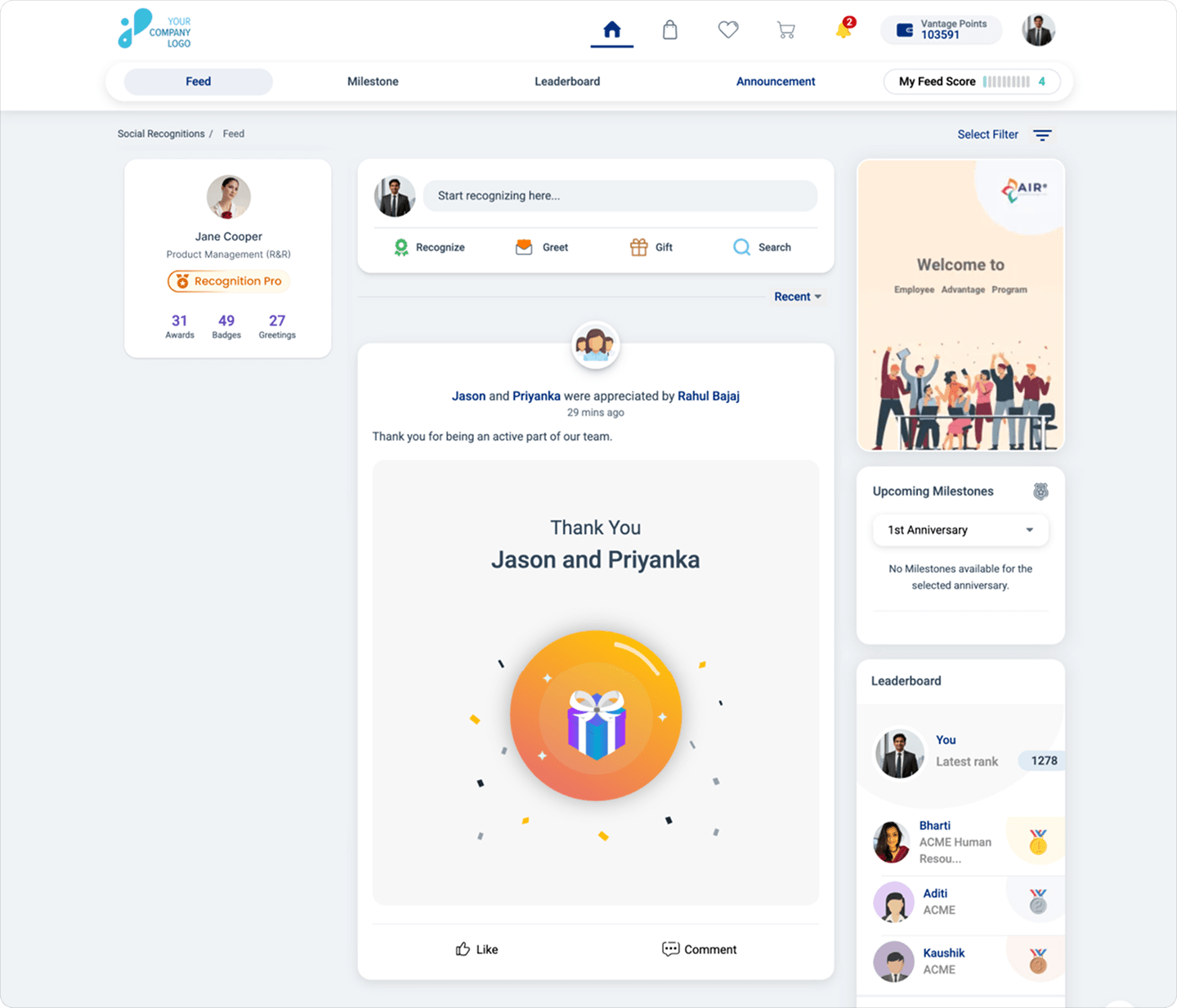
Peer-to-peer recognition is important because peers see the everyday contributions managers miss, and it lets recognition scale beyond the manager as the only source
People who work in an environment where doing their best is recognized have a better chance of feeling good about their work.
~Marilyn Suttle
Peer-to-peer recognition is simply colleagues appreciating one another for work well done.
In practice, it can be as simple as acknowledging a teammate’s contribution to a project or thanking someone for stepping in during a busy moment.Its biggest strength lies in its flexibility. Recognition isn’t limited to managers or teams and can come from anyone, including cross-functional peers.
The proof that it moves programs: one global digital infrastructure provider saw a 185% surge in peer-to-peer non-monetary recognition after giving peers a structured way to appreciate each other. For the full mechanics, see the benefits of peer-to-peer recognition; this section stays on why it matters.
Do Give a Read: Empower the Workforce with a Culture of Peer-to-Peer Recognition
A. Peers See What Managers Miss
Peer recognition matters because peers experience dependency, not hierarchy. In modern teams, work moves sideways, rarely top-down. People rely on each other to unblock tasks, share context, and keep momentum going.
This creates a different kind of visibility. They feel the difference when someone responds quickly, simplifies a process, or helps a team move forward. That lived experience gives peer recognition a level of accuracy that formal systems often miss.
There’s also a social proof effect at play.
Recognition from peers validates contribution within the team itself. It reinforces norms like cooperation, accountability, and shared ownership. And I am sure you’d agree that these behaviors directly influence how teams function day to day.
B. What Peer Recognition Does For Teams
Peer recognition builds the workplace relationships that drive engagement: 70% of employees say more friendships at work would make them more engaged, according to Gallup.
Peer recognition often starts with small moments. A quick thank-you after a meeting, a note of appreciation for stepping in, or a shout-out for solid teamwork. Over time, these moments turn colleagues into connections.
That connection matters more than we think.
How Do You Build a Recognition Culture? 3 Evidence-Backed Strategies
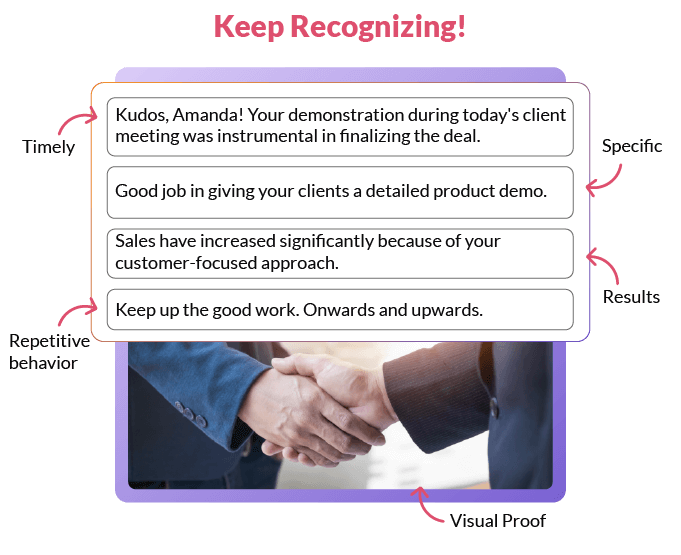
A recognition culture is one where recognition happens often enough that giving and receiving it becomes part of how the organization works, not a once-a-year event.
Everything above is the why; it only pays off when recognition becomes routine. As Bob Nelson, bestselling author and engagement expert, put it on the Vantage HR Influencers Podcast:

VANTAGE INFLUENCERS PODCAST
"Create the culture where recognition is happening all the time... That's when it becomes part of the culture, which I define as the way we do things around here."
— Bob Nelson, Author & Employee Recognition Expert
Listen to the Episode1. The Power of Personalized Recognition
Personalized recognition has the ability to make individuals feel truly seen, valued, and appreciated. It taps into the unique motivations, aspirations, and characteristics of each employee and acknowledges individuals in a way that is specific and meaningful to them personally.
Key aspects of personalized recognition include:
- Specificity: Recognizing particular actions, achievements, or qualities rather than giving generic praise.
- Timeliness: Offering recognition promptly after the noteworthy behavior or accomplishment.
- Relevance: Ensuring the recognition aligns with the individual's values, goals, or preferences.
- Authenticity: Providing sincere and genuine acknowledgment rather than insincere praise.
2. Public Recognition: A Catalyst for Motivation
Source: Vantage Recognition
According to research by Great Place to Work, employees who feel recognized at work are 2.2x more likely to drive innovation and bring new ideas forward.
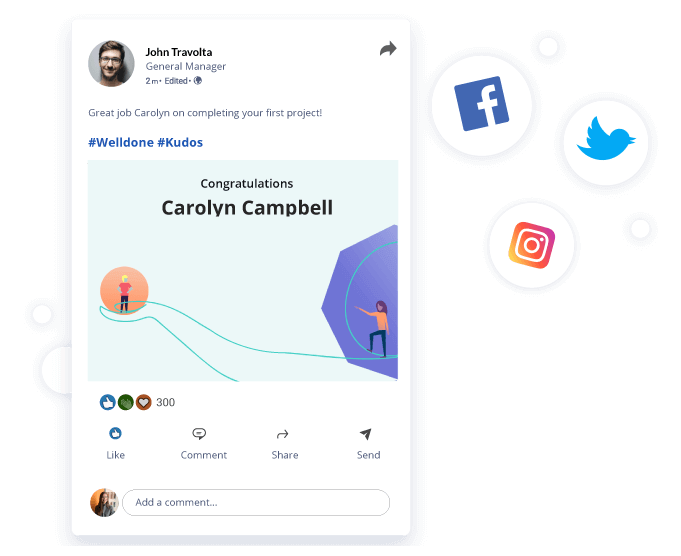
Publicly acknowledging employees for their accomplishments serves as a powerful motivational tool.
When leaders openly praise their team members' achievements, instills a sense of pride and value in their work. Furthermore, it inspires others to strive for excellence as well.
Public recognition, whether through team meetings, company-wide emails, awards ceremonies, or public shout-outs, amplifies this impact.
3. The Importance of Employee Feedback
Begin by conducting regular employee surveys to track evolving preferences on recognition methods and frequency. Complement these surveys with focus groups, bringing together diverse employees to dive deeper into survey results and explore new ideas.
You can also maintain an ongoing dialogue by implementing suggestion boxes, both physical and digital.
Additionally, you can leverage exit interviews to identify gaps in the recognition strategy by specifically inquiring about how recognition influenced departing employees' decisions.
Frequently Asked Questions (FAQs)
1. What is the main purpose of employee recognition?
The main purpose of employee recognition is to reinforce the behaviors, effort, and results an organization values, so employees repeat them. Done consistently, recognition strengthens engagement, retention, and a measurable recognition culture rather than serving as a one-off morale boost.
2. What happens when employees are not recognized?
When employees are not recognized, they are about twice as likely to say they will quit within a year, according to Gallup. A lack of recognition also erodes engagement and weakens the everyday connection that keeps people committed to their teams.
3. How often should employees be recognized?
Employees should be recognized roughly once a week. Gallup recommends recognition about every seven days as the cadence that meaningfully lifts engagement, which is why leading programs track recognition frequency as a core metric.
4. Does employee recognition have to be monetary?
No, employee recognition does not have to be monetary. Non-monetary recognition such as peer shout-outs, badges, and public praise drives culture powerfully.
Bottomline
Organizations that prioritize recognition strategically will unlock their workforce's full potential and achieve sustainable success.
The statistics and examples clearly demonstrate that recognition can significantly impact key workplace outcomes if implemented carefully.
So, don't hesitate to prioritize employee recognition today!

Sanjeevani Saikia is a Senior Content Strategist at Vantage Circle, where she leads end-to-end content strategy across SEO, thought leadership, brand storytelling, podcasts, and video. She is also the host of the Vantage Influencers Podcast, where she brings conversations with HR and business leaders from top global organisations, including Fortune 500 companies.
Connect with Sanjeevani on LinkedIn.