
Happiness in the workplace. Leaders often shrug it off. “It’s nice but does it really matter?” they say. The answer is yes, and the numbers say it all.
Unhappy employees cost money. A lot of it. If they leave, replacing one skilled employee can eat up 50–200% of their salary.
Even if they stay, unhappy employees disengage themselves, slowing down the ongoing projects. They make more mistakes and rarely share creative ideas. Often, they struggle with higher levels of stress and burnout, ultimately pushing absenteeism and healthcare costs.
Data says that actively disengaged workers cost businesses $8.8 trillion in lost productivity worldwide. That’s about 9 percent of the entire global economy, and it’s massive.
But, everything changes when employees are truly happy at work. They stay longer, take fewer sick days, and bring more energy to their tasks. Creativity and problem-solving improve significantly. Ideas get shared more openly. As a result:
- Customers notice better service,
- Leaders notice higher productivity and lower turnover, and
- The bottom-line notices stronger profits.
- And we see a clear rise in overall employee engagement.
Before moving on, let’s understand employee happiness and its definition.
What is Employee Happiness?
Employee happiness measures a person's general emotional well-being, fulfillment, and satisfaction in the workplace. Simply put, happy employees like going to work. They feel sustained by their responsibilities, driven by their mission, and positively engaged with those they are working with.
It might seem like an easy idea, but it's not an easy thing to achieve.
Building a genuinely happy workplace takes intentional, strategic actions from leaders throughout the employee life cycle.
They are entitled to shape every stage- from onboarding to career growth, recognition, and well-being to foster employee happiness.
Going deeper, let’s understand how employee happiness is different from job satisfaction and engagement.
Job satisfaction is about contentment with specific conditions. It can be your pay, schedule, or role.
Like say, you can be satisfied with your salary and the type of work you do but still lack inspiration and feel disconnected.
Engagement is the level of focus and enthusiasm for the work you do.
But you can still be burnt out and unhappy because of poor work–life balance.
Employee happiness goes beyond both. It’s the bigger picture of feeling good, valued, and balanced at work.
Why Do Employee Happiness Directly Impact Your Business?
Employee happiness and productivity directly impact your business because they shape how people work, behave, and stay within the organization. Let's break it down further:
1. Happiness leads to engagement
An HBRAS report claims that happier workers are more engaged. Engaged employees are more productive and miss work less. This directly improves output and lowers avoidable downtime.
2. Happiness reduces stress and improves retention
Happy workers show up more consistently. Their presence keeps your culture strong, positive, and stable. This also lowers turnover. Unhappy employees switch jobs more often. A Job Sage survey found that 1 in 4 individuals left their job due to mental health reasons. When employees are content, they stay longer, which reduces hiring and training costs.
3. Happiness promotes creativity, innovation, and collaboration
An American Psychological Association study results indicated that days with enthusiasm and energy led to increased creativity. This makes sense as happiness is related to creative thinking. In addition, a happy environment encourages people to freely share ideas and work collaboratively towards solutions quite rapidly.
3. Happy employees create safer, more productive teams
Happy employees naturally create safer workplaces because they’re more alert, more collaborative, and more willing to speak up before issues escalate. When people feel good and connected, they look out for each other and follow processes more carefully—directly reducing accidents and errors.
4. Happy employees = Happy customers
A PwC report shows that 42% of customers are willing to pay extra for friendly and positive service. Only happy employees deliver that experience. Their positive outlook translates into better interactions and stronger customer relationships.
5.Happiness is contagious
The impact doesn’t stay with one person. Positive feelings spread across teams. This builds stronger morale, higher cooperation, and better performance across the board.
How Do You Keep Employees Happy and Motivated?
Keeping employees truly happy requires intentional cultural design - not just perks. While long-term strategies matter, there are a few high-impact shifts leaders can make right away to boost morale and motivation. That brings us to the next questions:
What 3 Changes Would Improve Your Workplace Happiness Immediately?
You don’t always need massive overhauls to see a difference. Start with these three simple but high-impact improvements:
1. Create a culture of recognition
Creating a culture of happiness among employees begins with acknowledging their exceptional efforts. When team members consistently demonstrate strong work ethics, it's vital to recognize their dedication and achievements.
Employees thrive on appreciation and validation. Implementing a thoughtfully designed recognition and rewards framework is a powerful tool for meeting this need. Organizations foster positive morale and inspire continued excellence by regularly celebrating outstanding contributions.

A structured recognition system like Vantage Recognition provides employees with tangible incentives, fueling their motivation to excel. Organizations cultivate an environment where employees feel valued and fulfilled by intertwining meaningful recognition with enticing rewards.
2. Offer genuine flexibility of work
Following the pandemic, many employees have expressed a strong preference for remote or hybrid work arrangements. These arrangements allow them to avoid commuting time, give them the flexibility to choose how and when they want to work and achieve a better work-life balance.
Consider allowing your staff members to work from anywhere in response to this trend. Coordinate with them and jointly decide which days would be best for them to spend in the office.
This strategy promotes a higher sense of autonomy and empowerment among staff members.
In addition, it acknowledges your workforce's evolving requirements and preferences, all of which add up to a more contented and effective team.
3. Ensure fairness and equality in the workplace

(Credits: Unsplash)
As a leader, you should avoid showing favoritism in the workplace. Playing favoritism will create resentment among your employees.
You may have a favorite employee (we all do). However, providing a particular employee with extra advantages is unfair and will lead others to question your leadership.
Hence, endorse a company culture where equal treatment becomes a norm.
If you are still unclear about fostering an ethical company culture; don’t worry, I got you covered. Here are a few ways through which you can keep it in check:
a. Fair compensation
Employees invest their time and skills into your organization, so fair compensation isn’t optional - it’s the baseline they deserve for the value they bring.
- Usually, if they worked overtime, pay them for it.
- If their effort helps in the growth of your company, give out bonuses.
- Likewise, if a team completes a project, show your appreciation by giving out rewards.
- If both male and female employees are doing a similar job, don’t underpay your female employees.
b. Fair promotions
It doesn’t matter whether you like an employee or not, but if they are deserving of a promotion, give them one. Bypassing a deserving employee of a well-deserved accolade will garner ill-will.
To establish yourself as a trustworthy leader, you should keep personal feelings aside. As a rule, act rationally.
Establish a transparent system where the process of giving out promotions becomes evident. Maintain a standard of conduct which employees can follow to advance their career.
c. Address problem areas
No workplace is perfect, and nor will it ever be. Your employees will have their own set of problems.
They might genuinely feel that their rights as an employee are being violated. It might either be because of a collective dispute or an individual issue. An employee troubled by workplace problems will tend to be less productive.
Address this issue by making your employees feel comfortable about airing their grievances. Don’t turn their problems into something inconsequential.
Listen to them. Present a fair system for solving disputes among employees. Hire a company counselor to combat stress or frustration in employees. Make them believe that their mental well-being matters to you.
What Long-Term Strategies Foster Growth and Purpose?
While quick changes boost morale, long-term happiness depends on deeper initiatives that help employees grow, evolve, and find meaning in their work. These strategies build lasting commitment and purpose:
1. Encourage professional growth
Employees are far happier and always more engaged during work when they are growing. Offer organized stages of learning- like attending training classes or professional workshops or engaging in a mentorship.
When employees experience an employer who is developing their skills and abilities over time, it is confidence enhancing for everybody. The investment provides loyalty; employees feel like their contribution makes a difference.
2. Provide distinct career paths
It is essential for organizations to have frequent conversations with staff members regarding career-planning. You should ensure that you are providing employees with an understanding of what opportunities exist for work and career paths within the organization as part of training and development.
Doing this will instill confidence in employees that they have a future with your organization, something which can go a long way towards ensuring their long-term happiness and satisfaction.
3. Connect work to a larger purpose
Employees thrive when they understand why their work is important. Communicate with the broader mission behind daily tasks and show how each role contributes to your organization’s goals.
This helps employees feel part of something meaningful - a key driver of long-term fulfillment, pride, and intrinsic motivation.
How Can You Create a Positive and Supportive Environment?
Creating a positive and supportive environment starts with understanding what your employees truly need. When companies offer meaningful benefits and wellness programs, it shows employees that their well-being matters—instantly strengthening trust, morale, and overall happiness.
1. Boost employee happiness with tailored benefits/ wellness programs
Extensive employee benefits are a surefire way to keep employees content and productive. However, allocating resources to benefits can be challenging, especially after investing in new hires.
Effective communication is key here. Engage with your employees to craft a benefits package that meets their specific needs. Utilize surveys and feedback mechanisms to gauge preferences accurately.
Identify what matters most to your workforce. Is it enhanced parental leave, improved education opportunities, or better healthcare coverage? Understanding these preferences prevents investing in unnecessary benefits.
Consider both significant and minor perks. Do you acknowledge birthdays? Offer wellness initiatives? These gestures, big or small, enhance employee satisfaction and loyalty.
You foster a happier and more motivated workforce by actively listening to your employees and addressing their needs. Whether granting birthday leave or extending parental benefits, personalized support enhances morale and commitment.
2. Encourage breaks and "down time"
It's time to ditch the idea that sitting in chairs equals success.
Although it's tempting, pushing for long hours is counterproductive. Instead, breaks are vital for mental and physical freshness and to cut out unnecessary stress. They offer mental space, boost productivity, and battle burnout.
A Tork survey of 1,600 North American employees showed that those who took lunch breaks had higher engagement, job satisfaction, and loyalty. Break-takers reported feeling happier, and 39% noted improved work-life balance, highlighting the positive effects of breaks on well-being and satisfaction.
Thus, encourage walking or some chit-chatting with colleagues. You can also consider offering bean bags, a reading room, or a television.
Access to outdoor spaces like a garden or rooftop terrace for fresh air can be a great addition.
3. Encourage employee feedback
The art of listening speaks volumes when it comes to employee happiness.
And it isn't merely about collecting and nodding to your employees' opinions.
It entails establishing a workplace culture where every voice holds significance. Acting upon collected feedback within a respectful and collaborative environment is critical to this approach.
Are you looking to optimize your employee feedback process? There are many platforms available to help.
For instance, Vantage Pulse stands out for its smooth transition from complex surveys to continuous listening. Its user-friendly interface makes trend analysis and turnover factor discovery a breeze.
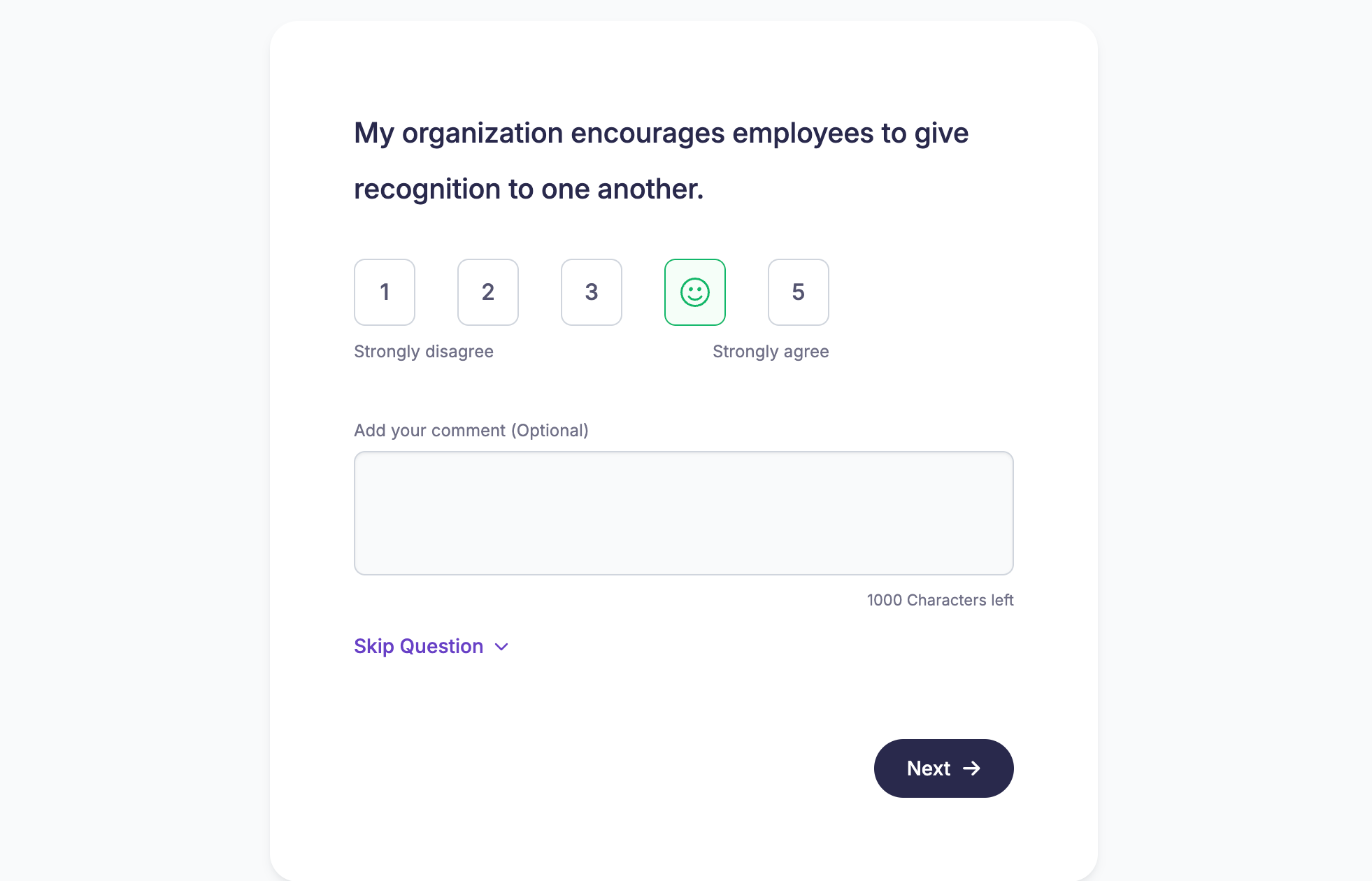
Additionally, it seamlessly predicts behaviors to enhance employee retention. It's the subtle shift you need for a more effective feedback strategy.
4. Instill pride within the workplace

(Credits: Unsplash)
Employees' happiness is significantly linked to their sense of pride in the workplace. If your employees are proud of working at your company, mentally pat yourself on the back. It means you are doing a great job!
Having pride in one's work and company is an incredible motivator and happiness initiator.
Especially, try to instill a sense of accomplishment within them. Feelings of negativity that may arise in the employees are to be expected. Work pressure and stress may be contributing factors.
- Maybe, conduct motivational seminars. Show your employees that their work has helped in the positive growth of your company culture.
- Likewise, have frequent meetings with your workers. As their leader, you need to connect with them. Your praise and validation will go a long way to increase their morale. When your workforce sees that their boss cares about their opinions, it is bound to develop their sense of pride.
- Also, offer rewards occasionally and accordingly. Gift cards, gym memberships, work from home options- the variety is endless.
- Entrust employees with new responsibilities. It will make them harbor a feeling of importance and pride in their work. Show that you trust them.
- Consequently, place value on your employees’ viewpoints. Make it easier for your employees to discuss any new ideas or proposals. Conduct brainstorming sessions.
- Take into account their views and go through the process of implementing those ideas. Discuss why those ideas may or may not work.
5. Build camaraderie

(Credits: Unsplash)
Camaraderie, according to the Cambridge Dictionary, is defined as:
A feeling of friendliness towards people that you work or share an experience with.
Thus, camaraderie works as an incredible booster for increasing the level of employee engagement.
In short, fellowship is the age-old human tradition of socializing. Much like wolves, humans work better as a pack or group. Because we are highly social creatures. Thus, regular social interactions foster our mental wellbeing.
The sight of employees, huddled around and gossiping, must be common across all the offices in the world. Thereby, some innovative managers must have had an idea to ban such kinds of interactions.
If you have the same idea, don’t. Stow this idea in your mental trash can. Harvard Business Review revealed how camaraderie affects company culture:
Employees report that when they have friends at work, their job is fun, enjoyable, worthwhile, and satisfying. Gallup found that close work friendships boost employee satisfaction by 50%, and people with a best friend at work are seven times more likely to engage fully in their work.
Here are a few reasons why workplace camaraderie should be encouraged:
- Encourages employees to develop and work better as a team.
- Being around peers creates a better workplace environment.
- A fun work environment reduces stress and results in better performance.
- Employees look forward to coming back to work.
- Above all, it promotes a strong emotional support network.
Hence, to help in developing a friendly workplace environment, you can opt for the following ways:
a. Organizing Social Activities
It can be anything from an annual picnic or can be a cultural night. Accordingly, incorporate social events that encourage interactions among the employees.
b. Improve Company Culture
Encourage a company culture where everyone is free to mingle and socialize. A company culture of a blue collared job and cubicles is a big no. Avoid it if you can.
The most successful companies understand that employees actively are looking for a fun environment. For instance, Facebook’s company culture highly encourages social interactions among their employees. One of its employees stated that:
"There’s definitely a lot of people walking around and a lot of things happening and conversations,” he said. “You just have every opportunity to learn from your colleagues and to collaborate.
c. Being the Friendly Boss
An unfriendly boss can spoil the workplace environment faster than you can say “cheese.” As their leader, your employees need to see you as a friend. All the great leaders know that you are better off by being among them and not standing on a pedestal.
The idea is to make yourself seem approachable and not into someone intimidating.
6. Prioritize employees' mental health and well-being
We all know mental health and well-being are super important.
Bosses who get that tend to be the best leaders. Conversely, those who brush it off often struggle to connect with their team.
When employers show they care about mental health, it makes a huge difference. Employees feel supported and valued and are game-changers for morale and productivity.
Ensure your employees access mental health resources, counseling, and mindfulness training. Also, tackle the stigma around mental health issues head-on. Creating a supportive environment is vital!
What Other Approaches Can Enhance Employee Happiness and Well-Being?
Creating a happier workplace isn’t about one big initiative - it’s about consistently supporting employees in ways that make their day-to-day experience better. Whether through connection, empowerment, perks, or better leadership, even small efforts can make a meaningful difference in overall well-being. Here are a few things to consider:
1. Create an ergonomic workspace
When a workspace is comfortable and designed to fit employees’ needs, it makes a big difference in how they feel at work. Simple things, like chairs that support posture, desks at the right height, or monitors at eye level- reduce strain and fatigue. Employees can focus better, feel less stressed, and enjoy their day more.
2. Make time for socialization
We spend about one-third of our lives at work, and it's a big chunk of our time. And quite obviously, engaging with colleagues solely on a professional level can grow dull.
Nurturing personal connections is not only acceptable but must be encouraged. Socializing outside work through shared meals or weekend activities fortifies bonds, enriches relationships, and bolsters morale. All of them help foster a workplace culture of creativity and innovation.
3. Help employees take charge of their happiness
Employees need to take more responsibility for their own happiness now more than ever.
Employers can make every effort to foster the ideal work environment, but ultimately, it is up to the employees to choose how they want to balance work and private life.
Accepting personal accountability for their happiness is the first step toward that. Leaders have an essential role in this respect. They must promote the idea that employees can determine their level of happiness. It is sure to lead to a significant mental shift.
Leaders, for instance, need to prioritize their well-being and maintain a healthy work-life balance. It will positively set an example for the other team members.
There is also this outdated idea that happiness is reserved solely for weekends! It's high time we shift gears and encourage our employees to sprinkle a bit of joy into their workdays. Let's help them ditch the Monday blues mentality and empower them to be happy and healthy daily.
4. Provide free food and drinks
According to a Peapod study, giving free food to employees can boost their happiness by 67% compared to those who don't.
Interestingly, Millennials value workplace food the most and wish their employer offered more snack options. Moreover, snacks can attract employees to new companies, with 48% saying they'd consider perks like snacks when job hunting.
In summary, free meals are a giant magnet for employee happiness.
Revamp the office snack game with a healthy snack basket delivered straight to desks. It's a tasty surprise that fuels productivity and adds excitement to the daily grind.
5. Manager upskilling
All the programs, perks, and initiatives you put in place to boost employee happiness will only work if managers can bring them to life. On the contrary, even the best initiatives can fail if managers:
- Don’t provide consistent support or feedback
- Don’t recognize contributions meaningfully
- Don’t address employee concerns or stress
Thus, by training managers in emotional intelligence, feedback, coaching, and recognition, organizations can ensure that all other happiness initiatives actually work. Simply put, happy managers = happy teams.
6. Offer free yoga/meditation class
Employees appreciate the opportunity to prioritize self-care and bond with colleagues outside of work tasks.
Providing company-sponsored yoga or meditation classes, as exemplified by Vantage Circle, significantly boosts employee happiness. These sessions promote relaxation, reduce stress, and enhance overall well-being, fostering a positive work environment.
Moving forward, let’s look at how we can really know if our efforts are making a difference. Measuring team happiness helps us see what’s working, address any challenges, and keep everyone engaged, motivated, and productive.
How Can You Accurately Measure Your Team's Happiness?
Rather than assuming employee happiness, you must measure it consistently. Today’s HR teams relies on data-backed, employee-metric tools to report on morale, problems ahead of time, and create a high-performance culture where employees are truly happy. The following are the essentials you need to precisely measure employee happiness.
Employee Happiness Index- How To Track It?
Employee Happiness Index is an essential KPI connected to a measurable view of how your employees feel over time.
It incorporates sentiment data, engagement scores, and feedback trends to clearly track whether morale is increasing or decreasing. By measuring this regularly, leaders gain a clear and quantifiable trend, rather than relying on guesswork.
Why Is an Employee Happiness Survey Your Most Powerful Tool?
Anonymous and frequent pulse surveys like those sent through Vantage Pulse provide the best real-time understanding of how employees feel.
Pulse surveys highlight real-time issues early instead of a slow-moving annual survey that does not provide value.
It also assists in tracking trends in mood to help team members avoid problems before they escalate.
What Other HR Metrics Can Signal Unhappiness?
- eNPS (Employee Net Promoter Score): Measures how likely employees are to recommend your company - a low score signals disengagement.
- Absenteeism: Frequent or unexplained absences often indicate dissatisfaction or burnout.
- Employee Turnover Rates: High voluntary turnover can reflect deeper issues with morale, culture, or growth opportunities.
Which Companies Get Employee Happiness Right and Why?
- Adobe
According to Comparably’s 2025 poll, Adobe is #1 for “Happiest Employees” among large companies.
Why: Employees praise Adobe for strong leadership, great compensation, and a sense of purpose in their work.
- ADP
Also high on Comparably’s 2025 “Happiest Employees” list.
Why: ADP gets credit for good work-life balance, supportive culture, and strong team collaboration.
- TP (Teleperformance)
Ranked 3rd in Comparably’s “Happiest Employees” list.
Why: Employees feel they are part of a supportive, global team; there’s a “family-like” environment and opportunities to grow.
- Hilton
Topped the 2025 Great Place to Work “World’s Best Workplaces” list.
Why: According to Great Place to Work, Hilton scores very high on trust, pride, and camaraderie, meaning employees feel trusted, proud of their work, and part of a community.
Finally
In summary, focusing on employee happiness goes far beyond boosting morale. It shapes how well an organization performs, grows, and adapts. When people feel energized, supported, and genuinely valued, they bring sharper ideas, stronger commitment, and better results. So instead of asking why happiness matters, maybe the real question is: what is your organization missing out on by not putting it first?
FAQs
1. What is employee happiness?
Employee happiness is a positive state of well-being at work, where employees feel satisfied, valued, and motivated in their roles.
2. Why does employee happiness matter?
A: Happy employees show higher productivity, lower turnover, stronger engagement, and better customer service, all of which improve business results.
3. What are the key factors that contribute to workplace happiness?
Supportive leadership, fair pay, meaningful work, growth opportunities, recognition, work–life balance, and a culture of respect are all key drivers of employee happiness.
How can managers improve team happiness?
Managers can improve team happiness by actively listening to employees, giving consistent and constructive feedback, and recognizing their efforts regularly. Supporting work-life balance and removing unnecessary stressors also helps teams feel valued and motivated.
4. How to measure employee happiness?
Use anonymous surveys (e.g., eNPS or pulse surveys), one-on-one feedback, turnover rates, and indicators like absenteeism or employee Net Promoter Score.

This article is written by Susmita Sarma. “She is a Digital Marketer at Vantage Circle, making employee recognition less of a checkbox and more meaningful - helping organizations say we value our people and truly mean it.”
Connect with Susmita on LinkedIn.