EN
EN  FR
FR  ES
ES  DE
DE 





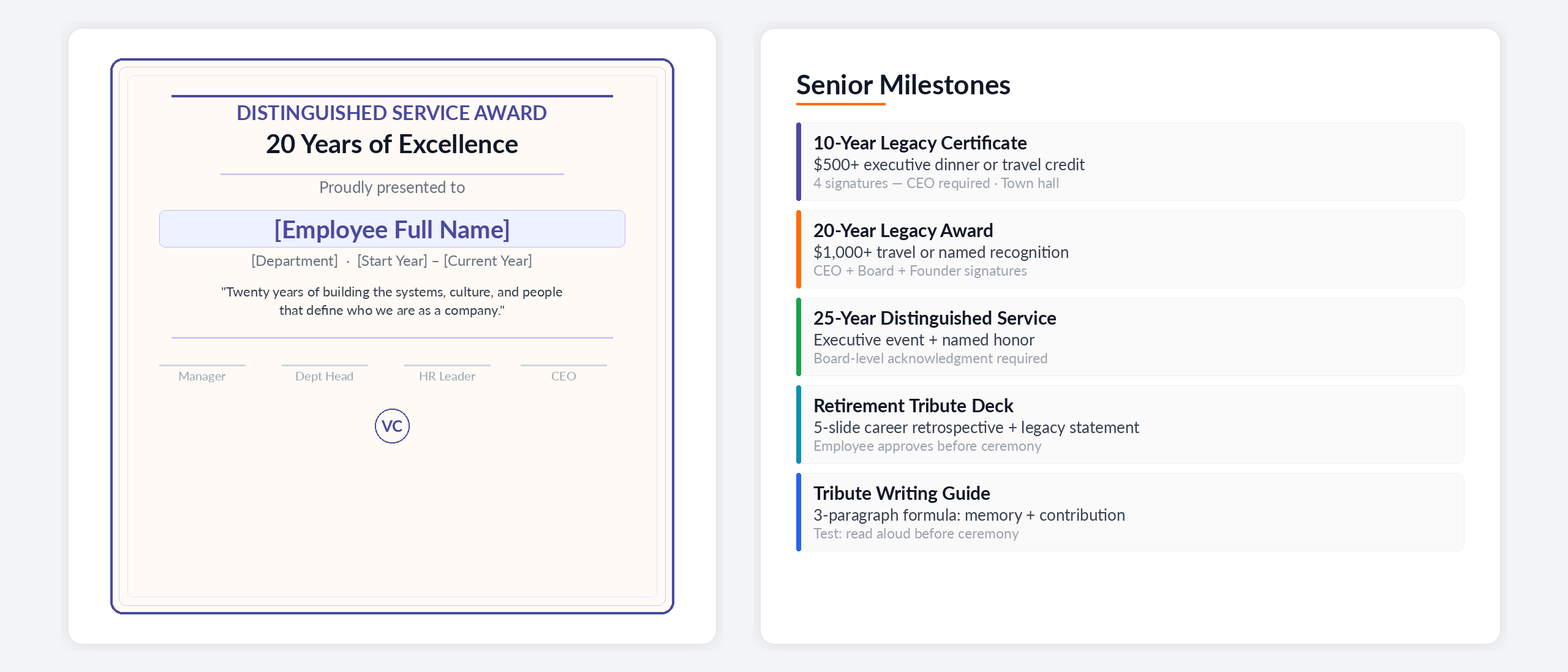
What Is a Senior Recognition Template?
A senior recognition template is a set of structured formats — legacy certificates, career retrospective slides, tribute frameworks, and ceremony scripts — for formally acknowledging long-tenure employees, senior contributors, and retiring staff in a way that honors their institutional legacy, not just their most recent output.
Senior employees are the custodians of organizational memory. Recognizing them well — through a long-service award, a tribute ceremony, or a structured legacy recognition program — signals to every other employee watching that longevity and contribution have visible, lasting value. Organizations that handle senior recognition poorly send the opposite signal: that the company forgets quickly.
Senior recognition is not simply a scaled-up version of standard employee recognition. It requires a different frame — one built around institutional memory, career arc, and the compounding impact of years of quiet, consistent contribution. This template gives HR teams the structure to plan and execute that recognition without starting from scratch. Explore the full library of formats at the Recognition Templates hub.
How to Use This Senior Recognition Template?
A four-step process that takes senior recognition from blank slate to a ceremony-ready program honoring long-tenure contribution.
Step 1
Step 1: Build the Career Retrospective
Collect three to five key milestones, projects, or cultural moments from the employee's tenure. Interview their direct reports, peers, and manager if possible. Compile into a 2–3 slide career timeline that can be presented at the ceremony or printed as a keepsake.
The retrospective is the most valuable part of senior recognition because it demonstrates organizational memory — the company remembers what happened, when, and why it mattered. Employees who receive this feel genuinely seen rather than just tolerated.
Step 2
Step 2: Collect Leadership Tributes
Gather 3–5 written tributes from the employee's direct reports, peers, and one senior leader. Each tribute should be 2–3 paragraphs: one specific memory, one specific contribution, one forward-looking statement about the legacy they leave.
Tributes from peers and direct reports are often more meaningful than tributes from leadership — they come from the people who experienced the employee's daily contribution. Both matter; collect both.
Step 3
Step 3: Design the Legacy Certificate or Award
Use the senior recognition certificate layout in the template to create a formal legacy award. For 20+ year employees or retiring employees, the certificate should include the full tenure span, a legacy statement co-authored by HR and the employee's manager, and a minimum of two leadership signatures.
A generic 20-year service certificate does not honor the contribution it is supposed to celebrate. A legacy certificate with a specific statement turns the document into a keepsake the employee will keep for decades.
Step 4
Step 4: Plan the Recognition Moment
For senior or retiring employees, the recognition moment should involve family, close collaborators, or a small private celebration — not just an all-hands slot. For 10-year milestones, a department-level event is appropriate. For retirement, a company-wide moment plus a private family celebration separates the organizational recognition from the personal farewell.
The format of the recognition moment signals how the organization values long tenure. A desk-drop certificate for a 25-year employee is a failure of recognition, not a success. Invest the planning effort proportionally to the tenure milestone.
Six Elements of Effective Senior Recognition
Senior recognition that lands as meaningful — not perfunctory — shares these six characteristics. Programs that fall flat usually fail at least three.
1. Organizational memory on display
The recognition names specific milestones, projects, and cultural moments from the employee's full tenure — not just the past twelve months. When the company demonstrates it remembers, the employee knows the recognition is real.
2. A legacy statement, not a performance summary
Senior recognition should answer: what culture, system, or capability exists because this person was here? A legacy statement answers that question in two to three specific sentences. It is distinct from a performance review in both tone and scope.
3. Multiple voices, not just leadership
Tributes from direct reports, peers, and cross-functional collaborators carry weight that leadership tributes alone cannot. Collect all three. The breadth of voices signals the breadth of the employee's actual impact across the organization.
4. A certificate worth keeping
For decade-plus milestones, the physical or digital certificate should be framed-quality: full tenure span, a named legacy statement, leadership signatures, and the organization's logo. Employees keep certificates that look like they were made for them specifically — not printed from a generic template.
5. A ceremony proportional to the tenure
Ten-year milestones warrant a department event. Twenty-year milestones belong at a company-wide moment. Retirement deserves both a public company gathering and a private family celebration. Matching the ceremony format to the tenure milestone is how the organization signals what longevity is worth.
6. A gift that reflects the person, not the budget line
Senior employees have spent years observing what the company values. A generic gift signals that the recognition was treated as a procurement problem. An experience, a custom keepsake, or a named recognition (a room, an award, a scholarship in their name) signals the opposite — that the person mattered enough to plan for.
Sample Senior Recognition Templates
Two ready-to-deploy senior recognition frameworks. Each includes the format, fields, and guidance you need to execute the recognition with care. The full pack includes additional ceremony scripts, retrospective slide layouts, and tribute collection forms.
Sample Template 1: 10-Year Legacy Certificate
Best for: employees crossing the decade milestone — the first recognition that explicitly honors legacy over output.
Certificate Title: 10-Year Contribution & Leadership Award
Legacy Statement: "A decade of steady contribution that shaped [team/department name] in ways that outlast any single project or quarter. Thank you for the standard you have set."
Signatures: Direct Manager + Department Head + CEO
Gift Pairing: $500+ — experience credit, executive dinner, or named recognition
Presentation Setting: Department event or town hall with advance notice so the team can attend
Sample Template 2: Retirement Tribute Slide Deck
Best for: retiring employees with 15+ years of tenure deserving a career-spanning acknowledgment.
Slide 1: Career timeline — key milestones, roles, and years
Slide 2: Contributions — 3 projects or initiatives named explicitly
Slide 3: Leadership tributes — 3–5 quotes from peers and direct reports
Slide 4: Legacy statement — authored by HR + CEO + the employee's manager
Slide 5: Thank-you and farewell — team photo, signed card, family acknowledgment
Explore Tenure & Service Recognition Templates
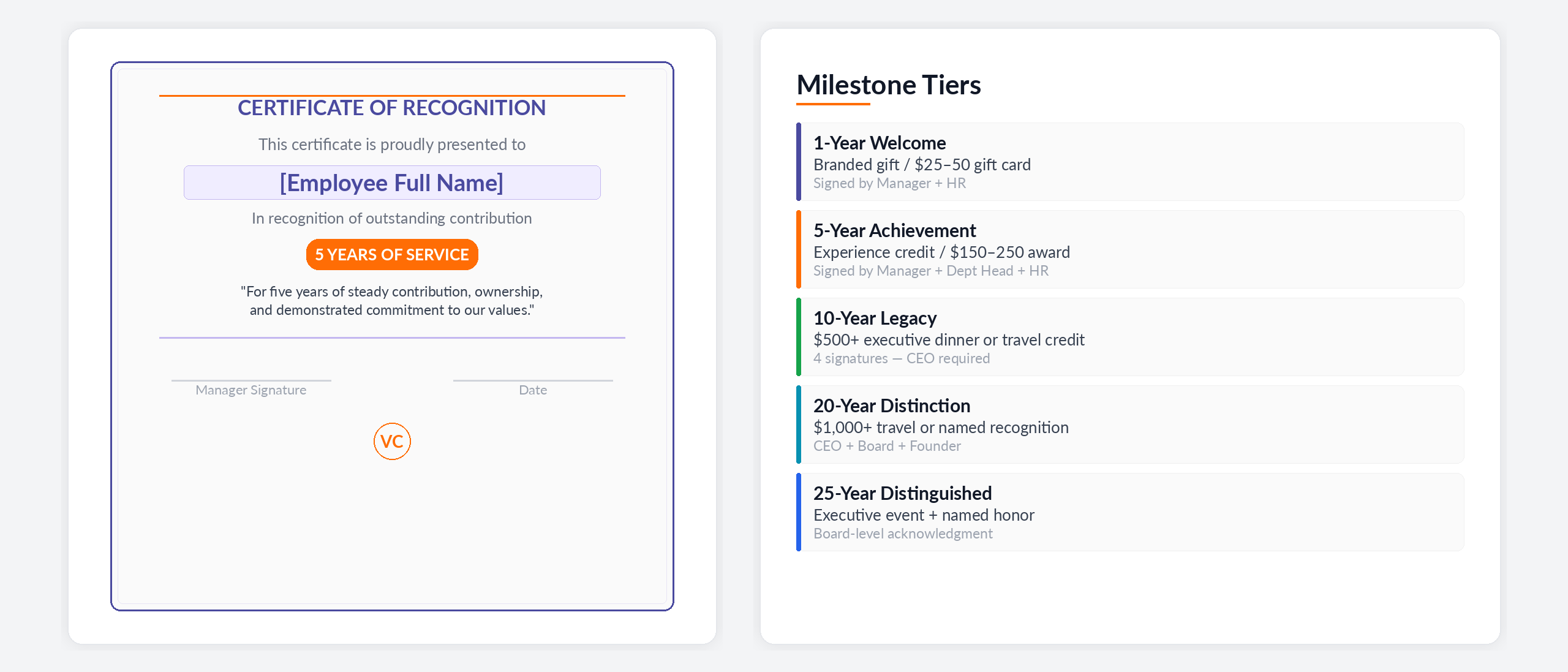
Years of Service Recognition Certificate Template
Milestone-specific certificates for 1, 5, 10, 20, and 25-year tenure anchors.
View Template ›
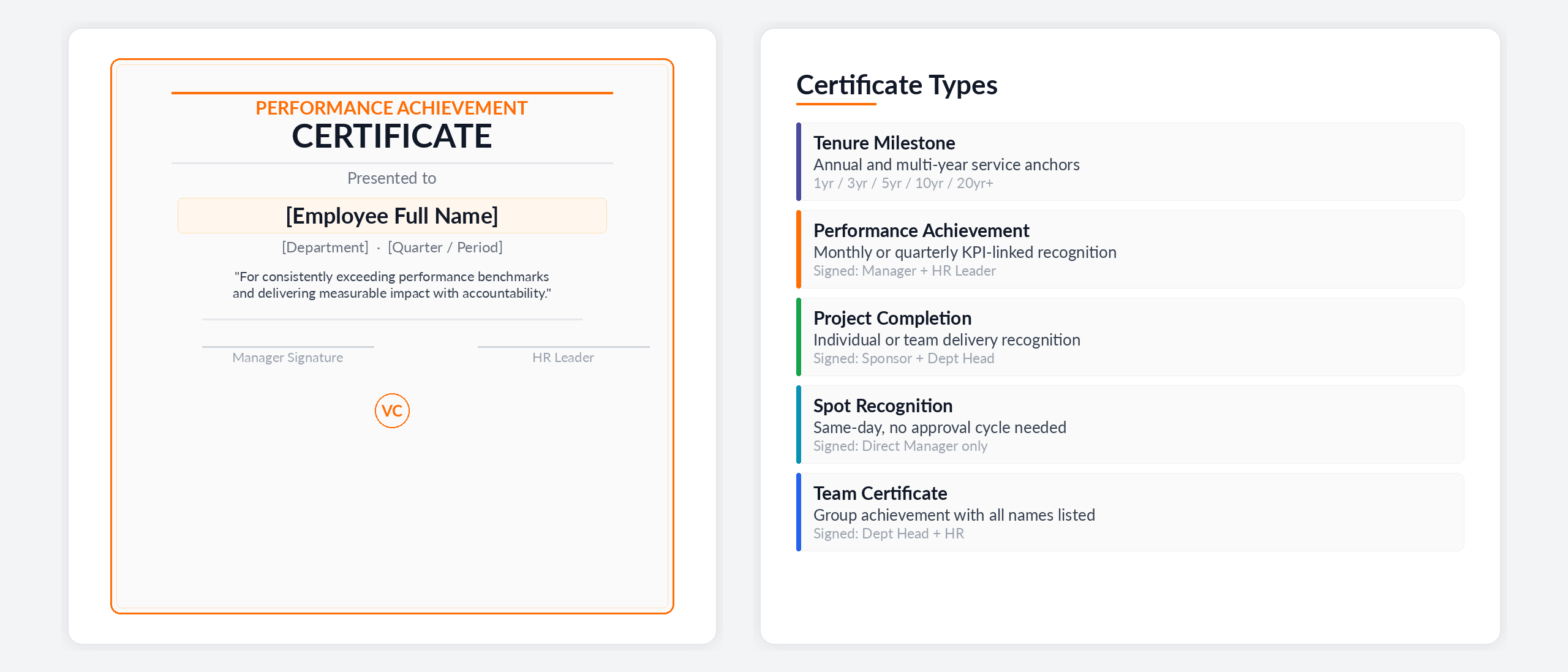
Service Recognition Certificate Template
Print-ready certificate formats for tenure, performance, and project milestones.
View Template ›
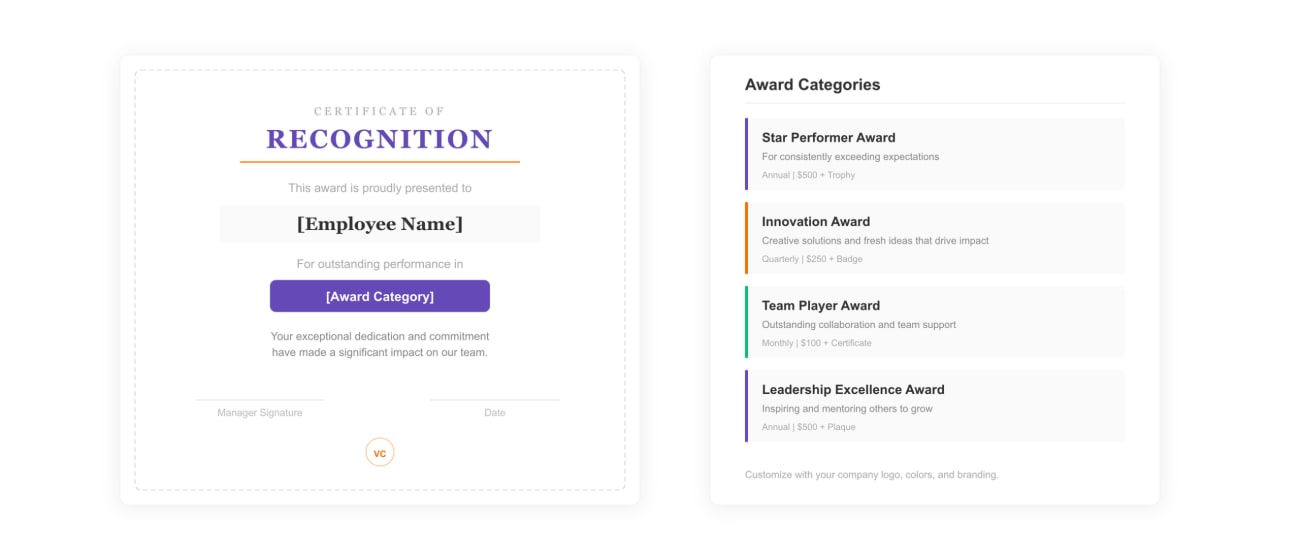
Employee Recognition Award Template
Formal award framework with citation examples and governance for any contribution level.
View Template ›