EN
EN  FR
FR  ES
ES  DE
DE 





What Is a Recognition Day Program Template?
A recognition day program template is a structured run-of-show that guides HR teams and event organizers through planning and executing an employee recognition day ceremony — covering agenda, presenter assignments, timing, and cultural segments.
Recognition day events — whether a formal recognition ceremony or a casual employee appreciation gathering — fail most often because of poor time management and underprepared presenters, not because of a lack of intention. A structured program template removes both failure modes — the agenda keeps time, and the presenter script keeps citations from becoming improvised.
A recognition day ceremony is one of the highest-visibility moments in the employee experience calendar. Done well, it becomes a cultural anchor that teams reference for years. Done poorly, it signals to the organization that recognition is an afterthought.
This template gives HR teams a complete, editable run-of-show so the ceremony matches the intention. Pair it with year-round workflows from the Recognition Templates hub.
How to Use This Recognition Day Program Template?
A four-step setup that takes a recognition day ceremony from blank calendar slot to a timed, scripted, culturally resonant event.
Step 1
Step 1: Set the Agenda and Timing
Use the run-of-show template to map every segment: welcome (5 min), leadership address (10 min), award presentations (7 min each), peer recognition (10 min), cultural highlight (10 min), close (5 min). Assign a timekeeper. Build 10-minute buffers between award segments for transitions, applause, and unexpected overruns.
Ceremonies that run over time lose the room in the final act — the very moment when the most significant awards are typically presented. Front-load the timing conversation, not the event itself.
Step 2
Step 2: Assign Roles to Presenters
Assign each award to a named presenter: senior leader, department head, or direct manager depending on award significance. Brief presenters on the citation format — name the recipient, read the commendation, pause for applause, then hand over the award or certificate. Give presenters a script 48 hours before the event.
Unprepared presenters fumble citations and undermine the recognition moment. A 48-hour advance script review is the single highest-leverage preparation step for an awards ceremony.
Step 3
Step 3: Build in Peer Recognition Moments
Reserve 10–15 minutes for open peer recognition: a chat segment in virtual events, a standing microphone in in-person events, or a pre-submitted shout-out wall. Peer recognition creates the emotional high point of most ceremonies — more than the formal awards.
Most attendees are not receiving formal awards. The peer recognition segment gives everyone in the room a role in the ceremony, not just the observers.
Step 4
Step 4: Close With a Cultural Anchor
End the program with a cultural moment: a video reel of the year's key team moments, a story told by a long-tenure employee, or a short message from the founding team about what the company stands for. This segment transforms a ceremony into a cultural event.
Recognition day programs that close on a logistical note ("refreshments are in the lobby") miss the opportunity to leave the team with a shared emotional memory. The cultural close is the part people remember for years.
The 6 Core Elements of a Recognition Day Program
Every high-impact recognition day ceremony includes these six structural elements. Skip any one of them and the program loses cohesion. The template provides a dedicated slide or script block for each.
1. Emcee Script and Opening
A prepared emcee script opens the ceremony with energy, sets the agenda for attendees, and signals that the event is professionally run. The opening should include a housekeeping minute (venue logistics or virtual platform instructions), a statement of purpose, and a brief preview of the program segments.
First impressions in a ceremony set the emotional register for everything that follows — a confident, warm opening earns attention; an uncertain one loses it.
2. Leadership Address
A 10-minute address from the most senior leader present — CEO, GM, or business unit leader. The leadership address should anchor recognition in company strategy: why this team's contributions matter to the business direction, what the company values, and what the year ahead requires.
A scripted address of this length, delivered without notes, takes 15 minutes of preparation. Give the leader the template's address brief 72 hours before the event.
3. Structured Award Presentations
Each award presentation follows the same four-beat format: presenter introduction (30 seconds), citation read aloud (90 seconds), recipient response (60–90 seconds), applause and handoff (30 seconds). Seven minutes total per award.
The citation must be written before the event and rehearsed by the presenter — improvised citations are the most common quality failure in award ceremonies. The template includes a citation slide format and a presenter briefing card for each award.
4. Peer Recognition Segment
A facilitated 10–15 minute window for team members to recognize colleagues who are not receiving formal awards. In in-person formats: a standing microphone at the front of the room with a two-minute cap per person. In virtual formats: moderated chat shout-outs, or a pre-submitted shout-out wall displayed on screen.
The emcee reads selected submissions for teams that are too large or too remote for open-floor participation. This segment frequently becomes the emotional peak of the ceremony.
5. Cultural Highlight or Reflection
A 10-minute segment that moves the ceremony from a list of winners to a shared story of the team. Options: a video montage of the year's defining team moments, a live story from a long-tenure employee about what the company's values mean in practice, or a brief message from a founding team member about why the company exists.
This segment is the highest-variance element in a recognition day program — when done well, it is the part the team references for years.
6. Timed Close and Group Activity
A 5-minute close that includes a thank-you from leadership, a preview of what the team is building next, and a clear transition into the post-ceremony activity (group photo, team meal, networking, or virtual trivia). The close should end on an upbeat note — not logistics.
A common error is spending the final minute on directions to the parking lot. The last sentence the team hears from the emcee is what they carry into the rest of their day.
Sample Recognition Day Program Templates
Two ready-to-deploy run-of-show formats. Each includes segment timing, presenter assignments, and format-specific notes for in-person and virtual ceremonies. The full pack adds emcee scripts, presenter briefing cards, and a citation slide template.
Sample Template 1: 90-Minute In-Person Recognition Ceremony
Best for: team-level or department-wide annual recognition events with 20–100 attendees.
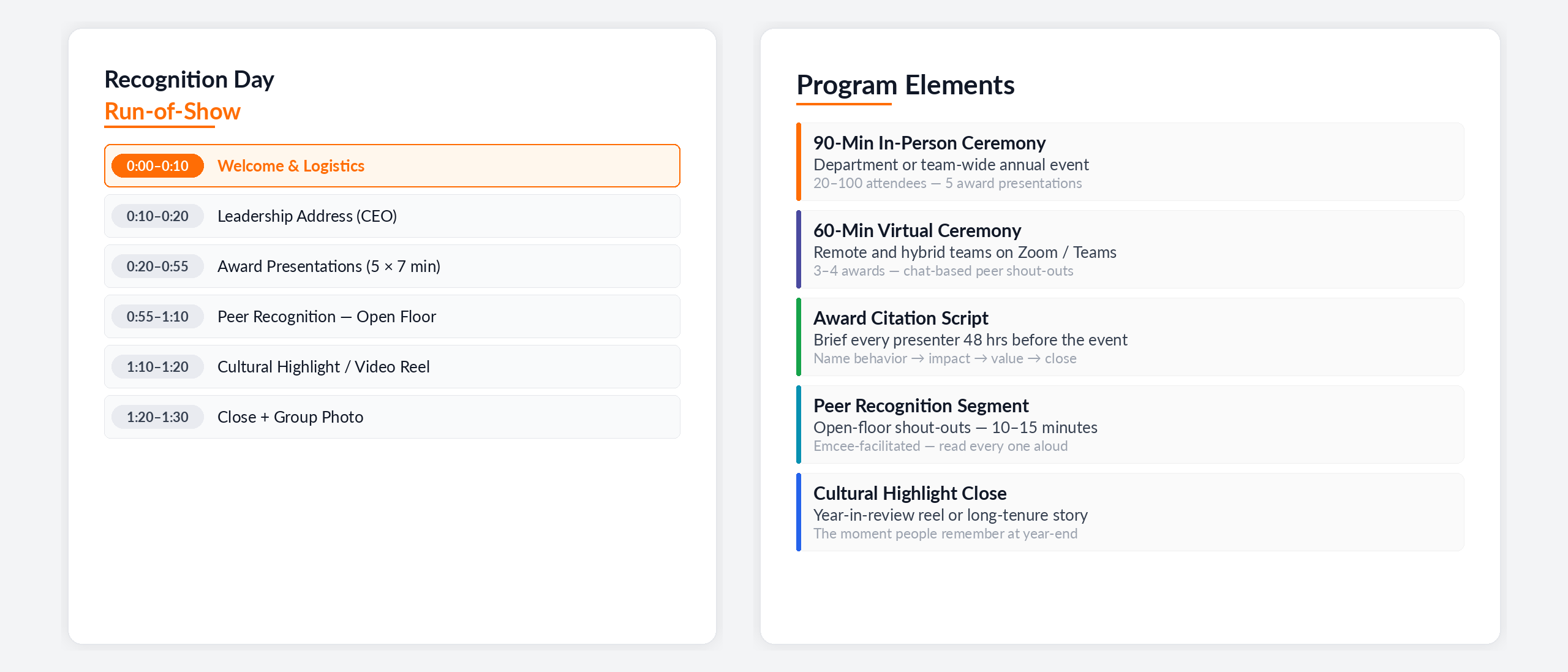
0:00–0:10: Welcome and logistics (emcee)
0:10–0:20: Leadership address (CEO or business leader)
0:20–0:55: Award presentations (5 awards × 7 min each)
0:55–1:10: Peer recognition — open floor shout-outs
1:10–1:20: Cultural highlight video or team reflection
1:20–1:30: Close + group photo + informal networking
Presenter notes: Assign a dedicated timekeeper who signals the emcee with a card at T-2 minutes for each segment. Build a 10-minute overrun buffer into venue booking — ceremonies consistently run longer than planned during the award presentations segment.
Sample Template 2: 60-Minute Virtual Recognition Day Program
Best for: remote or hybrid teams observing Employee Recognition Day online.
0:00–0:05: Welcome + housekeeping (mute, chat, reactions)
0:05–0:15: CEO or senior leader address (live or pre-recorded)
0:15–0:45: 3–4 award presentations (7–8 min each with citations)
0:45–0:55: Chat-based peer shout-outs (moderated by emcee)
0:55–1:00: Close — team photo screenshot + calendar anchor for next quarter
Virtual format notes: Pre-record the leadership address and award citations as a fallback if internet connectivity is at risk. Use the chat window as the peer recognition channel — it is more inclusive than unmuted open floor in virtual formats. Collect shout-outs in the 24 hours before the event via a shared form and display them on screen during the segment.
Explore Employee Recognition & Engagement Templates
Rewards and Recognition Invitation Template
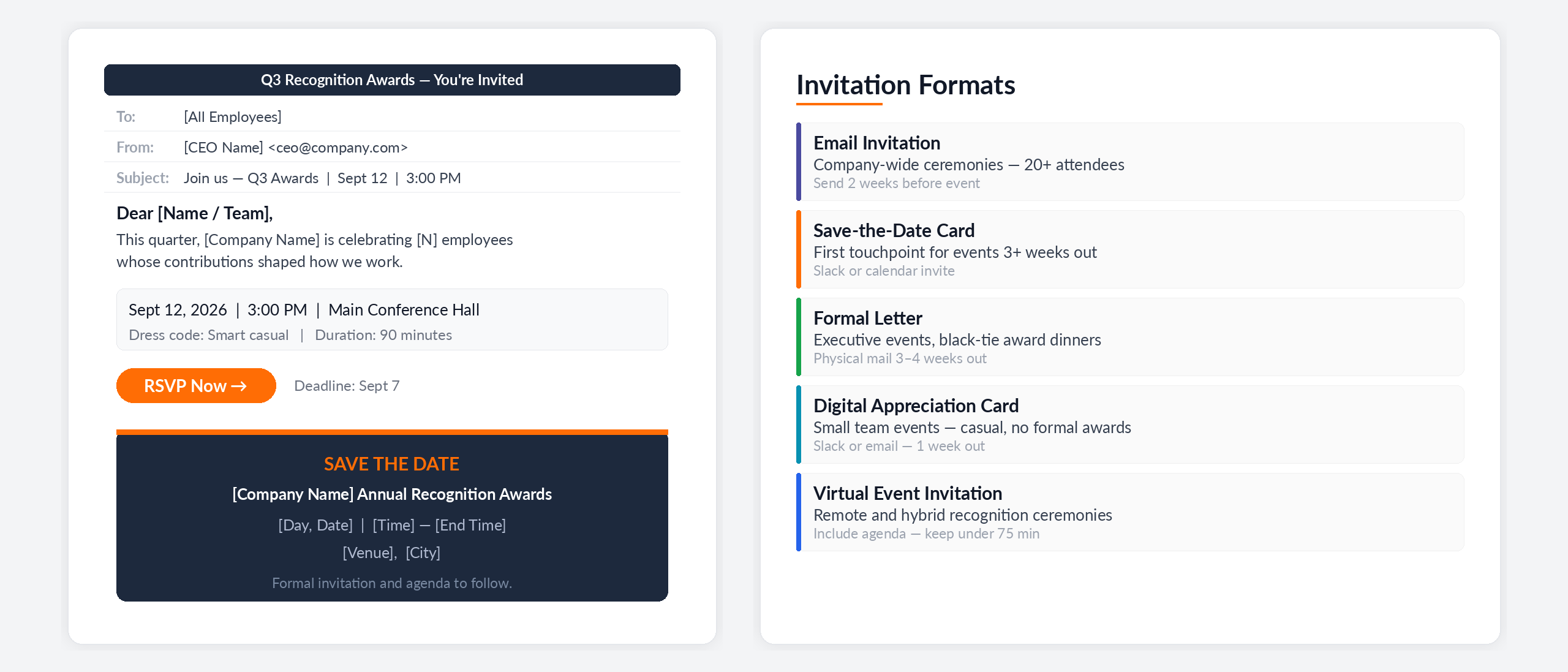
Invitation formats for recognition events — email, digital card, and save-the-date.
View Template ›
Employee Recognition Award Template
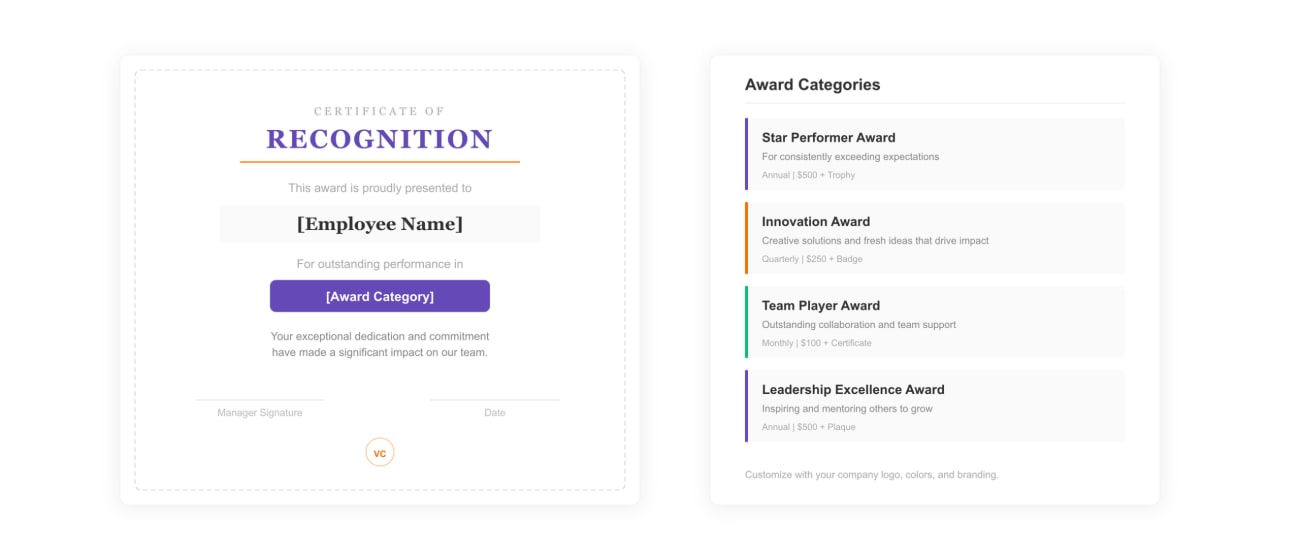
Award frameworks to pair with your recognition day ceremony.
View Template ›
Employee Recognition Program Template
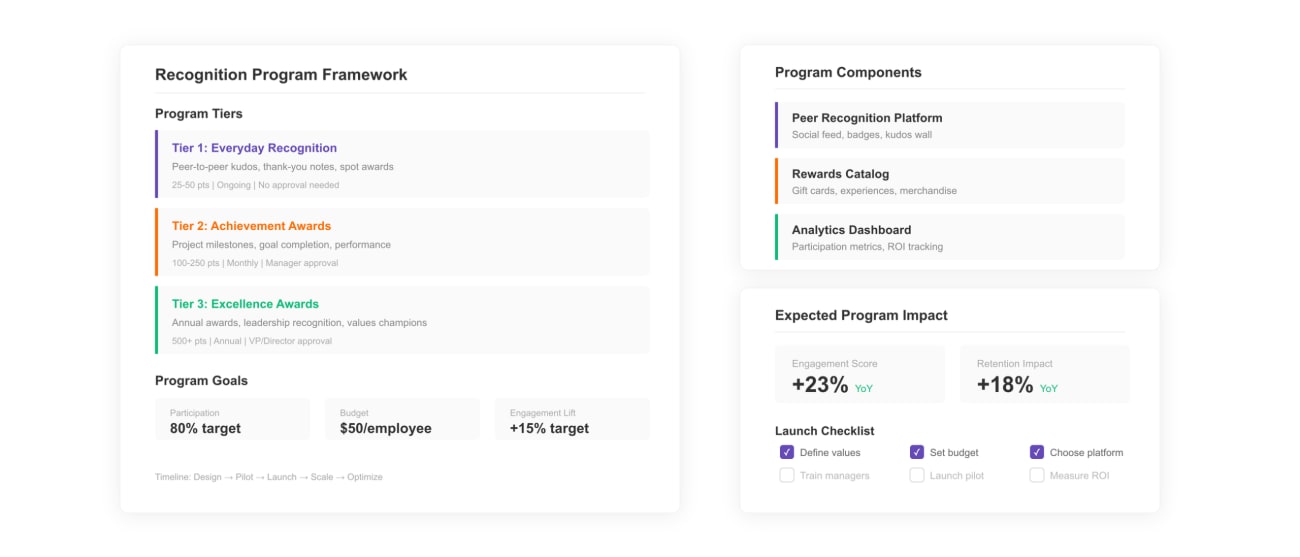
Year-round recognition program design to anchor your recognition day inside.
View Template ›