




20 Employee Rewards Ideas and Examples for Remote Workers

A Global Employee Recognition and Wellness Platform
Remote work has moved from a contingency plan to a mainstream model. According to a 2025 Pew Research Center study, 75% of employed adults will work from home at least some of the time in 2025, a clear signal that remote work is here to stay. But with this shift comes new challenges: fragmented communication, reduced visibility, and a growing sense of isolation, which nearly 25% remote employees report experiencing daily.
For organizations, this creates a clear mandate that the effective rewards for remote teams must go beyond compensation. Thus, leaders need reward systems that support emotional well-being, strengthen connection, and reinforce a sense of value even without physical presence. When remote employees feel meaningfully recognized and rewarded, engagement rises, and proactive effort increases across all work models.
That's where the remote employee reward strategies become a strategic necessity. Several studies highlight that when employees feel appreciated and recognized beyond mere compensation, they are significantly more likely to stay.
In this blog, we'll explore powerful ideas and real-world examples that help leaders, HR strategists, and culture-builders design reward systems that not only acknowledge remote contributions but boost engagement, performance, and retention in a lasting way.
Effective Reward Ideas for Remote Employees

Designing meaningful rewards for distributed teams requires more than digitizing old office perks. Remote employees value flexibility, autonomy, emotional connection, and recognition that feels personal and not performance focussed. The most effective programs are those that blend creativity, context, and choice, allowing employees to receive rewards that genuinely improve their day-to-day remote experience.
Let's dive in to see some creative employee rewards ideas explicitly tailored for remote workers.
Category 1: Monetary Rewards (Classic but Still Effective)

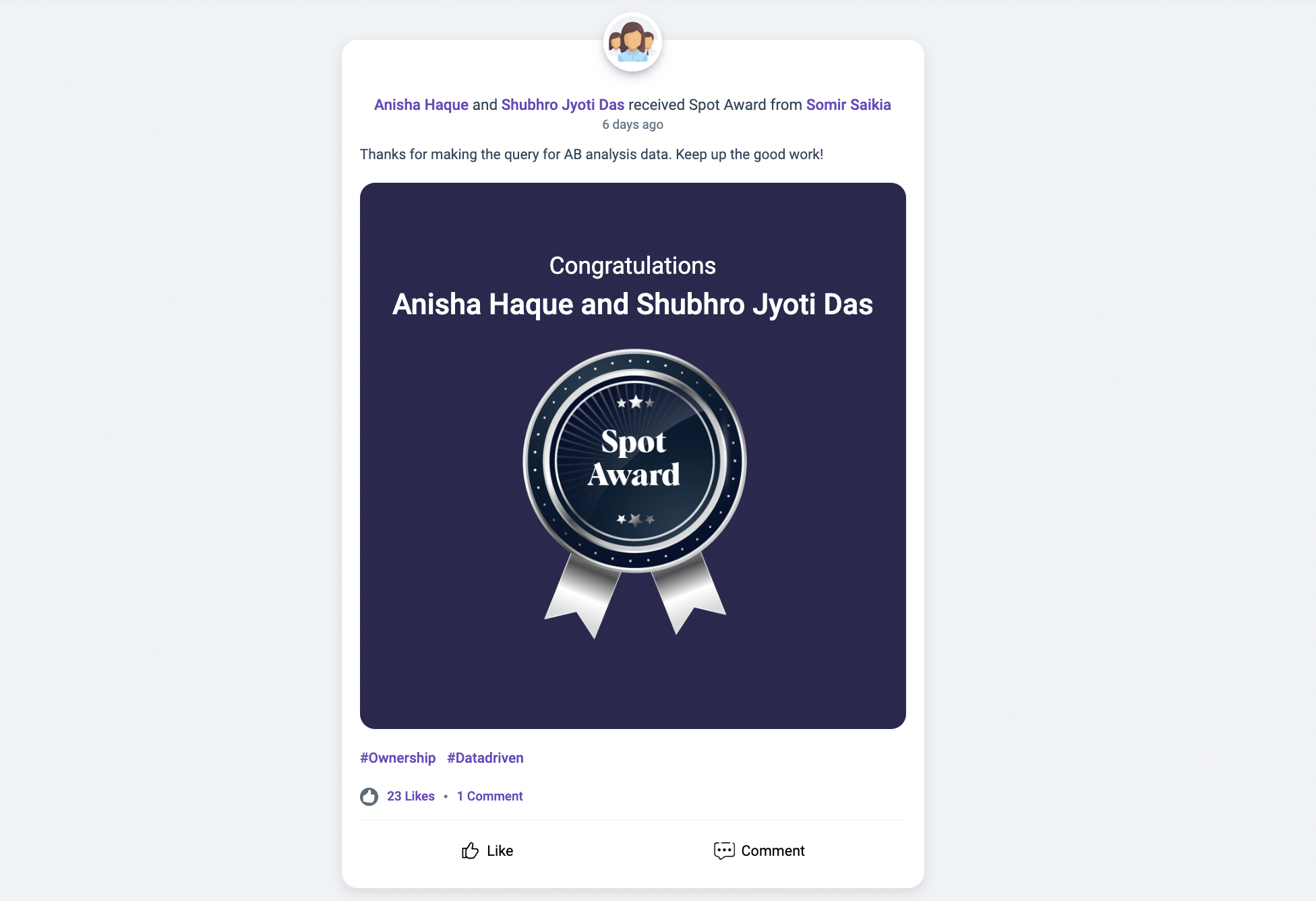
1. Spot Bonuses for Fast Wins
Remote employees rarely get the "in-office praise moments," so spot bonuses help recognize momentum in real time.
Business Impact: Reinforces agility and signals that high-impact work never goes unnoticed.
Source: Vantage Recognition
2. Personalized Gift Cards
Instead of generic vouchers, choose cards tied to actual interests like books, fitness, gaming, and groceries.
Business Impact: Personalization increases the perceived value of the reward by 2–3x.
3. Project-Based Incentive Pools
Reward entire remote teams for meeting timelines or exceeding targets.
Business Impact: Inspires collaboration and reduces siloed behavior in remote work.
4. Home Office Setup Stipends
One of the high – impact rewards for remote workers is investing in their space because comfort improves productivity.
Business Impact: Reduces fatigue and increases focus hours.
Category 2: Recognition & Appreciation Rewards

5. Peer-to-Peer Recognition Programs
According to Gallup , peer recognition significantly boosts engagement.
Business Impact: Builds a culture where appreciation flows freely, not hierarchically. Platforms like Vantage Circle, where employees award appreciation or kudos.
6. Digital "Wall of Fame"
Public acknowledgment in Slack/Teams or your intranet amplifies visibility.
Business Impact: Strengthens a sense of belonging, which is critical in distributed teams.

Source: Vantage Recognition
7. Manager "Mastery Moments"
A weekly 10-minute ritual: managers spotlight one remote employee who embodied a core value.
Business Impact: Makes recognition predictable rather than accidental.
8. Employee Spotlight Stories
Short video or written stories shared internally, highlighting impact + personality.
Business Impact: Humanizes the workforce and reduces isolation.
Also Worth Reading: Managing Remote Employees? 7 Key Steps You Must Follow!
Category 3: Professional Growth & Development Rewards

9. Certification Sponsorships
Growth is a top driver of retention; LinkedIn shows 94% of employees stay longer when companies invest in learning.
Business Impact: Builds internal capability while supporting career aspirations.
10. Learning Wallets / Skill Credits
Give employees a flexible annual budget they can spend on learning of their choice.
Business Impact: Encourages self-driven development in remote settings.
11. Mentorship & Leader Shadowing
Remote workers often lack visibility; structured mentorship fixes that.
Business Impact: Builds pipeline strength and boosts internal mobility.
12. Stretch Assignments With Visibility
Another highly useful reward optiom for remote workers is meaningful responsibility, not just swag.
Business Impact: Increases engagement by signaling trust and readiness for growth.
Category 4: Flexibility & Lifestyle Rewards

13. Recharge or Wellness Days
Short, frequent breaks reduce burnout, especially in remote teams where overwork is common.
Business Impact: Improves mental well-being and resets motivation.
14. Work-From-Anywhere Pass
Let employees work from another city or country for a short period of time.
Business Impact: Appeals to younger and global talent; boosts morale.
15. Flexible Schedule Credits
A reward based on trust: allow employees to choose their hours for a month.
Business Impact: Enhances ownership and work-life integration.
16. Quarterly No-Meeting Days
Time is the most undervalued remote reward giving it back is powerful.
Business Impact: Increases productivity and reduces meeting fatigue.
Category 5: Experience-Based & Well-Being Rewards

17. Virtual Experiences
From cooking classes to escape rooms, experiences strengthen culture beyond screens.
Business Impact: Creates shared memories essential in distributed environments.
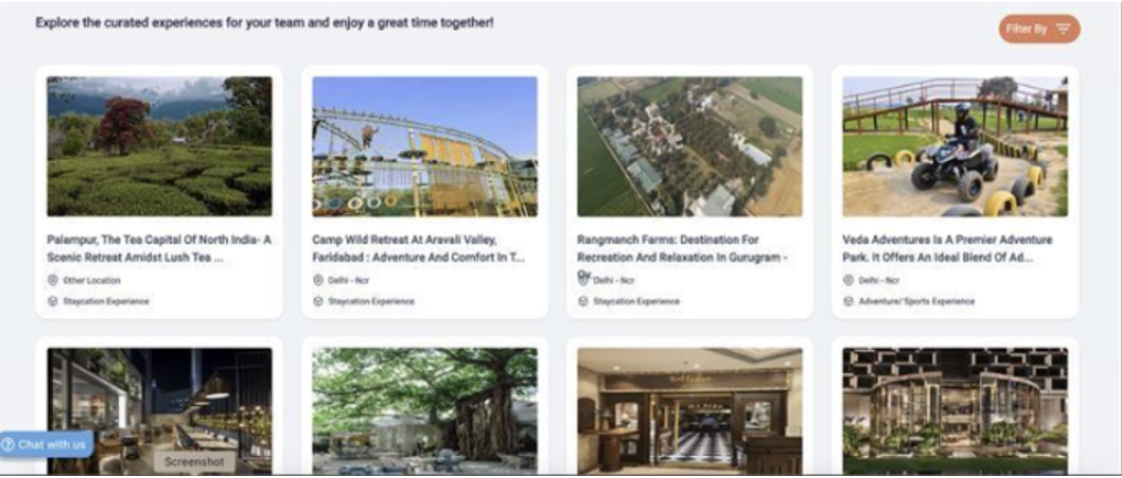
18. Travel or Staycation Vouchers
Perfect for celebrating tenure or significant milestones.
Business Impact: Rewards feel meaningful and restorative, not transactional.
19. Wellness Subscriptions
Gym, meditation, therapy, or fitness app memberships as long-term well-being support.
Business Impact: Improves physical and mental wellness — reduces sick days.
20. Personalized Care Packages
A high-impact emotional reward that is thoughtful, personal, and memorable.
Business Impact: Strengthens emotional connection and signals genuine appreciation.
Also Worth Reading: The New Rules Of Engagement: Well-being As A Strategic Advantage
Why Rewards Matter for Remote Workers

Remote work has changed how employees experience recognition, belonging, and motivation. With fewer informal touchpoints and more asynchronous collaboration, a deliberate rewards strategy becomes essential to sustain engagement, productivity, and retention.
The Challenges of Remote Work: Why Traditional Rewards Don't Work
Remote employees face several consistent challenges that blunt the effectiveness of traditional, office-centric rewards:
Invisible effort and isolation. Fully remote employees report daily loneliness at significantly higher rates than onsite peers about 25% for fully remote workers versus 16% for fully onsite employees.
Fewer informal reinforcement moments. Spontaneous, in-person praise (hallway kudos, team lunches, desk-side cheers) disappears in a distributed environment, so recognition must be engineered rather than assumed.
Physical perks don't translate. Perks designed for an office (free lunch, onsite events, office swag) create equity gaps when delivered inconsistently or not at all to remote staff.
Delayed recognition weakens impact. In remote workflows, delayed praise reduces the behavior-reinforcement effect, making real-time or near-real-time rewards more effective.
Implication for leaders: Traditional rewards are often location-bound, slow, or symbolic. Remote teams need digital-first, timely, and personalized rewards to close the engagement gap.
How Reward Systems Impact Remote Worker Engagement
Well-designed rewards address core psychological needs competence, autonomy, and relatedness and they produce measurable business benefits:
-
Recognition increases engagement. Employees who expect to be recognized are substantially more likely to be highly engaged research shows they can be as much as 2.7x more likely to be highly engaged
-
Recognition reduces turnover. Organizations that embed recognition into their culture report meaningful reductions in voluntary turnover; studies have found that companies with strong recognition practices experience up to ~31% voluntary turnover
-
Timely, peer-driven rewards boost collaboration. Programs that enable peers to recognize one another (points, badges, micro-rewards) create frequent positive feedback loops and higher trust scores among distributed teams.
Bottom line for strategists: Rewards are not decorative they are a core people-ops lever. In a remote context, reward systems that are timely, equitable, personalized, and tied to business outcomes materially drive engagement, retention, and performance.
How to Create a Reward System That Works for Remote Teams

A reward system for remote employees isn't just a collection of perks; it's an operating model that signals what an organization values, how it enables performance, and how it builds emotional connection at a distance. The companies that get this right consistently outperform on engagement, retention, and trust.
Below is a structured framework leaders can use to design reward programs that actually work for distributed teams.
Align Rewards with Company Culture and Values
A reward loses its impact the moment it feels transactional. Remote workers who operate with less face time and fewer informal cues depend even more on cultural clarity. That's why rewards must reflect what the organization truly stands for.
What this means in practice:
-
If your culture celebrates innovation, reward risk-taking and creative contributions.
-
If you prioritize customer obsession, recognize moments where remote employees go above and beyond for clients.
-
If well-being is a core value, provide time-off rewards, wellness stipends, or mental health support.
When rewards reinforce values, they stop being "extras" and become cultural signals. According to the Recognition Effect Report 2025 by Great Place To Work® India × Vantage Circle, organizations with value-aligned recognition systems see 94% of employees perceiving the workplace positively, versus far lower levels in companies with ad-hoc recognition.
Personalize Rewards for Better Impact
Remote employees work in different environments, time zones, and life situations — making personalized rewards dramatically more effective than one-size-fits-all perks.
Why it matters:
Personalized rewards activate deeper intrinsic motivation because the employee feels seen, not simply compensated.
What personalization looks like:
a. Allow employees to choose between lifestyle perks, L&D opportunities, or wellness benefits.
b. Maintain employee preference profiles (favorite rewards, hobbies, learning interests).
c. Offer flexible reward redemption instead of fixed catalog items.
This shift turns rewards from generic tokens into tailored experiences that remote workers genuinely value.
Make Rewards Transparent and Accessible
In remote teams, lack of visibility is one of the biggest engagement killers. Employees may not understand how rewards are earned or why someone else was recognized , which can create unnecessary frustration.
Transparency solves this.
Key considerations:
a. Publish clear reward criteria for performance, behaviors, milestones, and peer nominations.
b. Ensure that remote workers, regardless of geography, have equal access to reward opportunities.
c. Create a simple digital trail: who was rewarded, for what, and tied to which organizational value.
The Recognition Effect Report 2025 T shows that fairness in recognition strongly correlates with retention: 92% of employees in high-fairness cultures say they intend to stay.
Use Technology to Streamline the Reward Process
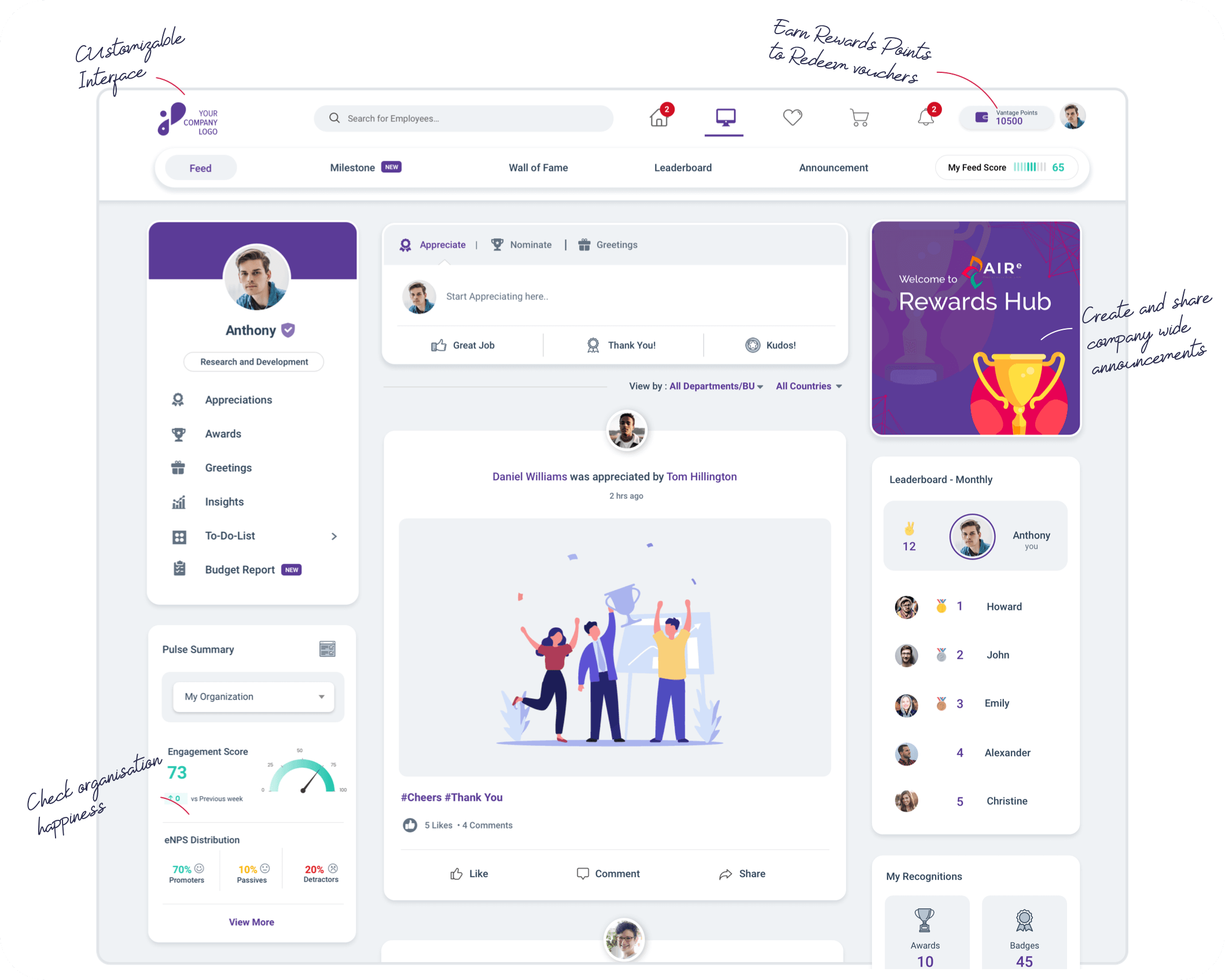
(Source: Vantage Recognition)
Managing rewards manually across distributed teams often leads to delays, inconsistencies, or lost visibility. Technology is what makes modern reward systems scalable, data-informed, and friction-free.
How tech enables better rewards:
Recognition platforms (e.g., Vantage Circle) centralize peer recognition, manager shoutouts, and point-based rewards.
Analytics dashboards help leaders spot recognition gaps, monitor participation, and track ROI.
Automations ensure birthdays, work anniversaries, and milestone achievements never get missed.
Multi-region reward catalogs ensure global teams can redeem rewards relevant to their location.
Involve Employees in the Reward Decision-Making Process
The simplest way to ensure your rewards are effective? Ask employees what they value.
Remote workers often have diverse preferences shaped by their home setup, geography, and lifestyle. Involving them in the decision-making process ensures rewards are relevant, meaningful, and widely adopted.
How to implement this:
-
Run quarterly "reward preference" surveys.
-
Hold focus groups with remote team members from different regions.
-
Offer flexible reward options instead of fixed perks.
Ensure Consistency and Fairness Across the Team
Remote work amplifies perceptions of inequity. Without visibility into day-to-day work, employees may feel recognition is uneven or biased unless companies intentionally build fairness into the system.
What fairness looks like:
Clear, published criteria for rewards.
Equal access for all remote workers regardless of time zone or location.
Objective, behavior- or value-based performance indicators.
A system to track recognition distribution and identify gaps.
Recognition Effect Report 2025 by Great Place To Work® India × Vantage Circle found that employees who perceive recognition as fair are 2.5X more likely to feel motivated and 92% more likely to stay with their company.
Keep Rewards Frequent and Regular
The cadence of rewards matters just as much as the reward itself. Remote workers don't experience daily in-office appreciation moments, so consistent reinforcement becomes essential.
Frequent, smaller rewards outperform occasional large ones because they:
-
Sustain motivation over time
-
Encourage continuous high performance
-
Create a rhythm of positive reinforcement
-
Reduce disengagement between milestones
Combine Rewards with Other Employee Engagement Strategies
Rewards alone can't fix disengagement. To unlock their full impact, they must be integrated into the broader employee experience ecosystem.
Rewards should work alongside:
-
Meaningful work design
-
Regular feedback and check-ins
-
Manager capability building
-
Psychological safety initiatives
-
Strong communication rhythms
-
Wellness and flexibility policies
When recognition flows through everyday interactions, manager routines, cultural rituals, and performance systems, it stops being a "program" and becomes a cultural habit.
Conclusion
Remote work has fundamentally changed how employees experience recognition, motivation, and belonging. In this context, rewards are a leadership lever.
The organizations that win will be those that design reward systems that are timely, fair, personalized, and culturally aligned, turning recognition into a daily habit rather than an occasional event.
FAQs
How often do you reward remote employees?
Remote employees benefit most from frequent, smaller moments of recognition rather than occasional big rewards.
A simple cadence:
Weekly: Quick kudos or shoutouts
Monthly: Small rewards tied to behaviors or milestones
Quarterly/Annually: Performance-based rewards
How do you show appreciation for remote staff?
Keep appreciation visible, timely, and personal. Effective approaches include:
-
Public shoutouts in virtual meetings
-
Peer-to-peer recognition via platforms like Vantage Circle
-
Personalized thank-you notes
-
Spot rewards for quick wins
-
Celebrating milestones and achievements

Supriya Gupta leads the Content team at Vantage Circle where she drives strategy and thought leadership across digital channels.With over a decade of experience in corporate and marketing communications, she specializes in storytelling that connects brand purpose with audience engagement. Her bylined work at Vantage Circle has been featured in platforms like Comp and Benefits Today, while her ghostwritten contributions—crafted in her role as a communications expert—have supported global brands across tech, media, and FMCG sectors, including Intel, ESPN, Pepsi, and the World Bank. Connect with Supriya on LinkedIn and X, or reach out to editor@vantagecircle.com for inquiries.