
Most company swag ends up in a junk drawer within a month. The swag that actually gets kept and used almost always has one thing in common. It was given for a specific reason. A first day. A five-year anniversary. A peer shouting someone out in a team channel. Not handed out generically because a box needed to go somewhere.
Company swag is branded merchandise a company hands out to employees, usually stamped with a logo, meant to build culture or say thank you. That definition doesn't explain why most of it gets thrown out within a week. What decides that is whether the item is connected to something specific happening in a person's actual work life, or just showed up because a box needed shipping.
Below are 25 curated swag ideas organized by the moment they actually fit, plus what separates swag people keep from swag people forget.
What Is Company Swag?
Swag covers a specific slice of company merchandise, items given to employees instead of customers, meant to be kept and used rather than glanced at once and forgotten.
The term borrowed its shape from consumer promotional products, but internal swag plays by different rules. A trade show giveaway only has to survive long enough to make it out of a conference bag. Give the same item to an employee and the bar is higher. It either earns a place in their actual routine, or it ends up in a drawer within a week.
Categories don't vary much: apparel, drinkware, desk and tech accessories, occasionally an experiential add-on like a gift card bundled with a physical item. What varies, and what almost nobody gets right, is the trigger behind the gift. Hand a hoodie out at a random Tuesday all-hands and it barely registers, just inventory moving out the door. Hand the same hoodie to someone on their fifth work anniversary and it becomes something closer to proof the company noticed.
Most swag programs never make that distinction. Someone orders a few hundred units, distributes them whenever, tracks nothing. Fine for a trade show booth. It falls apart with employees, because employees notice the pattern. The item hasn't changed between the random Tuesday and the anniversary. What it signals has.
Why Company Swag Works (When It's Tied to a Real Moment)
Swag works because it converts an abstract thank you into something physical an employee keeps, which makes the recognition last longer than the moment itself.
PPAI's 2016 consumer research found that 83% of people could recall at least one brand from a promotional product they'd received, even without being prompted. Inside a company, that same recall effect does something more useful than marketing. It turns a five-second interaction, a manager handing over a box, into something that sits on a desk for a year and keeps signaling that the moment mattered.
83% of people can recall at least one brand from a promotional product they received, without being prompted. — PPAI, 2016
The retention data backs this up too. A longitudinal Gallup-Workhuman study that tracked nearly 3,500 employees from 2022 to 2024 found that well-recognized employees were 45% less likely to have left their company after two years. I'd push back a little on stretching that number to cover swag specifically. The study measured recognition broadly, not branded merchandise in isolation. But the underlying mechanism holds. Recognition that shows up as something tangible tends to get remembered longer than recognition that shows up as a Slack message and disappears in the scroll.
Well-recognized employees are 45% less likely to have left their company after two years. — Gallup-Workhuman, 2024
Real example: The University of Washington's HCDE department built its service recognition program on this same logic. Every five years of continuous employment, staff become eligible for a service award that includes two paid days off, recognition at the next staff meeting, and a choice of $100 toward custom department swag, an Amazon gift card, or a set of team lunches. Swag isn't the whole reward there. It's one option inside a structured milestone, tied to a specific number of years, rather than handed out on a schedule that has nothing to do with the person receiving it.
A formal points system isn't the requirement here. The part worth copying is smaller: pick the moments that already matter to people, then let the swag mark them instead of arriving at random.
There's a cost angle worth mentioning too, though it's the weaker of the two arguments. A branded jacket costs a company a fraction of what a cash bonus at the same milestone would, and it still produces most of the emotional effect a bonus is meant to deliver. I wouldn't lean on that as the primary case for swag. Money still communicates seriousness in ways an item can't fully replace. But sitting alongside a real recognition mechanism, rather than replacing one, the cost math works in swag's favor.
25 Company Swag Ideas by Occasion
Flat lists of swag ideas all blur together after item twelve. Organizing by the occasion the swag is actually for makes the list usable instead of just scrollable.
| # | Occasion | Best For | Example |
|---|---|---|---|
| 1 | 👋 New-Hire Onboarding | A new hire's first week | Welcome kit, branded hoodie |
| 2 | 🎉 Tenure and Milestone | 5 and 10-year anniversaries | Branded jacket, engraved keepsake |
| 3 | 🤝 Peer-Nominated Recognition | A specific peer shoutout | Spot-award item, custom pin |
| 4 | 💻 Remote and Hybrid Team | Distributed employees | Home office kit, care package |
| 5 | 🌱 Everyday Culture-Building | Ongoing values reinforcement | Sustainability items, seasonal drops |
1. 👋 New-Hire Onboarding Swag
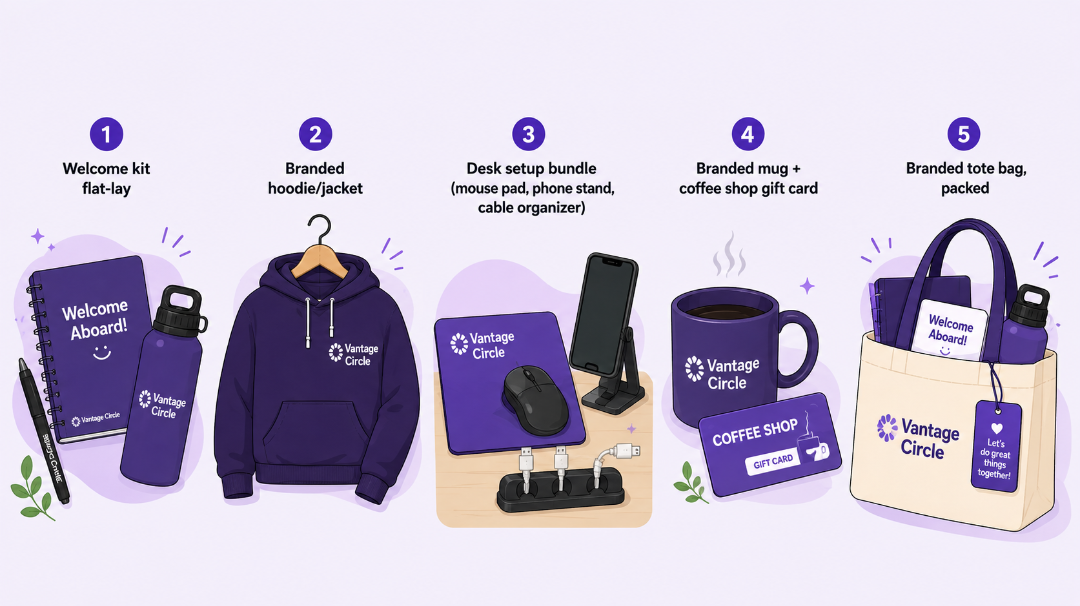
A new hire's first week is the highest-attention window you'll ever get from that person. Waste it and there's no second first day.
- Welcome kit: Built around three or four genuinely useful pieces, a notebook, a decent pen, a water bottle. Skip anything nobody would buy for themselves even at a discount.
- Branded hoodie or jacket: Handed over on day one. Clothing gets worn in public more than any other swag category, so it does more brand work per unit than almost anything else on this list.
- Desk setup bundle: Mouse pad, phone stand, a cable organizer that actually organizes cables. Small stuff, but it tells a new hire someone thought about their actual desk before they showed up.
- Coffee shop gift card + mug: Paired together. Gives a new person an excuse to leave the desk and start building a routine in a building they don't know yet.
- Branded tote: Holding everything above, instead of a loose stack handed over separately. A pile of stuff feels like leftovers. One kit feels assembled on purpose.
2. 🎉 Tenure and Milestone Swag
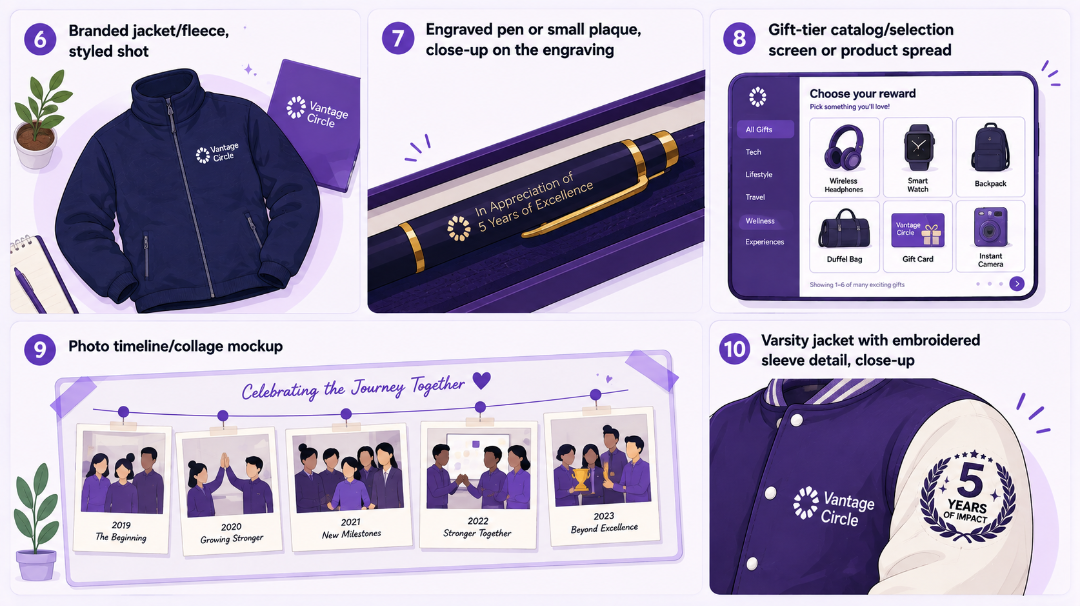
Get the tier wrong here and the whole gesture falls flat. A milestone gift only lands when it's visibly bigger than whatever came before it.
- Branded jacket or fleece (5-year mark): Unlocked at the five-year mark and tied to a Long Service Award. The jacket means more at year five than it would on a random Tuesday, because the milestone gives it context the recipient will actually remember.
- Engraved keepsake (10-year mark): A pen or a small plaque with a name and date. Meant to sit on a shelf, not get buried in a drawer.
- Gift-tier catalog: Tied to years of service, so people choose rather than receive whatever was ordered in bulk. Solves the single biggest complaint about generic swag: nobody asked what I wanted.
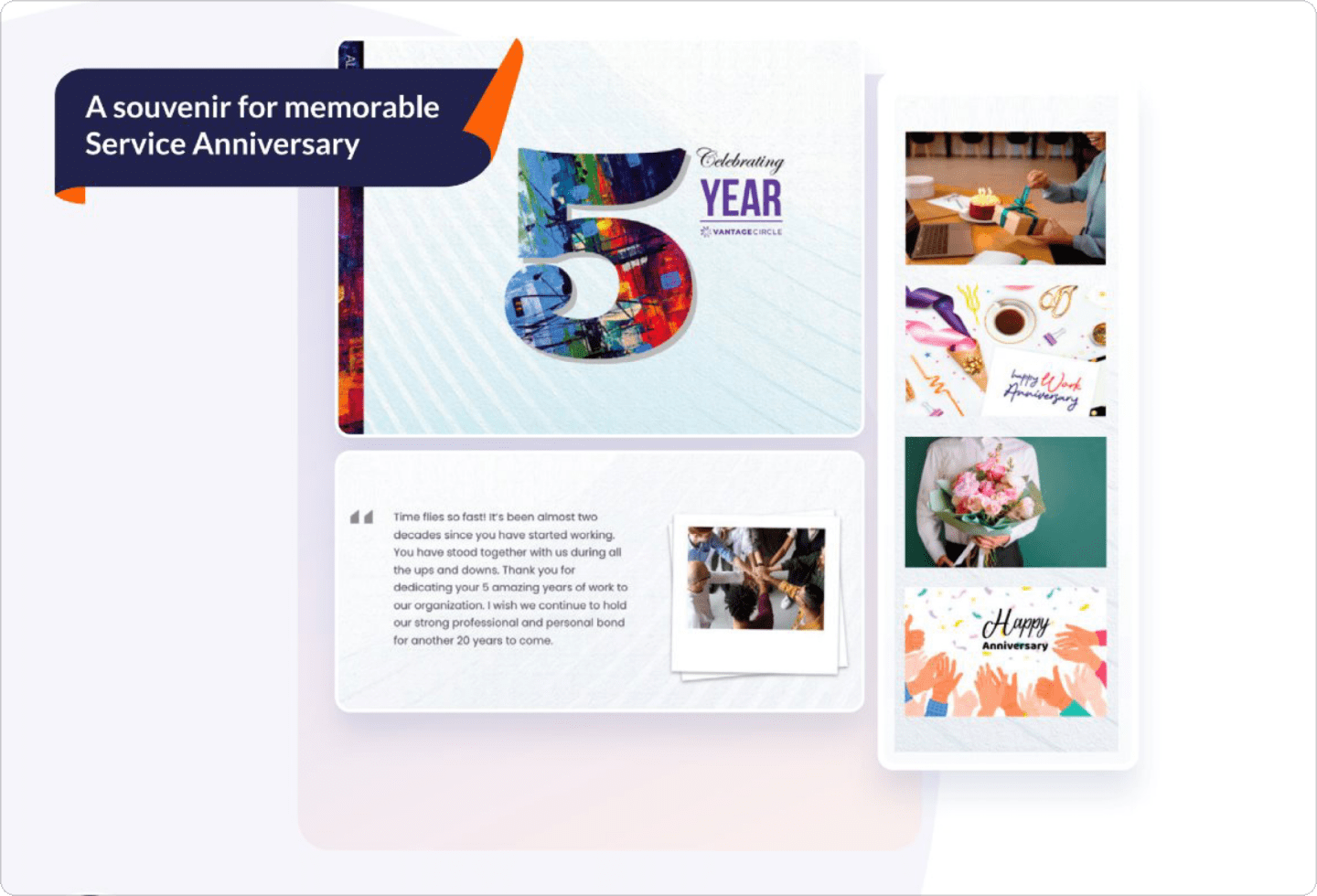
- Photo timeline: A short photo timeline of the employee's projects and contributions. Harder to produce at scale, worth doing for the senior milestones. It's the one item here that can't come from a catalog.
- Varsity-style jacket: With years of service embroidered on the sleeve. Unusual enough that people actually wear it, specific enough that it can't accidentally go to the wrong person.
3. 🤝 Peer-Nominated Recognition Swag
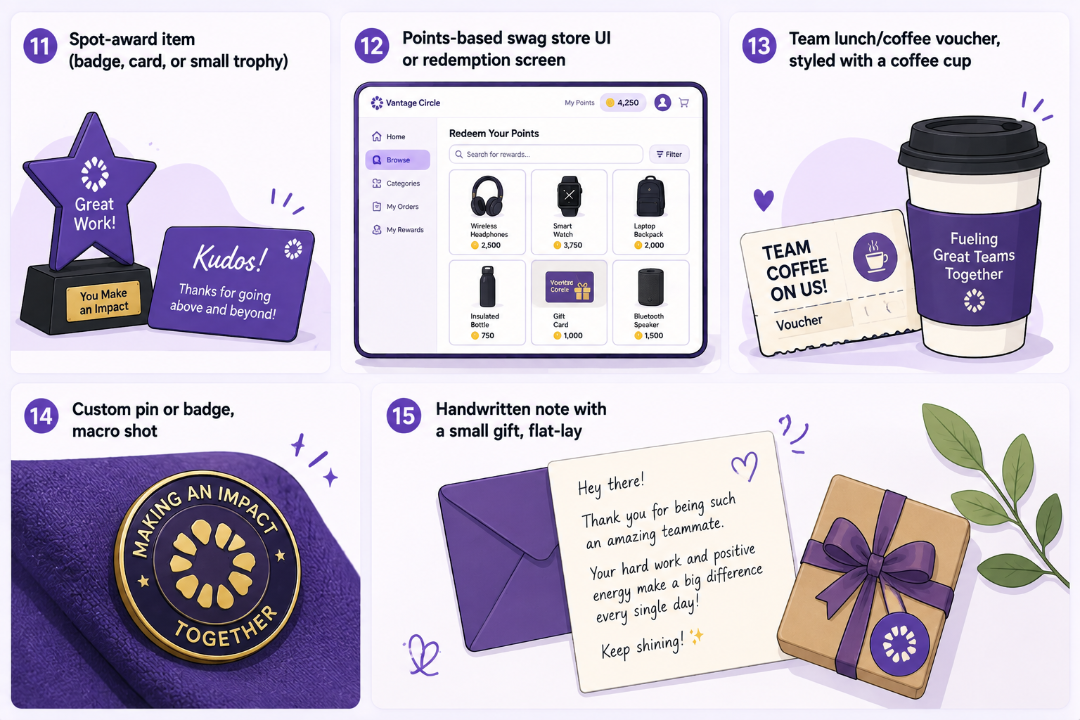
Swag chosen by a manager can feel generic. Swag triggered by a peer naming something specific you did well feels earned, and that gap is most of the difference between a gift and a reward.
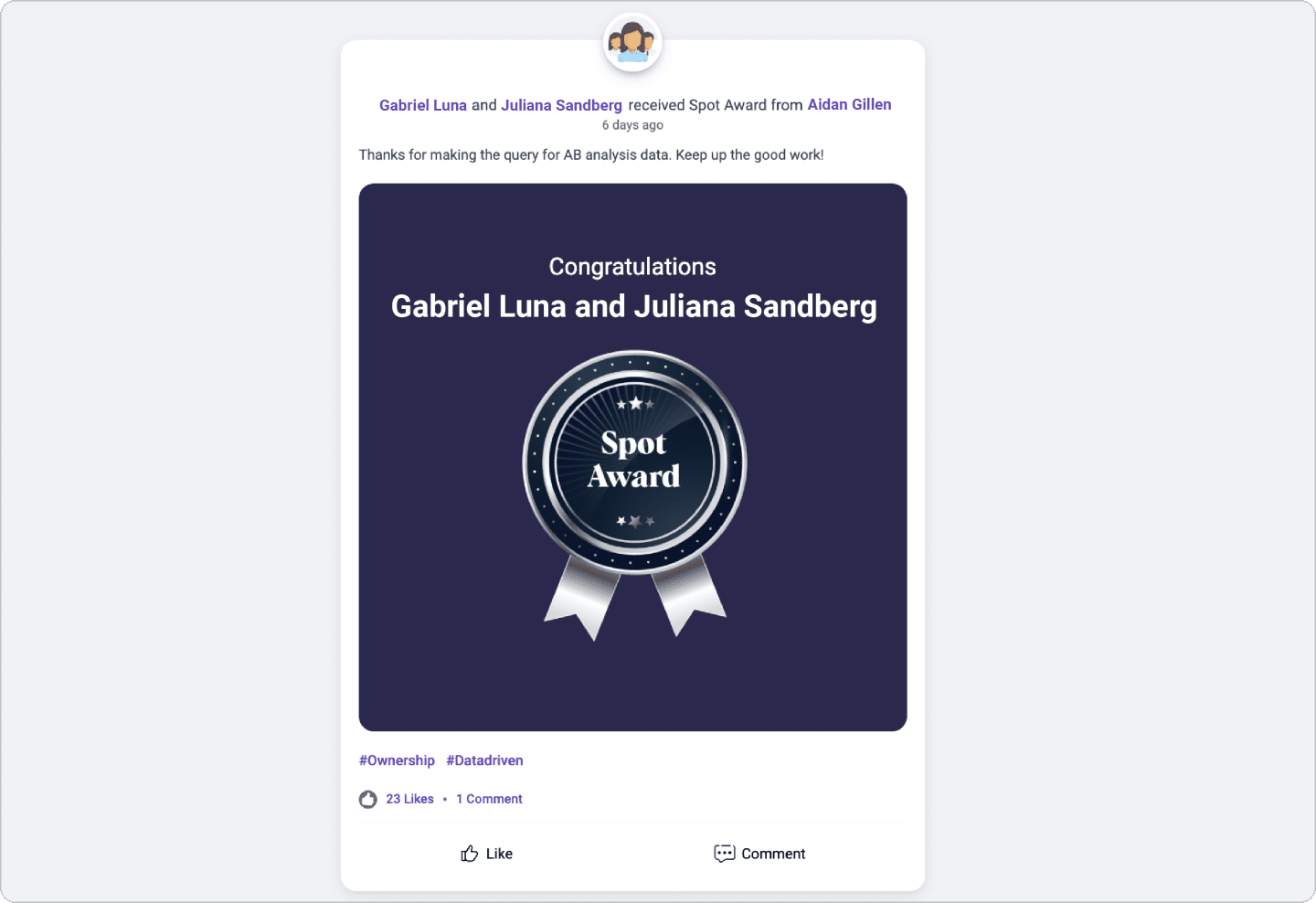
- Spot-award item: Triggered by a peer shoutout, delivered through Peer-to-Peer Recognition. The trigger matters more than the item ever does. What people remember is a coworker naming what they did well, specifically, not vaguely.
- Points-based swag store: Funded by peer nominations instead of a manager's budget. People redeem for what they actually want rather than whatever got picked off a vendor site.
- Team lunch or coffee voucher: Attached to a nomination instead of a calendar reminder. Sometimes the swag isn't a physical item at all. It's a shared moment with the team that recognized you.
- Custom pin or badge: Tied to a specific value someone demonstrated. Cheap, small, and disproportionately effective, because it names the behavior instead of just the achievement.
- Handwritten note: Bundled with something small. The item is almost incidental. What gets kept is the note. The item just gives it somewhere to live besides a drawer.
4. 💻 Remote and Hybrid Team Swag
Remote employees lose the physical cues that make office culture visible, the poster on the wall, the swag closet, the cake in the kitchen on someone's birthday. Swag has to do more of that work on its own.
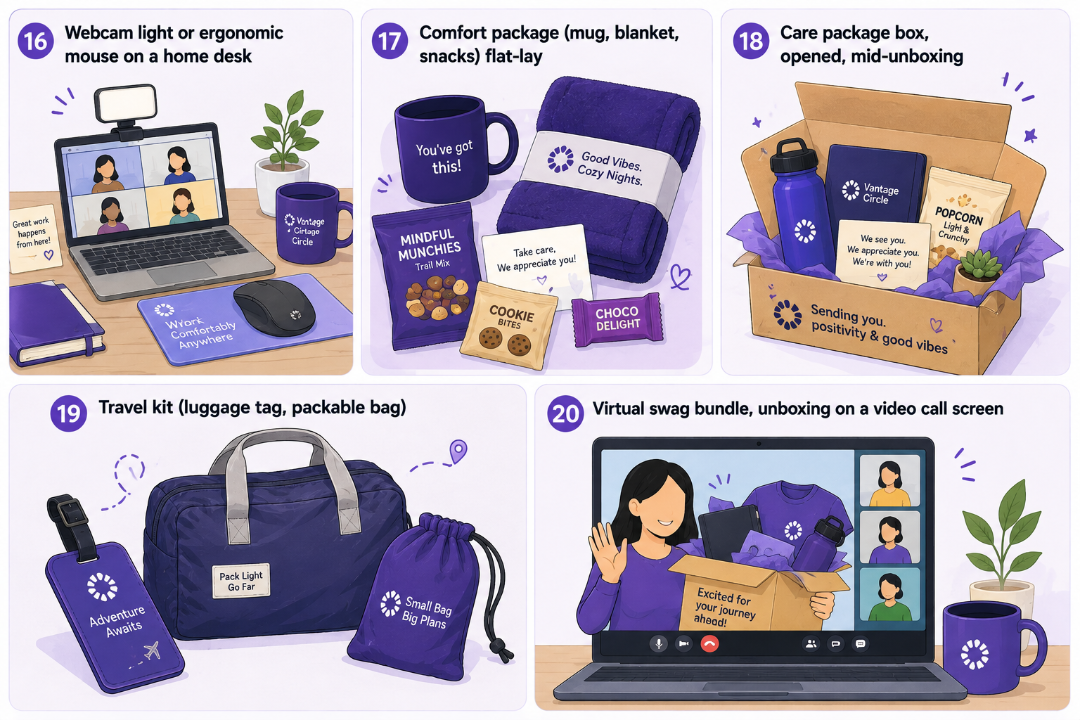
- Home office upgrade kit: A webcam light or an ergonomic mouse. Solves a daily annoyance, which is rare for swag. Most of it gets used once and forgotten.
- Comfort package: Ahead of a big virtual event: a mug, a small blanket, some snacks. Gives remote employees the same showing-up-together feeling an in-office snack table gives everyone else.
- Milestone care package: Mailed straight to a home address. Recognition shouldn't require being in an office to receive it. Shipping it closes a quiet inequity remote teams deal with constantly.
- Branded travel kit: For the rare in-person offsite, a luggage tag, a packable bag. Gets used exactly when it matters, on the one trip a year that brings a distributed team into the same room.
- Same-day virtual swag bundle: Sent right after a public shoutout. Speed is the whole point here. A gift that shows up three weeks later has already lost its connection to the moment it was meant to mark.
5. 🌱 Everyday Culture-Building Swag
Some swag doesn't need a milestone attached to it at all. It just needs to say something true about what the company actually values, rather than whatever's printed on the office poster.
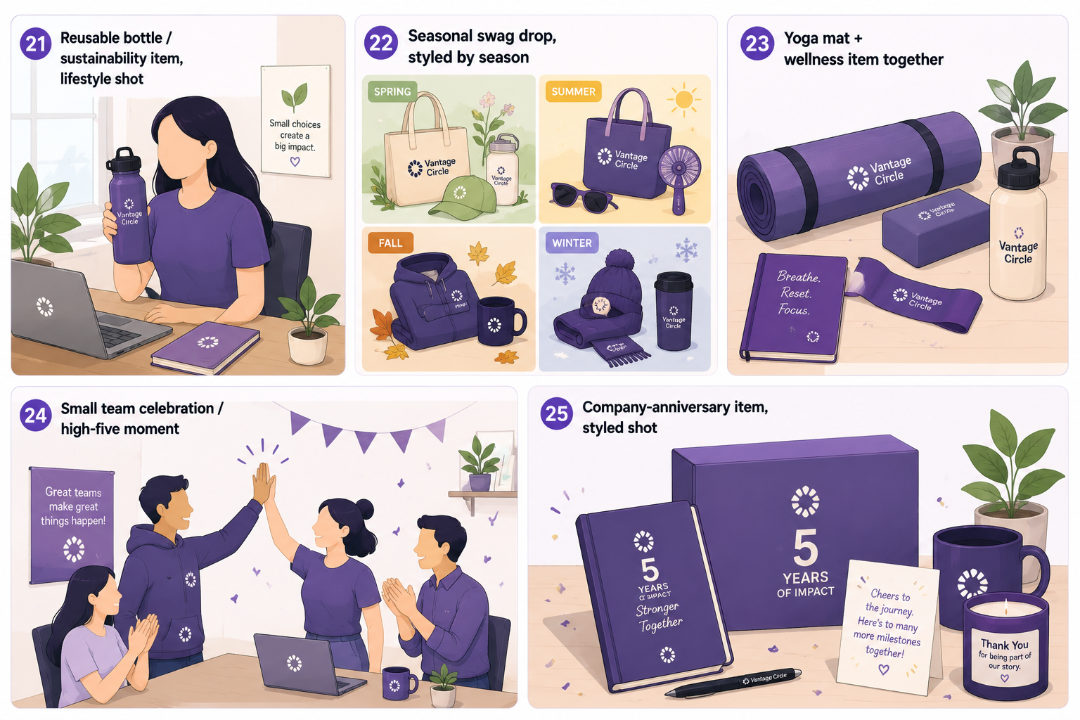
- Sustainability-branded items: Tied to a value the company has actually stated, and not handed out simply because reusable bottles happen to be trendy this year. A branded water bottle alone says nothing. The same bottle, given because someone modeled a specific Core Values Alignment, says something the recipient connects to.
- Seasonal swag drop: Tied to a real season or company event, not some random week in March picked for no reason. Gives teams something to look forward to without needing an individual trigger behind it.
- Wellness item + benefit: A yoga mat handed out alongside a real mental health stipend, for instance. The same mat with no benefit attached just reads as decoration.
- Project-completion swag: For shipped work. Marks the end of a hard sprint. The team doesn't just roll straight into the next deadline with zero acknowledgment of the one they just closed out.
- Company-anniversary swag: Marking the collective milestone rather than an individual one. Works best once a year. More often than that and it stops meaning much of anything.
Tips for Choosing Swag People Actually Keep
Here's what most leaders miss: the item matters less than the timing. A cheap mug given at the right moment outperforms an expensive jacket given for no reason at all. That single fact should reorder most swag budgets. It rarely does, mostly because ordering more inventory is a lot easier than building a real trigger system.
A few things consistently separate swag that gets kept from swag that gets pitched. Usefulness matters more than branding does. An item someone would buy for themselves anyway, logo aside, survives longer on a shelf than something that exists only to be branded. Nobody keeps a stress ball around. A good water bottle is a different story.
Quality can't be an afterthought either, and this one is more about execution than strategy. I've watched teams spend real budget on a milestone gift, then undercut the whole gesture with a shirt that shrinks in the first wash or a mug where the print starts flaking after a month. That kind of detail actively damages the recognition it was supposed to deliver, and it's entirely avoidable.
Then there's choice. Whenever the budget allows it, let the recipient pick between two or three options rather than shipping one predetermined item to everyone. Costs almost nothing extra. It's probably the fastest way to make a gift feel considered, not generic, and most programs skip it purely out of inertia.
Would the recipient buy this for themselves? Is it tied to a specific moment, not a random Tuesday? Did they get a choice between two or three options? Will it arrive within days of the moment it's marking, not weeks later? If you can't say yes to all four, it's inventory, not recognition.
Delivery speed gets overlooked more than it should. A milestone gift that shows up two weeks after the actual anniversary date has already missed the moment it was meant to mark. By then the recipient has moved on mentally, and what arrives reads like paperwork catching up rather than a celebration.
Scale doesn't excuse generic execution either. A forty-person company can hand-pick every milestone gift without much effort. A four-thousand-person company can't. That's the whole reason the trigger needs to live in a system rather than in someone's memory, past whatever headcount one HR person can realistically track by hand.
I've gone back and forth on whether occasion-based swag adds unnecessary process to something that used to just be an inventory closet. It does add a step, honestly. But the alternative is what's already failing across most of this topic's search results right now: a pile of hoodies nobody remembers the reason for.
How Vantage Circle Turns Swag Into a Real Recognition Program
A swag program becomes a recognition program the moment the trigger for the gift is a specific action or milestone, not a calendar reminder to reorder inventory.
Vantage Circle's platform is built around that distinction. Instead of a swag closet someone restocks on a schedule, swag moments get tied directly to the events that should trigger them: a tenure milestone, a peer nomination, a value in action.
That difference shows up most clearly at scale. A ten-person startup can rely on a founder remembering everyone's start date. Past a few hundred employees, that kind of memory stops being reliable, and the moments that deserved recognition start slipping past unmarked instead.
| Vantage Circle Feature | How It Structures Swag as Recognition |
|---|---|
| Long Service Awards | Flags tenure milestones automatically and unlocks a gift tier that scales with years of service. The size of the gift is supposed to say something about the size of the milestone. |
| Peer-to-Peer Recognition | Any employee can nominate a colleague for a swag moment tied to something specific that person did. Recognition doesn't have to wait on a manager noticing first. |
| Core Values Alignment | Ties a swag choice, a wellness item, a sustainability-branded piece of gear, to the value it's actually reinforcing. The logo ends up carrying less weight than the reason behind the gift. |
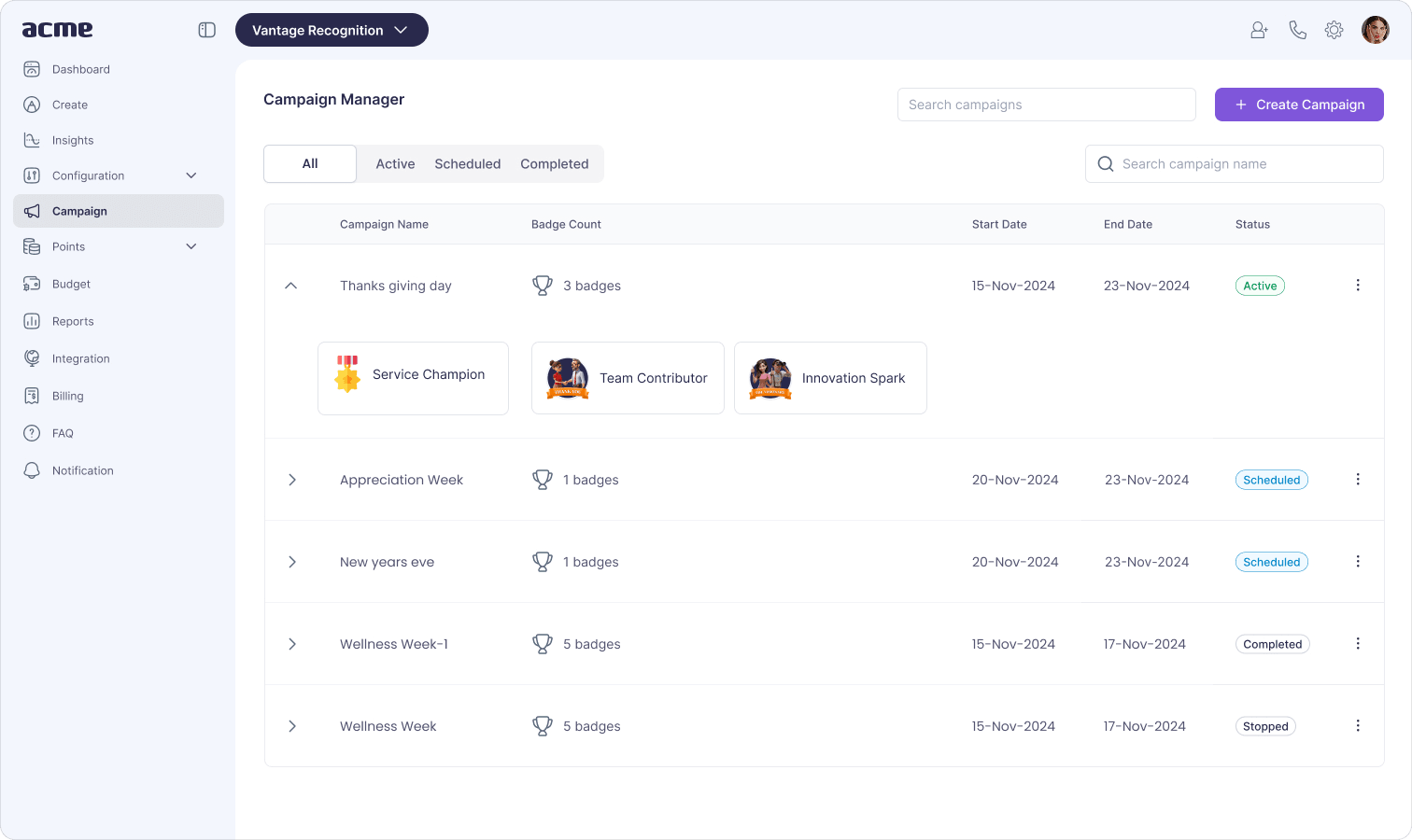
| Campaign Management | Runs new-hire kits and milestone drops as a managed campaign instead of a closet someone restocks whenever they remember to. |
| Social Recognition Feed | Puts the moment in front of the team rather than letting it arrive quietly to one desk. A recognized moment nobody else sees barely functions as recognition. |
None of these five pieces do much on their own. A points-based swag store with no milestone behind it is just a company store. A visible feed with nothing worth showing on it is just another notification nobody reads. The mechanism only holds together when the trigger, the gift, and the visibility all point back to the same real moment, which is the part most off-the-shelf swag programs skip entirely.
Conclusion
Most company swag fails for the same reason. It shows up disconnected from any moment that actually matters to the person receiving it.
The fix isn't a bigger budget or a longer item list. It's tying each piece of swag to something real, a first day, a five-year mark, a peer's nomination, so the item carries the occasion with it instead of just a logo.
None of the 25 ideas above are unusual on their own. Hoodies, mugs, welcome kits, milestone gifts, most companies already have some version of each sitting in a closet somewhere. What actually differs is whether someone bothered to connect the item to a reason before it went out the door.
Start with the moments. The swag closet will take care of itself.
FAQs About Company Swag
Q1. What are some good company swag items?
A: Apparel people would wear even without the logo. Desk and tech accessories that solve an actual annoyance. Drinkware that gets reached for every day, not just once. The category matters less than whether the item is tied to a real occasion instead of handed out at random.
Q2. What are some good corporate swag ideas for 2026?
A: Occasion-based swag is the clearest trend right now: onboarding kits, tenure milestones, peer-triggered recognition items, instead of one flat catalog everyone gets the same thing from. Sustainability-branded items are gaining ground too, along with home-office kits built specifically for remote teams, since distributed employees are usually the first group left out of physical recognition.
Q3. What are some good ideas for company goodies?
A: Whatever gets used in daily work outlasts whatever just sits there looking branded. A quality mug or a desk organizer earns its place. A stress ball or a pen with no other job tends to disappear into a drawer inside a week, if it makes it past the first day at all.
Q4. What are some cool corporate gifts?
A: Choice is most of what separates a good corporate gift from a forgettable one. Two or three tiered options at a milestone, rather than one predetermined item shipped to everyone, is what usually makes the difference. Engraving or otherwise personalizing whatever they pick pushes it further, since a name on an item is the one detail no catalog ships by default.

He has worked in the human resources environment and has elevated recognition and rewards through his insightful and detailed writing. He aims to enhance the practice of Recognition in the workplace with new ideas and innovation that will help shape the work culture. For any related queries, contact editor@vantagecircle.com


