











What Does Compensated Recognition Mean? A Complete Guide to Pay, Praise, and Rewards

A Global Employee Recognition and Wellness Platform
Employee recognition has always sat in an awkward middle ground. On one side, there is a paycheck. It’s contractual and expected. On the other side, there is praise. It is emotional, personal, and costs nothing.
Studies show that employees who feel their work is recognized are 4.6 times more likely to be engaged. Yet most leaders know that neither pay nor praise alone is enough to sustain engagement.
Salary keeps people in a job. Recognition makes them care about the work they do. The problem begins when organizations try to blend the two without a clear framework.
This is where compensated recognition comes in. It is not just another reward program. It is a deliberate way to pair meaningful appreciation with tangible value. It sits between routine pay and casual praise. When designed well, it reinforces the behaviors that matter most to the business.
Still, many leaders struggle with the same questions.
- When should recognition carry money?
- When should recognition stay symbolic?
- Does compensation dilute appreciation? Or
- Does compensation strengthen appreciation?
This guide answers those questions. It explains what compensated recognition really means. It clarifies how it differs from compensation, rewards, and recognition. It shows when money works better than praise. And it outlines how to design a fair program that motivates without becoming transactional.
What is Compensated Recognition?
Compensated recognition is a hybrid approach to employee appreciation. It combines recognition of an employee's achievements with a tangible reward that holds economic value. Unlike regular compensation, such as salary or wages, which are fixed and contractual, compensated recognition is both discretionary and performance-based.
In essence, it's more than a simple "thank you." While verbal praise acknowledges effort, compensated recognition adds a material component, often in the form of bonuses, gift cards, or other rewards. This "trophy value" provides employees with a sense of achievement that goes beyond the routine pay cycle. The tangible nature of the reward reinforces the sentiment of gratitude, making it more memorable and meaningful.
The key difference here is that while salary is guaranteed, compensated recognition is tied directly to specific achievements and behaviors. It recognizes not just time spent, but impact made.
Compensation vs. Rewards vs. Recognition: What is the Difference?
Understanding the difference between compensation, rewards, and recognition is crucial to implementing an effective compensated recognition strategy. These terms are often used interchangeably, but they represent different concepts in the workplace.
| Aspect | Compensation | Recognition | Reward |
|---|---|---|---|
| Definition | Payment for services (Salary or wages) | Psychological appreciation (Praise) | Tangible items given (Gift, Trip, etc.) |
| Nature | Contractual and fixed | Discretionary, emotional, and personal | Tangible, typically performance-based |
| Purpose | To meet basic living needs | To boost morale and encourage behavior | To celebrate achievements and milestones |
| Example | Monthly salary | Employee of the Month award | Spot bonus, gift card, trip |
Aspect: Definition
Compensation: Payment for services (Salary or wages)
Recognition: Psychological appreciation (Praise)
Reward: Tangible items given (Gift, Trip, etc.)
Aspect: Nature
Compensation: Contractual and fixed
Recognition: Discretionary, emotional, and personal
Reward: Tangible, typically performance-based
Aspect: Purpose
Compensation: To meet basic living needs
Recognition: To boost morale and encourage behavior
Reward: To celebrate achievements and milestones
Aspect: Example
Compensation: Monthly salary
Recognition: Employee of the Month award
Reward: Spot bonus, gift card, trip
Compensation refers to the salary or wages employees receive for performing their job. It’s a contractual arrangement designed to compensate employees for their time and services. Does compensation mean payment? Yes, but it's specifically for the work employees do, and it's guaranteed as part of their employment agreement.
Recognition, on the other hand, is about psychological appreciation. It’s the acknowledgment of an employee’s efforts or contributions, often expressed in the form of praise or thanks. While compensation focuses on meeting basic needs, recognition is designed to boost morale and motivation. It’s often discretionary and personalized, making employees feel valued without the need for a monetary reward.
Reward typically involves tangible items that recognize achievements, like gift cards, trips, or merchandise. These rewards are more concrete than recognition and are often tied to specific goals or milestones.
What Does "Compensation" Mean on a Paycheck?
When we talk about compensated recognition, it is important to understand how these rewards appear on an employee’s paycheck. Items such as gift cards, merchandise, or travel rewards given through recognition programs are classified as imputed income or non-cash compensation.
So, what does compensation mean on a check?
In practical terms, this means the IRS treats these rewards as taxable income. Even though employees do not receive cash, the value of the reward must still be reported for income tax purposes. This is why employees may see the value of a gift card or voucher listed on their paychecks.
For employers, this creates a real operational decision. Many organizations choose to apply tax gross-ups, where the company covers the tax impact so the employee receives the full value of the reward. Without this, employees may feel penalized for being recognized, which can quietly weaken the emotional impact of the recognition itself.
In fact, according to SHRM, some organizations choose to gross up non-cash awards, so employees keep more of the reward’s value after taxes.
This also leads to the question: "What are the three common forms of employee benefits?" In addition to salary, other non-cash forms of compensation can include healthcare benefits, pension plans, and performance-based bonuses. These benefits contribute to an employee’s overall compensation package, and they fall under the broader category of non-salary compensation.
When Should You Use Money vs. Praise?
One of the key challenges in designing a compensated recognition program is knowing when to use money and when to focus on praise. This can be simplified using Maslow’s hierarchy. While both serve important purposes, they target different needs in the hierarchy.
Maslow’s Hierarchy of Needs suggests that money primarily satisfies basic needs, such as safety and security, including the ability to provide for oneself and one’s family. Recognition, on the other hand, fulfills esteem needs. It boosts an individual’s sense of value, confidence, and accomplishment.
For example, an employee who receives a spot bonus or a monetary reward feels financially secure. This satisfies their need for workplace stability and security.
However, praise, whether verbal acknowledgment or public recognition, satisfies their desire for esteem and social belonging. It makes them feel seen and appreciated, which can often have a more lasting emotional impact than money.
You might also be asking, “Which is higher: a certificate of recognition or appreciation?”
Surprisingly, many studies have shown that social recognition, such as a certificate of achievement, can actually be more valuable than cash. This is because recognition through social channels, such as a public thank you or a shoutout, has "trophy value”. This type of recognition feels more personal and meaningful, as it’s not attached to any market norm or transactional expectation.
Additionally, money has a market norm attached to it. Also, its value can diminish over time. A certificate or award, on the other hand, often carries emotional weight that lasts longer, especially when employees are publicly recognized in front of their peers.
As Herzberg’s Motivation-Hygiene Theory suggests, while money is a hygiene factor (it prevents dissatisfaction but doesn’t necessarily motivate), recognition serves as a motivator, driving engagement and increased performance. The right balance of both is crucial for a well-rounded employee recognition strategy.
Types of Compensated Recognition That Actually Motivate
Now that we understand when to use money versus praise, it’s essential to explore the types of compensated recognition that can truly motivate employees. You might be wondering, “How many types of recognition are there?” Well, these types vary depending on how organizations structure their recognition programs, but all aim to provide tangible rewards for significant achievements.
So, the real question you should be asking is: “What are the three primary types of recognition?” Let’s find out.
1. Spot Bonuses
Spot bonuses are one-time cash rewards given to employees for exceptional performance or behaviors at the moment they occur. They are not part of regular salary or scheduled bonus cycles. Instead, they are discretionary and tied to specific achievements or actions.
Because they are given promptly, spot bonuses show employees that their efforts were noticed right away. This immediacy strengthens the link between action and appreciation.
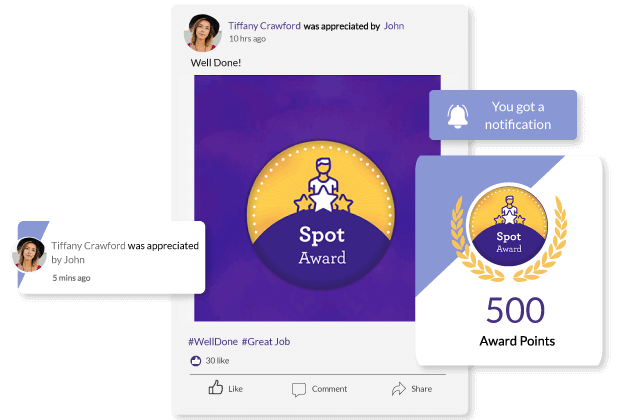
Spot bonuses can range from modest amounts ($50) to more significant figures ($500), depending on the organization’s policy and the importance of the contribution. They are especially useful when you want recognition to feel meaningful and timely.
Spot bonuses can be administered either in cash or reward points using an employee rewards and recognition platform. Which brings us to the next point.
2. Points-Based Systems
Points‑based reward systems are structured programs where employees earn digital points for specific actions, behaviors, or achievements over time. These points can then be redeemed for a variety of rewards that employees choose based on their preferences, such as gift cards, merchandise, or experiences.
These systems make recognition ongoing and personalized. Instead of receiving a standard reward, employees get flexibility to select what resonates with them. This increases engagement because the reward feels personal, rather than one‑size‑fits‑all. How many types of recognition are there? There are three key types: monetary recognition (like cash bonuses), non-cash rewards (such as points-based systems), and tangible awards (like trips or merchandise).
Points‑based systems are also useful for encouraging consistent performance and behaviors that align with company values. This is because the accumulation of points over time rewards sustained effort.
3. Tangible Awards (Merchandise/Trips)
Tangible awards include items or experiences that have lasting symbolic value beyond their monetary worth. Examples include company‑branded merchandise, paid trips, special tickets, memorable experiences, or physical trophies.
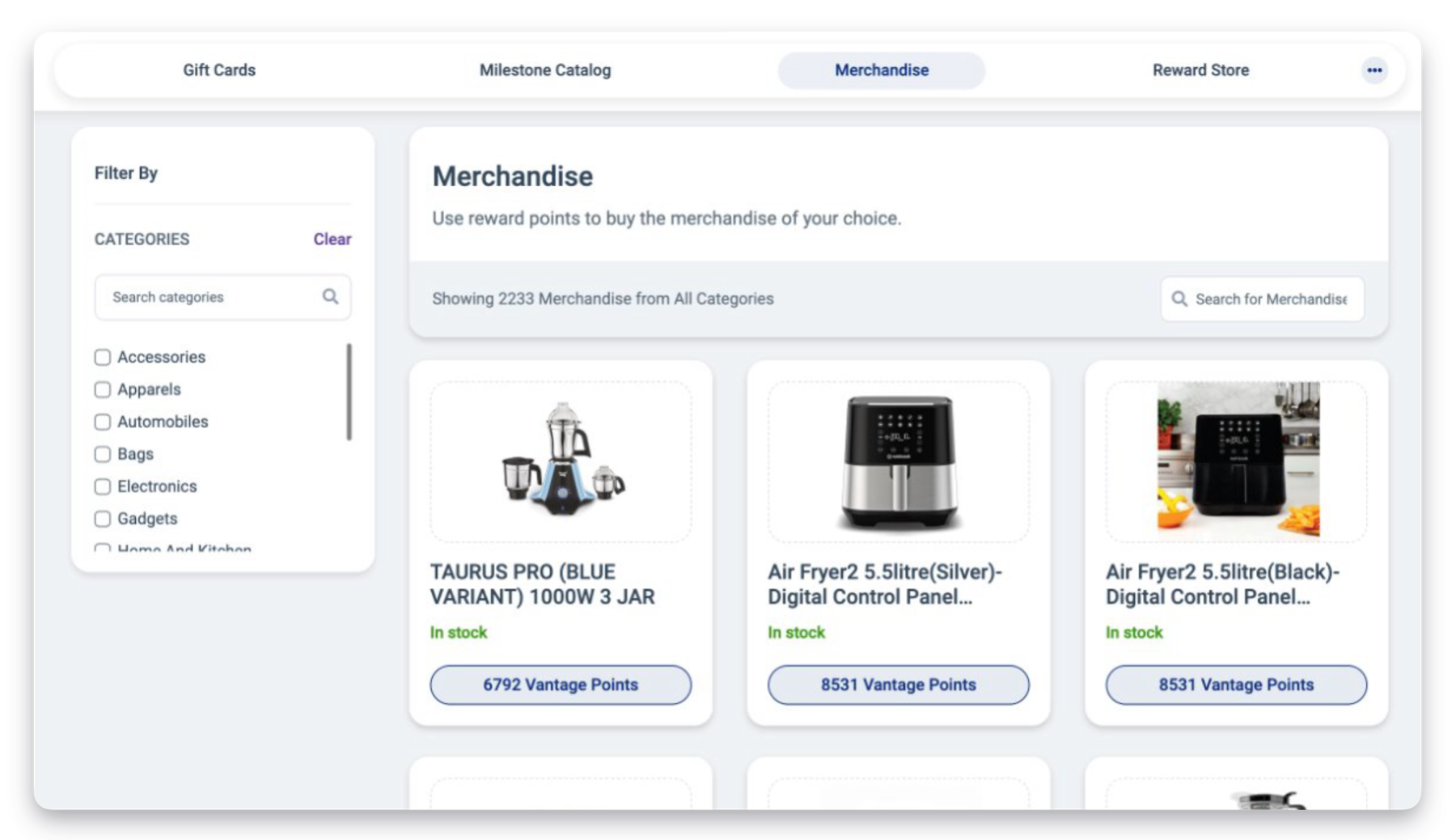
These kinds of rewards serve as symbols of achievement, not just compensation. A trip or a special experience creates memories and positive associations with the recognition, which can strengthen loyalty and emotional connection.
This blend of meaning and value makes tangible awards especially effective for significant achievements or milestones.
These types of compensated recognition can have a strong motivational effect. Gallup found that employees who are recognized with tangible rewards are more likely to stay with their company longer, resulting in higher retention rates.
Strategies for a Fair Compensated Recognition Program
Once you decide to use compensated recognition, the next challenge is execution. Without the right structure, even well-intended programs can feel inconsistent or transactional. The goal is to keep recognition meaningful while ensuring it remains fair, transparent, and sustainable.
Start with Clear Budgeting and Tax Planning
Compensated recognition often has tax implications, especially when rewards take the form of gift cards, merchandise, or travel. In many countries, these are treated as taxable income. This is why finance and HR teams must plan not only for the reward value, but also for tax gross-ups, so employees do not feel penalized for being recognized.
This matters more than most leaders realize. According to the U.S. Bureau of Labor Statistics, benefits account for 30 percent of total compensation for private-industry workers.
When recognition programs are not budgeted alongside compensation and benefits, they risk being viewed as ad-hoc perks rather than a core people strategy.
Design for Fairness Across Roles and Work Models
A common concern among CHROs is whether recognition is being distributed equitably. Frontline teams, remote employees, and corporate functions often have very different visibility levels. If only highly visible roles receive recognition, the program can unintentionally reinforce bias.
To prevent this, high-performing organizations anchor recognition to clear behaviors and outcomes, not job titles or proximity to leadership. When recognition is tied to values and impact, employees understand why someone was rewarded.
This also supports a common executive concern around trust. A Gartner study found that only 29 percent of employees believe rewards at their organization are distributed fairly.
A fair compensated recognition framework directly addresses this gap.
Control Frequency to Avoid Entitlement
Recognition loses impact when it becomes predictable. If employees begin to expect financial rewards as a routine outcome, recognition starts to feel like delayed salary rather than appreciation.
This is where frequency design becomes critical. Compensated recognition should be reserved for meaningful contributions, not for everyday tasks that are already part of the role.
Praise can and should be frequent. However, financial or tangible rewards should remain selective. Meaningful recognition is not about how often you reward. It is about when and why you do it.
In The End
Compensated recognition is a powerful tool that bridges the gap between verbal praise and tangible rewards. By combining the emotional value of recognition with the tangible impact of compensation, organizations can create a more motivating and meaningful experience for their employees.
It’s important to remember that recognition should be the right mix of monetary rewards, personalized rewards like points-based systems, and memorable tangible awards. This can significantly drive employee engagement and performance. However, it’s crucial to balance these forms of recognition with fairness, transparency, and appropriate budgeting to avoid entitlement and maintain the program’s impact.
When done correctly, compensated recognition enhances employee satisfaction and loyalty and fosters a culture where employees feel truly valued for their contributions. By integrating clear strategies and understanding the power of both praise and reward, companies can build a recognition program that resonates with their teams and drives long-term success.
Frequently Asked Questions (The "Cleanup" Section)
Q: What is another word for being compensated?
In employee recognition, terms like remunerated, rewarded, and reimbursed are used interchangeably. Remunerated refers to formal payment for services, rewarded is typically used for recognition of efforts, and reimbursed is used when repaying someone for expenses. These terms highlight different aspects of compensation in the workplace.
Q: Does "compensate" mean refund?
No, compensation in HR refers to rewards for work, such as salary or bonuses, while refund involves returning money. Compensation is about rewarding employees for their contributions, whereas a refund is about correcting an overpayment or mistake.

Nilotpal M Saharia is a Senior Content Marketing Specialist and Recognition & Rewards Strategist at Vantage Circle, where he transforms complex HR and marketing concepts into compelling content that drives engagement. With an MBA and seven years of cross-functional experience spanning marketing, content strategy, entrepreneurship, and human resources, Nilotpal brings a unique multidisciplinary perspective to his writing. His insights have reached audiences beyond Vantage Circle, with featured work on Select Software Reviews.
Connect with Nilotpal on LinkedIn and X, or reach out to editor@vantagecircle.com for inquiries.