





Contingent Workers: Why They're Key to Your Workforce & How to Keep Them Engaged

A Global Employee Recognition and Wellness Platform
Here's something that might surprise you: approximately 6.9 million U.S. workers were employed in roles classified as contingent as their primary source of income.
This consists of freelancers, contractors, consultants, and temporary staff who aren't on your traditional payroll.
And if you think that's just a blip, think again.
65% of companies are planning to increase the use of contingent workers. This is a fundamental shift in how work gets done.
This signals the fact that organizations are bringing in specialized talent to drive critical projects.
Why? Because they fill skills gaps without emptying the finances while maintaining business agility.
You're competing for talent in one of the tightest labor markets in recent history. However, you're potentially alienating a massive segment of your workforce simply because they're classified differently in your HRIS system.
The organizations winning right now?
They have figured out something crucial: contingent workers aren't a "nice to have" or a temporary cost-cutting measure.
They are a strategic asset that requires the same thoughtful engagement, integration, and investment as your permanent employees.
Maybe more so.
Because they are often the ones bringing the specialized skills you desperately need but can't find in traditional hiring pools.
Key Takeaways
- Who are these Contingent Workers?
- Why is the contingent workforce growing with time?
- What are the benefits of engaging the contingent workforce?
- What are the challenges in managing a contingent workforce?
- Key Strategies and Tips for Engaging Contingent Workers
Who Are Contingent Workers?

Contingent workers are professionals who work for your organization but are not on your permanent payroll.
Simple as that.
They are hired for specific projects, defined timeframes, or to fill temporary skill gaps.
The big difference? They do not receive the traditional benefits like your full-time employees. It includes things like healthcare, paid time off, or retirement contributions.
That definition itself can be misleading as the contingent workforce is remarkably diverse.
Understanding the distinctions matters for how you engage, manage, and maximize their value.
Types of Contingent Workers

1. Independent Contractors & Freelancers:
This section is self-employed professionals who work on a project basis. The thing about them is that they manage their own taxes, set their own rates, and work with multiple clients. It can include designers, writers, developers, and subject matter consultants.
2. Temporary Workers (Temps):
These workers are available for hire through staffing agencies to meet short-term needs. For example, if there is a seasonal demand spike, long-term employee absence, or immediate project requirements, then you can hire them.
3. Consultants:
The subject matter experts fall into this category as they are brought in to solve specific problems, implement improvements, or manage change initiatives. They have years of experience in their domain and provide clear deliverables and KPIs.
4. Contract Workers:
These workers are hired to complete a specific job within a defined timeframe. They specialize in project-specific demands, working under formal contracts which outline scope, duration, and compensation.
5. Gig Workers:
They are the broad category that encompasses freelancers, temps, and consultants. These sets of workers are sourced through platforms like Upwork, Fiverr, or other means. The plus point about them is that they provide access to skills across every possible industry.
What is common with them? They all offer flexibility, expertise in their domain, and the necessary agility to accommodate any work.
Why Is the Contingent Workforce Growing?

Businesses have become agile, and they need flexibility. And because of this very reason the contingent workforce is expanding rapidly.
However, that is just the tip of the iceberg. What are the main reasons for their growth? Let's have a look.
What are the main reasons for contingent workforce growth?
Here's what's driving this shift:
1. Cost Efficiency and Flexibility:
If we are honest with ourselves, then we know that hiring full-time employees is expensive. From benefits to office spaces to long-term commitments, it all adds up. On the contrary, contingent workers provide breathing space by letting them hire during need.
SIA describes a “rate-savings” methodology as the “most common way to look for hard savings” under contingent-workforce programs.
2. Generational Shifts in Work Preferences:
Millennials and Gen Z are taking up the workplace. By 2034, the World Economic Forum projects that Millennials, Gen Z, and Gen Alpha will make up the vast majority of the workforce in advanced economies.
And they do not believe in “work at one company for 30 years” model.
They want variety, flexibility, and control over their schedules. This signifies that the current workforce of millennials and Gen Z are more aligned towards becoming contingent workers. And it is one of the main reasons behind the rise.
Recommended Resource: Managing a multigenerational workforce: Benefits and Challenge
3. The Remote Work Revolution:
During the post-pandemic era, companies realized that people work effectively if they have flexibility. This opened the idea of remote work and now it is the new norm.
In doing so, companies could now also tap into a talent pool from any geographical area from anywhere. Hence, the remote work arrangement has made accessibility to contingent workers not only possible but practical as well.
4. Addressing the Critical Skill Gap:
Technology moves fast with newer advancements and ever-growing developments. It is sometimes faster than traditional education and training can keep up. Companies often need occasional niche skills for specific projects which training cannot provide.
But it does not make sense to hire someone full-time for occasional use. Hence, bringing in specialists on a contingent basis fills those gaps without long-term investment.
5. Speed and Agility in Competitive Markets:
The current market keeps changing in a constant manner, which necessitates companies to keep up with the trends. Contingent workers let businesses pivot quickly and adapt to the changes without getting stuck in the hiring process.
At the end of the day, it is about staying competitive in a world that does not wait around.
Benefits of Engaging Contingent Workers

Contingent workers offer numerous benefits if you hire them. But what are they? Let’s have a look.
1. Access to Specialized Expertise
You need a cybersecurity expert for three months or a UI/UX designer who is up to date with the latest trends? Name them and you get it in the form of contingent workers. They provide you with niche skills without the commitment of a full-time employee.
2. Substantial Cost Savings
You know what makes CFOs smile? The idea that contingent workers don’t require benefits packages, paid time off, or long-term salary commitments.
Having them saves you a lot of money as you are not paying for-
-
Healthcare.
-
Retirement contributions.
-
Incentives, etc.
Hence, you can direct that fund towards research or upscaling your products.
3. Ultimate Operational Flexibility
Businesses can be unpredictable. Sometimes you might need 10 extra developers; sometimes your existing ones are sufficient.
Contingent workers help you scale your team based on actual demands.
This reduces the headache or laying off or hiring teams to do certain work for a limited time.
4. Reduced Hiring Risk
Permanent employees sometimes might not be the right fit for the job, or the role itself might evolve with time.
With contingent workers you can hire them under special arrangements like “trial periods” before making full-time offers. This reduces the risk of hiring costs and enables you to take smarter decisions.
5. Faster Time to Productivity
Contingent workers understand their work well and hit the ground running from day one. They are used to new environments and figure things out quickly. This enables them to deliver results before the deadline.
Hence, they have the desired productivity levels and help you achieve your work without any hassle.
Challenges in Managing Contingent Workers

While contingent workers bring flexibility and expertise, they also bring up their own set of challenges. What can they be? Below are a few pointers I have compiled so that you have a clear view of the entire picture.
1. Limited Workforce Visibility
When you have contingent workers, they might be scattered across different agencies, platforms, and contracts. This makes it difficult for the management to check who is working on what. This blind spot makes resources planning a guess work rather than an absolute plan.
2. Compliance and Legal Risks
Sometimes the line between a contractor and an employee is not clear. This can lead to misclassification of a worker, which can lead to fines, back taxes, and potential lawsuits.
This is because employment laws vary by location and can create complications in the long run.
3. Team Cohesion Issues
The issue with contingent workers is that they are viewed as outsiders. Hence, they are left out of meetings, team events, and not looped into company communications. This creates a void in the work culture and hurts the dynamics of the team in the long run.
4. Data Security Concerns
The problem with contingent workers is that once you hire them, you provide access to sensitive information. This poses a risky bet and without proper protocols you become vulnerable to data breach and compliance violations.
This can damage your reputation in the market and hurt the bottom line.
5. Knowledge Drain
When a contingent worker leaves, their knowledge walks out the door with them. Critical insights, workarounds, and project history disappear unless you have solid documentation processes in place.
Key Strategies and Tips for Engaging Contingent Workers

Like your regular employees, the contingent workers might feel the burden over time. And to bring the best out of them you need to treat them as valued team members. Here’s how you can do it right.
1. Set Clear Expectations from Day One
Guess work can ruin your projects and leave people hanging. Instead, spell out project goals, deadlines, and deliverables beforehand. This lets the workers know what is expected which leads to less confusion and better results.
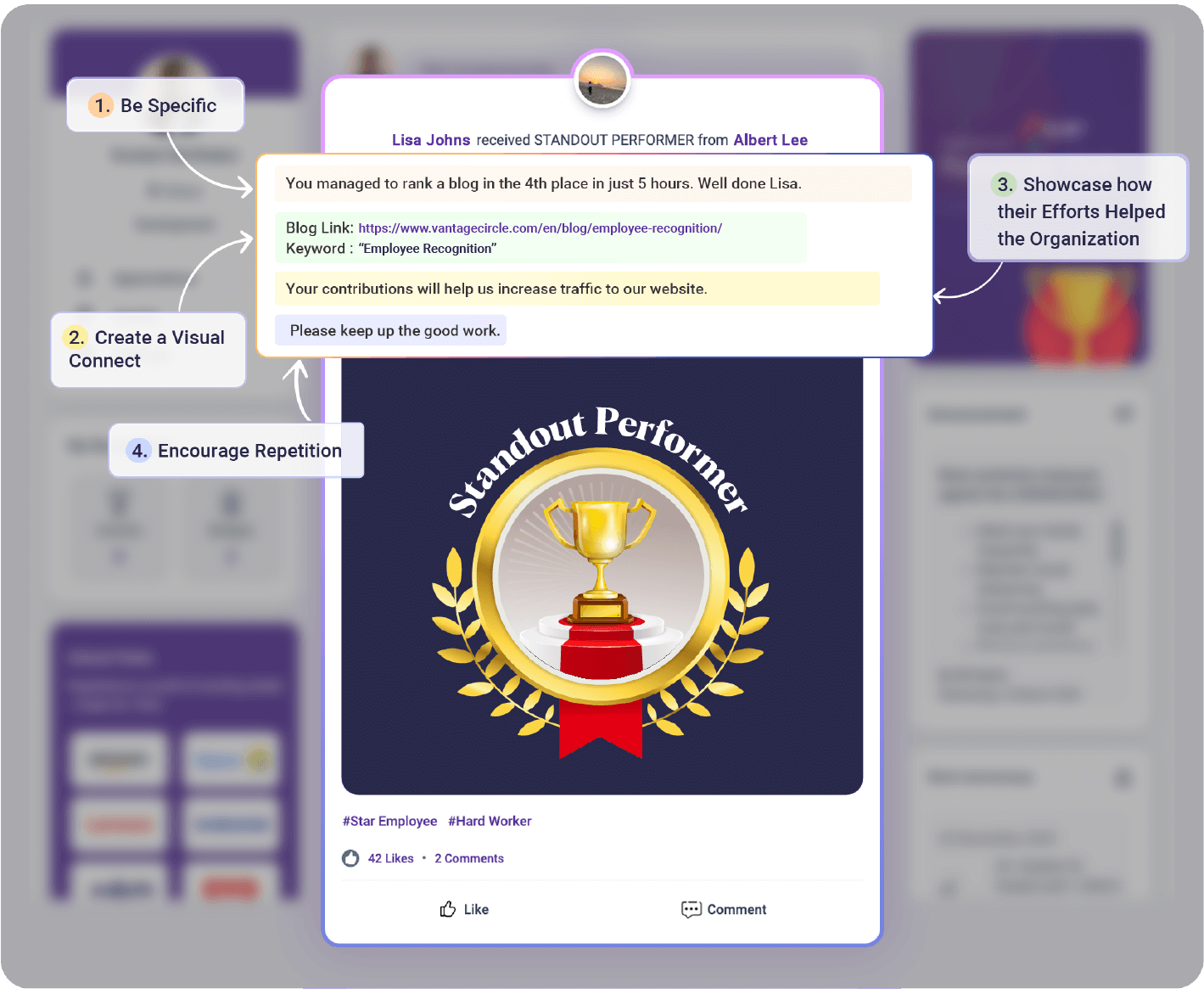
2. Give Regular Feedback and Recognition
Just because they are contingent workers doesn’t mean they are invisible. When you hire them temporarily, they become part of the team. Hence, it is crucial to check in regularly, acknowledge good work, and reward them for completing the project.
It creates motivation to become better and helps the organization improve the work culture.
(Source: Vantage Recognition)
3. Use the Right Collaboration Tools
Communication is the key to achieving work on time. Ensure that your contingent workers have access to the same tools your full-timers use. Be it Slack, Teams, or Asana. Provide access to them. This enhances collaboration and improves productivity.
4. Offer Growth Opportunities
Even if the contingent workers are not permanent, it does not mean they don’t want to learn and grow. To improve their skills, you can-
-
Share training courses.
-
Include them in skill-building sessions.
-
Give them challenging work that tests their abilities.
This way you can provide them with a chance to upskill and enhance their capabilities.
5. Foster Real Inclusion
Invite contingent workers to team meetings, company events, and casual conversations. Loop them into relevant communications. It’s simple that when people feel like part of the team, they perform like part of the team.
Conclusion!
The contingent workforce isn't a trend that's going away. It's the future of work. These professionals bring specialized skills, flexibility, and fresh perspectives that traditional hiring simply can't match.
But here's the thing: they'll only deliver their best if you treat them like the valued team members they are. Set clear expectations, keep communication open, and include them in your culture. When you invest in engaging contingent workers properly, you're not just filling gaps—you're building a more agile, capable, and competitive organization.
FAQs
Q1. What is meant by a contingent worker?
Answer. A contingent worker is someone hired for specific projects or timeframes without being on the permanent payroll. They include freelancers, contractors, consultants, and temps who don't receive traditional employee benefits.
Q2. What are disadvantages of contingent workers?
Answer. Main challenges include compliance risks, team cohesion issues, knowledge loss when they leave, and potential data security concerns. They can also create workforce visibility problems if not managed properly.
Q3. How long can you keep a contingent worker?
Answer. It depends on project needs and local labor laws. Keeping them too long can lead to misclassification risks, so always check your jurisdiction's legal requirements.

Mrinmoy Rabha is a content writer and digital marketer at Vantage Circle. He has worked in the human resources environment and has elevated recognition and rewards through his insightful and detailed writing. He aims to enhance the practice of Recognition in the workplace with new ideas and innovation that will help shape the work culture. For any related queries, contact editor@vantagecircle.com