




Employee Engagement in 2026: Definition, Importance, Drivers, Strategies & Examples

A Global Employee Recognition and Wellness Platform
Two months ago, a tech company lost its top engineer. It was not a salary issue, but she stopped caring, as expressed in her exit interview.
In fact, she wasn't alone. Four more high performers left within six months. One cited burnout, another called feeling invisible, and some found no meaning in work. Different words, same problem: disengagement.
This silent collapse of employee engagement is impacting the workforce on a large scale. It's not limited to one dramatic failure; it's the slow erosion from accumulated burnout, hybrid work isolation, economic anxiety, and AI transforming jobs faster than people can adapt.
To demonstrate the reality, here are some eye-opening statistics about engagement that we often negate or oversee:
- According to the Gallup report, in 2024, the Global Employee Engagement Rate was 21%
- Data from the Gallup Workplace report reveals that in 2024, Global employee engagement fell, costing the world economy US$438 billion in lost productivity.
- A Gallup study shows that employee engagement in the U.S. fell to its lowest level in a decade in 2024, with only 31% of employees engaged.
These statistics paint a grim picture of the dropping engagement. This has resulted in employees just showing up for work physically because of the economic sustenance, but mentally checked out, doing the bare minimum while quietly looking for something better.
So, here’s the shift. Employee engagement in 2026 is no longer a feel-good HR initiative. It's a performance lever and risk management imperative.
You must take engagement seriously and act before your top talents stop caring and leave without a thought.
And to help you in your employee engagement journey, this blog will be the most valuable resource, delving into the details of engagement.
What Is Employee Engagement?
Employee engagement is the energy, effort, and commitment employees bring to work to drive organizational goals. It is not about how happy employees feel at work. It is about their overall involvement in achieving organizational vision.
Engaged employees move beyond the bare minimum. They become emotionally invested in their work and the company’s success.
Why Employee Engagement Matters in 2026
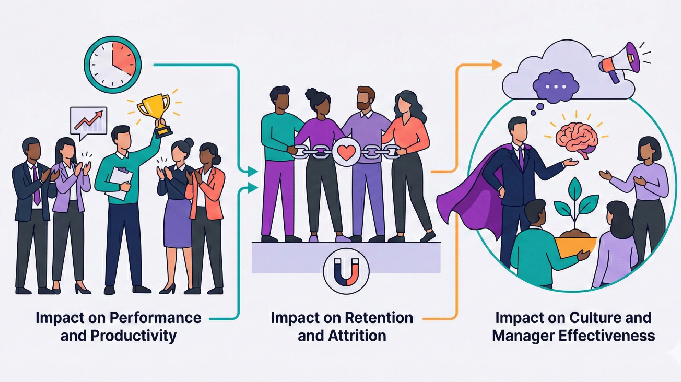
The significance of employee engagement lies in its ability to massively impact several factors, as discussed in the section below.
1. Impact on Performance and Productivity
A Gallup study found that engaged employees can achieve 23% higher profitability.
The simplest fact is that engaged employees are driven by a passion that pushes them to perform and not just show up. It encourages them to take ownership of their work, deliver better results, innovate more, and commit fewer mistakes.
This proactiveness among employees also enables them to identify and solve problems, which drives innovation and business growth.
2. Impact on Retention and Attrition
A Gallup study reveals that enterprises with higher engagement levels have 18% lower turnover compared to companies that have lower engagement and more than 40% turnover every year.
The statistic paints a picture of how engagement influences retention. Engaged employees are less likely to consider leaving. But disengagement can cost the company in terms of increased hiring and training costs, as well as the loss of institutional knowledge.
Also, the SHRM study states that the cost of replacing an employee can range from 50% to 200% of their annual salary, depending on their level. This is a big concern that companies should consider and make retention a key metric to manage costs effectively.
3. Impact on Culture and Manager Effectiveness
Although company-wide engagement initiatives are important, a crucial engagement happens more at team level, where managers take the lead.
They are the ones who shape their teams’ daily experiences, and poor engagement often points to gaps in manager effectiveness.
Managers who foster a culture of trust, communication, and recognition have the capability to drive higher levels of engagement within their teams.
Hence, organizations must be serious in manager training and support to ensure they can effectively engage their teams.
Recommended Resource: Employee Engagement Toolkit for Managers & Supervisors
Key Drivers of Employee Engagement
After grasping its importance, let’s delve into the significant drivers of employee engagement:
The Four Dimensions of Engagement
Cognitive
Do employees understand what's expected of them, how their work connects to broader goals, and what success looks like?
This clarity helps them align their responsibilities with organizational objectives, thereby boosting their engagement.
Emotional
Do employees feel valued, respected, and psychologically safe?
Emotional engagement is a crucial factor that strengthens loyalty and deepens trust.
Behavioral
Do employees take initiative, volunteer for projects, demonstrate extra effort, help colleagues, take ownership, and persist through challenges?
When employees develop a personal connection to their work, they show willingness to go above and beyond to help the organization succeed.
Cultural
Is feedback welcomed or feared? Is recognition frequent and fair? Do people feel they are part of the culture?
Team norms, leadership styles, and recognition practices shape behavior and daily experiences.
A culture that celebrates achievements and provides clear recognition boosts engagement levels.
Modern Engagement Drivers in Today’s Workplace
The fundamentals of engagement haven't changed, but the context has. Here are the drivers that matter most in 2026:
- Manager quality and coaching: Managers who listen, support, and coach their teams drive higher engagement.
- Fair and timely recognition: Recognizing employees for their contributions that is specific and frequent fosters a sense of value.
- Career growth and internal mobility: Employees want to see ascending career growth, not just a paycheck.
- Workload and role clarity: Employees want to feel they are set up for success, with clearly defined roles and responsibilities.
- Listening frequency: Utilizing pulse surveys and regular 1:1s signals that employee voice matters.
- Wellbeing and mental health support: Emphasizing employee wellbeing and providing access to mental health resources both increase engagement and reduce burnout.
- Inclusion, belonging, and psychological safety: Employees must feel that they belong to foster deep engagement.
- Digital experience: Easy-to-use tools and flexible digital environments enhance employee experience.
Pillars of Employee Engagement
Here are the key pillars of employee engagement that deserve our utmost attention:
1. Appreciation

Recognition is the foundation of employee engagement. It is that essential element that fosters motivation, builds trust, and ignites purpose in employees.
When they witness that their contributions matter, they feel more invested in their work, perform better, and stay committed to the organization.
It’s not about grand gestures but noticing effort and acknowledging progress, which reinforces their intrinsic connection to the company’s goals.
For example, a simple thank-you note or recognition in a team meeting can go a long way in fostering engagement.
A Gallup research found that well-recognized employees are 45% less likely to change organizations after two years.
2. Growth and Development

Research shows that 70% of employees are somewhat likely to leave their current job to work for an organization known for investing in employee development and learning.
The statistics reveal how vital growth and development are for employees.
Stagnation puts an end to engagement. Employees, particularly the younger generation, are enthusiastic about learning, growing, and seeing a future with your organization.
Hence, when you provide clear paths for advancement and learning opportunities, employees are likely to remain engaged and committed.
Also, take note that growth doesn't always mean promotion. It can mean exposure to new projects, cross-functional collaboration, mentorship, or skill-building that makes someone more skilled in their current role. What matters is forward motion.
3. Purpose and Role Clarity
Employees who understand why their work matters and how it contributes to the bigger picture are more engaged.
When employees gain clarity about their role and understand its connection to organizational goals, they develop a sense of purpose, which in turn motivates them.
For example, a warehouse manager began sharing daily updates on how the team's work is directly impacting customer delivery times and satisfaction.
4. Connection and Belonging
As humans, we tend to engage more when we feel connected to our team, trust our colleagues, and believe that we belong.
Fueling this connection requires employees to practice open communication, peer recognition, and engage in regular team-building activities.
For instance, a team introduced "collaboration hours" on Thursdays, where everyone worked in the same space (physical or virtual) with cameras on, creating an ambient togetherness without forced interaction.
5. Wellbeing

Research shows that 67% of employees who work for organizations with wellness programs like their jobs more and this same percentage is extremely or very likely to recommend their employer to others.
Well-being is no longer a perk, if it was perceived as one. It is a prerequisite for sustained engagement.
When employees feel burned out, exhausted, overwhelmed, or constantly in crisis mode, it indicates that engagement has collapsed. Hence, the significance of well-being arises.
The emphasis on well-being gives way to manageable workloads, respect for boundaries, access to mental health resources, and leaders who model healthy work habits. This ensures that employees feel supported both in and out of the workplace.
6. Autonomy and Ownership
Allowing employees to take ownership of their work, giving them the liberty to make decisions, solve problems their way, and own outcomes, whether good or bad, boosts engagement.
When you trust your employees and give them the independence to act, they become committed to the team’s and the company’s success.
Autonomy doesn't mean abandonment; it means trusting people with clear guardrails and support.
Recommended Resource: 14 Employee Engagement Trends for 2025
Effective Strategies to Improve Employee Engagement
After garnering a sound understanding of the key drivers and pillars of employee engagement, it’s time to delve into effective strategies that can help you improve and boost your employee engagement.
1. Use Continuous Listening Instead of Annual Surveys

Frequent pulse surveys and 1:1s are the best ways to keep employees engaged because it's timely, actionable, and signal that leadership cares about employee input.
It also allows you to gather real-time feedback, track trends, spot team-level issues, and intervene before disengagement spreads.
For example, a retail company replaced its annual survey with monthly pulse checks (3-5 questions). When one region showed a spike in workload concerns, leadership reallocated resources within two weeks.
2. Strengthen Manager Coaching and Communication

A study found that managers play a critical role in moving employees from burned out to thriving.
Managers are vital in driving engagement. And to make them proficient in their roles, it is necessary to invest in manager development programs that train them to coach (not just delegate) and enhance communication.
This also includes teaching them how to have meaningful 1:1s, give constructive feedback, recognize contributions, and support career development. In fact, training managers can be one of the highest-ROI investments you can make.
3. Build a Culture of Specific, Fair Recognition
A generic recognition like “Great Job” without context feels hollow. But a recognition that is specific, timely, aligned with company values, and equitably distributed across teams and roles creates a culture where contributions are valued.
In addition, fair recognition means ensuring that quieter employees, remote workers, and non-revenue roles receive acknowledgment and not just the loudest voices or top sellers.
For example, a SaaS company introduced a recognition platform that enabled peers and managers to give real-time kudos tied to company values.
4. Improve Workload Fairness and Role Clarity
Employees who gain clarity about their roles and have a manageable workload are more likely to stay engaged. This ensures that work is fairly distributed across the team.
Leaders should also regularly assess team capacity, redistribute work when necessary, and eliminate low-value tasks that drain energy without driving results.
5. Support Employee Growth and Career Paths
A Gallup study shows that employees who strongly agree their organization encourages them to learn new skills are 47% less likely to be searching or watching for another job.
When employees see a future with your company, they are willing to invest all their time and skills. But this can be possible when you take their career development seriously and support them.
You can offer employees concrete development plans, access to learning resources, and managers who actively support their growth.
This also includes lateral moves, stretch assignments, mentorship, and transparent conversations about what it takes to advance.
For example, a financial services firm launched an internal talent marketplace where employees could explore open projects, apply for rotations, and build skills outside their core role.
6. Invest in Wellbeing and Sustainable Performance
Supporting employee well-being goes beyond offering healthcare. A focus on work-life balance, access to mental health support, and sustainable work practices ensures long-term engagement.
Research shows that about 52% of employees say they feel more engaged and productive when their organization offers access to counselling or wellness programs.
Leaders should model healthy habits, encourage time off, and normalize conversations about stress and burnout. Employees won't prioritize wellbeing if leadership doesn't.
For example, a tech startup introduced "recharge days", four company-wide days off per year, no meetings, no email. Burnout scores dropped significantly, and employees reported feeling more energized and focused.
7. Foster Strong Team Microcultures
Employees experience company culture through their immediate team. Hence, fostering strong team microcultures built on trust, psychological safety, shared rituals, and authentic connection drives engagement even when broader organizational challenges exist.
Empower managers to create team norms, celebrate wins together, and build relationships beyond transactional work interactions.
Example: A logistics company encouraged teams to create their own "team charters" outlining how they'd work together, communicate, and support each other.
8. Align Engagement with Business Outcomes and KPIs
Engagement can't exist in isolation. It is essential that you connect engagement metrics directly to business outcomes such as productivity, quality, customer satisfaction, and innovation. This proves its value and makes it a business priority, not just an HR initiative.
Track engagement alongside your operational metrics. When team engagement improves, expect better results. When it drops, identify where performance suffers first. Allow the data to tell the story.
Real Examples of Employee Engagement
Large Enterprise Examples
Industry: Global manufacturing (400,000+ employees across multiple countries)
Challenge: Scaling recognition and engagement across a dispersed workforce while simultaneously providing transparent rewards and meaningful employee benefits.
What They Changed: Implemented a cloud-based employee engagement platform enabling peer-to-peer recognition, customizable awards, and exclusive employee perks accessible to all employees remotely.
Outcome: It attained a 10.70 increase in engagement, clubbed with stronger team relationships, higher participation in recognition activities, and improved employee financial well-being through curated discounts and benefits.
Industry: Technology (Cloud computing, business intelligence, analytics, social media, and mobility solutions)
Challenge: Wanted to boost employee engagement and job satisfaction to deliver seamless customer experiences, while requiring a flexible platform that could provide specialized perks and benefits without major limitations.
What They Changed: Implemented an AI-based, mobile-first rewards and recognition platform with real-time analytics, hassle-free point allocation by managers, a global gift card catalog, and curated discount perks from top brands.
Outcome: Achieved a 50% rise in employee engagement in 2020, improved job satisfaction, enhanced employee experience, and provided cost-effective benefits that allowed employees to save money while redeeming rewards seamlessly.
Everyday Engagement Examples in Teams
Workload rebalancing: Using pulse survey data, a customer success manager noticed two team members handling 60% of escalations. She redistributed cases more evenly and provided additional training. Team burnout scores dropped, and engagement rose within a month.
Team ritual: The engineering team started "demo Fridays," where anyone could share what they'd built that week, whether it was code, process improvement, or even a side project, followed by shout-outs. The ritual boosted connection, recognition, and pride in work.
Recognition practice: A team leader ended weekly meetings with
"appreciation shoutouts", where each person thanked one colleague publicly. This simple ritual significantly boosted team engagement.
Career conversations: A product manager began scheduling quarterly "future focus" conversations separate from performance reviews, asking each team member, "Where do you want to grow?" She then created micro-development plans. Two employees who'd been considering leaving decided to stay.
How to Measure Employee Engagement

Here are some core metrics that you need to regularly keep a check on:
Core Metrics to Track
eNPS: With a simple question, "Would you recommend this company as a place to work?" you get to measure overall engagement and predict turnover risk.
Overall engagement score: It holistically measures engagement levels.
It is typically measured through pulse surveys that cover key drivers such as clarity, recognition, growth, belonging, and manager support. Track trends over time and benchmark across teams.
Action plan completion rate: It tracks how prompt employers are when it comes to acting on feedback. Measure how many engagement action plans are created and actually completed.
Recognition frequency + distribution equity: Tracks how often employees are recognized across teams and whether it's equitably distributed by role, level, tenure, and demographics.
Burnout/wellbeing indicators: These indicators monitor absenteeism, self-reported stress levels, PTO usage patterns, and survey questions about workload sustainability.
Tools and Dashboards for Measurement
Measurement is not just limited to collecting data; it’s also about enabling action. This is where you can leverage employee engagement tools that give you team-level insights and the ability to track the progress of engagement initiatives.
Dashboards: These help you visualize engagement trends across time, teams, and demographics. Leaders can get a glance at where engagement is strong, declining, or at risk.
Heatmaps: These quickly identify the teams, locations, or departments that need immediate attention. Heatmaps highlight the patterns that spreadsheets hide.
Team-Level Reports: These reports provide managers with team-specific data that comes with actionable recommendations.
The goal here is to democratize data, give managers and leaders the insights they need to act on, and not just compile reports for HR.
Employee Engagement Programs
Recognition and Appreciation Programs
Recognition programs give structure to appreciation without making it complicated. The best programs combine manager recognition, peer-to-peer recognition, and milestone celebrations, all tied to company values.
These programs work because they make recognition consistent, visible, and equitable across the organization. When everyone sees contributions being acknowledged, it reinforces a culture of appreciation.
To ensure your recognition program is both effective and aligned with industry standards, AIRe framework can become your trusted ally. It is a proven methodology that maximizes the impact of recognition through four key themes. They are:
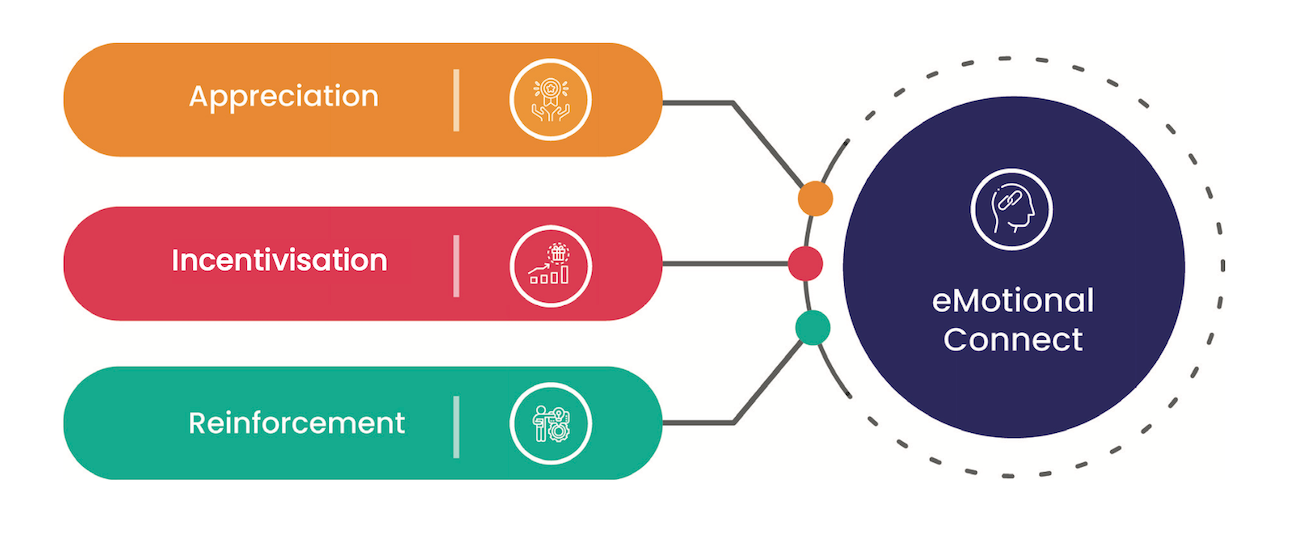
- Appreciation acknowledges the inherent worth of employees and their behaviors, making them feel genuinely valued.
- Incentivization makes recognition desirable, motivating employees to aspire toward it.
- Reinforcement guides employees toward desired behaviors and results by consistently recognizing what matters most.
- eMotional Connect amplifies recognition by attaching strong personal feelings to the act, transforming it from transactional acknowledgment into meaningful connection.
After designing your program using these principles, you can conduct an AIRe assessment to get a qualitative evaluation of your program design.
The assessment provides a design score that you can benchmark against industry standards. This helps you identify strengths and gaps in the program, which you can then improve. This ensures your recognition program not only exists but drives real engagement and behavior change.
Wellbeing and Wellness Programs
Wellbeing programs support physical, mental, and financial health. This includes access to mental health resources, fitness challenges, financial planning support, and initiatives that promote work-life integration.
These programs work because they prioritize employee well-being and not just productivity. Mental health support doubles engagement levels, proving that wellbeing investments pay off.
Manager Enablement Programs
These programs give managers the necessary coaching, training, and ongoing support to lead engaged teams. They provide tools, frameworks, and peer learning opportunities to strengthen manager effectiveness.
These programs work because they identify and address the root cause of most engagement issues, that is, manager capability. When managers improve, team engagement naturally follows.
Lifecycle Engagement Programs
Engagement shifts throughout the employee lifecycle. This is where the importance of lifecycle programs comes into play, as they ensure regular check-ins from day one to their last day.
They work because they create predictable moments to reinforce purpose, recognize contributions, and address issues before they escalate.
Employee Engagement Tools
These tools are essential to keeping your engagement running smoothly. But before we discuss the tools, we need to look for some crucial features that the platforms should offer.
What to Look for in an Engagement Platform
Not every engagement platform comes with the best features. The best ones integrate listening, recognition, wellbeing, and analytics into a single ecosystem that's easy for employees and managers to use.
Key criteria:
Ease of Use: Look for platforms offering user-friendly interfaces that require minimal training.
Comprehensive features: Look for platforms that integrate recognition, surveys, and well-being into one.
AI insights and recommendations: Platforms should surface patterns and suggest actions, not just dump data.
Strong analytics: Ensure you have the ability to track engagement at a granular level, by team, role, tenure, location, and demographics, to spot issues.
Integrations: Seamless connections with HRIS, Microsoft 365, Slack, and Teams reduce friction.
Security, privacy, and global readiness: Compliance and data protection aren't optional.
How Vantage Circle Supports Employee Engagement
Vantage Circle provides a holistic engagement platform that seamlessly integrates the essentials of engagement, catering to global organizations.
Vantage Recognition: This platform enables fair, meaningful, hassle-free, and timely recognition across teams and geographies. It allows peers to recognize each other, with recognition tied to company values, enables celebration of milestones, and comes with a gamified mode that displays leadership boards. Everything contributes to infuse recognition as a daily practice, where contributions are visible.
Vantage Pulse: It enables organizations to monitor their organization’s pulse through pulse surveys, AI-powered insights, and team-level dashboards. Leaders get real-time visibility into employee sentiments and engagement trends, allowing them to act before issues escalate. The platform identifies what's working, what's not, and what to prioritize.
Vantage Fit: It supports employee well-being through engaging wellness activities, thereby, building a productive and sustainable work culture. It includes fitness challenges, gives you access to mental health resources, and tracks healthy habits. Employees stay engaged when they feel supported holistically, not just as workers, but as people.
Vantage Perks: This platform enhances employees’ shopping experiences by providing access to exclusive corporate offers, discount programs, classifieds, and cashback bonanzas from innumerable global brands. It also enables organizations to track and measure the impact of the discount program. By leveraging comprehensive analytics, you can align the program with employees’ needs.
Conclusion
This detailed read has probably been enriching and has enlightened you that employee engagement is no longer a one-time HR project. It’s a leadership system that requires consistent reshaping of the workforce by focusing on data, habits, and culture.
By understanding the key drivers, implementing effective strategies, and using the right tools, organizations can create an environment where employees are engaged, motivated, and committed to success.
FAQs
What is meant by employee engagement?
Employee engagement is the level of commitment, motivation, and emotional connection employees have with their work and organization. Engaged employees care about outcomes, perform better, and stay invested in the company’s success.
What are the 4 pillars of employee engagement?
- Recognition and Appreciation – Employees feel valued for their efforts.
- Purpose and Meaning – Work feels connected to a larger goal.
- Growth and Development – Opportunities to learn and progress.
- Trust and Communication – Transparency and psychological safety.
What are the four types of employee engagement?
- Highly Engaged – Motivated, proactive, and committed.
- Moderately Engaged – Reliable but emotionally neutral.
- Barely Engaged – Doing the minimum required.
- Disengaged – Detached and unmotivated.

Riha Jaishi is a Content Marketing Specialist at Vantage Circle and host of the HR Vantage Influencers podcast, where she champions recognition-rich, people-first workplace cultures. Through her dual expertise in content creation and podcast hosting, Riha delivers thought-provoking insights that bridge theory with real-world application. Her engaging conversations with global HR leaders and compelling blog content consistently spotlight critical industry perspectives, empowering organizations worldwide to build more impactful, employee-centric environments.
Connect with Riha on LinkedIn, or reach out to editor@vantagecircle.com for inquiries.