










Intrinsic Rewards: Definition, Examples, and How to Foster Them at Work [2026]

A Global Employee Recognition and Wellness Platform
The proper question is not, ‘How can people motivate others?’ but rather, ‘How can people create the conditions within which others will motivate themselves?’ - Edward Deci (Co-creator of Self-Determination Theory)
In the workplace, motivation is shaped by two primary types of rewards : intrinsic rewards and extrinsic rewards. While extrinsic rewards such as compensation and incentives play an important role, they are only part of the equation. To truly understand what sustains engagement over time, let’s explore the role of intrinsic rewards.
HR Takeaway: Why Intrinsic Rewards Are Your Highest-ROI Engagement Lever
Research on employee engagement consistently shows that financial incentives alone do not sustain discretionary effort. While compensation helps attract talent and influence short-term performance, it rarely drives the deeper commitment required for long-term engagement.
This is where intrinsic rewards make the difference.
Intrinsic rewards in the workplace - such as purpose, autonomy, mastery, and meaningful recognition - create motivation that does not depend on constant external reinforcement. When employees feel trusted to make decisions, see progress in their growth, and understand how their work contributes to a larger goal, effort becomes internally driven.
According to Gallup's State of the Global Workplace Report (2025), only 21% of employees globally are engaged at work - and among those who report finding their work meaningful, engagement levels are significantly higher. Meaning, not money alone, predicts sustained engagement.
Other research also highlights similar patterns in purpose-driven organizations. Employees motivated by meaning tend to:
-
Persist longer on cognitively demanding tasks
-
Produce higher levels of creative output
-
Collaborate more effectively across teams
And unlike bonuses or short-term incentives, intrinsic rewards:
-
Require limited direct financial investment
-
Scale through leadership behavior and team culture
-
Strengthen over time rather than lose impact
For HR leaders navigating retention challenges, hybrid fatigue, and rising innovation demands, intrinsic rewards are not “soft” cultural elements. They are a strategic engagement lever - one that strengthens performance, resilience, and long-term workforce stability.
What Are Intrinsic Rewards?

Intrinsic rewards are the internal psychological and emotional benefits employees experience when they engage in meaningful, self-directed, and growth-oriented work. Rooted in intrinsic motivation , these rewards arise from purpose, mastery, autonomy, progress, and belonging - and exist independently of external compensation or tangible incentives.
The concept of intrinsic rewards originates from Self-Determination Theory (Deci & Ryan), which identifies three universal psychological needs:
Autonomy - Control over how work is executed
Competence - Sense of capability and mastery
Relatedness - Feeling valued within social systems
When work environments fulfill these needs, motivation becomes self-reinforcing - reducing dependence on external rewards.
Thomas’s 4 Intrinsic Rewards
Management researcher Kenneth Thomas described intrinsic rewards as four core workplace experiences. These experiences shape how employees feel while doing their work - and ultimately influence how engaged they remain over time.
These four intrinsic rewards help explain why some roles feel energizing, even in the absence of external incentives.
Snapshot overview:
| Intrinsic Reward | What Employees Experience | How Organizations Enable It |
|---|---|---|
| Meaningfulness | A sense that their work matters beyond routine tasks | Clear purpose communication and visible impact |
| Choice | A feeling of control over how work gets done | Flexible execution and trust-based management |
| Competence | Confidence in their abilities and ongoing skill growth | Learning opportunities and capability recognition |
| Progress | Visible forward movement toward goals | Milestone systems and regular feedback |
Intrinsic Reward: Meaningfulness
What Employees Experience: A sense that their work matters beyond routine tasks
How Organizations Enable It: Clear purpose communication and visible impact
Intrinsic Reward: Choice
What Employees Experience: A feeling of control over how work gets done
How Organizations Enable It: Flexible execution and trust-based management
Intrinsic Reward: Competence
What Employees Experience: Confidence in their abilities and ongoing skill growth
How Organizations Enable It: Learning opportunities and capability recognition
Intrinsic Reward: Progress
What Employees Experience: Visible forward movement toward goals
How Organizations Enable It: Milestone systems and regular feedback
1. Meaningfulness
Psychological experience: The belief that your work matters beyond completing tasks.
Meaningfulness occurs when employees see how their effort contributes to something larger - a team outcome, a customer impact, or an organizational mission. Without this, work can quickly feel mechanical.
From an engagement perspective, meaningfulness answers the question: “Why does this matter?”
Organizational activation:
Clear purpose communication, transparent goals, and sharing real impact stories help reinforce meaningfulness. Leaders play a critical role here by consistently linking daily responsibilities to broader outcomes.
2. Choice
Psychological experience: A sense of agency in how work is carried out.
Choice doesn’t mean unlimited freedom. It means employees feel trusted to make decisions within their scope. When people can shape how they approach tasks, they feel ownership instead of obligation.
Choice strengthens intrinsic rewards because autonomy increases commitment.
Organizational activation:
Flexible work design, outcome-based goal setting, and reduced micromanagement create space for this reward to emerge.
3. Competence
Psychological experience: The confidence that you are capable and improving.
Competence grows when employees see their skills expand and their contributions being recognized. Stagnation, on the other hand, quickly erodes engagement.
This intrinsic reward is deeply tied to growth and mastery.
Organizational activation:
Capability recognition, stretch assignments, constructive feedback, and visible skill development pathways help reinforce competence in the workplace.
4. Progress
Psychological experience: A visible sense of forward movement.
Even meaningful work can feel discouraging if employees don’t see progress. Small wins, milestones, and measurable improvements create momentum.
Progress fuels motivation because it provides evidence that effort leads somewhere.
Organizational activation:
Milestone systems, regular check-ins, and clear performance tracking mechanisms make advancement visible.
The four intrinsic rewards illustrate what internal drive truly looks like in action. However, their full significance becomes clearer when we compare them with extrinsic rewards - especially in how intrinsic motivation and extrinsic motivation differ in terms of sustainability, depth of engagement, and long-term impact.
Intrinsic vs. Extrinsic Rewards: Key Differences
| Dimension | Intrinsic Rewards | Extrinsic Rewards |
|---|---|---|
| Source of Motivation | Comes from internal satisfaction - purpose, growth, mastery, contribution | Comes from external incentives - pay, bonuses, promotions, perks |
| What Drives Effort | Interest, ownership, personal meaning | Financial gain, status, or tangible benefits |
| Sustainability | Strengthens over time as engagement deepens | Often fades once rewards become expected |
| Financial Investment | Requires limited direct cost | Requires ongoing monetary or material investment |
| Impact on Innovation | Encourages creativity, experimentation, and initiative | May drive output, but not necessarily creativity |
| Behavioral Dependency Risk | Employees remain motivated even without constant rewards | Motivation may decline if incentives are reduced or removed |
| Retention Influence | Builds long-term commitment and identity with work | Can retain talent temporarily but may not build loyalty |
Dimension: Source of Motivation
Intrinsic Rewards: Comes from internal satisfaction - purpose, growth, mastery, contribution
Extrinsic Rewards: Comes from external incentives - pay, bonuses, promotions, perks
Dimension: What Drives Effort
Intrinsic Rewards: Interest, ownership, personal meaning
Extrinsic Rewards: Financial gain, status, or tangible benefits
Dimension: Sustainability
Intrinsic Rewards: Strengthens over time as engagement deepens
Extrinsic Rewards: Often fades once rewards become expected
Dimension: Financial Investment
Intrinsic Rewards: Requires limited direct cost
Extrinsic Rewards: Requires ongoing monetary or material investment
Dimension: Impact on Innovation
Intrinsic Rewards: Encourages creativity, experimentation, and initiative
Extrinsic Rewards: May drive output, but not necessarily creativity
Dimension: Behavioral Dependency Risk
Intrinsic Rewards: Employees remain motivated even without constant rewards
Extrinsic Rewards: Motivation may decline if incentives are reduced or removed
Dimension: Retention Influence
Intrinsic Rewards: Builds long-term commitment and identity with work
Extrinsic Rewards: Can retain talent temporarily but may not build loyalty
Know more here: Extrinsic vs. Intrinsic Motivation- An Overview
Once the distinction between intrinsic and extrinsic rewards is clear, the focus shifts to implementation. The examples below demonstrate how intrinsic rewards can be embedded into workplace systems and leadership practices.
15 Intrinsic Rewards Examples in the Workplace
1. Sense of Purpose and Meaningful Work
Purpose doesn't just inspire people - it changes how they work.
When employees understand why their work matters, the nature of the task itself shifts. A sustainability analyst auditing emissions data isn't just running numbers - they're building the evidence base for a company's climate transition. The difference between those two framings isn't semantic. It's the difference between compliance and commitment.
The numbers back this up.
According to McKinsey ("Help Your Employees Find Purpose - or Watch Them Leave," 2021), 70% of employees say their sense of purpose is largely defined by their work - yet only 15% of frontline employees feel they're actually living that purpose day-to-day, compared to 85% of senior executives. That's not a culture problem. It's a communication problem.
Leaders often treat purpose as a big-picture conversation - something saved for town halls or company vision decks. But that's not where purpose lands. It lands in the small moments: a manager who explains why a project matters before assigning it, a team lead who connects a routine task to a customer outcome, a director who reminds the team what's at stake before a tough sprint.
The intrinsic reward here is identity - employees begin to see themselves not as job title holders, but as contributors to something that genuinely matters.
2. Autonomy and Decision-Making Freedom
Disengagement rarely announces itself. It accumulates - quietly, in the gap between accountability and authority.
Employees in high-pressure roles are often held responsible for outcomes they had little say in shaping. They own the deadline but not the approach. The deliverable but not the design. Over time, that gap doesn't just frustrate - it demotivates. This is the autonomy deficit, and it's more widespread than most organizations realize.
27% of U.S employees cite inflexible working hours as one of the top reasons for quitting, and organizations that empower employees with autonomy see 22% stronger retention than those that don't. Meanwhile, employees are 12% more likely to report being happy and engaged when they have the freedom to do their work in their own way - a modest number that compounds significantly across teams and quarters.
The fix isn't structural overhaul. It starts with visibility. Before redesigning roles or rewriting job scopes, leaders need to understand where the autonomy deficit actually lives - which teams feel trusted, which feel micromanaged, and where the gap between expectation and empowerment is widest.
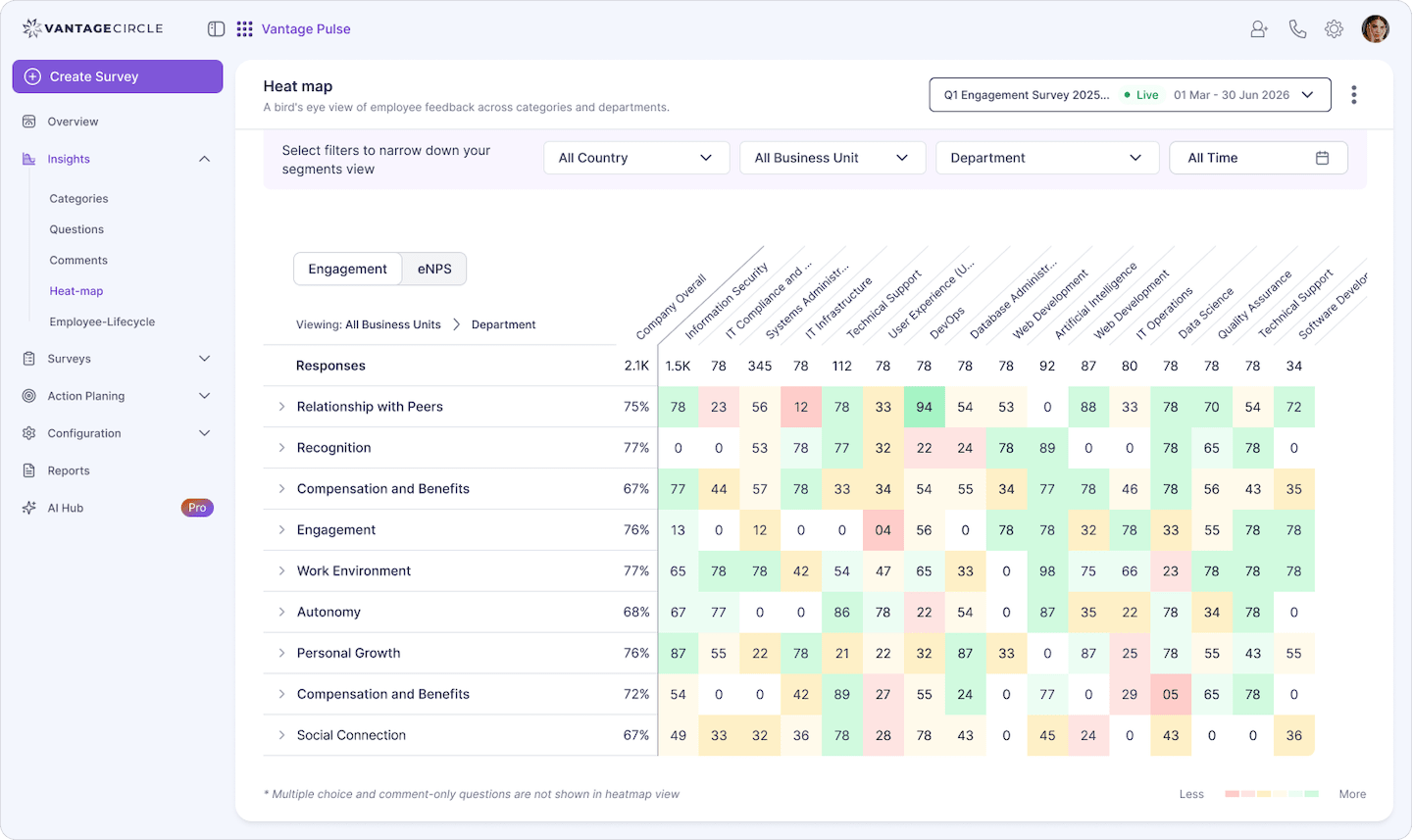
This is where real-time sentiment analysis becomes critical. By consistently monitoring how teams perceive autonomy, HR leaders can identify early signs of breakdown - before they surface in attrition numbers.
The intrinsic reward of autonomy is self-authorship - the quiet confidence of knowing that how the work gets done is, at least in part, yours to decide.
Tip: Visualize the Data to Drive Action
Numbers on a spreadsheet rarely inspire action. Instead of relying on static reports, use heatmaps and interactive dashboards to bring sentiment data to life. These tools allow you to instantly identify where engagement is thriving and where it’s struggling, so you can intervene before small issues evolve into attrition risks.
3. Mastery and Skill Development
When employees feel themselves getting better at something, that progress becomes its own reward. It's why a cybersecurity analyst runs penetration tests beyond what's required, or why a product manager obsesses over frameworks long after the deadline passes. Mastery isn't assigned - it's pursued when the environment makes it worth pursuing.
The data makes the business case clear. 94% of employees say they would stay longer at a company that invests in their career development as per LinkedIn's Workplace Learning Report. Yet only 46% feel their employer offers enough opportunities for skill enhancement - a gap that's increasingly costly given that 51% of employees believe the demands of their job will change significantly within five years.
There's also a quieter problem: mastery is largely invisible inside most organizations. An employee earns a certification or develops a skill that transforms how their team operates - and it goes unacknowledged beyond an HR system entry.
When organizations intentionally create visibility around growth, skill milestones become more than administrative updates - they become cultural moments. Public recognition of learning achievements signals that development matters. As peers acknowledge progress and leaders reinforce it, mastery shifts from a private accomplishment to a shared organizational norm
The intrinsic reward here is competence - the satisfaction of knowing you are measurably more capable than you were six months ago, and that it was noticed.
4. Peer Recognition and Appreciation
Appreciation from a manager carries authority. But appreciation from a peer carries credibility. It reflects someone who worked alongside you, saw the unglamorous parts - the 11pm Slack message, the last-minute documentation fix, the calm during a production incident - and chose to acknowledge it anyway. That specificity is what gives peer recognition its psychological weight.
The research is compelling. A study by Workhuman and Gallup found that employees who receive regular recognition are 56% less likely to be looking for a new job and 4x more likely to be engaged at work. Yet the same research shows that most employees go weeks - sometimes months - without a single meaningful acknowledgment from a colleague.
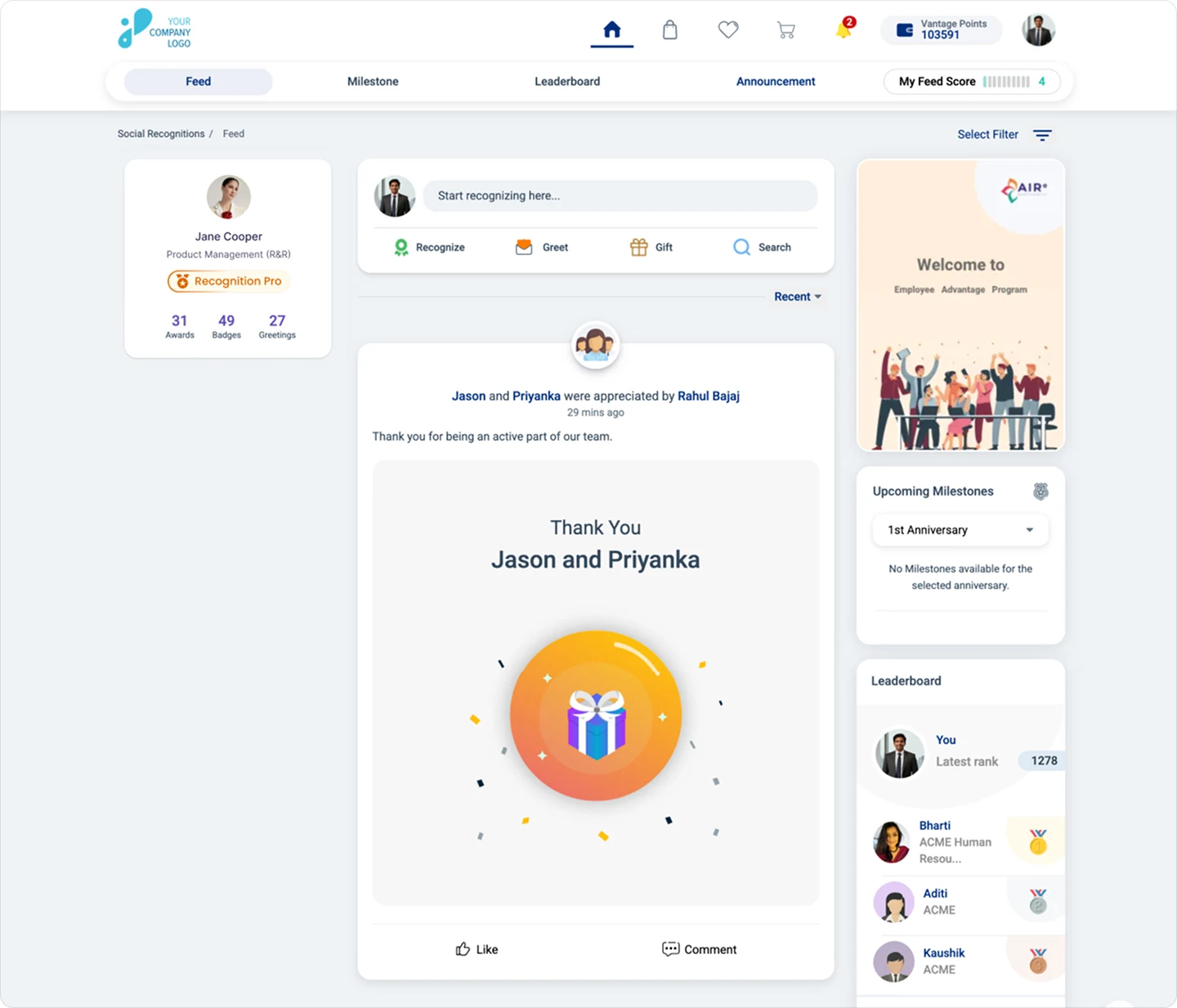
The challenge isn't willingness. It's friction and consistency. When recognition requires navigating a separate tool, filling out a form, or waiting for a quarterly awards cycle, it simply doesn't happen often enough to move the needle. This is where the infrastructure matters - platforms like Vantage Circle embed peer recognition directly into daily workflow, making it as easy to appreciate a colleague as it is to send a message. The result is recognition that's frequent, specific, and tied to real moments rather than performative ceremonies.
The intrinsic reward here is social validation at its most authentic - belonging confirmed not by a job title or a performance review, but by the people who actually saw you show up.
5. Creative Freedom and Innovation Opportunities
Google's 20% policy - giving engineers one day a week for self-directed projects - wasn't a perk. It was a deliberate bet on intrinsic motivation. AdSense and Google News, both now core to Google's business, came directly out of that unstructured time.
The principle holds beyond Silicon Valley. A lot of employees globally feel they're actually expected to be creative at work - yet the World Economic Forum ranked creative thinking the second most in-demand workplace skill.
When employees are given room to experiment - through hackathons, open sprints, or dedicated exploration time - the motivation is intrinsic. It's the pull of building something that didn't exist before.
The reward here is ownership - the satisfaction of seeing something you imagined become something real.
6.Personal Growth and Learning
When organizations invest in growth - through leadership programs, cross-functional rotations, or structured learning paths - employees stop thinking like contractors and start thinking like stakeholders. The relationship shifts from transactional to developmental, and that shift shows up in retention numbers.
The data is clear. 90% of organizations cite learning opportunities as a key factor in employee retention, according to LinkedIn's 2024 Workplace Learning Report. Employees with access to career development programs are 15% more engaged, and companies that offer comprehensive training programs see 218% higher income per employee. Perhaps most tellingly, lack of career growth remains one of the leading drivers of turnover, as per Work Institute's 2024 Retention Report - consistently outranking compensation as a reason people leave.
The intrinsic reward here isn't the certificate or the promotion. It's the feeling of forward momentum - the sense that who you are professionally today is not the ceiling.
7. Sense of Achievement and Accomplishment
In long-horizon projects, this is where organizations quietly lose people. When timelines stretch across quarters and outcomes feel abstract, even high performers start to disengage. Not because the work stopped mattering, but because the feedback loop broke.
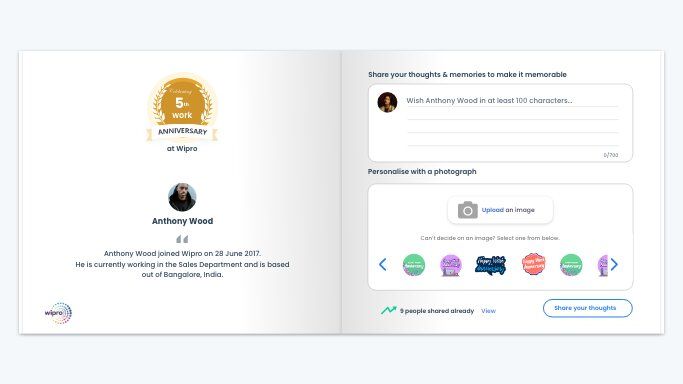
Tenured employees are often the most affected. Among workers aged 60 to 64, 52% have been with the same employer for 10 or more years - yet these are frequently the employees least likely to receive meaningful acknowledgment. Work anniversaries, in most organizations, are either automated emails or forgotten entirely. According to another report, adopting a simple recognition program that acknowledges work anniversaries can increase average employee tenure by two years - a return that requires almost no structural investment, just intentionality.
Beyond work anniversaries, breaking large goals into clear, visible milestones helps sustain motivation over long timelines. Employees are far less likely to leave when they feel genuinely recognized - and recognition tied to specific achievements, rather than generic praise, is what truly makes a lasting impact.
Read our blog on: Employee Milestones!
8. Wellness and Work-Life Balance
Employees are no longer choosing between a good job and a good life - they're choosing employers who understand the two are connected.
Employees worldwide now rank work-life balance above compensation. Among Gen Z, that need is even more important. And the cost of ignoring it is real: huge number of employees are quitting due to wellbeing/work-life reasons.
Yet most wellness programs fail not because they don't exist, but because employees don't use them. 15% of employees are unaware whether their employer even offers wellness benefits (they don’t know if the benefits exist). Again, 23% of employees say they are unlikely to use the wellness benefits offered. The gap isn't budget - it's engagement.
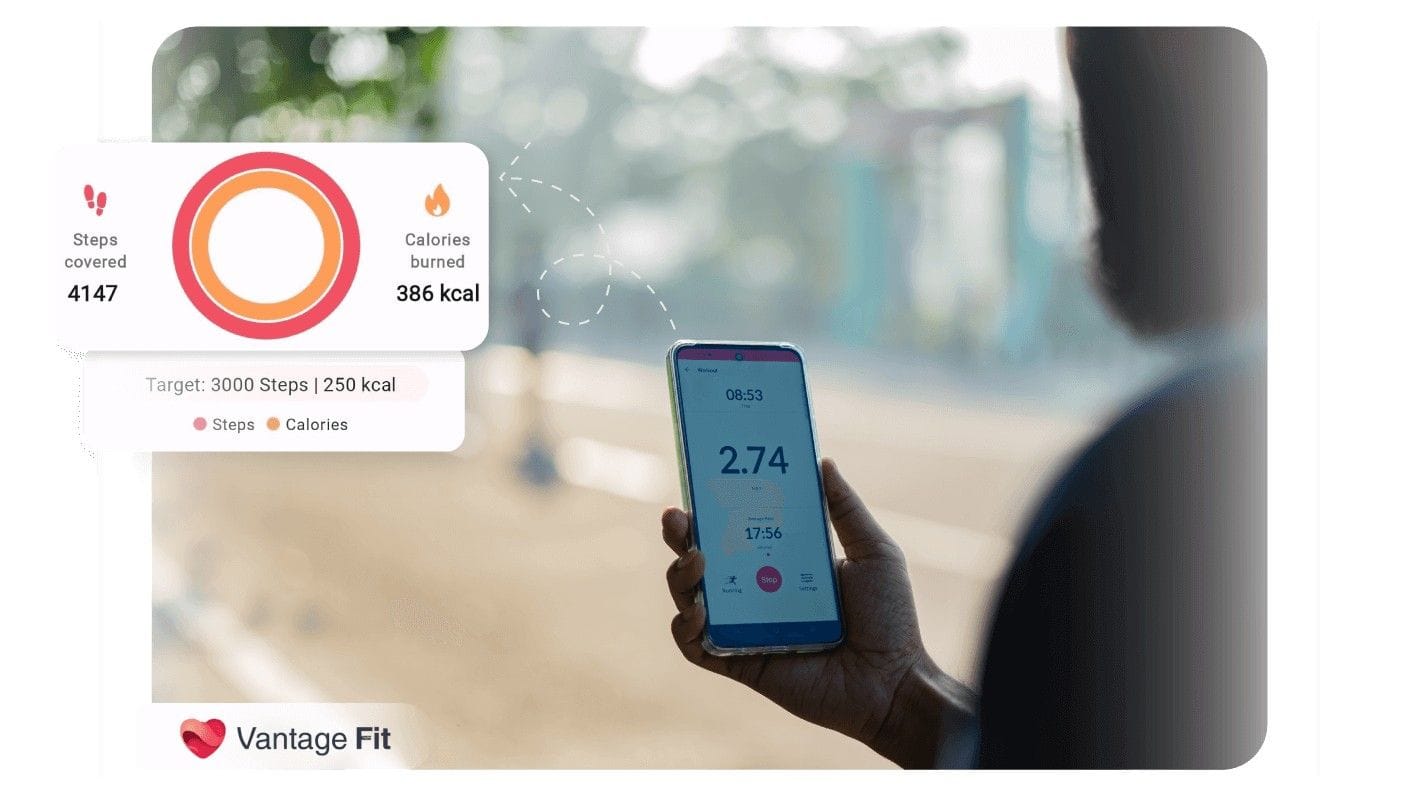
This is exactly the problem Vantage Fit is built to solve. Rather than a one-time wellness initiative that lives in an HR portal, Vantage Fit integrates into employees' daily routines - tracking physical activity, running team fitness challenges, and making healthy habits social and visible. When wellness becomes something colleagues do together, participation stops feeling like a corporate obligation and starts feeling like something worth showing up for.
The intrinsic reward here is simple: employees who feel well, work well - and they stay.
9. Trust and Responsibility
Think about the last time someone handed you something important - not because it was your job, but because they believed you were the right person for it. That feeling is hard to replicate with a bonus.
Trust changes how people show up. Employees in high-trust companies are 76% more engaged and 50% more productive. Yet 79% of executives believe their employees trust them - only 65% of employees agree. That gap is where discretionary effort quietly disappears.
The intrinsic reward isn't the responsibility itself. It's what the responsibility says about how the organization sees you.
10. Intellectual Challenge and Problem-Solving
The most dangerous thing you can do to a sharp employee is give them work that doesn't require them to think.
When NASA's Apollo 13 mission failed mid-flight in 1970, engineers at Mission Control had 87 hours to solve a life-threatening problem with nothing but the materials already on the spacecraft. They did. Not because they were ordered to, but because the problem itself demanded everything they had. That kind of full-brain engagement - where stakes are real and solutions aren't obvious - is intrinsically motivating in a way that routine work simply cannot replicate.
The same dynamic unfolds in everyday organizational life.
- A data scientist architecting a fraud detection model.
- A logistics leader rerouting supply chains amid geopolitical disruption.
- A product designer diagnosing why users abandon a checkout flow.
In each case, the complexity isn’t an obstacle to endure. It is the catalyst for deep focus, creative problem-solving, and professional growth. The challenge itself becomes the reward.
According to Gallup, employees who report being intellectually stimulated at work are significantly more engaged and far less likely to look for opportunities elsewhere. And 33% of employees who change jobs cite boredom and the desire for new challenges as their primary reason for leaving - ranking above culture fit and well ahead of compensation.
The intrinsic reward here is cognitive satisfaction - the specific pleasure of figuring something out that wasn't figured out before.
11. Progress Visibility and Feedback
Only 23% of employees strongly agree they received meaningful feedback in the past week. And while 50% of managers strongly agree they give feedback weekly, only 20% of employees agree their manager actually does so - a perception gap that quietly erodes motivation without anyone noticing. 41% of employees have left a job because they felt they weren't listened to.
The problem isn't just frequency - it's visibility. Employees need to see their progress, not just hear about it once a quarter. This is where Vantage Pulse serves a different purpose than a typical survey tool.
Rather than giving HR a top-down view of sentiment, it gives employees a regular channel to express how they feel about their own growth and workload - turning feedback into a two-way conversation rather than a one-way performance review.
The intrinsic reward here is clarity - knowing where you stand, and that your voice shapes what comes next.
12. Values Alignment
When an employee's personal values match their organization's - whether around sustainability, inclusion, or social impact - work stops feeling transactional. An ESG analyst who genuinely cares about climate doesn't need to be pushed to go deep on emissions data. A D&I program manager who believes in equity shows up differently than one who's just executing a mandate. The work itself becomes the motivation.
The intrinsic reward here is congruence - the feeling that what you do every day reflects who you actually are.
13. Flow State and Work Enjoyment
Psychologist Mihaly Csikszentmihalyi spent decades studying one deceptively simple question: when are people at their happiest?
His answer wasn't during vacation or leisure - it was during moments of deep, focused work where the challenge perfectly matched their skill level.
He called this state "flow." And in flow, time distorts.
A designer refining a visual system loses track of hours. An engineer debugging a complex architecture problem forgets to eat lunch. A researcher chasing a hypothesis works past midnight without noticing. This isn't workaholism - it's the opposite of it. It's work that feels intrinsically rewarding because it demands everything you have, and you're just capable enough to meet it.
The intrinsic reward here is absorption - the rare experience of being so fully present in what you're doing that the line between work and enjoyment disappears entirely.
14. Mentoring and Knowledge Sharing
When Steve Jobs returned to Apple in 1997, one of his first moves was to build a deep mentoring culture - pairing senior leaders with emerging talent across design, engineering, and product. The idea was simple: institutional knowledge shouldn't live in one person's head. It should move. That philosophy shaped a generation of Apple leaders who went on to build some of the most consequential products in tech history.
Mentoring works because it activates something deeper than skill transfer. When a senior engineer walks a junior through a complex architecture decision, they're not just teaching - they're making sense of their own experience. The act of articulating what you know forces you to understand it more deeply. Teaching is its own form of mastery.
The intrinsic reward here is legacy - the satisfaction of knowing that what you've learned won't disappear when you leave the room.
15.Workplace Flexibility as Trust Signaling
Flexibility isn't just a perk, it's a message. When an organization trusts employees to decide when, where, and how they work, it communicates something no policy document can: we believe you're capable of managing yourself.
Employees receive that signal loudly. 75% of employees rank workplace flexibility as their top benefit, and 76% say they would stay longer at a company that offers it. The inverse is equally telling - 54% of employees working fully remote and 38 % of hybrid workers say they would likely look for another job if the employer stopped offering remote work. For younger employees, flexibility isn't a negotiation point. It's a baseline expectation.
The intrinsic reward here is agency - the confidence of knowing your organization trusts you enough to not watch over your shoulder.
Benefits of Intrinsic Rewards for Organizations
Intrinsic rewards are often positioned as cultural ideals - but their real power lies in measurable organizational outcomes. When designed intentionally, intrinsic motivation systems influence engagement, retention, innovation capacity, and cultural resilience at structural levels.
Below is a research-backed breakdown of their enterprise impact.
1. Higher Employee Engagement
Engagement is not driven by satisfaction - it is driven by emotional investment.
Employees may feel satisfied with pay, benefits, and policies yet remain psychologically detached from work. Intrinsic rewards bridge this gap by activating discretionary effort - the voluntary energy employees invest beyond compliance.
When intrinsic drivers like recognition, autonomy, and growth are consistently activated:
-
Employees show higher meeting participation
-
Collaboration becomes proactive rather than reactive
-
Customer empathy increases
-
Problem-solving persistence improves
Engagement, in this context, becomes behavioral - not attitudinal.
Recognition ecosystems like that of Vantage Recognition can strengthen engagement loops by ensuring appreciation is continuous, peer-driven, and values-linked - embedding emotional reinforcement into daily workflows rather than annual events.
2. Improved Retention and Lower Turnover
While compensation influences job entry, intrinsic rewards influence job continuity.
Work Institute’s Retention Report consistently ranks lack of career growth, recognition, and meaningful work among the top voluntary resignation drivers globally - often outranking pay dissatisfaction.
This reflects a deeper workforce shift:
Employees no longer evaluate employers solely through financial exchange. They assess psychological returns - learning, purpose, belonging, identity alignment.
Intrinsic rewards influence employee retention through three mechanisms:
- Identity attachment
Employees stay where they feel psychologically invested.
- Future visibility
Growth pathways reduce stagnation risk.
- Social embeddedness
Belonging reduces detachment likelihood.
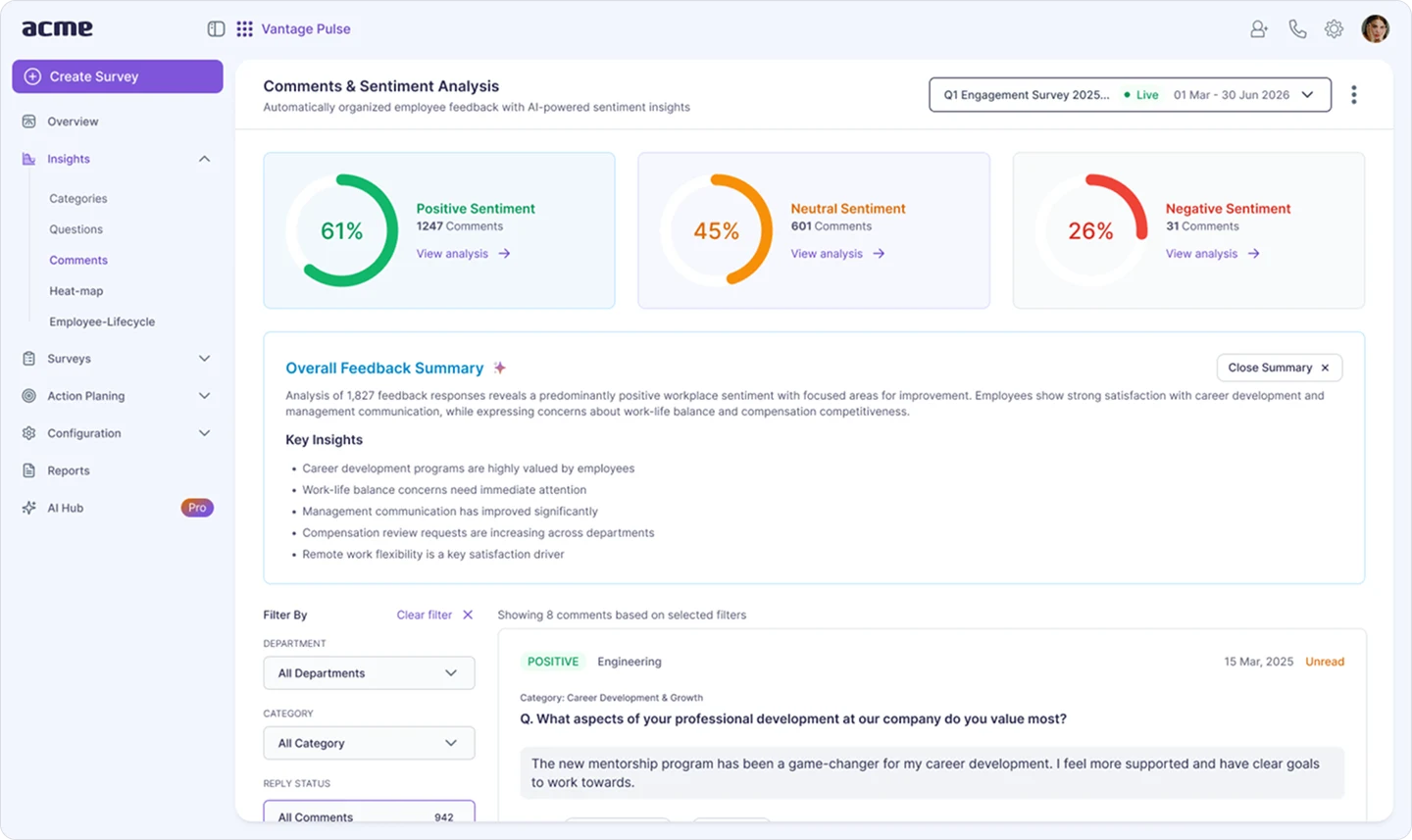
Recognition analytics and sentiment diagnostics captured through platforms like Vantage Pulse help HR leaders detect early attrition signals - such as declining appreciation sentiment or growth perception gaps - allowing preemptive intervention.
Retention, therefore, becomes predictable rather than reactive.
3. Increased Creativity and Innovation
Innovation thrives in intrinsically motivated environments because creativity requires psychological safety, autonomy, and intellectual stimulation.
Extrinsic reward systems - particularly those tied to short-term performance - often produce risk-averse behaviors. Employees optimize for reward attainment rather than exploratory thinking.
Intrinsic ecosystems reverse this dynamic.
When employees feel:
-
Safe to experiment
-
Empowered to ideate and
-
Recognized for initiative, innovation becomes culturally normalized.
Harvard Business Review research on innovation cultures highlights that employees driven by purpose and mastery are more likely to propose process improvements and product innovations - even outside formal R&D roles.
Recognition layers embedded through Vantage Recognition amplify this effect by celebrating not just outcomes but creative attempts - reinforcing experimentation as valued behavior.
This distinction is critical:
-
Rewarding results sustains performance.
-
Rewarding initiative sustains innovation.
4. Sustainable Motivation vs. Incentive Dependency
Extrinsic motivation requires escalation.
Bonuses normalize. Incentives plateau. Financial rewards must increase to maintain the same motivational impact - creating long-term cost pressures.
Intrinsic rewards compound instead.
Purpose deepens with time. Mastery expands. Belonging strengthens. Recognition memories accumulate.
This creates what behavioral economists call self-reinforcing motivation loops - where effort generates fulfillment, which generates further effort.
Wellbeing ecosystems powered by Vantage Fit illustrate this sustainability principle. Employees often begin participation for extrinsic rewards but continue due to intrinsic reinforcement - energy gains, habit pride, peer encouragement.
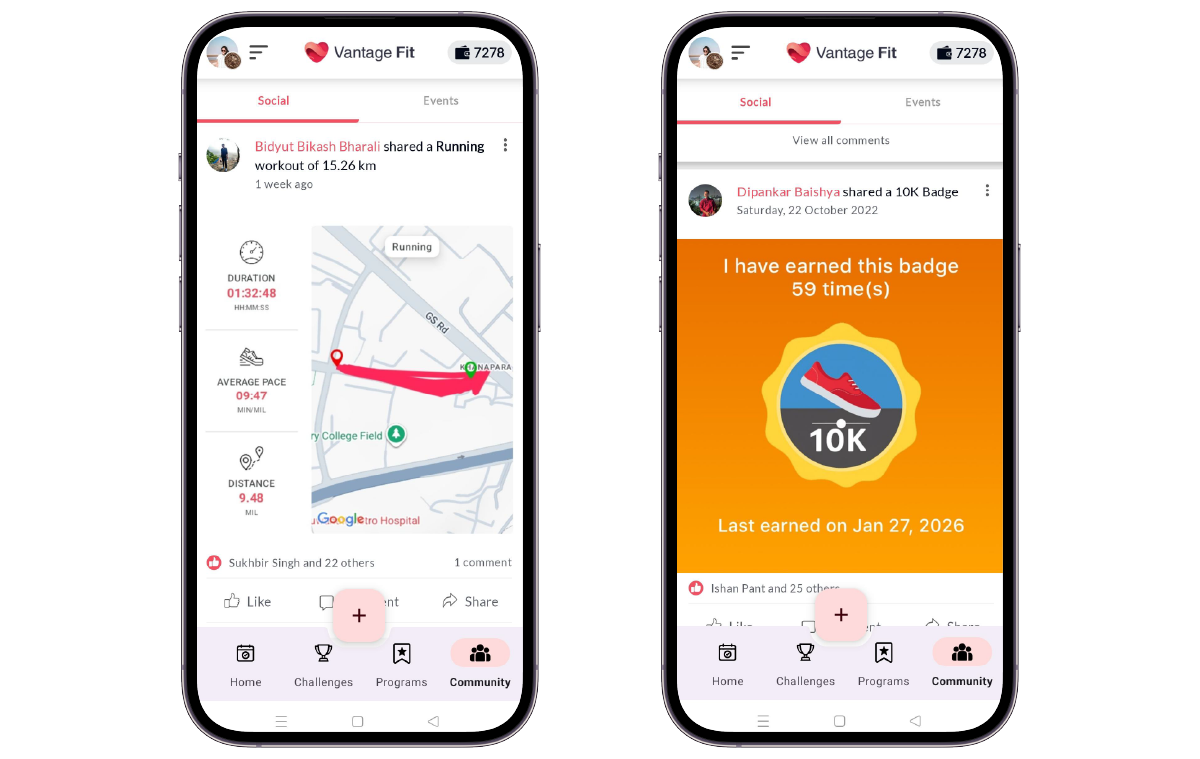
Thus motivation transitions from external trigger to internal habit.
5. Stronger Organizational Culture and Identity
Culture is not built through values statements, it is built through lived experiences.
Intrinsic rewards operationalize culture by embedding its principles into daily work.
For example:
-
Recognition reinforces values
-
Mentorship reinforces learning culture
-
Autonomy reinforces trust culture
-
Belonging reinforces inclusion culture
The intrinsic reward here is emotional affiliation - employees feel part of something rather than employed by something.
How HR Leaders Can Foster Intrinsic Rewards at Work
Designing intrinsic rewards requires intentional architecture - not incidental culture.
Below is a strategic execution framework.
Step 1: Audit Your Current Reward Mix
Most organizations believe they support intrinsic motivation - yet budget allocation reveals extrinsic dominance.
An intrinsic audit evaluates:
-
Recognition frequency vs monetary rewards
-
Growth investment vs hiring spend
-
Autonomy perception vs governance controls
-
Purpose communication vs task allocation
Pulse diagnostics and engagement analytics enable HR leaders to map intrinsic sentiment gaps across teams, functions, and geographies.
The goal is visibility - identifying where motivation relies excessively on financial triggers.
Step 2: Redesign Roles for Autonomy, Mastery, and Purpose
Intrinsic rewards are embedded through job design - not engagement programs alone.
Role redesign may include:
-
Decision authority expansion
-
Skill pathway mapping
-
Project ownership allocation
-
Innovation time structuring
For example, granting customer success managers authority to resolve escalations without managerial approval increases both autonomy and achievement satisfaction.
Intrinsic motivation rises when employees feel they shape outcomes rather than execute instructions.
Step 3: Build a Recognition-First Culture
Recognition is the connective tissue across intrinsic drivers.
It validates:
Purpose → “Your work mattered”
Mastery → “Your skill made a difference”
Progress → “You moved us forward”
Belonging → “You’re valued here”
Recognition ecosystems institutionalize this by embedding appreciation into daily workflows, enabling peer-to-peer validation at scale.
When recognition becomes continuous rather than episodic, intrinsic reinforcement becomes cultural rather than ceremonial.
Step 4: Use Technology to Enable, Not Replace, Intrinsic Motivation
Technology should amplify human appreciation - not mechanize it.
Digital platforms enable:
-
Real-time recognition visibility
-
Sentiment tracking
-
Milestone storytelling
-
Cultural narrative building
The objective is scale without dilution - ensuring intrinsic signals reach every employee regardless of geography or hierarchy.
Step 5: Measure Intrinsic Motivation Through the AIRe Framework
Intrinsic motivation must be measurable to be manageable.
Vantage Circle’s AIRe Framework operationalizes recognition maturity across four dimensions:
Appreciation - Frequency and authenticity of recognition
Incentivization - Alignment between rewards and values
Reinforcement - Consistency of cultural validation
Emotional Connection - Depth of belonging signals
This transforms intrinsic rewards from abstract philosophy into data-backed engagement infrastructure - enabling leaders to track cultural strength with the same rigor applied to financial performance.
Key Takeaways on Intrinsic Rewards
-
Intrinsic rewards drive sustainable motivation.
-
Intrinsic rewards - purpose, mastery, autonomy, and belonging - outlast monetary incentives.
-
When intrinsic rewards are embedded into daily work, engagement becomes self-sustaining.
-
Unlike bonuses, intrinsic rewards compound over time.
-
Organizations that prioritize intrinsic rewards build deeper retention and stronger discretionary effort.
-
Intrinsic rewards are not a substitute for compensation - they are the engine of long-term engagement.
Frequently Asked Questions About Intrinsic Rewards
1. What are the 4 intrinsic rewards?
The four intrinsic rewards are purpose, autonomy, mastery, and progress (or growth). Together, they fuel intrinsic motivation by making work meaningful, self-directed, and development-oriented.
2. What is an example of an intrinsic reward?
An example of an intrinsic reward is the sense of accomplishment an employee feels after solving a complex problem or successfully leading a project. The satisfaction comes from the achievement itself - not from external incentives.
3. What is the difference between intrinsic and extrinsic rewards?
Intrinsic rewards come from internal satisfaction, such as purpose and personal growth. Extrinsic rewards come from external incentives like salary, bonuses, promotions, or perks. Intrinsic rewards drive sustained engagement, while extrinsic rewards often influence short-term performance.
4. What are the benefits of intrinsic rewards?
Intrinsic rewards increase discretionary effort, strengthen resilience, deepen commitment, and support long-term engagement. They also reduce overreliance on financial incentives to maintain motivation.
5. Are intrinsic rewards better than extrinsic rewards?
Intrinsic rewards are not necessarily “better,” but they are more sustainable over time. The most effective engagement strategies balance both types of rewards, using extrinsic rewards to attract and reinforce, and intrinsic rewards to sustain commitment.
6. How do you measure intrinsic motivation?
Intrinsic motivation can be measured through engagement surveys, pulse feedback, retention rates, participation in voluntary initiatives, growth progression, and qualitative indicators such as employee sentiment and ownership behaviors.
7. What is an example of extrinsic and intrinsic rewards?
An extrinsic reward example is a performance bonus or promotion. An intrinsic reward example is feeling trusted to make decisions or experiencing pride in meaningful work.

Susmita Sarma is a seasoned Digital Marketer at Vantage Circle, specializing in content strategy, employer branding, and HR thought leadership. Passionate about creating recognition-driven and people-first workplace cultures, she blends data, storytelling, and empathy to drive meaningful engagement. Connect with Susmita on Linkedin or reach out at editor@vantagecircle.com for inquiries.