









Superlative Awards For Work: Funny Ideas To Boost Team Morale

A Global Employee Recognition and Wellness Platform
I’ve always believed that recognition at work shouldn’t only happen when someone hits a big target or closes a major deal. Good work isn’t just about results. It’s about effort, attitude, and how people show up every single day.
But in most workplaces, recognition still works like a scorecard. Numbers win. Everything else gets ignored. And it shows.
Only about 21% of employees worldwide say they feel engaged at work. That means the majority are just getting through the day, not because they don’t care, but because their efforts often go unnoticed.
So, one thing is clear here. When appreciation is rare, work starts to feel mechanical. People do what is required, nothing more and nothing less.
We often come across traditional programs like Employee of the Month and honestly, they aren’t bad. They have a place and are largely accepted. But they usually reward visible wins only.
Now, what about the quiet contributors? That person who keeps spirits high during stressful weeks, the one who always jumps in to help, or the colleague who makes workdays lighter just by being themselves. We rarely see them making it to the recognition dashboard whereas they are the ones who make work enjoyable.
That’s why I love superlative awards.
They’re simple, a little silly, and very human. Instead of only rewarding outcomes, they notice small stuff like personality, habits, and the everyday things people do that keep teams running. When done right, they create laughs, real appreciation, and that feeling of “okay, I actually belong here.”
In this article, I’m sharing what superlative awards are, why they work so well, and how to use them without making it awkward or forced.
What Are Superlative Awards?
Superlative awards are creative, light‑hearted recognition titles given to employees for their unique traits and contributions. They’re not about KPIs or targets. They’re simply about people.
They usually recognize things like:
• Attitude: the person who stays positive or calm no matter what.
• Personality: humor, empathy, energy, or the ability to lift everyone’s mood.
• Collaboration: the teammate everyone relies on.
• Culture: people who quietly live your company values.
• Everyday moments: habits or quirks that make work better.
In short, superlative award is less about the “top performer” and more about “this person makes our team better.”
Why Do Superlative Awards Actually Work?

Superlative awards work because they’re not vague or routine like regular recognition. They’re clear and visible. And they’re tied to things people actually notice in day-to-day work.
When a person is recognized as “Most Reliable,” “Quiet Problem-Solver,” or “Team Energizer,” it hits the right spot. They understand exactly why they are being recognized, what kind of difference they made, and that they have earned it.
The team sees it too, and it ignites something in them. The conversations become warmer, the energy level increases, and the culture comes alive instead of just a list of policies.
Best Superlative Award Ideas to Try at Work
The best superlatives are the ones that feel obvious. Like, people read the name, smile, and think, “That’s so them.”
Here are a few superlative award ideas that you can use as they are or tweak the names to fit how your team actually works.
1. Personality & Energy

These awards are for people who set the tone at work, often without trying.
-
Most Positive Attitude - stays hopeful even on difficult days.
-
Office Sunshine - lifts the mood just by being around.
-
Calm Under Pressure - steady when things get stressed.
-
Always Smiling Award - reminds others not to take everything too seriously.
-
Human Encyclopedia - usually knows the answer or where to find it.
-
Energy Booster - brings life into meetings and discussions.
-
These awards matter because emotional effort is real work, even if it’s not tracked.
2. Collaboration & Helpfulness

Every team has people who make work easier for others. These awards notice that.
-
Go-To Person - the first person people reach out to for help.
-
Team Glue - keeps people and work connected.
-
Most Supportive Colleague - steps in without being asked.
-
Collaboration Champion - works well across teams.
-
Problem Solver - brings clarity when things feel stuck.
-
Behind-the-Scenes Hero - keeps things running quietly.
These are great for recognizing effort that often goes unnoticed.
3. Habits & Work Style

These awards feel familiar and usually get people talking.
• Early Bird - starts work early and gets things going.
• Night Owl - often around later, making sure things don’t stall.
• Inbox Zero Hero - replies on time and rarely misses an email.
• Meeting Magnet - joins a lot of meetings and actually helps move things forward.
• Deadline Whisperer - stays calm and finishes work on time.
• Desk Decorator Supreme - has a desk or workspace people notice and like.
They work because they celebrate how people work, not just results.
4. Culture & Values

According to a recent PWC Culture Study 67% of executives believe culture is more important to performance than strategy or operating model.
These awards highlight people who quietly shape the culture.
-
Culture Champion - lives the company values every day.
-
Values Ambassador - leads with honesty and respect.
-
Inclusion Ally - makes space for every voice.
-
Team Spirit Award - keeps morale steady during tough times.
-
Most Likely to Brighten Someone’s Day - small acts that matter.
-
Kindness Champion - consistently thoughtful and supportive.
These awards reinforce culture without making it feel forced.
3 Quick Tip on Choosing Superlatives
You don’t need many awards in this category. In fact, fewer is better.
Think about:
-
How people talk about each other - the little compliments, shout-outs, or funny stories that come up naturally in meetings and chats.
-
Inside jokes or shared habits - the quirks and routines that only your team truly understands and enjoys.
-
Behaviors you want to see more of - the actions that make the team work better, stay sane, or lift each other up.
If the award feels obvious and makes people smile, it’s a good one.
Real Examples of Superlatives Making a Difference
If you’re wondering whether these awards actually work, here are a few real‑world examples.
At Enplug, a tech company, employees hold a yearly “Enplug Awards” where staff nominate and vote on quirky titles like “Most likely to have 10 kids” or “Most likely to give you a ride home from jail.” These light-hearted awards are part of a long-running internal tradition meant to build camaraderie and make recognition fun.
At Ohio University, staff superlatives such as “Early Bird,” “Helping Hand,” and “Best Sense of Humor” helped recognize everyday contributions that formal programs often miss. It gave employees permission to be appreciated for being human, not just efficient.
Amazon has an internal recognition called the Just Do It Award, which is given to employees who take initiative and solve problems or implement improvements beyond their formal role. It’s a light-hearted but real leadership/peer recognition that values creativity and action, and even historically involved presenting an old Nike shoe as the symbolic prize.
The common thread in these examples? People felt valued as individuals, not just as outputs.
Using Virtual Recognition Programs to Enhance the Experience
Recognition programs work best when complemented by tools that highlight contributions consistently and visibly.
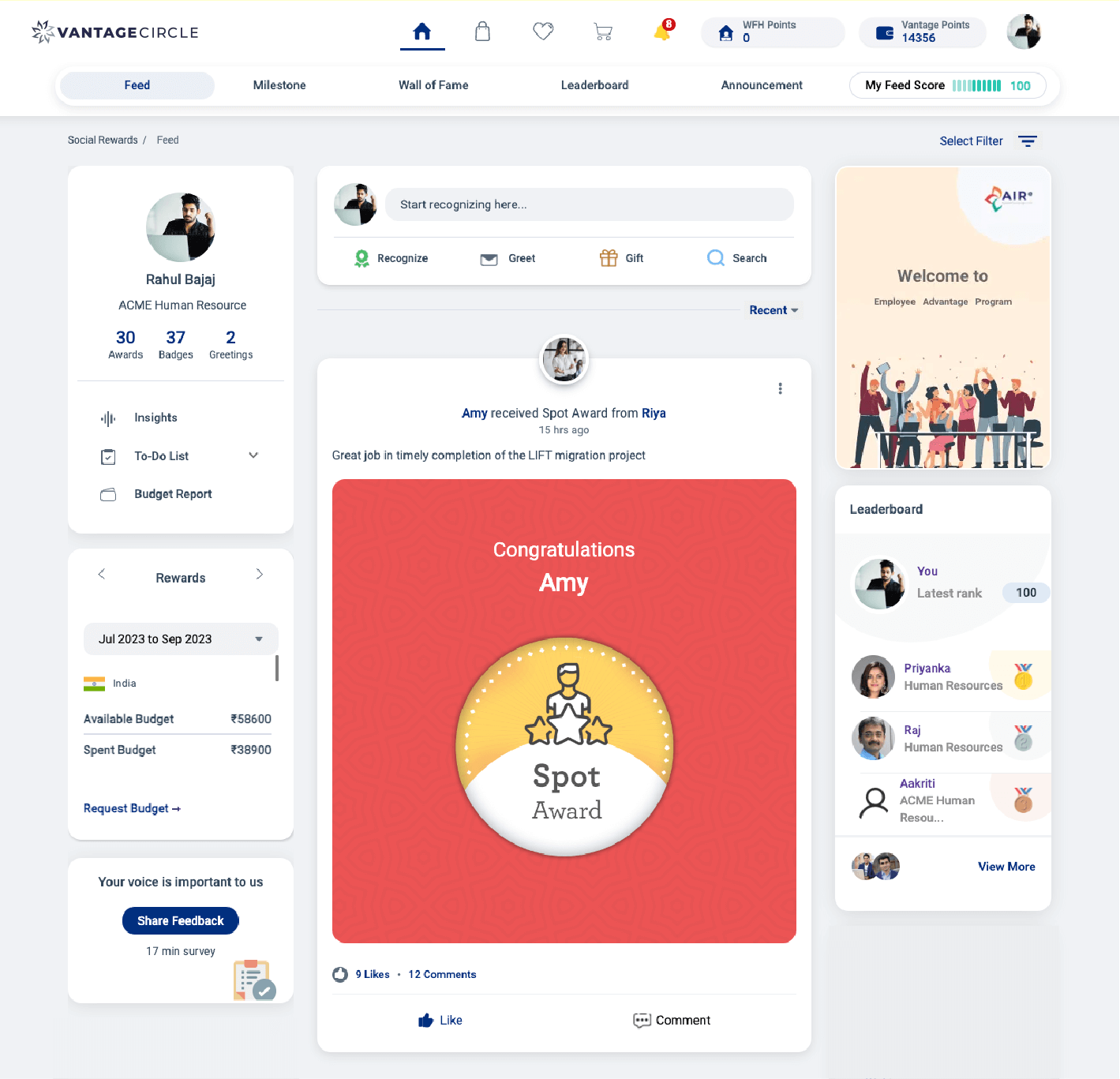
With a Recognition Feed from platforms like Vantage Circle, award winners can be highlighted in real time, letting the whole team celebrate small wins and fun moments as they happen.
Meanwhile, survey tools can help track how such initiatives are influencing engagement and satisfaction. What’s great about it is that leaders get a deep insight into what’s truly working and what might need a little tweak.
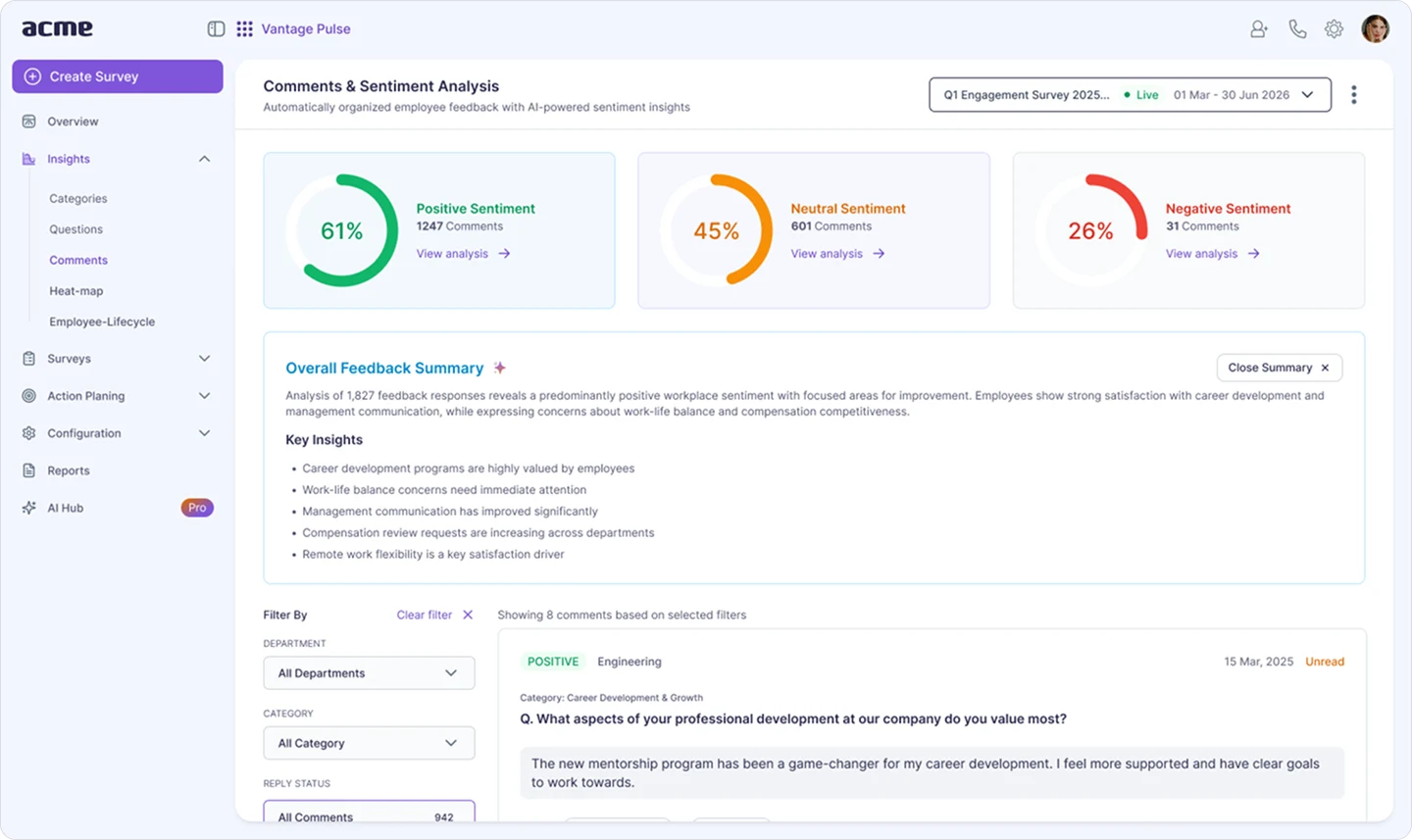
Source: Employee Sentiment Analysis By Vantage Pulse
Basically, it enables visible appreciation paired with actionable feedback that helps recognition feel both personal and meaningful, while also supporting a stronger, more connected culture.
According to Mercer’s 2024 Global Talent Trends report, only 15% of organizations invest in hyper-personalized recognition - even though 51% are trying to improve; most are still falling short when it comes to making recognition truly personal.
Best Practices for Using Superlative Awards
Superlatives work best when they’re handled thoughtfully. Here’s what to keep in mind:
• Keep everything positive. Never use sarcasm or anything that could embarrass someone.
• Recognize different kinds of contributions, not just loud or visible ones.
• Encourage peer nominations so recognition feels genuine.
• Always allow opt‑outs for people who aren’t comfortable.
• Refresh categories regularly so the awards don’t feel repetitive.
Small Touches That Make Awards More Memorable
• Add a small reward like a coffee voucher or fun desk item.
• Share winners publicly so appreciation is seen.
• Use humor carefully. Laughter should bring people together, not single anyone out.
• Tie awards back to company values when possible.
Conclusion
Superlative awards act like mirrors. They show teams what gets noticed when no one is trying to impress. Over time, those signals shape shared standards without policies, reminders, or enforcement.
That’s the real value. Not the title, the laugh, or the trophy, but the clarity it creates. When everyone understands what “good” looks like in action, work becomes simpler, smoother, and more human, without anyone having to spell it out.
Frequently Asked Questions About Superlative Awards For Work
1. What are superlative awards?
They are fun, creative recognition titles that celebrate personality, behavior, and culture - not just performance metrics.
2. What are good examples of work superlatives?
Most Positive Attitude, Team Glue, Inbox Zero Hero, Culture Champion, and Office Sunshine are popular choices.
3. How do you give superlative awards at work?
Choose positive categories, invite peer nominations, share recognition publicly, and keep the process light and inclusive.
4. Do superlative awards really improve engagement?
Yes. Teams that use fun, peer‑driven recognition often see better morale, stronger connection, and higher engagement.

Susmita Sarma is a seasoned Digital Marketer at Vantage Circle, specializing in content strategy, employer branding, and HR thought leadership. Passionate about creating recognition-driven and people-first workplace cultures, she blends data, storytelling, and empathy to drive meaningful engagement. Connect with Susmita on Linkedin or reach out at editor@vantagecircle.com for inquiries.