
Every great change begins with an idea. But an idea, by itself, is not enough.
I have always believed that the real strength of an organization is not measured by how many people follow the established path, but by how many are encouraged to ask, "Can we find a better one?" Creativity begins with that question.
A creative culture gives people the courage to question, experiment, and learn. It does not treat failure as the opposite of success, but as part of the journey toward it. When people are afraid to make mistakes, they become careful. When they are trusted to explore, they begin to create.
This matters more than ever. The World Economic Forum's Future of Jobs Report 2023 placed creative thinking among the most important skills workers will need, ranking it second only to analytical thinking.
The responsibility, therefore, is not simply to hire creative people. It is to create an environment where their imagination can become action.
What is a Creative Company Culture?
A creative company culture is a workplace where employees are expected to question assumptions, propose new ideas, and take intelligent risks.
Here failed attempts are treated as information rather than as a mark against the person who made them. When an idea fails, the first question is not, "Who made the mistake?" but, "What can we learn from it?"
Give people trust, curiosity, and room to experiment, and creativity has a chance to grow. Take those things away, and even the most talented people eventually stop raising their hands.
Benefits of Creative Company Culture in the Workplace
Boosts Employee Engagement
Encouraging creativity makes employees feel engaged, leading to deeper commitment and higher job satisfaction.
Attracts and Retains Talent
A culture that fosters creativity and innovation becomes a magnet for skilled professionals seeking dynamic and inspiring workplaces.
Improves Productivity
Engaging in creative processes boosts motivation, resulting in higher-quality work and increased productivity.
Gives Competitive Advantage
A creative culture sets a company apart, enabling it to adapt and foretell industry trends. This helps them gain an edge in the market.
3 Signs Your Company Culture is Truly Creative
The clearest signal of a creative culture is simple to observe. Watch what happens to a good idea that fails, because a culture that punishes smart failure quietly teaches everyone to stop taking risks.
Here are three signals worth looking for.
1. How Does the Company Handle Failure?
In a creative culture, a thoughtful idea that does not work becomes something to learn from. Teams examine what happened, take the lesson, and try again. In a fear-driven culture, the failed idea quietly disappears, along with the person who suggested it. The message is clear: don't be the next person to stick your neck out.
41% of employed Americans say they're afraid of being fired over a simple mistake — even in workplaces that formally encourage new ideas (Harris Poll for INTOO, 2026).
2. Who Gets Heard?
Pay attention to the room. If three or four senior people do most of the talking while everyone else nods, you are probably not looking at a creative culture. Creative organizations make room for ideas from every level, including the newest person in the room. Sometimes the least experienced voice sees what everyone else has learned to overlook.
3. Do Leaders and Employees Experience the Culture Differently?
This is where perception becomes revealing. Wiley's Workplace Intelligence Report 2023 found that only 53% of individual contributors said they felt safe taking risks at work, compared with 76% of executives. That is a significant gap, and it points to a problem leaders can easily miss: the culture they believe they have may not be the culture employees experience.
If you want the honest version of your company culture, don't ask only the people at the top. Ask the people with the least power to lose.
10 Strategies to Build a Creative Company Culture
1. Hire Diverse Employees
When a company commits itself to hiring diverse employees from different backgrounds and sexual orientations, it paves the way for a melting pot of ideas and concepts.
Diversity leads to a rich spectrum of perspectives, experiences, cultures, beliefs, and ideas. It fosters an environment where fresh ideas are born, nurtured, and transformed into innovative solutions.
Imagine a team where employees bring their unique experiences to the table. This mixture of diverse thoughts and experiences cultivates an environment where creativity flourishes and groundbreaking innovations emerge.
2. Foster a Judgement-free Environment
People in the organization should be free to express themselves without any judgment. This makes them more comfortable while trying out new ideas. It gives them the necessary confidence to become better.
A judgment-free work environment cultivates a psychologically safe workspace. Employees in such environments thrive and experiment with new concepts for the betterment of the organization.
For instance, you can foster a judgment-free environment by practicing open communication, celebrating differences, promoting empathy, and setting clear expectations.
Moreover, in a non-judgemental setting, failures are seen as a stepping stone to success. Embracing failure as a learning opportunity encourages resilience, perseverance, and a culture of continuous improvement.
3. Encourage Employees to Broaden Skills
A creative company culture benefits immensely from a diverse array of skills among its workforce. When employees are encouraged to broaden their skills, they bring a holistic approach to problem-solving.
Moreover, learning new skills can ignite curiosity, spark inspiration, and break the monotony of daily routine. It helps employees gain diverse perspectives and methodologies to address challenges.
Additionally, fostering a culture that encourages skill diversity boosts employee engagement and retention. Organizations can facilitate this process by offering e-learning opportunities, training programs, workshops, mentorship opportunities, and educational resources.
4. Encourage Flexibility in the Creative Process
A creative company culture flourishes when employees can explore different avenues and methodologies. This freedom paves the way for unconventional ideas and innovations.
Offering flexibility in approaching tasks encourages employees to experiment, take risks, and think beyond traditional boundaries.
Additionally, providing flexibility gives employees a say in how they approach their responsibilities. This sense of ownership cultivates intrinsic motivation, leading to higher levels of employee engagement.
5. Celebrate Failure
"There is no innovation and creativity without failure." ~ Brené Brown
Contrary to conventional notions, a workplace that celebrates failure cultivates a culture that thrives on resilience and risk-taking.
Failure is not viewed as a setback but as a stepping stone towards improvement. This mindset encourages employees to become confident with their unconventional approaches.
Organizations can institutionalize this mindset by creating forums for rewarding innovative thinking despite unsuccessful outcomes. This will push employees to think of unconventional solutions and challenge the status quo.
6. Reward & Recognize Employees
The practice of recognizing and rewarding employees for their contributions is a dynamic approach to nurturing creative company culture. It acknowledges employees' efforts and amplifies employee morale and engagement.
For instance, you can implement a recognition system where exceptional employees are rewarded for their creative and innovative minds. You can further promote peer-to-peer recognition by encouraging employees to appreciate and celebrate their colleagues' innovative efforts.
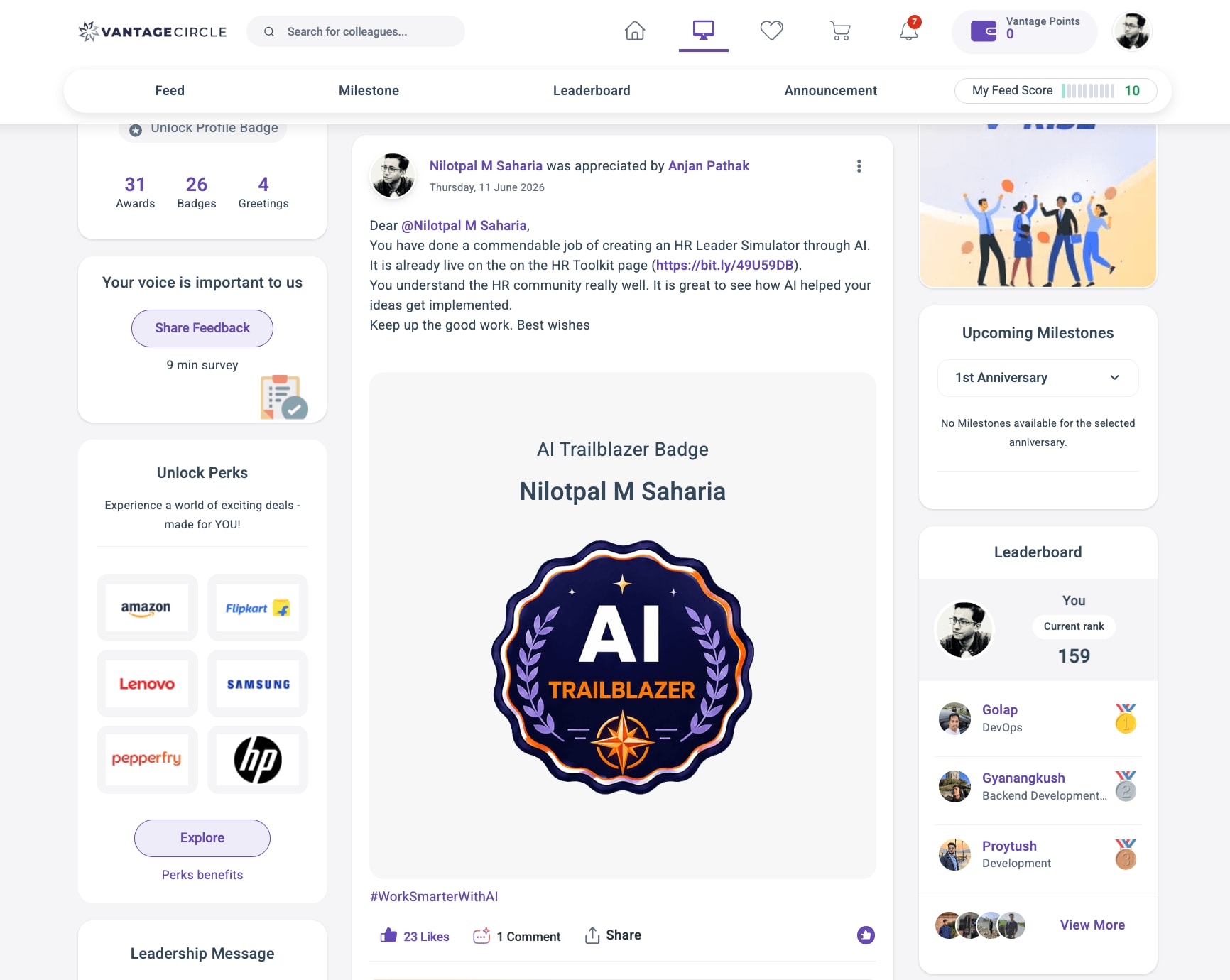
This practice not only enhances teamwork and collaboration but also cultivates a sense of belonging among team members.
7. Grant Flexible Work hours
One of the primary ways in which flexible working hours contribute to a creative company culture is by promoting work-life balance. Employees juggling personal commitments, such as childcare or education, greatly benefit from the flexibility to adjust their work hours.
Employees who can harmonize their professional and personal lives bring a renewed sense of focus, energy, and creativity to their work.
Furthermore, allowing employees to work during their most productive hours creates an environment where they can be their most creative. Whether it's early morning brainstorming sessions or late-night bursts of inspiration, flexible schedules accommodate diverse working styles.
8. Gamify Innovation with Challenges
Gamification involves applying gaming elements like points, badges, and leaderboards to boost employee engagement. Introducing game-like elements into the workplace stimulates creativity.
Challenges and competitions ignite a spirit of healthy rivalry, encouraging individuals to push their boundaries. When employees are presented with thoughtfully designed challenges, it sparks their imagination and encourages out-of-the-box solutions.
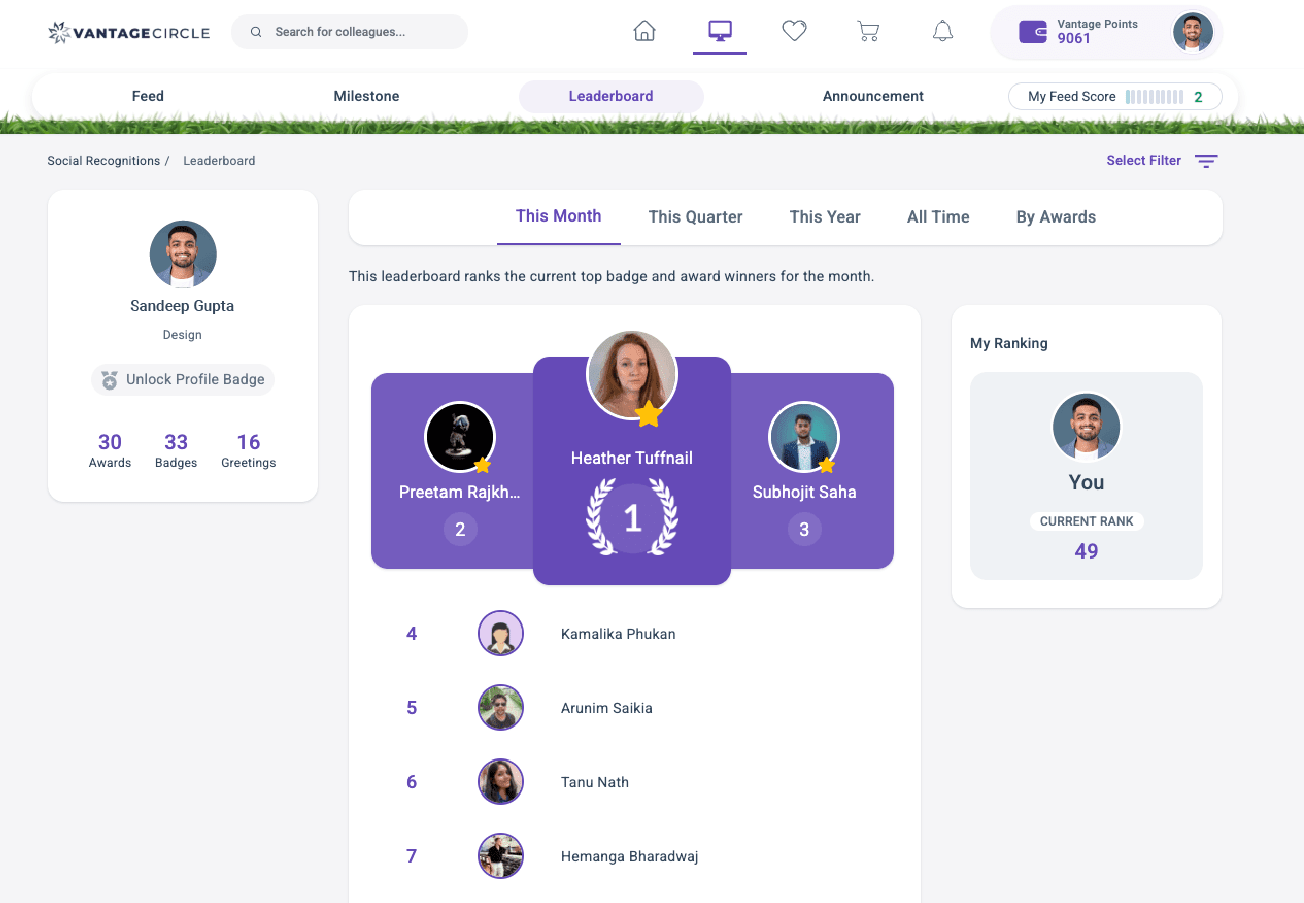
Furthermore, gamified challenges promote collaboration and teamwork. By creating challenges that require collective effort, companies encourage employees to work together and combine their strengths to achieve a common goal.
9. Build Inspiring Creative Spaces
Environment shapes behavior more than we like to admit. Sterile, uniform spaces tend to produce sterile, uniform thinking, while spaces with room to gather, sketch, and step away invite a different kind of work. This does not require a lavish redesign. It can be as simple as a wall people are allowed to write on, a quiet corner for focus, or a shared area designed for spontaneous conversation rather than back-to-back meetings.
10. Encourage Creative Hobbies and Interests
The reader who codes, the developer who paints, the analyst who plays in a band, these people bring patterns from one world into another, and that cross-wiring is where a lot of original thinking comes from.
Encouraging employees to pursue creative interests outside their core role is not a distraction from the work. It is an investment in the range of thinking they bring back to it. Companies that celebrate the whole person, not just the job title, tend to get more inventive employees in return.
🎙 Vantage Influencers Podcast
The Power of Curiosity in the Workplace
Tim Reitsma, Co-founder and General Manager at People Managing People, on how curiosity relates to employee wellbeing and how to train teams to be more curious.
Listen to the Episode →Examples of Companies With Great Creative Cultures
The best creative cultures do not leave creativity to personality or luck. They build systems that make experimentation easier, disagreement safer, and good ideas harder to ignore.
A few companies have been particularly good at this.
1. Pixar: Make Candor Part of the Process
Pixar's Braintrust is perhaps the clearest example of creativity being engineered rather than left to chance. The premise is straightforward: give talented people permission to be candid about the work, regardless of who made it. Directors are expected to hear difficult feedback early, when there is still time to act on it.
The lesson is bigger than the Braintrust itself. Creative people need honest feedback, but they also need to trust that feedback is about improving the work, not diminishing the person.
2. Adobe: Remove the Permission Barrier
Adobe took a different approach with Kickbox, an innovation program that gives employees a literal red box containing $1,000, along with a framework for testing an idea without waiting for managerial approval. When Adobe launched the program in 2013, employees tested nearly 1,000 ideas in its first year, compared with roughly 12 to 24 prototypes a year previously.
The clever part was not the $1,000. It was removing the approval step between "I have an idea" and "I can test it."
3. Netflix: Give People Judgment, Not Just Rules
Netflix offers another useful example. In 2024, the company updated its culture language from its long-standing "Freedom and Responsibility" framing to "People Over Process." The thinking remains consistent: in a creative industry, excessive rules can become a liability when people need to make fast, informed decisions.
The lesson is not that companies should eliminate structure. It is that structure should help good judgment, not replace it.
4. Google and IDEO: Build Experimentation into the Work
Google has long been associated with an organizational culture that values adaptability and experimentation. IDEO takes the principle into product development through rapid prototyping and its philosophy of learning early rather than waiting for a perfect answer.
The common thread across all four is that creative cultures are not built by asking people to be more creative. They are built by changing the conditions around them.
Give people candid feedback. Remove unnecessary permission. Trust informed judgment. Make experimentation part of the work. That is where creativity stops being a corporate slogan and becomes a way of operating.
Challenges in Building a Creative Company Culture
Building a creative culture is rarely difficult because people lack ideas. More often, the problem is that the organization creates perfectly reasonable conditions for people to stop sharing them.
Three challenges tend to show up again and again.
1. Leaders Unintentionally Make Risk Feel Unsafe
A manager does not have to say, "Don't take risks" to send that message. A dismissive reaction in a meeting, an overreaction to a failed experiment, or rewarding only ideas that work can do the job just as effectively.
The gap between intention and experience is significant.
Reporting on McKinsey research in 2024, the Journal of Accountancy found that only 26% of leaders were creating psychological safety for their teams.
The statistics mean that many leaders may believe they are encouraging candor and experimentation while employees are receiving a very different signal.
2. Short-term Pressure Wins over Long-term Thinking
Creative work is rarely predictable. Some ideas will fail. Others may take months or years before they produce anything meaningful. When budgets tighten or quarterly targets come under pressure, experimentation is often one of the first things organizations are tempted to cut.
That is precisely when leadership commitment gets tested. A culture is not truly creative if employees are encouraged to take risks only when business is going well.
3. Growth Turns Culture Into Process
Small teams often have an advantage. People can talk directly, decisions move quickly, and good ideas do not need to pass through five layers of approval.
Scale changes that. New processes, approvals, meetings, and layers of management appear for good reasons, but over time they can make experimentation so cumbersome that people stop trying.
The answer is not to measure creativity by the number of ideas submitted. It is to measure whether people are able to offer them.
Conclusion
Every company's creative culture is unique. What works for a tech startup might not work for a traditional law firm. Each organization's version of this culture is uniquely shaped by its industry, values, and history.
But the common thread is the commitment to fostering an environment that values imagination, encourages collaboration, and embraces change. So, go ahead and build an environment that actively cultivates creativity!
FAQs
What is a Creative Company Culture?
A creative company culture encourages employees to question assumptions, share ideas, experiment, and take thoughtful risks. It treats failure as a learning opportunity rather than a reason to shut down new thinking.
How do you Create a Creative Company Culture?
Give employees autonomy, psychological safety, and time to experiment, while recognizing ideas and learning from failed attempts. Leaders must model curiosity and make it safe to challenge the status quo.
What are the Characteristics of a Creative Company Culture?
Key characteristics include psychological safety, open communication, autonomy, collaboration, experimentation, diverse perspectives, and a healthy attitude toward failure.
What are Some Examples of Creative Company Culture?
Pixar, Adobe, Netflix, Google, and IDEO are often cited for practices that encourage candor, experimentation, employee autonomy, and creative problem-solving.
Why is Creative Culture Important in the Workplace?
A creative culture helps organizations generate new ideas, solve problems differently, and adapt to change. It also gives employees an environment where they feel trusted to contribute and experiment.

Shikha Gogoi is a Content Marketing Specialist focused on SEO-driven content around employee engagement, recognition, and workplace culture, helping build people-first workplaces.
Connect with Shikha on LinkedIn.